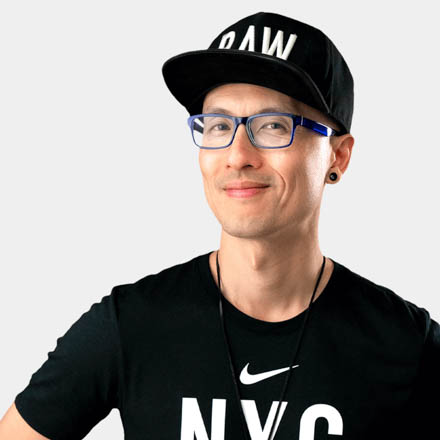
Everybody wants to create a better brand. Everyone wants to tell a better story. But follow these three rules from Greg.
Stop talking about yourself because it's not about you. Don't send me more emails. Send me an email.
Tell me what's in it for me. Make the audience, your clients, the hero of your story. Stop being so rational because we all know this.
We make decisions emotionally, then we post rationalize after the fact. But if you really want to make an emotional connection with somebody, telling them more facts is not going to do it. As it's said, Facts tell, stories sell.
The last one is stop talking like everyone else because guess what? You're going to disappear in all that noise and you're contributing to that noise versus standing out. Find your unique way to say things and avoid the cliches.
Stick around. All right, Greg, I'm excited to talk to you because the two of us, I think I've nerd out a little bit about story and branding and why stories really matter. But for people who don't know who you are, can you tell us a little bit about yourself?
Sure. My name is Greg Logan. I'm an Aussie who splits the year between Sydney, Los Angeles and Lisbon.
And I'm here on a sunny Lisbon day right now. Eight years ago, I founded Narrativity, which is a global brand storytelling business. And I took the most financially successful storytellers of all time, which is movies, and I translated their formulas for brands.
So they could tell a far more engaged, emotional and efficient story than they're currently doing. And my clients would stretch for every for everyone from startups to fortune 500s all around the world. They're really enjoying blockbuster results.
And because of that, I had a lot of businesses saying, I can't afford you. So I've written a book about it, which has just been released called creating a blockbuster brand. And I've broken down what I do for big brands and translated them for audiences.
And I'm sure in our talk today, people will get an understanding of what I do for businesses and you'll get to see how Hollywood can work for your business and your brand as well. Okay, you're talking about the most successful storytelling machine in the world, which is Hollywood. And I want to pull on that thread a little bit.
We're watching movies and we're wondering who the heck approved this movie? Why did they just spend $250, $300 million on this piece of garbage? So even Hollywood gets it wrong.
So maybe we should start there. How come some franchises get it right and some are getting it wrong? Marvel has been criticized recently with putting out some turds and I can't disagree.
I'm a Marvel fanboy. These films are not good. So there's two things we have to talk about is the success of movies and the value equation of the money they spent on it and then marketing and then the return they get on it.
If you look at the last hundred years, movies have been the most financially successful storytellers of all time. Gaming is now currently the most successfully financial storytelling at the moment. So Movies are having a tough time of it, but regardless of what movie they make and whatever franchise or whatever decisions they decide to green light, they will always use the successful formula of the hero's journey to make sure they're going to get the most return on their money.
So I think all big business now, people are risk averse and they just want to protect what they have. So Marvel's a classic example. When it first started in movies, people just loved it because it was just exciting.
It was new and fresh and had a sense of humor. And then they got stuck in their own formula and they became less fresh. And then there's other people like Deadpool, for instance, kind of showed Marvel how to do Marvel.
I think there are movies like any big business that's a lot of money at stake tend to make a lot of bad decisions. And the real breakout movies are the freshest ones, the ones that really excite us. But as I said, And every movie for the past hundred years, success or failure uses the storytelling formula to make sure we're hooked from the start of the film all the way to the end.
And it's like why we, a hero has a quest at the start of film that we agree with, and it's never furthest away than 10 minutes before the end of the film. And somehow it's always achieved, but it keeps us there. And we even, when we watch three hour movies that we hate and we go, why did I watch three hours of that rubbish?
I just wasted my life. It's because of the formula. The formula keeps us there.
And that was the thing I found interesting and I wanted to mine and make it work for brands. Now a brand doesn't work in a cycle. So I couldn't just use the hero's journey.
Although I have translated the hero's journey to make sure you stay engaged. As you scroll down your homepage, I've triggered every 12 points of the hero's journey for a homepage. But I've broken down the things that movies use, the tricks they use as they're writing the film to market the film and then to keep us engaged.
while we're watching. And I transmitted the hero's journey now, I think two or three times. And for the uninitiated, I think you're referencing Joseph Campbell's work there.
Can you tell people who don't know what the hero's journey is, what it is? Yeah. So it's a journey we've been on hundreds and hundreds of times and we don't even know it.
So every movie has 12 steps, 12 beats that they are true to. And it's a proven formula to keep us engaged. And it always starts with a hero in their ordinary world.
And they're called to adventure on a quest that's so big and scary that they don't want to do it. But they kind of know deep down they need to, and then they meet a mentor who convinces them they need to go on this quest and convinces them to cross the threshold from their ordinary world into a special world. And this is where all the shit happens.
Like where all the drama happens, where all the action, they meet their allies and their enemies, and they have to work out a plan of how to overcome the problem. And they have to reach their lowest, lowest level before they seize the sword and return home. Back home to their ordinary world, transformed and triumphant and happy ending.
That's the hero's journey. And if you break down every movie, you'll see it's true to it. But it's genius.
I think this is Joseph Campbell's work on the monomyth with a thousand faces. It's just like looking back at the thing that unifies the most enduring stories. I'd like to argue that not all stories follow the formula to their own peril because some experimental stories or some non-traditional stories don't follow the formula and laugh like, why am I watching this?
And we will probably leave. And so the most enduring stories seem to have this common spine throughout them. Right.
I, and I would say the most financially successful ones use the hero's journey. So yes, there's a lot of experimental films, a lot of European art house films, which are wonderful. I like them, not all of them, but they won't make a lot of money.
Yes. The ones that stick in our memories, the ones that are most loved and are on the all-time blockbuster list, they use the hero's journey. And if you need evidence for this, one of the most popular enduring stories or franchises, the universes that were created, none other than Star Wars by George Lucas, who was a student of Joseph Campbell.
So you can look at that for what it's worth. I had Michael Margolis on our pod many months, years ago, and he said something, he said, a product or service without a story is a commodity. When I say that to people, like now we're going to get somewhere with this thing, a product or service without a story is a commodity.
I know you know the answer to this, but why are stories so important? I think it's fundamentally simply, we are hardwired as humans to love stories. Ever since caveman sat around the fire grunting and telling stories of how they escaped T-Rex and how they killed the woolly mammoth, we have been hooked and all through history, whether it's the Bible, Hitler, Winston Churchill, Abraham Lincoln, the Beatles, Steven Spielberg, Steve Jobs, the best storytellers in the world are the ones who control the world, change the world and succeed in the world.
And it's because we as humans love them. Our brains are hardwired to love them. When you just talk If you tell messages just with facts, it triggers two parts of your brain.
If you tell messages with a story, it lights up all four parts of your brain. So it creates empathy with you as the teller of the story with your audience. You get a dopamine hit when we hear the word.
We hear stories, we get dopamine hits, which means we love you more, but also it makes it far more easy to remember. There's, there's incredible facts online about how many more times stories are more memorable, but it tends to be 22 times more than just told with facts. So stories work.
Do you remember, do you remember when Bill Clinton was running for president? And he was up against Bush and in the debate, he kind of stepped away from the microphone and then he went to the audience and he told personal stories. It was people like this is groundbreaking.
No one's ever done this before, but everyone loved him for it. And now all politicians tell a personal story. So it's become a bit cliched, but the reason they do it is to humanize the issues they're talking about and help the audience connect with them.
I think deep down it's in our human DNA to love them. You mentioned something about facts and stories and the four parts of the brain. What are the four parts you were referring to?
Like prefrontal cortex. It's very scientific. And we were talking a little bit before about South by Southwest, and there was this neuroscientist who talked about why brands should become better storytellers because it triggers all these four parts of the brain.
One part delivers dopamine, one creates alignment and empathy. one makes us remember stuff. Yes, I'm sorry.
I am a better storyteller than I am scientist. Okay. So we've talked a little bit about the origin, the hero's journey and how that maps into the most successful storytellers and frameworks in first movies and now video games.
And so naturally I gotta ask you, so how do we use this formula to tell stories for brands? Because that's what a lot of people are interested in. Everybody wants to be a better storyteller.
Everyone wants to have a better, stronger brand. So it's natural. I think that we need to find out about both of these things and how they overlap.
But I, on the plane home to LA, I realized no one told me how. And then I started seeing global CMOs, Coke was one of them, saying, so we're a brand storyteller now. And I'm reading and I'm watching what they're putting out.
I'm like, you're not storytelling. You've heard the buzzword and you're saying you're a brand storyteller, but you're actually not storytelling. So I thought I'm going to create the how.
I lived in LA and I was literally driving down Sunset Boulevard and I looked at the Hollywood side and I went, that's the how. Movies, movies have a very successful formula. I wrote a short film that Did very well.
I'm better at short form. I thought that's the how, and I spent six months breaking down these formulas for brands and it allowed them to distance themselves from their own normal way of speaking and to stop telling the story they want to tell and start telling the story the audience wants to hear. Which is a big flip because every business says, I'm amazing.
We just need to tell everyone how amazing we are and everyone will buy us, but they That's not true. And so the formulas are a very simple framework that ensures we always put the customer at the heart of it. And we always make sure there's an emotional hook and an emotional engagement throughout the story or the message.
The formulas I create or do for my clients. Genre, defining the kind of story we want to tell, because we use genre like a For Netflix, for instance, when you sit down and watch TV, you go, what do we feel like tonight? Comedy, action and genre brings the audience closer to what they desire.
And in marketing, we never do this step. We just jump to telling the message. So I have 27 different movie genres that exist, and I have a meaning for what that means for a brand.
And I get them to tell me the kind of story they want to tell. We do the enemy and superpower. We do quest, your customer mission.
We do your log line, which is your business pitch. We do your love story, which is your main story. We do your controlling idea, which is your customer value proposition, your synopsis, which is your key proof points and your backstory, which is your about us.
And we wrap it all up in the hero's journey, which is your homepage. Okay. So there are 27 genres that make sense for you from a brand storytelling point of view.
You've given us some, the question I have for you is off. Oftentimes when we're talking to people, they're blind to their own story. Like, I don't know what it is.
So when you're working with people, especially organizations, how do you help them surface this? Yeah, it's look, it's a great point. And I would say the number one reason why people don't tell a story as effective as it can be is because they're too close to it.
My most difficult client is me. I'm very good at telling everyone else's story, but can I be satisfied with one story I write about myself? No, because I'm second guessing it.
It's so hard when you are close to it. to see what is great about you and what is great about you in the eyes of your audience. So there's two things I really help my clients with is I'm an expert writer and I'm from outside.
I give them a bit of tough love and I won't let them get away with a lot of things that a lot of consultants who just want to tell them what they want to hear. I want them to do something really, truly different. That is, that's going to connect.
The other thing is the formulas get them out of the way. As I said, stop telling the story you want to tell. But one thing I do, Chris, which is quite different, as you would know with agencies or consultants, I don't take a brief.
I don't get them to write a brief and I don't take that brief and come back weeks or months later and tell them what I think they should say. We create it together. One, they know their business better than me, but I can see on their face when they're really excited.
Sometimes where I think, okay, I like this. So I put it up and then you see them go, they nod and go. And go, yeah, that feels right.
I go, okay, let's keep going. Because I've seen again, and I don't move on till I get one of two things. I get, oh my God, goosebumps.
Hell yeah. I got that yesterday from a client. And then I know we can move on because they are genuinely excited because they've seen their business and their story through a completely different lens, completely differently to how they normally talk about it.
And they've seen how their audience is going to see it. and they can see it's going to succeed. So is this done interviews, conversations, workshops?
Tell me the structure of it, please. Yeah, yeah, yeah. It involves a whole day session with the clients, not just marketing.
Key stakeholder. I say to the CMO, if there is someone in the business that can undo the work we're going to do afterwards, they need to be in the session. So It involves a whole day session.
I used to just start with that, but now I actually get them and they often ask a wider group to have input. And I asked them questions that will feed in and I can pre-populate the inputs and the stories. It saves a bit of time, but also it allows me to start creating some stories that I can bounce off them in the session as well.
Mostly we create the, in the session, half the things we come up with in the session. And I see they're really excited. And then the other half, the longer stories, they give me the inputs to create the tone of voice.
And then I write the longer stories in that tone of voice and I present back three days later. So the whole thing is done in four days, which is extraordinarily quick. Um, but the formulas and working with them really allows that to be achieved.
Okay. It sounds like people who don't know this, if you've ever tried to sit down and write your story and all the facets to it, it can take you months or even years to do. 4-Day sounds remarkably fast.
So it sounds to me like it's a combination of A, you have your frameworks and B, you have your experience and putting that together is what allows it to go fast. I'm just curious, since you do this for clients, can you give us a live demonstration? Of course.
Can we do it with me? We can do one with Christo in the future for sure. Why don't we do, let's do the quest because it's my, first of all, it's my favorite thing to do and we can do it quite quickly, but also it's the most important one for any business.
As I mentioned before in the hero's journey, a hero has a quest at the start of the film and we watch that film all the way to the end to see that quest achieved. But here's why we watch it all the way to the end. We agree with it.
We agree with the quest. So we want to see it achieved. It's a genius model.
So imagine if you can create a quest like the movies where your audience wants to see achieved and they're going to hang around for it. It's so powerful. So the movies have a very simple formula and you and all your listeners can take this down.
It's what do you do? Who do you do it for? And what value do you add to their lives?
Now, when I say, what do you do? I'm not talking, I create podcasts and online programs and it's I'm creating, I'm saving, I'm helping. It's just adjective of what you do.
But I'll give you an example of some classic quests from movies and you can see the formula. Lord of the Rings is save middle earth by destroying the one ring. Save what do you do?
Who for middle earth are you destroying the one ring. Star Wars save the The Galaxy, Who For? Defeating the Evil Empire.
Wizard of Oz, Fulfill New Friends, Wishes and Return Home. Barbie is Restore Girls' Boundary Between Perfection and Reality. And a really nice, I call it the Finding Nemo model.
The quest for Finding Nemo is find, Nemo because what you do finding who for Nemo is the value you add to Nemo's life. And I often use that with clients as well as sometimes we don't need to fill it out because it's so simple and big. I will now show you some examples I have done for clients and you can see how big and simple.
And I want you to always think about the audience here. And when I say you go, yeah, that audience would want to see that So for a small business lender, it's relieving business owners from the pressures they're under. For a home loan company, freeing borrowers from the mortgage handcuffs.
For an ethical investment company, creating a world that's better off. For a luxury hotel deals suite, unlocking the secret to holy shit. For a bra giving women a second skin they feel good in.
One of my favorites is a palliative care. hospice, ensuring people have their best death possible. And the Finding Nemo model for a university furthering.
And my one, my quest for my business for narrativity is turning businesses into loved brands. So you can see everything is set in a very easy, there's nothing corporate It's really big. It doesn't talk about how you do it.
It just talks about the end, the very biggest end benefit to the customer. So they go, I want to see that achieved. It's also a really great thing to make decisions against in your business.
So the first one I mentioned on the slide. was for a small to medium business lender. And they didn't want to do this because they said we've already done it.
And I said, great, what is it? To be the number one independent funder for small to medium businesses in the UK. And I went, that's just terrible because if you think about your audience, they're business.
Small business owners who need funding. They're in financial difficulty. They're in a world of pain.
And they come to you and you say, you want to be number one? You're not going to. The other thing is I was like, how do you make decisions against that?
Will this make us number one? I don't know, but. When you say, is this going to relieve business owners from the pressures they're under?
It's going to be very clear for will or not. And if it's doesn't don't do it. And if it does do it, because if you can continually make your quest real, you will become more and more valuable to your audience.
So that's the formula. You can see why I love doing it because it's so simple and so big. I'm I.
I started looking and I'm going to show people how I do it. But I looked at a few things that you've got online and you weren't trying to do a quest, but what I wanted to show was this could be a quest. What do you do helping who for creative entrepreneurs and what value helping creative entrepreneurs get more clients, grow their influence and build their personal brand.
But to me, that's just a shopping list of your features. It's not big and emotional or empowering creative entrepreneurs to achieve their full potential. So it's all correct and teaching people how to make a living doing what they love.
That's getting better, but I still think there's something meatier and more emotional. So this is how you take the formula and use it. Even though the formula starts with what do you do?
Don't start there. It's the last thing. It will naturally fall in line.
What do we do? You need to start with your audience, like everything. Chris, for you, you could say creatives, creative entrepreneurs, people, marketers, like what is the best description for you to describe your audience?
When you've got a job to do, Lowe's knows how to help you keep it moving. My Lowe's Pro Rewards members save more with member volume discounts on eligible orders through a quote of $2,000 or more. Plus, save time with job site delivery on select purchases.
Not a member? Join for free today. I would say creative entrepreneurs, not just creatives, because they need different kinds of help.
And the market of entrepreneurs is too big. So creative entrepreneurs. Brilliant.
Good. Now, the most important question for creative entrepreneurs, what value do you add to their lives? Just tell me the things you add that value to their life.
What value do you add to the lives of creative entrepreneurs? Okay. I teach them to speak the language of business.
I help them to have a healthier mindset around money. I help them to find their worth, not just in financial means, but in terms of the goodness that they put into the world. Yeah.
And what's, tell me if you, cause I teaching creative entrepreneurs the true worth of business is a lovely quest, but let's go a step further. What's the benefit of that once they understand the the true worth the benefit i believe the benefit is they create a sustainable business the one that they love the one that they show up for the reason why they avoided the traditional path and decided to pursue a creative life i think the true benefit is they're able To create a world for themselves in which they don't feel the financial pressure of having to be at the beck and call of clients. They can help their family and loved ones and live a life of creativity because it's hard to do that these days.
I love living a life of creativity. Is there a twist we can put on that? Like something more than just creativity and living a life of creative fulfillment?
You'll probably be able be able to put it all together. See, I have this fundamental belief that all of us are creative, non-creatives as well. And somewhere along the way, the creativity was taught out of us.
The artists in the world are the ones who survived childhood and didn't go along with the program. They're the rebels. They're the nonconformists or they just don't learn that well.
The artist that survives as a child is in the world trying to sort it out saying, I don't fit into this place. And the really beautiful part is that I believe that we all have this gift that Whether you believe in divinity or evolution, each and every single one of us has a unique set of traits. That in totality makes you a very special individual, but we're living in a society that wants you to conform to the standard.
When you deviate from that, they put labels on you, troublemaker, rebel without a cause. And what I'm trying to do is help people express their art because of this gift that they have. This gift that was meant to be shared with the world, but it has been subjugated, repressed, oppressed.
I'm trying to help them find that because I believe the world is a better place with more artists in it. A friend of mine, Brian Collins said that designers are futurists, that we imagine possible futures and we are rehearsed them in our minds. And then what we do is we select the most optimum path towards that desired future.
And I think that's a really beautiful sentiment. There's a good quest, helping creative entrepreneurs create the future they want. There is something really nice.
about creating the future you want. So helping creative entrepreneurs create the future they want. What you said before, which was really nice, the quest would be showing entrepreneurs how to powerfully express their creative gift.
I like that. You also said showing creative entrepreneurs how to live a life of creative fulfillment but i think that i prefer those previous two helping creative entrepreneurs create the future they want it's so simple it's so does a creative entrepreneur want to see that achieved that you can create the future one i think especially now and what's happening in the world and creative seems and and um more and more devalued and and technology is taking over it like i i find that very empowering and then Showing entrepreneurs how to powerfully express their creative gift. That's kind of, it's kind of magical and quite beautiful.
So yeah, there's two quests. How do they feel? I like both of them.
I think, um, as much as I want the future to work, I feel like the one that closest was closely expresses what I'm thinking is powerfully expressed our creative gift. And you could, so what you do can change, you could change it for us in showing entrepreneurs how to, but it could be enabling entrepreneurs to powerfully express their creative gift, or, you know, you could tweak it to enabling empowering. You could get rid of powerfully and empowering entrepreneurs to express their creative gift like shorter.
Cause now we're just in the tweaking, the finessing stage to make it as, as, as potent and clear and simple. Right. As possible.
Once you have the core idea, then you could wordsmith it and try to get it down to be simpler, more powerful, more elegant. Exactly. And you actually saw then I actually removed creative from creative entrepreneurs and moved it because it was in their creative gift.
And then you just saw three or four different Things you do, words you could change. You could take a word out, add something. People don't spend the time, but it's amazing.
You can change one word and it makes a huge, huge difference. I believe that. You can see how awesome the Quest formula is.
Look how quickly we did that. And we came up with some really, really cool thoughts. And hopefully it helps you see what you do in a different way, but more to the point, it helps your audience see why you matter to them.
And they want to see that achieved. That was really neat for me to watch you do. And there's always this moment where there's like the heat and the tension and it's like, Is Greg going to be able to pull this off?
Where is he going to go with this? Or is it going to be a dud? You know, so that's the sign of a professional, someone who's got the experience to be able to do this confidently.
Let me get this right. The current version is empowering entrepreneurs to express their creative gift. Is that the shortest, most potent version?
I think so. I think so too. Yeah.
Well, let us know in the comments. How did you think Greg did? Because you have done better.
Is this, do you feel like it accurately captures what we do and how you feel about us? Because that's more important to me. I don't care what I say.
I care what you say. That's brand after all. And if you're listening to this on the pod, you know, let us know somewhere, reach out to us, let us know that that's something we should run with, but I'm going to let it just stay in my brain and I'm sure you're going to have questions.
So feel free to drop them in the comments if you, if you can on YouTube and we'll read them and we'll respond to them. But yeah, let's, let's move on from here. Um, and I, and I just want to say something on your behalf here.
People think. that because something is said simply and powerfully that it's easy and because people who know what they're doing make it seem easy it does not how do i know Try it yourself and see what happens and you'll see how difficult it is. So a lot of people get this messed up and I'd love to get your perspective on this, Greg, is people write long mission statements.
They jam it full of words that it, it feel like a word du jour, just like whatever people want to throw in innovative, regenerative, and they just don't want all these terms, AI enabled. It means nothing. There's no meaning in it.
Like, first of all, it's impossible to understand, therefore making it impossible to repeat. So you're not creating a repeatable story, which is like the first thing of storytelling. I gotta be able to tell somebody else about this without you standing over my shoulder.
How do we respond to that in the corporate world? Like the tendency to want to stuff ideas with too many words that are too complicated. People put positioning statements, purpose statements, missions, whatever it is.
They just feel like they're compelled to put a shopping list of it wouldn't even be so bad of client benefits or customer benefits, but they're trying to put a shopping list of their aspirations Like I told you that client of mine, he said their mission was to be the number one independent funder for sport. That is nothing about the customer. And so first of all is stop talking about yourself.
Stop putting in a shopping list because no one can remember it. If your whole business can walk around and know exactly what your business is about. and how to talk about it.
And everyone says the same thing. That's gonna connect with people they talk to and the customer will take that story out themselves. But if you put more and more stuff in, you can't remember it.
And it, it emotionally distances people from you because you're just talking longer and longer and longer about yourself. If you can say something so sharp, so powerful that it just hooks you in. It's like that quest I just love to give people their best death possible.
You just melt. You go, I want that. Like who doesn't want that?
But you can imagine a hospice company talking about we create meaningful and personal care for all people and it just goes on and on and on and on. Blah, blah, blah, blah, blah. But no one will question it.
No one will question it. And it's my job to challenge my clients. And I got to show you this list.
It's so funny. I have a list when I start working with a client, I do a little intro and I go, before we start, these are all the words that are banned and they freak out because they go, they're all the words we say. Right.
And I go, yeah, but. you don't realize that everyone else is saying the same thing. So on that list, Chris is trust.
Let's go. It's trust. Don't tell me you should trust me.
If anyone says, trust me, you don't trust them. What is it? What is it you do that makes people trust you?
Don't ever use the word trust or trustworthy. My current hate is the word journey. Put any category in front of journey.
We're going to help you on your wellness journey. We're going to help you on your financial journey. We're going to help you on your podcast journey.
Whatever it is, it's just so cliched. And the more words are used like innovation and passion and customer focused and goals and scalable and solutions and value and peace of mind, the more you use them and everyone uses them. No one doubts them when they're creating them.
And that's why they all go out there. But as an audience, you hear them again and again, again. And so you just sound like everyone else.
So you're not being distinctive. You're certainly not being trustworthy. You're not being innovative.
You know, it's, it's going against all the words that you're using. So you've got to stop using corporate cliches and marketing cliches. And my number one job is to stop my clients conforming to the conventions of the category.
And every single company in every category does it. And we can't help it. It's from years of...
reading things in gyms or insurance companies and we've read it and all those things go into our subconscious. So whether it's the agency writer who's going, okay, you have to write about a gym and you lift that laptop and you start writing and your subconscious takes over and you, you're not meaning to do it, but you start writing in cliches and then you show the people in your agency and they go, yeah, that sounds right. And then you show the client, they go, that sounds right.
And then it goes out. and everyone, it just reinforces more and more. It's kind of like we've already started AI for decades within marketing because our subconscious has been scanning this stuff.
So my job is to break them right out of it. And it's exciting for me, but I just love it when they see it because they genuinely get excited and go, wow, we are honestly different now in our category. And also being true to who you are, of course you have to be authentic.
It's so, so important, but What is, that's another word that I think I need to put on the band words is authentic because yes, you have to be authentic, but now brands are going, we're authentic. Yes. But what is it about you that is authentic?
Is that you're completely honest? Is it your self deprecate is what, what is it that makes you authentic rather than just using the buzzword. So it sounds to me like there's these words on the outer surface.
They're not bad. They're overused. Maybe some of it is just out of laziness.
And then if you dig deeper and you get more specific, that's where it gets real interesting because we should trust you, but tell us why we should trust you. Yeah, sure. You're authentic.
But what is it about you that makes you authentic and what makes you different? What are you revealing that's vulnerable about yourself versus saying we're authentic? Because maybe everybody's authentic then.
So then that word has no meaning now. I saw it a few months ago at South by Southwest and everyone talked about you need to be authentic and it made me really sad. Cause I'm like, haven't we always been authentic?
That's kind of, does that mean everyone was not authentic before? And as I say, what, what traits is it that you have that are authentic? I'll, I'll give you an example.
Like. create a tone of voice for my clients. I find when I work with clients, they have minimum at least five personality traits that they're currently using for their brand or their tone of voice.
The client I'm talking about had five. Sometimes it's seven. I've had one client that was 10.
And what you'll find is they go, our personality traits and our tone of voice is trustworthy, passionate, customer focused. Like they're not personality traits and they're certainly not distinctive. Again, they're just values on your shopping list that you want to aspire to rather than what makes you authentic or genuine.
So I only let my clients have three and they have to be words, not values. They have to be personality, but they also have to be a personality that I can hear. Cause like there's no point giving me a personality trait that I can't hear what that sounds like because I need to create a tone of voice.
So with this client, They're a great brand. They've been around 16 years, quite successful. And they've kind of conformed to the conventions of the category.
And there are luxury hotel deals, online deals. You get last minute deals on luxury. And we got to three personal personality traits that were worldly, witty and unfussy.
And what I do is I put those traits together and they're They always have to dimensionalize each other. They can't be in the same pool. And I go, if someone was worldly witty and unfussy, how would they speak?
And then I create a definition that everyone knows when they hear it, they go, I know what that sounds like. And for them, because they're a luxury hotel, so our voice sounds like we pack lightly. And instantly, it's not a phrase that you normally use with a tone of voice, but you know what pack lightly is.
It means it's really short, sharp. It's got a bit of fun and it's casual and it's simple. I presented back to them last week and I have to say it was one of the most enjoyable tones of voice I ever wrote in because it was so fresh and it was so different and was so unique to them.
I think it's really powerful a way to get to that authenticity is to find three traits that are really quite unique that you can hear and then go, if that was a person, how would they sound like? Say this, Greg, you have a way with the words clearly. I like the word choice and I like how you are able to sum it up.
We pack lightly. I get that. And I get that you're listening for personality traits that translate to some tone of voice that you can actually hear.
So when you come up with something like that, we pack lightly. How did you translate that in other messages? Yeah.
Can you give us an example instead of saying this, say this, instead of saying this, say this or something like that? For instance, they would say we have significantly better deals than anyone else online for your weekend getaways. They won't last long book now.
Okay. That's the generic version, right? But I'm not exaggerating.
That's generally what they send. I could see that. And so with Pack Lightly, the reason they get them is these five star hotels have empty rooms and they come to them to fill them.
And so one thing I presented to them was five star empty beds, 80% off, don't overthink it. So you can see it's worldly, it's witty, it's unfussy, but That's packed lightly. It's so short.
It's sharp. It's got a sense of fun. It's not trying too hard.
It's not trying to sell you anything, but you can hear when you say that five star empty rooms, 80% off. Don't overthink it. You just, a smile goes to your face and you go, yeah, that is a much better call to action.
Don't overthink it then. Quick, don't miss out. But it's the evocative nature of defining a tone of voice.
Like we pack lightly. I've for a betting agency. They were sharp, cheeky, uncomplicated.
So we speak with a wink and you know exactly what that voice is. For Qantas Airlines, I did the tone of voice for Qantas Airlines many years ago, but they were genuine, helpful and warm. So if that was a person, they would speak like home.
And when Australians step on a Qantas plane, or see Qantas communication, they melt because they go, It takes me right back to Australia, wherever I am. And so you can see what I'm doing there is finding unique traits that are really simple and dimensionalize each other and go, if that was a person, how would they say? I had one which was homespun and something in it.
So we speak like a Dolly Parton song. It's fun. It's fun, but.
Unless I create that uniqueness, it's hard for them to be unique in how they speak as well. Getting back to the hotel one where we pack lightly, it sounded to me like when you're looking at a message, you're looking for the shortest, most truncated expression of it. So it's uncomplicated.
Let's just keep it light guys. Let's not fill it up with words here. Let's not do word salad.
And then the last part, and you talked about how changing a word or two can completely change the meaning, the feeling that you have with it. Originally it's don't wait. Yes.
Look now we've heard those expressions before, but that don't overthink it is like a command. Don't do this, but it's getting back to, Hey, so let's keep it uncomplicated. Everybody do it or don't.
Yeah. Yeah. There's an attitude and there's a confidence there.
There's a confidence. And as soon as people feel like you're trying to sell them something, they'll back away. Less you say, the more weight you put on those fewer words you say, and the more confident you are, the more they're likely to.
What engenders confidence is not selling, not trying too hard and humor. Humor. If someone is humorous, they're very confident.
People love humor. They respond to humor. One headline I did for them is the hotel bleaked you win.
It was just a fun. I probably gave them more copy than I've ever given anyone else because it was just such a joyous thing to write to. We pack lightly.
And what was really sweet was the lead copywriter, the lead creative on the brand sent me an email an hour later saying how excited she is and how different it is. And she sent me. I would say over 20 lines that she'd written since the presentation in the, in the pack lightly.
Okay. It was very cool. Is your background in advertising?
Yeah. Yeah. I was, I started at Leo Burnett.
Oh wow. Advertising at 19. And I worked for Leo Burnett around the world for 19 years.
I was creative director of Milan at the age of 25. I was a writer and then creative director. And I only left Leo Burnett.
I was part of the family. I only left there because I started my own agency, which four years later was bought by WPP. So yeah, I'm an advertising boy.
I, I I understand brands. I know how to condense things, but then I spent quite a few years in entertainment. I left advertising and I was creating reality TV shows.
That's why I moved to LA, but it certainly didn't pay the bills like advertising did, but I didn't want, I didn't want to go back to advertising. I think we've covered a lot of things, but in case we haven't, I'm going to phrase the question this way. What are three things that traditional marketing has gotten wrong?
What are your top three? Yeah, you've got to stop three things. You've got to stop talking about yourself.
I think we've touched on it, but no one wants to hear about you. They really don't. If you are not the hero, your business is not the hero.
Your customers who you want to attract are the heroes of their own lives. They have a quest. They have a daily, they have many quests.
Just getting by is one of them or having fun or watching the new Netflix or whatever it is. They have their own quests. So if you can stop talking about yourself and show them how you help them achieve their quest, then you become invaluable to them.
Stop being so rational. Is that number two? Um, yeah, that's number two.
Everyone gets so, so rational and we don't make decisions on facts. We don't make decisions with our rational brain. We make decisions on emotion.
We then sometimes use the facts and the rational to justify the decisions we've made. Same before like people like Coke and the big brands were saying we're, we're storytellers now, but they were still being rational. If you truly want to be a brand storyteller, if you want to emotionally engage your audience, you have to stop being rational.
And what that looks like is start with tension, start with your audience's greatest tension in the world. Think about them and go, what's their greatest tension. That's something marketers always go, oh, we can't be negative in our communication.
That's bullshit. Like it is powerful. Movies work.
You don't have a movie. You don't have a story. You can't have a happy ending if there's no tension.
And you will draw your audience in if you trigger their greatest tension. So I always ask at the start of the story, my clients, who's your audience? What's their greatest tension in life?
And don't remember. and remove yourself from the equation. I have many clients go, you know, if it's a water company, oh, they don't have enough pure, naturally alkaline water in their lives.
That's you trying to force fit it in. No, who's your audience? Health conscious consumers.
What's the greatest tension in life? Their lives are busy and getting busier. That's a tension.
They're going to go, yes, that's my life. Now, how do you solve that? All of a sudden you've started with emotion and you're putting yourself, wrapping yourself up in the emotion.
The third thing to stop talking about yourself, stop being so rational. And stop talking like everybody else. I talked quite a bit about that, how we conform to the conventions of the category.
Create a different tone of voice. Ban yourself from cliches. Look around, look what everyone else is saying.
And just don't be corporate. I always find it funny with my B2B clients. They go, oh, we can't speak like that because we're B2B.
We're talking to businesses. Who's working in the business? There's humans.
Humans work on emotion. but speak your own language. Be more daring, be bolder, be funnier, be riskier, be more tender, be more vulnerable, whatever it is, just be different.
Pack lightly, feel like home, speak with a wink. I've shown you some things you can do, but the three biggest mistakes is they talk about themselves. They sound so rational and they talk, they sound like everybody else.
Wonderful. So I have a question for you. Yeah.
What is Greg Logan's tone of voice? It's always the case, right? It's like, How have you defined it?
So do you know what? My three personality traits, brutally honest, engaging, and I can't remember the third one. It's a document I did when I started the business.
It's all, it's always a little interesting because my voice is me, but I was trying to of like mine. And as I said, the hardest person to work on is me. But if, if that was a person, they would tell it like it is.
That's my definition. That's what I write to. That's your phrase.
Tell it like it is. Yeah. That's my pack lightly, speak with a wink, tell it like it is.
So you can see I'm, it's very short and sharp. If you read anything I do or see my socials, it's very short and sharp. I'm not afraid to say things that others probably wouldn't, but there's tough love.
It's just, it's trying to make you better. Even those banned words. I'm telling it like it is.
I'm like, we're not going there people. I won't let you do that. And clients really appreciate it.
They really appreciate it because they see they've got something different. And most importantly, Chris, they're so proud of it. They're really proud.
And you realize how many people go through business and they're not, they might have a good business or sales have gone up, but But are they really proud? And a lot of my clients, one client said something very sweet. He said, Greg, I've told you very little, but no one in the world has ever told me so much, which was such a beautiful thing.
And then on the flip side, he said, also, he had a very entrepreneurial business and he was tech based. So it was always making stuff up. Each brief kind of, he created stuff to that brief, but he could never really explain it.
And when he took his stories home, he showed his wife and she said, this is the first time in 10 years, I believe it's going to be a billion dollar business. Okay. Now I don't mean to put my myself in front of you like this, but I'm going to try anyways.
I'm going to risk it because maybe one of my personality traits is takes risks. So I think your three personality traits are brutally honest, kind, and pithy. And so I think your tone of voice is packs a punch.
I really liked that you saw that. That is something because I'm too close to it. I wouldn't see, or I wouldn't think of saying, but I am very kind and I'm certainly kind to my clients, but yes, packs a punch.
It's not too similar to tell it like it is, but it's probably a little more potent. So. Thank you, Chris.
You're welcome. We've given each other something today. Yes, I've taken and I hope I give something as well.
No, but you can see, and I'm very honest about it. I have a tougher time with me than anyone else. Like we all do.
Yeah. Because we're too close to it. Yeah.
Cause we're human. Yeah. But I'll tell you something.
I think a lot of people approach me and say, "Oh, Chris, I got this thing." I'm like, "Yeah, I'm sure you do." And as we're going through our conversation and you're connecting the dots for me, it's becoming very apparent how strong the framework is and the thinking. You've influenced me now. I'm walking away with new tools and ways of thinking.
My mind is spinning a little bit here because I do some branding work myself. I like the way you have, but you've added something to my arsenal of things I can try and you've given me a target to hit, which I like. People are listening to this.
They're going to have some delusions here. They're going to be like, oh yeah, these guys make it sound so easy. And then you do it, you're like, fudge, it's hard.
It is hard. But you know what? It's a little bit easier.
It's a little bit more doable and achievable if you understand the frameworks behind it. And I think you've given us that gift. Yeah.
And that's my, my new book. It's it breaks down all the 11. I was just about to ask you about this.
It breaks down all the 11 formulas. I give examples. I even have QR codes that you can go online and look at videos and I break it down.
But every one of those, including the quest is in the book and it means you can do it yourself. People who have read it and done it said, wow. This is really helpful.
Also, I, you, we've all read those business books that you go. You could have told me that in five pages, what you just did in the whole book. And it drives me crazy because you just go, this is a waste of time.
And with my packs a punch tone of voice, I I've just left in the stuff that really makes a difference. And it's a workbook. So you come out with really tangible stuff that you can use on your business.
If you've enjoyed our conversation, if you've gotten value from this, and if this is tickling your brain a little bit and you want to dive deeper, there's only so much we can do and unpack in a conversation like this. But be sure you go pick up Greg's book. It's out everywhere now.
It's called Creating a Blockbuster Brand. And where can they find this book? Because I have clients and audience all around the world.
The best thing to do is go to the website on the book, which is blockbusterbrands.com. It's very easy. Blockbusterbrands.com for the book, Creating a Blockbuster Brand.
And there's also something else that I think your audience would really like. And I know everyone's brains are whizzing. What's my quest and what's my tone of voice.
And that's normal because we're all in business and we're all curious people. So what I did was I created a quiz, a really simple quiz. It's got multiple choice and sliding scale of where you are, where I ask you to look at your stories, your brand messages and go, where do you think you are on this scale?
And We've got some very clever people to kind of analyze it and the answers, and then it gives you a score on how well your brand messaging is. It's like a brand message health check, which we never do. Everyone always changes the website or their imagery, but no one ever changes their story.
And so this not only tells you how good your current story is, but when where you're falling down and how you can improve it. And then on that, everyone who listens to this will be very excited. There is a link to the, a free chapter from my book, and that happens to be the quest.
So you can get, you can download the quest for free on storytellingquiz.com. So that website is called storytellingquiz.com. You can do your own little health check of your messaging, find out how you're doing and what you can do about it.
Wonderful. So you can get two pieces of value there. Yeah.
Yeah. Wonderful. Okay.
So to get the book, it's blockbusterbrands.com. Yeah. Great.
And if you want to take the quiz, if you want to check to see how good your messaging is, everybody gets your health check and also read free chapter on the quest, the thing that we just talked about earlier, you go to storytellingquiz.com. That's right. Perfect.
Greg, it was a real pleasure talking to you. You too, Chris. Thanks for sharing.
I'm sure we could have talked for hours. Yeah. I would geek out with you with words because I believe that words shape worlds and you have a gift for shaping those words.
And I can only imagine what it's like to work with you. So this is a glimpse, everybody, in terms of unlocking this man's brain, his genius, his creativity. And if you want to dive into the brain, read the book.
Go get it now.