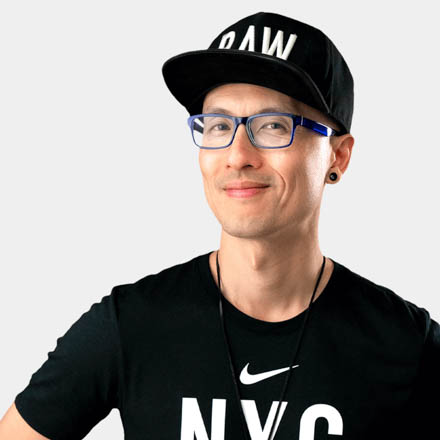
Today I had the opportunity to sit down with Troy and he is a wild person to say the least, but he's had a long storied career as a fashion and celebrity photographer that spans decades. His images have been seen in Vanity Fair, GQ, and pretty much every magazine you can think of, including Playboy. I'm not saying that you look at Playboy, but he's also shot for Playboy.
And his creativity has no bounds because he's not just limited to the career in which he started in because he's doing exciting things, revolutionary things. And to his credit has over five patents. You gotta tune in for the rest of the story.
My name is Troy Plota and you are listening to the future. My guest today is Troy. He's a well-known and long time fashion and celebrity photographer.
He's been on things like Vanity Fair, but he's had has a really interesting journey on doing lots of different interesting things. I hope to unpack some of that with him today. Now let's, let's go back in time.
Let's talk about your career. How'd you get started? Tell us a little bit about that, that whole life that you had.
Career wise. I, well, I started shooting when I was 13 and I was the worst student ever, ever. Okay.
And when I found photography, I mean, I really excelled at photography. So I just kind of like that got me through school. By the time I was a senior in high school, we had seven classes and five of my seven classes were photography based, including assisting this photography teacher and, you know, newspaper photographer and you know, that whole thing.
So. That led into me just knowing that I wanted to be a photographer. And I actually moved to Atlanta at my early 20s and opened my first studio when I was 21.
And it's really all I ever did until I became an app developer a few years ago. So I had this really amazing career as a fashion celebrity photographer for decades. And I thought that was wild, but it was like nothing compared to being in tech.
Okay. Let's get the timeline down here. I'm trying to figure this out.
First of all, where are you in high school? What city are you in? Clearwater, Florida with the Largo High.
What year is this? Because I'm trying to figure out what high school are you going to where you can take five out of seven classes? I graduated when I was in 1987.
1987. Okay. Yep.
And I guess I started shooting around 1984. What draws you to Atlanta? My wife.
What? Hold on. You're only 21 at this point in time.
No, it was 19 actually. Okay. Between 19 and 21, you met somebody and you're going to move to Atlanta and you're married?
I went to photography school. The third best photography school in the world was this Daytona Beach Community College school had epic curriculum. So it's the only thing that I could really afford.
So I was, you know, waiting cables, going to photography school. And then the only way that you could make money in the off season or like during the season was spring break. So I was working for MTV during spring break.
And so I met my wife while she was on spring break while I was working for MTV. Love is what gets you there. Yeah.
Yeah. Basically love. And I ended up opening my first studio shortly, not too long after that, maybe about a year or so after that.
And it was the perfect place. So I was total server skate rat in Florida. Okay.
Ribbon, Florida. Mm-hmm. And here I am landlocked in Atlanta.
I'm like, what the heck? Yeah. So the two, the things in my life were skating, surfing and photography.
So I get up to Atlanta and I'm like, there's no surf. So I'm just shot. Like that's all I did is shoot.
So basically kind of became like one of the main photographers in Atlanta at the time I was shooting Mariah Carey and Usher and Jermaine Dupri. I was Jermaine Dupri's main photographer for most of his groups. So it was a good start.
You know, you're glossing over some important pieces of information here. You drop out of the third best college for photography, which is an interesting thing just to say. You follow your heart, chasing the girl, you get there.
And how does one start shooting for all these big names? So I had a friend of mine who was with a modeling agency. called Arlene Wilson.
And it's, you know, it's hard to get in as a photographer for these agencies. So I was, you know, trying to get in with the bookers and go in there and I'd stand off to the side. They'd be like, stand over there, kid.
And I noticed their portfolios were a disaster. They give me good calls for the girls. They're like, okay, we need this book sent over for, for a job.
You couldn't tell where anything was. So I was like, I'm I'm going to start organizing their portfolios. These should be in alphabetical order.
So I just basically, whenever I started alphabeticalizing their portfolios, he's kind of helping out. And then a call came in, they'd be like, hey, a model needs to test. You're a photographer, right?
Can you test the model for me? And I was like, Yeah, so I kept doing this, kind of going to the agency, helping out. Next thing you know, I become friends with the bookers.
And I started testing a lot of the models in town. And what happens is as you're shooting for your portfolio and the model's portfolio, and you're making a little bit of money on the side, the clients start seeing your work. And they're like, who shot this?
You know, and that's basically what leads into your job. And the next thing you know, you can, you know, your friends with the hair and makeup artists and the stylist, and that leads to something else. And it was a really fun way to build up your career.
Let me see if I understand this. So one of your friends is a model. Yup.
And you tag along. That's why you're not thrown out of the building. And if people ask, who's that?
You're like, it's just my friend. And you're sitting there and then you take it upon yourself without asking anybody And they're cool with you moving things around. They were just so busy.
They're like, what do you do? And, but no, who knows? They probably weren't too cool.
They were, they were a tough crowd, you know? Um, but now it's like one of their feathers in their cap that they helped start my career. Let me peel away the lessons or the lesson that I'm hearing from people.
Number one is you're all kind of one or two people away from the people that you need to know. And you looked at your friends like, okay, you're moving somewhere and it's a cool space. I'm going to hang out with you.
And you do that. And then you find a way to make yourself useful to people. And I think it's one of these things where you're living embodiment of the idea of asking for forgiveness versus asking for permission.
You just took it upon yourself. Like I see a problem, I'm going to do it. And you could have been yelled at, you could have been thrown out of the building and banned from ever going back, but like, okay, this is a little easier.
And then from there, the things start to happen for you. So for people who don't know what testing is, what is testing? Use layperson language here, please.
Okay. So when a model needs photos for his or her book, you do a photo shoot to like, say they're up for a specific campaign. You'll do a test.
We call it testing for that specific look for them to present to the client. And sometimes it's free and sometimes it's paid and the higher status you get and more known you get, the more you charge. So I was able to make a good living off of that initially.
And then that leads you into being able to start shooting for the clients. Okay. So say like it's Calvin Klein and they're trying to book some guy for a new campaign and they call the agency and like, okay, we need to update the book.
He's got a new hair, whatever it is. And then they call you and say, Hey, Troy, do some tests for us. And it's just, again, it's like a white backdrop.
Is it white seamless? And they stand in front of there and you work with them. Where are you shooting these things?
Throughout my career, I specialize in location and I specialize in like exotic locations. Like anything that was like as difficult as you could possibly be, I just let's do something difficult, you know? If it was for a certain look that we knew that was gonna happen during that season, you know, of course I shot studio for years.
For years actually, and I got so bored of it. I'm like, I've got to get out of the studio. So I did kind of combination, but it just depends on the look, depends on the campaign and depends on if it was a catalog or if it was going to be editorial.
Okay. This is good. So you did do the studio stuff and there's only so many ways you can light this, right?
Okay. You look good at everything and you're looking for more challenges. Do you have final say, or do you have to get someone's approval sign off on this?
Like we're going to go somewhere else and we're going to shoot. No, when it comes to this stuff, it's more like you get to do whatever you want. So that's where the agents really start to trust you or you, you start creating certain looks and they're like, Troy, do that one of the black backdrop thing that you did last week on this model.
How much money would you get paid for a typical test back in the day? I think back in the day it was like 250 bucks. Okay.
Pretty good for that for that time. Yeah. I was really lucky actually to come up right around that time.
And the agency would pay for this, not the model. The model always paid for it. Oh really?
Yeah. And one thing too, like that for me, I would, I never charged a ton. I always really just was always fair.
I always wanted to over deliver and everything that I did. So I was always just really generally fair with my prices. And once again, that helped me kind of like shoot more.
I just want to be shooting all the time. That was really a great way to build a career. For contracts based on the time, what would have been a lot of money?
Instead of 250, what would some people charge? I started to shoot for the catalog houses. My day rate would be 1500 to 2000 per day for shooting catalog.
And then within a couple of years time, I actually got this gig. It's still to this day, my highest paid gig was $35,000 for the day to shoot. And I bought my first house with down payment with that, with that one day shoot.
That's incredible. How old are you at that point? 28.
Wow. Can someone still do follow that blueprint in 2025? Not like, gosh, it's hard to say.
I'm so not a part of that field anymore. But you know, as far as what's happening with the models and I'm, I'm moving into AI quite quickly. So I would say, yeah, I mean, you know, you have Instagram now you have influencers, but not, not really to that extent, unfortunately.
What are some of the things that you see young aspiring photographers on the come up do that? You're like, don't do that. Yeah, good question.
I would say one of the, you know, I was thinking about this earlier and one of my successful actions has been to go in and just do whatever I had to do, whether it was paid or not. There was a time actually fast forwarding after I had three kids, you know, I was raising my kids. I was kind of like living in Sarasota and I had this time that I had lost a big campaign that I'd been doing for 14 years.
So it was like this in between, like, oh my gosh, what am I going to do? And so I ended up once again, same thing as the Arlene Wilson story. I did a free shoot.
I just called like my buddy, you know, seeing who's who has what's going on. And then I ended up doing this free production for a test to show how beautiful Sarasota was as a location, as an alternative to Miami beach. So I had this whole story and then I ended up getting the campaign and making millions of dollars literally from that campaign.
And actually even the city bringing millions of dollars to the city for the shoots, but there was no specific budget to do that. I just made it up. And what did it take me one day of shooting and bringing my friends together?
And then once again, as I brought that, the hair and makeup and the stylist who helped me, they were able to also have jobs for the next few years. And so when I hear people say, I'll never do something for free. And they're, I don't know, that's not my experience.
I have mixed feelings on this. I don't like creative people doing work for free when that's what they know how to do and they're very good at it. However, when you're new in an industry or you're switching verticals, switching lanes and wanting to take some risk, we expect clients to pay for that.
And sometimes they do, but more often than not, you have to take the risk yourself. Because you haven't done it before. You need to prove it.
Put your money where your mouth is and go do something. And if you're very good at it, you can just look at that as marketing and PR. We don't have to look at it as free client work because we all need to spend time and money against marketing and PR if we want to generate new leads and new clients.
We need to do that. When did you get your big break? And tell us a little bit about how that came to be.
It may sound kind of funny, but like literally what I consider my big break was getting in to shoot for a catalog house. That ended up, it pulled me out of having to shoot for the testings, like the model testings. It pulled me into now shooting for clients and getting the higher day rate and being thought of as more than just a testing photographer.
So that for me was a big deal. But at the same time, I'm shooting Usher, I'm shooting Mariah Carey. And once again, those weren't even really like.
Like they weren't big paid things either. It took me eight months to get paid shooting Usher. You know, it's just, it's stuff like that, that as creatives, it's really, you know, you gotta just be resourceful for sure.
That's how it was back then. What do you mean it took you eight months to get paid? Yeah.
I shot Usher for, um, for the Atlanta Olympics, 1996, actually. I think he was like, he came from P. Did he?
You had to say it. I don't know. I don't even want to start the story.
We're not even going to. Okay. All right.
So you went to the white party. A few years ago as well for the Grammys. I got like all the, like every controversial person you could name, I probably have shot them.
But yeah, so, you know, eight months and then that led to me shooting, um, Tony Braxton. So I shot Tony Braxton for the cover of the Atlanta Atlanta Olympics Magazine cover the main NFL NBA pitcher of the year or something like that. So Tony Braxton, I'm probably at that point, like 25 or something like that.
Her manager says, Hey, we love what you did. Send me the film. Cause I want to see if I want to use it.
Right. So I sent him the film. I'm so excited.
Oh my gosh, it's Arnold Stiefel. And he's turns out they took my images and promoted her whole tour with my photography and never paid me. She did an $80 million tour in art.
I had to, it took me 10 years to get paid on that. So there's two stories now. Hold on, hold on.
I don't know if these are my breaks or not, but it's kind of like, you know, it's one of those things. It's like one lesson after another after another. The pattern you're going to see here is artists and creators being taken advantage of by the industry.
And so that's what I'm in a position of right now of helping. in a big way. We'll get to that.
Let's do this. Let's clear up these two stories and then we'll get into that. You still haven't told us why it took you so long to get paid by us.
Eight months. Okay. So you did the work, you sent the invoice, but they're now giving you the role run around.
Come on guys. Come on. You know, wait.
So now you're chasing money. Tony Braxton, they called you and said, send us the nags or when you said the film, that's the nags, right? No, it was transparency film.
Actually. Uh, what size are we talking about? When you say trans seven, what's that?
It was a shot with... Is that medium format? Yeah, yeah.
Okay, six... Beautiful, too. I mean, I nailed it.
Like, these shots were so cool. And actually, I never... The reason I found out, I was shooting the drummer for Hootie and the Blowfish in South Carolina for another editorial, like, a year later.
Something crazy like that. And, like, the page... The newspaper...
was this big of my shot it turns out that they had billboards in like for a show that she did and um what's what's the big arena there in new york city madison square garden bass's for gardens yeah so you use my image never paid me the film and you're like okay like who even turns over their phone what if it gets lost in the mail or whatever how but you're just whatever i mean once again i was excited you know to get my foot in the door there yes so you sent it to them without any kind of agreement about what the images were worth. They sent the images back. Let's just look at it, right?
He promoted her whole tour with my images. And then finally I had to get a lawyer to go after them. And it took me, by the time I got paid, I think I got $50,000.
Oh, I know what it was. This is the story. Matthew Rolston was booked to shoot this shoot with her.
he was my hero like math matthew rooster like we're all math is so cool and then So they ended up using my film instead of Matthew Rolston's in order to do the tour. But I never, once again, I never knew it. So it was like one of those things that could have been a really game changer for my career.
If they would have said, here's the money right now, you know, good job, you know, even some kind of photo credit or something like that. Okay. So you have to get an attorney at this point.
Cause they're not going to pay you. It was a whole, we're going to, we're going to screw you over on this one. And they're actually, they're, Liable for a lot at this point, because they use your images and license and essentially stole.
And there's evidence of it because there's a FedEx way bill. He sent it back. There's a return way bill.
There's a lot of evidence here and you're like, well, these are my images and that's what they're using. So you only sued for 50 K. I don't remember.
I don't know. How come not more? Did that feel like a lot back then?
Like 50? Yeah. Yeah.
Yeah. I was like, okay, cool. I can buy two new surfboards and there's enough rent and, uh, Wow.
Okay. Because I think 50 K is a good amount of money when it was done properly. But when somebody screws you over, it's like, nah, I'm out for blood.
You guys. Well, initially what happened was she signed, she filed for bankruptcy. Part of that.
I was actually a part of that. So that it delayed for years and you know, that whole thing. So, but it did it.
She's a total doll, total sweetheart, but Arnold Stiefel, probably not so much. Arnold. I mean, is he still out there?
I don't know. Okay. Well, while we're on the subject, did you go and do any crazy Diddy parties?
Uh, well, shoot. No, that doesn't sound very credible. Well, within this time, I was a playboy photographer for a few years as well.
All right. In Atlanta, I was kind of like the fashion playboy guy. I was like the clean, like they always knew I was going to get like, you know, That's like an oxymoron.
Yeah. There's a clean playboy. So you're saying fully clothed or just like, what is this called?
Erotica? Issues with like the college girls issues, the girlfriends issues, like all these, I have no idea what you're talking about. All these secondary issues that they would do.
So they had a producer in Atlanta. My career took off. I ended up getting a place in New York and buying a house in Florida.
And I moved to Florida, had, I was producing for Playboy at one point also. So I kind of had like the Playboy lifestyle action down in Florida for a bit. With the woman that you married.
Yeah. You have the Playboy lifestyle for a bit. What is the Playboy lifestyle?
You're I'm shooting for Playboy. I'm scouting. I'm producing.
The clubs would pick me up in limos to take me to Playboy night at the clubs. to scout and it was just you know i was i was like 32 at the time something like that i had a mansion so this boy had a big house in the water tarpon springs indoor pool and it was just like the like the you know i don't know it was fun you're living large yeah when you say scout are you going to the club saying, would you like to be a model for Playboy? No, they would just have the rooms where the girls would come in to show that they want to shoot for Playboy.
And you would pick the ones that you thought were going to be good. We would shoot Polaroids on the girls and send them to Chicago and they would get approval. for who would who and so anyways at the time i'm shooting fashion i'm shooting all tons of different stuff um and this was just kind of like my fun shoot actually shooting for playboy is what got me a ton of campaigns and i i personally i you know it was interesting whatever very technical shooting for playboy you really had to be an excellent photographer in order to pull that off but because i shot for playboy i got tons of campaigns and i would get bigger and better campaigns.
And I ended up getting some pretty really good campaigns. Pardon my naivete. What do you mean?
It's very technical shooting for Playboy. Probably as far as shooting people, the most technical thing that you can do is you generally have about nine lights on set. You've got hair lights, you've got side lights, you've got front lights, you've got the background lights.
It's it's really takes a lot of production in order to get those girls to, to, you know, how you can shape the environment and their bodies. Cause that's what you're doing, right? Right.
Exactly. In the phase two, you would have to have assistance on certain lights. Just really focused.
Wow. Just to get that exposure, your third stop difference in, you know, their ears, you know, something like that. Okay.
Very technical. That does sound very technical. Okay.
So you're saying now the big break, I guess it's hard for you to say a big break because it's like a lot of things happening that lead you to the next thing that keeps leading you to the next thing. Right. I know.
Yeah. There was just so many things in there. And, and really the big, big break is me.
Of course, even at the time I was a really good photographer, even though I'm young and here I am on my hands and knees organizing portfolios. I'm just in service. I literally, I think my whole career, I've just been in service in every particular way and no jobs too big or no jobs too small.
And just, you know, whatever it takes to get it done. At some point you, spot some potential problems and you have a new idea. Tell us about this.
So I had 132 page keynote on the future of photography. This is what I did. The Ted talks.
I had all these systems. I, you know, this is what I see. This is how I see it going.
And then I had an investor come in and he's like, oh my gosh. So it was the creator of I heart radio. And he's like, this is my next I heart radio.
And this is where we're going to be my partner. And I'm like, well, let's get investors. Like we don't need investors.
I'm going to back the whole thing. So I stopped taking photography jobs. I go full on into what we are going to do with VR actually, which is really interesting.
Long story short, a couple months into this, he completely backs out on me. He has a midlife crisis, totally backs out. But I had all these quotes.
I had a quote for photogrammetry for these different apps. I had quotes for collaborative robots, you know, 1.2 million, 900,000, 800,000, all these quotes for everything. And the lowest quote was, I just threw it in there.
It was this idea that I had for shifting pixels and taking a photograph and turning it into a video. So the quote on that was $95,000. And at the same time I get a call from MGM, there was some usage that was coming in from MGM.
Like they were going to repurchase some usage. I'm like, okay, hold on. I can fund the cheapest idea thing.
That was in the bottom of the cheapest idea. I can pull this one off. So I get it up and rolling and next thing, you know, a few months later, uh, six months later, I'm running out of money once again.
And I go, okay. I've got to go to beta. So we go to beta $300 a month in beta.
We did $230,000 in the first two weeks. It cost $300 a month to use the app. Yeah.
It blew up. Yeah. No, 300, 300 a year.
And you did how much in sales? 230,000 in the first two weeks. How'd you market it?
Influencers. We just were blowing up Instagram. So, so basically I was using the app and then we were getting like three or 4,000 followers per week on Instagram.
And then Brian Bielman. And then who else did we have? Peter Rupchak was using it.
And so it just was a phenomenon in 2016. It was like the thing of the year. Okay.
Okay. Wait, wait, wait. What is the app called?
Photograph. Photograph. Photograph.
That's off your name, right? Okay. Photograph.
So I had this perfect thing where it rhymed. My name rhymed perfectly with Photograph. I produced the first app to take photos to video, basically.
with pixel shifting. What is pixel shifting? Okay, so if you've seen an Instagram, TikTok, Facebook, a photo, you have a photo, but part of the photo is moving and it creates motion art.
So basically, your eye can't detect what's happening where the pixels are shifting, but you just know that it's moving, whether it's clouds moving and you can look at the same image. It could be like three seconds long and it'll just go forever. And you don't know where...
Yeah, exactly. Okay, so your software... Yep.
Using pixel shift technology is taking your static image and moving in a way that it's a perfect loop. So it could be clouds. It could be maybe trees, something like that.
It could be, but that would be a little bit more in the surreal realm. But at the time the DJs were loving it too. So if you go to show the DJs like behind, it was just like.
Looping backgrounds. It was cool. It was cool to see.
Like EDM stuff would be perfect for this, right? Yeah. So you're using technologies.
This is pre-AI, so you're using some other kind of technology. How does this stuff work? Well, that's what Apple wanted to know.
So Head of Photo Video calls me from Apple and said, you know, what you've developed here is going to change photography as we know it. And I said, yep. For me, it was a miracle because I wanted to help photographers monetize because video, a lot of our budgets were moving to video.
So this helped photographers do something different with their photos than just traditional stills. So that was so important to me. So had a photo video says, we want you to come in and we want you to build this and we want you to speak at WWDC.
We want you to watch this at WWDC. This is a ride with twists and turns and loop the loops. No, no, they called me and they said, okay, we want you to come into, and you're like, I can't say where I went into in Cupertino because I'm technically not allowed to say.
Yeah. So go in, uh, fly my devs in from Bulgaria and We build it. I'm practicing my lines to speak off the cuff, like without even a warning with my co-founder and I, they said, Hey, we want to talk with you guys in our office.
We're like, okay, cool. So we go in the office. So, um, what are you guys going to do with this?
You know, what are you doing this for? Like, well, you know, we're doing it to help photographers and, and eventually we'll sell it. Well, well, what's your price?
2 million. And we're like, so now it's like, we didn't have a chance to re so they're, they're, they're trying to buy us now and they're making us an offer without even a warning or any kind of like anybody present. 2 million, 4 million, 6 million, 8 million.
Right. Right. Right.
No prep. Um, so now he's getting mad. This guy, we thought he was our buddy.
He's like totally, he's like, oh buddy, old pal, Troy, you're my best friend. Right. So he goes, is your number more than 10 million?
And instantly it was like, yeah. What the fuck? Start slamming his hand down the table.
What are you crazy? You're not even built yet. You're going to turn down $10 million.
And we're like, Whoa. Like it was, he was like, like he slipped on us like this, right. In trying to intimidate us.
And so we're sitting there and we're just holding around. We're like now fast forward. It's done hundreds of millions of dollars in sales.
up until this point in time. Now it's a hundred. So the reason I did not speak is we go back in the lab, then we, then, you know, we're, we're getting everything set.
They send us home because we, after declining their offer, they send us home. And so I did not speak at WWDC. We got all down to the line that year actually was 2017.
At that point in there, your presentation was terrible. I was like at home, I was living in Santa Barbara at the time and I'm just like, yeah, what were they thinking? I should have told them.
God, they know that sucks. It was like Photoshop, copycat. Right.
So check it out. So then we go in the app store and we do, we go to number one in the app store. We go live in the app store, 700, $690,000 in the first month.
Number one in the app store ended up doing several million dollars first couple months. Apple says, this is a phenomenon. You guys are part of the family.
We love you guys. We want to do a giveaway. We want this to be the only featured app for the iPhone 10.
So I signed a contract with Apple for them to do a giveaway for As we're making millions of dollars with the app. And I said, but what are you gonna do? You give away a lot of the apps in, in.
Don't worry about it. You're part of the family. We're going to promote you after the giveaway.
We're going to, we're going to feature you guys and you know what happens with the feature. You know, you guys are set. So we signed a contract for 800,000 units.
And they said, okay, usually we do this three times a year, three apps a year. All the apps where we choose three apps. It lasts about three months as 800,000 units.
Well, at the time we're blowing up an Instagram. I've got a big following and I actually helped promote it as well. So we did a giveaway, iPhone 10 launches.
I deplete those 800,000 units in six days. Supposed to be three months, six days. It was supposed to be three months and we depleted them in six days.
So then we signed another contract for another million units. They ended up giving away $6 million of Plotograph away for free and then never featured us ever again. My competition a couple months later now has the exact app that they're featuring that goes to number one in the app store and they've done hundreds of millions of dollars of sales.
What's that app called? It was called Pixel Loop. Initially, and then motion leap now.
Okay. So literally my competition has my app. They have my code in a short period of time.
Apple knew all of my libraries and everything, you know, coming together. So anyways, fast forward, it's been, like I said, being a fashion and playboy photographer, I thought that was wild, but the tech industry, as far as what I've gone through. So we ended up going through court years of core.
I got five patents. The other part of this is Apple didn't expect for me to get patents on this. I got five patents on photo animation and video animation.
So we had basically what was the precursor to what's happening with AI in understanding what's happening with pixel shifting. So that kind of leads us up to what's happening now and what I'm leading to right now with Plotiverse. Let's pause there.
I've been in court now for years. Unfortunately with that other company. And I've been going through the ringer basically, as far as you know, you have these big companies, big corporations that are taking advantage of the inventors and the artists.
So probably one of the best things that happened to you was the, your former investor partner in iHeartRadio pulls out. Cause otherwise you might've made something totally different. You know, we definitely would have made something completely different actually.
And it would have been VR, which never really happened. Right. We know how that story ends.
Yeah, exactly. Exactly. So you, you're just like, what's the cheapest minimum viable product and launch.
This is one of the ideas. And it turns out to be the hit idea. You have a co-founder as you mentioned, and you, you got these guys in Bulgaria to do the development for you as a kind of a random bid.
They they're like, we'll, we'll do it. Apple invites you. For whatever reason, you and your team are developing on their computers, not realizing all your code is on their drives.
And then even though the deal falls apart and they kick you out, It did not occur to you to wipe the drives. We did, but they're, they're technical people. They can un, unwipe things.
So here's what was interesting is, is one of the days that we're there, we're there, I think for like a few weeks and then just randomly weekend, you have to take your phones out of your pocket. It's no device. They catch you down, make sure you got nothing on you.
There's a very secret place. You're using the so-and-so library. They start telling me which libraries were using for the code.
You're like, how do you know what my library is on my locked computer that we sign into every morning and lock it every night? Ah, you know, it's like, God, you smart son of a la la la la la. So, so basically, and they did that before they offered me the $10 million.
So they wanted us to know that, Hey, we have access to your libraries. We've already seen what you guys are building and here's $10 million. Little boy, run along.
Your co-founder is your co-founder, the Bulgarian guy or somebody else? No. Co-founder was Roy Scheider's granddaughter.
Apple pays for everybody to fly out. No, I paid on my own dime actually. Some strange stuff going on there.
I know, crazy. When they offered you that money, what number would they have said that you were like, let's do it? 50 million would have been for sure.
But did you know that at that moment? No, I think we just. You just knew the 10 was too low.
Yeah. Okay, I got you. I got you.
Okay. So you're like in your mind is like, it's gotta be a lot higher than their, their strong army. You're like, yeah, your kid, you don't know what you're doing.
You never work at this town again. Kind of thing. All right.
You get on the plane, you go home. So you, you eventually launch and you do your whole thing anyways, and you're making money. Okay.
All right. So it seems like it's gangbusters from the, from the jump. Right.
Exactly. Now for the uninitiated, when you were like, oh, we did this amount and that amount and How much money do you make in the first year? There's not the revenue part, but the, what do you net for share of this app going live?
Roughly. Like a couple million, probably a couple million in the first year. Okay.
Probably a couple million in the first year. Okay. Um, yeah, we just kept putting it straight back into the, to production.
Okay. R and D. Yeah.
Okay. Tell me about these five patents that you got and then you find that they're released as competing thing and they are what the heck. And then you, you go and sue them.
Are you still in the lawsuit or are you out of it now? We're out of the lawsuit as of last year. Yes.
We, yeah, it was a disaster. Well, tell us more. I had, so the company that we see is called light tricks now did motion leap and pixel loop and that sort of thing.
They were like a pervert vendor at apple. So we go, we go to court. Yep.
We had an 82 year old judge in Texas. Tell us like they were fighting and said, your honor, these patents should never have been issued. I, we had the best patent attorneys.
We spent a lot of money on patents, right? So this random 82 year old judge says, this looks like a Mickey mouse cartoon when I was a little girl. And maybe these guys are right.
These patents shouldn't have been given out. Undoes five patents of years of work of pros, a top pros of, of the industry basically. So then we go to appeals court in DC.
And before we go to appeals court, the other team goes to the U S patent office and says they tried undoing the patents there before we even got the court. Right. Patent office, they paid them big bucks to review, go through all the patents.
Patent office says, these are legit. There's no prior art. Perfect.
We did our job. Everybody did their job. Five patents, Stan, no problem.
We get to court. Once again, judges who have no effing idea what they're doing throws my patents out. Wow.
It was an $80 million. It was a $60 million. It's going to be a $60 million lawsuit in court.
They just throw out. So I've been in waiting for the past couple of years because of this. Long story short, I had one patent in the wings.
It's called the five patents. And I won that I hadn't submitted yet. The patent office finds out what happens.
Nobody's happy about this. Nobody can believe that I lost actually. So my patent attorneys go in, do whatever additional wording it is.
I got my patent back three weeks ago. The one that's the foundation of it all, I got back three weeks ago. It kind of is.
It kind of is. And it does sit in the realm of AI as well. You get your patents back, which is important, but your patents seem to be not enforceable at this point.
They are enforceable, especially this one now is lock solid because of what went through in the courts. We already have all the previous now. So in some ways they did us a favor because now we put whatever wording could possibly even come up now.
Made it tighter. And so, so now it's like super solid. Yeah.
Yeah. So I just signed a contract on last Thursday with a big firm in the States. I'm in Prague right now, actually.
So you spent a lot of money chase. I know lawsuits are expensive, especially with IP and you lost a $60 million thing because two judges dismissed you. So you were not able to recoup the theft of your ideas and your code.
How many years has it been since Politograph has been out? Almost nine years ago that we started that we started. So yeah, about eight years, like total, total lifetime revenue so far, uh, over $8 million.
Apparently 6 million of that came from Apple. No, they gave away $6 million for free. What'd you get out of it?
Nothing. Oh my God. They gave away $6 million.
Not a penny from Apple. I thought when they gave it away, they gave you money so they can give it away. Zero.
Nothing. Why would you agree to this? Because they promised that they were going to feature us.
We're part of the family you're in. If they feature you, you could do like a half million dollars in a month. Easy.
Probably even more now. Okay. Now light tricks has done hundreds of millions of dollars with Apple, right?
With my app, my invention, hundreds of millions. Doesn't coding have some kind of digital fingerprint? that if they ripped off your code couldn't a forensic person go in like yo these lines of code it's not a coincidence you guys snake the well it's kind of like writing a song or no It's kind of like basically going in the way that I, that I kind of see it.
It's a bit like, you know, it's the idea it's the, because initially I was told what I wanted to do wasn't possible. The coders would, they would call me like Troy, it's not possible. They'd be like, no, this isn't good.
Like, okay, we get what you want to do. They would call me. We did it.
We did it. Oh my gosh. I can't believe it.
You know, it's just like, it's like one thing after another. And initially we did it for iOS for iPad. And then we, hold on.
I'm testing this app. It says iPad and it says iPhone and universal. What happens if you click that universal button?
You're like, oh, well, if you click universal, it'll work on an iPhone. And I said, well, have you tried clicking it and tried an iPhone? No, no, no.
It won't work. The phone will be fast. It won't run it.
Push the fricking button. And they call me back, it works, oh my God, it works. So that's where it blew up because we thought it would only work on an iPad Pro.
That's what I was supposed to be speaking for. Worked on the iPhone, it blew up. And yeah, I think part of the thing too, is being in production as photographer, you just, you pull off the impossible all the time.
Like, you know, it's kind of part of the job. You've given me enough time to process what I think the app does. Does it use some kind of fractal to displace things so that it looks like it's moving?
Yeah. Is that what pixel shift is? Well, what it does is it takes the pixels and it's basically, it's like a morphing technology.
Okay. And, but what you do is you take that and you shift it in a way that your eye can't detect it. Like, like say if you're watching a morph or like the Michael Jackson video back in the day, it was like, like a big thing that I really loved.
It was like black or white or something like that. Like people would kind of morph into each other. Yeah.
That was like, I was like, uh, now that was to remember the time, right? With the Pharaohs and he was morphing. Right.
Exactly. Yeah. So basically the pixel shifting comes within that combinations of things.
And so I've been working with this for a long time and we used to be able to take the mold. It took five apps before to produce just a gift. And I said, if anybody could ever figure out how to do this and export it as an MP4, Then that would be something.
So now you're able to use the technology to shift pixels within an image and export. Even if you think that it's a still, it's exporters in a before where you have shifting pixels that only on your device or whatever device that you're using will know you can trace it back to that device basically. So it's another way of watermarking as well.
I see. some kind of hidden digital watermarking exactly through pencil shifting okay excellent let's land the plane where are you taking us now with the funding this whole time i'm like i'm looking at instagram and i'm like this is a disaster as an artist you know these guys know about it this is awesome and on top of it i was like okay i want a platform for artists to really have a real social platform. So I produce a social platform.
And so we ended up releasing an NFT social platform right when NFTs die, basically. So we pulled that, but now I just relaunched the world's first all AI social platform a couple months ago. And last week, I went to the blockchain event in Paris.
That was a blast. So right now with what we're doing is Everything's coming together now for me to really help artists not only present their work, but monetize it. The way that Instagram, TikTok, all these other platforms are set up, Facebook, you know, they're just filled with all different kinds of videos.
It's no longer what Instagram was created for, which was for photographers initially. So I wanted to get it back to the basics and get it back to something that was really special for artists. So now in saying this and putting all this together, I've gone straight into AI.
And, uh, my traditional target and AI and kind of combining it. Um, I actually met with Ellen von Unworth's team in Paris last week, top photographer for decades, probably one of the most famous photographers in the world. But everybody's like, what do we do?
Is this our moment? Like, is this where digital came in? Like in the photographers who were stuck doing film, how to get left behind, you know?
So I said, yeah, I think there's some elements here that you could build in with AI. So that's what I'm doing now is I'm taking pixel shifting and I'm taking my social platform and helping artists move forward now into this new AI atmosphere that we have right now, which I love, by the way, I think what's happening right now is really fantastic. It's just, what's it called?
Floativerse. So floativerse? Floativerse.
Yes. Floativerse. We soft launch an iOS.
So this app has over 10 million downloads already as well. And we're about to go live on Android. So by the time this interview hits, we'll definitely be live on Android and going into desktop as well.
So Plotiverse on desktop is where you're going to have access to Pika labs, runway. We're going to have all the models that you can use hitting the servers, but we're also going to build in open source models as well. And we're putting together a computer.
So you purchase the computer and you'll have all the open source models as well. So it, I would like to be a one-stop shop for AI content creation. I'm going to go check it out.
I mean, you're using a lot of different technologies, AI blockchain, you're talking about NFTs, pixel shifting, morphing, AI. It's like very interesting, cutting edge stuff. So let's go check it out.
And perhaps some of you are tired of Instagram. Oh, come on. You're looking for something different.
Maybe you're looking for something different. Zuckerberg's what the third richest guy in the world now off the backs of all these creators. So what we've put together is a way for monetization.
So as advertising comes in, we have it built in and it goes straight back out to the community. Like as far as a certain percentage. goes right back out to the community.
So, and we're creating a DAO through Cardano. So the creators can also be owners of the company. So ideally I'm want to put all this together to make it easy.
So where you don't even have to know what a DAO is. You don't have to know what the blockchain is. We just make it to where artists can monetize.
We make it easy. And DAO stands for decentralized? Decentralized autonomous organization or yeah.
Decentralized autonomous organization. I just wanted people not to be scratching their, like, what are they talking about? Last week I got to meet with Charles from Cardano.
Okay. Charles. To me is one of the guys who's basically ushering in the new way of how monetization is going to work and how blockchain is going to work, basically.
All right. Absolutely genius of our time. If they want to find out more about Plutiverse, is the best place to go in the app store?
Plutiverse. Yeah, Plutiverse on the app store or Plutiverse.com. And Plutiverse.com will take you to desktop, Android and iOS.
Troy, this is probably one of the most wild, interesting story driven conversations I've had a long time. Thank you very much for being our guest today on the future. Thank you, Chris.
Appreciate it.