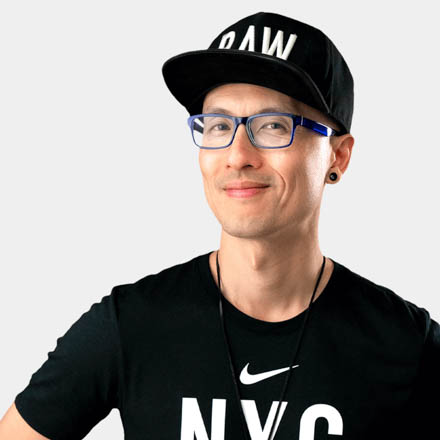
I had the opportunity to sit down with Laura, who is working at the world's largest, I would say also the most successful architectural firm, Gensler, which I've been able to visit here in Los Angeles. It's very impressive what they've done. Pretty much every AAA class building you're seeing in LA, as far as I can tell, is designed by Gensler.
It's the go-to architectural firm and it employs, I guess you guys have over 6,000 employees, which is like mind-boggling to me, in the revenue, in the billions, right? So this is amazing and crazy. But the reason why I want to talk to Laura today is because something has been happening in the retail space.
We've noticed that since the, I guess, invasion of dot-com companies, that people are migrating off of in-person experiences towards online experiences. And it's come at a high cost, I think. We're getting, I think, better selection, better price online, but we're missing out on the experience.
And I recently revisited Third Street Promenade, and it's like tumbleweeds are blowing through. There's a lot of vacancies, and some of the, I guess, you would consider the retail giants, the bookends, there's a term for it, I'm sure there is, they're not even there anymore. And I'm a little concerned about what's going on, and maybe it's about time that retail spaces get a rethink.
I think there was a time and period, the glory days of retail and malls, but I don't know who else better to talk to about this than Laura. Hi, my name is Laura Marrero and you are listening to the future. Laura, welcome to the show.
Hey, thanks so much for having me, Chris. Okay, so people might not know who you are. So let's just start with a basic introduction.
Can you please introduce yourself, your title, your role, and tell us a little bit about your story? Sure. My name is Laura Marrero.
I am a Partner Principal here at Gensler and I am a Strategy Director by job role and I lead up our global retail and consumer experience practice. I'm currently sitting in London, but Chris, I moved to London about 10 years ago from Los Angeles. So I know that city very well.
And I worked in that very office you went and visited when we moved in in 2011. So I'm glad you got to visit it. It's one of my favorite places.
And yeah, so a little bit about me. My background is not traditional architecture and interior design. I studied psychology, advertising, cultural anthropology, and marketing.
And I started off at Gensler working in marketing, specifically looking at the brand design of retail and consumer experience practices and really grew my career at Gensler, starting on our New York office and then transferred to the LA office. And now I'm sitting here in London. So I've been with the firm for about 23 years.
and explored all kinds of retail experiences and brand experiences, some hospitality, you name it, and have really been able to use this platform to transform the human experience, which is what we're all about. I don't get to talk to partners that much. What does it mean to be a partner at a large firm like this?
Well, it means that we're helping to lead the direction of travel for the business. So We all come together and set the stage for how we're growing and really in different areas of our business. So whether it be leading clients, leading practice, leading what we call design synergy, which are the different ways that we deliver design through the process.
And then regions and offices, because we're growing through multiple channels to make sure that we can be local and global at the same time, delivering amazing projects and putting the best thought leadership forward so that we can help our clients and the industry really navigate these shifting waters of what's happening in the world. Okay. Let's get into the meat of what we're talking about today, which is retail.
First, paint a picture of like the state of the union for brick and mortar retail. What does that look like out there? Well, I think retail is having one of its big transformation eras.
I think we're about to see what's coming, what's next. And we've been starting to see the signals of it since about 2020. We've really started to go into how we're reshaping the landscape.
The great thing about retail, just breaking it down, is it's all about a way a brand connects with its consumers and its guests and its staff, right? So at the end of the day, it's the brand's ecosystem on how it can connect with people. And that's a really great responsibility and a really great privilege.
And it's been a lot of fun being able to look at how this shift has been happening, especially coming out of COVID and looking at how everybody was transacting online for so long that they've realized the importance of place and they've really started investing in recalibrating what their retail and brand experiences are. outside of the online channel. - Okay, so you said we're in a transformative moment.
What does it look like in terms of like dollars and cents? Like when I see some areas that are thriving, but most of the retail experiences are not anywhere near where they used to be. Are people, the people who own these spaces, the own these businesses, what is their outlook right now?
Well, I think there's a lot of investment going into retail right now. Brands are really rethinking the way they connect with their consumers. What we're seeing is a shift about how they connect.
So the traditional, let's just go into a mall as a strategy isn't enough anymore because it isn't just about transactions. It's actually about the experience, the interactions, different way to create engagement. And so brands now are looking at how they can connect with people through a multitude of different typologies.
So you can go from everything from what you might see as a flagship experience, the things that you see in major cities where brands really take a lot of space and put a lot of product and have a lot of different experiences and services within that house because it becomes the home of the brand and a place where you can really go and experience everything the brand has to offer. Then you have the inline store, which is what you might see at a mall or some of those smaller format stores, which tends to be rolled out to get coverage, to be able to connect to where buying might happen or where you might have an audience. And then you have, of course, those temporary pop-up event type experiences that are also used to either test a market or to launch a product or to be able to connect with customers for a limited period of time around holiday seasons or peak offering points.
And so with that, you get a different kind of brand ecosystem. And everything is underpinned by this little thing that people have in their hands all the time. So we have what we like to refer to as the PhD.
You're going to walk out of here with a PhD today, Chris. So what is that PhD? It's the physical, the human and the digital relationship.
And retail and all consumer experiences are all about balancing that PhD. and how do we look at what people can get on digital and how it gets amplified through physical and through the human connection that you can get in one of these physical spaces. And that has really been what the shift has been about and what we've been really starting to see.
So where brands might be closing doors, they tend to be opening in a different kind of space, a different kind of community and a different kind of experience. How does one change the demographic or is that not possible? Because it sounds like from your perspective, if a retail brand is looking to put up a store and put some money behind it, they're going to go where the community is or where they think it is.
So that means if you're stuck in a neighborhood, it's going to just perpetuate itself or is that not right? We're going to go to a destination where other brands might be that people will frequent, right? So if you think about it, if you look across every single city that we could possibly live in, you're going to find consumers that would buy those brands pretty much anywhere.
And so how do you make sure that you're not trying to open stores everywhere? Because with every store you open, there's an operating cost that goes with it. You have to put merchandise in that store.
You got to pay for your real estate. You got to pay for the people that work there. And there's a cost with every decision you make, right?
So what you're going to try to do is figure out where is the best place for me to be that will pull the people that I'm trying to attract. And what happens over time is what's cool in any given city, what the cool place to go, whether it was the arts district or whether or not it's West LA or whether or not it's Los Feliz, it doesn't matter what it is, but you're kind of following where these new brands are coming up. And then you're trying to go to where that makes sense for who your customer is.
And so that's kind of how those decisions get made. And it's about how you're able to, by curating as a real estate, you know, when you're in the real estate part of the retail business, how do you start to curate those districts so they have a sense of personality and so that you can really drive that community to want to come together? And it's not just about the retailers you put there.
It's the food and beverage. It's the culture piece that you put there. It's the art galleries.
It's the... Like little entertainment venues. We see a lot of competitive socializing now over here in London.
It's spreading all over. But different ways that you choose to spend your time and your money. But also at the same rate, where do these people work?
You know, it's like, you know, if you're working nearby, how can you do something quickly and as a convenience? And then there's the other idea, which is how do you go to a place that's a destination because you're there for the experience. And so you have these two parts of the coin that brands are constantly trying to solve for.
And the first piece is where do my people want to go and where do they choose to spend their time? That's where you're going to want to prioritize. Whereas some other areas that we're starting to see traction, that might be where you put your second or third or fourth stores.
Now, two malls that I think have gone through a lot of redevelopment to different levels of success are the Beverly Center and Westfield Century City, which I thought they just finished remodeling. And then they did another project again, almost within a year of like, what is that? But I would say this though, to me for a long time, Westfield Century City was kind of boring.
Now it's kind of cool. They did some activations, outdoor spaces. They hired Kelly Wessler to do some of these exteriors.
And I was like, wow, that's really cool. It looks really good. It's very Instagrammable, which kind of takes us maybe to this term that I saw that you coined, which is retailtainment.
And so let's talk a little bit about that and the digital experiences with the PhD. Yeah, well, I wouldn't say I coined retailtainment, but let's talk about the whole idea of retail education, retail entertainment, kind of recasting what it is to be a consumer experience. And the whole idea is, if you accept the notion, brands wanna connect to their consumers, right?
What matters to consumers today as individuals, right? And so we've seen a huge shift in the way that brands communicate more authentically and more honestly with their communities of users. they actually stand for something.
They're off, they're getting off the fence about things and taking a hard line on what they believe in, in a lot of ways, which helps a consumer feel like they understand the values of a brand. We've seen that consumers are much more eco-conscious and they're really looking at their carbon footprint and they really want to look at brands that mean something and that are standing for something. And so you're starting to see They're gravitating to brands that are making good business decisions when it comes to sustainability and the circularity of the supply chain.
And so every, every single human being has the things that they look for when they connect to a brand, but it isn't just about the stuff they sell. So now it's about how you're captivating people. So when we talk about retail education, retail and entertainment, I call it the X factor, right?
I mean, it's not necessarily a stage or an event, but you're looking at how these spaces can have an additive effect beyond just selling product, but actually creating what I think right now is the age that we're in, which is creating the sense of belonging, right? Because there's so much going on in the world and we are so able to connect via all of our online platforms and all of our apps and everything. We're able to get such information flow and where we might live in a place, Chris, like you just mentioned, lived in Santa Monica, but you don't necessarily feel like that's at the time, you didn't necessarily feel like that was a place you wanted to hang out or now being over in Pasadena, it doesn't necessarily have the entertainment piece of what you feel, but you might have a bit of that community and friends and other vibes that you do get from that place.
But the cool thing about it was brands started realizing they could connect with that sense of belonging through the PhD, right? So you could have this online, you could follow them in their social channels and you could really subscribe to the content that they were putting out, the messaging. You could learn about what they stood for just in the way that they were developing their content and their platform.
And then it was about the spaces, right? Then the spaces, how do you build on a relationship that you started to create in a social platform where people are electing to engage and follow? That same thing in physical, how do you get them to elect, to engage and come in?
So it's not just about the products you sell, but it's about what's the extra thing you're able to do when you're there. And so it could be, you brought up drops. I'm a sneaker head.
I love Mason trainers. I have far too many Air Max 90s to be able to talk about on a podcast right now, but, and feel comfortable, I should say, but I love a good drop. I'm like all about finding those drops, but I want to go to a certain kind of retailer and have a certain kind of experience when I'm going in, standing in a queue for, you know, two hours to be able to get access to the drop.
Because there's a vibe that I want to feel. I want to feel that anticipation and that wow and that wonder. And when I get in, I want to feel like I've got something special.
I made it past the door. And so it's not just about designing a store. for it's like, hey, we're going to put the fixtures in and we're going to do this thing and everything will fit.
You'll get all your skus in, ta-da, we're done. It's about saying, how do we draw people in? How do we stir emotion?
How do we get them to want to come back? And so the platforms of entertainment and engage in the education and activations all came to bear. So you could go to certain brands and learn all about their sustainable platform and what you can do to become more sustainable in your lifestyle.
You can go to platforms and understand the collabs that would happen. You could understand different artists. and different collaborations where you're bringing art and culture into the mix in different ways with different fashion designers, partnering with different brands, making things more accessible in many cases, like the collabs with Target and H&M and all of these other ones where highbrow brands were coming together there's an educational component because where that person might be in the buying chain where they have a certain amount of disposable income today doesn't mean that 10 years from now they might not have an affinity for the high-end brand tomorrow right so it's being able to look at all of these amazing opportunities that brands were putting forward now let's add in the entertainment piece right so when you have a physical space How do you get people to engage?
So not only is it the product, but there's different ways that you can start to look at immersive experiences, like bringing in your digital platform, the content you're creating and immersing people in it. Having really cool demonstrations of products where you can actually, one of the big innovations for car dealers, if you remember, I don't know if you bought a car recently, But the car builder, like when you're there and you're able to use these 360 views and be able to create your car and customize it and feel like you've just been in this space where you could hear the car, you could smell the leather interior, you could do all of these cool things that you can't do when you just go and check car to car to car. So it's the idea of how you bring that wow and wonder and that sense of mystery and that sense of...
that wow, quite frankly. And so how can brands engage beyond the product to give people a memory that they get to walk out with that is more priceless than the product that they bought? Because that's going to keep people telling your story.
That's going to get people wanting to come back. And so that entertainment component comes through that factor. Okay.
I'd like to like get super granular and specific with you. Bring it. All right, let's do this.
So Two things they did well, one thing they did poorly. So let's go to the Westfield Century City. Two things they did well, one thing they could do better.
Well, we had the opportunity to work with them, so I'm biased. That's okay. I think that the things that they did well in their overall real estate approach is they looked and said, how do we make this thrive?
on a calendar. Like when you look at what they're doing, they're not just designing, they're not taking the field of dreams approach that if you build it, they will come. And that I think was the case of death with the way that a lot of people approached real estate.
These guys came in, these guys and gals came in and said, We've got a workforce here. We've got people that live in this area. We've got multi-generational communities.
And we're bam in the heart of where Beverly Hills is on one side, Westwood, Brentwood. You've got a lot of amazing connectivity there. And it's all within a 10 to 20 minute drive, right?
And then not too far away, you also have the ultra luxury Rodeo Drive. So it's all a very cool and, and. really top class area, like AAA catchment is what we call it.
You've got this amazing canvas from which to work. And they looked and said, how do we transform this from being a retail destination to being a proper lifestyle experience, right? So a place that people could go and spend time and feel like that time was well spent.
They gave multiple food offerings, everything from your Eataly, where you can go and buy your groceries. You can go eat at one of those different locations in the Eataly store. You could go to a food class when you're there and so they looked at the playground for food through italy you have camp where you could take your kids and have a really wow experience you have the vr theater you've got retail galore and some of the best brands that were relevant to the various communities of people that would shop in that space families um they the teen tween market, the young professional people that could shop high low, where they might get a couple products on Rodeo Drive, but they'll buy the bulk of their products at some of these brands.
And then you had such great dining options. They didn't just do what you normally see, which is like a food court and a couple of fast casual restaurants, they looked at places that you could go and have a vibe at night, places where you'd feel comfortable just going to the bar, some of those slow food options where it's much more organic and healthy while also having some of those fast food options. And so they were able to look at how do we give something for everyone?
How do we look at time and say, can people come here during lunch and have a good lunch? Can people run an errand here? They even added health and wellness factors in here.
You know, you could go to the UCLA health. And then if I remember correctly, if this honestly, my memory is fuzzy, so just play along, but even the wellness experiences, like you can go to the gym or you can go and, um, get a tweakment, like you can get Botox on the go, you know, looking at things that you can do in one place and get multiple things done so so that you only have to park your car once in a very commuter culture and you can get a lot done. You can go to the movie theater.
You can do so many different things in one place. And, you know, to me, that's gold dust. You've just maximized my time.
So, yeah, it's a fairy tale for me. Okay. What's one thing, just one thing, please, that they could do better?
One thing they could do better. The parking is still a little confusing. I think that one was always a tough one for me.
I always get lost in the parking, but I tend to the second I go subterranean and this is from a girl that lives in London. So this is problematic. I lose my way.
OK, very good. In the age of global brands where a brand that you love, there's going to be a retail experience somewhere relatively close to you. So the idea that you can shop somewhere and have it feel special and unique, having a one-on-one experience is mostly gone.
And I always tell my kids, hey, when we shop, basically try not to buy things that are expensive. imported from other places because when we're in those cities, it's buy from there because we'll support the local economy, the prices are better, but we probably get exclusive things. And so now I'm looking for like one-on-one experiences.
So those grungy places with the tiny boutique one-on-one stores are much more appealing to me. And I think some people are seeing that as well. What's your take on that?
I think people love to feel like they're getting something exclusive and something cool. I mean, that's always been the case is, I mean, just look at the drop culture, right? It's like you want to get something that others don't have.
And I mean, I was always like that. I grew up in Northern Virginia where there were 20 malls and 10 miles, but I'd love going into Georgetown and I'd go to these little stores and I'd end up at the time, Urban Outfitters was, I mean, I'm old, but at the time, I'd like score something really cool or I'd go visit a friend in New York when I was in high school and I'd come back with like cool shoes or something and nobody knew what the brands were because it's what you know in the community you're in and what's being curated for you. And so I think that adventure and for different people, different people have different focuses on what they think cool is.
In some cases, it might be going, you might be a fan of a sports brand, right? And you could go to one of these places and be able to go shop and get that sports team's jersey in the store and get photos of it. And so you have that one-of-one.
You could get that jersey somewhere else, but you can't get it personalized. So here's the... the conflicting dual interests of large corporations or brands is that they want to maximize profit.
So the idea of doing exclusive drops in limited quantities is something that they can't just get on board because it's like if it's a hot seller, why don't we make it available everywhere? And we saw this in the case of Supreme when it was purchased by whoever purchased Supreme. Supreme's whole thing was about it drops one time, you get in line and it's gone forever, which is even if it's not good, people got crazy over that kind of stuff.
And then when it was purchased, like, well, why would we do that? Let's just make it available all the time. And in essence, they pretty much killed the allure of Supreme.
So Supreme has fallen a lot for me from where it was to where it is now. It's not as desirable, not even close because you can literally walk into a Supreme store anytime you want. And almost there's no line, there's no nothing.
And it's nothing special to me. And so I want to encourage brands that are out there, big and small, when you have an idea and make something scarce, it becomes much more valuable and it becomes part of like the halo part of your brand. I think Rolex has done this really well, almost to a criminal way.
Porsche has done this really well for their very exclusive cars. You need to buy more Porsches in order for you to buy this one. And so by controlling supply, They increase demand.
So whoever's out there listening to this, think about this. Now, I wanted to ask you about this in terms of the future. You're on the edge.
My favorite topic. Give me my crystal ball. Yes.
You're seeing things that most of us don't even know about that might not even come to life for several years. One thing I've noticed is how amazing the Uniqlo shopping experience is. And they are living in the future.
Japan mostly lives in the future, but okay. I don't know if people ever shopped at Uniqlo in Japan. And I think it's rolling out everywhere in the world is you get your stuff.
And you walk up to a bin and you put yourself in the bin and using RFID cards, they figure out what it costs and you just pay. It's freaking genius. No more scanning barcodes.
Okay, tell me. I gotta tell you. I tell everybody this.
There has never been a store that's pissed me off more than Uniqlo. And I say this because... That technology was so amazing.
I was so pissed off. I didn't think of it myself. That is, you always know when I think something is good when I walk out angry.
Cause I'm like, why didn't I think of this? It's so clever. But it really, in a world where everybody was trying to look at how to rethink the checkout experience, and I'm sure, Chris, you've been through it, where you get your clothes and it has the little device on it and you're trying to take the thing off of it.
And it's the most irritating thing. And the other thing about it that made it so hard is when you're trying to take that device off, when you think about the store as a habit, when you start going to self-checkout, For us, it might be that, you know, when we have those experiences where we're taking things off, it might be a fast fashion brand or it might be something where it's like, oh, they're trying to reduce overhead costs and they're trying to make this seamless. But there are other people that save a lot of money to be able to go buy those products.
Because when you think about how we spend our money, you know, as much as I wish I could go and buy everything that is in the Comme des Garcons store, you know, or in the Dover Street Market, I go there on special occasions. There's some people that could drop, you know, drop quick and walk out with everything, but that isn't me. But you could say the same thing about all these retailers that were trying to navigate the self-checkout.
And how do we make sure that We're being smart about making people feel like that hard-earned money is being valued in the way that you want to be receiving the product the way that I'd want to be receiving it from Dover Street, right? Because I am dropping coin and I want to make sure I'm feeling like I'm getting this experience. And what Uniqlo did in that amazing moment is they level set it.
They took the pain out of it. They said, you don't have to take any of these things off. All you need to do is scan your app.
You drop your goods. You press the button. You check out.
All you need to do is fold it and bag it. And it was genius and it makes me so mad, but also so proud that this is the pace of innovation. The people aren't just doing gimmicks.
They're looking at how we, what is the problem we're trying to solve and how do we solve it in a way that's equitable, not just for the consumer, but for the sales associate that has to help somebody or for the different types of consumers that might be shopping through it. And it really helped me. remind myself and the teams that we work with to think that way about the opportunities that we get to solve for is we got to think of the spectrum and one little innovation like that unlocks an amazing experience that makes you anytime you think that you need to buy like plain shirts and you want to go and do it, that's the first place you want to go because you know friction, bad friction is taken away.
Like it's easy. uh, high end luxury stores are masterful at implementing friction. There's a queue outside.
There's a security guard. Uh, do you have an appointment with us today? I'm talking about Louis Vuitton and I'm just trying to buy something and they, they increased the, the friction so much so that I'm like, what is going on here?
I'm going to miss my flight. Give me the stuff. Now, while I was waiting for myself a little bit, questioning my decisions in life at that point, I had this two ladies who had purchased one lady actually, who had purchased a bag, a handbag.
And they were like, having this euphoric elation that was like something out of this world like one lady who didn't buy it was so happy for the other one that this was an achievement to be able to unlock this new level i'm like just give me my bag maybe men and women shop differently but here's what i noticed when you buy the bag they didn't let you go out of the store like um here's a couple of things why i box up your thing and they keep showing you where stuff like no no no I'm good. Like, okay. And they disappear.
I imagine going in the back, having lunch or coffee or something like, how long does it take to put my thing in a thing? And then they come out with my bag in a box, a box in a bag and that bag in another bag. That's a lot of bags.
What is going on? So wasteful, not sustainable. But then I realized something because it took so long.
I told my cousin, hey, hold on to this. I got to get out of here. I'm going to be late.
So what happened was when she left with my bag, she didn't buy it. She felt special because it's a giant billboard for LV. And she's walking around like everybody's looking at her and she's looking at them like, huh, I've achieved something.
Now, I don't look at it like that, but that is friction that's engineered on purpose. I'm not talking about the accidental friction that is through neglect or foresight. Let's talk about that, the high-end luxury friction that's built into the process of buying.
Well, and I'll say, if you're going to look at this objectively, you'd say it's not just high end luxury that does it. Everyone does it. You know, if you think about going to the grocery store, you know, when you're at the checkout, like you don't have kids that are trying to pull stuff off.
That's like, dad, get me this. Come on. Like there is always that up.
So there's always that moment. And I want to go back to something that I. fundamentally believe, which is the way to really create and engender that sense of belonging between brands and consumers is to value their time.
And I think what you just described as an experience is There are people that are in fast mode. There are people that are going there to have the entire wait on me experience and high end luxury, right? There are people that have saved up or have gotten on a plane to go to Champs-Elysees to go have this moment.
So they can tell the story about how they went to Paris and they bought the bag at the store in Paris and dah, dah, dah, dah, dah, dah, dah, dah, right? We know, cause we've been those people, right? Now, that being said, when you go into a place and you're in fast mode and you know exactly what you want, how you want it, when you want it, part of the opportunity to release friction is to say, I am really here on a convenience journey.
Like I'm here to do something quickly because it's also how do we make sure that the service matches the appetite of the consumer? And when you think about it, when people are going to the high end luxury stores, they tend to go in and expect a level of service and attention, which is one on one sales associate, all of that. You don't want your your experience interrupted because as much as you want to interrupt when you're in your fast mode, if you are not in that mode and somebody comes in, you're like, wait your turn.
I waited mine. We know how it goes, right? But maybe there's an opportunity to say, how do we also identify that not every luxury retail experience is a slow experience?
How do we also accommodate the people that want to go and get something and they know exactly what they want, or they just want to look between two things and make decisive action? How do we make sure that we're building that into the luxury experience? Which by the way, thank you for telling me, because I'm going to keep that in mind for my next projects to make sure that we build that in.
Because that's what's responsible is so much of what we get to do as Gensler when we're working with brands is talking to people and learning what are the pain points? What are the gain points? Like what are the problems?
We need to diagnose the problems to treat the opportunity, right? And so it's not just about designing a beautiful space. It's about making it work for the people that are going there and for the people that are serving those individuals.
And so that's super important because your love of the brand will go up or down based on what that experience is and their way of anticipating your needs. One of the things that we talk about often is how do you advocate for your own experience, right? How do you become the CEO of your own shopping journey?
And so one of the things that when we do design stores and we're looking at the service roles and all of those fun things that make a store an experience, It's about listening to the consumer and really allowing that guest to tell you what their needs are. And so also feel like you can advocate for yourself and say, Hey, I'm coming in. I'm really time pressed.
I'm looking for this. And by the way, I'm ready to go. I don't really need any of the packaging because I'm going to take it with me.
I'd prefer not to have any, you know, I want to make sure that we're not just, I'm not going to throw it away later. You have the opportunity to say that and they won't in any way feel offended, which is what I think a lot of people feel like, oh, I can't not get it because I don't want to insult the person giving it to me. They're trained service professionals that if you tell them that, they'll be like, great, thanks for sharing where you're at.
let me take care of you the way that you want to be taken care of. And, and I think part of it is we don't feel comfortable enough to create a dialogue with the brand in person. Like we will comment on a Twitter feed or on an X feed, excuse me, or go into Instagram and do comments, but that's what you are online.
You can bring it offline and the brand's going to teach the service professionals how to respond in kind. So I would say Netflix. Next time you now have tools that you're able to go in and say, hi, thanks.
Super excited to work with you. Here's my stick right now. This is where I'm at.
You've got me for 20 minutes. I know I want this happy to look at some other things, but I don't need to spend time packaging up. You just need to drop it in the dust bag and let's roll, you know?
That's it. And then you'll be able to feel like you were heard. You will feel like your time was well spent and you would have knocked back that champagne faster than everybody, you know, get a little bit lightheaded on your way to the airport.
Right? I mean, one, one. Okay.
Very good. So you're saying, Chris, you have a responsibility too, which I accept. I like that.
It's a two-way relationship between you and the brand. I want to end on the future because you said, I'd love to talk about the future. Please be as concrete and specific and short in the three or so things that you see that's coming down the line that we all can learn from because some of these changes take that long to implement.
So what are you seeing? Let's look at the crystal ball. Right.
So I think the PhD is going to become the APHD, the AI, Physical, Human, Digital. Um, you knew it was coming. Um, I think we have brands have, um, have gotten a lot of information from consumers and we now are going to have the ability to help them parse that information into actionable understanding of consumers.
All of that online data we've been giving, everything that we've been showing as preferences, how that can then manifest and translate into value is going to be really a huge untapped opportunity. And I can see how the physical experience will be better armed with service understanding. So the employees will be given more information about you to be able to help guide your journeys and deliver on experience.
So I absolutely think that that is paramount. I believe we're going to see a lot more responsible design and looking at the ecosystem of repair, reuse and upsell, like reselling. I think that market, you can already see the signals of how it's growing.
And I think you're going to look at people that are going to buy a brand right off the runway and then use it once or twice, resell it in a brand and maybe not even going to a third party reseller, but the brands themselves will take it back like the automotive industry. and they do their like 50 point or their 300 point check to be able to validate the product is still at the same level. So now you're taking a brand that might feel luxury, for example, but you're able to over time give access to different communities so they can all be a part of the brand.
So there's a huge opportunity there that I'm looking at. I'm really looking forward to. And I think that repair piece of this also, you're starting to see a few brands that are building repair.
And we just did the Ugg store prototype here in Europe. And they have this whole repair element to it, which is amazing because when you buy a product and you're really being sustainable and conscious, you want to know that it's going to last a test time. And if the brand is standing for repair, longevity of products and making sure that it's about waste reduction, the ability to go and get it repaired.
And even if you have to pay a nominal fee or get things fixed for free, regardless, it's the option that you're providing your consumer with that makes it amazing. And last one, I think brands go beyond retail. It's not going to just be about buying things.
It's going to be about this extension of, and you'll, you see it, I'm using your Louis Vuitton example, right? So you've got Louis Vuitton that's doing stores. They also do runway.
They also do these pop-ups. They also do collabs, but now they're doing restaurants and now they have their flagship experiences, but now they're also doing a hotel. And so you no longer just have to buy the product.
You can buy the lifestyle and it's not just luxury that's doing it. Muji, you can go stay at the Muji hotel, you know, and it's all of these different ways that brands are looking at creating a better relationship. So these brands are not just retailers anymore.
And these online technology companies that are selling products are coming and creating hospitality like experiences. And so I really think what we're going to get is something better in the way that a brand starts connecting with people. And those very empty stores that you're pointing out will have a new purpose over the next five to 10 years as they start filling your neighborhoods with different kinds of experiences that make sense for your communities.
I'm really excited about this. kind of certified pre-owned concept that you're talking about. Because if you are in fashion and fashion by nature, it goes in cycles.
So you may want to be on the cutting edge, wear that runway look, but it's actual use. And something like this, most people do not even use or wear a shirt or a pant more than 35 times. So, and then that, that unfortunately leads to a lot of this consumerism and waste and, and pollution and all this kind of eco footprint going on up.
So now I make a point, like, have I worn this thing 35 times? And if I haven't, I have to tell myself a new lesson, which is do resist the urge to buy this next time, because you're not even meeting the average count. So if I buy something, it's a cool look and the season's up and I don't want to wear it anymore.
I'd love to be able to resell it back to the brand. have them inspect it, have them clean it, and resell it. Now that's the pragmatic part of me.
And then somebody else can love it and own it for a much lower price. This works. It keeps it out of the landfill.
But then there's the people who are like, well, wait a minute, you're wearing that look. That's the same look that someone else is wearing for much less. And so the whole status that you get from buying an expensive, high quality piece of clothing is diminishing.
People don't like that. And I think retail brands will rather destroy overstock than they would be to sell it at a discount. So how does a brand manage that balance between what's good for an environment versus what's good for the buyer or the brand itself?
It's an interesting question and it is a complicated one to answer, but I will say this. There are people to which the luxury brands are their way of life and they can go drop there what they would buy in luxury, what I can buy in Zara, right? Or something to that nature.
And so when you think of the conscious or you think of the consumer classes, there is an acceptance for some of these brands that that's the 1% or that's the 2% lifestyle. They can buy all of that, right? For some, that's the aspirational.
And where we used to track where, you know, people would buy low-end, low-market cost fashion when they don't have a lot of available disposable income. Then you have mid-market that would buy the mid-brand fashion, and then you have high. It doesn't work that way anymore because people will go to Costco and buy undershirts and underwear because they don't care.
That's a commodity for them, right? But then they'll go and spend a ton of money on bags. And then they might, you know, find a couple of premium brands in the middle that they shop at as well.
So as people shop high, low, your footprint changes because it's what you value and what you don't mind to be the commodities that you'll get your 35 wares out of. They tend to probably not be the things you're spending a lot of money on in a weird way. They tend to be the things that you're go through faster and it it'll wear.
The things you're spending a lot more money on might be those signature items, those things like if you were to look at your capsule collection, you might have a few of those items, your coat, your like really cool like cardigan or your blazer that you know that you'll always be able to get good wear out of. But then you're also going to have those seasonal things and you might get a couple of those high end, but you'll probably get the mid market or premium mid, you know, because, or even fast fashion for some, now that it's becoming a lot more sustainable and they're taking different, they're grading their supply chain and getting smarter about what they're doing to be able to meet the needs of the people who are doing the buying. So I don't think it's so black and white.
And I would say even looking at buying behavior today, you have people that might be low income, but they save their money to go buy an expensive collab because that's what they value. And so this is where the whole idea of demographic and disposable income kind of gets shattered because it's really about who are you and how do you want to curate your own brand? And so what you choose is who you feel like you're expressing.
There's a reason you chose what you're wearing today. There's a reason I chose what I'm wearing today. It's part of who we are and the way we express ourselves, right?
- Yes. Okay, Laura, it's been a real pleasure talking to you all things retail and brands. I think you've brought a fresh perspective to things I've been thinking about, but have not had the opportunity to talk to anybody about.
So thanks for geeking out with me on this stuff. - Hey, thanks for having me. It's been a blast.