The New Approach to Personal Branding That Changes Everything (Forward Event)
Chris Do reveals a new heart-centered approach to personal branding focused on closing the gap between your real self and your public persona.
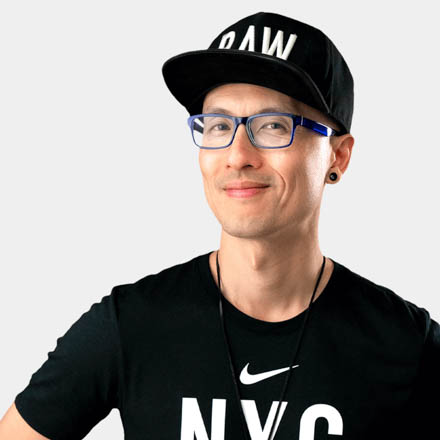
Chris Do
Founder, The Futur™ · September 29, 2024
Stop Performing, Start Healing
Most people get personal branding wrong. They treat it as a tool for client acquisition, a slick way to leverage personality for a sale, or a trend to jump on. This is a fundamental mistake.
“The problem is most of us are building a barrier between our true selves and the people who want to see like who is that person behind there,” says Chris Do, founder of The Futur. This gap, the space between your public persona and your private reality, is where trust erodes and authenticity dies.
The real work of personal branding is not marketing. It is a process of self-discovery and healing. “It’s a process of discovering who you are and getting in touch with that,” Do explains. It is about confronting the unresolved trauma we carry from being raised by imperfect people, the same trauma that makes us afraid to show up, create content, or simply be ourselves.
We are all children in adult suits, operating from a place of fear. The fear of judgment, the fear of irrelevance, the fear of failure. This fear dictates our actions, leading to inconsistent content, a generic voice, and a brand that feels interchangeable with a thousand others.
The new approach to personal branding changes everything. It is not about selling. It is about closing the gap. It is about showing up as the real you, even if that person is socially awkward, introverted, or weird. As Do, a self-proclaimed Loud Introvert, argues, his success is built on this very principle. “I want to be known before I have to walk into the room because I'm just super weird like that.”
If a socially awkward introvert who started YouTube at 42 can build a following of millions, anyone can. But you have to start from a place of radical self-acceptance. You have to stop performing and start being.
The Uncomfortable Truth of Being Unremarkable
In a live event, Do conducts an experiment. He asks the audience to network for a few minutes, meeting three new people. After the whirlwind of introductions, he asks a simple question: “Who do you remember and why?”
The answers are telling. One person remembers Hope, a psychiatrist, because her name was unique and her profession was different. Another remembers Lee, because he didn’t talk about his career at all. Another remembers Matt, a fellow gamer.
The lesson is immediate and unavoidable. We remember what is different, not what is the same. When everyone talks about business, talking about family stands out. When everyone is buttoned-up, geeking out on video games becomes a memorable hook.
“The uncomfortable truth is this,” Do states, “it's like we're being like everybody else so we become really hard to remember.”
Are you showing up the same way on social media? Are you being unremarkable, not worthy of being remarked upon? It takes very little to change this. Don’t try to be better. Try to be different. This is a core idea in building a brand, one that separates market leaders from the forgotten majority. It is the art of positioning yourself in a category of one.
This path is not easy. It requires courage. When a friend and professor once advised Do to soften his aggressive and opinionated style, he refused. “I believe the only reason why people were in that room in the first place is because I'm this way,” he countered. “I would rather have 10 people who follow me for being for me being me than a 100 million people following me for not being myself. What is the point of life if you can't even be yourself?”
The fears are real. You will be judged. You will be criticized. Worst of all, you might create something and have no one show up. But here is the paradox. “The reason why people aren't showing up is because you're not showing up,” Do says. Your true self is absent, replaced by a safe, generic, and ultimately unremarkable persona.
The Architecture of Trust
Authenticity is the currency of the modern economy. Without it, you are just noise. But what does it mean to be authentic, and how does it translate into a brand people will follow and buy from?
Do points to the Trust Triangle, a framework developed by Harvard Business School professor Frances Frei and her co-author Anne Morriss. Originally detailed in their book Unleashed: The Unapologetic Leader's Guide to Empowering Everyone Around You, the model identifies three core drivers of trust.
These drivers are:
- Authenticity: Are you who you say you are? Is the real you present? Do people feel they are interacting with an honest representation of you, not a curated persona? Authenticity wanes when there is a large gap between your public self and your private self.
- Empathy: Do you genuinely care about the well-being of the other person? Or are your questions and interactions merely a thinly veiled path to a sale? People can sense when they are being maneuvered. True empathy prioritizes their needs over your agenda.
- Logic: Is your reasoning sound? Can people follow the argument you are making? Logic provides the structural integrity for your claims and offers.
Of these three, authenticity and empathy are the most critical and often the most compromised. We are socialized from a young age to conform. Don’t do that. Don’t say that. Sit still. Raise your hand. Go along to get along. School, Do argues, beats individuality out of us.
The result is a persona self, a carefully constructed mask we wear to navigate the world. “The real you is when no one's watching,” Do clarifies. The bigger the gap between that person and the person you present to the world, the more you are faking it. Personal branding is the work of bringing those two selves together.
This is why so many sales calls feel hollow. A salesperson may present logical credentials, but if they lack authenticity (they feel scripted) and empathy (they only want the close), trust collapses. This is why a leader with a powerful vision still fails if their team doesn't believe they genuinely care. Without all three pillars, the entire structure is unstable. The path to building real connection, as explored in conversations around authentic sales, starts with genuine care for the other person.
By leaning into who you are, caring deeply about your audience, and presenting your ideas clearly, you build an unshakeable foundation of trust. This is the engine that drives a powerful personal brand.
The 9-1-1 Content Strategy
Many creators and entrepreneurs fall into a vicious cycle. They feel pain and fear around creating content, so they procrastinate or remain inconsistent. This lack of belief manifests a negative outcome: poor-performing content with low engagement. The result confirms their initial fear, and the cycle repeats.
The content flatlines. The brand fails to launch. The problem is a broken ratio of giving to asking.
When you give value and immediately ask for something in return, it is a transaction. There is no goodwill, no relationship, no brand being built. To break free, you must widen the gap between the time you give and the time you ask. This is the central thesis of Do’s content philosophy.
He declares: The strength of your personal brand is measured as the distance from the value to the ask.
Play the long game. Social media is a value exchange platform. Your audience gives you their most precious resource: time. In return, you must provide overwhelming value. When you do this in abundance, you activate the principle of reciprocity. People feel a natural urge to return the favor.
You give so much that you don’t even have to ask. They ask you. “Hey, how do I get into your program?” “How can I work with you?” This is the mark of a strong brand.
To make this tangible, Do introduces the 9-1-1 Content Ratio, a simple framework for structuring your content calendar to build trust and authority.
- 9 Value Posts: Nine pieces of content designed solely to help your audience. These can be educational, insightful, or entertaining. They solve a problem, offer a new perspective, or provide a useful tool. There is no ask.
- 1 Personal Post: One piece of content that reveals the human behind the expertise. This is for your soul and for the audience. It builds relatability and shows that you are more than just a smart person; you are a person with a story, struggles, and unique interests.
- 1 Ask Post: One direct call to action. Because you have earned the right, you can ask for the sale, the signup, or the follow without guilt or shyness. You are on the right side of the value equation.
Do points to entrepreneur Alex Hormozi, who amassed millions of followers by delivering excessive value with a simple promise: “I'll never pitch you or sell you anything.” By delaying the ask almost indefinitely, Hormozi built incredible leverage and a loyal audience. The 9-1-1 ratio is not just a content tactic; it is a philosophy of generosity that underpins the most successful personal brands, a theme Do often discusses when analyzing what top creators do differently.
Different Is Better Than Better
A product or service without a story is a commodity. When you are a commodity, the only thing that matters is price. The lowest price wins. It is a race to the bottom.
To escape the commodity trap, you must build a brand. A brand is a story, a feeling, a point of differentiation that attaches meaning to an otherwise interchangeable offering. Do illustrates this with a simple example: bottled water.
A generic bottle of water is a commodity. But then there is Evian, which isn’t just water; it’s water “made by the French Alps.” That is a story. Then there is Fiji, which is “natural artesian water from the island of Fiji.” That is a more exclusive story. Then there is Essentia, which claims to be “ionized alkaline water” and, more importantly, “overachieving H2O.”
Whether or not alkaline water provides superior health benefits is almost irrelevant. Essentia told a better story. They positioned their water not just as hydration, but as a tool for high performers.
This is the power of perceived value. Rory Sutherland, the advertising legend and Vice Chairman of Ogilvy, has spent his career arguing that marketers focus too much on tangible reality and not enough on intangible perception. In his book Alchemy: The Surprising Power of Ideas That Don't Make Sense, Sutherland shows how human behavior is driven by stories and context, not just objective facts. People don’t buy the best product. They buy the product they feel best about buying.
Your personal brand operates on the same principle. You must find your point of differentiation. Maybe it is where you are from, like the mortgage broker working from a farm. That single detail separates him from every suit in a city office. It creates a hook for connection based on shared values or aspirations.
The more points of differentiation you can overlap, the stronger and more unique your brand becomes. It is not a trick or a hack. It is about building familiarity and trust at scale. As Do says, different is better than better. Be obsessed with leaning into what makes you different.
Find Your Nickname, Find Your Brand
Many people struggle to define their brand, getting tangled in abstract concepts. Do offers a refreshingly simple entry point: start with a nickname.
The first thing anyone learns about a brand is its name. While you are given a name at birth, you can earn a name based on your story and personality. A nickname is shorthand for your character. It’s memorable, it’s sticky, and it tells a story in a few words.
Consider these examples:
- Mike “The Situation” Sorrentino: The Jersey Shore producers understood branding. The nickname immediately signals drama, trouble, and self-importance.
- Israel “The Last Stylebender” Adesanya: The UFC champion’s nickname evokes his love for anime (specifically Avatar: The Last Airbender) and his unique, fluid fighting style. It perfectly encapsulates his persona.
- Mirko “Cro Cop” Filipović: The MMA fighter’s name is a nod to his past as a member of Croatia’s anti-terrorist police unit. It speaks to his discipline, origin, and formidable reputation.
- MrBeast: Jimmy Donaldson’s brand name suggests he does everything in “beast mode,” going to the extreme. He doesn’t just give away a car; he gives away a Lamborghini. The name is a promise of scale and spectacle.
Your nickname becomes a filter for how you tell stories and how you show up. To find yours, Do suggests a simple exercise. Just come up with a silly nickname for yourself. The criteria are simple: it should be true, unique to you, and memorable. You get bonus points if it is also a little vulnerable.
A nickname like “Badass” is forgettable because it is ego-driven. A name like “The Lone DeLorean” (as one audience member suggested) is clever, memorable, and hints at a story. Do’s own “Loud Introvert” encapsulates the central tension of his personality and has become the foundation of his brand story. This is the essence of building a brand, a concept Do further explores in his 10 rules for creating a powerful personal identity.
Write to Someone, Not Everyone
If your content is failing, it is likely because you are writing to everyone. Writing for everyone is like writing a love letter that starts with, “To whom it may concern.” The phrase, which Do attributes to former AppSumo CEO Ayman Al-Abdullah, perfectly captures the problem. When you are not clear on your ideal customer, your message is diluted and ineffective.
The solution is to get incredibly specific about who you are serving. A powerful tool for this is Empathy Mapping, a design thinking exercise used to build detailed buyer personas from the customer’s point of view. You are not describing them; you are pretending to be them.
Do lays out a simple four-part prompt to create a mini-empathy map:
- Identity: Start with “I am a(n) [adjective] [job title].” The adjective is crucial. Are you a stressed engineer or an overworked CMO? The emotion provides the context.
- Struggle: Fill in “I struggle with [personal or professional challenge].” What is their core pain point? An overworked CMO might struggle with “getting noticed against bigger, more established brands.”
- Want: Based on that struggle, complete “I want [a solution, feature, or benefit].” The CMO wants “a scrappy branding agency that specializes in underdogs.”
- Pain/Risk: Finally, add what is at stake. “Or I risk [the negative consequence].” For the CMO, the risk is “getting fired, demoted, professional embarrassment, and future opportunities.”
This exercise forces you to step into your customer's world and see their problems through their eyes. It gives you immediate insight into the kind of content that will resonate. Instead of guessing, you are creating solutions for a specific person with a specific need. For those struggling to define this, building a strong user persona is a critical first step explored in-depth in finding your starving market. If you can understand their wants, needs, hopes, fears, and beliefs, you can easily create content that meets them exactly where they are.
Your Content is Your Legacy
In an age dominated by artificial intelligence, many fear the loss of identity and the rise of deepfakes. But Do offers another perspective. What if the content you create today becomes your legacy tomorrow? What if it is a form of immortality?
He was once asked what would happen to his brand if something happened to him, since he is so present across all channels. He replied that he has created over 1,300 videos, hundreds of podcasts, books, courses, and notebooks filled with ideas. “All of this stuff is great training material for something else,” he reflects, “like for an AI.”
We are just months or years away from being able to create a reasonable digital approximation of a person based on their body of work. Imagine your great-great-grandchildren being able to have a conversation with an AI version of you, to hear your stories, to learn from your wisdom, to know who you were.
This transforms content creation from a marketing task into an act of profound generosity for future generations. It provides a powerful reason to start creating content now, in the highest fidelity possible, capturing your voice, your ideas, and your likeness.
Even if you do not care about branding or marketing, think about the future you might want to connect with. Today is the day to start building that archive.
The final takeaway is the simplest and most profound. Branding is about one key idea: different is better than better. Be obsessed with it. Lean into what makes you unique.
But remember, all the social content in the world is garbage if you lose yourself in the process.
It is so simple. We just want you to be you. Or as Do’s friend West McDowell once said, “Be the usest you you can be.”
TRANSCRIPT
Enjoyed this? There’s more where it came from.
Get insights on creativity, business, and design from The Futur.
You can unsubscribe anytime. By submitting, you agree to receive communications and to our Privacy Policy.
“Different is better than better.”
— Chris Do
Key Takeaways
Subscribe
Details
- Length
- 50m
- Views
- 256,100
- Topic
- PERSONAL BRANDING