I Grew From 0 To 5M Followers, My 10 Personal Branding Rules
Chris Do shares his 10 rules for building a powerful personal brand, forged over a decade of growing a multi-million follower audience.
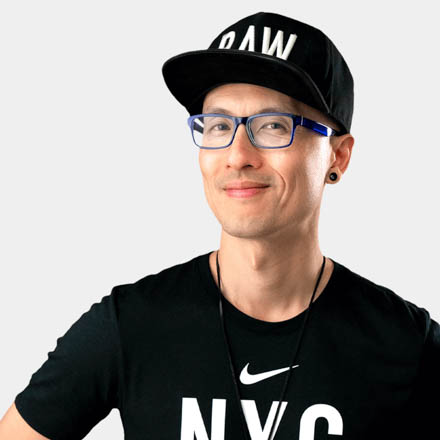
Chris Do
Founder, The Futur™ · May 31, 2025
The Authenticity Gap
Most people build their personal brand on a lie. They construct a persona, an acceptable mask designed to be loved, safe, and accepted. But behind this carefully curated image, the real self begins to suffocate.
After 11 years, more than 1,800 videos, and an audience of millions, The Futur’s founder Chris Do has seen this mistake cripple countless creators. The gap between the persona and the person widens over time, creating a chasm of anxiety and impostor syndrome. “If you pretend to be someone long enough,” Do warns, “you start to forget who the real you is.”
This is not a new lesson. It’s a foundational truth embedded in our most popular narratives for a reason. Do points to Disney's classic, Aladdin, as a perfect case study. The titular hero uses a genie’s magic to become a fake prince, believing this is the only way to win the affection of Princess Jasmine. He struts with false bravado, an image of what he thinks power looks like.
The irony is brutal and predictable. Jasmine was never interested in the prince. She was captivated by the “street rat,” the clever, adventurous, and authentic young man he was from the start. The persona was a repellent. The lesson, Do argues, is clear: lean into who you really are.
The first rule of building a powerful personal brand is to choose authenticity over image. People can sense a fabrication. They may not know exactly what is off, but they feel the inconsistency. That carefully constructed persona you think is protecting you is actually the very thing preventing true connection.
No one falls in love with a persona. They fall in love with a person.
The Currency of You
Authenticity is not an abstract concept. It begins with a concrete inventory of your own life. Do’s second rule is to understand and wield the power of your origin story.
Your beginning is the easiest story to tell because you lived it. There is nothing to fabricate. Do encourages a simple line of inquiry to unearth this narrative gold:
- Where were you born?
- Who were your parents and what did they do?
- What is your ethnicity?
These questions tap into what Do calls cultural currency. This is the shorthand that provides immediate context about who you are. A last name like Garcia, Yamamoto, or Tran instantly paints a picture in the mind of the audience, for better or worse. It can lead to stereotypes, but it also offers a powerful tool for the brand builder.
“This is where it's really powerful because you can play to or against that stereotype,” Do explains. When he shares that he is a refugee immigrant from Vietnam, a flood of assumptions follows. That his family was poor. That they were Catholic. That he had “tiger parents” who demanded academic perfection.
Some of these assumptions are true, some are not. But by invoking them, he immediately establishes a deep and textured narrative. He’s not just a business educator, he’s a survivor, an immigrant, a product of a specific cultural pressure cooker. This is a story far more compelling than a résumé. This is what he explores at length in his talk on how Your Insecurity Is Your Brand.
These details, from the food you eat to the accent you speak with, are not things to be buried. They are assets to be brought to the surface. Do notes the cultural fascination in America with certain accents, like British, Australian, or French, which are often associated with intelligence, charm, or romance, respectively. Your unique way of speaking, your colloquialisms, and your cultural references are invitations for the audience to enter your world. It is the beginning of an emotional connection.
This connection is the bedrock of a magnetic brand. It is built not on flash, but on a foundation of inner peace and self-acceptance. “What makes someone really attractive?” Do asks. He clarifies he isn't talking about physical appearance, but a quality that makes people feel compelled to be around someone.
His conclusion is that magnetic individuals possess two key traits:
- A powerful inner peace: They operate from a place of high self-awareness, self-acceptance, and self-love.
- Radical vulnerability: They are transparent about who they are, having moved beyond shame and guilt, which in turn creates a non-judgmental space for others.
When you are around someone with this quiet confidence, you feel seen, heard, and safe. The opposite is the person who is all show, boasting of watches, cars, and bank accounts. “I'm not falling for it,” Do states flatly. True connection resonates on a deeper level. It's built by sharing who you are, not just what you have.
The Prism of Personality
Being authentic does not mean showing everyone every part of yourself all at once. To see the totality of a person can be overwhelming, even blinding. Do’s third rule is to achieve consistency across platforms by understanding personality as a spectrum.
He uses a powerful metaphor: white light. You can’t see the components of white light until it is passed through a prism, revealing the full rainbow of colors within. “This is the metaphor I like to use,” Do says, “because maybe to your parents, you're showing them the warm tones… And maybe to your professional friends, you might show the cooler hues.”
These are not different people. They are different facets of the same whole person. This is a critical distinction for anyone creating content online. The person you are on LinkedIn, Instagram, and YouTube should be rooted in the same core identity, but the expression of that identity must adapt to the platform.
On a platform like X (formerly Twitter), character limits demand brevity. The goal is to be pithy, short, and powerful. Here, you might show the sharp, analytical sliver of your personality.
On YouTube, however, the goal is different. It’s about building a deeper, more conversational relationship. It’s an invitation into your office or living room. The format allows for more nuance, storytelling, and a broader spectrum of your personality to be on display. Both are you, but they are tailored to the context and the audience’s expectations for that platform.
The danger lies in inconsistency of identity, not expression. “The last thing that you want to do is to pretend to be one kind of person on one platform and a different kind of person on a different platform,” Do warns. When those two worlds inevitably collide, you will be revealed as a fake, an impostor. The trust you’ve worked to build evaporates in an instant.
The strategy is simple: be consistent in your core self, but be strategic in which part of your spectrum you reveal on each platform. This is a nuanced approach to authenticity that recognizes the practical realities of modern communication, a concept also central to many discussions around What Successful Personal Brands Do Differently.
The Generosity Mandate
There is a fundamental conflict at the heart of many personal brands: the need to build a brand versus the need to make money. These are two very different objectives that require two very different approaches.
Making money is transactional. It’s about terms, conditions, and the exchange of resources. When the transaction ends, the relationship often does too.
Building a brand is relational. It’s about the impression you leave, the gut feeling people have about you and your values. This brings us to Do’s fourth rule: give value before you ask for anything.
Lead with generosity and do it for as long as you possibly can. The most valuable assets your audience has are their time and attention. The only way to honor that gift is to reward them with value. This means sharing what you know, based on real, lived experience, not just things you read in a book yesterday.
Do offers a critical guideline for this process: “You do personal development in private when no one's watching. And when you discover things, you teach that in public.”
There is a dangerous rush to share everything you are learning as you learn it. But this is a mistake. The information might be unreliable, or you might change your mind later. The creators who truly break out and build lasting influence are often the ones who have been quietly perfecting their craft for years. They emerge not as students, but as reflective practitioners, sharing hard-won lessons.
Before you ask for a single dollar, a sale, or a subscription, you must show up consistently and give away your best ideas with no strings attached. This isn't about being a martyr. It’s about understanding the psychology of brand building. A transaction creates a customer. A sustained practice of generosity creates an advocate. This approach of leading with service over sales is a recurring theme, as explored in his talk on pricing and service.
Facts Tell, Stories Sell
If you do everything right, you might build a superior product or offer a superior service. But in today’s marketplace, that is not enough. Quality is no longer the differentiator. Brand is.
Do poses a thought experiment: “They have a better brand. You have a better product. Who wins?” The answer, he says, is a spoiler alert: the better brand wins every time.
This leads to his fifth rule: branding is done through storytelling, not just through visual aesthetics. A product or organization without a story is a commodity, destined to compete on price alone. A story transforms it into a symbol.
He cites his conversation with Michael Margolis, author of Story 10x, who made the point that in a world of high expectations, brand is the only true differentiator. We vote with our dollars every single day, and we don’t just buy products. We buy the stories they tell about us. “When I buy this, when I consume this, what does that say about me?” That is the question every consumer is subconsciously asking.
For a real-world example, Do points to the struggles of Tesla. For years, the story was about an innovative visionary tackling climate change. The cars were symbols of a progressive, tech-forward future. But as Elon Musk’s public persona shifted, the story soured for many of its core liberal-leaning customers. The brand narrative became entangled with political controversy and erratic behavior.
The cars are still excellent. They remain some of the highest-performing, longest-range electric vehicles available. Yet in 2024 and bleeding into 2025, sales have plummeted in many markets, with competition from Chinese automakers like BYD only part of the equation. The story changed, and so did consumer behavior. People didn't want the new story to be their story.
The lesson for any brand builder is to internalize a simple maxim: “Facts tell, stories sell.” You cannot build a brand by objectively listing your features and benefits like a biographer. You must tell a story from the heart. You must make people feel what you feel by including sensory details and putting something at stake.
Do offers one last provocative piece of advice on this front: “Don't let facts get in the way of telling a good story.” This isn't a license to lie. It’s an instruction to prioritize emotional truth over dry, objective detail. Your story must connect, resonate, and sell.
The Evolution Imperative
The greatest gift a human being possesses is the capacity to learn, adapt, and evolve. Yet, many people wear their static nature like a badge of honor. They listen to the same music, hold the same beliefs, and resist change at every turn.
For a personal brand, this is a death sentence. Do’s seventh rule is that relevance is maintained through evolution. “To me, the biggest marker of joy for me personally is when I reflect on how I was one year ago,” he says. “I want to see a pretty big gap between that person and the person that you're seeing today.”
This commitment to evolution is directly tied to his ninth rule: personal growth is the brand strategy. Everything you do today is a rehearsal for the person you are becoming. The reps you put in, the coaching you receive, the 10,000 hours you dedicate to your craft, all of it is fuel for your brand. This continuous learning expands your perspective, allowing you to connect disparate ideas and speak to a broader audience.
Do recalls speaking at a real estate conference filled with mortgage brokers and loan officers, a far cry from his usual audience of designers. He felt like an outsider, with a presentation full of design theory and pop culture references. To his surprise, the audience was electric. They leaned in, interrupted with questions, and showed a level of engagement he rarely saw from his more introverted designer peers.
Afterward, one man told him he brought his 18-year-old son, pointing to Do and saying, “This guy knows what he's talking about.” Another confessed, “I didn't know you could talk about these things in public without being ridiculed.” By mixing his diverse interests, from comic books to business strategy, Do connected with people outside his echo chamber. His personal growth had become his brand's unique selling proposition.
He contrasts this with a fixed mindset, using the example of returning to client work. For a friend, this was a story of failure, a sign she couldn't make it on her own. For Do, who also took on a new client project, it was a story of opportunity. He was overjoyed. It was a chance to help a friend do important work, and more importantly, a chance to transparently document the entire process for his community: the strategy, the cost, the execution. “This is freaking awesome,” he thought. “This is evolution.”
The same circumstance produced two wildly different stories. One was about shame, the other about growth and generosity. The difference was a mindset rooted in constant evolution. Your brand cannot outgrow you. If you stop growing, your brand stagnates and dies. Your own development is a topic Do revisits often, particularly in conversations about how the words we use shape our reality and future.
From Audience to Army
Too many creators treat content like a transaction. They adopt a “spray and pray” strategy, carpet-bombing social media with posts and then walking away. They ask for follows, shares, and engagement, but offer nothing in return beyond the initial piece of content.
Do’s eighth rule is to engage your community, not just grow one. He uses a powerful metaphor: you are the host of a party. You invite hundreds of people, hoping for a packed, buzzing event. When everyone arrives, what do you do? You leave. This is what it looks like when you drop content and disappear.
By failing to engage, you miss out on two critical assets:
- Genuine connection: The opportunity to build real relationships with the people who support you.
- Content inspiration: The comments, questions, and stories shared by your community are the foundation for future content, ensuring you are having a dialogue, not a monologue.
When Do gets a comment asking, “Chris, is this really you?” he replies with a single word: “Yes.” That simple act of presence builds a level of trust that outsourcing to a social media manager can never replicate. It transforms a passive audience into an engaged community.
But the ultimate goal is even bigger. The tenth and final rule is to build a movement, not just gain followers.
Followers do what you tell them. A movement, however, feels involved in the mission. They feel like they are in the C-suite with you, looking out over the empire you are building together. They become champions, advocates who will defend you in the street and share your message with evangelical zeal. This is the difference between having an audience and having an army.
This transformation happens when you enroll people in a purpose beyond making money. It requires a clear, and powerful answer to the question: Why do you exist?
For The Futur, the mission is explicit: “To teach a billion people how to make a living doing what they love without losing their soul.” The positioning is equally sharp: “Private art school without the crippling debt.”
This mission is born from Do’s own origin story. Education transformed his life, but he recognized that high-quality education is a privilege, often inaccessible to those who need it most. The current system, he argues, punishes people for being poor. The Futur’s movement is built on the conviction that the only way to elevate society is through accessible education.
When people hear this, they make a choice. They decide if they are on Team A or Team B. If they believe in that mission, they don't just follow. They join. They become part of something larger than themselves. They become part of the movement.
This is the pinnacle of personal branding. It’s when your brand is no longer about you. It’s about the change you want to make in the world, and the people you inspire to help you make it. This strategic enrollment is a recurring theme in expert discussions on a personal branding masterclass level.
TRANSCRIPT
Enjoyed this? There’s more where it came from.
Get insights on creativity, business, and design from The Futur.
You can unsubscribe anytime. By submitting, you agree to receive communications and to our Privacy Policy.
“Facts tell, stories sell.”
— Chris Do
Key Takeaways
Subscribe
Details
- Length
- 22m
- Views
- 78,643
- Topic
- PERSONAL BRANDING