Personal Brand Secrets W/ Beats & Dr. Dre $3 Billion Sale To Apple
Chris Do explains how Dr. Dre’s personal brand, not the hardware, was the $3 billion secret behind Beats' sale to Apple.
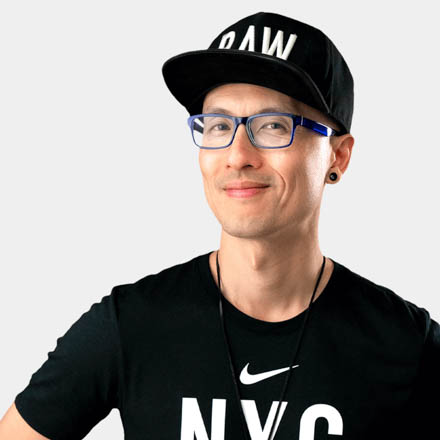
Chris Do
Founder, The Futur™ · March 19, 2024
The $3 Billion Misconception
In 2014, Apple acquired Beats Electronics for a staggering $3 billion. The deal instantly launched hip-hop legend Dr. Dre into the billionaire stratosphere and solidified the iconic, bass-heavy headphones as a global cultural phenomenon.
It was a masterstroke of branding, championed by two industry titans: Dre, the musical pioneer, and Jimmy Iovine, the legendary record executive. But there is a piece of the story most people don't know.
A secret that rewrites the entire narrative of what Apple actually bought.
Do you know who manufactured Beats headphones?
The answer is not a trivial detail. It is the key to understanding the profound difference between selling a product and building a brand. It is a lesson in value creation that separates fleeting transactions from legacy-defining wealth.
The Ant and The Grasshopper
Most businesses operate like the grasshopper from Aesop's fable. They spend their days chasing immediate results, chirping for sales, and celebrating today’s revenue. This is the world of **Performance Marketing**.
It consists of the ads you run, the webinars you host, and the constant invitations to buy, join, or sign up. Performance marketing is seductive because its effects are immediate and measurable. It brings in the cash needed to pay the team and keep the lights on. It feels productive.
The problem is, it’s a treadmill. As Chris Do explains, “for people who are curious who have a problem that they think this will solve, they'll give them money. But as soon as the transaction is complete, they move on. There is no residual value that's being built here.”
On the other side of the spectrum is the ant. The ant works diligently all summer, preparing for a winter it knows is coming. This is the work of **Brand Building**.
Brand building is the slow, unglamorous accumulation of trust and positive sentiment. It is showing up consistently, creating value, educating, and entertaining, all without asking for anything in return. While performance marketing creates customers, brand building cultivates true fans.
Do describes the outcome clearly. “In 3, 5, 10 years from now, when they want you to do something big, you feel compelled to do this because you've entered into becoming a true fan versus a consumer or a client of theirs.”
This isn't a theoretical exercise. It's a strategy playing out in headlines.
- Ryan Reynolds built a massive personal brand, which he then leveraged to turn Mint Mobile into a company T-Mobile acquired for $1.35 billion.
- Dwayne “The Rock” Johnson transitioned his wrestling stardom into Hollywood dominance, then poured that brand equity into Teremana Tequila, now one of the fastest-growing spirits brands in history.
These are not just celebrity endorsements. They are examples of monetizing decades of relationship-building. As a 2023 Harvard Business Review article noted, an over-reliance on performance marketing can come at the severe cost of long-term brand value. It's a choice between a meal today or a harvest for a decade.
The Geography of Brand
The contrast between these two philosophies isn't just visible between companies. It's visible between entire economic cultures. Do points to a stark difference between Western and Eastern business mentalities.
“If you look at America, the West, as brand builders, they're able to create products that command a price premium in the marketplace,” Do says. The names are familiar: Apple, Nike, Coca-Cola. These brands occupy mental real estate. Consumers willingly pay a premium not just for the product, but for the affiliation, the story, and the perceived status.
In contrast, many Eastern markets, particularly in consumer electronics, have historically focused on a different driver: price. Walk into an electronics store in Taipei or Shenzhen, and you are met with a dizzying sea of signs, features, and competing discounts. The philosophy is sell, sell, sell.
Do recounts the experience: “I don't know one company from the other. There's literally no difference and they're just competing on price.”
This isn't a judgment. It's an observation of a market in a different stage of evolution, moving from a production-based economy to a consumer-based one. But the lesson is universal. When you compete on features and price, you are a commodity. Someone will always be cheaper. Someone will always add one more feature. It is a race to the bottom.
Brand is the only durable moat. Do asserts, “Brand is an invention of the 21st century in the way that we understand it that is going to be more valuable than selling products or services.” This is a concept explored in depth in the difference between a personal brand and a business brand, where the individual becomes the ultimate differentiator.
The goal is not to abandon sales. A business must survive. The challenge is finding the right balance. The ratio of performance marketing to brand building is determined by your financial runway. If you have capital, you can afford to play the long game more aggressively. If you don't, you must still dedicate a portion of your efforts to building for tomorrow, or tomorrow will look exactly like today.
From Anonymous to Preferred
How does a professional in a seemingly "boring" industry build a brand? Take an accountant. Most compete on services like tax preparation. A slightly savvier accountant might position themselves around peace of mind, promising thoroughness to avoid audits.
But very few accountants forge an emotional connection. There are no celebrity accountants, aside from the anonymous giants known as the “Big Four” in the United States: Deloitte, PwC, Ernst & Young, and KPMG.
For a smaller practice to stand out, it can’t just offer services. It must build a brand by focusing on the customer's world: their fears, hopes, and challenges. Do suggests a path: “You have to start thinking about the customer... you need to educate them or you need to entertain them.”
An accountant can transform from a necessary evil into a valuable guide. They can make complex financial concepts simple and engaging. They become the funny, relatable expert who breaks the mold of the stuffy, ill-fitting suit. They become the accountant for this generation.
The journey a brand takes in the mind of the consumer has two critical stages.
Step 1: Differentiation. You must first be different. Not necessarily better, just different. Our brains are wired to notice what stands out. As Do puts it, “If you're the accountant who works out of a coffee shop, you'll be different. If you're an accountant who has a mobile office, you'll be different.” Difference creates a hook for memory.
Step 2: Preference. Being different is not enough. Many political figures are different, saying wild things to get attention, but you may prefer not to associate with them. The second, more difficult step is to become preferable. You must give people a reason to choose you beyond your novelty.
Preference is built by doing two things:
- Embracing Your Identity: Take an audit of who you are. Celebrate your strengths and, more importantly, your weaknesses. Your quirks and flaws are core components of your uniqueness. Talking about them openly makes you human and relatable. Your insecurity can become your brand.
- Translating Identity into Value: Frame your uniqueness as a benefit to your audience. The mobile accountant isn’t just different; they offer convenience. The funny accountant isn’t just entertaining; they make a dreaded topic approachable, empowering business owners to make better decisions.
This transformation from being a commodity to being a preferred choice is the essence of brand strategy. And no story illustrates this more powerfully than the truth behind those iconic Beats headphones.
The $3 Billion Brand
Before Beats, if you were an audiophile in the 2000s looking for premium cables, you bought from a company called Monster Cable. They made thick, high-gauge copper cables, sometimes with gold-plated connectors, that promised the purest sound. Monster was an established electronics company that also made headphones and earbuds.
But very few people knew that.
Then, a new headphone brand appeared. They were fashion-forward, with a bold, simple “b” logo. They were championed by Dr. Dre, a man who had spent decades meticulously crafting some of the best-sounding records in music history.
The question was simple for the consumer. Would you buy headphones from an anonymous electronics company called Monster, or from Beats by Dr. Dre?
The choice was obvious. As Do points out, the association with Dre was everything. “He's an icon, he's a pioneer in the hip-hop space... if they're good enough for Dr. Dre, they're good enough for us.” It didn't matter that Dre wasn't an electrical engineer designing speaker diaphragms. His life’s work in the studio gave him an earned authority that translated into immense brand equity. He was a seal of quality and, more importantly, of cultural relevance.
Here is the part of the story that changes everything.
The company that engineered and manufactured the original Beats headphones was Monster Cable.
Dre and Iovine had the brand, the vision, and the connections. But according to reports from the time, they had no experience in manufacturing, design, or distribution. So, they white-labeled the hardware from a company that did. Monster made the product. Dre and Iovine made the brand.
Think about the outcome. Was Monster acquired by Apple for $3 billion? Do asks, “Nobody even knows who Monster is.”
Apple did not buy a headphone company. They bought a culture. They bought a direct line to an audience. They bought a brand built on decades of musical credibility and an irrational, emotional connection with millions of fans.
Audio purists complained that the sound was too bass-heavy, distorting the music. Owners noted that the build quality wasn't always the best. But as The Rock would say, “It doesn’t matter.”
The brand was selling coolness, desirability, and affiliation. These are the emotional drivers that 21st-century marketers understand. They created differentiation and preference, and in doing so, built a billion-dollar asset on top of someone else's commodity product.
The Unbearable Weight of Patience
At this point, the common objection arises: “Didn't it take Dr. Dre 20 or 30 years to build that brand? Do I have to do that to see a reward?”
Do poses a counter-question. He recalls being told in high school that if you save a small portion of every paycheck, compound interest would make you a millionaire by age 55. The formula was simple and proven. The question is, how many people actually do it?
The vast majority do not. Why? Because they are not willing to put in the consistent, unglamorous work for a reward that feels distant. They are stuck in the mindset of needing to make money right now.
This is the principle at the heart of Darren Hardy's book, The Compound Effect. It is about making small, smart choices consistently over time to produce radical results. Building a brand is the professional equivalent of this financial principle.
Do paraphrases a famous line from entrepreneur Alex Hormozi, who, when asked how to become a millionaire, reportedly said: “If I told you what to do for 5 years and you did it consistently without ever trying to make a dollar, you become a millionaire. I guarantee it. Will you do it?”
Most people say no. The pull of immediate gratification is too strong.
Building a brand is a bet on the long game. There are no guarantees, but as Do argues, “There's a stronger probability you hit it as opposed to not being able to hit it at all.” The work of building a personal brand is one of the few endeavors where your effort compounds, a reality explored in what successful personal brands do differently. Each piece of content, each helpful comment, each act of generosity is another dollar in the retirement account of your reputation. The payoff isn't linear; it's exponential.
The Choice: Community or Cash
This entire philosophy crystalized for Do in a single, gut-wrenching business decision.
In 2014, Do and his partner, Jose Caballer, started creating content together on a YouTube channel called The Skool. After two and a half years, they had divergent visions for the company and decided to part ways amicably.
To ensure a fair split, Do invoked a lesson his father taught him: one person cuts the cake, the other person chooses their piece. He divided the company into two distinct halves:
- Option A: The YouTube channel, the audience, and the community. This half had all the relationships but generated zero direct revenue.
- Option B: The intellectual property, the existing products and courses, and all the revenue attached to them. This half had all the money.
Do let Jose choose first. “Jose chose he needed it,” Do recalls, “because he needed the revenue and the products.” From a short-term perspective, it was the only logical choice. Who would give up all the cash-generating assets for a YouTube channel with just 10,000 or 20,000 subscribers?
Do was left with the community. For years afterward, the only money the company made from those original products went directly to Jose. Do remembers writing six-figure checks to his former partner, who was doing nothing to earn it. That was the deal.
While the old company was generating cash for Jose, Do was busy serving the community he had inherited. He started producing new content, building relationships, and focusing entirely on the long game of brand building. Eventually, he launched a new course, and it sold well. The channel grew. The community thrived.
Years later, the true value of that choice became undeniable.
The community repeatedly asked Do to write a book. Reluctantly, he agreed to try, but only if there was proven demand. He ran a Kickstarter campaign with a modest goal. “If we can't get $30,000 worth of book pledges,” he told his team, “I'm not writing a book.”
By the time the campaign ended, it hadn't just met the goal. “To my surprise,” Do recalls, “I think we raised $80,000 worth of pledges, which blew my mind.”
During a recent lunch, Jose Caballer reflected on that story. He said to Do, “Chris, it's because you have the community. They showed up for you... back when you had given me that choice, you made the smart decision to go with community.”
Do corrected him gently. “I said, ‘Jose, I appreciate you saying that, but I didn't choose. You did.’”
That moment reveals everything. The asset that seemed worthless in the short term, the community, proved to be the most valuable asset of all. It was a well of goodwill that could be called upon to manifest an $80,000 launch for a first-time author, a principle he details in his rules for building a powerful brand.
The future, his company, is nothing without that relationship.
Do is adamant. “If someone wanted to launch a product that was equivalent to ours, forget about equivalent, just say it was superior to ours... it will not sell as well as ours.”
It's not that the product's superior, it's the relationship is superior.
That is the final lesson of Beats, of Mint Mobile, of The Skool. In the 21st century, you can have the best product, the best service, or the best technology. But if you don't have the relationship, you have nothing. Just ask Monster Cable.
TRANSCRIPT
Enjoyed this? There’s more where it came from.
Get insights on creativity, business, and design from The Futur.
You can unsubscribe anytime. By submitting, you agree to receive communications and to our Privacy Policy.
“It's not that the product's superior, it's the relationship is superior.”
— Chris Do
Key Takeaways
Subscribe
Details
- Length
- 23m
- Views
- 122,744
- Topic
- PERSONAL BRANDING