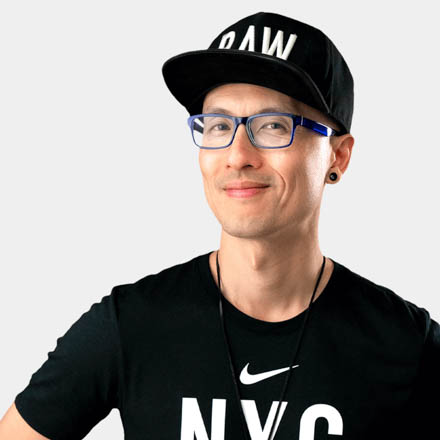
In this episode, I talked to Hector Garcia and he's quite a bit of an anomaly. He started his life as a CPA, transitioned to being a content creator, software developer, among many things, also an event organizer. He's a man who doesn't fit into a single box or category.
I hope you enjoy the conversation. I endeavor to have interesting people who don't fit in a box on the show to share their life experiences, their journey, and insights they've learned along the way. My next guest is a a person who is, I think, ideally suited for this type of endeavor.
His name is Hector Garcia. By day, he's a CPA, but by night he does something totally different. I think he's a designer trapped in the body of an accountant.
And he told me at one point he was the most influential person who sold QuickBooks, which was a pretty amazing statistic when you think about it. Of all the people out there, an accountant is making content on YouTube and social media talking about specific products. So I want to welcome my guest to the show.
Hector, welcome. Thank you for having me. Wonderful.
Now, for people who don't know who you are, can you introduce yourself please? And tell us a little bit of your backstory. I'm Hector Garcia.
I'm a CPA based out of Florida. I came to the United States when I was about 12 years old. I was raised in Venezuela, South America.
So I'm bilingual, speak Spanish and English. Fast forward to my thirties, I decided to pivot careers into accounting. I started a bookkeeping firm at 27, actually, when my daughter was born.
And we did only bookkeeping work, only working with QuickBooks. I became very technical. I'm a very technical person.
technically savvy person. Like you will laugh, but I'm the best Photoshop designer in the accounting industry. But I think it to your standards is probably laughable.
Hold on, hold on. Let it sit for a minute. Everybody.
The best Photoshop designer within accounting. Not been tested yet, but I believe it's probably true. So I've always been sort of technically savvy with software.
So I figured I'll go deep into the rabbit hole of using QuickBooks. And then I started as a way to create a diary of what I've been learning. I started recording the things I was learning and putting them in webinar content for free for other colleagues, business owners to access.
And just for the passion of showcasing what I was learning, I learned from Gary Vaynerchuk about enjoying the process, documenting the journey. And I took that by heart. So basically I publicly exposed everything I was learning about QuickBooks for many years and the place where those videos landed was YouTube.
Now I never felt, I never I thought YouTube would be my main marketing source like it is today. But then I realized that 99% of our clients that come into our firm come from a video that they saw in YouTube. So about 12 years of creating content later, thousands of videos.
At this point, I probably have deleted more videos that have become irrelevant, obsolete, or whatever that they want are active and 300,000 subscribers. That's where I... stake the claim that I'm the most quote influential person in the QuickBooks world, because no one really has created the amount of content for the amount of time with the amount of views.
So whether or not you can quantify that, I'm pretty much sure that if somebody, the average books person thinks of where they learned QuickBooks from freely off the web, It will probably be one of my videos. So I had my accounting practice, which I grew to a decent size. We had nine employees.
I sold off my interest of the practice to my existing partners. I'm still in the board of directors of the practice. I still get asked questions.
I'm the, what would Hector do guy, right? If they want a second opinion, they still get me involved. And now I, as I split that off, I went into two separate directions.
Half of me wants to help other accounting professionals do the things that I have done. So I created an organization called Reframe, which puts conferences together and teaches similar to what you teach to other graphic designers. I try to teach to other accounting professionals.
And then the other side of me also accidentally I founded a software company. So I'm sort of the ex-firm owner, still YouTuber, software designer and conference host guy. And that's where I am right now.
Oh, that's a lot to process here. You're a man of many talents and I love seeing what you're building. Just really quickly, just for people who don't know, what is the software that you're making right now?
What does it do? So obviously I've been using QuickBooks for a very long time. I have my gripes.
about the things that are broken with it, things that I think work really well, things that I don't think very well. I've given them feedback for the past 10 years, but a big company like Intuit or Adobe, I'm sure you've had feedback on Photoshop and Illustrator, that sort of thing. It takes a long time for that feedback to make it through.
So I found a person that was very, very savvy at creating a Chrome extension and sits on your browser and allows you to potentially manipulate the things that you're seeing on the screen. So when I discovered this person, I partnered with him to build a tool. I gave him basically my laundry list of everything that I think was broken about QuickBooks Online.
And then for the past two years, we have been creating solutions and fixes, and in some cases, automation, semi-automations about the navigation portion of QuickBooks Online. And the name of this tool is called Write It's on the right side of the screen. There's a right navigation bar, but also we think is the right tool for the job.
The name actually was very easy to market and a lot of accounting professionals that use the tool swear by it. Are you aggressively marketing and promoting this tool so that you can grow this business? No.
Well, not marketing from the traditional pay-per-click or bringing outside endorsement type of stuff. But yeah, it's a type of marketing, I think. A type.
I don't think it's marketing at all. Let's get into it a little bit because, so the way that I think is if I'm a big giant billion dollar company, I do know how many users there are at QuickBooks. Pro online edition.
About 5.8 million is the last number I've seen. Okay. It's a big number.
It's a big number. So then amount of people actually using this extension to increase their productivity is fairly low, right? Extremely low.
It's like 25,000 maximum between the paid users and the free users. The way that you would get them to incorporate these features and to basically buy you guys out so that they can have the intellectual property, but maybe also have you as an advisor is to make as much noise as possible. So when you make Too much noise.
They cannot ignore you anymore. Right now, it's just, there's not that many people that are that interested in it, relatively speaking. So if you have 25,000 users of the free and the pro version, what percentage of 5.8 million is that?
That may be the podcast math. Less than 1%. Yeah.
It's very small. Yeah, for sure. Yeah.
So I was thinking if your strategy is to get them and get their attention, the sleeping giant, if you will, is to get as many people using the free version as possible. And the paid version is not even that important. And you can use organic media and the stuff that you've earned just to talk about it.
And so I'm hearing from you a little bit of what I hear in a lot of creative people is their resistance to marketing and talking about their own products. Do you feel like that? I feel that Chris, because of our relationship, you have a little bit higher expectations of sort of like our potential.
There's a lot of successes, successes that we have with Right Tool that a lot of software companies don't have. You know, starting with zero funding, having 3000 paid users, having a whole bunch of free users, the community that we built, there's a whole bunch of bunch of other things I could talk to you about what the community does for us and with us. The way I see it, if I had to justify the results, it's where we can put our resources, right?
So since we have a relatively small staff, we are spending most of the day answering feedback questions and guiding people to the process, onboarding the pro users with a one hour presentation and kind of walking them through it. We chose to spend our resources on making our pro users Super fans, truly super fans. And I could give you some numbers in terms of what proves to that.
We feel that we could get noisier on the marketing part, but we just don't have the bandwidth at the moment. We're open to suggestions of on how we can do this in a scalable way where I and the core staff can still serve the pro users the way we serve them. Okay.
Here's what I want to do with you. Hypothetically speaking, you can speak about QuickBooks full-throatedly on your channel. You've made a lot of content, hundreds of videos, hundreds of thousands of subscribers without any reservation about what you're trying to do, because you're not responsible for the product.
You're just trying to teach people how to use it. If you didn't make your own product, meaning somebody else made Bright Tools, couldn't you just talk about how to use it the same way? I couldn't.
I could. What's interesting on the YouTube side is that YouTube is like the YouTube ad revenue is a source of revenue for me. Right.
So I count on that. I'm not saying I live off that, but that's part of how much money I make as a creator/accountant. The channel is very much geared towards people that want QuickBooks tips.
And anytime I create content that's outside of that, I actually see subscribers go away. So it's always that apprehension of keep the YouTube channel the way it is, or do I exploit it and add other things where people go, eh, that's no longer our thing. It's happened to me with AI.
So about two years ago, I started doing a lot of AI related content, which I think is relevant. As a matter of fact, I thought for a minute that my channel would get to a million subscribers because I was building really meaningful AI content, but it was actually the opposite. The amount of new subscribers I get now has gone down by about 25%.
And you can tell when a QuickBooks video comes up, how much new subscribers are gained from the QuickBooks video. And when an AI video comes up or a Rite Tool video comes up, or a rifle or reframe. Cause I'm sort of like, that's the challenge that I have is have so many brands that I manage under my own personal brand that sometimes the message is even confusing.
It's my way. You're the quick folks guy, or you're a right tool designer or your reframe. So I'm trying not to model too much the message on the YouTube channel, just because of the fear it going into a different direction.
So I do a couple of videos, but I try to stay away from my channel completely transforming into a right tool marketing machine. Okay. It's because you see it as a marketing thing.
This is fascinating to see how your brain works here. I want to say also for full disclosure, Hector and I aren't just strangers talking on the internet about a podcast. We're friends.
And I don't know exactly when that friendship began, but it began many years ago and I've gotten to know him and his brother Carlos. Yeah. So during the pandemic, I was doing a lot of stuff in Clubhouse.
You were doing a lot of stuff in Clubhouse, just like you're always experimenting with new things. And then into it, the maker of QuickBooks saw that I was the only accountant that was doing things in Clubhouse. And they're like, okay, we want to get into this new medium, right?
Because all corporations look at the shiny object that they say, we got to be there. Otherwise our competitors will be there. So they reached out to me and said, hey, we want to have a successful Clubhouse event.
We want to do a small business. tips. Can you help us lead this?
Here's your budget. And I told them, look, I got like 9,000 followers in Clubhouse. That's not really that big, but it was bigger than any other accountant that was doing that.
But I have this, I have this guy that I've been following for a very long time. And we've been exchanging DMs back and forth because I used to send you like interesting design things that I found interesting. As a frustrated graphic designer, I used to comment, thank you.
Cool. And I'm like, okay, I guess I have a open channel communications with this guy. And then Intuit came over and I told them, Hey, what if we would do something weird?
Like we tap into somebody else, somebody else that may have an entirely different audience. Maybe the people he's talking to are not even accountants or care about accounting. At least it gets a room a little bit bigger.
It gets some bust going. Maybe we get even more questions and we get different questions instead of getting the same message that you get from the same community. And they said, sure, make it happen.
And then I went to you and you told me, okay, I'll do it. And then, so we together in Clubhouse did this thing where Chris and I hosted like a small business tips thing after it was over. Chris, you contacted me directly.
I said, Hey man, that was really interesting. And that wasn't really accounting stuff. That was more like business advice.
And you kind of noticed that I've been studying and reading the same books that you've been reading. And from there we started communicating and it's turned out to be a really interesting friendship. So I think it'll be interesting for people to know kind of how it started, especially if you don't remember.
I actually do remember, but I wasn't sure if that was the very first time because you're right. I think there was an exchange of messages. So I want to pause everybody, just pause.
And I want to zoom all the way out and share from my perspective here. How do you want to build relationships with people online? Like whether they're collaborators, sponsors or customers or investors, how do you want to build that relationship?
Now, if we zoom out and we look at the timeline in which Hector begins conversation with me, he's sending me things that he thinks I think would be valuable. And he still does to this day. He's like...
all over the internet. Just watch this funny video. This is interesting.
This is a new feature. And he would send me these things. Not in a, hey, I need your attention.
I want something from you. But in a genuine expression of giving value to other people without any expectations. And I think he'd been doing this for some time.
So then my mind blurs together when our official interaction is. Look at the very next thing he does. He goes, you know what?
I'd like to collaborate with you on this new format, this clubhouse thing. And I don't even care about my money. I'll get you whatever I can for you.
Again, an act of generosity. And you're going to see this kind of mindset or this modus operandi to route all of Hector's life and everything he does. He's really about putting himself out there and serving other people.
And that's why he has such a strong and loyal community of people. So many people will ask me, how do you build a community? How do you build a following?
Well, first you have to show up and care about people. People who may never be able to do anything for you ever, but you keep showing up and you serve them, you serve them. Now on the other side of that, you kind of have to run a business.
And so we'll talk about that a little bit. So this is a thing that I start to take note of. In my life, there are people who just keep showing up and asking for stuff with their hands out.
And you're the guy who's like, no, no, here's cash. Let me put some money in your pocket right now. Let me bring an opportunity to you.
And so since then we've hung out, we've done multiple events together. And I've spent a lot of time with you and especially your brother and and traveling to other countries. So it's like, I think it's transitioned away from an online quote unquote relationship versus like a real genuine connection with another human being.
You've hung out with me. You've driven me in your car. You've taken me around town to show me the things that you're so proud of the city in which you live in.
And it's just, and you've introduced me to your parents and your daughter. It's just like, it's so cool for us to be able to have that. So I just want to put that out there into the universe, everybody.
You're looking at a very short transactional model. Play the longer game. Play the game of genuine relationship with people that you enjoy, look up to, like.
All of the art to that, which is beautifully put, is the transactions come. They come. I mean, you have to have the confidence.
that if you are creating value and you're very clear about where you create value and you make a personal connection to someone that is not just interested in how you create value, but as you're doing in this podcast, interested on my thinking and why do I have mental roadmaps on where I can add more value and stuff like that. Sometimes the value is an unknown random spark of a conversation. So the transactions come.
I think it's okay to say, do it without thinking of what you're going to get back or thinking of a transaction. I would just add one more layer to that is don't worry. If you're built it, they will come.
So if you're always giving value and surrounding yourself with people that give value, eventually somebody is going to go to Chris and go, hey, can you talk at this event or whatever? And you can't. And he goes, but I have someone that that It doesn't fit the model, but I think it would be perfect that you would vouch for that person.
Not just me, all the people in your network that you consider friends and colleagues. as well so just it is a relationship building is business the fluffy relationship stuff that's there but it's part of business right but my affiliation with you your affiliation with me there will be situations where someone that knows you but doesn't know me and needs me but knows me by seeing us interacting and vice versa so like the transactions come i just want to As an accountant and as a business advisor, I want to tell business owners to don't worry, they will come. I'm going to say it a different way.
One more time. I'm going to say it a slightly different way because I know my audience. The strength of genuine human connection increases the surface area of luck happening.
I just say it like that. All right. Now you introduced me to lots of people, but one person that you introduced me to as a concept, but also as a, in real life is a gentleman named Ron Baker.
And I think you quoted him so many times. So I think this is his quote. Correct me if I'm wrong, which is revenue is vanity.
Profit is sanity. Correct. Okay.
So I'm going to ask you a vanity question first. And I can only ask you because you have accounting as your background. Of the different things that you're doing from the conference to the software to your licensing or having exit out of your bookkeeping business and your YouTube revenue, how many different buckets generate revenue for you and what percentage does that account for?
So my YouTube channel with many views on QuickBooks and my relationship with Intuit, I am a reseller or an affiliate marketer for Intuit, which means that every single person that looks at our QuickBooks video and decides I will become a QuickBooks user and they click on the link on that video, I get paid by Intuit. I would say that is the most significant part of my income. So let's call that 30%.
Okay. 30%. This is affiliate.
Correct. Affiliate revenue that comes from YouTube. Offshoot of YouTube, I would say another 5% to 10% come from other affiliates that say, hey, could you do a video for me?
I'll pay you a percentage of the sales. So I create videos for other people that are not competitors of QuickBooks, but they're There are apps that work in the same universe as QuickBooks users, apps to do 1099s, inventory apps, whatever. So that's additional revenue.
We'll call that brand deals, okay? Is that okay if we call that brand deals? Yeah, brand deals.
And as brand deals, people will ask me to make a tutorial for them and go, hey, I won't pay you affiliate, but I'll pay you five digits and endorse the software. And we'll have this conversation about what endorsement means. And if I love the software, I'll say it.
If I don't know what the software is, I might not even do the video for it. Right. Yeah.
So that's another, maybe 10%, I would say you can add. Okay. Yep.
So we're at 40%. So the recurring revenue that comes from selling my firm. And very interestingly, I gave my partners the choice of buying the firm at the firm value based on the revenue of the client list.
Or I could say, pay me nothing, but pay me a royalty for the rest of my life. And I just stay as a board of directors. And if you grow your business, I still get a royalty from there.
And they said, Absolutely. It's worth the deal to keep you by affiliation. And in exchange, every single accounting referral goes to them.
I don't refer to any other accounting firm. So that could be another, maybe 10%. What do we call this then?
Let's call it a royalty from legacy firm. Okay. Perfect.
Okay. Another part now actually comes from right tool that right tool is actually profitable company and pays me a salary, so to speak. So that would be another 10 to 15%.
How about YouTube revenue? Yeah. And then the remaining is consulting work.
A software company will ask me for advice on how to structure their software or even Intuit. You contact me many times and they want me to look at a new feature or a new product. And it's just flat fee consulting work that also in there, it's also traveling and speaking at conferences.
So stuff that requires my physical presence, it's the remaining balance. What percentage is that? It's like a 20%.
20%. Okay. You didn't tell us how much YouTube AdSense revenue is.
It's about $8,000 a month. So I'm going to bundle that in with a 30% of the affiliate revenue too. Okay.
It's a different category, but okay. And what about write tools? Yeah.
So write tool is 10, about 10%. The write tool actually pays me a salary. Yep.
Okay. 30, 40, 50. And little to no money coming from Reframe.
Reframe is a, let's call it a nonprofit. It's a nonprofit organization. We'll call that 5% or something like that.
I would love for you to split your affiliate commission apart from your YouTube AdSense, because I want people to understand like how a person like you, an influencer creator, a consultant actually makes money. Yeah. During the pandemic, With a third of the subscribers, I saw a couple of months of $20,000 AdSense revenue.
At that point, I'm like, you know what? I'm quitting everything. I'm gonna dedicate my entire life to becoming a YouTuber.
Now I have three times the subscribers and it's a third of the revenue. You really can't put all your eggs in the YouTube basket. But not a lot of channels with 300,000 subscribers make that much revenue.
And what's interesting is YouTube pays you based on the category that you're in. So if you're like in a lifestyle category, you may make so much per click ad. But if you're in a FinTech category, a category that's hot, that people spend a lot of marketing on, you get paid a lot more.
So I might be in one of those categories that pay the highest per view. because there's still so much money being poured into technology, AI, FinTech, that stuff. So just be aware that having a channel with half a million subscribers doesn't automatically mean you can make five digits a month from YouTube.
So it's really based on the category that you're in. Yeah. For the YouTube walks out there, what is the CPM?
I'll give you the answer. What category? Yeah.
I wonder what category you are deemed to be. Like that's the interesting thing. Right.
Education. Right. The interesting thing is you don't really get clear data in terms of this category pays this category pays that.
Right. or real clear data in terms of how you become one category or the other. I think the YouTube algorithm kind of just decides that on their own.
Yeah. We barely do more than you. We're doing like $9,600 a month and we have two point something million subscribers.
I lost track. Two point something million subscribers. Every one of your videos has five digits of views minus some videos get a lot and some videos don't.
Yeah. I totally get that. that, what's your CPM at?
Yeah. I think ours is last time I checked was like $24 per thousand views. Yeah.
So if that, so I remember doing the pandemic on the highest moments, it was close to a hundred. It was incredible. $100 per thousand?
Yes. It was during the stimulus check. Oh my God.
No wonder you're making so much money. Yeah. It was during the stimulus check thing where everybody was checking YouTube like every single day and that sort of thing.
Everybody was at home. People, but last time I checked, it was somewhere in the fifties. What the heck?
Holy cow. So you're doing about double what we're doing. That's why that makes a lot of sense.
Yeah. Okay. All right.
So do you want to give us a percentage? I want to subtract it from the 30 and call it YouTube. Maybe five of the 30%, 5% could be YouTube.
Okay. Okay. So we'll do the math now.
You're making me do a lot of math. This is basic math. This is graphic designer math.
So 25% affiliate revenue, 5% YouTube AdSense, 10% affiliate brand deals, basically 10% royalty that you collect from the legacy agency or firm that used to own and run for software, I think You said like 10, 10 to 15%. And then we talked about consulting. It counts for quite a bit, actually.
The second highest, which is 20%. Yeah. And I think that's it.
A lot of consulting. Yep. And a little bit of reframe, which is like, we'll talk about like one or 2% or something like that.
Yeah. Okay. I found the CPM.
It's $28 today. Okay. $28 today.
Yeah. Where'd you find that? Where you tell it the default category of your videos, but for AdSense revenue, they put you in the category because it's how they sell to advertisers.
Yeah. So there's specific advertisers that probably choose my channel and other similar channels to advertise in there. So a competitor or QuickBooks, that's where they wanna advertise, right?
It's really funny. Some people will watch a QuickBooks video, but the ad before that would be QuickBooks' biggest competitor, right? And YouTube places that, I don't place that.
Okay. Here's where it gets real interesting. So our total revenue in the last 28 days is about $9,500, just barely a little bit more than you.
So you're like, how did Chris do this? More viewers? No, that's not it.
Because memberships, premium memberships, it accounts for $3,400 of that $9,500. You guys don't have premium memberships, do you? Don't.
I turned it on a long time ago and I forget to add more videos to it. And maybe $500 of that comes from premium memberships. Every once in a while, remember, you know what, I'll release this video first and And then wait two weeks until it releases to the general public sites.
But I don't have a structure to create members only content, which by the way, would probably have a lot of people subscribing because people ask for more things. Like every video I put, the comments are not, oh, your videos are great. The comments are, what about this?
What about that? So the comments always ask for the next video. So in theory, I could grab all those comments and create content around those comments.
And I would have a lot of membership. I just don't have the time. You told me something real interesting.
while back, you said that you took a paid course and you put it on YouTube for free, like hours long course to teach people how to use QuickBooks. And you said you made more money from the ad revenue on that than you did people actually buying the course, which was a pretty fascinating strategy. Can you expand on that?
Yeah. So I used a platform called Teachable and I recorded this course, which is almost like a certification prep for people that want to want it to become QuickBooks certified. And I put that for sale for like maybe like a hundred dollars, $150.
It sold quite a bit, but I was selling courses through their paid courses. And I was looking at the sales, the sales were, you know, let's say $1,000 a month, $1,200 a month, passive income. During the pandemic, I didn't see a big bump, those courses, like we went maybe from 1,200 to 1,400, but I saw this huge bump in views and revenue coming from YouTube.
And right early on, I said, you know what? I'm going to do this experiment. I'm going to turn off the paid course.
I'm going to disable it so people can't buy new ones. I'm going to grab that entire four hour video, put it in YouTube, tell people, by the way, I'm temporarily making this course available. This is a course I usually charge on, but during the pandemic, I think people need to learn how to do this.
Here we go. It's four hour video. And.
Looking at the percentage of the revenue when I was getting close to $20,000 a month in YouTube, $3,000 a month were coming just from that video. So I came to the conclusion that I could make more money by making the courses for free with AdSense versus having them gated in there. And to date, they probably, I probably get, actually now I have them both.
I have the paid version and I have the free version in YouTube. The only difference is in the paid version, there's a community and I answer the questions there where in YouTube, I don't prioritize that. But today they're like kind of head to head.
Like I get maybe a couple hundred dollars a month on selling that course versus a couple hundred dollars a month equivalent in the YouTube revenue. So it's interesting. How, once you get a channel going and the YouTube partnership is pretty strong, you almost have to make the decision.
Is it better to make it free or is it better to gate it and put it as a paid course? That was pretty awesome. I think you, you did the right thing at the right time and maximize your earning potential there.
All right. We kind of have an understanding of all this stuff now in terms of like how you make money as a content creator and this shift away from doing the day-to-day tax work and bookkeeping, being able to build a successful business. I want to explore a little bit more about the creative brain that you have, but I want to get back to the whole marketing thing.
Okay. So here's a pretty typical thing. I'm not saying this is you, but this is a typical thing that I hear from a lot of creative people.
And when I say a lot of people, creative people, I mean myself sometimes that we want something to be perfect before we go to market it. We're unabashedly promoting other people's products, but Oftentimes feel great guilt or shame sometimes talking about our own products. We put them into different categories.
A little bit confusing to me. So the way I see what you're doing right now is you're educating people on how to use QuickBooks. But a gigantic productivity booster, a hack, if you will, is to be able to use some of the tools that you provide to make your workflow faster.
No one wants to work longer. They want to work more efficiently. They want to work smarter.
And I feel like it's such a natural thing to say like, okay, I'm I'm going to show you three things I don't really love about QuickBooks and here they are, and here's how you'd solve them. And the reason why I bring that up is because I have a tool that I use to solve this exact problem. I'm going to show you how to do it right now.
It's very much in keeping with the content that you make. I think I don't consider that promotion. I just feel like if I have 10 templates, textures, actions that I've built, lots for photos.
And I feel like it's going to save you a lot of time. I have an obligation to tell you about this while I'm talking about the thing that you care the most about. What are your thoughts on that?
Well, my initial thought is I think a lot of those ifs and buts I was putting were probably just in my mind and the way you're framing it. I think I have to revisit that strategy. Matter of fact, after without recording this, I'll make some videos for a right tool and put them in my channel.
But you're right. It could be that imposter syndrome kicking inside of me saying, you know, I'm a QuickBooks promoter. I'm not a software designer or, you know, maybe fooling myself into thinking that I need to keep the YouTube revenue intact or the YouTube channel intact.
And I don't want to lose subscribers or maybe fooling myself into thinking that people would think I'm selling to them versus what you said, I'm trying to help them. And you're right. If I believe in the product, why not shout it from the rooftop?
And I do believe in the product. And you know, Chris, one of the challenges I've been having for the past 15 years I've been doing this, which is do I build a personal brand or do I build a business with its own brand? At some point, I would love Right Tool to have its own personality, its own brand, its own world and Righttool has its own channel, right?
Only has a thousand subscribers, but that channel serves the purpose of giving people tutorials on how to use it. And in my mind, I was thinking the more videos I make in my channel about Righttool, the more I create dependency to that brand. Unfortunately, I built a personal brand and done a really good job at building a separate entity brand.
And even with my firm, like my firm still Hector's firm or Hector's old firm, what used to be Hector's firm. Like a lot of people don't even know the firm name. They've done business with us for like 12 years.
and they still don't know the firm's name. So it's one of those things that I've created this monster of a personal brand. And part of me wants to not unwind that, but wants to not to make the same mistake over.
So I think maybe in the back of my head, I want Right Tool for Habits, its own brand. And I want to exploit my community. I want to exploit the credibility that I bring, but I don't want to create that dependency.
Okay. Very interesting. I don't know if I would consider myself a personal branding expert, but I have a deep passion and desire, and I've done a lot of work on this front.
Having a strong personal brand is the accelerant to any business period. If you make a thing of water and no one knows about it, no one knows the story of the water or the person behind it, then its ability to grow is quite limited to the amount of money that you can spend in advertising or how long it takes word of mouth to work, which can be a very long time, by the way. We look at today in the last couple of years, we see celebrities really push products that are pretty much A white label of an existing product.
Pretty much. Yes. Thank you for saying that.
Yeah. Alcohol brands, coffee brands, supplement brands, pretty much the same ingredients, probably made in the same factory, but because it's propelled by a personality, People say, I like that person, therefore I want to support them. And this is going to bring me to this idea that I learned recently.
And I want to give credit where credit's due. Having dinner with some really fun, super smart, successful people. Gentleman, his name is Ryan Dice.
He runs a company called Scalable. He said something like really contrarian at the table. He said, if you give so much value to the world, if you're giving all the time and you don't give people an opportunity to reciprocate, they become resentful.
And my eyebrows perked up. Wait a minute. Hold on.
Wait a minute. Because my whole business philosophy is around giving as much value as you can, and people will find a way to reciprocate. And so luckily I didn't have to say anything.
Somebody else at the table say, explain yourself, Ryan. So Ryan said this, he goes, I've done well enough in my life. So when I invite people out for dinner, I feel compelled to pay for it.
Cause I think maybe they're not in the same status in life. And so I would insist and the bill would always get paid really fast. And at some point in his life, one of his friends said, If you don't let me pay this time, I'm not going to hang out with you anymore.
And he's like, what? Because I don't feel good about myself because you're not allowing me to pay. And then Ryan very openly and honestly said this to the group.
He goes, I forced my ability to pay for things because it was an extension of I want to say I can afford this and I got you and I didn't want people to pay by not allowing them to pay. I made them feel smaller or less than, and this was revelation to me. And this is something that a lot of creative people suffer from.
We just want to give, and we never let people know how to give back to us. Now, most fair minded people when they're in a, in a situation where imbalanced relationship where they're taking all the time, they don't feel good about themselves. Now, horrible psychopathic people, leeches, bloodsuckers, vultures, they'll take as much as possible.
I'm just talking about regular folk, okay? They don't feel right when they take so much, they feel guilty. And so we, as the people who make products or things that give value to the world, we just have to, from time to time, let them know, here's how you can repay me if you shouldn't wish to, if you should so desire to.
And this is an important thing. First, I just wanted to share that concept with you, get your genuine reaction to that concept. And then let's talk about it as it relates to you.
What's your reaction to it? Just hearing that. It could be interesting to take this conversation offline or to do an entirely different topic, because this really hits home.
Um, this is something that my grandmother used to do a lot and she taught us that she said, surprise people by pay, go to the bathroom and go give the credit card to the person, pay the bill prior, that sort of thing. We I've done that quite a bit. And I've had reactions of people going like the first time they do it.
They're thankful. They like the surprise. The second time they're resentful.
And for the longest time, I've been perplexed at that. I would understand in a situation where maybe it's evident that one group of people have a lot more money than the other group of people. And you do it a lot where it could be seen as like, I don't know, condescending or like you said, extension of your ego or whatever.
Right. But I promise you and everybody that knows me and has been through that experience with me, I promise that I did it because I wanted to. Like it wasn't, I wasn't trying to do a power move or I was just trying to treat.
And I know you wouldn't allow me to treat, you know, if I presented the idea, like I had to sneak in and do it. behind their back. So that did, that really resonates with me.
I've done it quite a bit and I've had mixed reviews. Like for some people, some people loved it. Some people hated it.
What I really stopped to think about, and I have these discussions with my wife all the time, which is I may have a preference on like the quality of the restaurant that I want to go to or the quality of the hotel that I want to stay in or whatever. And we're, We're planning a thing with friends and and the reality is you set a budget, right? And everybody stays within the budget, but it could lower the quality of the experience that I want to have for everybody.
And I tell my wife, Hey, I don't, I don't mind paying a little extra for this. Let's just, let's get this upgrade. And she would remind me, Hector, people don't like that.
People don't like that. It's almost like. Like, but I want to do it and I'm not, listen, I don't mind.
Even if you don't like it, I want to give them a gift. It's like, people don't like that. It makes them feel that they're not equals or whatever.
So it resonates with me a lot, what you're saying. It's part of stuff that I deal with day to day. Yeah.
So, and I'm with you. There's this genuine expression of generosity. There's also this thing like when you're ordering food, maybe you want to order hors d'oeuvres or drinks and you don't want everyone to feel like, oh God, I got to pay for Hector's thing.
So you just order and I got it. And you're right. Oftentimes it becomes a little bit of a battle at the table.
A lot of it's just like a social etiquette to battle a little bit, to show some resistance. And you can tell people who really want to pay versus people who are like just doing it for emotions and they really do want you to pay for it because the showmanship. Yeah, it's a little showmanship.
So don't lose face. And then we never think about the other side. So I create a lot of valuable content as do you.
We never think about what the other person feels like when they receive all this and you give them no ability to reciprocate. So for example, I have some general rules about this. If I invite you, I'm going to, I got you.
You're in my town and I picked a place, I got you. Next time you can pick the place and you can get me and that's totally fine. So there's just some general things there.
If there's seven of you and there's one of me, maybe y'all should pay. Let's not go halves on this because there's one of me and seven of you. I'm just doing basic math.
But if it's just a one-to-one, flip a coin, you got it this time, I got it next time. It's no big deal. We enjoy each other's company.
The other rule that I generally have is if you have something to gain from this meeting, like you're trying to get something from me, you should pay. Vice versa. If I want you to speak at my event, I got you.
I'm going to pay for this because it makes sense. Right? Because I'm asking something of you or if I'm asking for advice, that that makes sense.
People who don't observe these social cues tend to get put in a category in my mind like, oh, I see the kind of person you are. And it does get at me a little bit. Right.
Can I ask you a business question that pertains to that? I want you to think of yourself when you were doing client work and your client said, hey, can I take you to lunch? But you know that this client asked for a lot of sort of extras, so to speak, and they're not being malicious about it, but they want to befriend you a little bit more.
So they have a little bit more, let's call it flexible terms. How did you feel when they were paying for a lunch or a dinner that you thought was a mutual thing? Hey, I'm a professional, you're my client, we're working together.
But did you ever feel that if they're wanting to pay, is them wanting something out of you and that somehow will compromise the commercial transaction or the pricing or the terms that you would give them? No, I don't have a problem with that. And it's not even about imagining back then people invite me to lunch all the time.
Instead of paying me my $5,000 an hour consulting rate, they're peppering me with questions the entire time. And I get that and it's okay. And once I accept that I'm going to be there and they want to buy lunch, I'm totally okay with it being somewhat transactional and it's a very inexpensive coaching session.
And I'm okay with that. And my wife keeps telling me like, honey, don't you realize that's what they're doing? I'm like, I accept it.
I I accepted going in and I accept people's generosity. It's totally okay. So I get invited to all kinds of things.
Clients who give us money, hundreds of thousands of dollars also then invite me personally to come to dinner with them and celebrate. I'm good with that. It's like what they do, right?
There are different traditions for different cultures and different industries. I don't want to be the guy who comes in and is like, well, I can't accept that. That's not for me.
I'm good with that. Like, for example, you come to my house. I'm an Asian guy.
Take off your shoes. Those are my rules. I don't care if you sleep in your bed with your muddy boots on and you have your dog peeing everywhere.
That's your house. You get to do what you want. And I generally like that.
Let's be observant and mindful and respectful of how other people do things. Totally okay with that. I remember that one.
Why do you ask that? Well, why did I ask that? So mostly because I have a lot of clients that invite me to lunch.
A lot of them, quite honestly. I think they, part of them want to pick my brain, but the other part is, hey, I want to get to know you a little bit more. You know, you're really good at the accounting stuff, but it seems like there's some interesting things that you have to say about politics, life, raising kids or whatever.
And sometimes they generally want to, it's an attempt to have a social, like I have one client that I love her and the relationship is mutual. Just what, After I sold my firm is that one of the three clients that I kept that I still do one-on-one consulting for her. And she invites me to dinner all the time.
And I don't say no, because I don't want to, it's mostly like a time thing. But a part of me is trying to decide, you know, how much of that affects the commercial transaction. You know, how do you allow people to treat you, but keep it professional?
How do you make sure that you let people know that, Hey, I'm not trying to say no to the lunch. I'm just trying to prioritize because I have a limited amount of time and I want to respect the time that my clients are paying for. So I want to dedicate 100% to them.
And we might not need to have this social thing because we already have the social thing while we're working. So it's just, it's one of those things that like, since you brought it up, it's something I still struggle with. I'm still trying to figure it out.
Yeah. You're talking about blurred lines and lack of boundaries and it's a very complicated nuance thing. And there's a lot of variables that play into this.
You and I have a professional relationship. You run an organization called Reframe and I'm a speaker or a person who does workshops from time to time with you. You've also organized events that are branded on clubhouse where we do work together but i've also hung out with you on a personal level and it's not so much even that i want to hear about your views on politics but it's like is our relationship purely business or is there something more do we have a deeper connection on things and to hear the funny stories and just sometimes share struggles in business and life marriage parenting all that kind of stuff and it's just pretty pretty organic i I think if people just wanted to keep it purely business, I totally understand that, but then it doesn't allow us to become much closer than that.
Correct. And it's not easy, but because just the example of you speaking a reframe, right? So first year, the event was kind of new, kind of exciting.
Your fee includes that, includes the novelty, okay? A new market, this and that. The next year we become friends, I definitely want to be there.
The next year I have a schedule to keep and I have opportunity costs that I have to, and sometimes I literally have to be in Los Angeles and Miami on the same week. And it's extremely costly, not just costly from a travel perspective, but having a marathon where you're in multiple places, you can take a week off. So that's also money you can make.
So it makes it very tough to tell somebody, Hey man, it's not the same rate. I literally have to say no to something else to say no to this. And it's that easy.
I totally get it. And it happens to me too, by the way, that, that is, that is the hack. I cannot make a business case where like, that is the best because that immediately acknowledges people that, Hey, I want to work with you and I want to be your friend and I want to help you everywhere I can, but I have to make a business case for saying yes to the transaction.
And when I learned how to say that, it just made it a lot less awkward, but that's still a struggle that I have to deal with. And I'm sure you have to deal with it, not just with us, with everybody that you're friends with that you want to help them, but also you have to manage your own schedule. Yeah.
I think a lot of it is also when you have to travel for work, it takes away from time at home, being with your partner, with your children, just doing house stuff. So it's always against something like that. I want to talk a little bit before we get out of here about reframe.
It's not like you don't have things to do. You're creating content on YouTube. You're coming up with ideas, troubleshooting things, onboarding people for your software company called RightTool.
Consulting. A lot of your time is spent non-scalable consulting, doing one-on-one consultations. type of work.
Why invent something where there's a lot of risk? This is one of those high risk, low reward things, I think on paper, where you as an accountant to yourself would say, what are you doing? Why do you spend so much time working on an event like this that doesn't bring in enough money?
That's not really that profitable. What's the game for you? Why do you do this thing?
Good question. So if I had an accountant, that accountant would tell me, This division of your business activities needs to go away, right? Because there's no business case.
That person would say, I have no business case for you continuing this endeavor. One thing I could tell you, I got to tell you a backstory and then give you the answer. One thing I could tell you is every time I go to an accounting conference and I talk to the people there, to my colleagues, to my friends and colleagues, and we have discussions about how they conduct business.
One thing that's evidently true is that every, everybody to their detriment wants to help their client all the way to the end. And during the pandemic, the accountants working to help people with the PPP loans and the SBA loans, and just figuring out all the craziness and we overworked ourselves quite a bit is evidence that our profession is extremely noble, extremely noble. With that, comes the peril that we build into ourselves, which is we tend to overwork ourselves and not price our services correctly, which leads us to have more clients than we're supposed to, which ultimately leads us to individually serve our clients less and at the same time bring stress into the home and shorten our lifespan and that sort of thing.
And I know many accountants that have gotten strokes because of the stress of tax season and all that stuff. So I think our profession, even though it's noble and it's great, and I want to save that, has this business model problem. And in the backdrop of that, even though that hasn't been solved that, we have an avalanche of changes that are going to attack our industry, which is mostly coming from artificial intelligence.
And I know graphic designers have the same feeling from a different angle as well. And I think here's a once in a lifetime opportunity that I have with the passion that I have with the followership that I have. I almost feel like it is my duty to spearhead what accounting profession 2.0 looks like.
And that looks having better client relationships, having less clients, doing deeper work for clients. charging more, charging what you're worth. And that requires multiple tools, pricing tools, communication tools, business model tools, creativity, right, as well.
And at the same time, that needs to be how we rebrand the profession against the new narrative of And then literally the reaction is why so much if I heard that AI can do that? So AI is taking over the narrative as to what accounting should be or will be. And it's because of the bookkeeping work that I'm doing.
And I'm doing it because I'm doing it because I'm doing it because I'm doing it because I'm doing it because I'm doing it because I'm doing it because I'm doing it because I'm doing it because I'm doing it because I'm doing it because I'm doing it because I'm doing it because I'm doing it because I'm doing it because I'm doing it because I'm doing it because I'm doing it because I'm doing it because I'm doing it because I'm doing it because I'm doing it because I'm doing it because I'm doing it because I'm doing it because I'm doing it because I'm doing it because I'm doing it because I'm doing it because I'm doing it because I'm doing it because I'm doing it because I'm doing it because I'm doing it because I'm doing it because I'm doing it because I'm doing it because I'm doing it because I'm doing it because I'm doing it because I'm doing it because I'm doing it because I'm doing it because I'm doing it because I'm doing it because I'm doing it because I'm doing it because I'm doing it because I'm doing it because I'm doing it because I'm doing it because I'm doing it because I'm doing it because I'm doing it because I'm doing it because I'm doing it because I'm doing it because I'm doing it because I'm doing it because I'm doing it because I'm doing it because I'm doing it because I'm doing it because I'm doing it because I'm doing it because I'm doing it because I'm doing it because I'm doing it because I'm doing it because I'm doing it because I'm doing it because I'm doing it because I'm doing it because I'm doing it because I'm doing it because I'm doing it because I'm doing it because I'm doing it because I'm doing it becoming less valuable what we can do with our hands. And we have to rebrand it about what we can do with our brains. That's what reframe is.
How do we grab a profession that cannot be changed, right? Because accounting rules are accounting rules. But reframe it, change the perspective that people have towards accounting professionals so we are protected and shielded against how AI changes the narrative and at the same time safeguard our sanity so we can protect this beautiful thing that we have is like how noble we are and how much we want to help our clients.
Basically, I want to protect the beauty that we have created in terms of the value we create for our customers. And at the same time, I think that the only way to protect it is to rebrand those and reframe It's spearheading that, that initiative to rebrand the profession. Okay.
The logical part says don't do this thing. The heart, the emotion says let's do it. Right.
At what point do you say, you know what? Logic, you win. Emotion, we gave it a try and it didn't work.
Do you have... a red line on this? I thought I had a purpose prior to ReFrame.
You know, my purpose is to create value and somehow that that comes back to me, educate people in accounting and stuff like that. But purpose is it wasn't bigger than me. And after having four kids and knowing and wanting to leave a legacy for my kids, that's not monetary.
where people, where kids will say, after I'm gone and say, you know, my dad passed away fighting for this or against this, there would have to be a big purpose behind that. And I've, I never felt that a purpose was bigger. So regardless of the commercial logic, you know, whether it makes sense or not, I feel that it is the biggest purpose I have ever had and the most clear one.
And regardless of how I make a living in the future, whether anything changes, I want to have something that's still tied to a purpose. And I believe Reframe is the only thing that ties me down to a purpose where it's not about increasing my followers or making more YouTube revenue or selling my software off for millions of dollars. The purpose is noble and it's about protecting the noble profession.
So it's sort of meta baked in that. And I came up with it. So it's mine and I own it.
So it just has to be there. It has to be there. Plus it created a great opportunity for my brother to go into his own partner with him.
And this is also a brand that I kind of want my brother to spearhead. He's a much better communicator than I am. And he's got a huge heart, you know him.
And I think that he could be more clear at delivering this message. So I will exploit my personal brand, my followership, my community to bring people into it. But eventually I like to hand over the reins to my brother to be the face and the leader of Reframe.
And eventually if I could sell my software company, then I could just do philanthropy, philanthropy for the rest of my life. Maybe I'll be a baseball coach and help you know, kids love baseball the way my kids love baseball and I love baseball or whatever. But I want to preserve that purpose.
Out of curiosity, how old are you? 44. Okay.
So you started this a couple of years ago. So somewhere in our forties, I think we start to wake up, like we get out of the rat race, the grind of, I need to make money, provide for my family. And somewhere, hopefully if you play your cards right, you have enough.
And you start to say, oh, what do I want my life to mean? Now I heard this scary statistic that when men hit the age of 50, we have like 24 years left to live because the average age of so many of a man in America is like 74, 72. I can't remember the exact age.
Yeah. And it's 78 for women. Yeah.
It's a little bit longer for women. Yeah. There's a joke in there somewhere, but we won't go there.
So we're going to die. All of us will die. And we want to start thinking about, okay, first half of my life is over.
Now, if the second half is like the first half, is it going to give me more fulfillment? And you're saying all the kinds of things that I think those of us who are above 40 years old start to realize. Yeah.
I want to leave the place a little bit better than the way I found it. Yeah. That's it.
But it's just based on that. Now, the question I have for you, I mean, the purpose of this is really beautiful. It is noble.
It checks many boxes. Number one is there's a legacy here that your kids can grow up one day and say, yeah, dad did this. Or, you know, your great, great, great grandkids that, you know, my, my great, great, great grandfather accomplished something noble and was able to shift industry in a way that allows them to be valuable, to be sought after and not commodities in the AI war that took place.
Let's just say that part. Number two, is because I know so much about you and your brother's history. It's like to see you two working together after being like rivals as children, it's just a beautiful story arc.
Right. And to say, you know what? I think my brother does a great job.
And if I could do something where we can both build something together, where you can really shine, that's a good big brother thing to do. I think that's really cool. So you got a lot of different things going on there.
I want to end this arc on this question here. And I think you've already tipped your hat. Yeah.
I think there were four or five ways in which you make money. Yeah. If one of them could make a hundred percent of your money, which one would it be?
Wow. I, I've had, I had the taste of passive income. Yes.
Um, with due to revenue and stuff like that. So obviously it would be some sort of passive thing that way I can have more control over my time. As long as I have my voice and my energy to teach, I hope to continue to bring a unique point of view to things that people already knew, but because they're hearing it from me, somehow it sounds and feels different because I don't want to claim that I have any new ideas, so to speak.
Most ideas get inspired by you, by Ron Baker, by common authors that we read. So I would like to, in my deathbed, continue to teach. I want to teach things that are meaningful for other people.
And as a teacher, I don't want to think about how good am I teaching. I want to think about how well people are learning. So I will continue to learn the craft of being effective at empowering people to feel that they have a new tool at their disposal, which is new knowledge.
So I would love to do this for the rest of my life, to teach and share information. Hector, it's been a real pleasure talking to you today. Likewise.
Thank you. It means a lot.