Elevating Your Personal Brand with Style
Chris Do explains how to engineer your personal style to communicate value, manage perceptions, and create opportunities in a competitive world.
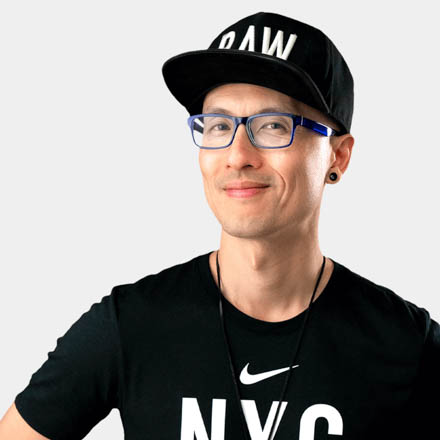
Chris Do
Founder, The Futur™ · September 8, 2023
This Is Not a Fair System
Water covers over 70 percent of the Earth. It rains from the sky, free for the taking. Yet somehow, companies have convinced the world to pay more for a gallon of bottled water than for a gallon of gasoline, a resource that requires massive capital investment to extract, refine, and distribute.
This paradox is not about hydration. It is about branding.
It’s a lesson in how perception designs reality, and it reveals a fundamental truth about the world we operate in. We are taught to believe in a fair system, the kind we experience in school. In that world, there are clear rules, known outcomes, and a direct path to victory. There are right and wrong answers. Success is a matter of following instructions.
The real world does not operate under a fair system. It operates under a wicked one.
Author David Epstein explores this concept in his book Range. A wicked system is one where the rules are unclear, feedback is delayed and inaccurate, and there is no single right answer. It’s a world where less talented people get promotions over their more qualified peers, and it makes no logical sense. As The Futur’s founder, Chris Do, explains, “It doesn’t compute. It’s like it doesn’t function in our brain. And the reason is because the rules to the real world aren’t there. All of it’s fabricated. It’s a construct.”
To navigate this world, you cannot rely on the linear, convergent thinking rewarded in school. You need something more. You need divergent, non-linear thinking, the kind that allows Mavericks to disrupt entire industries. Elon Musk didn’t beat NASA by playing their game. He solved a wicked problem they ignored: making rockets reusable. He applied existing ideas in a new way and revolutionized space travel.
This is what business thinker Daniel Pink meant in A Whole New Mind when he argued that right-brainers will rule the future. The ability to combine analytical thinking with creative, divergent problem-solving is a superpower. It’s about activating the whole mind.
This same principle applies not just to building rocket ships, but to building a career, a business, and a name for yourself. It applies to personal branding, and more specifically, to its most visible and visceral element: your personal style.
The Power of the Package
A product without a story is a commodity. When there is no story, there is no emotional attachment, no preference, and no reason to pay a premium. The decision defaults to a single variable: price.
The story is told through packaging. Consider a simple experiment. Two bottles of shampoo, both containing identical liquid. One is in a sleek, minimalist black bottle with elegant typography, staged among balanced stones in a spa-like setting. The other is in a generic, brightly colored plastic container on a plain white background. Which one is more expensive?
The answer is immediate and intuitive. The design, color palette, shape, and context communicate value before you ever read the ingredients. The same is true for coffee. A bag with dark, bold graphics, exploding coffee beans, and a starburst effect is perceived as stronger than another, even if the copy and logo are identical.
Packaging absolutely influences our perception of quality, taste, and freshness. As author Seth Godin writes in his book All Marketers Are Liars, marketers and consumers are complicit in a pact. The brand tells a story, and the consumer chooses to believe it. “We taste the wine before it enters our mouth,” Do says, “just by how we hold it in the glass, how it’s poured, how it’s presented.”
Our minds are built to fill in absent details with story and context. This is the core engine of branding.
So what is brand? It is not a logo or a color scheme. According to brand expert Marty Neumeier, “Brand is a person’s gut feeling about a product, service, or organization.” It’s what they say it is, not what you say it is. Cognitive neuroscientist Dr. Christine Looser defines it even more practically. For her, branding is simply impression management.
You cannot control how people feel about you. But you can absolutely influence it. You do it on a first date. You do it in a job interview. You pay extra attention to your handshake, your eye contact, and your presentation. You are managing the impression you make.
This is why branding creates preference. It builds an irrational, emotional connection that allows a company to charge a premium. The value of a brand, its ROI, can be measured by how much more someone is willing to pay for it over a cheaper, generic alternative. This is the space where Apple, Porsche, and Starbucks thrive. They’ve already won the battle for your heart and mind. As Marty Neumeier argues in The Brand Flip, we don't just buy products anymore. “We are joining tribes. We’re searching for meaning. We want to form our identities.” Every dollar you spend is a vote for the world you want to live in.
This understanding of brand is crucial, as Do explains in Developing a Winning Brand Strategy. But how does this apply when the product is you?
You Are the Product. Your Wardrobe Is the Packaging.
For a personal brand, there is no bottle or bag. There is no traditional package. Or is there?
Your face is your logo. It’s the container for meaning, the shorthand for who you are. We are neurologically attuned to faces. We might forget a name, but we remember a face.
The product itself is you: your beliefs, your values, your skills, what you think, say, and do.
And your packaging? That is your wardrobe. It is the clothes you wear, your grooming, your posture, and the accessories you carry. It’s the entire context and narrative you present to the world. And people make judgments based on it instantly.
To illustrate this, Chris Do puts a friend, Rich, under the microscope. From thirty feet away, Rich is wearing a non-descript t-shirt, pants, sneakers, a backpack, and a hat. The immediate assumptions about his occupation range wildly: creative, tech developer, trainer, videographer. There is no clear signal.
Zooming in, we see the logo on his t-shirt is for RVCA, a skate and surf brand. He wears a wristband and a watch. We can make a few more guesses about his backstory, but the image remains generic, pleasant but indistinct. The crucial question is this: what impact does his packaging have on the perception of his value? Is it positive, negative, or neutral? For most, it's neutral. He blends in.
Here is what the packaging fails to communicate. Rich is a Marine veteran who served with Apache attack helicopter crews. He is an entrepreneur who runs a podcast production company. He’s a videographer who works with A-list clients. He is an athlete who is in the gym at 5 A.M. every morning. He is, by all accounts, a disciplined, generous, and highly capable professional.
His packaging tells none of that story. It is a generic container for a premium product. It is an opportunity waiting to be seized.
The Style Playbook in Action
How do you transform a generic package into a narrative that communicates value? It begins with intention. It requires a makeover, a reimagining of how style can tell a story. For Rich, the process starts by identifying the core pillars of his identity: military background, athletic discipline, and creative profession.
The first step is moving from baggy, non-descript clothes to a more tailored and fitted silhouette. “A person who’s fit needs to wear clothing that’s slim, that’s tailored and fitted, so that it accentuates their silhouette,” Do advises. This alone signals discipline and attention to detail.
Next is to lean into his unique history. Military-inspired design offers a rich visual language. It’s functional, fitted, and communicates precision. Do suggests exploring brands that master this aesthetic:
- G-Star RAW: Known for its modern, architectural take on denim and military silhouettes.
- Alpha Industries: A literal supplier of jackets and gear to the U.S. military, now a fashion staple.
- Stone Island: A high-end Italian brand famous for its innovative materials and tactical, technical aesthetic.
To honor his athletic side, the look should be versatile and multifunctional. Instead of generic gym wear, the choices become more deliberate. Brands like Army, a fitness company with a sharp, stenciled logo, Nike ACG (All Conditions Gear), and Adidas Terrex offer performance wear that is also stylistically distinct. These pieces are designed for movement but carry a strong design point of view.
With a foundation of fitted, military, and athletic-inspired pieces, the next step is adding layers of personality. This is done through color, pattern, and accessories. Rich’s current wardrobe is largely monochromatic gray. Introducing a pop of color, like a supernova orange, used sparingly, creates a focal point. “Colors can be used to accent,” Do cautions. “A little bit goes a long way.”
The real transformation happens in the details, the accessories that tell a story. Instead of a standard watch, why not a Bell & Ross, a brand whose timepieces are directly inspired by the instrument gauges in aircraft cockpits? The connection to his past as an Apache crew member is immediate, subtle, and powerful. It’s an insider’s nod, a conversation starter.
As a podcast producer, he should signal his connection to audio. A pair of high-quality headphones, perhaps in his signature accent color, worn around his neck, communicates his profession without a word. It’s functional jewelry. As a videographer, his camera gear itself is part of his packaging. A basic DSLR says amateur. A camera fully kitted out with a tactical cage, top handle, and side grips says professional. It looks military-esque, precise, and serious. People sit up a little straighter when that camera is pointed at them.
This is what building a personal brand is all about. It’s not about being someone you’re not. It’s about making the invisible, visible. It's about aligning your external packaging with the high value of your internal product.
Standing Out Is Non-Negotiable
In the world of branding, there is one cardinal sin. It is not being disliked. It is being ignored. Do borrows a line from designer Brian Collins to make the point: “It’s called branding, not Blanding.”
In every industry, there is a de facto uniform. The tech CEO in the hoodie. The lawyer in the navy suit. The creative in the all-black ensemble. This code of conduct provides a sense of belonging, but it is also a trap. It encourages conformity. If you want to build a personal brand, you must do something different. You have to stand out.
Our brains are hardwired to notice differences. We are superior pattern-processing machines. In the film The Matrix, a training program demonstrates this perfectly. In a crowd of people dressed in monotonous black and white, a single woman in a red dress instantly captures our hero’s attention. She is the anomaly. She is memorable.
This principle is wielded with masterful effect in the world of entertainment and sports. Look at UFC champion Sean O’Malley. Early in his career, he looked like a standard All-American kid. But as his star rose, his style became increasingly flamboyant: rainbow-dyed hair, bold tattoos, flashy jewelry. He became impossible to ignore. His rapid ascent to a title shot, jumping past many higher-ranked fighters, was not just about his skill in the octagon. It was about his ability to command attention.
His style is heavily influenced by his friend, the rapper Tekashi 6ix9ine, another master of personal branding who transformed himself from a regular kid named Daniel Hernandez into a notorious, un-ignorable public figure. Their strategy is clear. “You either want to see them win or you want to see them lose,” Do observes, “but the only thing that you can’t do is to ignore them.”
This is not a call to be obnoxious. It is a call to be expressive. “When they zig, another zag,” Do urges. “You Zug.” Go a different direction. Draw inspiration from your culture, your city, your hobbies. The goal is to tell your story, and you cannot tell a unique story by wearing a generic uniform. Whether you emulate the provocative tactics of an O'Malley or not, the underlying lesson is the same, a theme Do explores in Why You're Still Invisible. If you want to stand out, you can't blend in.
Your Personal Style Toolkit
Developing a personal style can feel daunting. Where do you even begin? The process starts with a simple, foundational question: What three things do you want your wardrobe to communicate about you?
The key is to choose words that evoke a visual. “Integrity” is an admirable quality, but what does it look like? In contrast, Do’s three words are: “Designer,” “Doesn’t fit a mold,” and “Intention to detail.” These words immediately suggest a visual direction: deliberate choices, pushing boundaries, perhaps even androgynous clothing, and a high level of craftsmanship.
A powerful way to find your direction is to identify a style icon. This isn’t about copying them, but about drawing inspiration. Look at Pharrell Williams, who can take classic silhouettes and add an editorial twist that makes them entirely his own, from his signature hats to his expert use of neckwear. Or the rapper T.I., who masterfully blends classic American style, like a tweed jacket, with hip-hop culture, adding luxe accessories to elevate a simple sweatshirt and jeans.
Once you have an icon, dissect their style. Ask two questions:
- What is the one thing they wear that complements their unique physical features?
- What is one way they accessorize that you really like?
Pay attention to body type. A style that works on a 6’3” person who weighs 160 pounds will not work the same way on someone with a different build. The clothing must fit the person.
With this foundation, you can start building your own toolkit. Do offers a straightforward guide:
- Have one statement piece. This is something unique that tells a story. It could be a splurge, like a pair of designer sneakers, or something deeply personal that references a hobby or passion. It becomes your signature.
- Layer and accessorize. For men especially, accessories are a critical opportunity to add personality. Think neckwear, eyewear, jewelry, bags, and even the tools you carry. Glasses frame the face, a unique watch tells a story, and a scarf can change an entire outfit.
- Find your signature color. Move beyond the designer’s all-black trope. Pick a bright, brilliant, saturated color and use it as an accent. A pop of yellow on a cap or a flash of red in your socks can define your look.
- Experiment with patterns and textures. This is an advanced maneuver, but introducing patterns like houndstooth or textures like woven fabrics can break up a solid look and add a sophisticated layer of visual interest.
Your clothes are an invitation. For introverts, they can be a way to provoke conversation without having to initiate it. A concert t-shirt or a piece of tape on a hat becomes a prompt. It invites extroverts to ask a question, to find common ground. It turns your wardrobe into a passive communication tool, a strategy he details in How to Ditch Networking and Build an Authentic Brand. It is your business card, your packaging, and your story all in one.
Master Your Silhouette
The late, brilliant fashion designer Lee Alexander McQueen once said, “To change the silhouette is to change the thinking of how we look.” Fashion designers are obsessed with silhouette. They play with collars, shoulders, sleeve lengths, and pant widths to alter the fundamental shape of the human form.
This same principle is a cornerstone of character design in animation. In the film Kung Fu Panda, each character has a distinct and instantly recognizable silhouette. The crane, the panda, the tiger, the snake, the mantis, each has a unique shape. Designers even give the crane a large straw hat to alter its naturally small-headed silhouette, making it more graphically interesting and identifiable from a distance. The details don't matter if the core shape is not clear.
You can apply this thinking to your own personal style. Start with a generic silhouette: a simple shirt and pants. It’s a monolith, a single, unbroken shape.
Now, start making small, intentional changes. Add a pop of color with bright red socks. The entire visual balance shifts. You’ve anchored the look and created a focal point at the bottom. Add red glasses. Now you have visual interest at the top and bottom, drawing the eye up and down.
Turn a cap sideways and add some color. The silhouette of the head is now different, more angular, more dynamic. Add a t-shirt with a simple red graphic. The monolithic torso is broken up. Add a red watch band. You now have a complete, intentional look built from small, deliberate pops of color that transform a generic shape into something with personality and intrigue.
You can upgrade your silhouette and signature look with a few key items:
- Designer Sneakers: A statement piece that anchors your entire look.
- A Signature Hat: A beanie or cap can break up your silhouette, but be sure it fits the shape of your face.
- Neckwear: A scarf, ascot, or even a bolo tie can add an unexpected and sophisticated touch.
- Jewelry and Eyewear: Rings, necklaces, and distinctive glasses add layers of personality and frame your face.
- Bags and Tools: Your backpack, briefcase, or even your phone case are all part of the package.
The journey begins with a mood board, collecting images that inspire you from art, music, movies, and your own culture. As you collect, a theme will emerge. A story will begin to form.
As the musician John Prine once quipped, “If you keep making the same mistake long enough it becomes your style.” The goal is to make your “mistakes” intentional. Once you start wearing a signature cap or a specific style of glasses, people will associate it with you. You are creating consistency. You are creating a brand.
Be bold. Be italic.
But never be regular.
TRANSCRIPT
Enjoyed this? There’s more where it came from.
Get insights on creativity, business, and design from The Futur.
You can unsubscribe anytime. By submitting, you agree to receive communications and to our Privacy Policy.
“If you keep making the same mistake long enough it becomes your style.”
— Chris Do
Key Takeaways
Subscribe
Details
- Length
- 1h 13m
- Views
- 35,850
- Topic
- PERSONAL BRANDING