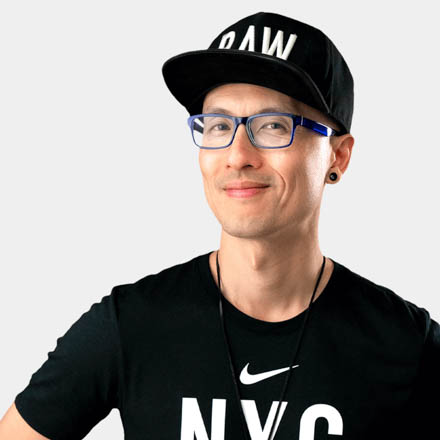
My guest today is Anna. Anna's done some pretty remarkable things, interesting background in childhood, but I'm getting ahead of myself. Sup, I'm Anna Nassery and you're listening to The Future.
So Anna, for people who don't know who you are, can you please introduce yourself and tell us a little bit of your backstory? Hello, hello. I'm Anna.
I run a creative agency, Lumina Creative. It is a website and brand design agency. I've been doing that for the past eight years.
But prior to that, I worked 12 years in creative direction as a CMO for just different companies. tech startups. And what I do now is I run my agency and then I support other creatives in building a life and business that's more reverse engineered towards who they want to be and the life they want to live rather than building a business that consumes their lives.
Now, based on your pedigree and the titles you've held and what you're doing now, one would assume you're a creative person with a design background. But as I looked up, you went to Cal State Fullerton and you studied public public relations so i'm like what maybe we all said the wrong things everybody we said to design and here she is cmo running her own agency how does pr lead you to your first gig that made sense to you it literally did not at all okay and it's funny i don't know i don't know if this resonates with you but i've hired a lot of people whether they're marketers or creatives or in ops And I never look at where they went to school or even if they went to school. And I think my parents were very big on education, which is why it was just a no brainer for me.
But looking back, I would have rather worked and gained life experience in that time instead of I don't even remember anything I learned about PR back then. Did you graduate? I did graduate.
Were your parents okay with that? Yeah. Going to PR and graduating.
Yeah. They would have wanted me to get my master's degree or my doctorate or something. That's another story.
Okay. Did you go to college? I did.
I went to art school, Art Center College of Design and got my degree. That didn't exactly make my parents happy because it was kind of expensive to go to school, but they wanted me to do something that had more financial stability. And I did apply what I've learned.
So I've been talking to a lot of entrepreneurs. Many didn't go to school. Many dropped out.
Many studied something that didn't make any sense to what they're doing now. So I'm always fascinated by people who are like, I don't know exactly what I'm going to do, but I'm going to do this thing. I'm going to get this piece of paper.
And then they're like, screw it. I'm going to do whatever I want. Okay, so your parents are cool, you got your degree, they probably want a master's or something more.
I'm assuming typical immigrant parents. - Typical. - Typical, typical.
They wanna be able to brag to their friends, look how good my daughter's doing, look what they're accomplishing, and they like the big brand names. They could care less what you actually learned, what you're able to do, but it's a good shorthand for stuff. - Absolutely.
- So any resistance going into PR, So, actually, even now that I think about it, I'm kind of going back into post-graduation and that whole, the first 10 years of my career. I think it took a while for my parents to actually be like, oh, shit, what you're doing is actually... more impressive.
It took a long time to get there. Okay. Yeah.
Let me ask that question then. What was it that they're like, okay, that was pretty cool. I think the first time I spoke on a stage.
Oh. The first time I spoke on a stage and then when I started... advising for other companies and then mentoring other people and kind of the change that I elicited in those people.
Okay. So what stage did you speak on? What did you talk about?
I think the first stage I spoke at was it was an Orange County commerce company, but it was like a big crowd. And that one was like Speaking has always come very naturally for me. And I think that was, I was just in flow for that.
And then after that I did Kajabi here alive as well. And that was a bigger, that was a bigger crowd too. But then like my parents drive past the Kajabi building all the time in Irvine.
So that was like, Oh, nice. kajabi here live it must mean that you're also creating a course or something kajabi that they invite you to speak or not quite the opposite because my agency was the first agency to custom code kajabi websites okay so i actually spoke on web conversions oh rather than the actual creator side of things i guess we've studied the wrong things everybody we studied the making parts and okay so how did you become a cmo what was that so early on in my career, I think I just hopped around. I worked at Interscope Records for a little bit and then a medical device company, all in marketing.
And then around that time, I think that's when PR really shifted with the emergence of social media. So I think a lot of what I was doing and my skills started translating over to marketing. And after those two corporate jobs, I realized like, I don't want to work in a cubicle.
I don't want to work in a company where I have to be in at 8am and I'm there till five. I felt like as a creative, I was really stifled. So I actually got a job at a startup.
It was a tech startup. I also realized that early on, a lot of these opportunities that I had, I got through different people. And I got through, I realized that one of my gifts was through connection and my network and the people that I knew and the rooms that I put myself in.
So I was lucky enough to get this opportunity. And then I became a co-founder of this company and I had an exit five years later. Right.
So within that time, I was like, okay, I have ownership of this company. And I felt like I was in business school, just being at this company as like number two. And then during that time, as you know, with a startup, it's like you have to wear a ton of different hats.
So in doing so, I saw that a lot of what I liked doing was more in the creative direction side of things and more in like brand and brand strategy. And I actually got a job at at a company called Athos in Redwood City, so up in the Bay. And we had, I think the way that I got this job was I remember I used to always be on TechCrunch and look for the press releases of like these big funding rounds.
And I would message everybody on the C-level team for these companies congratulating them on their round. And then being like, "Hey, I also noticed your website sucks." and it is not reflective of the 60 million dollars you just got so let's do something about that and i know how these companies work because i've always followed like tramath palapataya and he runs social capital which is one of the biggest vcs in the bay area have you heard of the all-in podcast i think i have but i'm not familiar with it okay it's it's an interesting one but he's It's a lot of like politics and economy and things like that. So Chamath is really well respected.
So I've always looked at his principles and something that he always like advises the companies in his portfolio is to not invest in marketing or graphic design or these things until you've reached product market fit and the product is good. So I had that in mind when I'd reach out to these companies. I'd be like, okay, I know you're probably not hiring people.
anybody, but I'll contract for you. And this is what I can get done. That's how I could do it.
So when I did that to this company, Athos, they hired me immediately. So day two, they were like, can you come to San Francisco? I was like, yep.
So hired you as in hired your company or hired you? Hired me. Yeah.
So this was well, this was well before I started my agency, but in my time working at the startup, I was the only non-technical person. I was the only non-engineer. And I got to do everything.
And I got to hire my dream global agencies. Every Monday, I would just sit in these meetings with the C-level team and me, who was like a 25-year-old. I didn't have too much experience.
But our CEO, Don Fowle, he's now the CEO of CrossFit. He was the former COO of Pinterest. Our marketing lead was the former CMO of LinkedIn.
Our brand lead was the former head of brand and monetization at Snapchat. Our lead engineer was the former lead engineer at Google. So we had this incredible team.
So I learned an immense amount. And Mike Randall, who is the guy that ran brand, he became my mentor. So within the time that I worked at this company, I think it was over three or four years, we rebranded a ton and it all came down to changing our demographic.
And each time we did that, I got to go into his brain to see what he would change when it came to the words and the aesthetic and the feel and even the product. how that translated into product design. So that's really where I learned a lot of the creative parts because I wasn't inherently a creative.
And I also in that time got to liaison with some of the, because we had all these rebrands. So each time we'd hire a different agency, I'd fly to New York, I'd fly to Florida, and I would be the one managing these agencies. And there They were really good.
You know, they would charge six figures for website rebrand, all that. But I'd be there while they do the discovery and the brand archetype. So I learned from the best.
But also I'd be like, I could do this better. Absolutely. I have ways of doing this a lot more efficient and better and I'll test it out with them.
They would send me one thing and then I'd change up the system and like implement some new software and then like give it back to them. And during that time, I was like, it'd be dope to run my own agency. So it sounds to me like the way you got into this is some tenacity.
and being very proactive, looking for opportunities, reaching out, building relationships. You got on company when it's really young and the people that you wound up hanging out with wound up becoming really big players elsewhere in the near future. So that's pretty rad.
So your network there is just ginormous. Yes. And you're in the base or you're in the heart of it all.
You're getting a first row seat in how these things are done, how people run strategy, how they do discovery. You can see the proposals. So you have a tremendous advantage because most of us never get to see that.
So I take it then you spotted patterns and you're like, well, perhaps we can do this better. So that gives you the itch to go and do this. Now you mentioned joining on, it's like number two and then that it was acquired or sold.
Was that Quorum you're talking about or a different company? - Tethered. - Tethered, okay, Tethered.
So that was acquired, right? So when a company is acquired, do you get money or it's just you, you just become part of a bigger company? - Oh yeah, baby.
Well, let's talk some numbers here. I've not been acquired. Yeah.
Poor Chris. No one's ever paid me money for my stuff. What can you disclose?
I have an NDA with the details associated with that. I can't discuss the financial side of it, but I will... What is there to discuss then?
This is over. Okay, go ahead. Yeah, but it was, I learned a lot about that.
And now the intel I learned from that are the components, the groundwork that I laid with my own agency into building it to sell it. Like what makes a company or a brand sellable? And a lot of that is like removing the personal brand from it, from the way that the brand or agency or business is perceived.
And then creating like really clear IP replicable systems and processes, things where somebody would just come in and it'd be a really easy sale. So I wouldn't have been able to understand that had I not gone through that process. Right.
But are you going to spill some tea or no? Nah. This is a deprobative conversation here.
You just brushed me aside like a kid guy here. I develop systems. You can't give us any kind of ballpark information when you're like, oh yeah, I feel like you need to say something like more than this, less than that.
Let's just say that my twenties, I was, it wasn't like wealth, like life changing. However, it gave me the flexibility in my late twenties to do what I wanted to do and to kind of fund my agency and be able to, in the early stages, not pay myself. and not and just keep reinvesting back into the company team i'm gonna try one more time this dog's gonna give up on the bone he's gonna throw it in when i least expect it no i'm gonna try one more time post acquisition how long could you live without working i was working still i know what you're doing no of course you know what i'm doing because you're a smart lady i'm just saying like man i could live and not work for x number of time Roughly.
Two years. Two years. Okay.
That's helpful. Yeah. So that gave you two years of runway to figure stuff out.
So when you went off on your own, we kind of now know what the runway looks like. And that's a great amount of time. It's not too long where you're like, F you, I'm done with this.
And it's enough where you can take some moves. So how long after the acquisition do you say, I'm going to go do my thing? So I was working the whole time.
So I was doing, yeah. People always think I accuse them of things. I think early on when I was starting that company, it's like I wasn't even getting paid.
while I was working for my company. So I was working like 60 hours a week. So I was working full time at the startups and then doing my own thing and traveling and all that good stuff.
Okay. So you're full time at a company, then you're side hustling it. Exactly.
Basically making no money. Yes. Okay.
Yeah. I get that. But you have a nice cushion to fall back on.
Absolutely. Two years of runway, a nice salary for the day job that you have. So is this the beginning of an agency?
Yeah. So what actually happened then was the company Athos I was working at, it was actually really dope because that was when all the wearables were coming out. And this was the first wearable that was actually compression garments that were embedded with EMG sensors.
So it would track like, let's say for like, if you're strength training, it would track your squat and it would go stream to your mobile app and show you your muscle sequencing or like you're using 48% of your left quad, but only 38% of your right quad. So you're in the moment, you can make adjustments. And we had a lot of brand sponsors.
We worked with a lot of athletes. Yeah. And one of the athletes kind of caught my eye.
Hold on, hold on. First of all, wearables is short for wearable technology? Yes.
Okay, so sensors and things like that. Yeah, that's when Apple Watch was coming out, the Garmin sensors. This was pre-ordering and pre-whoop.
Okay. But those were kind of like, you couldn't really track much with those. There were more for the general consumer and this was like the high-end, like, crazy person that does crossfit a lot so an athlete caught your eye the name of this athlete my ex mike lee who's a professional boxer okay so when you say caught your eye so anyways so he's an ex-boxer correct long story short i ended up moving back down to la and his little sister and I became really good friends and her name is Angie Lee and she has a podcast she has like comedy podcast she used to run kajabi programs for marketing back in the day like 10 years ago and she was the antithesis of me like in a lot of ways I was very like have to have my shit together have to more perfectionist and she was more just like run with it.
So I learned a lot from her. And I also coming from Silicon Valley down to LA, I hadn't heard the word mastermind or been in this bubble of people who are in now where everyone has an online course and a program and all of that. I come from like More of a professional.
My God, that sounds like a diss right there. It's a diss track dropping. So you're saying you're a professional and masterminds aren't?
And masterminds are not. Says someone who runs a mastermind. So Angie actually had me teach for...
one of her mastermind online classes. And she also was urging me, she was like, "Why don't you just start your own agency?" And I was like, I did learn a lot, but I was on the brand side. I was like, I would love to work at an agency for six months so I can at least learn operationally.
How do I create an org chart? What are the systems that we use internally and then do my own? But within that one online class I taught, I had like 10 clients.
They're all like, can you build me a website? Can you do this? And I was like, I would she urged me she was like, just fucking do it.
Who else would get all these clients right away? And I was like, Okay, and they're all on Kajabi. So I actually then going back to my network, I was like, I've been working in Silicon Valley for years, I have a really incredible Rolodex of designers, developers, copywriters, brand strategists, and I could just pull them into this project.
And then I spoke to one of them who would build on Shopify. And I was like, isn't Shopify coded somewhat similar to Kajabi? And we figured it out together.
And then voila, the first custom coded Kajabi website. What year is this? 10 to 12 years ago.
Okay. So we're talking about... - 2013.
- 2010-ish? - Yeah. - Oh, okay, so that'd be 15 years ago, so, okay, 2012, 2013, okay.
- Yeah, and then also, that is when I found my niche, because a lot of people, they just have this vision. So a lot of people are starting out, you know, you're creative, and you really wanna figure out who you're serving. And you think, almost like selfishly, like, who do I wanna work with?
And for me, my selfish thought was like, it would be really dope to work with health and, 'cause I'm into health and wellness, as you know. And I was like, it would be great to work with health and wellness or CPG or something like that. And then when I worked with these clients who were just like fell on my lap from my network, they were so much easier to work with as clients.
Because let's say I work with you. you. You know who you are.
You know your brand. Let's say I'm building a website. The discovery process is going to be easier compared to working with a team of like 10 people on the board.
They need to approve everything from their entire team. And some of them are dinosaurs. They don't want to be on Slack.
They don't want to merge with my systems. And that's not the ideal client that you want to work with. So I found my version of the ideal client.
They move fast. They're entrepreneurs. They know who they are.
And they were like, our turnarounds were really quick. And then through working with those initial like 10 clients, and then I worked with Angie who had a really big platform. I then met some of Angie's friends who are also influencers and I gave them deeply discounted rates.
But I told them that through the lifetime of their website, you need to have website by Lumina at the bottom to link back to our site. So with that, we just got so much traffic because like in the early years, like we worked with Chalene Johnson, Jen Esker, Chris and Lori Harder, Boss Babe. We've done all of Boss Babe's sales pages for the last eight years.
We've done everything for them. We've worked with Dave Asprey. So we have a very good roster.
Vanessa Lau. Oh, Vanessa. And then with the way I work with whenever I create these partnerships with these clients, like a Vanessa as well.
We also have a website template shop. So I always think through. I'm like the opportunity of, okay, we're going to, Vanessa's a client.
client, when we launch her site, how can we create a referral partnership with her where if we build out a really dope reel at the end of the project and we post it as a collaborative post and then we'll give her 5%, 10% commission per project, she sends her away without really even doing much work. Also, we have a template shop. So I approached her and I have this for Angie Lee.
I have this with my friend Amanda. We have a few different collaborative ones. And then I pitched to them.
I'm like, hey, I know you have a business program and we built your sales page where they're buying the business program. What would you say about us building you a Vanessa template? And I can come on and do a training for your people.
And sometimes they even include it in their course and then give you 50% commission. So that's how my brain works with the business is like, how can I meet the right people? How can I create mutually beneficial referral partnerships with them and then create products that are going to serve their audience in the best way?
Okay. Wow. Very savvy with your business and your marketing here.
For one of these low budget Ones where you do it deeply discounted and they have to do the backlink. What kind of numbers are we talking about here? So I'm always on top of our profit margins.
Yes. And I track everything. Even my time.
I'm not surprised. And I create limits for everything. Okay.
So I always have very clear vision. And I think that's something that a lot of early stage creatives, they kind of, they offer too many services. And in offering a lot of services, you're never quite clear on how long things take.
You're kind of like, sure, we'll do it. But you haven't put in the reps to have the precise clarity on how long it takes. Right.
And you end up bleeding money. So I've always just had really clear, And honestly, early on when I was account manager and I had designers and developers that I'd outsourced to, some of these people were offshore that worked for the company that had 60 million in funding. And I think early on, I was at around 90% profit margins back then.
That's crazy. I was doing everything. Yeah.
And at that, I would give it to them for like 75% off. But I only did that for like the first five people. And for the right kinds of people.
Yes. Yeah. 75% off, what price?
So I think I started off with just really basic web builds. And for creators, it's really simple. Home page, about page, a program's feed page, and then maybe one sales page.
So something like that early on probably charged like 6K for that. Okay. So I'd give it to them for like closer to...
- Okay, easy yes for them. - Yeah. - And then you would use them to help promote and build your brand to backlink.
- Exactly. - So it's a good strategy. - Yeah, and then over time with the-- - Did you do the copywriting too for the sales pages?
- We would add them on. I mean, now it's kind of different with AI and everything 'cause we have a lot of options. We create custom GPTs for our clients who wanna DIY their copy.
We have incredible conversions copywriters that we bring on, so it's like an add-on. - But back then, did you, do it yourself or hire someone or they provided the copy? Yes, we'd give them the option.
Okay. Because I never believe in cookie cutter thing where we only do a five-page site, even though you don't need five pages and we only offer copywriting, even though you might be a really great copywriter. And I noticed a lot of the people that you mentioned that you worked with, most are female entrepreneurs.
There was a David thrown in there, but I just heard a lot of female names. So I know that's a little bit about what you want to work on, right? Yeah.
like focusing on female entrepreneurs. Yeah. Yeah.
There's a lot of female entrepreneurs for sure. When did you quit then? Cause I'm still tracking time here.
Side hustle starting to grow. Did you quit? Oh, yeah.
So when I moved down from San Francisco to LA, I had a little cushion. So I was giving myself three, four months to get my agency job. But then that three, four months turned into me starting my own agency.
What year is that? So eight years ago, 2017. Okay.
2017. Yeah. Okay.
I want to hit you up with some philosophy, like kind of things that you believe and hopefully just tee you up so you can explain this. Hit me. You say something like regulate the founder, then you regulate the business and you tie it to nervous system.
It makes sense. Can you explain what that means? Absolutely.
So the somatics and nervous system work has been a massive part of my life, I would say the last five years. So kind of going back to early stage of the business, I I'm sure you can kind of track this yourself, but if you look at all types of businesses, I would say a creative agency happens to be one of the most chaotic business models. You're building something creative, which is very subjective.
It's not black and white. You're You're managing multiple designers, creatives, developers, copywriters, and then managing multiple clients at once. We used to have 60 clients at once.
I had three account managers, a creative director, a tech manager, a project manager, and I built a really big business. Because again, all my mentors in Silicon Valley were men. And I think I evolved under the masculine paradigm of success and almost like hormosy culture.
Have you seen that video from Alex Hermosi where he talks about how slaves worked all day and that that inspires him to work more? It's ridiculous. I will send it.
It exists and I will send it. Okay. But that, you know, that's what a lot of the people, even now that I'm around, they're into that.
They're into the Hermosi calendar. Absolutely not. Okay.
So you're saying creative culture tends to be like hustle and grind and they, They kind of celebrate the fact that you have no life and you're just going to work all the time. A packed calendar, a lot of clients, big revenue numbers. And that was the trap that I fell in early on.
I was like, how big can I grow this? And I just grew and grew and grew and grew. And then I went on a few bigger podcasts.
And then we had a ton, you know, our clientele started getting bigger and bigger. So we got really big. And I was like, okay, more team, more team, more clients.
Until one day I just broke. And this kind of came around the time where I did the Hoffman process. Have you heard of that?
Okay. So the Hoffman process, I actually heard about the first time when I was in San Francisco, because a lot of these startups, they send their C-level executives out there. It's a week long transformation leadership program.
They take your phone, they take your laptop. It's a complete dopamine detox. And it's all about your uncovering your deepest patterns.
Because the way that I see it, business is a microcosm. Your romantic relationships are a microcosm. Your friendships are a microcosm.
If you're avoidant, that's going to come out in your business. If you're somebody who gets anxious with XYZ or you're late with this or you're not clean with your word, it's going to really bleed out into whatever you're doing. So that's why this is called a leadership training when in reality, it's like uncovering your deepest wounds and it's uncovering how you were raised.
And in that, I realized like, holy shit, I was born in a war zone. I was an immigrant. I was a refugee.
I moved every year until high school. So I'm used to like a lot happening, changing. I love my parents.
I think they poured a lot of love into us, but they worked a lot as immigrants. And that was embedded into my nervous system. Like in order to be successful, you need to work a lot of hours.
You need to be stressed. You need to hustle. You need to grind.
So it took a week for me being in this retreat to really realize that. And then I got out of that and that was a few other things happened over the course of a couple months. You said you grew up in a war zone.
I know we talked about it before cameras started rolling, but people were like, what? You can't just throw that out there and walk away from that. I mean, I know technically or figuratively, a lot of you are like, I grew up in a war zone of Orange County.
Please explain. So I was actually born in Afghanistan during the Soviet invasion back in 1987. And my parents had a good setup there.
And we just fled overnight because there was a bomb that went off on our street. I imagine my mom having me as a six-month-old, my brother, who's a year and a half older than me, and we just left everything overnight. And my parents were both highly educated.
They had a good life. And we hopped around. We were in India and Paris for about three years.
And then we moved to California. My dad got a job as a security guard working graveyard shifts and at Pizza Hut. My mom worked as a bank teller and also at Nordstrom's Wraith.
And again, they're both very prideful people, very highly educated. And that's what they had to do in order to support my brother and I and send us to private school. And where is this in the valley?
Yeah, in the valley. Which part of the valley? Calabasas area like Chatswood, Northridge, Granada Hills.
And just so I understand, what is your earliest memory? What city are you in? Because this happened when you were really young.
And you moved around a bunch, but I don't know the timeline here. So when you are conscious, what city are you in? So I don't know if this is the case with you, but I feel like I remember a lot of things early on.
I remember being like two and a half in France. I remember going on a bike for the first time. I remember my brother beating somebody up in the playground for me.
I remember the flight from Paris to California. I remember what I was wearing. So around two and a half years old.
Early memories is in Paris and when your parents left, you went to India and then to Paris, right? Okay. All right.
So really interesting. So you have no memory of Afghanistan? No.
Have you ever been back? No. I have not.
And I don't really, I travel a lot. I don't think I want to go back there unless I have something to contribute. Just how about your contributions?
Just touch foot on a motherland. That's true. It's very dangerous.
And it's still dangerous now. Really? Yeah.
There's a lot of like, women aren't allowed to go to school. Like girls are not allowed to go to school girl. And also women and throughout the whole country can't go to the gym.
You can't hide. you can't you know so i'm like i don't feel like i'd be very stifled out yes i've watched some films traumatization of how horrible it is for some people because the taliban and all that kind of stuff it's pretty bad okay so we i understand yeah right where were you born i was born in saigon okay fall of saigon 1975 april 30th we left have you been back a couple times yeah but only recently yeah and i would love to go to that part of the world that's more of like It's not as Taliban-y. I don't understand that so much.
Is that the technical term? Yes. It's less terrorist state.
Yes. Yeah. More freedom, democracy.
You don't go to jail arbitrarily. Yes. And they can't abduct you.
Women can drive and do what they want. Yeah. Yeah.
It's a beautiful country. I think the food looks incredible. That's on my travel list.
I just think it's real interesting how we as the children of immigrants have a different perspective. We have the American perspective, which doesn't always paint a flattering light on our home country. But the people who grew up there who talk about it before it got real bad, they'll have a totally different sense.
And sometimes it's not always good. Sometimes it's bittersweet. So I would encourage you, as it took me an awful long time to go back to my home country, not because I have any bad feelings.
I just didn't prioritize it. Going back home changes you. Because when I went back to Saigon, I felt an instant familiarity even though I'd never been.
Because the culture, the language, I felt like I was home with my people. - That's beautiful. - No, I hated the heat, but it's just walking around like, I don't feel like a foreigner.
- Yeah. - You know, I grew up as a foreigner here and sometimes-- - Where did you grow up? - In the Valley in San Jose.
- Okay, so. For me, I was always... I rejected my culture as a child.
Because, you know, when you're a kid, you want to be like everyone else. And I grew up in the valley and, like, areas of Calabasas where I was always the foreign kid. Nobody knew how to say my last name.
So I'd always try to morph into... the Caucasian culture. Yeah.
Until I think when I was in my 20s, I was like, I love where I was from. There are so many unique parts of my culture that make me who I am. Yeah.
And it took me a while to embrace it. But yeah, even doing the Hoffman process, a lot of what I uncovered and saw was a lot of the ways that I operate came from cultural limitations and beliefs. Yeah.
And a few other things that I dove into around that time just randomly. Yeah. where I took my first breathwork class and then I did my first plant medicine ceremony.
And I grew up, I didn't smoke weed or drink or do any of that until I read James Fadiman's book when I was 25 and learned about LSD and all the Harvard studies and what it does to your neuroplasticity. And I was like, this seems dope. I would love to do that in that kind of setting.
And I actually found a therapist in LA that through a few different touch points from people that I trusted, one of them was an MD that referred him to me that through these plant medicine ceremony, I have to put that in air quotes because I think ceremonies is, you know, it's a little whack. Okay. It's the ceremony you put in the quote on the plant-based.
You do drugs with your friends in a ceremonial setting. Yeah. So I did the ceremony for the first time and we, it's a blend of sassafras, which is a plant-based MDMA.
And then you take psilocybin with a microdose of ayahuasca in it. And the first, you were like doing it all. This is like the whole buffet.
So it was so dope doing that with a facilitator, with my best friends. It's like a sassafras. it's like you're having this like sleepover with all your friends and it was just for the first time like i actually got the idea of my website templates during one of these ceremonies i broke up with that boxer that we were talking about in one of these plant medicine ceremonies i decided there too within there too because it like lifts the veil and you can see everything like with really high perspective, I decided to move to Austin during one of these ceremonies with five of my best friends.
So it's been such a pivotal part in my awareness into who I am, into my power, into my blocks. What are the things that are blocking me? And also, have you done a proper hour-long transcendental breathwork practice before?
And I haven't done jack in my life. I would love to start straight edge as straight edge as can be. Yeah.
I'm not into the woo at all. So any of this breath work, I'm like, okay, sure. And my wife's the exact opposite.
So she's into all this stuff. And the only reason why I know some of the stuff that you're talking about is because I'm married to her. I get, I get secondhand woo as I always tell people.
Yeah. So the breath work, class I took, I thought was just like, oh, you're breathing. You don't have to do that with quotes.
It's just a class. I thought it was like you're sitting there and you're relaxing and you're taking deep inhales. That fucked me up, my first breathwork class, because it releases DMT in your brain.
And it felt like The plant medicine ceremony that I did. Did you get lightheaded? I started laughing.
I started crying. My hand, I got, you get lobster claws. So like you lose sensation in your hands and then repressed memories come up and you're able to like feel somatically in your body.
Like, fuck my back. hurts has it always been hurting am I just numbing down that pain day to day like it just like rewires a different intelligence into your body your psyche your soma and I thought that was really cool so that was the time that like I did Hoffman I started going to therapy I started doing these plant medicine ceremonies once a year, and then I would do breath work every couple months. So at the same time, my business was blowing up.
And then I was like, this does not resonate with me. I'm working a fuck ton. I'm doing like the Alex and Layla Hermosi plan because that's what I assume.
And I look at other people. I'm like, you know, I think oftentimes we look at other leaders and we're like, I want to build what they have. When in reality, we're all unique sunflowers that we all have different drivers, different motivators, different drains, different things we like or don't like.
So now a big part of the work that I do with creatives is essentially, I call it finding your energetic blueprint and your CEO identity. So I created a GPT that it'll assess your culture index score, your Colby analysis, your human design, your Enneagram, and your Myers-Briggs. So- I imagine, sorry to interrupt you, I imagine all the women are like, check, check, and checkmate.
Yes. You're using all the words that I've heard my female friends talk about. Got you, ladies.
human design Enneagram y'all ladies you get it yeah you get it I'm like but like also culture index and Colby I've been using those in corporate for the last 15 years for hiring people just understanding what you're and I the human design is the one like woo one but I here's the thing one thing about me I don't believe in astrology I don't. Human design is technically astrology, but the accuracy is wild, wild. So anywho, the step one is getting clear on all these things.
Those are who you are. And then this GPT will prompt you on all these questions. And it'll kind of let you know, okay, based on who I am, what is my ideal work?
Do I like managing other people? Do I like having a pack calendar? Do I like not having calls?
Because something I've realized with myself is I fucking hate a Zoom call. If I have one thing scheduled in my day, that completely stunts my creativity. And I feel like I can't get into flow if I'm like, oh, I have a call.
And for me, a Zoom call is not life-giving. I'm drained at the end of it. What's it about a Zoom call that drains your life?
One of my friends created a test for this a while back, and it differentiates things like your working style. So there's the architect, which is the person that's really good at operations. And then there's the teacher versus the coach.
A teacher is somebody who will go on stage. It's somebody who can lead a webinar. I can do that for days because there's no feedback loop.
If I'm on a call with somebody and I'm leading a call or if it's a coaching call, there's a feedback loop that that drains me. Instead of me speaking to someone or me like, flowing. It's a very nuanced thing, but it's a thing that kind of changed everything for me because I do have a lot of friends that love coaching.
They love one-on-one stuff and they don't mind Zoom calls. So for them, they've really built their business by design and I've built mine by design. And then I have other friends who grew up without family and without having like a tight group of friends.
For me, it's like I had that. So So it's not as important for me to like need to have this like really tight team culture and a big team. And my friends who have the they want that they want to have an in-person office.
They want to have meetings and stand ups and check ins because that's life giving for them. So it's about the awareness into what do I actually want and how do I build what works for me? And I don't think a lot of people have that awareness.
So I was able to put that into place because I completely gutted my business and I rebuilt it. So I had a team of 20 something, 60 clients at once. We offered a lot of different services.
So I just scrapped everything. This was about five years ago. So then our custom projects, I would only take on big brands for custom projects.
And then we created a productized service, which is where we build your template in one week. It's easy peasy, done in a week, really high profit margins. And then we have our products and then monthly recurring.
And then the custom side was only really a small piece of what we were doing. And that felt really clean for me. Operationally, it was very easy to manage.
I And then I change it all over to only one full-time team member, my operations director. And then all the creatives we work with are per project. So then- So you went from 20 to one.
Yeah. with independent contractors. Yeah.
And then now guess what? Our profitability is way higher than that vanity metric of having really high revenue. And I also noticed when I look at the org chart of an agency, there's a certain limit for me.
I can manage like two account managers, but as soon as we have more than that, then I need a creative director or project manager that is a higher paying salary. to kind of be my second brain to manage them. And then I'm like, now I'm paying 200K, somebody's salary for 200K and that's really dipping in a margin.
So why don't I just decrease our volume? I can cut that expense and then build something like lean and mean and then not be so reliant on custom work. Right.
So I think that was a lot of the business acumen that I learned earlier on in my career to be like, okay, how can I... Again, it all comes back to clear IP, replicable systems and processes. I remember last time when I met you, we were talking briefly about infusing AI into agency work.
And that's something I'm obsessing with right now as well. And that I think can really eliminate the chaos from the way a lot of people are running their businesses. But to kind of like tie everything together.
I had this awareness into like, oh, I grew up in chaos. I grew up moving around a lot. I never felt safe.
I never felt comfortable. I grew up with parents who worked a lot. So that created a story for me into what I created.
And it was viscerally, it was a very similar feeling. So I had to undo all that to kind of get acclimated with like, how can I create something easy? And how can I change my belief system to know that I can be successful without working 40 hours a week?
And with really building my business that is reverse engineered to like my life and the way that I actually want to live. And also giving myself permission that like, I'm really good at deal flow. I'm great at marketing.
I'm great at these things that are not operations or being in Slack or managing clients. So I think that permission slip and, and, Again, going back to the microcosm analogy, a lot of people, I think it's kind of popularized now too. People say that, let's say a romantic partnership, people are attracted to chaos.
Women don't like the nice guy. They're like the guy that likes to keep them on their toes because they like chaos. So I remember like I had a relationship and then I had my agency and I was like, everything's a shit, like nothing feels safe or good.
And then I had that realization and I was like, let me start from scratch. And how can I attract relationships and friendships that aren't drama? They're loving, they're easy, they're unconditional.
And how can I like rewire my nervous system to receive that and not be like, I like the dopamine ups and downs of chaos. And same goes for the business. What is your human design?
Manifesting generator. And the important part is the numbers. It's a two, four profile, which...
to a T. What that is, is the hermit opportunist. The opportunist is described as the person whose business and their opportunities come through their network and other people.
And you're great at peopling. And then the hermit is the person that recharges in their alone time. So I'm the kind, I was just in Costa Rica for a week with friends.
We put together a self-led mastermind retreat. We did ayahuasca, wachuma, business strategy, nervous system work, somatics. It was seven of us, super dope.
During that time, I'd be like kind of like connecting. And then I'd be like, I need to go introvert in my room for 15 minutes. Bye.
And then in the mornings, I need to just like be on my own. at night's wind down but i toggle back and forth between the introvert and the extrovert would it surprise you to know that i'm also manifesting generator i can see that for you can you yeah i don't know what that means i'm just saying somebody did this test for me i'm like oftentimes creatives are are mgs creatives people that have like they have more of the outward like charisma too we got the riz okay okay so the other thing that you talked about i just want to try and like wrap it up for folk which is the environment in which we grew up in despite how chaotic it might feel feels like home so throughout the rest of our adulthood we get into relationships and environments that remind us of home because that's what's normal i didn't know this but i hired people came from that environment and i like to be chill you know And so they would bring all the drama and the chaos. I'm like, whoa, what is going on?
Business coach at that time said, they're just recreating their home. Unfortunately, it's not your work. So what we have to do is we have to weed those people out because it's clearly stressing you out right now.
I'm like, yes, it is. Because I'm not used to that. They would just make up random stuff so we can get into fights with stuff.
So once they start to understand that. So everybody just know that. The other part that you said, which I think is true, which is women are attracted to...
I think chaos, the bad guys, because sometimes like, why is that person with that? And I don't understand. I don't know what the lure is.
A little bit of danger, a little bit of chaos and maybe a little mistreatment. And then all you sucker nice guys, they just look right past you, look right through you like you're cellophane. Yeah.
Your relationship with your father and your brother as a woman is what paves the road for the love that you receive from men down the line. So if your dad or your brother were avoided or hot and cold, that is bad. home.
That's normal for you. So then you, unless you have the awareness or you want to do a pattern interrupt, that is what you will continuously perpetuate through the rest of your life. Okay.
And I get this back to you. So you help people figure out how they're wired through all these tests and questions. And then to say like, how would you like to design your life and with your job and what you do for a living?
Right. And so we have a moment to take a snapshot of where we are to get familiar with ourselves, which a lot of people don't know. I think I'm just, I don't want to be careful how I say this.
It seems like a bunch of my creative friends that are also female have a big problem. Like they don't really know who they are. And I'm the guy who tells them like without a GPT, I just say like, you're this person.
Really? I can't tell you. That's your brand.
Like you, I feel like you look, you can cut through the noise with someone and just be like this. But when you're in your own soup, it's really difficult to like, yeah, very difficult. Next to impossible.
So I can't tell you recently how many friends and family friends I've told them like, believe you're on the spectrum. You might have ADHD. You may want to get tested.
But that's just my random opinion. And I think it's insulting for me to say, but the reaction has been, let me get tested. And then they get tested.
And then there's this gigantic wave of relief. I just want to let people know. They cry because they've been telling themselves, I'm so dumb.
I can't get stuff done. And I'm focused. And I'm i'm a loser and all then they find out my god you're wired different not worse just different and then they can now begin that process of just being kinder to themselves so i think it's insulting to go tell people you might have something it's not good or bad i'm just saying you might because of your patterns then they get Sometimes they take meds, sometimes they don't.
But at least they know themselves a little bit better. It's awareness. Yeah.
It's very powerful. I'm just saying that because I'm validating some of the things that you're saying. I myself have lots of conversations with myself.
I know who I am. I don't need tests. I don't need anybody to tell me.
I don't need a genie or a gypsy or anybody to tell me who I am. I'm good with that. But for a lot of people, it's a very opaque thing.
They have no idea. So I just want to encourage all of you whether you do it on your own or get help, just think about how you can find out those parts of yourself that are kind of blind you. They're in your blind spot.
Okay. So you do the tests, you help people out, and then you figure out the program. And then you, what do you do with that?
Yeah, that's the first step is the awareness, like getting clear on like who I am, my energy and the what is my it all comes down to like, what's my ideal work week? Am I working Monday through Friday? Am I working 40 hours?
Am I on calls? Am I not on calls? Am I in the delivery?
Am I in the management? Once you get clear on that, that's the foundation. And then from there, as you know, there's like the actual infrastructure of your business, such as, you know, what are, what's your offering suite?
How are you a Chinese menu of everything? Cause that also comes from a place of scarcity. If you're, if you have an agency and you're doing marketing and design and copywriting and, and, YouTube banners and all these things.
I used to do that from scarcity because somebody would come to me as a client and Chris comes to me and he's like, oh, I need a website. I'm like, I got you. And then they're like, hey, you also do my Facebook banner and my podcast cover.
And can you help me with ads? I'd be like, oh, more money. Sure.
I'll figure that out. I might team smart. We'll do it.
So we would do everything. But let me remind you, of jack of all trades is a master of none. And you want to be known for being the goat at the one thing.
So I always encourage people, what is your one thing? And then really limit your services to one or two or three things that support that one thing, not everything else. And then create referral partnerships for other creatives to do these other things.
So you get free money for your discernment and creating a roster of people to refer out to and you're not even involved in the delivery of it. So just getting clear on offering suite, how the business is set up, and then diversifying the revenue streams as well between monthly recurring product, productized service, and then over time tapering off of custom work. The question I have is if I'm somebody listening to this program right now and it sounds great, sounds like I get to do the things that I love and my delegates are rats.
But what if I'm not in a financial place where I can do that? How do I get in this place? Great question.
In the early stages, I think especially I was a solopreneur when I started my agency. I was like, we're an agency. It was just me managing a couple of creatives.
And sometimes some people might want to keep it at that. Not an agency isn't for everyone. You might just want to be a designer.
You might just want to be a writer, whatever it is, and just build that business as a consultant or whatever that looks like. If you are building more of a studio, more of an agency, something like that, I am big on wearing all the hats in the beginning because you need to be in delivery of everything that you're doing because life is hard. You can't just start a business and be zooming out to five years from now and being like, why aren't I making this much money?
Like I said, I didn't pay myself a penny the first year or two I had my agency. I was just reinvesting and paying other people and making sure our services are are better. Again, product market fit.
How can you reinvest into what you're delivering to people to make that the number one? And then as that grows, then you can fall into your role. But at this point, you're a CEO, you're a founder, and you really need to do what's going to behoove the business.
And that means wearing all the hats, doing all the things. Eventually, you're at a place where you can hire a VA to support with admin. And then based on your energetic blueprint or your CEO design, what do you do?
As you know, with me, I'm not a designer. So otherwise, I would have been in the trenches designing, but I just don't even have that skill set. So I was account manager.
And then I hired that out. So then you can figure out based on like what you're good at or what you have experience in. You own that and then you hire out your first delivery person.
And then the more money you make, then you can hire more as long as you're still working as much as you are. But you're focusing on revenue producing activities that only you as the leader could do. And oftentimes that comes down to...
This is subjective, but this is the way that I coach people. I'm big on human to human businesses. So not B2B, B2C, human to human.
H2H. Yeah. So it's all about like, how can you create a really dope founder brand?
Yeah. And again, not cookie cutter, like everyone else is doing it. You don't have to be on Instagram.
Going back to what you're good at. Are you a writer? Do you want to be on X?
Do you want to be on LinkedIn? Do you want to be on Instagram? Are you good at reels?
Are you a long form writer? Do you want to like build a really dope newsletter? Like whatever long form and short form content platform you individually thrive in, go all in on that.
So people will resonate with you because I, you know, we were doing six figures a month. in two years into the business, Through me. We had never put a dollar into marketing or sent an email or done any ads.
It was all through referrals and all through my network and my Instagram. My face is not on my agency's website or social platforms. However, I link out to my agency from my personal social accounts.
So people would like resonate with me and then hire our agency. But I also made it very clear that I'm not involved in delivery or working with my team. Just quickly recap.
So if you're early stage, you're not ready to invest. You're saying, "Hey, buck up, do the work, it's a grind. You might not make any money.
Don't quit that job just yet. Get it to a place in which you can afford to hire someone." And eventually you get to this place where you're talking about where you can really help them so that you can help them figure out the parts they love doing the most that's aligned to their energetic blueprint and to do their CEO design so that they can do fulfilling work, work that lights them up, and someone else can do all the other stuff. Got that right so far?
- Yep. - Okay. I'm sure we can go down many more rabbit holes.
I'm gonna tee you up in a little bit about how you can find out more about your programs and how you help people. So don't just leave just yet, but I do wanna know something about you. This is a test.
Who are you as a person and as personal brand as opposed to your company? I wanna just separate church and state here a little bit. I don't know which is you, church, and maybe your business is.
How do you think people perceive you? You're sending out certain energy right now because everything we do sends out energy. In the case of people, the way you look, the way you talk, the tone of your voice, the words you've been using, everything.
You're communicating to somebody something. So for the record, how do you think people perceive you as a human being? I think there are the moments where when you run a business, you always want to be a good representation of the business.
And I do understand that. And I'm big on authenticity. So I'm the kind of person where I'm not the most professional sometimes.
I've cursed a lot this conversation. Yeah. 14 times.
I meant to ask you about that in advance. I just want everyone to do whatever feels natural to them. But that's who I am.
And like, that's how I get clients. And I'm sure I can put on another... Yeah.
for attracting clients because like attracts like. I want to attract ratchet clients. So I think what you're saying in how you present yourself is slightly unrefined, raw, unpretentious, keep it real real with you.
Yes. And if you don't like that, I'm not your girl. You can leave.
You can leave. Yeah. That's the exit over there.
Yeah, exactly. Okay. How far into your life do you come to this place where you're so confident and comfortable saying, I'm me and I'm just going to be the meest me I can be?
I think around that time I was telling you about where I like after I did, I did the awareness piece and I kind of gutted my business. I was like, I'm going to start this over and I'm just going to do it. Three years in.
Correct. So that's five years ago. So that would make you 33.
- Yeah, it takes a while to get there. - Amazing, I got the math. - Yeah, and another one too was like, this is another thing, a pattern of mine from, I moved schools every year up until I was in high school.
So that is a blessing and a curse 'cause it gave me a gift. I can walk into any room and talk, like I have an ability to connect with people and I can walk into any room and be like, I know what conversation to have with him, I know how to talk to her in a way that's like gonna feel comfortable for them. The curse of that is that's a chameleon factor.
So in like relationships or in coaching, if you're like a fake version of yourself to appease the other person, that's not like, you're not going to be happy with your own self-expression. Yeah. I was just about to say how much we have in common and then you changed it on me.
We're both manifesting generators. We both at some point in our lives ran an agency servicing creative folk. We both teach or coach or run programs to help folks get there.
You're a person who had to flee a war-torn country, raised by immigrant parents, didn't quite fit in, and pursued something in our lives that we finally found some expression of creativity, even though you're not a classically trained creative person. I think you were compelled to it. You study, you reverse engineer, you see from the front lines and you figure out, I'm pretty good at this, I can do this.
Where we are totally different is where you say, I'm going to meet that person. I know what to say. I can blend in anywhere.
I'm the exact opposite of that. I'm like, I want to meet you, but I'm going to stand in the corner and just look at the water. That's me.
I don't know what to do. And the ongoing joke, sometimes I stay on stages. I'm super socially awkward.
I want to make content so good I don't have to develop social skills. - Nice. - So if your content's good enough, people are like, "Hey, yo, I think I know you." I'm like, "Oh, okay, cool.
I wanted you to talk to me. I just didn't know how to do that." - Yeah, yeah. And just to remind-- - So girls like you scare me, by the way.
I'm like the dolphin and you're like the shark or the killer whale just like just chomping on people like holy cow who's that stay away guys this could be a dangerous for us let me I feel like this is a good permission slip for all the listeners out there I went up to you at the Kajabi event i kind of didn't want to but i was just like shoot your shot you know i shot my shot and i don't know if you remember this but i dm you i harassed you in the dms i pitched myself to be on this podcast and you were like literally like i'm busy i was like great i'll check in in a week and then i just can i just like hopefully it wasn't too annoying but like every like two weeks i'd be like sup And then you could, the worst you could have done was just be like, no, thank you. But that's how you got to really shoot your shot to get opportunity to get what you want out of life. Clearly, you know how to do that.
I do not know how to do that. So can I ask you a question? You can ask me.
I bookmarked this. And remember how we were talking about how your superpower and your gift is like being able to see clearly into other people and see pull things out of them and give them perspective. Did you have somebody do that for you early on or were there periods where you couldn't see that within yourself, where you were in your own suit?
I think we all have blind spots. I don't care what kind of clarity you have. I think there are things that you might think about, but you're not certain about and somebody says something to you and then it just clicks.
So there's a couple of things. One is my therapist, Joan. And Joan said, you're a caretaker.
I'm like, I'm not a caretaker. Why would I? No.
And then she just asked me three questions and I caved instantly. I tapped out because I'm a middle child. She goes, the way middle children survive is they take care of people.
I'm like, wow. Because in my life, like with my wife and family and my parents, everybody takes care of me. The office, everyone looks after me.
But there was this part because she was trying to help me understand something like why, I'm so adverse to confrontation. So some people would be very passive aggressive with me and I would just cave because I felt like their feelings were more important than mine. And so I would take care of their feelings and become really resentful of them afterwards.
So there was that challenge. And so once I became aware of that, I started to give myself permission to speak up a little bit more and I would do like little exercises. I'll give you an example.
So if we went to a restaurant or cafe and we ordered something and I got not what I ordered, I would just eat it. You're one of those. I am one of those.
Hold that label in judgment for one second, please. I'm like, "Yeah, that's not what I ordered and I'm going to eat it. I don't want to waste the food.
What am I going to do? They're going to throw it in the trash." Immigrant mindset too, by the way. Yes.
I'm going to eat all of it or if it's salty or it's whatever, it's usually too salty. And now what I do is like, "I'm so sorry. I don't mean to be a pain in the butt.
There's just too much seasoning on this. Can you have somebody do this where it's not that salty?" And they're like, well, we could do something else. Or I'm like, okay, what are the options you have that might not be?
And I'll do that. So it's just the little things first. And then that gets you out of that mindset, that mode, and you can speak up and you find that's not horrible.
I also have this vision in my head that I don't want to be one of those LA people. It's like, oh, can I have this and off the menu? And can you do this instead of that?
And it's like, God dang it. Well, don't eat here then if that's what you want. But the way it's supposed to be made, if it's an edible or inedible, I'm not going to eat anymore.
I used to do that up until like 10 years ago. So I am one of those people. What are one of those people?
So see that awareness that your therapist gave you. Yes. And I'm sure that almost like fun.
It's a you know, there's fight, flight, freeze and fun is the fun. Fun is the reaction where like you're kind of you're the one that's like you kind of go quiet and you're like making sure the other person is good and making sure that everyone else's needs are met before yours. kind of going into like people-pleasing.
Would that affect you in your business and people that you manage? Or like, let's say somebody isn't doing something the way you want them to, you're kind of like, I'm not going to call them out on it necessarily. Yeah.
That's me. I learned that from my dad. My dad's highly opinionated when no one's around.
Oh. But he's the one who gets my mom to do stuff. And I was like, that's weird.
But then I wind up doing the same thing. But also coupled with the middle child syndrome and all that stuff. So I think like, again, therapy is such a dope pool for gaining awareness into yourself.
Like I have a somatic therapist. I have a regular therapist. I have two business coaches like I work with you know who Nick Shackelford is no he runs structured agency he and also Breeze that it's this cannabis drink company but I met him at Eric Su's event a couple years ago he was speaking and I was like you're dope and then I met Eamon Al Abdullah oh yeah there too I was like you're fucking dope and then I was at that conference wasn't I I don't know.
No, no, no. Because I followed your work early on. When I first started.
Because I did speak at Eric's thing. Yeah. Okay.
And maybe it was, maybe you did that the year after or something. Because you're definitely not at the one I was at. Because I saw Eamon there at the dinner party.
And that's where I met him first, the first time. This is years ago. Yeah.
Eamon is one of the dopest people I know. He is. Super cool guy.
Oh my gosh. He spoke at my, I throw two like live events a year. And he spoke at my last one.
Three people cried. They were like, that was the best thing I have ever seen. Like his ability to like, and he's also one of those where like, I look at Eamon as a mentor and Nick as a mentor.
They both have families. They're both married. They both don't work around the clock.
And they're in their Dharma. They're doing shit that they're really good at. They're empowering other people.
They're running really profitable businesses without too much output. So I'm like, if I'm listening to anyone, it's not going to be Alex for Mosey. It's going to be somebody who lives the life that I'm like, Oh, of course, that's what I want.
Not just the business, but the holistic puzzle. puzzle that they've built for themselves. What does in their dharma mean?
In their passion and their life's work. So dharma means passion and life work? Yes.
Is that the Indian word? Yeah. Okay.
Yeah. All right. Let's land the plane for folk.
So they're listening. They're like, I like your vibe. I feel like I need this.
I'm in a place where I'm feeling chaotic. I'm approaching burnout. I've been repeating patterns I can't see into my blind spot.
you mentioned a mastermind is this the appropriate place to send folk or where do they go to like dive deeper into your programs and the ways that you could possibly help them um thank you so i i think connecting with me on instagram Anna doing things. And there's an underscore at the end, not to be confused with the other Anna that does things. Just kidding.
Does the other Anna do weird things? I think so. Okay.
Yeah. So careful. Careful, everybody.
I have two main offerings depending on where people are in their business. I have my high level 12 month mastermind. Those are for people who do over 20 to 100K a month.
the agency owner or creative or consultant that wants to live a life that is in flow in alignment while also building out the proper systems ai operations to make sure that business is doing the business and then i have how much is that that it is 18k for the year 18k okay and how many people can you take on in that mastermind i cap it at 25. and i hand select every person because i'm like we We do during my retreats, we do plant medicine together. And I'm like, what I want, do I respect their business?
Am I going to want to coach this person? Do I want to be their friend? So just a very tightly curated, like I have the most impressive people in this group.
And then I have a Slack community for creatives. It's called the Creative Collective. And that is just where I go off on resources and trainings.
Whenever I feel inspired, I'll just send a Loom video and be like, yo, we just completely updated our entire onboarding process. This is how we're doing it. hey, I just made a VSL.
Here's the script I made. Hey, I just wanted to chat GPT and figure it out how to like get my color analysis for a photo shoot that I just did. Here you go.
We cover like nervous system, operations, platforms, design, team management. And then there's an Ask Anna Anything channel where once a week you can send whatever you want and I'll audit it for you. So that's for the early stage.
Yeah, that's for the early stage people. Okay. So early stage, how would you define that?
What kind of Like literally just starting out because it's inexpensive. Every once in a while, we open it up to a monthly membership. It's like 60 bucks or it's 600 annual.
That is like the stepping stone. And a big part of it too is it is a referral hub. So people go in there, they're like, hey, I need a marketing person to do this.
Hey, I need a copywriter to do this. And people are just kind of crossing lines and like finding people hiring people all that good stuff okay so are both models what you would consider recurring revenue the membership is the membership is the recurring well i guess it's a mastermind they're both because they're paid annually right so yeah Okay. Yeah.
So then you do still some bespoke work? For the agency? Yeah.
No, no. You're done with that. Yeah.
If somebody like a you, which you obviously came to me and were like, hey, can you build me a website? Or Tony Robbins came to me, I'd be like, sure. We'll clear the dust and I'll take care of you.
We'll slam it for a little bit. We'll do work for Tony. Yeah.
Yeah, exactly. But other than that, we build websites and it's our productized service in one week. for 3k who builds it my team i have oh you're independent yeah because they they work with our website templates as the base and then copywriters come in account manager come in and they just customize everything for the client how much is that 3k baby And they look great if I do say so myself.
I think you just did. Okay. Wow.
This has been a wild ride. We touched on so many different things. We talked about rough starts, fleeing a war-torn country, bouncing around, moving around year to year, switching schools and what that can do to you and discovering yourself in that process and learning that that's not what you want.
We learned about your manifesting generator. Real recognize real. We heard the word Dharma, plant-based, workshops and community driven things.
We got a lot of air quotes. We got a lot of sass. We know you like ratchet things and maybe you are ratchet, but I don't think you said that.
I am. And so much more. And you'll have to listen to the entire episode if you want to find out what the heck we're talking about.
Thank you for being our guest. Thanks for coming out to Santa Monica. It was a pleasure having you here.
The pleasure was mine. Thank you for having me. Thanks for being so persistent.