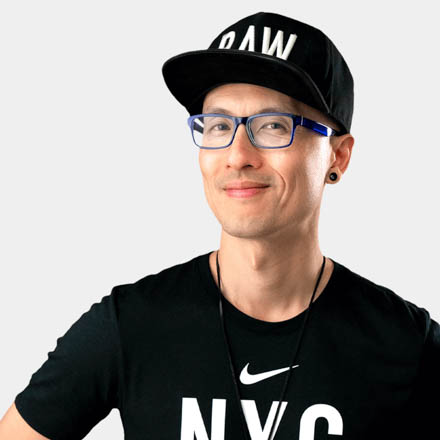
Hey, we're back again with Brendan Cain. We talked about why formats work. Now that we've done that, let's move our focus into bringing them into life, choosing the right ones, filling them up and making them yours.
Let's jump in. Hi, I'm Brendan Cain and you are listening to The Future. What's next?
So I think we can get into the algorithms. So there's a lot of misinformation and myths about the algorithms. And I'm just going to kind of like break down at this level why they exist.
So I started in social media in 2005, MySpace or Friendster. So at that time, there was 25 million people on MySpace, 6 million on Facebook, 8 million on YouTube. So it's a far cry from what it was today.
And then 2010, it jumped to about 2 billion, 2015, 3 billion, 2020, 4 billion. Today, it's about like 5 billion, just in rough numbers. So obviously, as more people came on to the scene, more content was being produced.
And the social media algorithms didn't exist in the beginning. They weren't there. Social media was very simple and straightforward for the first five years.
You get somebody to follow or connect with you, you post content and people see it. Pretty simple premise. Good old days.
Yeah. But when more people are creating more content, these systems had to invent the algorithms. Why?
Because they needed to prioritize content. Like today, if we opened up our favorite app, there's probably 150 ,000 pieces of content it could cede to you based upon the content you engage with and the people you follow. Now, obviously, they can't push 150 ,000 pieces of content to you because you just couldn't absorb that much information.
So they need to prioritize, well, what are the first 5, 10, 15 posts that I'm going to push this person? So the way they make that decision is they have one goal. And that is just to keep people on the platforms longer.
Because the longer people spend on those platforms, the more ads they serve, the more profit they generate. So what they're designed to do is purely retention. So what they are looking for is the best storytellers.
The storytellers that can stop the scroll So that is just like a - and that is just to keep people on the platforms longer. Because the longer people spend on those platforms, the more ads they serve, the more profit they generate. So what they're designed to do is purely retention.
So what they are looking for is the best storytellers. The storytellers that can stop the scroll and hold attention longer than others. So that is just like a simple truth about how these algorithms work.
Now, there's other things that people say, and I'm just gonna break down these false truths that people think, oh, I'm being shadow banned. 99 .9 % of the time, you're not being shadow banned. Unless you're an only fans person or you're doing something illegal, your content is not holding attention long enough.
Again, we're not saying you're a bad person or that your content or your underlying message isn't there. It's just the context isn't grabbing and holding attention. So that's one truth to it.
The next one is the other people say, well, they're just suppressing your reach on purpose to get you to pay for it, to boost for it. Well, I know that's false for two reasons. One, I've managed over $200 million in advertising spend.
And I can definitively tell you, these platforms don't make money off of the average person paying $20 to boost to post. They make money off of Apple, Coca -Cola, Pepsi. These companies that spend billions and billions of dollars a year on advertising.
Number two is, well, how would Mr. Beast be the most subscribed person on YouTube? A 12 -year -old kid starting in his bedroom in North Carolina.
If they were favoring people with more money, then it would be Apple is the most subscribed or Coke or Pepsi or Gatorade or one of these major brands. But that's just not the case. It's easier to blame something that you can't put your finger on than it is to take accountability that you can actually work on this and make it better.
I'm with you. A hundred percent. And I just want to kind of empathize with people.
Like, I know what it means to like put your time, energy, heart and soul resources into something and it just doesn't work. And I feel your pain because I've been there. I'm sure you've been there.
But the reality is it's not these external factors that are driving that down. It's just your ability to be a great storyteller. Now, the hope that I give people is everything that we're talking about today, 99 % of the content creators out there are not doing this.
So if you just start integrating, even just like 10 % of this, it's going to put you ahead of everybody else. Okay. What Brendan is saying, and I'm quoting here directly, that if you think you're shadow banned, the reality is your content sucks.
And he said that. No, he didn't say that. Brendan is saying there's a very low likelihood that you're being shadow banned.
It's just you need to learn how to use the right context to capture attention. Yeah. Right?
Absolutely. Okay. So another thing that we get asked a lot that is a...
pure shadow ban, the reality is your content sucks. And he said that. No, he didn't say that.
Brendan's saying there's a very low likelihood that you're being shadow banned. It's just you need to learn how to use the right context to capture attention. Yeah, absolutely.
Okay. So another thing that we get asked a lot that is a really truth to confront is, well, Brendan, it's going viral. Okay, I don't really care.
I just want to grow my business. And it's a valid question. It's a valid point.
So when I think about the term virality, which is thrown out a lot, and there's a lot of, I would say, definitions of it. From my definition and what we do at Hookpoint, it's not necessarily the number of views, it's the impact that you're having. So the reality is, what is the impact that you're looking for on your business?
First off, I would never tell somebody to do something that has nothing to do with their business just for the sake of going viral. It has to correlate to your business, your goals and objectives. Otherwise, it's a waste of time.
It's not going to translate into anything. But beyond that, for some people, 10 ,000 views is enough, and they can generate a lot of business. For other people, it's hundreds of thousands.
Others, it's millions, tens of millions, hundreds of millions. I honestly don't care about the size. I care about, again, that foundation.
What is the size of your vision? And how are you actually going to capitalize off that attention? Because I'm sure you and I know people that have millions of followers or subscribers that maybe make six figures, and we probably know people less than that, that are making seven, eight figures.
So it's not necessarily the size of your audience. It's what you do with the size of the audience that counts. So how does virality and getting exposure drive a correlation to business?
So one of the first things that we have to look at is, well, what causes virality? And it's another kind of truth that I'll intertwine into this is like, is my business sexy enough? Like I'm an insurance agent.
I'm a real estate agent. I'm a nutritionist. I can't go viral.
I'm a tax accountant. That doesn't go viral. The reality is anything can go viral with the right context.
But how do you actually do that? How do you actually achieve that? Well, most people are creating content from the old paradigm that was created pre -social media.
And I'm talking specifically organic social. And the old paradigm tells you create a niche message or a niche piece of content with a niche audience. Now, obviously, as business owners, we want to communicate to that niche because they pay our bills.
But how do we still communicate to them, connect with them while still making our content accessible to a wider possible audience? Because remember, the algorithms have, there's over a billion pieces of content uploaded to all the social media platforms combined every day. or a niche piece of content with a niche audience.
Now, obviously, as business owners, we want to communicate to that niche because they pay our bills. But how do we still communicate to them, connect with them, while still making our content accessible to a wider possible audience? Because remember, the algorithms have, there's over a billion pieces of content uploaded to all of the social media platforms combined every day.
So they have so much content to choose from. And again, what do they want? content that can grab and hold attention with the masses.
So if you create a niche piece of content with a niche audience, the minute it's seen beyond that, it's typically going to fail. In addition, it's not just that you're competing with your direct competition. The people that you're reaching follow thousands of other people, engage with thousands of other pieces of content.
So it's fighting for attention there. So as business owners in a niche industry, we have to make our content, again, accessible to our niche audience, but accessible to a wider audience. So what are some examples of this?
We have Ryan Serhant, luxury real estate agent, Manhattan, New York. So he represents properties anywhere from 15 to $250 million. So it's a very small number of people that can afford those properties.
But what he does is he plays the generalist principle. He does videos like, let me take you in a tour of a $7 million closet. Let me take you in a tour of $125 million penthouse.
Well, first off, that's a format that was created before social media. And you know what TV show that was? Lifestyles of the Rich and Famous?
Exactly. Hey, I got one right. So again, storytelling, repeating patterns.
So with those formats, he generates tens of millions of views because who doesn't want to see what a $7 million closet looked like? Who doesn't want to see what a $125 million penthouse is? And he knows if less than 1 % of the tens of millions of people viewing his content or his core audience, he will beat out all of his competition.
He has even said that he has sold a $30 million penthouse property. Another account, Amalfi Jets on TikTok. It's got like a million followers.
And basically, it's a simple format where they have the owner of the jet company and they have on speakerphone like crazy requests from clients about jets and things of that nature. And it's millions of views because they want to see like, what does this experience look like? And he beats out all of the competition that way.
So I think people get a little bit flustered with, well, how does it translate into business? And I don't want to just talk to everybody. I want to just talk to my core audience.
Well, if you really want to win, you still got to talk to your core audience, but expand beyond that to drive it. And you see that in your content too. Like you do amazing content, like the ones that have like 50 million, 40 million views.
You're talking about kind of universal truths and principles about like, how do you value yourself from a pricing standpoint, things of that nature that anybody would be interested. still got to talk to your core audience, but expand beyond that to drive it. And you see that in your content too.
Like you do amazing content, like the ones that have like 50 million, 40 million views. You're talking about kind of universal truths and principles about like, how do you value yourself from a pricing standpoint, things of that nature that anybody would be interested in consuming. And then through that, even if a small percentage of that is the core audience that's going to buy your products and services, you ultimately win.
I get asked this question a lot from people who are coaches who think what they do is pretty boring. What kind of format can they use so that there are more people looking at their content? Well, there's so many formats out there and I'll go through a few like man on the street is a simple one that can be used for any industry or sector.
I'll give you another example called visual metaphors. So there's a clinical psychologist named Dr. Julie Smith.
And she breaks down like PTSD, anxiety, panic attacks. And she basically just uses visual metaphors. So she'll have like one of her most viral videos is a waste paper basket on the desk that's overflowing with papers.
And she talks about trauma processing of like taking each paper out, folding it neatly on the desk until it's a stack, clean stack and putting it back into there. We have another client that used it, Chris Cobb, that uses it for car insurance of explaining how car insurance works through kind of like little toy cars and action figures and things of that nature. So that one, again, can be used for any type of industry.
We talked about walking listicles with Robert Croak that can be used for any industry of just walking around the block and going through three tips. We talked about two characters, one light bulb, but it's kind of more about how you take that core content and contextualize it for anybody that's interested. So like I'll give you another example, like tax accountants, like that's a pretty dry subject matter.
So there's an account clear value tax and it went viral during COVID because they were covering videos. And like, if you watch his videos, it's like the most bland background. He's sitting behind a desk.
There's not a fancy camera or anything like that. And he was breaking down, like, when are you going to get your stimulus checks? Like, what are the updates?
And we get millions of views or another one, a dentist. Like, how do you make a dentist interesting? Well, we were working with a dentist out of Utah, Dr.
Jordan Davis. And again, previously he was just doing like commercials and things and nobody wants to see a commercial. So we did a kind of like a react format, but he would like break down celebrity veneer teeth.
So he like, he would do a breakdown of Emily Blunt and like go the progression of her veneers and tell you like how he would do it better. And that video got 21 million views. So it brings people in or another client of ours, Regina Roth, a hairstylist.
She just did this format, but he would like break down celebrity veneer teeth. So he like, he would do a breakdown of Emily Blunt and like go the progression of her veneers and tell you like how he would do it better. And that video got 21 million views.
So it brings people in or another client of ours, Regina Roth, a hairstylist. She just did this like amazing short reveal of this woman's hair and her reaction to it. And that generated 17 million views.
And she was booked out a full year in advance from one video. So it's really about kind of finding that format and that context that can make it interesting and accessible to anyone. You've given us a lot to process and to think about how are we going to get our first million views?
So again, going back to the five step process, the biggest mindset shift that you can make is just understand that this thing called formats exist. And as you start consuming content, start looking for viral videos and click on the creator that created it and see if they've used that same format, the same structure at least five or 10 times and keep doing that over and over again until you find a format that you are really excited about, that you can get behind. And one of the big pieces of advice I can get is most people are looking for apples to apples comparisons.
Like I'm a nutritionist. I'm only going to look at examples of nutritionists or I'm a real estate. I'm only going to look at examples of real estate.
Some of the biggest breakthroughs is breaking the mold of your industry and looking at creators using formats in different industries and applying it to you. Because remember, with these formats, it's not about the content. It's about the context.
It's how you insert your message and deliver it in there. So as you're going through these formats, just be open to other industries, other sectors, and just find the one that really drives your passion. And once you find one, and I'm not saying you have to do the full analysis that we do, because we spend like 15 hours dissecting a format, just at least look at a high performer versus a low performer and see if you can spot the differences before you start creating.
And if you do that, if you follow that process, you are well on your way to your first million views. I just want to take a moment to caution people. If you're in the real estate industry, don't copy other real estate professionals because you'll just be seen as a copycat.
Nobody wants that. I'm going to butcher the quote. I think it's Picasso who said something like the secret to originality is your ability to hide your sources.
So when you go outside, when you are influenced by, like if you're in cinema, be inspired by music or be inspired by plays, not other directors directing the same genre of film that you are, because you'll just be the poor person's version of that. Just want to warn you all. Absolutely.
Now, what do I need to do to go viral? Now I'm going to ask you some questions. Okay, let's do it.
All right. I want to do Man on the Street. What would work for me?
Because now I have Drigo here and we can go on the street and pass. Do you want to do music or be inspired by plays not other directors directing the same genre of film that you are because you'll just be the poor person's version of that just want to warn you all absolutely now what do i need to do to go viral now i'm gonna ask you some questions okay let's do it all right i want to do man on the street what would work for me because now i have drigo here and we can go on the street and do you want to do man on the street because i can just tell you i tested it and i didn't like it humor me let's pretend i really want to be man on the street what can we do that's more interactive i'll tell you why okay earlier you have to go back to that part you talked about looking at your resources and on the other side of resources are your constraints right like what tools do you have what time do you have work within that that's a great place to be a springboard for creativity but your resources could be like what skills do you have i feel like i'm pretty good at thinking of my feet i'm a pretend stand -up comic and i want to see what i can do in real time so we did a lot of research on man on the street i think we've done 10 research projects one thing specifically for you that i'll just point out that i think will be really helpful is understanding the difference of who the star of the man on the street is so if you look at simon squibb he is the star of man on the street but if you look at like school of hard knocks and i love what they've done don't get me wrong i'm not knocking them in any way but he's not the star of it so if you're trying to build a personal brand around man on the street in school of hard knocks he's just asking the other person questions he's not the authority leader the other person's the authority leader versus the way that you're i'm thinking you want to approach you want to be the authority leader so you have to set up the interaction from that standpoint so i mean we could just do a quick little brainstorm here like and i did this you know before we started but what are your most viral short videos the most viral short videos that we've made are usually in a workshop format there's a whiteboard and there's a heated topic that really riles people up emotionally and you can you can actually be on either side of the argument and still feel like you're still right so the logo pricing one is the most high producing but and correct me if i'm wrong most of the underlying subject matter and themes is how you value yourself yes that's the underlying thing because money what you charge is an extension of what you how you see so to me that is one of the first places i would start is underlying themes of how you value yourself is interacting with people in a way that determines how much do they charge for their value of their time and doesn't necessarily be that literal but along the lines of what you've seen in terms of that interaction in that seminar type environment because it's just interacting with other people and breaking down this misconception of kind of like how people perceive themselves how they perceive value determines how much do they charge for their value of their time. It doesn't necessarily be that literal, but along the lines of what you've seen in terms of that interaction in that seminar type environment, because it's just interacting with other people and breaking down this misconception of kind of like how people perceive themselves, how they perceive value, how they perceive pricing, how they perceive charging, which again, all comes down to one fundamental thing is like, how do you kind of value yourself?
So I don't know if you've seen Caleb Simpson. He does man in the street, but he asks people how much they charge for rent and then asks them to do like a home tour. So just one idea is like, how much do you charge an hour?
And like getting into like, why do you only charge that? And kind of, you want to have this paradigm shift and you see this happen with Simon Squibb and like, he has the biggest, like kind of easy universal one. And we would need to think through what is that universal is like, what is your dream?
Like everybody has a dream. Not everybody kind of charges by the hour, but kind of that concept of like, how do we ask a question that gets to the underlying thing of how they value themselves? And then through that, you can coach them that through that experience to have that mindset shift.
Okay. So where can this go wrong? So there's a few areas that can go wrong.
Number one, it relies heavily on the person that you're interacting with and the reactions of that person. If you are interacting with somebody, you need to have that. And this is a big part of kind of the way that we're thinking about.
There needs to be that aha light bulb moment. And you need to be able to capture that aha light bulb moment, because if you don't, it's just going to fall flat. Number two is it has to have that generalist principle, universal appeal of getting down to something.
And I'm not saying that you would do this, but like, how much would you charge me to design a logo versus what is your hourly rate? Or like, I want to hire you how much you're going to charge me for an hour type conversation. But a lot of it is, is really choosing the right person, that personality, and capturing that aha light bulb moment.
I imagine that to be just an issue of tonnage. You got to go through a bunch of people and that's the one. That's the reason I didn't like it.
It's because my personality. I'm not extroverted. So like just going up to a bunch of random people, like for Simon, you know, his personality, like he is primed for that.
Like if you can do man on the street, there is a massive amount of potential with it. It's just like you said, like, I think he goes through like 60 people and he gets like two or three clips out of it. So it's just from a personality standpoint, it just takes a toll on you if you don't have the right personality structure for it.
Let's try it right here. Hey, excuse me. Can I ask you a question?
How much do you charge an hour? Why are you asking me that? Why should I tell you?
I'm trying to figure out what people charge because I'd like to hire you. amount of potential with it. It's just like you said, like, I think he goes through like 60 people and he gets like two or three clips out of it.
So it's just from a personality standpoint, it just takes a toll on you if you don't have the right personality structure for it. Let's try it right here. Hey, excuse me.
Can I ask you a question? How much do you charge an hour? Why are you asking me that?
Why should I tell you? I'm trying to figure out what people charge because I'd like to hire you. Hire me for what?
Whatever it is that you do. I charge $25 an hour. And what do you do for $25 an hour?
I do graphic design. Anything specific? I design websites.
Okay. So why not $50 an hour? Why not $10 an hour?
How'd you arrive at $25? I think it's probably too much for people to pay for my experience. And do you have evidence that had led you to this conclusion?
No. So what are you basing your beliefs on? Honestly, I don't know.
What if I told you there are a lot of people who are just like you, who are charging 10 times more than you and happily doing it with happy customers? How would you respond to that? I would ask, how do I do that?
Great. Let's have a conversation. Okay.
Let's do it. All right. That's the episode.
That's going to get four views. But the important thing is I want to point out tension is a big thing. Like we saw this with Alex Stemp when we did some work with him.
Like sometimes he would put a rejection in before somebody stops. So you'll put in like somebody who says, no, I don't want to talk. And then it goes into the success part of it.
Yeah. I like those. In fact, when I look at Simon's Instagram account, I see that some of the more popular videos are when they turn him down.
Because I think it's just riling up a lot of emotions. There's one video where he offered $10 ,000 to pay a woman to stop vaping. She thinks about it and she goes, no, I don't want it.
And it was incredible. Like, what are you doing? Take the money.
Yeah. I mean, not vape for a day or two. And he does it with books too.
Like I'll pay you. I saw that. Yeah.
Yeah. Because again, it just goes back to the tension part of it. We don't want something that's monotone or flat.
There needs to be some unpredictability about it. And again, a lot of this stuff happens on a subconscious level and automatically with man on the street, there is this initial subconscious, like what is going to happen? What is going to happen?
That hooks people in. Now you need to continuously hook them throughout to make sure that they stick around. Do me a favor, everybody.
If you saw that short, how many views do you think that would get? Put it in the comments below. And then secondly, what do you think about this format?
Do you think I should try this? And if you do, let me know in the comments and I'll go out there and try. Just say, Chris, go for it.
Okay. I think I want to see it. It's interesting that you say this because I was going to do a series telling people how much I think their work is worth.
So how would that work? Okay. It's like basically send me a description of what you do, a video.
And show me a little bit of your work and what you charge. And I'll tell you if you're worth it or not. comments and i'll go out there and try just say chris go for it okay i think i want to see it it's interesting that you say this because i was going to do a series telling people how much i think their work is worth so how would that work okay it's like basically send me a description of what you do a video and show me a little bit of your work and what you charge and i'll tell you if you're worth it or not and how would that look visually it'll be probably the first couple of clips uh the first few seconds would be them saying oh i do da da da and this is my work and this is what i charge an hour and then i would go through it and then i would respond to that but they would be submitting video clips yeah they would be tagging me on social and saying tag me and using an hashtag how much am i worth so it's going to heavily depend on the video of the person submitting it because it's kind of like a reaction yeah it's kind of like a reaction video and reaction videos are highly highly highly dependent on the video that you're reacting to okay a good format that i think you could test that i think would be good for what you do is tips on the move have you seen mark tilbury do that no where he'll basically just break down tips going from location to location okay so it's just kind of like this movement and kind of this visual cue to kind of what you're talking about that does extremely well and it's less intensive than like man on the street because it's very structured and scripted brendan should we delete our non -performing social media posts i would say yes i don't say it's a requirement but again if it's not doing a good job of telling a story and you know people are flipping through i would say more for short form less for long form because long form has a longer shelf life than short form short forms shelf life is very short but from a short form perspective like if somebody's on your profile and they're scrolling through videos why would you want them to just stick with content that's that's not a great structure story so i would take those down maybe not for long form because like videos have been known to take off six months or a year later so it's like you make 10 bad cakes and get rid of the 10 so people don't have a bad sample exactly okay good do you think it's possible to go viral and get clients without showing your face it's 100 possible i would just say showing your face will tend to a stronger relationship with people and will tend to lead to more clients and there's no definitive answer for anything but there's people like dan ko that started off with you know kind of the animations and did really well with that but he's now started to move towards putting his face in the content there's a guy like hunter prosper that does man in the street but he doesn't show his face you just hear his voice there's media companies like vox that do kind of explain their videos through that i'm not pushing people in any direction i tend to ask people the underlying question of like There's people like Dan Coe that started off with kind of the animations and did really well with that, but he's now started to move towards putting his face in the content.
There's a guy like Hunter Prosper that does Man on the Street, but he doesn't show his face. You just hear his voice. There's media companies like Vox that do kind of explainer videos through that.
I'm not pushing people in any direction. I tend to ask people the underlying question of like, what is behind the reason you don't want to show your face on it? Because typically it has nothing to do with social media.
It has something to do with some past trauma or something like that. So again, just understanding the fundamental reason why you're actually making that decision, because it does lend itself in both you and I are faces of our companies and brands. There is something to having that connection, but I'm never going to definitively say, no, you can't do it because there's all this rage of faceless content and things of that nature.
It can work, but it is a bit difficult to build a brand around. I would have answered this question differently two years ago, but I'm going to answer it this way. With the onslaught of AI generated video, voice and scripts, it's now more important than ever to put you in it so that people know a human is involved.
Every time I realize it's an AI content, I don't want to consume it at all. That doesn't mean you have to put your face in it, but your voice, if you have a really good voice and maybe not such a good face, use your voice. If you have an interesting body part, like a foot, point to stuff with your feet.
I don't know. So use what you've got, things that make you uniquely you. And I would just say there are so many examples of unique people, different ages, different genders, different backgrounds, different parts of the world.
You don't need to feel, I'm not going to say you don't need to, I feel self -conscious sometimes. But we looked at Mark Tilbury today. I don't know, he's an older gentleman.
I don't know what his exact age is, but he's killing it on social media. Like you have, you know, people from all different backgrounds, all different parts of the world that come together. Like we talked about Tanner Leatherstein, like he didn't feel comfortable on camera at the beginning.
And he's not like this, like a Simon Scrib or Gary V that's overly energetic. So don't feel like you need to be somebody else to show up on camera. There are plenty of examples of different personality types working.
So Brendan, when it comes to Instagram, should you post via your personal account or your business account? And we've heard rumors that getting that blue check mark helps your content get seen more. So let's start with the personal versus company account.
I mean, we just talked about personal brands typically drive more connection than a company account. I'm not saying it can't. You look at something like Duolingo or Ryanair where they do an extremely good job with their content.
But founder -led businesses and oftentimes you look at like an Elon Musk or like these founders that have far more. personal versus company account. I mean, we just talked about personal brands typically drive more connection than a company account.
I'm not saying it can't. You look at something like Duolingo or Ryanair where they do an extremely good job with their content, but founder -led businesses. And oftentimes you look at like an Elon Musk or like these founders that have far more of an audience on social than the company does because it's easier to make that initial connection.
It just depends on like, what are the resources that you have? If you have the resources and team, then do both. But if you have to choose between one and you feel comfortable being on camera, I would do it through a personal brand rather than a company brand initially to build the traction.
Once you build the traction, then you can redirect that traffic to your company account. In terms of the blue check mark, let's just say there's a lot of information that says that. I don't know that I fully buy into that.
The reality is, is these platforms are going to favor the best stories and the best content creators. And why would they suppress a piece of content just because there's an associated blue check mark with it? Now, maybe there's some, it's easier to build trust.
Like if you're a great storyteller with it, if you can afford it, it's not that expensive. I don't know how much it is now, 10 bucks a month, 20 bucks a month. It's not super expensive.
Like if you can afford it, I would do it, but I'm not going to say it's a requirement by any means. Do you have it? On Instagram, I do.
Okay. But there's no free wins. No, but I got verified before.
Oh, you got it. So you didn't pay for it? No, but it's like, there's no free wins.
Like just because you have a blue check mark doesn't mean your content's going to perform. Right. Just means you paid for it.
Here's your last question. How do we get out of our own algorithm to learn more about what we need to be doing? Because the assumption is the algorithm keeps feeding us the things we're consuming.
And that's true to a degree, I believe. So there's two ways you can do it is you just change your search behavior and content. And all of these platforms have search based functions.
And once you start searching for content, it'll start seeding you more of that. If you don't want to mess with your personal feed, then you can open up new accounts. You can go like an incognito window in Chrome or another browser and just create a brand new account just for specifically researching content.
So it's pretty simple and straightforward. It's just kind of the decision of how you want to do it. Do you want to do it through your personal account or just open a new account to do it?
What is the most exhausting social thing you've done and how long did it take you to recover? Man on the Street is probably the most recent one because I love speaking. Speaking energizes me, which is kind of interesting from an introvert.
I don't like going to events where people, I don't know people or people don't know me. That's exhausting. I love interacting with people if they want to come up, but I'm not the person that goes up and starts speaking to you.
Oh, so I'll give you an example. So we were talking man on the street is probably the most recent one because i love speaking speaking like energizes me which is kind of interesting from an introvert i don't like going to events where people i don't know people or people don't know me that's exhausting like if i love like interacting with people if they want to come up but i'm not like the person that like goes up and starts right so so i'll give you an example so we were we were talking about the event that i was at and they put us on like this yacht party and it was like seven hours long and we were out at sea oh you couldn't escape i couldn't escape funny story about it so like i don't know if you've seen you've been to miami right yeah so you know how like they have all these bridges that have to come up with the big boats so we started from a place where they had to open like 10 bridges so it takes like an hour and a half to get out and then as we're getting going back it's gonna take an hour and a half back and this one guy that owned the boat he's like i'm not gonna wait because it's gonna take an hour and a half so just drop me off and i'm gonna get off the boat here and call an uber i was like i'm doing it anyways but the thing is they made us take our shoes off and left it at the destination so i wanted to get off so bad that i left my shoes and i went barefoot into an uber to get back to my hotel and had somebody bring my shoes the next day that's how much i wanted to get out of that situation look i'll tell you this they may be more in common with us than meets the eye besides the hair all the hair people i do that for you the thing is i don't like going into rooms of strangers i don't think anybody does but extroverts can just swim in there and just like yeah hey you and then they're all best friends by the time the party's over for me it's like there's a whole strategy about how to do that but i found that through creating content you're invited to speak and when you speak there's this introduction so they know you before you know them so technically you never really walk into a room full of strangers you just have to wait long enough and deal with your discomfort so that somebody who's seen you who wants to talk to you will come up to you and i try to make myself to be as approachable as possible in all formats so that there's not this weird like he doesn't want to be talked to a hundred and i think that's also just like the underlying reason why we build personal brands because i've built businesses where you actually have to go out and knock on doors and like not literally knock on doors but you have to go out and seek out the business versus the business coming to you and that's why i invested in a personal brand is because i just know my personality and i don't want to be that person banging on doors and like i wanted always to have an influx of people wanting to work with us because it takes so much time and energy to do it the other way what is the brand of brennan kane so we're reinventing that right now before it was like the science of virality but that messaging was created four years ago i don't know if you know ernest lupinacci but he he's like one of the top copywriters and he helped me create the title wanting to work with us because it takes so much time and energy to do it the other way. What is the brand of Brennan Cain?
So we're reinventing that right now. Before it was like the science of virality, but that messaging was created four years ago. I don't know if you know Ernest Lupinacci, but he's like one of the top copywriters.
And he helped me create the title of my third book, The Guide to Going Viral. And we created that title like three or four years ago and it started out like a keynote. But then you fast forward today, as we were talking about, like everybody's talking about virality.
So it's moving more into storytelling and formats, like getting out of just like pure virality because there's just so much noise around that. And I think we like as we talked about, I think we need to get to our roots of like, how do we all become better storytellers? That's where success really comes from.
You answer that question in a funny way. You're a we and there's a team. Strip all that way.
Like when somebody meets you for the first time and they're going to have an impression about who you are. Just testing your own self -awareness here. What is Brendan Cain's personal brand?
Like, who are you? Like, how do you think people see you? Well, a lot of people see me from my first book, One Million Followers.
So that's where a lot of that comes from. My second book is starting to gain more traction, but more in like the cult marketing audiences hook point. But how I would prefer to be seen, I don't know exactly how I'm seen because I think it's interesting.
My three books are distinctly different and how people kind of pick up. But like the interesting thing is like all three of my books have the same dedication. And that is like, I believe that there's people all over the world have the ability to transform it in a positive way.
But their voice is being suppressed in some way, shape or form, whether it's by a government or dictator at the extreme end. Or maybe it's suppressed by the algorithms because they don't know how to tell a story or they just don't have the right insights. So I just want to help people reach their fullest potential by standing out, like rising above the noise so their voice can be heard.
And again, like as we talked about, maybe it's 10 ,000 people, maybe it's 100 ,000, maybe it's 100 million, whatever that is. But that's really what drives me at the end of the day. I'll tell you what I see.
And people in the comments will happily do it without even us asking. Here's what I see. a guy who's very serious.
I see a guy who's very research and analytical in how he looks at the world and moving things into categories and trying to qualitatively look at the world and kind of break things down. And there's a beautiful brain in there. There's not like this natural, like, let's laugh and let's have a good time until you're roasting me and I'm having a hard time.
Then the warmth comes out. So you're a little cool in the temperature wise, but very professional and very deliberate and intentional in the way you communicate. Well, I can break it down from a personality structure.
We use a communication model. It's been around since the 70s and it breaks. And there's a beautiful brain in there.
There's not like this natural, like, let's laugh and let's have a good time until you're roasting me and I'm having a hard time. Then the warmth comes out. So you're a little cool in the temperature wise, but very professional and very deliberate and intentional in the way you communicate.
Well, I can break it down from a personality structure. We use a communication model. It's been around since the 70s, and it breaks down that people perceive content in the world in six different ways.
So the largest subset of the population is feelings based. That's 30%. So they connect based upon how it emotionally makes them feel.
25 % is fact and logic based. So it's not feelings. It's who, what, when, where, why.
20 % is fun based, you know, reactions, laughing, things of that nature. 10 % is valued and opinions. So it's like, do I trust this?
Are you dedicated or committed? 10 % is reflection based. They just reflect on the world.
Like, I don't know if you saw Oppenheimer with Albert Einstein, like he's staring out at a pond. Like that was his personality. He would just stare out the window and things to come up with his best theories.
And the last one, 5%, the smallest, is action based. So it's, they don't think, they don't feel, they just move. Like it's incidents is their psychological need.
So like Tom Cruise in Mission Impossible, he's not thinking, talking about values, he's not having fun. He's jumping off the side of buildings and hanging off the side of airplanes. So we have access to all six, but we have our strengths and we have our weaknesses.
So my top one is facts and logic based, which is what you're calling out. My second lowest one is the fun base. So that's where it's like, you're bringing that, that part out.
Yeah. But an interesting thing is, and they don't talk about it, Pixar, all of their scripts are based on this. So if you go watch like Inside Out 2, like they'll have a character that's designed for each one.
So that is why, broken down in a very analytical way, why you see a lot of that, that, that cold logic analysis part. Yeah. Very good at doing specific tasks and jobs in the world, right?
My older brother, he's a software engineer from Stanford. Like this is what he does. And everything he does is very binary.
It's like, it's this or it's that. It's either yes or it's no. And at first, if you don't understand him, he comes across really cold.
And I was like, there's a cold killer inside of my brother's eyes, my older brother. And then after a while, I learned like, this is how he processed the world, the world. And then you can see the heart in the way he asks questions and that he doesn't really care, just expresses it very differently.
And that's where a lot of conflict in the world comes from, is you don't understand that people perceive the world in different ways. You could be saying the exact same thing, but it's like you're completely disconnecting because you're saying it in a different way. Yeah, and I think all of us live on this massive spectrum of emotions all the way and just pure logic on the other side and somewhere in between.
Yeah. And to share a little personal note with you. a lot of conflict in the world comes from is you don't understand that people perceive the world in different ways.
You could be saying the exact same thing, but it's like you're completely disconnecting because you're saying it in a different way. Yeah. And I think all of us live on this massive spectrum of emotions all the way and just pure logic on the other side and somewhere in between.
And to share a little personal note with you, I was talking to my therapist many years ago and she goes, are you a fan of Star Trek? I'm like, yes. So which character do you most identify with?
I aspired to be Spock. She goes, I've never seen or heard anybody describe it like that. Like you don't see yourself as Spock, but you aspire to be like him.
And she thought what I described as my hero, she thought was such a tragic character, a person struggling to find their humanity. I was like, Spock always makes the right decision no matter what. And the line, the needs of the many far outweigh the needs of the few.
Yeah. I was like, I aspire to be like that. Definitely.
If you want to take action on this, find your format, one with millions of views and try and replicate that format with your own voice, your own originality. And to Chris's advice, find a format in a different industry or sector. And if you put the link to that video with millions of views from another creator using that format and your video will break down, even if it's not successful or even if it is successful, we'll break down the difference between the two.
And Brendan, if people want to find out more about you, tell us about the books you've written and where they can follow you for more. So I'm the author of three bestselling books on social media, 1 million followers, how I built a massive social audience in 30 days, Hookpoint, how to stand out in a three second world and the guide to going viral. And for the future listeners, you can get a free copy of my third book by going to hookpoint .com forward slash the future.
But if you want to learn more, you can connect with me on Instagram, LinkedIn, or check out hookpoint .com. We'll include the links in the description below if you're watching this on YouTube and check the show notes if you're listening to this on the pod. Hi, I'm Brendan Cain, and you are listening to The Future.
Thanks for joining us. If you haven't already, subscribe to our show on your favorite podcasting app and get new insightful episodes from us every week. The Future Podcast is hosted by Chris Doe and produced and edited by Rich Cardona Media.
Thank you to Adam Sanborn for our intro music. If you enjoyed this episode, then do us a favor by reviewing and rating our show on Apple Podcasts. It will help us grow the show and make future episodes that much better.
If you'd like to support the show and invest in yourself while you're at it, visit thefuture .com and you'll find video courses, digital products, and a bunch of helpful resources If you enjoyed this episode, then do us a favor by reviewing and rating our show on Apple Podcasts. It will help us grow the show and make future episodes that much better. If you'd like to support the show and invest in yourself while you're at it, visit thefuture .com and you'll find video courses, digital products, and a bunch of helpful resources about design and the creative business.
Thanks again for listening, and we'll see you next time.