A lot of people watch these videos and ask themselves for the first time in their life what is their dream and they actually wake up for a second and say here's a lady that works at Bubba Gump that's now going for her dream why am I not going for mine? What is my dream? Why am I not following it?
I know what they're saying. Yeah. So what we're trying to do in a lot of the content, if you watch it carefully, is teach people how to get started with no money.
So I think a lot of people aren't aware of this because Skoll doesn't teach people this stuff. So here's the crazy thing is you can answer my question. How much did you sell the company for?
I could be a politician, couldn't I? No, I thought you were going to ask. Yes, sir.
How do we justify spending 50,000? Whatever I said. That's a good question.
Yeah. If you were good at podcasts, you would ask it. I'm trying to help all those entrepreneurs who are like, this is never going to work.
That's what they're thinking. This will never work. I've got $100 million in my account.
I'm trying to be there. Then there's a better way to explain it. Okay, please.
So some of you may wonder, do you believe in destiny? Do you believe in luck? I'm in Dubai, the 1 billion follower summit.
I see a crowd of people around this gentleman and I can't figure out who it is yet, but I know everybody there is important and is an influencer and somebody of note. And so here we are on a different day, I'm writing down an escalator and on the opposite side of the hallway out walks Simon. He goes, "Chris," and we start having this conversation.
And he goes, "Maybe this was meant to happen. You need to get my new book, which is 'What's Your Dream?'" And we said we should make some content together. And fast forward, here we are in Los Angeles, in your place while you're here in Los Angeles.
And I think it's really cool what you're doing. And I have so many questions from our audience about what it is that you're doing and how you got here. So, first of all, for people who don't know who you are, Simon, can you please introduce yourself?
Sure. Well, at that event, by the way, I won a million US dollars. You gave it up.
No, just... No, it's going to get into that, but that's cool. All right.
But just because that event also was quite an amazing experience for me because I'd never been given a million US dollars before and no catch, no tax, no catch, cash sent to my bank. Weird. And and amazing, but we can talk about it a bit more later.
- Okay, wait, stop. Now we have to talk about it and then we'll get into your introduction. Okay, so Simon tells me he's up for the million dollar prize in this casual encounter very serendipitously we're talking and then I was really you kind of recall the videos that make when you approach people on the street and you ask them what's What's their dream but you take it a step two or three further you have to promote their business you give them guidance and mentorship and you give them the most important thing they give them money to start their business and What's shocking to me is how many people actually turn you down and sometimes I think those videos get more views than the ones that take your money.
But that's a whole nother thing. So I say to you, well, if there's a person who's going to win this prize, it needs to be you. And you said to me, there's lots of other good people up for winning the prize.
It was true. I can't remember to be honest. Since we didn't have money, my brain's just...
What did I say? What did I say? This is how much of an impact I made on Simon because I remember the entire encounter.
No, I remember it very well. He said, you know, if I win it, I'm just going to give it all away anyway. I said, well, even more so than you mean to win it.
So let's fast forward. I'm in Singapore and this is the day after and they announced the winner and I see little clips here and there on social media and there's this man and he's in tears and accepting this prize of million dollars yeah that was me about that what was going through your mind through your heart as they announced us because it could have been anybody at that point i mean of course they'd make it all high level suspense you don't know if you're going to win it of course they want you to react in that moment so we're all sitting in a how many of us are there there was six people one of six yeah one of six and i think at that point there'd been over 19 million votes For the people that were there. Yeah, and then so this was the kind of final final thing and I think um, Elon Musk's mum was there Yeah in the room and like so you got all the kind of I think it was 2 000 people in this room and there's Really high profile people there all sorts of different levels of you know from famous actresses and influencers to business people to Financiers, this is a really big world.
Maybe there was some yeah, of course I mean the i'm gonna get the name wrong of who actually gave me the money, but it was someone Very, very high up in the royal echelon, I think. The point I'm getting to is that I think what happened was I didn't expect to win it. I partly told myself not to expect to win it.
I don't actually need the money. this is the irony i don't i don't need the money but i think once i'd won it what was really special was just the validation of what we were doing me and my team to help people and people always say oh um free has no value right so what we're doing is helping people for free has no value so many people say that and i think in that moment free suddenly had value a million dollars worth of value in in that one moment So it was kind of, everybody in the room was cheering for our mission because everyone then knew what we were doing anyway, because we'd been at the event, we'd done a presentation at the event, everyone was voting at the event. So they all knew who we are as an organization and what we were doing.
I just felt this overwhelming love. Actually, it wasn't the money. People were like, why are you crying because you got a million dollars?
You'd be laughing or happy. But I think it was the emotion of like five years of work to build this thing up. I felt that that whole room got it and were like, cutting us in the back saying, well done, well done, there you go.
It wasn't really about the money. I just felt an incredible sense of like appreciation for the moment and energy towards what we were doing. And instead of people judging me and saying, I'm doing it to get views, I'm doing it this and that, there was this thought, you're doing something good and here's a whole community behind you saying we're with you, you know?
Yes, I have a whole theory about why people cry. And I think you may support one of those theories right now. So you had said you just felt an overwhelming sense of love and appreciation, maybe acknowledgement.
And I think when you write down love, love is understand me and appreciate me. And you felt it all in that moment. And it just came out of your eyes.
So my theory about why people cry is because there's some hurt in there somewhere. Oh, yeah, of course. And if you're a fully loving, like you feel self-love and love all the time, maybe when you feel it, it's like, okay, that's just normal life.
But it There's some sense of like something broken gets appreciated and healed in a little bit So can we take it there a little bit and I'm poking in there. No. No, I tried to think about it.
I think I Would have studied psychology if I'd stayed at school. I think I find I find the whole like human intention human design Kind of fascinating like how who are we is it nurture in nature? You know is it is that are we are the sum of our experiences or was it really just doesn't matter you are who you are the way you're born is the way you're born I really think that Nurture is more powerful than nature and I know a lot of people don't agree with me But I just think that your experiences do craft you and I've had quite a few moments where I felt I physically changed and And I think one of them was actually when I met my wife and she just made me want to be a better person in every way.
And I think if I'd met the wrong person, maybe it would have made me go the other way. But I felt like she made me want to be a better person. And I think as I developed my personal life and my career, I tried to be a good person in part because I wanted to impress her.
I wanted to also have, what's the word, her respect. And so I think that's, If I analyze that moment, why am I crying? I'm crying because I've been working five years on something that everyone was doubting was good.
And in that moment, it was being validated. So that's part of it. I think another part of it is, you know, I'm being loved in a way that perhaps I want to be loved.
My mum kicked me out of home when I was 15 years old. You know, when my father just died and my mother kicks me out of home, you know, there's a sense of not being loved when that happens to you. You know, you lose the love of your father because he died and then you lose the love of your mum because she's kicked you out.
And so in that moment, I also lost connection to my three brothers. So I've got love for my brothers gone, love for my mum gone, love for my father gone, all in the space of like two months. So that's bound to affect you, isn't it?
And I think as I've grown up i've started off thinking well i don't need love i've just i'll be fine about it and then i meet someone who i love and loves me and that opens me up a bit um and I watched Billy Elliot with my wife and I cried my eyes out. She said it was the first time she'd ever seen me cry like 20 years ago. And I think, you know, yeah, it's a good movie, but I think sometimes you can shut that off.
That's like that fight or flight model you get into, which is like survival, no emotion, just got to survive. And I think as I've got older, I've come more and more out of fight or flight and more into my emotional self. And certainly when you have overwhelming love, it's quite hard to process it and and then you cry okay you you opened a door and have to walk through it because you could have said a lot of things but you said Billy Elliot my heart Billy Elliot made you cry at that time I have a theory you know okay I think it's been a while since I've watched it but from basic memory it's the idea that someone has a dream and that but they're born into a town where that is not a normal dream And so there's something beautiful about watching someone persevere, even though they're not in the environment to make that dream flourish.
So people listening, maybe if they were a designer and they're living in a family of doctors. And they're like, well, you know, you should be a doctor like us. And, you know, this is the route we know, survival-wise.
So there you are wanting to be a designer. But you're born into a family that wants you to be a doctor. And there's something really beautiful about people that can push through that and keep their own identity and become who they want to be.
And I think Billy Elliot represents that as a program, as a movie. Yeah, I think he wanted to be a ballet dancer. Ballerina.
And he was a straight boy, I think, at that point in time. Yes. He's being judged.
He's being judged. Like gender norm or roles, he's being judged. And he has to sneak out and do it.
I think his mom supports him, if I recall. But his dad gets it against it. But also, the whole community is a little bit judgy.
A little bit. So there was a little bit of support here. What's wrong with your son sort of thing.
And there's a lot of judgment going on. And I think... You will never go broke telling the story of an outsider being overlooked, the underdog, because even if you have all the privilege in your life, we always feel like internally there's a child who needs help, and that's us, by the way, that we feel like the odds are stacked against us, no matter how much privilege you have.
So when you tell that story, the child who's hurting, who's broken, who wants just like a warm embrace, they connect to that moment and then the tears start to flow because they feel hurt in that moment and feel seen. What part in that movie is it banned? Is it somewhere that you start to cry?
At the end. I think because he broke through and he did become on stage. He's a famous ballerina.
And I think if I was to analyze it just with my own life, I grew up in a small town in England where you are really going towards, if you want to fit in the community, you're going to work in a factory and have 500 pounds a week, which is a lot of money for people in that town. And I broke free of all that. But I was kind of, you're a little bit ostracized when you try to break free of all of that.
It is partly, but first of all, you lose connections with your people you grew up with. And so there's an element of like, well, that love goes, but you know, you becoming something else that that town perhaps wouldn't have let you become. And I think that what then Billy Elliot, there's that model.
He grows up in a coal mining town. So his job really is like his father to go down the coal mines and do a hard day's work because that's the way it is, you know? Right.
And so he's not going to go down the coal mine. He's going to go on stage as a ballerina and, you know, in some fancy opera house. Right.
And so it's so different to what his family culture is. And he's, And I relate to that. I didn't cry at that time of thinking all of that.
I'm thinking about it now. But I think it's just seeing someone push through. and follow their purpose, their dream that is not predetermined, but it's there instinctively in you.
And despite all the pressures not to do it from his father, from the village, from life in general, where you're not going to make money being a ballerina, are you? Forget that. You're in the coal mine with me.
That's how you're going to make money. And so I think there's something really... It really resonated with me in that story.
And I think a lot of people really need to see that they're capable of doing anything. And I think when people do it, it's beautiful, but it's so hard. Like trying to grow a beautiful flower in a bed of Mars dirt.
If you can somehow extract water for the flower and it somehow grow, it can make you cry. Now, you're probably thinking, these two guys don't even know what they're talking about in terms of this movie, and what's the point of any of this? Well, I think, I guarantee you, when you see the arc of our conversation, you're going to understand the foundations that we're laying right now.
I like to get into, like, the early parts of people's lives, because they leave clues as to who we're going to become. You briefly mentioned three brothers. Are these three older brothers?
One older, two younger. Why are you the one that gets thrown out? So my older brother was also thrown out.
Okay, so two of you. But earlier on in his life, before my father died, he was thrown out. Same age.
The reason? Different reason? I mean, for no reason, to be honest.
Just because of an argument, and that's it. My mom is very headstrong. Okay.
So your older brother's out. My older brother's out. I'm the one that...
I'm the one that kicked out. And then I've got two younger brothers. Two younger brothers.
And they stay at home for the next few years, and then the one below me gets kicked out. Oh, there's a pattern here. Oh, yeah, of course.
Everybody gets kicked out, then. out in the household? Yeah, exactly.
Eventually. Yeah. And by the way, I mean, just for the record, I think that there's two sides to every story, but I think getting kicked out was the best thing that ever happened to me.
Now my mum didn't do it to help me, but it did actually help me because it's kind of like, I think sometimes in life, there's a lot of people perhaps listening where life gets comfortable. You can stay in your mum's spare room or dad's spare room. You can, you know, you can get by with a crap job.
It doesn't matter. Life's all right. There's something about having like no support.
that's quite freeing because you don't have any choice anymore and choice can cause problems in the brain. It makes you not make decisions. Well, there's also autonomy, agency.
Yeah, totally. Because I remember when I was younger, the thing I wanted to do was leave home because I wanted to do things my way. We all were pretty headstrong.
And if we just look back a couple hundred years ago, leaving home as a 13-year-old or 12-year-old boy is pretty normal. It's only in modern times that we hold on to our children much longer than we do. Yeah, I don't think it's healthy to actually...
So I believe you have the tools to survive, and clearly you did. Just really quickly... Do you keep in touch with any of your siblings?
Yeah, I speak to my brothers. Okay. I've fallen in and out of like being in contact for various reasons.
I moved to Hong Kong when I was young and I lived in different places in the world. I got busy, you know, other things going on. But I generally try to chat to them.
I still, weirdly with family, I don't know if people listening can relate to this, but just because you're born into a family doesn't mean you have to actually like each other or get on. So, yeah. I get on with my younger brother.
I don't really get on with my other brothers now, just for various reasons. I've changed and they've changed, but we're not necessarily people that, you know, I'd want to hang out with my brothers. I don't really like my older brother, for example.
I just don't like him. Okay. And I feel bad saying it.
It's not his fault. It's not my fault. It's just a personality thing.
But because we're born into the same family, it doesn't mean we necessarily need to keep annoying each other, you know? Yeah. And you get to choose friends.
You can't choose your family. Yeah. Well, you can choose your family, it turns out.
Well... You can decide not to speak to them anymore. It's no rush.
Well, that's one way of describing that choice. Yeah. Okay, Simon.
So you don't know me, but I used to make commercials and music videos for a living. I do know you, by the way. I'm a film geek.
So I'm trying to imagine this moment, which I've not seen in any kind of real way. You're on stage. They announce you as the winner.
Here's what happens. In the cinematic version I direct of your life. Okay.
The camera pushes in. It's a very long lens, shallow depth of field, and your eyes are starting to well up, and And in that moment, you realize you've won. We flash back, cut.
All these chromatic moments in your life where everybody who tells you you don't deserve to win or to be here. And that all comes crashing into the singular moment. And then your eye twitches.
Almost making me cry now. And tears. It's starting to make me feel emotional now.
Yeah. I mean, is that... Is that how we would film that?
Yeah, maybe. I think it might be... You only need to go back five years to where I started it and get all the hate in my social media.
You probably got that far back. I don't know if you know, back to my childhood, you could just go back to like maybe five years ago when people were like, oh, this guy... Just five years.
You don't need to go back 30. I think... Okay.
Let me re-edit the thing. Yeah. Cushing tight in your very small movement.
Your eyes are starting to rub out. Okay. Depth of field and it just cuts the black string since five years earlier.
Yeah five years again I did a post and someone says you selfish wanker something based on the worst But I think people the show we're living in a really weird time. I think in general I think that with social media, which I think is really powerful. We can do a lot of good but I think there's also an element of like if are running a charity today and and you're making the world a better place with that charity, that's great.
But then if people find out that the person who's running the charity is paying themselves really well, suddenly they're vilified. Okay. And so, but my mind is like, If someone's running a charity and they care about that charity, I'd like to pay them well.
Why is it okay to pay people that do good things as little as possible? And the people that do bad things, pay them as much as they like. The bankers that set up mortgages, and this is true, the people that actually did the subprime mortgage crisis, the top 10 people are sitting on 150 million profit each.
Each. In England, there's a guy called Gary Stevenson who made millions on the economy having a problem. And to me, it's like, why is it okay to kind of say, "Great, you made money out of people's misery.
And that's cool. You made lots of money, got a nice household, nice car. Great." I think we should flip it.
And so partly when I started what I'm doing now, I wanted to do a for-profit for good business. But I wasn't a charity. And I think charity model is broken because you can't pay people properly and they can't get the best talent.
If Google was a charity, they wouldn't make any money. Your talent has to be capped on the amount you pay them. And you can't build an incredible business if you have that mentality.
My point being that I think the world needs to flip upside down. I think people that do good should be paid well and people that do bad should be paid less. So I think I started out doing good, but I'm making money from doing good.
So for example, I'm asking someone on the street what their dream is, I'm helping them, and then I'm giving them some money. And then people are like, he's only doing that because he's making money out of it. He's just doing it for himself to get views and likes.
And I'm like, no, no, I've got enough money. I never need to worry about money again in my life. Actually, I just sold my company.
I'm just trying to help this person. But people are so negative. And there is a part of it is like, it's global.
It's a global problem. You have a lot of people from LA saying you're a wanker. LA?
Well, I don't think they use that terminology. But they say an asshole. But no, I don't know about LA specifically.
I think LA is quite a special place just from a cultural point of view. There's a big mix of people here. People come here for their dream, right?
To make their acting dream happen, for example. I think this is a particularly unique space. But definitely people in America have had hate from America.
I've had hate from Australia. It's got less over the last few years because I've proven that what I'm doing actually has value and I don't need to do it for the money. But I think Yeah, I think there's an element of like, if you went back five years ago and looked at some of the comments, it's painful to, when you first start making content anyway, people are very judgy.
They are. And people, and I think you have to like, this is my theory on it. Tell me what you think of this.
Okay. We used to live in tribes of 5,000, right? So what happened is in our DNA, what got us here won't get us there is my point.
5,000 people living in the tribe. Now, if someone in that tribe doesn't like you, that's actually a problem. Even if you don't know them that well, that causes poison within the tribe.
And eventually the people that are close to you will hear that and that will cause pain in your tribe. So it's actually in our DNA to generally want everyone to like us as a general rule. But now we're not living in tribes anymore.
So our new tribes are, you know, communities online, social gatherings. But if someone online comes and gives me hate, My natural DNA is to try and deal with that because if I let it get worse, the whole tribe's going to hate me and they're going to kick me out of the tribe. I'm going to be all on my own.
So my instinct when I see a negative comment is, oh my God, how can I stop that from happening? And so it really affects you. And I realize now in a non-tribal world, that person has a fake profile.
They've probably got a miserable life of their own. They've just done it because they can. But actually, it doesn't matter because they're not part of my 5,000 tribe.
That part of my DNA that makes me feel that way doesn't need to feel that way anymore because we don't live in those sorts of ecosystems anymore. But equally, enough people... I noticed on YouTube, when you put a video up on YouTube, the first few comments determine the rest of the comments.
So if someone says something negative like "this video has no value, I wasted my time watching it" that other people will either agree or comment something similar to agree with that comment. Whereas if you have something positive at the beginning, most of the comments end up being positive. Is that your theory?
Yes. What do you think? I don't know if I agree with that.
Alright, tell me what's the truth then. Why are people hating on me for no reason? Okay, let me be careful how I say this, or be intentional.
They see a straight white man do really well in his life, and they're already going to hate him for that. And then you're trying to do something good in the world. And we're very suspicious of people trying to do good in the world because we have long examples of people pretending to be somebody that they're not only to steal from other people.
And so our guards up and especially in this hyper media where world that we live in, everyone starts with the knives out first before they open their hand and say, welcome, welcome to the, my home, welcome to my room, welcome to my life. And so they naturally have that disposition. So then over time, it's upon you and not upon them to show up consistently to reveal your character.
As if someone knocked on your door right now saying, hey, I have brought me, you know, go away. Because we're used to that now. Because there are too many charlatans out there doing things for nefarious purposes.
goals or ends that then we become hyper aware. So when you come out there and you're trying to do good in the world with a business model that goes against tradition, and I'm all there with you, I do not understand why we think if you do good in the world, you must do it for the goodness of doing it versus like you being able to run a business. Whereas if you do anything else for profit, no one even bats an eyelash as to how much money you make.
And I don't want to get into the Gary thing. That's probably another episode, but there's a whole thing for us to unpack there. we have opened up so many doors that my brain cannot contain all the doors that are open.
So before we go any further, Simon, For people who don't know who you are, can you introduce yourself? Sure. Okay.
So I guess today I would be described as a social media influencer. I have 15 million followers. I get over half a billion views a month for my content.
I try to help people figure out how to make their dream happen. They tell me their dream and then me and my team and my system help you make that dream happen. Prior to that, I've invested in over 80 startups.
I invest in people's businesses. and I take equity for capital and then I help those businesses. And I personally started 18 companies.
I'm now on my 19th business today. So I built businesses from the age of 15 and I just love creating things that are in my head and making them real and I love helping other people do that and follow their purpose. Now, if you're falling alone in the story, first of all, your name is Simon Squibb.
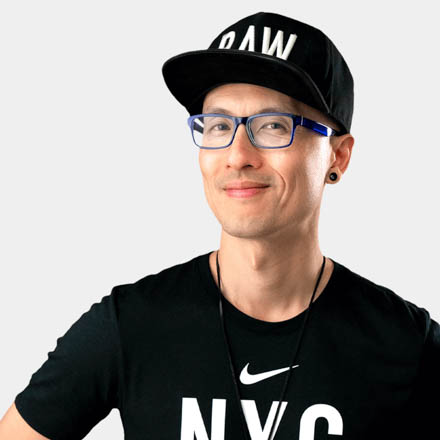
My name is Simon Squibb. I'm hoping you can put a little signal on me. and a nice tight face yes i'm always nice so i said they probably kicked on the thumbnail it probably has my name on it somewhere somewhere yes okay so you kicked out when you're 15 i think you're on the street for a little bit and then you make your way to hong kong like why hong kong of all places so there's a big gap between that and hong kong okay um i was on the street for eight weeks yeah and uh and then i spent quite a few years in england building up businesses and then i i moved to hong kong when i was 23?
1997 I moved to Hong Kong, so I have to double check the maths of my own age. I moved to Hong Kong because I had a friend that lived there and they said come and stay on the sofa. And I just sold a company and if I moved out of England for that period of time I wouldn't have to pay tax on that company I just sold.
So it was a very small amount of money looking back on it now, but it was enough for me to have maybe six months traveling. And so I went to Hong Kong. But when I got to Hong Kong, my mind was blown.
Before we get to the mind blown Hong Kong thing, how does a homeless person with no real family support without formal education, I assume. Yeah. Even start a business and then just sell the business.
I don't even understand that. This is why I think everyone can start a business. This is why there's a controversy around this idea.
Anyone can start a business because I'm dyslexic. So I actually can't read and write properly. And I can't, yeah, I can't, I feel I can't.
even begin to explain how average I am. I'm very average and I had no money when I started out, no experience in business, no one had ever taught me sales ever in school, any of this stuff was, or none of this was... You're saying a very impressive resume at this point.
Yeah, I have nothing special about me, which is why I know... Do you smell bad too? I don't think so.
Are you trying to tell me something? No, not at all. You smell like a million buttons.
Thanks, thanks man. But I think what happened to me, I always describe it as the moment everyone should have, which is I didn't want to make it, I needed to make it. So I tried to get a job, I couldn't get a job.
15 years old, no one would give me a job. And then I tried begging, for some reason no one gave me anything. So that didn't seem to work.
I don't know why, I don't know what I was doing wrong. Give me your pitch, how are you asking for money? Hey man, sorry, I've got nowhere to live.
Have you got any money, spare money? Yeah, yeah, healthy man. Go get a job.
I didn't look like a healthy man at that point. Really? No, no, no.
Sitting on a curb on the street. I see a lot of people who want to go get a job. Yeah, well, go get a job.
I mean, that's the thing. At that particular time, I couldn't get a job because legally you need a national insurance number. But that's the thing about homelessness.
And we could get into, that's a whole subject we can get into, certainly. Homelessness does have a miscategorization because a lot of those people, if you imagine you're on the street, even for eight weeks like I was, you smell. You actually do smell.
And the idea of going to work, you can't even get an interview. You haven't got any way of sending your resume in. To get an interview.
You don't have an address. So even if you walk up to a, I don't know, I did do this, I walked into a wine shop and said, please give me some work. Even then they looked you up and down, they were like, we don't have anything at the moment.
And then if someone walked in with looking pristine... Looking at a young Simon Scribd, they said that? They did say that.
Remember their name? Actually, to be fair, I did get a part-time job in a wine shop eventually. But I had to lie on the application about my age because you have to be 18 to sell alcohol in England.
And I actually lied. But do me a favor, look right into the camera. Just staring with your big blue eyes.
How could you not hide this young man? Exactly. Well, he's someone you like.
You look like... I have this theory about reading people's faces. And people have ill intentions, it's on their face.
People who worry a lot, it's on their face. And people who are joyful inside and out, it's on their face. And I look at you, and maybe you've changed a lot, and maybe because you said you've changed a lot, you look like a person who has a joyful heart.
thank you generous spirit i i feel that is true i will take a look at him let's judge him right here i think leave him a comment if you think he has a trustworthy joyful heart or not or do you think he's a scoundrel trying to scam people out of money and let us know in the comments well we know what you think of my face but there's well let's focus on doing it what do people say about you what does your community say never trust the guy with the cap That's why you keep wearing it. To prove them wrong. The stereotypes are dangerous in general, aren't they?
I mean, they say serial killers look like friendly people you want to know. Are you trying to warn me? No, I'm just saying.
I actually had this conversation with my wife yesterday. We were talking about everything. If I lived in America and I was a detective, I could spot all the serial killers quite quickly.
They're obvious to me. I can literally, I think I've walked past a few since being here, you know, like they will give us some of the money. They're probably by accident.
They don't need money to do that. I wouldn't need to get, I wouldn't need to finance that. They need gloves.
They need tarps. You know, you need rope. I have not had anyone say that one yet.
That would be, you seem to know a lot about where we get capped. You know what's needed. I didn't know you needed tarp to be a serial killer.
Okay. Let's get back to the story. Some people want success.
You needed to be successful because you got no... It's like when you burn the road behind you and the road was burned for you, so you had nowhere to go to. You tried begging, obviously, you stuck at it.
You smelled okay enough to get a job in a wine place. But just the condensed Cliff Notes version of this, how do we go from there to making money? Because there's more interesting stories I want to unpack.
I mean, in a simple... a version of it i i just couldn't figure out how to make money i went and tried to get social benefit okay and they told me what the hell are you doing here just go home right so so i couldn't really explain i couldn't go home so that seemed like a simple answer they're not going to give me any benefit so i tried to get a job couldn't get a job i tried begging couldn't beg i tried to do social service support couldn't get any couldn't get that so the only left option for me was to start business and i described this on drugs Well, I would have done. By the way, that is kind of a business.
Not that I would endorse that type of business, but it is a business. I think the entrepreneur muscle in my brain woke up, and maybe that's the drug dealer model. It woke up in my brain, a literal muscle in my brain woke up.
I almost felt it. Suddenly, it's like the need to use that muscle became urgent. And so I walked past this massive house and the garden was so messy.
And my brain said, it spoke to me, this entrepreneurial muscle, which we all have. Everybody has it, introvert, extrovert, doesn't matter. You've got it.
It's just not turned on in school for a reason, in my opinion. It came on and I thought they will pay me to clean up that garden because they've got a big fancy house and their garden's messy, which means instantly my brain said, they've got no time and I can sell my time. to do that garden and they will pay me.
So with confidence this entrepreneur muscle had given me, I walked up to the front door of this big house, knocked on the door, this guy answered it and I said, "My name's Simon Squibb. I could take care of your garden for you if you pay me." - Don, could you say it? - My name is Simon Squibb.
What is your name? - No, I wasn't that advanced. I've got a much better model now.
No, no, no. We moved the garden clean and it threw me out. I should have said, is your dream to have your garden sorted out by me?
By young, young sheep labor. But they said yes. And then I just, but you have tools?
No. So, slight problem, don't have the tools to do the garden. But again, necessity.
So I literally, I did two things actually. One is I said to that person is okay if I use your equipment. They're like sure they're not using it It's all sitting in the garage so that you see you can use my crew.
I'm also and I'm saying didn't suddenly yes I think they probably knew they were doing me a favor. You know I think I was I wasn't dishonest. I did kind of say, look, can I use your equipment?
And in fact, that made it cheaper. In my mind, I'm like, if I have to get my own equipment, I'm going to have to be more expensive because I have to go rent the equipment. But you've got the equipment, so I'll just use it.
But actually, I also went and knocked on a lot of other doors that day because that person said yes, but I wasn't doing the garden then and there. I said, come back. But I went and knocked on a lot of other doors and lots of people said no.
I was very lucky. The first person I ever knocked on the door said yes. Oh, okay.
So there's a bit of luck in life. There's a lot of luck in life. If they'd said no to me that first time, my entrepreneur muscle would have gone, oh, you don't know what you're doing.
This is impossible. But they said yes. But then after that, and that's why I become people's first customer quite a lot on my content.
Because I remember that first customer feeling where you almost have validation because one person said yes. That spurs you to get 10 no's because you know at one point someone said yes and then surely someone else will too. So you have that survival vibe.
So I knocked on about 100 doors after that day and said, oh, you've got a messy garden. Can I take care of it? A lot of people said yes, but 12 people in total said yes and let me become their gardener.
And then I went back the next day and asked them for a deposit. Right. And I took that deposit and that allowed me to buy some of the fertilizer and some of the other bits and pieces I needed.
But one house I saw had a whole like ride on mower, all the equipment, a lot of it was brand new looking. So they bought it but never used it because they're too busy. So I just asked them, I said, you've got this equipment here.
Can I can I use it? And I'm like, sure, go ahead. Doesn't matter to me.
It's just sitting in my garage. People buy this fancy stuff and don't use it. Why not?
So I managed to get all the equipment for free. And then through the deposits I got from all the people that said, yes, buy the basic bits and pieces that I needed. The big problem came when I tried to do the gardens and I was, I'm so bad at gardening.
So then that's also a good, good thing. Cause then I had to bring some other people in to do the gardening. I think I can turn this to a 17-hour podcast.
I'm trying not to do that because you keep opening more doors. Sorry. It's like this infinite web, kind of like in Loki, you know, the secret timeline.
Yeah. It's got too many branches and we need to prune some down. Okay, fair.
But I love the stories. I would like to talk to you multiple occasions here. The reason why I'm moving left and right is because the plot thickens every time you tell me a story because then it's very clear who you become, why you choose to do what it is that you do today.
And when we get to that, it'll make a lot of sense to all of you who are listening or watching this right now. Okay. There's a couple of things I want to point out.
Number one is, you're, I just want to say this, but I don't want to dwell on this. You're a white guy knocking on doors, doors open. You're a guy asking for work and don't have equipment and don't have skills.
And they say, yes. I just want to put that out there because people are going to say that easy for him to say but here's where it's not easy because a lot of us wouldn't knock on those doors I put myself in that category and what you call the entrepreneurial muscle this need I think it's another word for it's just called you're hungry like literally hungry right because you don't have a choice if you don't make this and you don't figure this thing out what do you need we're going to live and so you have to do this so many of us live in this place where We don't have that kind of backed into the corner feeling. So we just wait and wait and wait.
And some of us just wait too long until it's just too late for us to do something about it. So there's something to be admired. I respect anybody who has the guts to go up to the door, talk to a bunch of strangers and give a pretty okay pitch, not knowing if they can even do it.
And then being listed by the confidence of your first sale and have the guts to say, let me do that 99 more times and not just quit with the first one. So you get it together and you're able to do this and you hire people because you don't know what you're doing and I assume this is the beginning of a business for you? Yep.
That you turn into a business and other businesses and then you sell all these things and leave? Yep. Okay.
Okay, so how much money is in your pocket when you go to Hong Kong? I had about 80,000 pounds. That's a lot.
And you were 20? 23. 23.
Okay. We're going to map this from UK to Hong Kong. You're 23 years old.
But if anyone has lived in Hong Kong, they'll tell you that doesn't last very long. The most expensive city in the world, Japan's number one, Hong Kong's number two. Really?
London's number 12. I think LA's number 14. Singapore's got you up there, right?
Singapore's number five, I think. Okay. Yeah.
But I literally went to one of the most expensive places in the world. And when I got there, I realized this is what people spend in a weekend. In Hong Kong.
But yeah, as a young person, that's a huge amount of money. And coming from nothing, of course, it was a huge amount of money for me. If you have $80,000 in your pocket, what do you need to stay on somebody's sofa for?
Because I didn't want to burn it. And actually, by the time I learned how to be frugal and build things, the last thing I want to waste money on is a mortgage or rent. Okay.
And if I can avoid those two things and use that money for experiences and building something, the better. So there's a lesson there too. Some people want to get a little money in their pocket and burns a hole and they start to spend it right away.
Easy commies again. Material things. Exactly.
Or they think it's an infinite supply and then they're wrong. So you're good. You're saving your money.
You're staying on couches, living very humbly. I want to get to the part of the story now where you founded a design and marketing agency and you build a certain point where it's being sought after and you sell it to PWC. Tell me a little bit about that moment.
What do you sell it for? Those kinds of things. Yeah, so I built a company up called Fluid, which became one of the largest and most successful creative agencies based out of Hong Kong.
And in a nutshell, it was an agency that would help brands come up with marketing strategies. And we wouldn't just come up with a strategy, we'd also execute on the design. So we come up with ideas and the execution.
And I loved it. I built it for 10 years. It was just literally walking into the room with brands, new companies and old, and they tell us their problems and then we come up with solutions.
And I started it all with Helen Griffiths, who's now my wife. She's a designer and I guess I'm a marketing person. I'm a salesperson as a gardener, but in the end, I'm a marketing person later as I rebrand myself a bit.
And I, yeah, I just, with this company, it turned into quite a big business. I think in the end, we had a couple of hundred people working with us, both freelance on contract and full-time. And one day, PwC start partnering with us to pitch to clients together.
So they've got, you know, the top 500 companies in the world working with them, one of the biggest audit firms in the world. And we start doing some partnership projects projects together. And then quite quickly, it seems that it would be a very good move for PwC to buy Fluid and integrate us into what they offer their clients.
And so, yeah, I sold the business. It took about a year from them saying they wanted to buy it to the deal being done and the money being in the bank. But that's how it transpired.
Weirdly, when I sold it, and a lot of people listening might relate to this, everyone's dream is to sell a company. Everyone has that part of their bucket list um i was really happy when i sold it and then i had a bit of time where i was a bit sad because i lost my identity um everything was i fluid my company i'd built up that was my image my personal image but like your future if it was gone like well you change the number in your car you know like what are you going to do right suddenly it's a big part of who you are and um and so i i was a bit lost for a while after i sold it but maybe i'm talking too much i don't know okay so you're 33 when you sell it I'm 40. 40.
Yeah. So there's a couple of mysterious years in there somewhere. Well, no, not really.
I ran it for 10 years personally, and then I brought someone in to run it for three or four years for me. Okay. So I learned to bring someone else in to run it.
That's one of the reasons it's sold, by the way. Okay. Because if the founder is still running the business, this is another business lesson I've learned in my book.
If you end up being the only person that can run it, it's very hard to sell it. So I brought in very clever people and teams to run the business. And that allowed me to step away.
And while Flu was running without me, I was still kind of chairman was my title. I started an investment company called Nest. We'd invest in startups.
Okay. So... Yeah, that's kind of how the timeline worked.
I see. Okay. So when you sold it, you're free and clear.
You don't have to stay on because you already put a management team in place. Exactly. Were some of them required to stay on?
Yes. Okay, naturally. All right.
So you're saying when you sold Fluid, your identity vaporized? It didn't vaporize. That was a physics joke.
Oh, I see. Fluid. Oh, I get it.
It turns into vapor. Evaporated. Yeah, I get it.
All right, so I missed the joke. I thought it was a serious podcast question. There was.
I was trying. It didn't evaporate. Yeah, I think it's just when you build a business, you must relate to this.
If you suddenly couldn't use future anymore, that was someone else's brand name. It is part of who you are, right? No.
Well, it was for me. Maybe I made a rookie mistake. I didn't know it, by the way, until I sold it.
So I felt like it. The other thing was a bit like losing my family again. The company and the people were people like my family.
I know you're not allowed to say that. I know it's politically incorrect. Let's call it a football team, if you like.
But my football team was gone. I mean, it was a business and I sold it. But in reality, I probably interacted with everyone in that company at some point in a month.
And suddenly, technically not really allowed to interact with anyone. They want me out of it now, right? So it's like losing the family again as well.
Some repeat of my earlier experience. So I have this thing, this kind of personal philosophy about practicing some kind of form of passionate detachment. I want to be passionate when I'm doing things, but when I'm no longer doing it, I'm totally detached from it.
So I can see things objectively. I wish I'd had you tell me that before I saw you. I wish we met each other earlier in life.
I could borrow money from you. Yeah, well, equally I wouldn't have been so emotionally upset for so long after I sold the company if I'd met you. This is important, actually.
I think so. It's a good lesson for people. I think you should be attached to what you're doing, but not.
Did you see Vanilla Sky? i think we can just pull reference tom cruise yeah the other relation to that is wilson it's it's coming coming so spoiler alert if you haven't seen it i'm sorry he gets into a horrific car accident And he's mutilated in that and they have to create some kind of strange alternate reality for him to process it. And that's the big spoiler.
Like he's all he's all messed up. Oh, yeah. When people lose a limb, they're disfigured.
They lose a sense of identity because he was the publisher playboy who got to do everything he wanted to speak with whoever he wanted. Then he got really messed up in that process. And so everybody that goes through that, I think, has to start to question, who am I?
What is my identity? So if you lost a finger tomorrow, are you like 98% less Simon Squibb? No, of course not.
Right. And a finger is much more serious than a company, but you're still you. Yeah.
So as long as you're conscious and you have a soul and a spirit or whatever you want to believe, and you're still able to do what it is that you want to do, I think you're still you. And that's why it's like this emotional attachment. It's the thing that was part of loss of identity.
Yeah, I counter argue that I think that it helped me make it work in a way because I don't believe in work-life balance. I don't believe there is a separation. I think that there's just work and there's, well, I think there's just life.
You know, there's no work life. So, you know, my business partner became my wife. And I think I had a good relationship because my wife was there in the business with me.
I like working. And if I'm working until 10 o'clock at night on a Friday, if my wife wasn't working with me, I wouldn't be seeing my wife. We'd probably get a divorce.
So I just really like integrating things. And I think even with the team, I have it now, by the way. I really care about my team now.
I will talk to you about that too, because when I walked in here the first time, It was a different model I was seeing. A little bit scary, also very exciting. Okay.
yeah but i just i just think it's i don't want to work with people that i don't i wouldn't want to be friends with i think mark zuckerberg said it and i'm not a fan of mark zuckerberg because i'm not endorsing what he has to say but he did say something i liked which he talked about how if that person you hire isn't someone you would work for don't hire them yeah and there's and i feel that way like i feel like i'm we got this house here in la i'm staying with everybody here i trust everybody here i like everybody here Otherwise, I wouldn't want to be living with them right now while I'm in LA. I know it sounds for a lot of people, maybe it's like we shouldn't. There's one person who told me that you couldn't stand.
Oh, there's only one, and he's over there, so I don't want to insult him. Poor Arthur. I love you, man.
I'm joking. but the point i'm getting to is like yeah i just think that's oversold to people too and it's kind of a counterpart i kind of just to you know be careful with it because i i think that there is definitely detachment when i sold the company i should have just probably started something else instantly partly we think that that's a rebound thing maybe but it's a bit but it's also like it's like saying don't be too much in love because when you you know break up you might cry there's There's a part of me like, "Oh, fuck it. I'm just going to do the all-in love thing." And then business, I kind of like it.
I do take it personally. People say, "Don't take business personally," too. I do.
And I do fall in love with what I'm working on. And I think that allows me to really love it and really be all-in. That's why I've been married for 23 years.
I'm all-in when I do something. You are missing so many metaphors in here. Am I?
Are you guys following this? No, I mean if you take it at face value, but if you're like literally unpacking, this doesn't make sense. Because you were madly in love and now as soon as that love is over, you're ready to bang the other business.
If my wife divorced me, I'd probably bang another business. You have to go through a period of grieving and saying, you know, what is my life? Not always.
If you were in love with them, yes. Well, I did have two years off. In fact, I had two years off before I started what I'm doing now.
I went through a grieving process. Yeah, we're just messing around. But it was pretty hardcore.
I did actually, I felt I had a sense, a little bit of depression after I sold the company. Just because, again, like my whole thing was I needed it and I didn't just want it. And I think I carried this needing it right until I had all the money in the bank from this company.
Oh, that's fascinating. And now suddenly needing wasn't, I didn't need it anymore. Even like if I told my wife.
I'm going off now to have a meeting. She'll be like, "What's the meeting about?" "Oh, maybe I'll make some... We don't need money.
So where are you going?" "I don't know. I don't know where I'm going. I won't go." And you suddenly have all that...
That's the secret to staying married. I'm not... Just do what you're told?
Oh my God, yes. Yeah, I think that is the secret. Honey, I'm sorry.
I haven't learned the lesson. You haven't learned the lesson? I'm an Asian man.
That's a problem. How long have you been married? almost 30 years right let's see you know what's the secret it's not well we'll get into that later then did your chance to ask that question on your pod oh right okay fair enough fair enough so you went from living in the streets needing a way to make money and you found that but when you started to make money and you made a lot of money at some point that need moved into i would say a want well i didn't even want it anymore i i i think it was something well i wanted purpose in the form of work i i think i wanted to be useful when i wanted to be seen that's why i came to the conclusion what are we back to 15 again no we're back to like well maybe at 15 yes i think so but back then it was like well i might want to be useful and i might want to be seen but the real reality is like a lot of people in this world i've got to pay bills i've got to eat So, you know, a lot of people are living in fight or flight, right?
Yeah. So they might want to be successful, but right now they just need to pay the bills. Okay.
But I had no choice. I needed it back then when I was younger. I think what changed when I got to 40 and had money is I didn't need the money anymore.
So there's no need anymore. And I didn't really want anything in particular. So I actually fell into like neither want nor need, which is even more dangerous.
Where are you then? Now? If not want or need, yours is versus.
I think basically you're lost. You're a lost soul. Okay.
Because if you want stuff, that can motivate you. But if you need it, it'll make you do it. There's a difference.
Yeah. Right? So I want to be fit.
But then I might go a little bit here and there and I'll eat healthy some days. And then someone tells me I'm going to die unless I, I'm going to get diabetes unless I go to the gym tomorrow every day for the next two years. Now it's a need.
Right. And I think I moved back into like, Well, I didn't move back. I think I moved to like, well, what do I want?
And I didn't even have that answer anymore. Because when you need money, at least that's a want, right? So it took me about two years to figure out the next step after that, which is I would create purpose.
Creating purpose that creates the need. You all right then? Sure, I can write that.
I've written this word a lot. But it's such a woo-woo word that a lot of people don't understand. It doesn't get taught in schools, but if you have a purpose, it can create a need.
You don't need to go homeless and almost starve like I did to have this superpower hit you. I think you can find it with purpose. Okay.
I like that. And you can hack purpose. There's a way to find purpose if you don't know it as well.
It's not easy, but it's worth finding. Yeah, it powers you up to make it a need. So here's the crazy thing is...
you didn't answer my question how much did you sell the company for i could be a politician couldn't i could but if i'm a reporter you're not going to get away so interestingly people don't know this when you sell a company um they have things like ndas where you're not allowed to actually disclose how much you sold it for between what and what but between one i always say the best way to describe is i never need to worry about money again i i i basically made more money than i ever need that's how i phrase it up and if you can work out i could probably live to 100 and I spend 20,000 pounds a month living, you can probably work out how much it is. But I genuinely don't think the amount matters. Sometimes I like now not talking about it because it's about building something you love, that you enjoy, and you make money from equity.
You're working out. I already know the amount. It's 240k.
And you are 50 years old, so live with this. You multiply that by 50, 50, that's 24, 80. You know, you can figure this out.
So I saw a great media day like Trump's getting into a war with Asia over math switch. Yes. Okay, let's get back into it.
So you've earned out more money than you could spend. So here's where I really think it's important to highlight this part of your story, because I want more successful entrepreneurs to consider the possibility of doing something that you're doing. Here's how most entrepreneurs work.
They make money and they just want to make more money. They can't even spend the money they have, but they just want to make more money. And it's why there's this great disparity between the bottom 99 and the top one, because as you have resources, as you know, money makes money for you and you don't even have to do a lot.
I don't have a lot of love for people who use money to make money because they don't really generate anything in the world. I don't also have a lot of love for people who move around money as a means to make money because they've yet to do anything. I like what you're doing.
I have great respect for you and what you're doing. And the people that know me and like me also like you and just are saying this guy is a real genuine person. Here's what I think.
There's a gentleman. His name is Eric Silva. I think that's his name.
He gave a TED Talk. You might have seen it. he goes on stage and he says in the 21st century the new billionaires aren't the ones who have a billion dollars in the bank account it's the ones who can make a positive impact on people's lives every life is is one of the one billion and i think the world would be much greater place for everyone who's got more than what they need or possibly what they would want for them to turn around and do something good to help the world and make a healthy profit, but do good now.
Don't wait until you're like 98 to give away your money. That's how most rich people do. Like they find God and then they find religion and then they want to give it away.
But you can do a lot of good right now in the moment and still build a really good business and a life for yourself. Totally right. So what I have to do is now unpack why this crazy guy wants to take his money he's made and then put a lot of it at risk to try and help other people.
And I also want to understand the business model helping other people achieve their dreams. So give us your best pitch as to why if you're at a place where you don't need or want that money anymore, why you would want to try and help other people achieve something, some version of their own definition of success. When you've got a job to do, Lowe's knows how to help you keep it moving.
My Lowe's Pro Rewards members save more with member volume discounts on eligible orders through a quote of $2,000 or more. Plus, save time with job site delivery on select purchases. Not a member?
Join for free today. Exclusions, more terms, and restrictions apply. Can't be combined with any other discount, including but not limited to contract and or special pricing.
Loyalty programs subject to terms and conditions. Details at lowes.com slash terms. Subject to change.
I think when you're figuring out what the purpose of life is, which is that kind of crazy question, what is the purpose of life? I discovered it after I made money. So it's very easy to say this.
Once you've made money, you can have purpose. There's some truth to it. I think you've got to fill your own bucket up.
You've got to be able to pay your own bills. But I think that I actually made a shocking discovery in the last six years. I didn't fully understand this.
Once I had enough money that I didn't need to do things for money. So I didn't need to help someone for money. I could just help someone.
I was doing that when I was retired. I would help people and I didn't expect anything back. I didn't want anything back.
And there was something really special about that dynamic. And I think I realized that in the last 100 years, since the banking system really took over our lives with things like mortgages, everything's become a transaction. So for a tax man to make money out of you and me, we need to have a transaction so they can tax it.
But if I just help you because I like you and I want it, The tax man gets nothing. So they don't like it. Equally, you just help me, it's not good for the tax man gets nothing.
So there needs to be money back and forth. And that's why the sayings give and take have kind of become part of our normal culture. It sounds fair, right?
I'll help you if you help me. But actually, that's not our natural state. Our natural state is you tell me what you need.
And if I can help you, I will. I'll do it. Now, I need to pay my bills.
So there's always that element. But I don't necessarily need to make money of you to pay my bills. I can help you.
Like Dragon's Den annoys me or Chuck Pack annoys me because they're only going to help you if you give them 40% of the company. Well, actually, I can just introduce you to the person at Walmart who can help sell your product. I know them.
It's one email from me. I can just do it. I don't need to take 40% off you.
But we've become so transactional. And this was the first time in my life that I didn't have to be transactional. And it kind of shocked me.
the oxytocin I got, the natural happiness I got from just helping someone without anything back. And then I realized that everybody can do it. We just don't think we can do it.
So everybody, I want everybody to know what I've discovered. And listening, the problem is I'm rich now. So people are like, well, he's got money.
He can do that. You have to frame it. The way I think about this is If you've ever been given a present, right?
Or you've given a present or been given a present. If you've given someone a present, there's actually a lot more joy. I go find the present.
I wrap it up. I can't wait to give it to that person. I give it to them.
I see their happy face. That's actually more fun most of the time than getting a present. So we basically naturally in our DNA want to make other people happy.
And sometimes the cost of the transaction stops that from happening. And then even on a micro level, I saw someone the other day open the door for someone and someone walked through it. Now that person didn't say thank you.
They got all annoyed. Well, don't say thank you then. I just opened the door for you.
So they literally made themselves angry from doing a nice thing, having expectation attached to it, give and take. They didn't have detachment. They should have just opened the door and let the person walk through, but they didn't.
They made themselves annoyed and upset and angry because they helped someone and that person didn't reciprocate with something back. And that's not what life's about. I have been the happiest I've ever been, not when I had a lot of money, but when I was helping someone without an agenda.
It's a selfish thing. So people, when they hear what I'm doing, and you're very kind the way you put it, I'm helping people, I'm so philanthropic. Actually, it's also selfish.
I genuinely feel like I'm doing something that is selfish that happens to be helping people. You know, I get a lot of satisfaction when someone tells me their dream and then I can put them on my platform and promote them, give them a little bit of money, which is just energy transfer anyway, and they can make it happen and have a better life. That's amazing.
Like I'm, it's selfish. And yes, hopefully that knock-on effect means that person has a better life. They can go on to help people.
We can start removing this transactional nature that's being conditioned in us. It's not natural. We've been taught to make everything transactional, but it's actually not our natural state.
Again, you can push back on this if you like, but my analogy is there's 5,000 people living in a tribe. Someone puts their hand up and says, my tent's fallen down. And someone says I can help you with that and they go and help put the tent back up We don't have anybody homeless after that tents back up the tribe is happier The ecosystem continues where we all help each other to get through the day and that person has somewhere to sleep tonight That's how it used to be that person nowadays says hi my tents falling down and someone says, okay, here's a quote I'm not fixing your tent.
Fuck you. You can be homeless unless you pay this and that's why we have hundreds of thousands of homeless people And then that's kind of the basic problem. Here's where I push back.
But before I push back I need to say something I said the wrong person's name. There's a gentleman, his name is Jason Silva. He's giving his TED talk.
Maybe you've seen it. Okay. We added that back in.
Fix that part. Okay, here's the pushback on this. I think there's social capital.
That's how through thousands of years we can form societies and villages or the tribe. Because there's a bargain that's made. It's not transactional in cash and money, but it's like, hey, I have to go hunt today.
Can you look after the kids? And when I come back, we will share the bounty of what it is I do. There's still a trade there.
That's a community trade. Yes. I don't think now it's become so...
literally an invention money has become the mechanism in which we do that. That's right. Whereas before we had a sense of community.
Yes. Which I, don't get me wrong. I'm not saying you shouldn't have, uh, a support mechanism, which is, I think that's what you're talking about there.
That's not the same as what I'm describing. I understand. You're talking about community support, right?
Well, the word you use is village. So somebody's tent falls down and you raise your hand, you help. And then one day you're like, I don't have clean water and no one comes to your aid.
Eventually you're like, this is not my community. I have to leave. This is not my village.
And that person's a taker. So eventually it it needs to correct itself i think caldini writes about this in terms of reciprocity it doesn't have to be quid pro quo like this exact amount for that exact amount but it's through our need to support each other that we can grow strong for example if an invading tribe came and they all split and left it there that's not much of a tribe or community either isn't but i think we're maybe mixing up the examples because of course today we're not living in tribes the tribe the tribe is a virtual tribe but But yeah, well, I mean, not everyone's online. Everyone has an online tribe.
I think now the difference is like this street in LA where we are now, I'm pretty sure no one knows anyone on the street. So there's no support mechanism in the communities anymore. We own a house, the bank lends the money, it's my house, I close the door, I protect my family.
So the tribes have really shrunk, okay? And the problem now is that if, for example, someone needs help, the hardest thing is actually to ask for help so if you don't have a tribal system where you can ask for help the only way you can get help is if you pay for it and most people can't afford to pay for it so people have mental health issues because they can't get help they can't afford it um people can't get people to come and help them fix problems with their cars they can't get to work because they can't afford it and i think that we have forgotten the tribalism i'd like to bring it back okay in a sense of like and i'm trying to do this on help bank by the way It's the first time I've never had a problem with a trademark. We've got the word help and bank together.
No problem. Because no one's better bank and help together. Thanks for tuning in to this conversation with Simon Squibb.
We impact a lot from personal stories to the deeper reasons behind why we do what we do. But this just scratches the surface. In part two, we go straight into the mindset and tactics for creating and sticking to your path.
Don't miss it.