At the start, you just shut up and do the work. Get good, get clients, get case studies. Do, do, do.
Say yes, say yes, say yes. And then maybe use it as a filter. Maybe you just think, hang on, which type of clients do I want to work with?
The last thing I want to do is be forgettable. The last thing I want to do is just to blend in and be like everyone else, to be average. Hey everybody, Chris here.
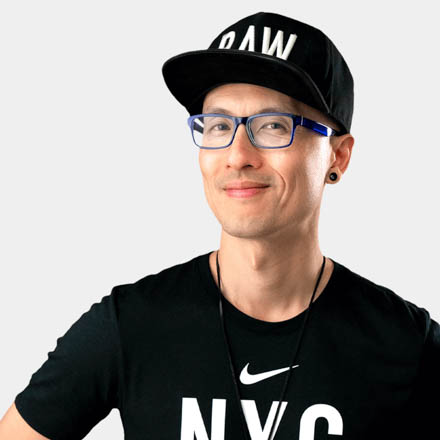
On this episode, we're going to do something very different. I'm joined today by a friend of mine. Her name is Jody and she's been on the pod a couple of times before.
And we had this crazy idea. What if we had an ongoing series, a limited series on things that we're really interested in, the mutual overlap and the points of conflict and the points of agreement. And so on today's episode, we're going to talk about - When should you reveal your true self?
Or is it even possible to be 100% truly yourself? So on this topic here, I saw somewhere, somebody talking about this, I think they were a therapist, and they were talking about how when we have a negative emotion, And if we keep it inside, the negative emotion grows. And the best way to treat that is to speak that negative emotion.
And I was trying to use my logical brain to understand this conversation around emotion. And I was thinking, is there a time when I felt the negative emotion where when I kept it in, it grew, and when I said it out loud, it diminished. And I think it holds true to most things.
I could not find a use case or an example where that wasn't true. So I was thinking this must be true. Conversely, if you have a positive emotion, he posits that we should hold it in because it grows the same theory, right?
So when we have a positive emotion, like we're going to go work out, we're going to do some powerlifting, we're going to join the Olympic wrestling team or whatever it is we're going to do. We should not speak it out loud because when we do, the energy that we have to do it diminishes a little bit. So in your case, When you had this secret about you traveling and you're holding in this emotion, I have to imagine at some point it's going to affect your psyche, your emotional well-being.
Because every time the clients would ask something, you'd have to like carefully navigate it without lying. And you kind of tell a true, untrue thing. And that's really stressful, I think.
I want to pause here and just ask you how you felt during that time. Yeah, exactly that. It's reminded me of, you know, the Matthew McConaughey book, Greenlights, is a really cool book.
I think he did about a bazillion interviews when he was promoting it and he just told the stories in the book. But there's one story that he told about this concept of crumbs. And the idea that he doesn't like leaving crumbs and crumbs is that person you annoyed or that lie you told or that thing that you did that means that you've left crumbs around and you have to now look over your shoulder to remember what you said or make sure that something doesn't get out when you want it to or make sure you don't cross wires with a few people for some reason.
So, yeah, it's overall not good. And if you're a vegetarian. And you don't want to work with the way you eat meat or you're the other way around.
If you think you're going to eat meat and you're going to lose a vegan client, what do you do then? Do you hold that in or do you just... get clients who only eat meat as well.
Where do we draw the line? I don't think you have a choice in that. I think if it's important for you to express that you eat meat or you have handguns or you believe in abortion, whatever it is that you believe in, if you feel so convicted to speak about it, just be intentional about it when you do and to have a point of view that's informed.
And in this way, I think one of a couple of things are going to happen. The people who are dead set against you because they're equally convicted in the equal but opposite way, they're going to say, well, I can't do business with you. Then there's the people who are totally aligned with you.
It's like, I must do business with you because we have shared values. Then there are the people in the middle, the flexible middle, which is like, I have my beliefs, but my convictions don't preclude me from saying that you don't have your beliefs. And we can disagree on lots of things.
But if we're going to agree on doing work together where we mutually help one another, then we're okay with that. So you're only losing potentially a third of your audience. And some of them who are convicted in one way, they might not even say anything.
They just might feel it. They might treat you a little bit differently. And you'll feel that energy.
But I would rather do work for people who are 100% aligned with the way I think and live and my values and to be open to working with people in the middle. And it's okay if the other people don't want to work with me. And I don't think there are You don't really have values and convictions if they're not tested because then there's no courage that's required, nothing to sacrifice or give up.
That's the cost of doing something that's right for you. So if that worked with, if you were hiring an agency and you wanted to be completely aligned with them, what about the guy who owns the grocery store? What if they didn't align?
Like, where do we draw the line at it? Where does it matter? Like, how much do I need to have in common with the supermarket owner who I buy my bananas from?
compared to the agency who's representing my entire brand and putting their creative spin on my work. I don't know where it stops. Yeah.
So this is going to bleed into probably something we'll talk about in the future about brands and how when we live in an age of abundance, when we have too much choice, there's an embarrassment of riches, so to speak. And so when you go to one supermarket or the other, you already made the choice to support a specific business owner. Some people like their local coffee shop, even though the service isn't great and the line's long and it's inconsistent.
They would rather support a mom and pop coffee shop than to support an international conglomerate like Starbucks or something. And some people prefer the exact opposite. They want their latte done a very specific way and they want that super consistent, predictable results every single time.
And so there's a quote behind me that I'm forgetting his name right now, but he shared with me. It's from Ana Lape. And the quote is something like, every dollar you spend is a vote for the world that you want to live in.
And that makes a lot of sense. So we're already voting all the time to support one kind of clothing manufacturer versus a different kind of restaurant or an amusement park, or even where we vacation. Now I make a point to everywhere I go in the world to leave a little money behind.
I think that's just being a good tourist because a lot of places, their main economy is tourism. And so even though I don't like want that exact thing, I will spend the money and I'll give it as a gift to somebody because I think that's what isn't, is the right thing to do for me personally. And I want to spend money on local brands to support local artists and local entrepreneurs.
But that's how I vote. And we get to vote all the time. So the solution then is not to hide your lifestyle, hide what you do.
It's to be as open as possible with everything that you do so that you manifest in the people who aligned with you. And you don't mind so much about the people who aren't because they're going to drop off and then you're going to find better clients. Yes.
And how much of this you share? I at what point in your career matters a lot. Okay.
So let's just take, for example, if you're a young new graduate, you're not going to go into the office day and one is that, oh, I believe in this candidate and I'm aligned with this church or no church. It's just too much of you. And you're just the new kid.
I think you need to just pump the brakes on that a little bit and just get good at doing what you're doing. Learn the system, develop a network of friends, peers, mentors, and things of that nature. And eventually when you're in a position to share your individual point of view and where the consequences are something that you're able to live with and you pay for yourself, then I think you start to reveal more.
Here's the weird part. If I hire you, I'm not going to ask you those deeply personal questions. In fact, it's against the law during the interview process because it's called discrimination, I believe.
And if I hire you and then you're new in the business and you work for me and you start spouting off on things that I don't believe, it reflects poorly on me. And then now I have to pay the price for your opinions. And this happens a lot.
And people don't understand that because you have the ability to express your opinion, doesn't mean it doesn't come at a cost. So when it's you kind of writing the check of your opinions, Write all the checks you want. And I think when, like, again, later on in life, when you have your own business and you kind of know who you are, I think you have to be very intentional about what it is that you really are deeply passionate about.
Because you don't want to share every single thing. It's just too much to share. And frankly, not everyone's interested in that.
And it can come across as a little bit narcissistic to self-important. What are your thoughts on that? Yeah, I like the idea that at the start, you just shut up and do the work, get good, get clients, get case studies, do, do, do, say yes, say yes, say yes.
And then maybe use it as a filter. Maybe you just think, hang on, which type of clients do I want to work with? Oh, now I can choose.
Now I've built up demand. People are coming to me. I I can use lifestyle as a filter.
I can get people who do align with me a bit more. I can share more of my beliefs because I don't just need clients. I can choose more now.
So yeah, it's probably different advice for different stages of business. Yes. And I think it's pretty fair that the clients choose who they want to work with that are aligned in their values, just as much as we think it's fair that we get to choose which clients we want to work with.
So if you are, say, anti-gun, And there's a Smith and Wesson approach you to do some marketing or social media management for them. You could just say like, I'm going to decline because I don't believe in that. And that's, I wish you well and do what you do, but I just think it's not good.
Let's say that's your position. We don't think there's anything weird or wrong about that. This works on both sides.
It's not like we're always ceding power to one person or the other. We have a lot of power too. We get to choose what kind of clients we work with.
I don't think that's going to hurt anybody's opinions or feelings. So we have to then think, Well, shouldn't the clients be able to choose who they want to work with too? And I think this is a reason why a lot of corporations do corporate or good or whatever the name is where they donate money and they are actively involved in things and causes they believe in because other corporations and clients see that as that's true to me that's true to my heart and I'm really glad that your company supports this and so we should do business together we're just looking for commonality I think in relationships big and small professional and personal I wonder if it also depends where you meet clients you Because right now, lots of our customers will come through works where their networks that I'm part of because of interest.
But maybe if you're just using Google ads or if you're just relying on SEO, then people are coming into you and then you're not totally, you don't get to choose as much. Maybe it depends on the kind of marketing you do as well. I think you can.
The best example there, I think in recent memory is Patagonia. They recently changed in the last couple of years and they said something like we're in business to save our home planet. Mother Earth is our biggest shareholder because they're donating X amount of money to their business, not to their children, but to organizations they believe in.
They clearly put a flag in the ground and said, this is what we stand for. This is what we believe in. And this can be communicated across multiple platforms and not even within close networks.
And so you and I, we get to know what they stand for and we get to decide, like, do I believe in what they believe in? And we get to decide again with our money. I always tell people Patagonia is not a very fashionable company.
Their cuts are a little bit weird to me. Their color palette's a little strange. They're made really well because everything I've owned from Patagonia is held up.
And I love that when I'm done with a garment, I can bring it in and they'll They'll repurpose it somehow, sell it as used or fix it, or just bring it back into their manufacturing process. And that makes me feel really good. And for that, I pay a premium for ugly clothes, which sounds really weird.
Yeah. Yeah. And then is that sustainable?
I just don't know because... So to go back to the coffee shops that we talked about, there's one that I've got in my mind and they're a really great coffee shop. I love the owner.
I love everything they stand for. I feel like I'm really close to them, but they are so slow at making coffee and they're on the way to the train station. So you go there when you need coffee fast.
And so at some point, I'm just going to go to Starbucks because it's next door and because it will be faster, even though I'm like, oh, I really don't want to, but I'm going to have to. So at some point, it's just going to be the best and the best is going to win. And you're going to go, I love Patagonia, I love everything they stand for, but do I want to look like my clothes don't fit me properly?
I don't know. And maybe that's a bad, I don't know anything about the brand and how those clothes fit, but I think that being good probably wins out over everything at some point in the future. So then you want the ones who have the heart and the ones who are aligned with your values, you want them to be good as well.
You always want to teach them how to be good so that you keep working with them I don't know. And to each person, I'm not going to judge anybody. So Jodi, if you're there and I'm in that line for that mom and pop coffee shop at the train station and you zip past me to the Starbucks and I'm still in line and I see you leave sipping your delicious latte, whatever.
I'm like, God, there's always a price to pay for everything. There's a price to pay. There really is.
And here's the problem. I think when all things are relatively equal, people would choose the one that's more aligned with them. Okay, and when if you if it's not like life, like critical for life, then you're like, Okay, I'll just choose this one.
I'll wait, I'll hang out and, and The problem here is the reason why, and I love the coffee thing, even though I don't drink coffee, I can understand it. I think it's really relatable, is that the mom and pop store, they haven't figured out how to run a really good business and they're content at just having enough customers. It's kind of very, I would just call it, and I know this is not fair to say, but like a European mindset, which is, We have enough.
We don't need to be better or the best at anything. We just have enough. And we just want to wake up every morning, serve our loyal customers.
And when we run out of coffee, we run out of coffee. And that's that. C'est la vie.
Whereas corporations like Starbucks will do everything they can to optimize the user experience, to increase efficiency, and to train their people. They do invest in like corporate-y types of things. So not all corporations are bad.
And that's what they get to do. And you and me, we get to decide on whatever... whatever variables that are important to us is what we're going to do.
And I think that's a really beautiful thing. I love that you just called that a European mindset. I've never heard that before.
Is that the thing? Like, where does that come from? Is that like an American teaching of other parts of the world that are inferior?
Like, what is going on? Well, okay, I'll tell you something. Maybe it is an Asian immigrant American point of view.
But my former business coach, he's since passed away. His name is Kier McLaren. And Kerry would say something like, America's relatively new in the global scheme of things.
And you look at European countries who have been, have civilizations and government around for hundreds, thousands, of years, they've figured things out. And the reason why a lot of what America does is very unique is because we're still so new as a country. We're still interested in the rat race and ambition and innovation and having more and being like a world conqueror.
There's a period in time when Spain ruled the world or London or the UK ruled the world or Portugal. And they had their trade and they dominated and they started to figure it out. What is the point of all this stuff?
And there's a story and it's the classic story of the fishermen. I'm sure you've heard it. Maybe you even told it to me on a previous conversation.
The Mexican fishermen. Yeah. Did you tell me that story?
Maybe, who knows? Yeah. But I know this story well.
Why don't you tell that story? You tell that story. So there's a Mexican fisherman and he is fishing.
He's really enjoying his day. He's going to go out. He's going to fish.
He's going to catch like five. He's going to have enough to eat with his family. He's going to give some away to his friends.
And then he's just going to hang out. He's going to play with his kids. He's going to listen to some music.
He's going to have a really nice time. And then one day at... And maybe it was an American businessman.
American businessman. It was. And he's like, oh, my goodness, you're so good at this fishing thing.
You should start a company. You should have a fleet of boats. You should have all of this stuff going on.
And this Mexican fisherman is like, oh, tell me more. How do I do that? He's like, well, you hire these five fishermen underneath you, and you teach them how to do it, and then you manage them, and then you get contracts, and then you do this and that.
And the Mexican fisherman is like, oh, tell me more. Tell me more. And then the businessman keeps going and keeps going and saying, and you could get this, you could get that, and then you could sell it for millions and you could do all this stuff.
And the Mexican fisherman just keeps being like, and then what? And then what? And then what?
And then... the ending the bit that he gets to is like oh and then you could sell your business you'd never have to work again and then yeah you could you could chill out a bit you could just you know go out in your boat you could catch five five fish you could feed your family you could feed your friends and then you could chill out and listen to music and play with your kids and enjoy life and he's like oh I get it and then the penny just dropped that he's literally already doing all of the stuff that he could ever want to dream of and he doesn't have to have the hustle to get there Yes. And so I think the moral of that story is that Europeans or older cultures have already figured this thing out where enough is enough and they don't need to be world beaters anymore.
They can enjoy their life and live a great life and they can be amongst their friends and play with their children and just have enough. And that's okay. I do quite like the American energy though.
I'm in a mastermind group at the moment and On purpose, I stay up late to talk to more American people because sometimes you just get more of the, this is the business and we want to grow it and we want to do all this. And you're like, yes, yes, yes. Because the British way is way more...
Like if a British person tells you that they're doing well, they're doing freaking amazingly. If an American person tells you that they're doing well, it's the other way around because they're just exaggeration and just playing stuff down. And it's a very, very different culture.
Yeah. There's something in, we both have traveled a lot and we kind of find joy in traveling and experiencing different cultures. And one of the things I noticed is, and In America, we celebrate exceptionalism.
We celebrate achievement and accomplishment, and we cheer people on. Whereas in most of the world, almost everywhere I go except for America, It's kind of frowned upon. It's like, who do you think you are?
You're just, you're just too self-important right now. Like, why do you need all that? And you could literally talk to a CEO of a company with 5,000 employees or whatever, who's doing really well, who's doing a hundred million dollars plus, but they have to act like I just work here.
And I don't understand that totally. I admire some of it, but I just don't fully understand it. Can you explain that perspective?
I think it's different in different cultures. I know in New Zealand, they have tall poppy syndrome, where when it looks like someone's getting a bit higher, they get chopped down. There's a really interesting Norwegian one that a friend told me that kids are taught a certain, almost set of rules.
and one of them is you're not better than us like you're not you're not amazing you're not all these things it's like the opposite of you're amazing you can do anything it's that kind of energy which then means that people are often just very humble very unassuming very un-american i guess because it would just proliferate your whole life i don't know totally where it comes from i guess it just depends what is valued as a way of being and if being brash and loud and obnoxious and everything else is not an attractive thing then lots of people just aren't going to do it yeah i think it's like swedish culture um the law of yanta which is like we're all the same no one's more important or should be so unique to stand out like who do you think you are and then you have a lot of conflicting I guess, belief systems. I have friends who are Swedish and they aspire to be world renowned, that whatever it is that they do to speak on public stages and for a moment when they're speaking to be the center of attention. I don't think there's anything wrong with that.
But they're so conflicted inside that they seem to say one thing and do something else. And it's like, I'd rather just be real. Like, is it humility that you want to have as be a virtue of your life?
Or do you really want to step up onto the global stage? I don't care either one. But it's when you can see this conflict in them.
It just looks like inner turmoil to me. And so a lot of the world does look at America as like this place where you can be celebrated and you can do great things. And then we attract all the Europeans and the Asians and the South Americans and the Canadians who want to be something who can stand out because here we celebrate you.
We salute you. We applaud you. And we think it's great.
I wonder if you just need to keep traveling until you find the place where you feel like you found your people and you don't have any sense of, friction because you're just like there's something about this place and i don't know what it is but i feel like i belong here and keep going until you find that until you find your people and your culture and your way of being what the lines because it's what are the chances that the place for you happens to be within a few miles of where you were born it's just not true it's never it's never it but most people set up there So I think the answer is to keep traveling, maybe forever. That's an interesting perspective. And I know it's a privileged thing for me to say this, but as an American, I feel like I'm going to be who I am everywhere I go.
And I'm okay with that. And in fact, when I go to places where everyone's doing a very controlled or reserved thing, I feel like I have a greater opportunity to even stand out. Because the last thing I want to do is be forgettable.
The last thing I want to do is just to blend in be like everyone else to be average to be part of the median. I don't want that at all. Yeah, I love it.
I like being in different countries because I like being the foreign one or the one who isn't from around here because then you just become a magnet and people ask you where you're from and what you're up to and why you're there and i love those i like having the excuse to have those types of conversations and we talked in the podcast that we did a couple of months ago how in the how the lowest ROI you get for your British accent is in the UK because everyone else is just from the UK and you just sound like everyone else. Whereas if you go somewhere else, they're like, oh my God, where are you from? And it's like, have you seen Love Actually?
There's a scene in Love Actually where, so it's really funny. So there's a British guy and he's talking about going to America and he meets this American girl and she's like, oh my God, they're going to love you there. Like, honestly, girls, I love, love, love British guys.
And he's like, okay. And then as soon as he arrives, he meets these like four beautiful women and they're like, oh my goodness, you need to come and stay with us. Like you have to.
And he's like, okay. And then it all comes true and he absolutely can't believe it. But I think that happens with a lot of just, different accents and different types of people from different places.
I think it's such a superpower leaving your country and meeting new people. Yes. Well, let's take a look at you, Jodi.
You have short cropped hair. You're wearing a tank top. Your traps are showing.
I mean, you're not a person who is easily put into a box, right? You're not a person who is easily put in a box. So just you being you is a conversation starter.
Maybe the only place where that doesn't really happen is you and Gold's Gym. Because everybody's exactly like you there. I mean, I'm making a broad stereotype there, but where it's like lean gains, bro.
You could do this and they've got all their weightlifting belts on. Well, okay, I guess I'm with my people. So sometimes I think it's good when you're still developing to be around your people so that you could build you up and kind of build that strong foundational core.
And then when you're ready, you got to leave the nest. You got to fly and you got to go places where you're going to stand out. And by standing out, I think things happen for you more than they do when you blend in.
- Where do we get the courage to stand out though? Because I, as I found out recently, my dad's nickname at college was arms. And a lot of time for a guy, that's a really good thing for a girl.
Like when I, when I was like, oh my God, my arm's a huge, what do I do? It was a really, really bad thing. And I used to be really embarrassed of them.
And I used to work with this guy, he was called Kieran. And he always used to laugh at me about my arms. He'd say like, oh, that's so big.
And do you work out? And I'd be like, no, I didn't. I just worked in a pizza restaurant.
So the pizzas were quite heavy, but I didn't, I didn't work out. And then I used to hide them. I really did.
And when, when I was doing. Um, when I was on like zoom clients, I would wear t-shirts, not tank tops. And I really, really, really didn't want to make them a thing at all.
I don't think I had the courage to really lean into them until I started bench pressing. And until I started seeing them as a tool rather than something to be embarrassed about, but it took me a long time. It took me a long time to go.
This is something that I get insulted about that I get laughed at about that now I'm going to decide to own. because I can do something with it. And now I never wear t-shirts.
I always wear tank tops because I'm like, it's okay now. I feel good about it now, but it's, it did not happen on its own. It didn't happen easily at all.
So you inherited your dad's genetics for the arms, the growth in your arms. Now, for the audience who can't see this, who are listening to this podcast, I'm going to say now, you may want to pause this episode, jump onto YouTube and search for this very episode so that you can see what we're talking about. Now, Jodi, this might be weird for me to ask.
Can I see you just show me your guns for a second here? Is that okay or no? Yeah.
Hang on, let me see. Let's see. Everybody hold on.
She's going to show us the guns. Damn. Look at that.
When you've got a job to do, Lowe's knows how to help you keep it moving. My Lowe's Pro Rewards members save more with member volume discounts on eligible orders through a quote of $2,000 or more. Plus, save time with job site delivery on select purchases.
Not a member? Join for free today. Exclusions, more terms, and restrictions apply.
Can't be combined with any other discount, including but not limited to contract and or special pricing. Loyalty programs subject to terms and conditions. Details at lowes.com slash terms.
Subject to change. This is where some of the boys like, oh, shrinking a little bit like, oh my God. I shouldn't have skipped gym day.
Okay. Yeah. This is freaking phenomenal.
Okay. So where we started this conversation, I think we're right back where we started, which is How much of your personal lifestyle, your choices, your preferences, the things that make you uniquely you, do you want to communicate to the world? And your question is, when do we arrive at a place where we feel confident enough or have the courage to be that person?
I think there's a commonality here for at least two people, you and me. When we feel like we know who we are, when we know who, like we have a clearly defined identity, I think we're going to start to show more of that. So for me, for a long time, I just wanted to disappear.
When I found my skill, my talents in life or graphic design to manipulate type on a page or on a screen, I started to become me. And from that place, I started expressing myself more. So I think for a long period of time, and some of us are very lucky to escape this during adolescence, but we don't know who the hell we are.
And so the last thing we want to do is to be ostracized, to be cast out from our peer group, because we just want to not be at the top, just to blend in and be left alone so we can develop. And I think when we find our identity, that's the opportunity for us to step out into that light. And for some of us, that happens when we're 18.
For some of us, it happens when we're 80. I don't know. And now I'm curious for you, Jodi, when did you feel like, I think I know who I am and I'm going to celebrate that?
So unbelievably recently, maybe properly, I'd say like four years ago. I think I had a sense of it. I think I had a big sense of it.
It was building up, it was building up, but I still had things like people pleasing tendencies. And like I stopped drinking alcohol about about 10 years ago now, maybe 10, 12 years ago. But before that, I used to, I really, I know I really wanted not to do it, but I did it because it wasn't socially acceptable to not.
And I, there was so many of those patterns where I just did stuff that I didn't really believe in just to fit in. So it's been a gradual journey of it. But I think probably about four years ago, I reached a new level of like, I don't care at all about anything.
It slowly built up. Now we're going to be able to deduce your age. So if this feels uncomfortable, Don't answer it.
How old were you four years ago? This is very complicated math. I was 34 years ago.
I know a gentleman's not supposed to ask a lady how old she is, but did you say 30 or 32? 32. 32.
Okay. I heard correctly. Wow.
My gosh. So you've already sold your company and you still didn't know who you were? This is amazing.
Not 100%. Not to the level of... I don't care at all.
I'm completely happy to be me. So one of my real big tests for if I'm being myself, if I'm with my kind of people is if I have to think before I speak, because I don't want to ever have to think before I speak because I don't have like an internal monologue. You know, some people have, they think in an internal monologue and other people think more conceptually, like in shapes and colors.
I'm a hundred percent in shapes and colors that person. So I never want to have to take, use the mental energy of processing an internal monologue before I say something out loud. i just want to say it and if i'm finding that i have to censor myself then i'm not with my type of people i'm not being me and i think it's probably only in the past four or five years that i fully all the time say what i think okay take me back there 32-ish what has happened leading up to this moment when was that moment and how did you know that was the moment It wasn't a single moment.
It was a series of smaller moments where I realized that there were people showing up unashamedly as themselves who were getting really far. And I realized that I was creating blockers to doing that. I guess one of those moments people with someone oh she's a really good friend she's called lara acosta she's a linkedin kind of linkedin influencer she's got a linkedin agency she is all about linkedin she grew her account real big and then she teaches other people how to do the same and she's really cool and she came to stay with me in spain maybe it's actually only a couple of years ago and then she arrived there and the first day she sat me down she said we need to talk about your linkedin And I was like, what do you mean?
And she's like, you need to just show up online more. You need to just do it. And she said, because I think she's maybe not about eight or nine years younger than me.
And she was like, you've achieved everything I want to achieve. And you don't talk about it at all. And I'm building my account and I'm not even there yet.
And you're not talking about things. You're like playing them down and you just need to stop it. And I feel like it was a series of conversations with people like that who were really good friends who I know want the best for me, who were just saying, come on, stop hiding.
That meant that that happened gradually. And then she told me how to do that. And then she sat down next to me, wrote a bunch of LinkedIn posts.
Bear in mind, I used to own a social media agency. I know how to do this stuff. I just wasn't doing it.
And she got me to go viral in the first day. And then since working, since working with her or since she kind of told me what I should be doing, I think my account has quadrupled it like quadrupled in, in the year. And it was like, okay, so now I can show up better like that.
I can apply this to other things too. And so it's a gradual path of just showing up, being more me, being more interested to post online. I guess, I I guess build a personal brand but not because I'm trying to fit in with some template or some structure but more because I'm like I just want to meet more people who I have stuff in common with because it's fun and it's less oh I want to get comments because I want to get good engagement and metrics and whatever else it's more I want to hear what people think and I really feel like that now but that wasn't at first that was after a journey of posting building coming out of my shell, I guess, in some ways.
Okay. Well, that was the moment then, wasn't it? Yeah, but that was only like 18 months ago.
So there must have been other moments. There must have been other moments before then, but that was a big one. Yeah, okay.
So maybe the four years was a slight exaggeration. Maybe it was 18 months ago. I don't know.
I mean, Chris, maybe it was yesterday. I don't even know. But do you ever feel like you're fully there?
Because I don't feel like I will ever be totally... I don't know if, does anyone ever feel like totally, totally, totally, I am me in everything, every single situation. I feel like there's, if I'm tired, if I'm hungry, if I'm a bit like, oh, I can't be bothered with today, there will be lower self versions of me showing up.
And they will have those people-pleasing tendencies, those impatience, frustrated, those tendencies that like the lower self version of me has. And that person maybe isn't totally secure in her, like doesn't totally understand, doesn't totally always show up exactly how she wants to. And I feel like that will always be there to some extent, even if it goes down, I feel like we're always on a, maybe like a 1% better every day or something like that, but you're still tending towards perfection.
You're not there. I just love that you said this because I think we're on the same journey. Just the gap between us is a little bit.
There's just a little gap. And I was just thinking about this is fantastic because I don't, I don't have the opportunity to have these kinds of conversations with people who are that close to where I'm at so that we can explore what the sides of the spectrum look like. Number one is I think you needed to get permission.
And this is really weird. When I heard this concept first, I was like, you know, what do you, I could do whatever I want. And they're like, you know, a lot of us are waiting to get a permission slip from somebody to do something that we've always wanted to do.
And they just needed to say, Jody cook, you do you. And then you're like, okay. And that's all it takes.
It's not like this giant thing. It's not like you have to be abducted by aliens. Somebody just says you can do this thing.
And so you found a mentor who you could model after. And that just showed you that it's possible. Now, just out of curiosity, what nationality is Lara Acosta?
She's Mexican, but she lives in the UK. She lives in London. Wow.
Okay. That's kind of unusual. So a Mexican Brit?
Yeah. Huh. Okay.
I don't think so. I think she's half Mexican, but she lives in the UK. I'm just curious where people come from and what influences they have.
And sometimes what my business mentor, same one I mentioned earlier, he would say to me, the big innovations don't come from somebody who's been deep in the field or deep in the culture, because they just are stuck in dogma. So it's always somebody who doesn't know what they're doing and enters the field or someone so new in the field that they haven't learned all the rules yet, that they can break the rules. So So sometimes these transplants who grow up in one culture, but before they're fully formed, move to another culture.
So they're between cultures and they get to define who they are. And I'm just using myself as an example. Like I'm not Vietnamese enough for some people.
I'm not American enough for some people. I'm just stuck in between. So I get to be whoever I want and borrow from different things.
But you found somebody who was like, you know what? you got to do this thing. I believe in you and I've done it.
And it sounds like you trust her and she has your best interest at heart. So you can say, okay, this person's not out to sabotage me. They're not out to make me look like a fool and they're doing it.
And I see what they're getting. I like their stuff. And so I am just going to model myself after this person.
And the instant you decide to do that, you start getting viral responses. And then you're able to grow 4X and you're like, a new story is told. That story is that that the more me i am the more the world likes me this is what they want and i've been hiding it so i just thought of some books there's like uh james alters choose yourself there's one is it set go to permission based marketing you've got lots of those kind of you can do this take back power and i feel like each one of those books gets me a bit closer and so everything's always another rung up And some of the rungs, like if you call Lara and that conversation, if you call that like a kind of another rung that helped open another world, that helped me forex my LinkedIn, it's like there's still one after that and there's still one after that and they still keep happening.
But I still... I feel like you could read all the books and you could have all the theory and you could have all the conversations, but you're not necessarily going to go from zero to hero just with one influence. It's still going to take a series of them and then you practice it and then you feel it out a bit and then you do it again.
Do you think there's ever like one thing that happens and then everything changes without like a rock bottom moment? Yeah, great question. I think so.
I think the thing with Laura was she's a LinkedIn coach and And so she's doing things on LinkedIn. So you think the rules only apply within LinkedIn. So the reason why I want to hang out with you is I want to show you how weird I am and how weird is just fine.
Like I'm gonna let my freak flag fly. And I'm just like, I'm cool with it. And there's something that I do with my children that makes them feel really uncomfortable.
Like their whole thing is dad, dad, you're just doing weird things again. because I want to show them a different template. Now, when I'm growing up, my father's very reserved.
I mean, of course, he still is a very reserved man. And he doesn't know how to express himself outside of his culture. Inside of his culture, it's amazing when I see him.
He's the oldest male in his family. He's often asked to do the big important speeches, and he's very eloquent and charismatic. And people always ask him to do the talks.
But In American culture, he hardly ever says anything. He just leans over and tells my mom to say whatever because he's uncomfortable with his language skills or he just doesn't feel like it's his culture. There's a discomfort for it.
So I don't have that great role model. And so for a long time, I'm like, oh, I don't know how to establish my boundaries. I don't want to say what it is that I want and I feel uncomfortable, but I just suppress it and suppress it.
Some of it's people pleaser. I'm a middle child. I get that part.
But then as I grow up and I'm starting to find myself and find my identity and I'm given permission to say what I think, I find ways to say things that are not pleasant to say, but I find a way to say it that's nonviolent, that treats people with respect, but also respects my own needs to have certain things done the way that I want them done. And so when I'm around my kids, we're in Japan, and Japan is like a very reserved culture, as you know. Everybody's like real tight.
And we're walking in the streets. I'm not bothering anybody, but I'm dancing. I'm like singing a little bit.
I can't sing nor dance. My kids are like, no, dad, don't do that. I'm trying to show them there's no punishment for you to be weird.
In fact, there might be punishment for you just to blend in. And when they travel with me from them being young kids and now adults, They're seeing the rewards of this, how I dress a certain way and how I stand out and people like me for it. They prefer me to look like this.
And I'll land it on this thing. Recently, I spoke in Austin a little like a week before South by Southwest. And the room is full of really influential, successful, rich people, mostly white.
And I'm wearing white. My man's skirt. I didn't want to say it's a skirt.
It's a full blown skirt. Right. And I'm wearing my outfit.
I sit there and I'm an awkward introvert person. I'm just in there. And then later on, after I do my thing, a gentleman came up to me afterwards, a very accomplished person.
I don't want to name his name. He said to me, Chris, when I walked in the room, I saw you immediately. And I just said to myself, this guy's the king of the court.
I want to get to know him. In other circles, like, hey, you know, what are you, trans? What do you know?
Are you bi? And it's like, I can give a flying F what you think. This is how I choose to express myself.
And when I was 16, I would be really concerned about what you thought. And I would be really concerned that what I was doing was unfashionable or uncool and make you feel bad because I don't want that kind of attention. Now I'm going to do me.
Good or bad, I'm going to do me and I'm okay with that. You do you, whether they like it or not. Yeah.
So I think you got to the place of, I don't care. I care a lot less now. I think it's a beautiful place to be.
I don't know if this is interesting, but I just started a, um, I started a YouTube challenge and I've been posting every day on YouTube for 15 days. I'm going to do it for 13 days and it's really fun. And it's the whole, like getting, getting scrappy and, um, not being held back by perfectionism and just doing it.
I don't know if it's interesting because I feel like I've talked to people about it and they'd be like, oh my God, I want to do that. And then they started doing it too. And then they've got really cool results.
There's a couple of videos of these guys who are okay looking, don't have a lot going for them just yet, but they will just walk up to girls and just flirt nonstop. And the kinds of things they can get away with are amazing to me. and i imagine that at one point somebody dared them like hey go do this thing and they did it and it was terrible and they kept doing it kept doing it now they're really good at they have a lot of riz so i think what you needed was just the real world version of the linkedin thing that what is your viral moment in real life what is your 4x growth in real life because if it happens in real life you're not going to say well that only works in real life you're going to say well if it works in real life it should work everywhere now there's this person There's two people who do this.
Number one, there's an Australian person, young man. And he said like he was trying to deal with some kind of fear based mindset. And he had committed himself to like laying down in the street, everywhere he would go, he would just lay down the street and first people would come up to him.
He was super uncomfortable. He started to sweat palpitations the whole bit. And people are like, Hey, are you okay?
Are you okay? And he says, No, I'm fine. I'm just just looking up at the sky and it's super uncomfortable because no one just lays in the street for a lot of different reasons and then when he got over that then he thought to himself i could do this what can't i do and he was doing all kinds of stuff at that point the other person who who wanted to like get rejected like 100 days of rejection and made a card game out of this called rejection therapy and then later was purchased and licensed by somebody else but i remember watching the original version of this ted talk which was just to ask for things that people are going to say no to.
And we become desensitized to no. No doesn't have the same power over us. And so we're not so concerned anymore about what people think.
So if you were to immerse in that and produce YouTube content around people saying no to your face, you'd solve your YouTube problem. But I think you're going to rewire your brain to say like, no, it's not as bad as I thought it was. I just want to say to our audience, if you've enjoyed this conversation, let us know, give us some feedback, share it on social media, because I've been looking for someone to have conversations with on a regular basis, because I like to go deeper.
And I feel like every time I have a guest on that I have a connection with, that's the beginning of the end. And so it's the saddest part for me. It's like, okay, they go on with their lives.
I go on with my life. And so Jody, I've had a conversation with her a couple of times, and I'm looking forward to having more of these.