- We're actually living in a day and age right now where the more actually imperfect it is, where you can just feel the humanity and the authenticity behind it is like where humanity is at right now. They wanna know it's you. - I believe your perfectionism is an avoidance strategy.
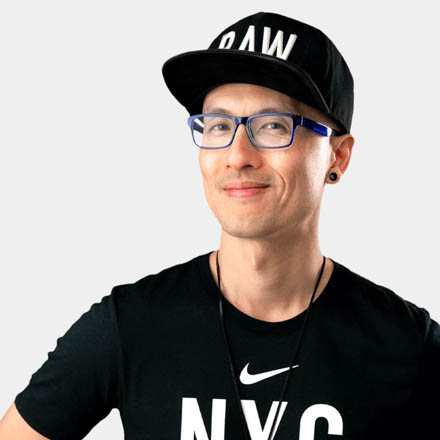
- I'm Matt Gray, and you're listening to The Future. Matt Gray is my guest today, and we're going to talk about how to build a profitable personal brand. We're going to get into the story, and we want to start to unpack the things he's been able to do to help a lot of other people.
Normally, he speaks to, I think you have a program called FounderOS. Is that your main thing? Yep.
The average person there does, what, $2 to $3 million a year? Yep. And then you help build their personal brand.
Yes. And you have a lot of frameworks and strategies and even AI tools to help them do that. And we'll get into that in case you want to find out about that, but make sure you stick around.
Let's get to know the man first. Okay. Matt, you look like a super chill guy.
Who's got like very meditative vibes. Where are you before you do any of this? Like who is Matt?
Yeah, I'm currently living in Bali, Indonesia, and then split my time there and then in Europe, typically in the Dolomites in Italy, mountain biking and doing my thing there in the summer. I've been building businesses for about 18 years now. Exited a company that I first started when I was 21, exited at 24.
Since then, I've built three other profitable companies, audiences of 14 million around those companies, and When I was 30, started building my own personal brand. I've now scaled that to 3 million people and currently focus most on a company called FounderOS, which really helps founders build profitable personal brands to help them feed their businesses with organic content. And what I've noticed over the years is that founders are looking to do this stuff, but they're kind of on the fence and not sure how to really get into it.
And I think the key thing behind it is you need to have the right systems at the end of the day, because without those, you end up on a bit of a content treadmill. And before you know it, it's all coming down to you. And obviously you got to run a business.
And so I think there's a lot of talk about building personal brands online. But I think sometimes it ignores the fact that it's not just about building followers online, right? We're trying to actually drive real business results.
And so there's a bit of an infrastructure layer there that I think most people miss that we'll probably get into here. All right, let's get into this. I've seen you grow really, really fast.
in terms of millions of followers in a matter of like a year and a half, two years. That is not something that we see every single day. And oftentimes people will send me your content.
I'm like, what's Matt doing? I'm like, he's doing something good. I could tell he's doing it.
What have you learned in the process of taking your account from nothing to like where you're at now? You have millions of followers. What did you figure out in this process?
Yeah. So, I mean, I started my personal brand around five years ago. the process to getting to that point was kind of actually quite messy but eight years ago was using substances drinking too much i had become kind of a little bit lost and I had gotten out of a relationship and had this opportunity to kind of like look myself in the mirror and go like, okay, something's got to change.
I had tried to kind of quit 40 plus times. I knew I needed to get some help. And so I started looking at my phone, starting to think about who do I know?
Who can I reach out to? And probably listening to too many podcasts at this point in time, I was like, okay, Huberman could help me. And And so I picked up Instagram, sent a voice note to Huberman two minutes long.
And sure enough, the next morning, randomly didn't expect this. I have no relationship with him. He got back, sent a voice note and acknowledged the situation I was in, told me some of the health issues that were likely to come up if it continued, and then made a referral to a guy named Dr.
Kyle Gillette and was like, hey, you should go get blood work done with him. I think it'll help you understand the impact you're making on your body. And so sure enough, a few weeks later, had blood work done, realized that the substances I was using caused my testosterone to drop from 800 to 200 as a 30 year old male, which is super, super low.
And so decided in that moment and something clicked, I think it was like this idea of almost gamifying sobriety, which for whatever reason worked for me, which was like, okay, it's at this level now. If I can just sober up maybe for a few months, I can get those levels back and then get back to a level of vitality. And so sure enough, that's exactly what I did.
I quit cold turkey, stopped drinking and other stuff. And around that time, I got like a kind of a sobriety coach, essentially. And this individual recommended that I read the book, The Artist's Way by Julia Cameron.
And so read the book. For those that don't know, it's this like kind of eight week journey. There's like a 10 page reading.
There's about 10 different prompts at the end of each chapter. And you essentially just write three pages of morning pages every single morning when you first wake up. No social media, no nothing.
Wake up, write your morning pages. This was a new habit for me. I had always thought of writing as really scary.
I had no idea really how to write that well. And you didn't need to. This book was really liberating in that sense.
You're just writing privately to yourself and just letting it flow. And so that's exactly what I did. And there's a lot coming out of me.
And throughout that experience, I started to realize that I think part of what was going under underneath all these substances was that like the artist in me was kind of being like muffled and suppressed and I had just kind of gotten lost in building things in life and struggles or whatever and hadn't given that artist much of a voice or an opportunity to like exist and create and so After going through these 90 days, I just as an experiment was like, oh, screw it. Why don't I start sharing some of these different lessons and things on X? I'm at the time Twitter and it was messy.
I was just putting stuff up there, had no idea how to really do it all, how to look good or how to make it good or whatever. I was just sharing the same way I'd been sharing with myself these random thoughts in these morning journals. And so I started sharing it along that kind of journey.
It was messy at first. Nothing was growing, and I wasn't really in it for the growth. The whole thing was like just the process of just putting this stuff out there.
Maybe I could help other people like me. The kind of creative expression of it all was interesting. There was no grand master plan, and people started to enjoy, though, the things that I was saying.
And there was a little bit of positive feedback, which did feel great, which was a little bit reinforcing to continue the journey. And along that way, I started to kind of become a little bit more obsessed with just the craft of writing, reading random books, whether it's On Writing by Stephen King and other books like the Adweek Copywriting Handbook by Joseph Sugarman. And then that brought me in a little bit more of a wormhole of just like wormholes do, right?
Of just looking at hooks and looking at ways of doing it and realize there's a whole art and a craft behind this that was actually quite fascinating to me. And so I just was both learning the practice of expressing myself more and letting this artist kind of unleash while also like applying the tactics of copywriting to package it in ways that would travel online and that would be digestible and shareable by folks. And so that was kind of the genesis for then building this audience.
And it worked. And on X grew to 100,000 plus and then just started literally taking that exact same content and just putting it onto LinkedIn. No different edits, no nothing new, literally just putting it over there.
And it actually started growing even faster. And so that journey kind of continued. And it was this gradual process of just iterating and putting myself out there.
It was only about 14 months into that journey then that I started bringing it to short form video, Instagram and TikTok and YouTube shorts, playing around with that, looking like an idiot, short form videos in the backyard of a Puerto Escondido, Mexico Airbnb I was staying at. And then about nearly 18 months into the journey when I started YouTube. So it's been like a step-by-step journey, but that's kind of how it all unfolded.
Was your intention just to share what you were learning at the time, or was there another motivation in terms of building your brand so that you can get people into a program or something or coach them? Initially, it was really just sharing stuff. I figured we've learned these things, right?
Which like first time founders focus on product, second time founders focus on distribution. And actually, when I rewinded this period, this initial sharing on X period had met you. i went to a sort of a conference hosted by eric sue you were one of the speakers there along with formosi and cody sanchez and some others i was just in the audience because i was curious actually a friend steve from prey.com was like hey come check this out come with me like it'd be fun i was like screw it so i actually flew from toronto just for that and i was just there for the three days for this conference and it was part of like one of those inflection moments in this whole journey because i started realizing I was watching Hermosy on the stage and then watching Cody Sanchez and it started to become obvious in my own brain.
I was like, you know, Matt, you haven't built a personal brand, but you have been building media companies now for nearly a decade. Having built Herb, my second business to an audience of 14 million people organically and produced tens of thousands of pieces of content, not for me, but for that brand. And it felt really liberating to some extent to go and take my own brand that much more seriously, kind of move from approaching it maybe more in the farm leagues and be like, oh no, let's go pro.
Let's give this a shot. And so around that time was when I was like, okay, I'm going to really lean into this more and start viewing it almost like one part art and one part like a sport. At some point, about six months into the journey, I was like, I'm going to go and put together something.
Let's try and just see if a bunch of people would get on six weeks of Zoom calls with me and learn a little bit more about my own approach to entrepreneurship and how I build companies. This kind of symbiotic relationship between taking care of yourself. At this point, I'd been maybe almost a year sober and how when you take care of yourself helps your business flourish.
I called the thing Soulful Entrepreneur. And sure enough, I got about 15 people in that from my audience, and it served as this awesome kind of just testing ground. And then that evolved into something more formal.
I ended up listening to a few mentors, one of them, Alex Lieberman, founder of Morning Brew. I had been talking to him every other week, and he's like, Matt, this thing is a bit woo woo. And the name sounds like a yoga studio.
I like the systems aspect of what you do. And it wasn't so much that he said this or that his advice. was like what really mattered.
I think that most advice, like you got to obviously run it through your own filter. So when I ran it through the filter that I had, it just clicked with me. Like, yeah, the systems thing that you're saying you think I should lean into that resonates with me.
I like that. And so that became more of sort of how I started building my brand is around the systems behind entrepreneurship, helping folks build profitable personal brands, helping them do it in a way too that doesn't all come down to them and helping them build the right team, the structure, the workflows, the strategy behind it all to make it much more simple. Is that then the rebrand to FounderOS?
Exactly. Here's what I want to do now because I've teased it, I've promised people. I don't even think we even need to tell people why they should care about brand because if you're this deep into this episode, I'm going to just make the assumption you do care about brand.
and people are a reluctant to make stuff, help us get over that part first. Let's just say like, I love the idea. I've not done things because I have all this fear inside of me.
How do you help people get over that? Yeah. So I think it's kind of breaking it down.
Like it's, that's completely normal, right? Like anything, any important thing you do in life, it's always like that nervous feeling before like starting to get that muscle going. And so I think of it like someone just starting to go to the gym, right?
You don't need to worry about gaining a bunch of muscle or losing a bunch of fat initially. I think if I was advising someone to get fit, it's like, let's make sure like for the next 90 days, you just walk through the gym door and And so the analogy then there on like a personal branding side is first off to know, are you more of a camera first person or are you more of a pen first person? Does it excite you more to start writing with your words and pen than maybe get going on a platform like X or LinkedIn with maybe a newsletter eventually?
On the other side of things, if you're more comfortable on camera and that's what excites you, then get going on that direction. Maybe publishing a YouTube every month to start with and remembering along the way too that the best content strategy is the one that you can stick with. So don't try to go too hard in the paint too fast, right?
Like one step at a time. From there, I think like for the first 90 days, view it as almost like a spiritual exercise of just getting going and building the muscle of shipping. Like as you ship a YouTube video, emotions are going to come up.
Oh my gosh, what are people going to think of this? Am I doing it right? Oh, mine doesn't look like Chris's do.
All of that stuff is going to come up. And I think it's playing with that voice in your head and viewing it as a practice. You got to view it as a bit of a practice and a skill that you're picking up.
It's a bit uncomfortable. And so same thing. It's like, You're likely watching this because you know that it's a valuable thing for attracting talent and driving cash flows and leads and serendipity and new opportunities in life.
People know these things because it's the truth. And so not letting those voices creep in your head and stop you from actually shipping the thing and getting started, realizing that no, that's part of the practice is that there's stuff going to come up. And so maybe it's having something on the wall where you're just tallying out just the consistency of it and just seeing it as don't worry about the quality of it.
Don't worry about what people say. You're literally just doing this as an internal practice just to start shipping some stuff that you feel good about. I'm going to turn this over to our audience here.
What I hear you saying is, let's just first develop the habit of shipping. And do it in a way that's sustainable and do it aligned around something that excites you. If we accept that as a critical first step, what would be stopping each one of you from doing that?
Perfectionism prevents me from shipping. Yeah. So when people are building their brand, right, something that's going to come up is this idea of like, you know, is it good enough?
Right. And perfectionism is something that can often creep into people's brains and stop them from just taking that step. Something I've been thinking about, just a quick story on this, is that sometimes this whole content game online, it goes through like these different pendulums and the pendulum swings from a world of kind of super authentic, off the cuff, imperfect content, and then sometimes swings to like more polished content.
And in this day and age, when we're looking at most content online, one of the first questions people have when they see something is, was this created by ai and that's the world we currently live in rewind five years ago during covid everyone's locked in they start seeing chris's content they're like oh he's got a sure mic and he's got an fx3 and they start getting that and then they're looking at color grades and they're going and they're nerding it out and that was like a wave that we had that's now kind of coming to a halt and so i would say first off to deal with like i think it's the right side of the brain that's more logical maybe getting it wrong is like we're actually living in a day and age right now where the more actually imperfect it is where you can just feel the humanity and the authenticity behind it is like where humanity is at right now they want to know it's you even with my own content that was polished for sec we're unwinding it we just started a second youtube channel it's the rules are no editing off the cuff and just keep it real keep it simple so that's that piece okay on the other side of the perfectionism. First off, I get it, right? It's tricky.
I've been writing a book now for the last three years and wanting to ship this for a while. And I've been viewing it, though, as more of an art project, not any business or anything. And so I'm just giving myself the time to just go through the fifth draft, go through the sixth draft.
So I definitely understand perfectionism because I allow myself to be a perfectionist in certain aspects of my life. This being kind of the one, to be honest. That said, I think when you're going and doing the content side, the thing that's the most important is not where you start, it's the learning velocity.
And I think that's true with most things in life. I think it's actually one of the most important things for us just as humans and founders to compete over the next 20 years. It's just how fast can you learn?
Because if you can learn, you can iterate, you can build a better product, You can get results, you can get cash flows, you can reinvest that in areas of your company and also in your own lifestyle and continue to flourish. And so when you kind of begin this journey and as you're there, realizing that if you can just have more of an insatiable appetite to just learn, then maybe it allows you to ship something because you're more obsessed with the learning you're going to get from it than the reaction or outcome you're going to get from it. The last thing I'll say on it too is that I've struggled with this again in many areas, and I think it's also about a reframe going from reframing things as this content is a performance where I need to show up and look a certain way to how can I approach this like play?
And it's about I'm just going to show up as I am. No performance, not trying to look good, not trying to be perfect. Just like I am who I am.
I have things to share that can provide value for someone. Let's do it. Let's press play and trying to just approach it and kind of loosen the grip on the whole experience.
So, Gil, you are a lawyer. You're also an artist. You play multiple instruments.
Did you get good at playing the piano on day one? No. Okay, so if a young student wanted to learn how to play the piano, what would you say to them?
You can't be perfect on day one. So why does it make sense there, but it doesn't make sense to you in your own life? It's an interesting question.
It does not make sense. So I have a theory, and you may not like me for saying it. is I believe your perfectionism is an avoidance strategy.
i agree with you 100 okay have you seen that ira glass interview he's does this american life higher glass is the host and he goes there's this thing about creativity and he goes i want to play for you a clip of me doing an interview and he hosts one of the most beloved podcasts and he plays it for for you and he's stuttering and stammering through it there's a lot of ums and filler words in there he goes that was five years after starting He goes, the problem with a lot of creative people is we have really great taste, but we don't have the skill. The gap between your taste and your skill is enough for it to cripple you to start. So he goes, I'm still not that good.
And he's been doing this for decades, but people love it. So maybe we shouldn't use our own taste as the barometer for whether or not we're going to do something. So if you can just let go of that, I think you're going to learn so much more.
I'd love to hear your views on the fear of being judged. Let me ask you this question. The entrepreneurs that you work with that are part of the FounderOS system that are doing $2 to $3 million a year, do they voice these same concerns?
Yeah, I think the interesting thing about all the stuff we brought up is like it doesn't matter whether you're that successful entrepreneur running a $400 million company or you're that person that's just got a school community to $100,000 a month or you're someone just beginning all this journey. The interesting thing is that when it comes to building a profitable personal brand, i would have noticed is that everyone's kind of a beginner and as such yeah all this stuff comes up this stuff is a skill right it's a craft and it's complicated and it's messy you know when you look at you know as an example the first mission to the moon thing was like apollo 13 maybe people think it was like a straight shot to the moon and then back to earth. But when you actually look at the journey, the whole time it was wiggly like this.
And so what's the lesson there? It's like 97% of success is about correction, not about getting from here A to B, right? The journey of whether it's building a business, the journey of most relationships, the journey of personal branding, it's inherently kind of messy.
And so how do you ensure that you're course correcting along the way? Well, you would find a coach or an accountability partner of some sort. And there is a difference in my eyes between a therapist, a friend, a family member, and a coach or an accountability partner, right?
Someone that's like weekly or biweekly, like really checking in and making sure that you did what you said you were going to do, irregardless of maybe what came up or you're expressing these limiting beliefs and the perfectionism and the worries that come up and being able to then work through it, but then still commit. And I think that's inevitably what is needed, I think, in this area. I want to acknowledge how scary it is to put out content.
Because even in my me asking you about playing piano, when we practice, we have someone to teach us. It's very private. You do it in your own home or some small place.
It's not on stage in front of 300 people. Could you imagine just learning scales in front of 300 people? And now I understand there's pain there.
That's a very real thing. So it's not just imagine. And I want to ask this question in your life.
How many people do you really care about their opinion? Probably two, three, two or three. So we really only care about the opinions of two or three people.
And maybe by proxy, when you put it out onto the internet, some idiot that you don't know is going to say something to you that you're going to take and carry with the weight of the two or three people as if they're saying it to you. Perhaps my very practical thing for you is to talk to the three people and say, I'm going to go on an adventure. I'm not going to be very good at it, but intend to be good over time.
And your opinion means so much to me that I just need space to grow and fail without your condemnation and judgment, because I know that will really derail me. Could I get your permission to do this and invite you to give me grace during this time? And if you could do that, that'd be fantastic.
If you give me a support, that would mean even more. You don't have to be great to start, but you have to start to be great. So you're trying to find the loophole in that expression.
I think you are. Yes. Let's get into the next part.
Okay. So we have to develop the habit of shipping imperfectly. Let's get into some of the deeper tactics, the things that you have been able to help other entrepreneurs do and build their following.
I think the next stage that you want to be thinking about when you're just getting going is for me early on in my journey, it was effective to kind of go and think about my icky guy. I come across this in a book, this idea of your reason for being this Japanese philosophy around really kind of like finding what sets your soul on fire and your calling in life. And it kind of sits at the intersection of really thinking about what you're great at, what you can be paid for, what the world needs, and what you really love to do, the kind of stuff that you lose track of time doing.
And if you're going to be on this journey, the greatest returns are going to come from the long-term compounding of the thing. So this icky guy exercise can be really effective because it helps you then make sure that you're building something that is going to make you money, that's going to be fun and that you could see yourself doing for the long term so for me that's things like helping founders with systems building distribution around founders and myself building communities that's the stuff that sets my soul on fire and so i'm building this audience and i'm building now business too around just my own like natural passion and curiosity and i'm building a business that i could do and will do until i die that sounds like entrepreneur step What about the personal branding part? How do you build an audience around?
Let's just say I've identified that now. How do I build an audience? Yeah.
So let's double click into like the different platforms you can build audiences on and maybe some of the different tactics there. So every platform is going to have its own like operating system as to how you go and start building an audience on it. Okay.
And so we can deep dive onto a bunch of that. On YouTube, as an example, the thing to understand when you're going and growing on YouTube is that 90% of the success on YouTube is your packaging. It's your idea, title and thumbnail.
On LinkedIn, the key thing on LinkedIn is four aspects. Number one, making sure that you have long form value. Two is making sure that you have amazing hooks.
You're trying to stop the scroll. There's images as well. I use a lot of infographics or carousels.
All even and what actually led to some of my most fastest growth on the platform was actually just hand drawing just a little bit of value on a pen and paper with an iPhone image every morning for about 20 minutes is again a little practice and then just sharing those. And then the fourth thing is then making sure that you obviously have a CTA in it, a call to action that leads people to repost it, which is the number one metric that LinkedIn is looking for. On the X side of things, very similar.
Every single day on X, I post at 8 a.m. and around 2 p.m. And the kind of content I'm posting are my best ideas.
And then making sure that we're also refining them based on what we're seeing work on the platform. X right now, and it kind of has been this way for about the past year, it is a squirrely platform. Love it.
I think I think it has some of the best ideas on there. I think it's got the best copywriting in the world you can find on X. It's typically then what travels to other platforms from my observations.
That said, growing on the platform right now is extremely hard. And then on Instagram, when I look at the past six months of performance on my Instagram account, that's like around 950K and again has grown to that over the last few years. They're all carousels.
Carousels are a format where it's just generally a square image that you can swipe through. And oftentimes there's then a CTA at the end of it. One of your standout things, and it's hard to miss if you've been on Instagram, LinkedIn or X, is these, I would call them crazy infographics that look like you wrote.
And I have some questions for you about that because they're really neat. Even the spacing, the design of them is really neat. And it got me to think, is Matt doing this?
Is AI doing this? Is a designer doing this? And how many versions of this is he doing?
So Matt's built a T. So... I was at like an artist retreat in Esalen, Big Sur, and like, I think it was October 2023.
And after going and building random mosaics and weird artist stuff after that, I got back to building on these platforms. And at the time, LinkedIn was one of those things. And so it was about January 2024 at this point.
And it was, I just actually had been sharing again, all my same stuff on X onto LinkedIn, like like I'd said. And I was like, okay, well, let's spice this up a bit. One approach that I sometimes have on these platforms is like the JLo approach.
JLo, she can act, she can sing, and she can dance. And so it's like this idea of being a triple threat. And I think sometimes that's an interesting way over time as you start to get more comfortable to kind of think about your content strategy and what makes you stand out.
So I had really good hooks i had great value in them but there was like something missing and so i was like well what if i just go and put a drawing together around this concept i'll time it i'll give myself like 25 minutes this morning to get this done and then take a photo off my iphone attach it to the thing and put it live sure enough did this for a week things just absolutely caught fire and so Like most things, when it starts to catch fire, well, I kind of stick with it, right? There's like some good signal there. And as long as you're enjoying it and you're having fun, like, you know, no harm, no foul.
So I did that for another around a hundred days. Okay. So really putting in the work, really doing this and again, approaching it more like I just got back from this artist retreat.
So that's what I was doing. It continued to work, continue to go, continue to grow. And then like most things, when we're at that scale, it's time to delegate.
And And so at this stage, I have a couple actually, they're married that run my social media and Anna also has really neat handwriting. And so Anna had been seeing these images for some time and she said, yeah, I could definitely take this over. Like beautiful.
So, uh, That was that. I just explained the process to her, made a loom around it. She obviously had the whole bank of infographics I'd been making up into that point.
And now Anna is the one going and creating all these. And I think she's done it for again, around like a year and a half now. I think something I've learned over time with these two, because I've obviously got a lot of feedback on this specific format, which is handwritten infographics, is that my feeling on it is that there's something psychological to it just about like human writing has existed forever, right?
It's like so primitive. And so I think there's something like when you're scrolling LinkedIn, as an example, you're seeing like this polished thing and a job announcement, and then this like beautifully designed Figma intentional, perfect spacing thing. And then you just see this weird lighting, iPhone photo, some of it's dark, some of it's bright.
There's like a hand mark here. There's ink there. Yes, it's decent writing, but there's something so catching to it also because it's this primitive form of, you know, you know it's handwriting it's a pattern interrupt yeah so it's a pattern interrupt exactly so that's a big thing and yeah it hits the save function and that gets going and then weirdly enough i've had so many people say that they print these out daily that gets me thinking with your content it's kind of Knowing what your signal metric is more than the platform metrics.
It's kind of sad in a way, what the platforms kind of brainwash us to think sometimes, right? It's all about the likes and the comments and the views and all this stuff versus to me, one of the things that jazzes me up the most. I mean, yeah, if someone says they're printing off something I made, that's badass.
That's worth 10,000 views to me, 100,000 views. What you're saying sounds exhaustive to people. Like, okay, so you're posting this many times, you're doing this and you're writing hooks.
And people are like, I didn't get into this business to be a social media person. I want to focus on my core business. How do you address that?
Yeah, so we're kind of getting to stage three here, right? Stage one is kind of going and being able to build up the muscle of shipping. Stage two is then starting to pick a platform or two and learn the game of the platform.
And then also it really sets your soul on fire and make sure that you're getting that early monetization going. The reason that stage two is important because as we get to stage three, yes, we're trying to get out of the stuff that we don't enjoy. And so stage three, I would say, is it's moving from being a personal brand to a personal media company.
And so I think that wanting to build a personal brand long term actually, in a sense, is a bad idea. What you're really trying to do is view yourself as a media company. You're not trying to be a creator that every day is waking up, making things, thinking of ideas and feeling like it's just this never ending treadmill.
You want to be the CEO of a media company and have the right people underneath you and systems that can help you go and build what you're trying to do so that you could take a week away or a month off eventually and come back and that thing is still cranking along. And so how do you start to view yourself as this personal media company and build that profitable personal brand? Right?
Well, first off, Obviously, at that stage two aspect, you got to make sure that you have an offer that can scale beyond just like 15, 20 customers, but be able to scale to hundreds depending on the pricing to get you to real profit numbers per month. Let's just say 30K plus in profit per month. So when we start making that profit, depending on that route we've gone, we've either gone camera first or we've gone writing first.
On the camera first side, there's going to come a point probably that you want to bring on a social media manager and probably a video editor so that you're not editing all your own stuff. You have more leverage around you, someone going and creating the stuff that's ready to post on the given platform, and then someone to go and handle the posting for you so that you can get yourself out of the operations of it all and the workflows and be able to focus on basically being one part CEO of a business that has to keep scaling likely and then have to show up. Maybe it's once a month for a few days to film a bunch of videos in a batch all at once and then be able to have content now loaded up for the next 60 days and then have that handed off to your media team to then use all that for all the social media content you're going to be putting out.
So then you've got the profit, you kind of understand at least the minimum viable team structure to have this personal media company. Then you need to also have like the systems behind it to make this level of leverage happen. And so A couple of things there.
Number one is something I talk to founders a lot about is having first off on the content side, a bit of a content waterfall system. And in my companies, this idea of waterfall is a verb. When we see a good piece of content that we've created, typically a long form piece of content, we'll waterfall that content.
Meaning we'll take that pillar piece of content that's done well and we'll make sure it turns into about 20 plus other pieces of content. And what this allows you to do is obviously get more output from a given piece of content, thereby not having to constantly just create and create and create because We want to do kind of less but better as we're scaling. And so the next aspect, we've got kind of the content side.
That's like one core system is then your nurture layer. So you've got this audience growing. We need to actually go and own that audience.
The real value of building an audience when we talk about building a personal brand and eventually a personal media company is owning that audience. Any entrepreneur will tell you the most valuable asset in their business is their email list. When you understand the value of really owning and growing your own email list, it doesn't matter the platform, Substack, Beehive or Kit, doesn't matter, right?
Just something. We then want to make sure that we're building that infrastructure right there to go and grab that attention and convert it into emails. And this is where most people screw up.
So it's that infrastructure middle nurture layer that then leads you to having the ability to eventually send out a weekly newsletter in there, in the PS section, maybe mentioning the offer that you've created, the business you have, the product, the service, whatever, and start to actually drive leads to your business, which leads to the third layer, which is then monetizing. So you talked about content and waterfowl system monetization. That's where I have no clue.
Could you deconstruct that a little bit for us? What do you mean by monetization? The monetization layer, right?
Like the pot of gold, the gold mine, like we're trying to crack the code on this, right? And yes, it can be like the trickiest layer for folks, especially creatives, oftentimes that it's really scary asking for money. And I, you know, Chris has some unbelievable content around that.
I know a lot of the creatives I've spoken with always refer back to some of Chris's amazing videos on that, on that front. But to give this a shot, I think I think I definitely don't recommend that it's ad dollars that you're relying on, although that's fine. I think that a purely ad based model is what I'd call like more of a creator than a founder.
Okay. And there's nothing wrong with any of these things. But creators typically make a business based on views where I see founders build a business based on some sort of offer that they have.
Then the question becomes, okay, well, what's your offer? What is it that you want to deliver? So an offer.
is essentially just something that you're delivering to someone that they want to buy at a certain price. So the most simplistic way to think about this, at least that I think about, is we need to go and create a one or two page Google Doc that is a thing that you are selling. And Contrary to what most people tell you, I think you can sell a lot of things off of a Google Doc initially.
You can keep it simple. A Google Doc and a Stripe link can work wonders, at least to get you to your first 15 customers. I think that's like layer one of monetization.
Layer two, as we start to now scale it up more, is like that offer becomes a landing page on your website. It may have a video sales letter attached to it as well that allows people to learn more about what you're doing via video and then copy around what that offer is. If it's something that people can buy immediately, maybe that's under $2,000.
They can just click a link to buy and check out with Stripe or whatever payment layer you want to use. If it's above $2,000, it may be considered what's called a high ticket product, and thereby the typical way of selling that is on a sales call. And so it's kind of that layer that we're talking about in monetization.
So your offer could be, I'm going to help you to get into it could be like a portfolio workshop. where you're going to get high school students who want to go to Art Center or Otis or one of these private art schools and for four or $5,000 over the course of four weeks, you're going to review their portfolio, you have a system in place, you have a framework, you'll do some video like asynchronous courses, and you'll do some personal feedback and critique. And that's your offer.
in a sense like to really this is a quick analogy right it's like you have like a piece of real estate you bought that could maybe one day be an amazing restaurant and people know that you're a great chef they see you around this restaurant but there's no menu And they see you, they know you're an amazing chef. So you have some people sometimes pass by and go, hey, you're going to serve anything? What I'm proposing with this offer thing to bring it down to this analogy is like, put a menu outside, put a sign on the wall, like set the tables, right, so that people can walk by, see a menu like any restaurant we'd go to.
This is interesting. I'd like to work with you or I'd like to eat this. And then they sit down and you've got your customers.
and so your offer is like your menu what you're saying makes a lot of sense if i'm a solopreneur i want to be able to go and and build the content and then have a way to monetize and in order to do all this stuff i do need help but then i don't have the money to get help so i keep telling myself i make enough money that i'll get the help help me get out of that routine because i think i'm voicing it probably for 85 of our audience right now yeah stuck in this weird loop yeah so my approach to the weird loop is First things first, you got to get the money. What's the most important thing? You're rebuilding a business.
Okay, we got to get some cash because you get some cash in the door. Then you can start getting the help you need around you. Then it's just looking even just getting a pen and paper out for a second.
Like, let's just keep things simple. Right. I know when I get a little anxious or overwhelmed going in just pen and paper, kind of writing things down.
And I don't mean journaling. I mean, even just writing down some bullet points, maybe some to do's, maybe drawing something helps just me get it in my head. What are like maybe the next five ten things you think you can do that would drive you some cash flows so you've now kind of documented some things in your journal some are really bad and been there done that do that all the time and some are actually a kernel of something amazing you want to then prioritize those things and i think a way to think about this just giving that even more granular right if i'm really trying to dial this is what is the lowest effort thing that i think that could produce the easiest amount of cash.
So like, oh, there's literally someone that emailed you that you just haven't answered yet that wants to work together. Get on a call, try and close the deal. Let's get this done.
That's the next step, because then the cash flow brings you the leverage and the optionality to start investing in some areas that may be able to support you. But without the cash, you're just in this cycle of constantly spinning your tires. Matt, I appreciate you taking the time to talk us through it.
I love the way you present information. You are who you present yourself to be online. Everything you said checks to me.
There's a clear logical system. You are very good at creating systems and you've just proven it to me. And I hope our audience can probably, though you probably need to replay this several times and go through this.
And if you ever stuck, you just take the part you're stuck and ask AI, i understand this how do i apply this to my line of business and it will help you you don't need to get all the answers from one person but i like this really high level kind of ceo executive level looking at a problem so we understand the architecture of how this is supposed to work and then each person is going to have to determine does this fit for me what i'm doing my financial goals my work ethic and then find the right answer for them Now, before we get out of here, people are like, this is super cool. Is there a lead magnet or is there someplace that we can send them to that they can then go deeper with what you're doing? Yeah, so people can find me, Matt Gray, on all platforms on on my YouTube.
You can see a bunch of different topics there. Go and peruse them. Each video also is accompanied by either a worksheet or some sort of deep dive system that you get for free.
So you can go and check those out there as well. And then if you're interested in going a little deeper on how we work with founders and creators inside of FounderOS, you just go check out FounderOS.com. Perfect.
Thanks for being here, man. It was awesome. Thank you.
Appreciate it.