Why You're Not Getting Clients on LinkedIn
Chris Do and marketing coach Nicole Oscon teach you how to finally get clients on LinkedIn by abandoning sales tactics and becoming human.
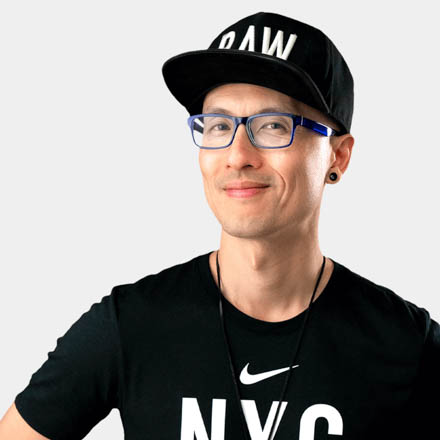
Chris Do
Founder, The Futur™ · September 24, 2023
The Sunglasses Test
There is a fundamental disconnect in how most professionals approach selling. They operate with a split personality. As a buyer, they despise the hard sell, the pushy follow-up, the generic pitch. They want to be seen, understood, and helped. But when it is their turn to sell, they adopt the very persona they detest.
They become the aggressive marketer, the relentless salesperson, the anonymous avatar flooding inboxes with irrelevant offers. They forget how they like to be treated.
Chris Do puts it simply. “People do not need to learn how to sell,” he explains. “They need to learn how to be human first.”
This is the core of becoming a human-centric marketer. It's about recognizing the person on the other side of the screen, understanding their needs, and serving them with integrity. Sometimes you can help them. Sometimes you cannot. And that is okay.
Marketing coach Nicole Oscon learned this lesson not in a boardroom, but at a market stall in former East Germany. In 1989, after the Berlin Wall fell, her parents lost their jobs and became market traders to make ends meet. As a shy teenager, Oscon was put in charge of the sunglasses section. She had to learn to sell, or she would not earn her commission.
What she discovered was that the hard sell was a repellent. “You don't want to be bothered by all the Traders trying to Hard Sell,” she says. Instead, she developed a different approach. A relaxed demeanor. A smile. Eye contact. She learned to read people’s faces to see which frames would light them up, and she listened to their budget.
When a prospective customer—played in a role-play by Do—shows interest, she doesn’t pounce. She offers a gentle invitation. “I spotted you looking at some of our sunglasses. Do you like to have a little try?”
When questioned about the quality of the budget-friendly glasses, she is honest. She does not oversell. “If you're really concerned, perhaps it might just be an idea to go to an optician,” she advises. “So that you can really get those glasses which are best for your eyes.” She positions them correctly: a fun, low-risk pair for a party, not a long-term investment. This honesty builds trust, and trust leads to a sale.
This is the model for getting clients on LinkedIn. It is not about mastering an algorithm. It is about mastering human connection.
Stop Blending In
Less than one percent of people on LinkedIn create any content at all. This statistic is staggering. It means the world’s largest professional network, with over 930 million members, is primarily a platform of lurkers. The competition for attention is, contrary to popular belief, relatively low for those willing to speak up.
Yet, most creatives and agency owners who do post sound exactly like everyone else. They blend in like a clownfish in a sea of anemones. Blending in keeps you safe. It also keeps you invisible.
As Oscon notes, this makes your business look like an unmarked white van. It is functional but forgettable, lost in a parking lot of identical vehicles. The goal on LinkedIn is to be the bright orange van, wrapped in bold graphics that clearly announce who you are and what you do. You want to get noticed for the right reasons.
The problem is, many professionals view LinkedIn as a stuffy, corporate platform only for job searches. They believe it is inherently spammy. But spam is a behavior, not a platform feature. “In our email inbox, we get so many emails which don't make sense,” Oscon points out. “We get the same on LinkedIn. But as long as you’re not part of that society, that's all that matters.”
Getting noticed starts with a simple reframe: treat every new connection like a first date. You would not propose on a first date. You ask questions, find common ground, and build rapport. “When you are reaching out to someone on LinkedIn, make sure you date first,” Oscon advises. Only after you have built a relationship, and they know you well, should you make a proposal.
This is a fundamental shift from transactional thinking to relational thinking, a concept Do has explored in his work on building an authentic personal brand.
The Story Is the Strategy
The easiest and most powerful way to connect with your audience is to share your stories. As legendary filmmaker George Lucas said, when people get to know the people behind the product and how it is made, they talk about you more.
This is the first and most critical type of content for LinkedIn. It’s what makes you unique.
Chris Do provides a masterclass in this with a post about his experience as a last-minute keynote speaker at the Atomicon conference in Newcastle. He tells the full story: saying yes to the gig with no slides prepared, planning to finish them on the plane, then in the hotel, and finally, finalizing them on the afternoon of the event.
He builds the tension. “The audience was already standing when he entered the stage,” Oscon recounts. Then, the ultimate nightmare for a speaker: the tech system failed, and he could not see his next slide. For a talk prepared at the last second, this could have been a disaster.
But it was not. He delivered. The story is not about his speaking prowess. It is a story of vulnerability, pressure, and trusting yourself. It encourages everyone who reads it. “If someone is asking you to give a talk, you are the expert,” Oscon says, summarizing the post's takeaway. By sharing the struggle, Do connects on a human level and reinforces his authority without ever having to say, “I am an expert.”
This is not an isolated tactic. It is a core tenet of effective communication, as detailed in discussions on why most stories fail to connect.
You do not need a dramatic keynote story to do this. Adi Frankie Lort, a UK-based consultant in the adoption and foster care sector, does this by sharing bullet points reflecting on her life experiences: her mother dying young, her time as a social worker, her sense of adventure. She pairs it with a beautiful family photo.
Her post does something brilliant: it invites the audience to participate. “Now over to you, what's made you who you are today? Share a couple of things in the comments below.” This simple call to action makes it easy for people to engage, generating dozens of comments and hundreds of reactions. She turns her story into a community conversation.
The Five Winning Post Types for LinkedIn
Every piece of content you post on LinkedIn should have a purpose. Oscon breaks it down into five key objectives, which form a versatile content strategy. These post types are not mutually exclusive, but thinking through them brings clarity and intentionality to your efforts.
- Stories: As discussed, these posts make you relatable and memorable. They can be about your personal journey, your professional struggles, or the values that drive your business. They build an emotional bridge to your audience.
- Client Success: These are your social proof posts. They are not just testimonials; they are stories of transformation. By showcasing your clients' results, you create a sense of FOMO (fear of missing out) and demonstrate your expertise in a tangible way.
- Expertise: These posts are designed to educate your audience and position you as an authority. They can be tutorials, insights, or analyses of industry trends. The goal is to be generous with your knowledge.
- Entertainment & Engagement: LinkedIn is still a social platform. People scroll to learn, but also to be entertained and connect. Posts that are fun, surprising, or interactive can stop the scroll and show a different side of your personality.
- Conversion: These are the posts that ask for the next step. They might promote a freebie, a webinar, an event, or a direct service offering. They are used strategically, not constantly.
By rotating through these five types of posts, you create a balanced and compelling feed that serves your audience while also driving your business forward.
Showcase Transformation, Not Just Work
The second type of winning post, Client Success, is where most creatives miss a huge opportunity. They show the final design, but not the impact. You want other people in your network to see your work and think, “I want that result for my business.”
This is about showcasing transformation. Oscon highlights several examples. She posted a photo with her client Travis, who flew over 7,200 kilometers from Vancouver to London for an event. The post is not about her coaching; it is about the dedication of her client and the value of in-person connection.
Another example comes from US-based designer Kubali. She shares a brand she created for a client and uses it to celebrate the power of good branding. “She encourages us to be proud of our brands,” Oscon notes. It is a sales post, but it feels like a celebration of her client's success. It is subtle and effective.
Data-driven marketer Conrad shows this by sharing a screenshot of a client's results. He tells the story of the client’s initial skepticism, then reveals the green chart showing success. The post is a magnet for engagement. “All these people who commented,” Oscon explains, “he can now reach out and engage.”
This is a crucial point. When someone interacts with your client success post, it is a buying signal. They are raising their hand. It is the perfect opportunity to slide into their direct messages and start a natural conversation. “Hey, what resonated with you? How are you finding your own results?”
It's a low-pressure way to move from public engagement to a private sales conversation, the very topic explored in guides on using LinkedIn for lead generation.
The key is to frame your client work as a story with a beginning (the problem), a middle (your process), and an end (the transformation). This makes the value you provide undeniable.
Share Your Expertise with Generosity and Flair
The third and fourth winning post types—Expertise and Engagement—are about demonstrating your authority in a way that is not dry or academic. You are talented. You have expertise. LinkedIn is the perfect platform to show it off.
The master of this is Chris Do himself. His document posts, or carousels, are a benchmark for sharing valuable information in a visually compelling format. “These sliding images which take really poignant points your audience's faces and give them a solution... it's kind of addictive clicking through,” says Oscon. These posts generate massive engagement because they are educational and easy to consume. They teach and they hook.
But expertise does not always have to be a polished carousel. It can also be fun and engaging. Helen Reynolds, who works with communications professionals in the UK public sector, creates adorable mini-comics to illustrate her points. Her style is so unique that when you see it in your feed, “you know immediately it's from Helen.” She has found a way to stand out and connect in a typically serious industry.
Alison, a print and brand specialist, found a fun way to share her expertise while on holiday. She took a photo of beautifully wrapped commercial vans but pointed out a critical flaw: they had no contact details. “How does this business hope to get additional bookings?” she asks. It is a simple, observant post that is relatable, educational, and engaging all at once.
The most important part of sharing expertise is responding to the engagement it generates. As Do emphasizes, showing up to your own party is critical. “You would not invite a bunch of your friends… to a party and then not show up to your own party,” he says. When people comment, you must respond. Every comment boosts your post's visibility in the feed. More importantly, it shows you value your audience's time and input.
Oscon calls commenting your superpower. “Treat every comment like a mini prize,” she urges. Go beyond “thanks” and continue the conversation. This is how you nurture a community.
How to Ask for the Sale
The final post type, Conversion, is about turning attention into action. This is where you make a direct offer, but it should be done with the same human-centric approach.
You can create a sense of urgency. Lee Matthew Jackson, an event organizer, posted a photo of people dancing on stage at his event with a simple message: only one ticket left. The energy of the image combined with the scarcity of the offer created immediate excitement.
You can make a direct, niche-specific offer. Designer Kimberly created a simple, beautifully designed post promoting budget-friendly websites specifically for contractors. It clearly listed the benefits: fast turnaround, professional design, and a worry-free service. It speaks directly to a specific audience with a specific solution.
One of the most effective conversion tools on LinkedIn is the poll. Polls are low-commitment for the user but provide you with invaluable market research and a list of warm leads. Amanda Webb, a marketing expert, used a poll to plan a training program. She asked a simple question: “Did you take courses and online programs during the summer holidays?”
With over 30 people responding, she now had a list of individuals interested in education. She could follow up with each person to ask about the kind of courses they were looking for. It is a soft-sell approach that starts a conversation and qualifies leads simultaneously.
Think about what you could ask your audience:
- Is your current brand out of date?
- Have you seen a competitor step up their marketing?
- What is your biggest challenge with your website right now?
The responses are a roadmap to your next sales conversation.
Your Profile Is Your Best Sales Page
Before you implement any of these content strategies, you must fix your foundation. Your LinkedIn profile is your primary sales page. It is your digital shop window. If it is not optimized, all the traffic you generate from your posts will be wasted.
Angela, a brand designer and graduate of a Futur program, provides a perfect example of an optimized profile. Her banner image is bold and unmissable. It reads: “Launch your knockout brand in just ONE DAY. Seriously.” It is a powerful, benefit-driven headline that grabs attention and sparks curiosity.
Her LinkedIn headline reinforces this message: “Knockout brands that get you noticed + launched in a day.” It is not a job title; it is a value proposition. It tells you exactly who she helps and what she delivers.
Angela admits she used to freeze up on LinkedIn, worried about what to say and sounding like everyone else. But by embracing her unique voice and optimizing her profile, she began to attract the right clients. Her profile does the heavy lifting for her.
Before you post again, audit your own profile. Does your banner image convey the value you provide? Does your headline speak to your ideal client's desires? Are your featured links pointing to your best case studies or lead magnets? If the answer is no, fix it now.
Address the Unspoken Objections
The most sophisticated LinkedIn users do more than just post content. They use their content to proactively address the fears and objections that live inside a potential client's head. You need to understand what keeps them awake at night.
Jennifer Barnes, CMO of Bionic, helped outline some of these common, unspoken concerns a client might have before hiring a designer:
- Trust: They may have had a negative experience with another designer in the past. How can they trust you?
- Taste: What if they do not like the concepts you present?
- Time: They are busy. Will they have enough time to provide feedback? Will the project drag on?
- Budget: Are you too expensive? Will there be hidden costs?
Your content—especially your stories and client success posts—is the perfect place to address these fears. Tell a story about how you handled a project where the design brief changed midway through. Share a case study that details your transparent pricing and timeline. Show, do not just tell, that you are a reliable partner.
Do not just hope people will find a way to trust you. Earn that trust, one post at a time. Stop hiding. Stop blending in. Start telling the stories only you can tell.
Your future clients are waiting.
TRANSCRIPT
Enjoyed this? There’s more where it came from.
Get insights on creativity, business, and design from The Futur.
You can unsubscribe anytime. By submitting, you agree to receive communications and to our Privacy Policy.
“People do not need to learn how to sell; they need to learn how to be human first.”
— Chris Do
Key Takeaways
Subscribe
Details
- Length
- 55m
- Views
- 44,829
- Topic
- LEAD GENERATION