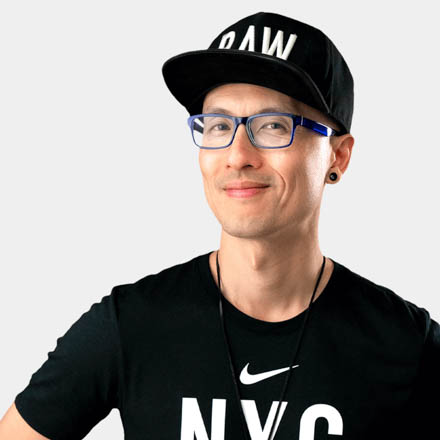
Okay, people, my next guest is a person who's a four -time memory master champion from Australia. This is a topic that is near and dear to my heart because I always see people who have an incredible memory as having a gift. They always tell you it's not a gift.
It's something you can learn and develop and anyone can do this. And if you are a person who struggles with remembering things, like you can't remember a name or an actor in a movie, or maybe something more important, you're giving a big presentation in front of board members and you have a hard time recalling what it is you're supposed to say. And maybe the most practical application of this is you need to remember something for a piece of content that you're going to share under 60 seconds.
And if you're like me, you struggle with this kind of stuff. So welcome to the show, Tansil. Hi, my name is Tansil and you are listening to the future.
For people who don't know who you are, can you please introduce yourself and tell us a little bit of your backstory? Yeah, my name's Tansil. Some people call me Tinsel, Tonsil, or yell out, hey, you Tansil.
I have many names. But what I generally do is I show people memory skills, which they can use to do things like remember speeches or pass their exams and remember people's names, things like that. So it is a skill, but one that not many people know of.
And what's interested me is that why weren't we taught these skills in school? So I've just been for the past 20 odd years trying to get this message out there that this is something anyone can do and use as well effectively. The first thing I have to ask you is when you are doing one of these incredible challenges, like when you've memorized two yellow pages, does that stay with you or do you just remember it for long enough to do the test?
The yellow pages phone book, if anyone remembers it, the basic usage of that is if you're short, you stand on it to get something high. That's the whole idea behind it. But there is a phone directory there as well.
It's funny because that was from a PR company. They wanted me to memorize this phone book as a viral campaign to sell their advertising space. They only needed me to memorize it for a particular weekend because they were promoting their product.
So when I went out to memorize this phone book, there was actually two phone books and I memorized it just for that weekend. So if they said, Tansel, we want you to hold it in your memory for a longer period of time, say 10, 20 years, I would have used a different process altogether. So it's really about what are you using your memory for, the intention and understanding what the need is rather than I'm just going to use this technique and off I go.
Okay. That's good to know. I assume you wouldn't want to occupy precious space in your brain to memorize two yellow pages full of phone numbers.
So did you remember their names and the phone numbers or just the phone numbers or their names or what did you remember? Yeah, it was the names and the telephone numbers. So if someone said Bob's plumbing, I would say, okay, that's 92478761 or something like that.
Or if they say, what's this number? Then I can say, okay, this number equates to this business name. So I can do it back and forward because they're both related and they both trigger each other.
Wow. And do you remember roughly how many names and phone numbers that was in two phone books? It was about 20 ,000 digits.
names or what did you remember? Yeah, it was the names and the telephone numbers. So if someone said Bob's Plumbing, I would say, okay, that's 92478761 or something like that.
Or if they say, what's this number? Then I can say, okay, this number equates to this business name. So I can do it back and forward because they're both related and they both trigger each other.
Wow. And do you remember roughly how many names and phone numbers that was in two phone books? It was about 20 ,000 digits.
So over 2 ,300 business names on there, which took me a while. I slacked off. I memorized it all in 24 days.
I could have done it in nine days, but there were some days I woke up saying, why do I have to do this? It's very challenging, very difficult, but ended up pulling it off in the end. Wow.
I can only imagine going through this for the first couple hours and saying, what did I get myself into? This is like a human pet trick. They used to have this on David Letterman.
Instead of having animal tricks, they would sometimes have human tricks or stupid human tricks. So this is incredible. Okay.
So we've learned a couple of different things about you. One is you have this incredible capacity to memorize anything, but there's also perhaps different tools and techniques that you use to remember something for the short term. I think that's how most of us look at memorization in relation to an educational process.
Like in school, we're going to learn the vocab words. We're going to learn the formulas. And so that we can take the test and we purge immediately.
Some of that never winds up going beyond the exam part. So how many other techniques are there to keep things in a longer term memory? Really, it only comes down to a couple of skills.
And if you can master these skills, you can use whatever technique there is. And I'll go through them with you because I think once people know, and I know you've talked about a lot of these in your channel as well, directly, indirectly. So it'll be great to share them with the audience.
Number one is storytelling. This is one of the biggest ones, because if you can tell a story, you know how to engage the brain with connection because stories, they engage not just visual, but emotion as well. And if you can capture emotion while you're trying to remember something or make something memorable as well, now you're connecting to the parts of your brain where it's going, hang on, what's going on here?
Something's happening. Something's going on rather than rote learning, which is repeating something, but the brain's just, there's crickets. There's nothing going on because it's not being engaged.
So we need to be able to use stories, visualize, use our imagination to make that memorable. Because if you just said, here's a telephone, that's kind of boring. But if I said, it's my mobile phone, it's my phone.
Now I've got a personal connection. And if I make a personal connection, guess what happens? All these emotions can start coming from it.
So if we can personalize, visualize, use our imagination and create a story that makes things more memorable. Now I remember a trick that I used to do when I was in high school to remember vocabulary words, I'd make up silly stories. And I think my older brother told me, just make up a silly story about each vocabulary word that somehow leads you back to the definition.
And to this day, some of those stories still remind me of the meaning of certain words I don't use very often. I'll give you an example. And then you tell me if this is one of the techniques or not.
It sounds like it is, but let's see. So to remember the word abscond. Abscond is one of those SAT words that we learn, and you don't really use abscond much.
But the way I remember that abscond and the meaning of it is abscond sounds like Abe's gone. Well, where did Abe go? And why did he leave?
So then abscond means to run and hide with something, run away and hide. And so somebody absconded with my pencil, somebody absconded with my iPhone. Now I can remember that.
me if this is one of the techniques or not. It sounds like it is, but let's see. So to remember the word abscond.
Abscond is one of those SAT words that we learn, and you don't really use abscond much. But the way I remember that abscond and the meaning of it is abscond sounds like Abe's gone. Well, where did Abe go?
And why did he leave? So then abscond means to run and hide with something, run away and hide. And so somebody absconded with my pencil, somebody absconded with my iPhone.
Now I can remember that. The use of it is always tricky to me, but I know the definition. Is that something similar to what you're talking about?
Yeah, that's absolutely spot on. Because what you've done is you've taken something that's abstract, a word, but it's not just any word. It's an abstract word.
So we can't just visualize something for it. So we have to make up a story, which what it does, it takes it from zero, that nothingness to create some sort of an imagery. And the imagery, because it's a story, you remember it.
And that connects the visual side to the abstract side. So part of the brain that does that is a corpus callosum. So once you connect those sides together, that's when you really start to get stronger recall.
And you can apply this not just to words, but pretty much everything you can create with your mind. Let's find a really practical application, because I'm sure most of our audience aren't worried about passing a vocabulary test of words that we're really going to use. I got that part.
Okay. Here's something that's very functional, very useful for someone like myself, which is I meet a person at a social function, which I'm about to go on tomorrow. I cannot remember the person's name as soon as they say it.
As soon as they say it's gone. And even if I'm teaching and working with them for multiple days, I cannot remember their names. It takes a long time for me to remember some of these names.
So how can I do a better job of remembering somebody's name? That's a very popular one, isn't it? A lot of people forget names, but there is a reason.
And it's exactly the same as remembering those abstract words. A name, in fact, has less meaning, believe it or not. So I'm not talking about the meaning in general, but if I meet someone named Stephen, right?
It's like, I don't know the meaning of this name. It's just an abstract word. So what we have to do is we need to create a story, a visualization for that name.
So your name, for example, Chris, I can imagine maybe meeting you at a Christmas party. So I've associated Christmas to your name, right? Or you do Christmas, you're doing Christmas.
Like it doesn't even have to make sense grammatically in your brain. It just has to make sense visually. My name, I gave an example earlier, right?
Tinsel, tonsil, someone yelling out, hey, utensil, which happened in real life, by the way. So these things like that, creating an association, like I used to work with a guy named Vijay Anuranganamachandra. Beautiful man, but really long name.
And I didn't just want to call him Steve or Vijay. I'm like, I need to know this full name. So what I did was I thought, you know what, I'll take Vijay.
This guy was DJing at a nightclub, Vijay. An orangutan jumped on him. Rama, I thought it caused all this drama at the nightclub, right?
That it was DJing. And Chandran, well, in Australian vomiting, we say chandering. So everyone was chandering after that.
So if you remember Vijay DJing, orangutan jumped on him, caused all this drama, everyone's chandering. Now you're going to remember the name in order as well. So association with the name works really well.
So if you're creative, this will work really well for you. All you have to do is just connect it to the abstract word. You remember the name or you remember how to say it.
How do you tie to that person in their face? Because I'm doing a workshop. There's 50 people.
There was a lovely lady. She sat in the front. She's a VIP.
Her name's Angie and it's spelled A -N -J -I. She has short crop blonde hair, but then there's Anna and there's Ann and there's... tundering.
Now you're going to remember the name in order as well. So association with the name works really well. So if you're a creative, this will work really well for you.
All you have to do is just connect it to the abstract word. You remember the name or you remember how to say it. How do you tie it to that person in their face?
Because I'm doing a workshop. There's 50 people. There was a lovely lady.
She sat in the front. She was a VIP. Her name's Angie and it's spelled A -N -J -I.
She has short crop blonde hair, but then there's Anna and there's Ann and there's like, oh my God, I'm just getting hit with this. So if I'm seeing Angie, Angie's a kind of a unique name, I think. What is the trick that I need to do to tie that name to her?
There's a lot of cool tricks you can do with names. One is rhyming. So as soon as you said Angie, I thought this lady's a whinger, Angie the whinger.
So they both sort of rhyme very similar. So I can imagine now I'm visualizing her. However, she looks, she's whinging.
She's always asking me these questions. Now, obviously you don't say that to her. You just visualize it in your own mind, picturing her.
You meet another person and you visualize them. Now, sometimes you can get away with using if they've got a visual feature or if they've got big eyes or long hair. Like if you meet Sandra, you can picture sand in her hair.
So you can add stuff in there as well. If you meet a John, picture that person in the toilet, right? So sometimes John could be a toilet.
So you can use things like this to your advantage. But the difficulty with remembering names is that if you haven't trained your memory, it's going to be slow at the start. So you meet someone and you're going to sit there for a minute going, how do I make this story?
Or so the real trick to improving your memory is yes, there's application then and there, but it's memory training. And this is what a lot of people don't know about is if you train your memory, you get faster at what's called encoding that period of time that it takes you to make that connection. And that's the difference between me and memory athletes, everyone else is that we just make stories within split seconds and stories that make things stick rather than sit there for a minute going, how do I remember Craig?
What is whinging? is complaining in Australian terms. Just so people are aware, it doesn't have to be rooted in reality.
You could think that somebody's really lovely, but then the memory device that you use is something that's not so pleasant, like John in the bathroom. Don't really want to visualize John that way. Angie's not really complaining.
But those ones that are abstract, not abstract, but like are memorable and visual and different, those are easier to recall, correct? And you could also use family members or people you know, like if I meet another Chris, I can imagine maybe them wearing your cap or your glasses or something that I remember from you. So now that person you know is triggered by the other person you know.
So they're all connected. So if I meet another, say Monique, my wife's name's Monique. So now I can visualize them maybe talking to each other.
I mean, that's quite boring. Maybe they're having coffee. We love our coffee here in Melbourne.
So maybe they're drinking coffee together. So some sort of an association together and it becomes even more memorable because you know that person. My mind is already taxed right now.
Just a few names we've discussed today. So how is it that you're able to do this and not feel overwhelmed? Because it feels like in my mind, I'm holding on to more.
And my excuse I always make to people is I remember certain things, and you'll probably tell me why in a second, that are just very easy to remember. I can recall them at any given point in time. They happened five, 10 years ago and I still can remember them.
And the names are like, Oh my God, I'm just working so hard. I've just decided I'm going to be good at remembering things that happened in movies. Got a good memory for that.
And my own memory, like. So how is it that you're able to do this and not feel overwhelmed? Because it feels like, in my mind, I'm holding on to more.
And my excuse I always make to people is, I remember certain things, and you'll probably tell me why in a second, that are just very easy to remember. I can recall them at any given point in time. They happened five, 10 years ago, and I still can remember them.
And then names are like, oh my God, I'm just working so hard. I've just decided I'm going to be good at remembering things that happened in movies. Got a good memory for that.
And my own memory, like life details, and things that happen in comic books, and they're all very visual, story -driven. And that's why it's so easy for me to remember, but people's names, I'm like, man, it'll be okay. I'll just apologize.
Yeah. And we can totally get away with that because as humans, we know how difficult it is to remember someone's name. But once we do do that, wow, it's powerful, powerful stuff.
The challenge there is, how do you, as I mentioned before, how do you train it? How do you train something like this? And the big question that you mentioned is, does it just get flooded?
Like all this stuff that you have to remember. So the question to you is, everything that you remember, they're all experiences. Whereas names, that's not really an experience.
So how do you make that into an experience? Well, just a little story is good enough. Now, if you make a good story, does that mean you'll remember it forever?
Not necessarily, because you have to review and go back to that story. And this is where something called space repetition comes in, where as soon as you learn something or memorize something, you go back to it, say, a couple of hours later, and then come back to it 24 hours later, one week later, two weeks later, and so on. So what this process does is that it embeds whatever you've learned, whatever you've remembered into long -term memory.
So if you're meeting people, you memorize their name, that's great. Go and review it, because the people that spend that extra time putting that extra effort to remember the person's name, they're going to get it. Yes, it's going to take a bit of effort, but you know what?
So does everything else that you want to master and that you want to get good at. You don't just get good at it by knowing one skill. You're going to keep repeating and making sure that you do it really well.
So that's where the training comes in. And in relation to holding stuff in your brain, the brain is amazing. It acts like a filter.
So whatever you don't need, it's not there. It's only when you want to retrieve it. So memory is actually, it's a retrieval process.
So when you're memorizing something, you're, let's say, creating stories, images, all that, but you could totally forget about it. And then when you want to remember it, you go back to the holding spot for it and retrieve it. I'll give you a really good example.
There's a memory technique called the memory palace. is essentially, it was created by ancient Greeks back in the day called the method of loci and then people will go to particular locations in order. So they're going from, let's say I'm in this room right now.
So I've got a television, then I go to the whiteboard, then I go to the table and so on. So I go around in a sequential order because I want to remember in order. And then whatever I want to memorize, I attach stories onto those locations.
So if I want to remember this camera, I say the camera was someone threw it onto the TV and then this chair was somehow up against the whiteboard. So I'm just making silly stories, right? And the mind remembers silly stories.
So these kinds of systems, what that does is create a folder system in the brain, just like on a computer. You don't put everything on your desktop, all your files and walk away. And if you do, I'm coming after you because, you know, working in IT for so long, I know that feeling, but we put them in folders.
TV. And then this chair was somehow up against the whiteboard. So I'm just making silly stories, right?
And the mind remembers silly stories. So these kinds of systems, what that does is create a folder system in the brain, just like on a computer. You don't put everything on your desktop, all your files and walk away.
And if you do, I'm coming after you because working in IT for so long, I know that feeling. But we put them in folders. So if you've got photos, you don't put them in your text folder, right?
You put them in your photos and videos and so on. So you create a structure. But do you need to memorize and remember where everything is?
No, you just know what that folder is. So it's the same thing with the brain. The folders remain the same.
You know where they are, just like the locations, but you can put all that information in and then walk away and totally forget about it. Go on with life. And then when someone asks you, hey, Chris, what was such and such about?
What were these people's names? You know, what was this talk about? And you can say, hang on, give me a sec.
I'll just go to the right folder and retrieve everything perfectly. So that's what you can do with memory techniques. So you don't need to flood the brain.
You just have to have a recall system. I'm just curious, just on a side note here, I'm familiar with the memory palace. It takes a lot of mental energy to put things in time together.
But when I've done it, it has worked. What you've said is if you're able to, I forget the term you use, it says something about... Spaced repetition, yeah.
So in intervals, you repeat back. And then from that, you're going to more able to lock it into and know where the folder is kind of thing. Okay.
Now, just side question. If I had a memory, mega memory, what would I do with this kind of power? I was thinking I'd gone to like game shows, and take all their money because I'd remember everything.
Is this how this works or is it not like that at all? You could probably do that. I've coached a lot of quiz masters and they've gone on to do some amazing things as well.
I mean, you can use it. I mean, I've helped people pass the world's most difficult exams as well, like the bar exam, but also the master sommelier exam, which not many people pass. So you can go ahead and memorize all answers and questions.
But at the end of the day, it's not so much about memorization. When you're learning something, you need to understand it. So if you're learning a lot of information, the best thing to do is understand the higher concept, just like a mind map.
And a mind map gives you the main branches and then it branches off the smaller branches. The goal isn't to memorize all the smaller branches of information. It's to understand, well, what are the larger branches talking about?
So if I'm talking about memory, rather than giving you all the techniques, I can talk about, well, what's one usage of it? What's a practical application? What does encoding entail rather than just talk about it?
So that way, once you understand the concept, once you understand the theme, what it's about, then it's easier to recall from that rather than just get to every single little detail, which is not the most practical way to remember and even learn. What you're saying is you could apply your technique and your craft to doing things like playing on a game show or to pass the bar or any kind of difficult test where you need to be able to recall lots of information on a given moment. Okay.
But you're like, yeah, but memorization isn't learning or understanding. It's just memorization. That's why sometimes people who can remember lots of trivial information, they're not well -accomplished people in their regular lives because I can recall that, but what do we do with that?
That's why it's called trivial pursuit. They're small things. Now, you just touched on a topic I think a lot of people are going to benefit from.
So I want to use your techniques to be a better learner. And the best application I can think of this is. of information on a given moment okay but you're like yeah but memorization isn't learning or understanding it's just memorization that's why sometimes people who can remember lots of trivial information they're not well accomplished people in their regular lives because i can recall that but what do we do with that that's why it's called trivial pursuit they're small things now you just touched on a topic i think a lot of people are going to benefit from so i want to use your techniques to be a better learner and the best application i can think of this is reading books i have friends who try to read books but they can't seem to recall anything about the book or the higher or even the smaller branches they can remember nothing how do we apply your techniques to being a better learner so that we have a chance at knowing something and understanding it versus just going through the pages well i'm glad you asked me this question because i wrote a whole book about it learning is an interesting process because a lot of people think i have to read this book i have to do that but they can't read past the first two chapters or once they have read a book it's like well what do i remember from it they might get a few key points so there's a number of things you could do i've got a few real cool hacks number one is what you can do is you can mind map a whole book so mind mapping it's a concept mapping tool that gives you structure to whatever you're looking at so for example you have a heading in the middle and then from the heading comes certain almost like chapter headings so you might have chapter one two three four and then after chapter one might be chapter 1 .1 1 .2 and so on so what you can do if you want to really understand and learn from a book is you can just do a mind map of the chapter headings so chapter one chapter two and so on and then you go to all the other subheadings mind map then and then if there's any other headings underneath that and then as you go to read that book whatever keywords that you come across you can put that underneath the mind map so by the time you finish doing that then you don't have to read the book again all the knowledge is on there it's way more than what you can actually pick up just by reading it once and i've done this exercise i created the world's first school mind games this was back in 2014 a while ago and we trained up a few schools in this skill and then the end of the year came and these kids they weren't the greatest of students what they did was they read my first book the yellow elephant in 10 minutes using speed reading techniques i'll talk about speed reading as well that's just reading visually once they did that then they mapped out the whole book in 15 minutes and then they presented it back so within half an hour they not only read the book they memorized it and presented it back in great detail then one of my students did a ted talk and they memorized his 11 minute ted talk word for word verbatim using these skills so knowledge has to have a strategy you can't just go in and say i'm just going to grab this knowledge off i go no one teaches you how to learn at school unfortunately but when you have tools like mind mapping that's great another thing that i mentioned was speed reading have you ever come across speed reading chris i'm just curious yes i have and what do you know about speed reading if i may ask i know very little what i do remember and i've tried this is your mind can read faster than you think and so you try to read whole sentences at a time and then you start to read multiple sentences at a time and then a paragraph and then you're able to recall that and some of the techniques to focus your eye on the first and the last word of a paragraph or a sentence and then just trust that you'll remember what's between those two bits my practical application is when i'm trying to read really fast i just use my pen i just move it faster than i think and i just follow the pen and then i'm able to do that and I've tried this, is your mind can read faster than you think.
And so you try to read whole sentences at a time, and then you start to read multiple sentences at a time, and then a paragraph, and then you're able to recall that. And some of the techniques to focus your eye on the first and the last word of a paragraph or a sentence, and then just trust that you'll remember what's between those two bits. My practical application is when I'm trying to read really fast, I just use my pen, I just move it faster than I think, and I just follow the pen.
And then I'm able to do that. That's the little that I know. Yeah, that's more than most people.
And that can work as well. It's probably one of the most difficult things that I've ever done, speed reading. So what I try and do is break it down to its core.
What are you really trying to do when you're speed reading? And speed reading is actually not about speed, believe it or not. It's about visualizing the content.
Because remember, content, when you're looking at words, it's abstract. So a lot of people, including myself, when I started, read, read, read, read, read. And again, what the hell was that?
You go back and you have to reread. So you backskip. And the reason why we backskip is the picture hasn't formed yet.
You can read much more ahead and still not know what you're reading. So the trick to reading and remember, acquiring knowledge, which is what we're talking about, is reading visually. So for example, if it says something like, this contract must be signed by April, 2026, something boring and dry, what you can do is say, okay, if I'm reading this, I'd say April, okay, contract, contract, I might think of an old parchment paper and someone's signing it in fountain pen.
April's around Easter time. So you might think an Easter bunny is signing a contract or something like that. So here's the cool thing about reading, right?
You don't have to make it so that it's exactly what you're reading. You can read and make it fantasy level as well. So make it fun.
And that's what got me back into reading because I used to absolutely hate it. Being a creative, I would think all out there, but when I'd look at words, it's like doing math. I was like, I don't get it.
So as soon as I started playing with my words and seeing images, and when I say images, things like the rabbits and the contracts, and if you're reading about rain, well, why don't you just get under the rain and experience it? So as soon as you start experiencing and being what you're reading, now you can understand you're reading a book on business. Well, put yourself in that person's shoes.
What did they do to get more business? How did it feel? As soon as we add the emotions, you could feel it.
And the brain can't tell what's real and what's not. If you're watching a horror movie, you're going to get scared, right? Why?
Even though you know there's cameras everywhere and it's all fake, well, the brain can't tell. So that's how powerful it is. So you can really immerse yourself in reading.
And that's a far better way to learn than to just read and forget. I want to circle back on a second. There's a couple of hacks.
You talked about mind map. You talk about speed reading. Were there any other ones that you wanted to mention before I go back to dig in a little bit deeper?
Yeah, look, those are the main ones. The other one essentially is training your memory, which we can talk about as well, because not a lot of people know how to train their memory. And look, speed reading is one way where you can train your memory.
And when I say speed reading, it's essentially just visual reading. That's what it is. And if you're practicing storytelling, imagination, you're essentially training your memory that way as well.
So going back to mind mapping, it sounded to me like your system is very similar to the analogy that you made in terms of folders, where folders we put information in. So when you read a book, the folders are the headings. And I assume we get this from the table of contents.
Is that what we're looking at? Yep. Straight from the table of contents.
Like it's actually given to you. visual reading that's what it is and if you're practicing storytelling imagination you're essentially training your memory that way as well so going back to mind mapping it sounded to me like your system is very similar to the analogy that you made in terms of folders where folders we put information in so when you read a book the folders are the headings and i assume we get this from the table of contents is that what we're looking at yep straight from the table of contents like it's actually given to you so all you have to do is map it all out and the most difficult part is putting the keywords and your understanding and how hard really is that as you go along and do it not once you finish the book it's like well i don't remember jack so you need to be able to put it as you're going on now it is a process and not everyone's going to do it i totally understand but it's just one method that if you really want to study a book and know its components whether it's a textbook for you know university or college or something like that you can do it that way where if it's just understanding for the sake of getting a few points here and there you obviously don't have to do that but if you read visually you'll still get way more than what you would if you just normally read it can we put this into practical application can you tell me about a book that you read where you did this for and how it sounds like how does this work yeah i mean it's interesting with books what you can do it's got thousands of words in there right let's say 40 50 000 words you're not really reading 50 000 words you're reading in chunks of scenes like watching a movie why do we watch a movie and we can just concentrate on it for a couple of it well not these days anyway because the the flicking and scrolling but anyway we can concentrate for a couple of hours watch the movie but imagine if you did two hours of reading very very challenging why because we have to encode we have to take those words put into images so we have to do the same thing with books so for myself when i do read books i just look at the whole thing i say i look at the whole chapters i do a bit of a preview and see what's coming up because if i just start from the start without looking at the rest of the book i might get to a certain point and go no that's on board but if i look at everything now i might say you know what this topic that i like is coming up in chapter seven so you'll end up reading it so that fixes a problem of not being able to finish reading books because now you've anticipated you know what's going to come up and end up finishing as well so what i do is i anticipate i try and understand what the book's about my intention is way more important than reading the book because if i pick up a book and say my intention is to become better at branding or get more clients or something like that right and say okay what am i really trying to get out of it ask yourself the five why questions because a lot of the time people don't necessarily need to read a book they just need to do the thing they need to do because people fall in the trap and i spoke about this in my last youtube video is that people are learning all the time they're watching their favorite videos they're reading all these books but they're not doing anything they're not taking action so sometimes the book is there a reminder of you know what you just go and contact those people or put this bit of content out there rather than just watching 50 videos on it so it all comes down to many many factors i believe and answering that deeper question when i read a book i have an intention to read the book there's many books behind me i've not read many of them is because when i need to read a book that's when i'll read it so there's something that demands that i need to read this concept something i recently discovered somebody says you must read this before our next conversation you're going to really enjoy it i'll read it there so i'm i'm doing it with a very specific intention and purpose i'll reread books that i love many many times because i sit there and i really to many, many factors, I believe, and answering that deeper question. When I read a book, I have an intention to read the book.
There's many books behind me. I've not read many of them. It's because when I need to read a book, that's when I'll read it.
So there's something that demands that I need to read this concept, something I recently discovered. Somebody says, you must read this before our next conversation. You're going to really enjoy it.
I'll read it there. So I'm doing it with a very specific intention and purpose. I'll reread books that I love many, many times because I sit there and I really ruminate on it.
So I'm the opposite of speed reader. I'm a slow reader. I'll sit there.
I'm like, hmm, what is the framework? What is the, is there an icon? Maybe I was just thinking about the visual, not describing it in the way that you would, but I write things on the margins.
That's how I'm able to keep it. So people, I find that to be not the normal where people just read the book to say, I've read the book. And then I ask them like, what'd you get out of it?
Can't tell anything. So if we go through this process of mind mapping, having some intention behind why we're reading the book, is that going to help us? Yeah, definitely.
Because it's doing similar to what you're doing. It's writing in every margin, but then you can map out everything. So you can do it that way.
But again, depends on your purpose. You don't need to study and know a book every minute detail. What you're doing is essentially, you're studying the book, you're learning from it.
And that's great. So when I say speed reading, it's not necessarily about speed. It's about visualization.
And if you visualize the group of words, you're going to naturally read faster. So that's what it is. So often when I tell my clients, I say, you can speed read slow, right?
You can speed read slow. What does that mean? That just means you can visualize what you're reading and really sit there pondering about it.
And you'll still be faster than what you would normally do. Because if you do that, now you're understanding. And that's the real key.
Understanding, jot some notes down. It doesn't have to be a mind map. I mean, you can do bullet points.
You can draw pictures. You can do whatever. As long as you immerse yourself and really get what you want.
And another point, and this is something I learned from Tony Buzan, who's the creator of mind mapping. He was saying, if you want to get something from a book, just go directly to where you want. Like I wrote a book on memory.
If you want speed reading, just go to the speed reading chapter. You don't have to go back and start from the start. So they're the key things that I've learned with knowledge as well.
Just go straight to the source, go straight to the answer rather than try and wait for it to come up because it may not come up if you just stop reading. So you're giving a lot of people permission to go ahead and skip to the part that you want and not worry about doing what you're taught in school, which is linear beginning to end because you may miss it throughout the whole process. Speed is the key.
I mean, we talk about learning. Why should we waste so much time when we can just get the answer? And then the real challenge comes, okay, what do we do with this answer?
It's just like AI now. We can get answers straight away. But the real challenge is, well, what type of questions do I ask?
What's the quality? What am I looking to do with this information? We're past the information age.
It's more about what can we do. Like as humans, I feel that the memory capacity is going to be even more important as we move along because we need to be able to decipher, encode. It's a muscle that we need to train.
If we don't train it, if we're just getting answers all the time, then what's going to happen? It's like people exercising. Why do you exercise?
Well, we know the reason why. But if you never exercise and thought, you know what? The car's just going to take me there anyway.
We know what we're missing out on. But mentally, we can't really explain it in that sense. So we need to be able to learn how to use our brain a lot better.
Before we move on to two things I really want to talk to you about, are there any other tips that you can share about how we can read and get more out of? train it. If we're just getting answers all the time, then what's going to happen?
It's like people exercising. Why do you exercise? Well, we know the reason why.
But if you never exercise and thought, you know what, the car's just going to take me there anyway, we know what we're missing out on. But mentally, we can't really explain it in that sense. So we need to be able to learn how to use our brain a lot better.
Before we move on to two things I really want to talk to you about, are there any other tips that you can share about how we can read and get more out of the reading process? I've got a buddy. He has a really difficult time with reading.
He's dyslexic. He also has some trauma around learning in school where he was made to feel stupid because he was dyslexic. And so there's some emotional pain there.
But putting that aside, what can he do to increase the ability to recall important ideas from a book? Firstly, learn memory techniques. There's a really amazing principle called SMASH and SCOPE, and it's an acronym.
So it's S -M -A -S -H -I -N, and then SCOPE, S -C -O -P -E. So what these stand for, I'll just very quickly go through them because this essentially changed everything for me. I used to compete in the Australian Memory Championships.
And as a memory athlete, we would train a lot, but I would come second every single time. I would never win it. And it took me six years to win this competition.
And what I did that was different was use these memory principles. And when I learned how to use this, I won every single event every year that I entered, which was four years in a row. So it completely changed everything.
And you can apply this to your learning, to your reading, to remembering names, speeches, exams, everything. So I'll go through this is by Tony Buzan and Vandernorth. They've created this.
Essentially what it is, it's to make things more memorable. So the first S is using your senses. How do you use your senses to make things memorable?
I mentioned that earlier, like with the phone, it's my phone. So now I've got a personal attachment. If you just said chair, well, that's a chair.
But if someone sat on and I pulled the chair, now I'm laughing. That's funny for me. So I've got emotion behind it.
So using your senses is powerful. Movement, which is M, the brain loves engagement. So if you create some sort of a movement or pattern of engagement, instead of a static image, now that's going to be more memorable.
Like if I just picture this camera in front of me, it's just sitting there. But if it's moving around all the time or 3D or doing whatever, now it's suddenly a little bit more memorable. So I can add movement in there.
A is for association. And we talked about connection. That's where memory really happens through association.
The other S is using a sexual mind, if you will. Some people are really good at that. Or you can put yourself in the image as well.
Like I said, as soon as you put yourself in the story, you can get the senses working for you. But if you're looking at it from say a third person or an object, that's not going to happen. H is for humor.
So adding humor, again, gives you a little, almost a little jolt of, oh, my brain's got this now. Like that's why people, they listen to jokes and they go, that was funny. Emotion.
I is for imagination. That's self -explanatory. The more you imagine and visualize, the more out there it's going to be.
Your brain's going to remember that. N is for number. Now, number's an interesting one because it's abstract.
But if you've got a whole bunch of say short people and one tall person standing out, that's going to stand out. So number really is about, well, how can you stand out? What can you do to be memorable?
And essentially it's this process here. And getting to the scope, I don't want to make this a theory lesson in case, but it's really powerful stuff. The S is for symbols.
Symbols out there it's going to be. Your brain's going to remember that. N is for number.
Now, number's an interesting one because it's abstract. But if you've got a whole bunch of, say, short people and one tall person standing out, that's going to stand out. So number really is about, well, how can you stand out?
What can you do to be memorable? And essentially, it's this process here. And getting to the scope, I don't want to make this a theory lesson in case, but it's really powerful stuff.
The S is for symbols. Symbols essentially, like emojis now, right? People write emojis.
Why? Because it means like a thousand words pretty much, right? Picture means a thousand words.
That's what that means. Then you've got C for color. If you've just got one color, that can make it not memorable.
So if you ask me a question saying, Tansel, how do I forget stuff? Well, picture it in gray. If you've got, say, a stressful moment, you can visualize it all in gray.
And then imagine it getting smaller and smaller and smaller. And you externalize yourself, take yourself out of the picture. As soon as you start looking at this gray dot, it'll start to become insignificant as well, which is really powerful stuff.
So memory can actually be used to manage stress and anxiety, which I've done for myself and many of my clients as well, using these principles. Then you've got O, which is remembering the order of things. And we talked about a memory palace there as well.
P is for positive imagery. So we talked about positive. The one thing Tony Buzan doesn't talk about in his book is negative imagery as well.
Both on the extremes help you remember. And the final E is essentially exaggeration. So if you exaggerate, make things really big, you're going to remember it.
Your mind's going to say, whoa, that was a huge tomato or something like that. So that principle, if you can get your friend to just use some of that, doesn't have to use all of it. Even just using some of that to the learnings that he's approaching, I can guarantee that he's not only going to remember, but he's going to have a newfound appreciation of learning and probably appear smarter to most people than others because he's doing something that not many people are as well.
So how do you apply this smash and scope technique to something you've read? Like say you read a chapter. Am I supposed to tie the chapter, the big idea to one or more of these things, is this acronym?
Yeah. Like you're reading something and it says it's raining. You can picture yourself under rain, but you can feel the rain.
You're signing a contract. I mentioned that earlier. You can picture the bunny.
You can picture what does the contract look like. Reading something on how to get clients. Well, you talk about what's your ideal client?
What does it look like? What are you feeling? So as soon as you add that experience, are you talking to them?
How do they sound? Do you know what I mean? So you try and make it as real as possible.
And this smash and scope gets you to dig deeper and ask those questions of, well, how's it more memorable? Instead of saying, here's my story. Well, tell me your story.
What's engaging about it? How does it connect to people? What's the impact?
Often when I work with speakers, because I run TEDx conferences here in Melbourne, is that it's not about remembering your content. How are you going to make them memorable? What are you going to make the people feel as you're presenting?
And as soon as I say that, their language changes now. It changes because it's not coming from the brain. It's actually coming from the heart.
And they start talking in their own way, rather than trying to feel like someone who's an accomplished speaker, which everyone tries to be, forgetting that if they're just themselves, they can now connect with people on a heart -based level as well, not just brain level. So smash and scope has got very huge applications in terms of making things memorable as well. How did you discover that you have this capacity to have this incredible memory?
How did you speak to you? How did you discover that you have this capacity to have this capacity to have this capacity? in their own way, rather than trying to feel like someone who's an accomplished speaker, which everyone tries to be, forgetting that if they're just themselves, they can now connect with people on a heart -based level as well, not just brain level.
So Smashing Scope has got very huge applications in terms of making things memorable as well. How did you discover that you have this capacity to have this incredible memory? And when were the early signs?
Because the natural thing that people are going to think, well, people who sing tell everyone they should sing. People who have great memories tell everyone you can also develop a memory. So how did you discover this gift that you have?
Yeah, I was watching David Letterman one night. This was going back 23, 24 years ago, a while ago. That's all we used to get in Australia, David Letterman.
And there used to be these memory experts, right? I think it was Kevin Trudeau back in the day. And they'd remember everyone's name and number and all these things.
And I used to think these people are just fake. You know, they just want to sell their cassette tapes. That's what it was back then.
And then a friend of mine came up to me and he said, look, Tansel, I can remember 40 random objects back to front, any order. I'm like, what? Like those guys on TV?
He's like, yeah. And I did not believe him. I thought, hang on, this guy's a prankster.
He's not going to... Okay, I'll just go along with it. So I gave him a whole bunch of words and I didn't see him write down anything.
And he memorized it all perfectly when I tested him. And I said, hang on, what's the trick here? I just don't get it.
Because I was the biggest skeptic, by the way. I never believed this stuff. And he said, no, it's just memory techniques.
I'm like, what do you mean memory techniques? What's that all about? He said, oh, I got it from a book.
I said, well, what's the book's name? And he couldn't remember. So anyway, he gave me the author's name, which was Tony Buzan.
So I read all his stuff. And then I realized, hang on, this stuff works. And then back then, there used to be a website.
It's still around today. And your audience members can write it down. Take note as well.
The website's G -O -O -G -L -E .com. You can put W's in front of it. And I went to this website and I typed in memory techniques, how to remember stuff.
Lo and behold, some lessons came up. And I thought, wow, this is interesting. So I went through a couple of those lessons and I was able to remember.
And I thought, surely it can't be this easy. I mean, I wasn't taught this at school. It would have taken five minutes to learn.
Why wasn't I taught this at school? So I started digging more and more into it. I got really excited.
I started learning some cool techniques. I was really bad at it, but I learned. And then my excitement was really high.
Doing Googling memory again, I came across the Australian Memory Championships. And I said to my friend, look, there's this competition. I mean, we're two metal guitarists.
Like, what are we doing in a memory competition? I thought, this will be pretty fun to enter. So we'll come last.
Who cares? So we entered this competition. People came all around Australia and they had events like remembering people's names and faces, which I was the worst at.
This was all paper -based, by the way. So I had photos of people remembering a random shuffle deck of playing cards in the quickest time possible, remembering random digits of numbers in rows of 40. And whoever could memorize the most wins.
But there was a caveat. If you make a mistake, you get penalized really bad. So for example, in a row of 40, if we make one mistake, we don't get 39 out of 40.
We got 20 out of 40. If we make two mistakes, we get zero. And because we were memorizing in pairs of digits, one mistake would give us a zero.
So very challenging. And by the end of that, it's funny because I ended up second in Australia. My friend came third and we broke all these memory records with only a couple of months of training.
And I thought, hang on, how is this even possible? And then from there, we sort of moved along, went to Malaysia for the world competition, which was the first time it was there back in 2003, the following year. And I thought, two mistakes, we get zero.
And because we were memorizing in pairs of digits, one mistake would give us a zero. So very challenging. And by the end of that, it's funny because I ended up second in Australia.
My friend came third and we broke all these memory records with only a couple of months of training. And I thought, hang on, how is this even possible? And then from there, we sort of moved along, went to Malaysia for the world competition, which was the first time it was there back in 2003, the following year.
And I thought I'm coming last because all the best memorizers in the world are there. People I've read the books, they're there and so on. So enter this competition, 10 events, I broke six memory records out of the 10 events, came fifth in some of the events.
I mean, got more than my idols back then as well. I thought, wow, this is amazing stuff. And then I realized that this is something that anyone can do.
I mean, I was a skeptic. So I started coaching and training people since then. I started working with students because I thought they had the most learning and memorizing to do.
And then lo and behold, it sort of led to more media and corporate speaking engagements, workshops. I was already a trainer, IT trainer. So the transition was easy from training IT concepts to ADSL back then to now memory concepts.
So I would train all around the world and speak and write books, all that sort of stuff. So really, I got into it because I was a skeptic. And then once I proved to myself I could do it, it just got me excited.
And then I went back to uni as well. And I did two master's degrees. So I studied an MBA and an IT master's as well, just because I was interested in the subjects and did all that.
So really, for me, it improved my confidence, speaking ability. And essentially, my goal now is to just get this message out there to everyone, because it can not just benefit yourself, but you can benefit other people. And that's been the most rewarding thing for me is seeing people that I've trained out in the media or mentioned in popular books or things like that, because you want the message to grow as much as you can.
How old are you at that time of you being the skeptic when a friend says, I can do this forwards and backwards? I was 24 years old. So I was actually in hospital in a major operation.
I said, if we didn't operate on you on this day, because I kept delaying it, you would have been dead. I'm like, gee, thanks for telling me that. So I had a scarf that cut me up from chest all the way down the stomach, because I had something growing from my stomach.
And luckily, that's all sort of gone to survive that. But it was during that time, I had a bit of time. So I learned about memory.
And, you know, it just came together really well. But the biggest thing was me just keep on pursuing it, and go further than what a traditional person would do, because I just knew the power it wielded, because I was always struggling with learning, always struggling at remembering names and conversations was the biggest one. I used to forget what someone used to say to me.
Now, in my coaching sessions, I can go back and say, you know what, five sessions ago, this is what you said. And here's where we're at now. It's powerful stuff.
What makes one memory athlete better than the other? If you've learned the techniques, presumably, let's just say you've learned the techniques. And you're saying that anybody can learn and use these techniques, but not all of us are going to become memory athletes.
What makes one the champion in the next one, the runner up? I'm glad you mentioned this, because I work with quite a few memory athletes, one at the moment for the US competition. He's awesome.
And essentially, it's the same thing as any competition. You've always got mental talk, you've got the thing that you need to do the process of memorizing, but then you've got, well, what state are you in? Are you happy?
Are you sad? Where are you training? What days are you training?
What are your energy levels are at? And how far can you go? What do you want to be able to do to be the champion?
So it takes a lot to be a champion and you need to be able to think. competition. He's awesome.
And essentially, it's the same thing as any competition. You've always got mental talk. You've got the thing that you need to do, the process of memorizing, but then you've got, well, what state are you in?
Are you happy? Are you sad? Where are you training?
What days are you training? What are your energy levels are at? And how far can you go?
What do you want to be able to do to be the champion? So it takes a lot to be a champion and you need to be able to think differently. You need to have the mindset of a champion.
You need to do all the things that not many people are willing to do. And that's what makes essentially the champion. Now, people think that I'll just practice.
I've got a natural talent, whatever. That can only get you so far. That's what I've noticed.
You need to be able to look at, especially in a memory sense, look at all the techniques. Okay. How can I get faster than this guy who's currently got this record?
Because there's records out there. So we need to be able to beat them. And if I keep doing this for X amount of hours, I know I'll get there.
But here's the thing. Not many people do that. So they're not fit to be a champ.
So you need to be able to do the thing that you need to do and then just work your ass off at that. I thought you were going to say this. Maybe you did say it.
Like when we talk about mixed martial arts, then there's two athletes. It's just like, who's better prepared for the fight that's going to win. So the diet, nutrition, the training regimen, the refinement of techniques.
But if you're talking about two world -class athletes, who's got a little bit more in the gas tank? Who's got a little bit more nuanced technique to like put somebody in a chokehold or something? And so it sounds to me like there's some similar parallels here, right?
Like we can learn the techniques. It's your state. It's all the things that you do before that's going to determine if you're going to win or not.
Yeah. And what else I do with my clients as well, not just athletes, but everyone in general. And I love this word.
I do failure training. So I give them exercises where they're bound to fail. And then we analyze and say, okay, where did it go wrong?
What aren't you doing? And then I do another thing where it's a hundred percent training. You can only get a hundred percent and then move along.
If you muck it up, you're going to have to start from the start again. And this is really painful for someone trying to memorize two decks of cards a hundred times in a row. If they muck it up, they're going to have to start from the start again.
So really high accountability. Another thing that I also do, which I used to do myself is train at the worst possible times. When I used to go to a competition or before then, sorry, is I used to train say 12 o 'clock at night, you know, AM because I was at my mental capacity, mental load through the roof, everything that happened during the day, energy levels are shot.
Say, okay, if I can do it now, I can do it much better when I'm at my peak. So I try and give these examples because the goal isn't to be doing this stuff at your best, but that's not the goal. Like if you're trying to manage stress, you're not trying to manage stress when you're at the happiest of your life.
You're trying to manage stress when you're stressed. So it's the same thing here as well. You're trying to compete, but you're competing in competitive environments.
People are trying to beat you. They might say something that might get to you. So how do you not let it get to you?
How do you keep your focus under all sorts of pressure? If you're feeling sick, what do you do? If you're feeling down, what do you do?
So it's all these skills that once you learn how to do them, they not only help you with competition, they help you with everyday life as well. I love this idea of stressing your system and like intentionally designing it to put you at your max. Like I think of those athletes who train with a parachute or an oxygen mass that restricts their breathing.
And so then they're dealing with a lot less fuel for their body. And so when they take it off, it's like, wow, they're turbocharged. And sounds to me like there's something like that.
Now, I don't think many people who are going to be listening to this are going to With competition, they help you with everyday life as well. I love this idea of stressing your system, like intentionally designing it to put you at your max. Like I think of those athletes who train with a parachute or an oxygen mask that restricts their breathing.
And so then they're dealing with a lot less fuel for their body. And so when they take it off, it's like, wow, they're turbocharged. And sounds to me like there's something like that.
Now, I don't think many people who are going to be listening to this are going to have that wake up call like you did at 21 or 24 and say, I'm going to become a memory athlete and become a champion. So what I want to do is, before we get out of here, to ask you for three things that somebody can do after listening to this episode that they can have a noticeable bump in their ability to recall and hopefully to be able to understand. What are three quick wins that we can give to them?
Okay, very quick win. Learn the memory palace technique. It's very easy.
A quick way to do a memory palace is just create 10 locations from your house. So for example, my house example is the first thing that I see is my front fence. Number two is my driveway.
Number three is my door, front door. Then I go into my rooms. I might say number four is my bedroom window.
Then it's my bed. Then it's my shower. So I'll go around, create 10 locations.
Then put things that you want to remember onto that and make stories. So if you're remembering a list of things or even a talk, you can put key points in a talk there and remember your whole talk perfectly. So learn the memory palace.
Number two is work on your storytelling. And the best way to do this is through the smash and scope exercise that I gave you earlier. Those principles.
Use your senses, use movement, add emotion in there. Soon as you start doing this, what's going to happen is your brain's going to, it's almost going to start seeing things like a movie. And when you're doing that, you're creating high level of engagement, which is great.
And the third one, when you're, we go back to the reading exercise because we talk quite a bit about it is read visually, use your finger because the finger is acts as a guide. Your eyes actually don't do the reading your brain does. So you're guiding your brain as you move along.
And as you're reading with your finger, try and focus not on your finger, but what you're reading, what you're trying to grab visually. Because as you do that, you might find that your finger starts to go jagged now because you're not really following the process of going line by line. You're following what's written and that's the powerful stuff there as well.
Okay. Y 'all heard it here. I want you to practice this and I want you to share with us on social that you've done this and you've had some kind of result, good, bad, or otherwise share it with us.
And we'll read it in the comments, in the comment section, or just post. Like if you found this to be helpful and if you applied this, I want to hear from you after you tried these things. And if people want to find more about you, where can we direct them to?
Just to my website, TanselAli .com. I'm on all the socials as well. So yeah, it'll be great to connect with people, but I'll also spread this message out as well.
So I'd really do appreciate it and hope that people can take lots of benefit from the message. So that's Tansel, T -A -N -S -E -L, and then Ali .com. Thank you very much for doing this.
I've not talked to a memory athlete, a person who teaches memory skills before. Admittedly, it was a lot for me to process and hold on to. I don't have those techniques yet, but I will in the future.
Thank you very much for being a guest on our show. I've talked to Tansel. He's a four -time Australian memory champion.
He had the crazy task of remembering all the names and numbers in two phone books in 24 days as part of a marketing campaign, and he did it incredibly. He's written also two books, The Yellow Elephant, and then the newer one, which is How to Learn Almost Anything in 48 Hours. If you've enjoyed this, look up those books, get a hold of him somehow, somewhere, and improve your memory, tell better stories so that you can be.
techniques yet but i will in the future thank you very much for being a guest on our show i talked to tancil he's a four -time australian memory champion he had the crazy task of remembering all the names and numbers in two phone books in 24 days as part of a marketing campaign and he did it incredibly he's written also two books the yellow elephant and then the newer one which is how to learn almost anything in 48 hours if you've enjoyed this look up those books get a hold of him somehow somewhere and improve your memory tell better stories so that you can be a deeper more profound thinker and learner and that's going to really boost you up in all aspects of your life tancil thank you very much for being part of the show thanks for having me chris cheers