Skip to content
    Podcast 14 min read

    Why Process is Better Than AI w/ Scott Clum

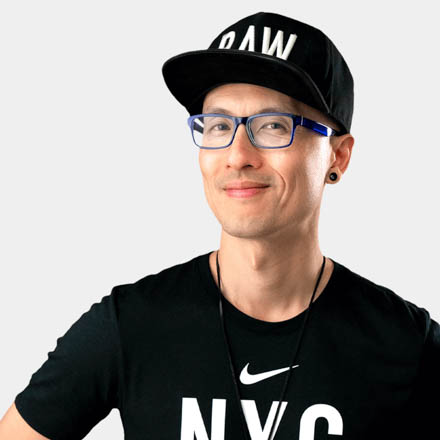
    with Scott Clum

    Scott Clum and Chris Do examine why hands-on design process builds judgment that finished-looking images cannot replace.

    Chris Do

    Chris Do

    Founder, The Futur™ · April 25, 2026

    A finished image is not a finished education

    A convincing image can conceal an undeveloped eye. Scott Clum, an artist and designer introduced by Chris Do as having shaped snowboarding, skateboarding, and editorial design for more than 40 years, locates his value somewhere less immediately visible: the process that teaches a person how to see.

    His argument is not that every new tool makes design worse. It is that a shortcut can remove more than labor. It can remove the encounters through which a designer develops judgment, discovers an unexpected direction, or learns why one decision works and another does not.

    The finished image and the education of its maker are different outcomes.

    That distinction gives Clum's position on artificial intelligence its force. He is open to using AI with a client to explore ideas and possible appearances during a working session. He draws a personal boundary at execution, where delegating the work would take away something he wants from making it.

    For Clum, the missing element is also relational. Working beside another designer means seeing that person's choices unfold. An automated result can supply an image without supplying the same opportunity to observe, question, and understand the person making it.

    Do approaches the issue through the appearance of completion. An untrained person can now produce something that looks resolved without necessarily recognizing what remains unresolved. His concern is the distance between generating a plausible image and possessing the aesthetic judgment to finish it deliberately.

    That is a critique of evaluation, not simply production. A tool can return an answer. The designer still needs a basis for deciding whether the answer deserves to leave the room.

    Clum describes a broader habit behind the AI debate: reaching for a filter instead of going outside, finding materials, and bringing them back to assemble. The objection is not that software cannot produce a texture. It is that the person who skips the search also skips whatever the search would have revealed.

    “You're shortchanging yourself,” he says.

    In his account, the opportunities being surrendered are concrete:

    • Finding weathered materials whose surfaces suggest an unexpected composition.
    • Watching another designer work rather than receiving only a finished result.
    • Discovering through execution what the original idea failed to anticipate.

    None of these experiences guarantees a better image. Clum does not present a controlled comparison between handmade work and AI output, nor does the conversation establish that one technology produces uniformly superior results. His claim is narrower and more useful: the way a designer works changes what that designer can notice.

    The title's opposition between process and AI therefore needs precision. Process is not a competing image generator. It is the accumulation of observation, decisions, corrections, and material understanding that makes an image maker valuable beyond a single deliverable.

    Clum's career supplies the evidence for that distinction. His most vivid account of design is not a description of a pristine final board. It is a factory story involving film, screens, ink, exhaustion, and mistakes. Before that story can make sense, however, another assumption has to go: the idea that professional constraints prevent real creative work.

    The client is not the interruption

    Clum separates art and design by the circumstances of the work. A commercial assignment is design or creative direction. Personal work allows a different kind of investigation, one that begins with his own attention and does not need a client's permission to matter.

    The distinction is practical rather than absolute. He can find visual inspiration in eroded materials on a sidewalk and imagine their relationship on a page. The same eye operates in both settings. What changes is the obligation attached to its use.

    Commercial design carries obligations beyond self-expression.

    Do identifies the friction that follows when those obligations are treated as intrusions. Some designers want commercial work to finance their preferred expression without requiring compromise. They experience client involvement as interference, even though the client is the reason the assignment exists.

    “Clients allow them a livelihood,” Do says.

    Clum has heard the complaint that paid work obstructs the work a designer really wants to make. He understands the feeling, but it does not describe his own expectations entering the profession. In art school, he did not anticipate the career he eventually built. He expected to work within a larger system, and he loved the activity itself.

    That starting point matters. If the reward is exclusively recognition of an uncompromised personal vision, revision looks like defeat. If the reward also includes learning how an image works under real conditions, a client's intervention becomes part of the material.

    Clum does not claim every requested change improves a design. He challenges the assumption that being asked to change something is inherently an offense against creativity. Utility belongs in the assignment. Responding to another person's needs is not an accidental inconvenience added after the interesting work.

    He also resists the belief that starting a business removes these demands. Running an independent operation requires keeping that operation functioning. The fantasy of freedom can conceal the amount of work needed to sustain it, a tension also named in The Futur's Moving from Makers to Entrepreneurs.

    Clum's own education complicates any clean division between free expression and practical discipline. He initially entered design as a painter and illustrator, expecting that visual language to transfer into advertising and messaging. He says that expectation was wrong, but the discovery of design's tools proved rewarding in its own right.

    Making a logo and taking it through a photographic production process gave him something physical to understand and hold. He later pursued a fine art degree because he wanted to deepen the thinking that graphic design alone did not satisfy.

    Neither discipline had to eliminate the other.

    His account leaves room for three different kinds of satisfaction:

    • Personal work develops an individual point of view. It can follow an interest without first solving a commercial assignment.
    • Client work answers an external need. Its constraints establish what the work must accomplish.
    • Production turns decisions into consequences. Tools and materials reveal whether an idea survives being made.

    Those are distinctions, not a formal system Clum names or teaches. Their importance is that they prevent one kind of work from being judged entirely by another's promises. A commercial brief does not have to deliver unrestricted self-expression to be worth doing.

    That attitude later allowed Clum to care deeply about a brand without confusing its identity with his own. The difference becomes especially clear in his account of moving from Sims to Morrow.

    A visual language built from wet snow

    Clum dates the beginning of his work for Sims to early 1985. He describes becoming Tom Sims's first design director in Santa Barbara and sustaining a connection to the brand across decades. At the time of the conversation, he reports two new boards for Sims Japan.

    The continuity is not explained as a preference for familiar assignments. Clum connects it to his relationship with Tom and to the part of his own life invested in the brand. Designing those boards is tied to caring about what Sims represents.

    But caring did not mean treating the brand as an unrestricted outlet for his own taste. Looking back, Clum says the graphic direction they developed together represented what Tom wanted Sims to be. That was the assignment, and he speaks of it with respect.

    Morrow offered a different opportunity.

    Clum recalls leaving Sims in early 1990 and being approached roughly three months later by Rob Morrow, who wanted him to come to Salem, Oregon, to create graphics for a new company. What mattered creatively was the chance to rethink the visual premise.

    Clum did not want an idealized account of snowboarding. The version that interested him was physical and unruly: long hair, sweat, rain, and slushy snow. He wanted graphics that carried the activity's grit rather than smoothing it into agreeable scenery.

    “This is where the soul is coming from,” he says.

    A visual language can emerge from participation rather than decoration.

    That proposition explains why his identity as a rider matters to the work. When Clum describes turns in powder, he is describing an experience he wants to translate, not a demographic he wants to imitate. The sensation comes first. The graphic becomes an attempt to give that sensation a public form.

    At Morrow, this translation extended to information that could otherwise remain peripheral. Board dimensions and length markings did not have to live inside a quiet technical compartment. They could become graphic material, changing scale and prominence across the surface.

    The ingredients he describes were specific to the environment:

    • Technical markings enlarged or rearranged as part of the graphic composition.
    • Riders' developing vernacular translated into imagery.
    • Typography and shapes expanded to suggest the feeling of a turn.
    • Factory materials and improvised prototypes treated as visual inspiration.

    This is audience knowledge at close range. The relevant connection to The Futur's Know your audience is not simply that designers should identify a customer. Clum's story shows what becomes available when the designer shares the audience's activity and pays attention to its language.

    He is equally clear that the result was not his invention alone. The Morrow crew helped shape the direction through conversations, shared experience, and the atmosphere of the company. Although he executed the graphics, he repeatedly credits the people around him with developing their character.

    That qualification protects the story from becoming a mythology of the isolated artist. Clum had a point of view, but the point of view was being sharpened by a group and a place.

    The factory made that collaboration visible. He remembers boot and binding models held together with tape, wire, cable, and rivets. These were working objects rather than polished demonstrations. For someone attentive to materials, their exposed construction was an invitation.

    The graphics did not merely represent a DIY culture. They grew inside one, and their method of production carried that culture onto the board.

    The factory was part of the studio

    Clum's description of making Morrow's graphics begins far from a finished snowboard. It begins with black-line artwork and the labor required to turn that artwork into separate printable layers. He had worked as a darkroom technician at Vision Sports while also doing Sims work, and he brought that production knowledge forward.

    He describes making a full-size film negative from the artwork, masking sections, and producing a positive for the relevant silkscreen layer. At Morrow, he says he handmade every film layer. Opaque pens, applied registration marks, and large light tables were ordinary parts of the task.

    The significance is not simply that the procedure was difficult. Each operation forced a decision about how the image would exist in production. Separating a graphic into layers meant understanding it as more than an arrangement seen all at once.

    “You are married to that whole production,” Clum says.

    His account also includes the cost. He remembers becoming run down while working on roughly 14 boards, generally limiting designs to three or four colors. The workload was tedious and physically demanding. That detail matters because it prevents the story from presenting manual labor as an uncomplicated creative virtue.

    Process can educate and exhaust the same person.

    The arrival of the screens opened another stage of discovery. Clum would stay at the factory for a couple of weeks, printing at night with cardboard and experimental top sheets. He had set up the silkscreen operation there, giving him direct access to the conditions in which the graphics would become objects.

    Test prints were numbered and presented to the group. Once colors and designs were selected, those choices became the references for the year's graphics. The result emerged through trials that could be examined together, not simply through agreement about an image before it existed materially.

    Do slows down this sequence because its cumulative effect is easy to miss:

    • An idea becomes artwork on clear film, with negatives and positives made by hand.
    • The prepared material goes out to a screen company to become printing screens.
    • The returned screens are loaded with ink and printed one section at a time.
    • Drying, mistakes, color tests, and selection help determine the final result.

    This is not a prescribed workflow for contemporary designers. It is evidence of what Clum means by process: the work continues to supply information while it is being made. An accident is not necessarily an obstacle to executing the idea. It can become part of the idea.

    The shared evaluation also matters. Clum did not describe numbering the prints only to admire them alone. They became objects around which other people could make decisions, connecting his account to the concerns named in Learning, Collaboration, Critique & Feedback.

    His comparison for the resulting memory is a concert that stays in the body. Once someone has experienced that combination of anticipation, physical effort, and discovery, the impression does not vanish when the tools change.

    The durable asset is therefore not allegiance to film or screens. It is the knowledge acquired by making decisions in contact with consequences. A designer who has watched an image change through production carries that experience into the next assignment, even when the next assignment uses entirely different equipment.

    The screen is a tool. The accumulated judgment is the investment.

    Human work does not require a familiar client

    A reasonable objection to Clum's account is that it depends on unusually close alignment between his life and his clients. Snowboarding is an activity he practices, a culture he understands, and a source of feeling he can draw on directly. Not every commercial assignment offers that intimacy.

    Do tests the issue by asking how Clum would respond if none of his client work could involve snowboarding or skateboarding. Clum's answer is immediate: “Challenge.”

    He then points to work he has done for Intel. Those campaigns required translating a perspective shaped partly by action sports into a technical environment. The subject changed, and the work demanded another kind of attention.

    Clum describes the recurring destination of those discussions as the human side of the assignment. The design mattered, but so did the psychology of how people would receive the campaign. His task was not to transplant snowboard graphics into technology marketing. It was to understand what the communication would mean to its audience.

    That distinction is the transferable part of his method.

    A strong visual identity does not have to become a fixed package of recognizable effects. Clum's interest in scratches, imperfect arrangements, and human marks reflects a sensibility, but the deeper continuity is his attention to people, materials, and reception.

    The same tension appears in his conversation with Do about taste. Do describes looking for the odd piece in a clothing collection, the unusual object rather than the obvious center of demand. Clum recognizes the attraction: something apparently marginal can become the object that remains meaningful years later.

    There is a risk here. Designing only for people with the designer's taste can become self-congratulation disguised as discernment. Both men recognize the possibility that the work they value speaks most immediately to people like themselves.

    Clum redirects that discussion toward an obligation he feels in editorial design. The purpose is not simply to signal membership in a discerning minority. It is to give readers an encounter they have not already had, even if their initial response is rejection.

    “The worst thing,” in his formulation, would be delivering something the reader has already seen.

    That is not a license for arbitrary novelty. Clum says he wants to make an educated decision. The unfamiliar image has to come from thought, observation, and the needs of the page, not from a reflex to appear different.

    This is another reason process matters. It gives the designer grounds for defending an unusual decision without treating personal preference as sufficient evidence. The unexpected form can be traced to a place, a material, a problem, or a way of understanding the audience.

    For Clum, the Morrow factory provided those grounds. For the Intel work, discussions about reception did. Different assignments demanded different sources of information, but neither was solved by assuming his first preference was automatically the right one.

    His editorial ambition pushes the idea further. A page can help readers become aware of something they previously overlooked. The designer's role is not only to package existing attention but to direct attention somewhere worthwhile.

    That is the promise Clum is now asking a new publication to keep.

    The work worth putting back on paper

    When Do raises the diminished physical presence of magazines, Clum answers with a project rather than a lament. He is starting one. At the time of the conversation, he describes an art and culture publication called Walk, with a tentative twice-yearly schedule and an intended spring 2026 launch.

    Those are plans stated in the conversation, not confirmation of a publication date. Clum openly asks for room around the schedule and describes the difficulty of managing the work. The uncertainty belongs in the account because making the magazine is itself part of the argument.

    His example of a possible subject is not a celebrated artist in an immaculate studio. It is a neighbor who cooks exceptionally well without exceptional equipment. The interest lies in the used pans, the improvised arrangement, the hands at work, and the materials left visible around the activity.

    The process deserves attention before the person becomes famous.

    That premise makes Walk more than a return to a preferred format. Clum wants to put overlooked acts of making on the printed page. A modest kitchen can reveal something that a polished portrait of success would conceal: how the person actually works.

    The connection to his own production history is direct. Factory prototypes held together with tape once supplied visual inspiration. A cook's mismatched tools can supply another kind of evidence. Neither setting requires ideal equipment before meaningful work becomes possible.

    Clum describes developing the publication with a team and with his partner Mark Moran, whom he identifies as working at Portland State University. Their collaboration includes filtering ideas and challenging each other. Again, the project is personal without being solitary.

    The move from noticing an experience to shaping its presentation has a parallel in the title of The Futur's Designing Moments: A New Approach to Event Entertainment. In Clum's case, the moments already exist. The editorial task is to recognize them and give them a form that rewards attention.

    His position does not require designers to reject contemporary software, build a darkroom, or publish a magazine. Those would be imitations of his circumstances rather than applications of his thinking. What can travel is the insistence that observation and execution remain sources of knowledge.

    The practical distinctions in his account are modest enough to survive a change of tools. Exploration can use AI without automatically delegating execution. Commercial work can meet a client's needs without erasing an individual perspective. An unusual design can challenge expectations while remaining accountable to the environment that produced it.

    None of that makes slowness the objective. Clum's exhaustion in the factory is not a recommendation to reproduce every burden of an older process. The issue is which burdens teach something and which simply consume effort. Eliminating the second does not require surrendering the first.

    For a designer evaluating a shortcut, the consequential question is what disappears with the saved labor: an unnecessary operation, or an opportunity to learn how the work behaves. Clum's stories make that difference visible in ink, film, prototypes, client conversations, and ordinary kitchens.

    A finished-looking image can end a task. It cannot prove that its maker learned to see.

    For me, the AI aspect of things, yes, it could be great in some of the stuff if you are going to use those tools. And yes, some people will choose that route, but other people will not. And I do feel like that you're going to be more of a valuable image maker, designer, what have you, if you can be true to the process. My name is Scott Klum, here with Chris Doe, and you are listening to The Future. Before we start, Scott Klum has been shaping the visual language of snowboarding, skateboarding, and editorial design for 40 plus years. If you grew up around snowboarding or skate culture, his work is probably somewhere in your memory. You just didn't know his name. Occasionally, this show goes here to the people the industry knows but hasn't made famous yet. I'm glad we finally get to this one. Now, I have this quote from Paul Rand. Art is an idea that has found its perfect visual expression, and design is the vehicle by which this expression is made possible. Now, you describe yourself on your own website as an artist and designer. Usually, I ask people, which are you more of? But you use an and, so we'll leave it there. So I'm just curious, what is Scott Klum's definition of what is the difference between the two? I guess I use the terms, Chris, because I'll differentiate between personal work and commercial work. Like if I'm working on something for a commercial client, I'm not going to call it art. I might internally, but you're going to refer to it as design or creative direction. And then art is when we all walk out our front door in the morning and whatever our thought process is and whatever we can find. Because for myself, if I could be walking down the sidewalk and I find these beautiful materials and there might be eroded or they go together a certain way, and I'm just like overjoyed. You know what I mean? I'm like, okay, this is amazing inspiration. we can find because for myself if I could be walking down the sidewalk and I find these beautiful materials and there might be eroded or they go together a certain way and I'm just like overjoyed you know I mean I'm like okay this is amazing inspiration and for me that's design on the page so there's a lot of young people out in the world who are designers looking for professional commercial work working with clients and they seem to not understand the difference between doing personal and commercial work one person pays your bills the other is about a self -expression and your point of view in the world and it seems to mess them up they have this attitude and opinion that clients get in the way of them doing good work when in fact clients allow them a livelihood so I'm just curious about your perspective you've been doing this a long time well a couple things about that I feel like that sometimes there might be a lack of respect for the journey you're on I have run into that before with a lot of people like well I'm trying to do this work but it's getting the way of what I really want to do and I understand that feeling we probably all run into that but where that came from I really don't know unless it's the society we live in where everything's like immediate gratification and I never expected anything when I was in art school I never thought I would be in this position whatsoever I just thought I was gonna be part of the machine and go through one thing after another but internally I really did love it so I I never had that that feeling of like oh everything's getting in the way and it's funny you bring this up because I do hear that a lot it seems like sometimes there's um there's two things number one is some kind of sense of entitlement like I get to make money while doing my art and I don't want to make compromises and it creates a lot of friction do you know who Alain de Botton is he's he runs a company called the school of life no I don't he's a British guy I believe and he's a philosopher and he's written books and he has a really interesting take he's obviously very well read he talks about the romantic period in art and literature and we start to understand these ideas about these feelings things and he says prior to that period in time we did things out of utility so maybe we see ourselves kind of in the modern era in this room take he's obviously very well read he talks about the romantic period in art and literature and we start to understand these ideas about these feelings and he says prior to that period in time we did things out of utility so maybe we see ourselves kind of in the modern era in this romantic version where life is supposed to be beautiful and the sparks and fireworks and all this kind of stuff and we're supposed to just do stuff and people celebrate us for these things now it's great if you can get it but reality is we got to work yeah i love what you said i think that might be more of a fantasy you do use a great word utility i'll ask all the young folks that are out there listening or anybody that's out there listening like what's wrong with utility what's wrong with having the client move things around are you reacting to it like isn't that what we signed up for i've never felt like my work was perfect or frankly that great i was just being honest with myself because it was the process that i was going through that was really paying me back so for me to think otherwise i just never saw it but i do agree with you i feel like there's a lot of i'm not going to call them answers but some gratification short -lived and social media today where you know you take folks who start their own business and you know we all know that's a hard thing but i think that that fantasy of doing that some people think oh i'm going to do that i'm not going to go work for someone else i'm going to go do my own thing and it becomes a bit more selfish and then they find out well this machine takes a lot to keep running so you're kind of doing the same thing i do think that by default programs and buttons and shortcuts and all that have trained us to think i don't need to go there i'm just going to do this and push the button show me where the filter is you know no scott i'm not going to go down the street and get all this ephemera and bring it back and paste it up whatever i'm just pushing this button and that's all i'm going to do that attitude i think is very prevalent and it's upsetting to me because you're missing out you're shortchanging yourself you're a rare person in that there's artists and there's this athlete as professional writer and all that kind of stuff so that's kind of rare in our world we think of designers as not the most athletically inclined i'm just curious which came first which i prevalent. And it's upsetting to me because you're missing out. You're shortchanging yourself. You're a rare person in that there's artists and there's this athlete as professional writer and all that kind of stuff. So that's kind of rare in our world. We think of designers as not the most athletically inclined. I'm just curious, which came first? Which identity was strongest for you at the earliest age? Was it the athlete or was it there was an artist who was just like didn't know how to express himself, but was finding a way? I will answer that immediately. It's the art. My parents, when I was young, helped reveal that to me. I would do drawings of the family dog and odds and ends or whatever the case may be. And I can't tell you why. I was just very fascinated and interested in being able to capture. To me, and even today, those things to me are always moments. And we all love those moments. So whether you could be a photographer, you could be an illustrator, you know, whatever. I think that's one of the things that drags me really in the profession is capturing those moments. I love those things. Then came the athletes. So. And how did you find a way into say graphic design? Because automatically people assume, oh, you're a designer. You must know how to draw. That's not the case. They're different disciplines, right? Yeah. So graphic design. For me, I decided to go into design because I was a painter or illustrator. Because I thought that that language was going to transfer to ad agencies and messaging. So I was wrong about that. But in that journey, I discovered the utilitarian use of the tools. And for anybody that inks up a logo and then goes to put it under a stack camera, you know, not anymore, but at that point, and you go through this process and you're holding this in your hand, like it's a very rewarding thing. So for me, that process and learning to be a graphic designer was amazing. But after that, to kind of back up what I was saying, when I got a degree in fine art, because I kind of wanted to round out that thinking process, because graphic design process forces you to think a certain way. And I could never get away. designer was amazing but after that to kind of back up what I was saying when I got a degree in fine art because I kind of wanted to round out that thinking process because graphic design process forces you to think a certain way and I could never get away from the fine art aspect of it of like okay I'm going to go deeper here with this thought and this notion so I need to discover a deeper sense here with the fine and I think what that's frankly a lot of people ask me as you how I got started or how that all that happened and those two disciplines are really how it all happened and it's really what's made my work and the recognition be what it is because it's a combination of all that's in you know you mentioned like this click a button kind of culture that we seem to be living in it's only been made worse or accelerated with AI that even non -trained designers now can create things that have the appearance of finish and intentionality when if you know better you're like wait a minute AI might get you 80 90 percent of the way but it's that last 10 percent that it's really not good at and the people they don't have that eye that aesthetic that training the rigor they're like that's good enough let's get that out and then that'll make people like us cringe a little bit and it's like you know what somebody is asleep at the wheel here so what is your take on AI what's your stance on this and is there a warning for younger generations here like anything that's new we're all curious about it I think that you go back to you to the utility of making art making images whatever the case may be there's no technology erases some of the curiosity so for me the AI aspect of things yes it could be great in some of the stuff like say you're sitting in a room with a client and we're doing revs for two hours and we're using AI just to come up with ideas or what things could look like or these appropriations or whatever that could be cool but execution wise I'd leave that out because I would feel like I'm cheating and myself like say you and I are working on a project together I honestly want to know and see you work if AI does that could be cool. But execution wise, I'd leave that out because I would feel like I'm cheating. And myself, like say you and I are working on a project together. I honestly want to know and see you work. If AI does that, we're never having that conversation. So for the folks in the audience, too, like if you are going to use those tools and yes, some people will choose that route, but other people will not. And I do feel like that you're going to be more of a valuable image maker, designer, what have you, if you can be true to the process. I saw on your website, it described you as the world's most prolific snowboard graphic designer. And you've been doing this for decades. Like when I was still in school, you're already doing this work and you're still doing this work. So I want to ask you this question. What keeps you going? I don't know. I think I've just been blessed with a very abundant soul, frankly. But really what's kept me going, I get asked this a lot. So I started doing graphics for Sims in early 85. And I'm still doing graphics for Sims 40 years later. I have two new boards that came out with Sims Japan. But because of Tom and I's relationship, since he passed in 12, but from when I was young and growing up, I was his first design director in Santa Barbara. So all those graphics I did riding on up until today, it's because I care about that brand and my life and soul is in that brand. So that's one side of doing graphics for snowboards. And then the other side is some companies will just ask me to help them or they want a certain perspective. I did a lot of great work with Yes. And David was just fantastic about explaining what they were looking for and giving me the leeway to make changes and do all this stuff. So we had, as far as yes, snowboards go, there's this amazing collaboration between everybody there. That was fantastic. So I think though, that your definite answer is this. I'm just moved by snowboarding in general. So when I'm making turns in the powder or whatever, I just, I'm relating to that, to the art of the whole thing. And then when you're not. collaboration between everybody there that was fantastic so i think though that your definite answer is this i'm just moved by snowboarding in general when i'm making turns in the powder or whatever i just i'm relating to that for the art of the whole thing and then when you're not on the mountain and it is graphics time and someone wants me to maybe translate that or offer a perspective with them it's hard for me to resist it feels like snowboarding is very much part of your dna you're in the culture of the culture shaping the culture you speak for the culture what if all the client work you do none of it can be for snowboarding related industries or skateboarding now how do you feel challenge challenge so great perspective and i will tell you i'm a like all of us i don't mean just me but i'm a deep thinker and i'm a focus person and i'm a scribbler and i think out of all my work say the last five years the human art is just dying to come out so that you know i've been there whether it's a scratch or whether things aren't quite aligned i do like as you know doing the work that where things aren't quite arranged perfectly like there's just no such thing in it to back up your your question i've done work for intel for years and worked on their campaigns and that was challenging but challenging in a good way because here i am trying to translate my maybe action sports focus to a more technical side of things and how do i embody partners in a tech world to understand the campaigns and the marketing we're putting out there so and every time chris we'd have meetings or whatever and every time we would always land back on the human side of things it wasn't so much the design of things although that helps but it was actually the psychology of how it was going to be received i wanted to ask this one question for you if you can just look back into time from the very first moments in which you're doing design work until now has there been a single project that stands plans and you It wasn't so much the design of things, although that helped, but it was actually the psychology of how it was going to be received. I wanted to ask this one question for you. If you can just look back into time from the very first moments in which you're doing design work until now, has there been a single project that stands out the most? The one that you hold dear to your heart and like that felt like either it just came quickly and it was perfect or there was some challenge you had to overcome, but it holds a special place in your heart. I would say as a whole, the work I did for Marl Snowboards was a huge catalyst for my thinking, for the rewards I got personal and audience -wise. Because I was thinking about this earlier, when I was at Sims, Tom, who I loved and respected immensely, he was like a brother to me. So the graphic direction that he wanted was different. He and I worked on that together and a lot of the graphics that we did, they're great, but they represent, they really represent what Tom wanted Sims to be. So moving forward, when I left Sims in early 90, almost three months later, Rob Marl asks me to come to Salem, Oregon and says, I'm starting my own company. I want you to do the graphics. Well, it was a complete flip because there's a point where as a designer and a graphic designer and an artist, I really wanted to start over with the DNA of how punk rock snowboarding was. To me, it was not blue skies and pretty this and pretty that. To me, it was sweat, long hair, raining days, slushy snow. So to me, I felt like this is the grit. This is where the soul is coming from. A lot of the graphics at Marl started off with like this perceptive reality, what snowboarding really was like, as well as like that deep rooted DNA of graphic design too. So I felt like that was the language, like no one was doing that at all. And I felt like that was a language that was developing in my mind. reality what snowboarding really was like as well as like that deep -rooted dna of graphic design too so i felt like that was the language like no one was doing that at all and i felt like that was a language that was developing in my mind and amongst the crew at moral snowboards i definitely couldn't have done it without them although i executed but every single person there really helped shape that language i want to back that up with the fact that my process at moral snowboards was a process i carried over from sims where i hand cut a lot of my own graphics so i was a dark room technician at vision sports too while i was doing sims and what that means is we would do black lines for designs and then you would take this black line there's no color but just the graphic and then we would make a negative out of it in the dark room on film at 100 percent and then what we would do is tape off the sections we didn't want and then you'd make a positive out of that and that's the positive that goes on your whatever layer your silk screen is going to be so i handmade all of my film layers for moral snowboards every single one of them we're talking about using opaque pens and registration marks that you peel off and put on and huge light tables so when you do that process and i see you smiling because you know what i'm talking about when you use that process you are married to that graphic like you are married to that whole production so for me building that was quite tedious and it took a huge toll on me i remember at the time that i would get really run down i was doing like 14 boards or whatever and then i would keep it limited to you know three or four colors but the day that those screens came back on a truck like they'd be delivered to the factory i would stay at the factory for a couple weeks and i would print every night my own on my own because i set up the the silk screen um aspect of in the factory and so i would go in with cardboard and some experimental top sheets and i would do test prints on these screens and it was phenomenal i mean it was just amazing so then i would have these test prints and then we would number them and then we would the silkscreen aspect in the factory. And so I would go in with cardboard and some experimental top sheets and I would do test prints from these screens. And it was phenomenal. I mean, it was just amazing. So then I would have these test prints and then we would number them and then I would present them to everyone. And then once we locked off on what color we wanted, what we wanted, those rest of them got put away. And then those were our models for the graphage for the year. So for the designers out there, you're coming up with an idea and then you're putting this on a clear piece of film and you're hand -making your own negatives and positives. And then you're sending this out to a screen company and they're burning you screens. And you get the screens back and now you're building colors and you're printing one section at a time. You're loading the screen with ink. You're waiting for things to dry and you're making mistakes and you see the beauty in these mistakes and it's a process. And it is the anti of what we were talking about using a program or whatever. So when you get that in your mind or in your body, like you can never get rid of it. That's like anybody out there who sees like their best show. Like maybe they've seen The Stones or The Who or maybe they'd seen Rolls. I don't know, whatever your deal is. Like you're never going to forget that. So I think that's what I'm trying to say is some of the design processes that I carried forward to my career that this method is on. Okay, I'm going to ask you one more question about Morrow because I know you're a co -founder and an early pioneer in shaping the visual language of graphics for snowboarding. For people who don't understand, do your best to describe the visual, the language that you're talking about here because you said Sims had a specific look but Morrow was more what you wanted to do, right? You can play more. So how would you describe that aesthetic? like I said, came from everyone involved in the company. And we had a lot of discussions and sometimes it was me just in my studio by myself. But the aesthetic came from zero appropriation. I felt like it would be really interesting. Skis or snowboards had a very locked up little area to put the dimensions or this, that. I'm like, you know what? Let's make graphics out of those. Maybe they're unreadable. Maybe they're a certain centimeter length so you know what length you're buying. Maybe they're trying to separate someat roads, But the Assetta came from zero appropriation. I felt like it would be really interesting. Skis or snowboards had a very locked up little area to put the dimensions or this, that. I'm like, you know what? Let's make graphics out of those. Maybe they're unreadable. Maybe the certain centimeter length. So you knew a length you were buying was more prominent. I really started breaking down the language of like riders discussing like, as you know, like you start to develop your own vernacular, right? And I would translate that into imagery. And maybe the typography, some of the shapes got blown up and it kind of helped portray a turn or whatever. So the visual language really got developed from, like I said, I guess, misappropriation because I wanted to challenge the norm. We'd seen everything at this point. Everything was kind of logo driven, which, again, was really beautiful at the time. And Mauro, I want to give a super high five to all of the factory guys and all the team around, frankly. But when you walked into that factory, there was a real DIY sense there in the whole factory. Like Rob would have models for boots or binding that were full of tape and wiring and cabling to hold things and ribbits and stuff. And for an artist, anyone really who's interested in materials, like when you see this, you're like, oh my gosh, like I see where this is going. And when you see this DIY feel, it's so motivating to kind of take things to the next level. And any of the DIY stuff that you see, whether it's street art or your neighbor printing shirts or whatever the case may be, like when you see them, it's unmistakable. Like, you're like, I got it. I got to do that. So because Mauro was one of the only companies in the U .S. at that time with the manufacturing facility right there, I spent a lot of time down there on that floor. And I was inspired by that DIY stuff. And that just really helped cultivate my language of like, OK, here is the mood we were in. I'm going to translate this and put this in graphic form on there. And it's going to be fucked up. down there on that floor and i was inspired by that diy stuff and that just really helped cultivate my language of like okay here was the mood we were in i'm gonna translate this and put this in graphic form on there and it's gonna be fucked up so i want to thank everyone at moral because everybody really paid a hand in helping with that process because we were kind of like a family what not come back we were we were a family in those early days it was fantastic and everybody shared and everything so i think people who do know the moral work or if you want to look back on it i challenged all of it not for my ego just because like that's what it felt like in the factory or as a rider and anybody who does ride we all know what four feet of powder looks and feels like and when you're at the height of those emotions that's what i was kind of trying to put down a little bit you know of like hey let me take you here type of thing i'll talk about something before we went on air you were talking about like the feed in japan and this trip i'm going shopping all these guys trying to help them find their style and my buddy he's a very good friend of mine he's like you know i trust your instincts when you say that piece is good i think that's wacky it's good like when you pick art that's the one that's going to be hot i said please please please i cannot bear the responsibility of you making decisions based on what this one guy likes it works for me i love it but i always find this thing if you see a whole season a collection from any designer i'm looking for the weird thing i'm looking for the thing that's not down the center so i have to ask you this question and maybe we're similar where i go out i'm like i don't want the same car i want this other weird car i want that weird shirt or that weird jacket or that weird skateboard and it always surprises me why is this one still available and why do they make so few i think they know i think you're right about that and sometimes they're just like they're the best articles you're like whoa like and you look back on it five years and you're like i can't believe i still have it or whatever the case may be i don't know maybe there's someone like yourself in there who pushed and forced their way to get this out into the public and there's 10 of them and chris comes along and buys one so maybe you and i back on it five years and you're like, I can't believe I still have it or whatever the case may be. I don't know. Maybe there's someone like yourself in there who pushed and forced their way to get this out into the public. And there's 10 of them and Chris comes along and buys one. So maybe you and I and people like us, we design things for other people just like us, but the majority of people aren't like us. Well, I've been accused of that before. A thought popped in my mind. Perhaps the work that you do, maybe just for you and me and people like us, is kind of like the equivalent of a dog whistle. And I hate to say it because it's going to sound very self -important. The dog whistle, do you have taste? Do you see the world the way I see it? Because if you do, let's have a conversation. I was reluctant to say what you said because doing editorial design that I've done a good part of my career, I feel I could get an opportunity to create a deeper self -awareness for the readers. Like, hey, I'm going to show you something you've never seen before. You might think it completely sucks or whatever, but the worst thing I could do as a designer is give you something you've already seen. Why would I do that? So I've always felt like Chris, that I need to make an educated decision to do a better drive. Well, you've been behind the scenes doing the things and shaping the culture for bikini, magazine, stick nylon. And I'm just curious about this thing that the internet kill editorial did to kill the magazine because I had a voracious appetite for magazines. And I remember like scanning, not just for the editorial content or the articles, but for the ads and just seeing like, what is high society or low society? What does it look like? And now you pick up a magazine like Wired, it's thin. It's a pamphlet now. Oh my gosh. Yeah. Five pages. Yes. It's so skinny because none of the ads exist anymore because they'd rather spend money where they can track and have analytics. So what's your feeling about all that? Well, I'll tell you exactly what my feeling is about that. I'm starting a new magazine. About a year and a half ago, I decided to start a magazine because I do love editorial. I love the process. I love the whole thing. And I wanted to get back. where they can track and have analytics. So what's your feeling about all that? Well, I'll tell you exactly what my feeling is about that. I'm starting a new magazine. About a year and a half ago, I decided to start a magazine because I do love editorial. I love the process. I love the whole thing. And I wanted to get back to proving that the things that we love, like you were just saying, like spending all that money on magazines just because you're compelled to do it. I mean, that's a pretty cool thing. I think a lot of people are or were into magazine culture, and I think our social platforms just ripped them down. That being said, I wanted to put my money where my mouth is and bring a printed magazine back, and we've literally been kind of reinventing the page. What vertical is it in? It's probably more art and culture. Say you have a neighbor, and he or she is this unbelievable cook, fantastic with food. They are an artist with the process, right? And you go over to their house, and they don't have the best pots and pans. They don't have the best kitchen. They live in this flat, and when you see these moments where all of the ephemeris laid out, the used pans, the used stuff, the mishmash here and there, and then you're watching this cooking process, you're watching this person go through this with their hands, and those are the moments that are in the magazine. So you don't need to be a rock star to be in the magazine. So anyway, if I'm coming full circle here with all the things you and I spoke about, I think this magazine will be a culmination of what I've been believing in, what my partners around me are believing in, people like yourself, people like Marvin, and our other friends, and our daily comrades. I think it'll be a welcome thing to have this back on the printed page and to challenge some of the things that we're dealing these days. Publishing cycles quarterly, bi -monthly, monthly? This was a rough one for us to figure it out, but it'll probably end up being like twice a year. And some of these, I'm not sure I want to say you know what to expect because you really don't know what to expect because if you know my work, that's one thing, but I've really taken it past, again, like I was seeing in earlier. fun for us to figure it out but it'll probably end up being like twice a year and some of these i'm not sure i want to say you know what to expect because you really don't know what to expect because if you know my work that's one thing but i've really taken it past again like i was seeing in earlier as we were talking like i like to deliver the unexpected not to do the unexpected just because i owe it to my audience to give them things they haven't seen before before we wrap up is there a name for the magazine and is there an on -the -shelf date so that people can set their calendars so the magazine title is called walk w -a -l -k and the shelf date it'll be this spring 2026 so give me grace everyone because as we all know and if marvin listens to this he definitely knows how hard it is to manage a hundred things every day but i've got a great team with me and my partner mark moran who works at portland state university he's been instrumental in in helping formulate these ideas and he's been a great filter both of us working in challenging one another i'll say a couple things before we wrap up number one is you've been in this inspiration to me and so many other people the fact that you continue to do what you do and are as passionate today as the day that you started is is the thing to behold because i have to say to be in the industry for this long it's not an easy thing it's not an easy path that you walk sir and it makes my heart happy that you're still staying true to this vision for everyone who's listening you're going to want to pick up the magazine as soon as possible because do we need another magazine no but do we want a really beautiful well art directed vision or a glimpse into this this world that you live in 100 we want that okay it's called walk coming out spring 2026 and we don't know much more than that it's an art and culture magazine and it celebrates the kind of unseen invisible art and design that shapes our life and our culture absolutely all those wonderful moments that we all share and love so i appreciate that chris thank you very much if people want to find out more about you where should we send them you could go to scottclumb .com that celebrates the kind of unseen, invisible art and design that shapes our life and our culture. Absolutely. All those wonderful moments that we all share and love. So I appreciate that, Chris. Thank you very much. If people want to find out more about you, where should we send them? You could go to scottclumb .com and then take a look at stuff there. I'm trying to be more open and put more things up there about my talks and about where I came from, things like that. So I also, I'm not great at it, but my handle on Instagram is just scottclumb underscore design. So I think the discussion on that platform speaks pretty true to what. Go to the website. I've been checking it out. It's fairly modern and new surprise because a lot of designers have been in this game for a bit. There's their sites all broken. I can't see anything. So I'm glad that you kept some things up. It's scottclumb .com. And if you want to follow him on Instagram, give him a follow. If you're listening to this and you enjoy this conversation, he's at scottclumb underscore design. It's been a real pleasure, Scott. Oh, Chris, are you kidding me? All mine. And I can't thank you enough. I have a huge amount of respect for you and thank you for your contribution because you're an inspiration for this as well. And I know a lot of other people out there. So amazing. Great conversation.
    Download transcript

    Enjoyed this? There’s more where it came from.

    Get insights on design, creativity, and visual thinking.

    You can unsubscribe anytime. By submitting, you agree to receive communications and to our Privacy Policy.

    “Clients allow them a livelihood.”

    — Chris Do

    Topic
    DESIGN

    Share