Building A Powerful LinkedIn Presence: Tips from a LinkedIn Expert
Chris Do gets a live LinkedIn profile roast from expert Yasin (Jay) Alan, who reveals the writing frameworks and optimization secrets for real business growth.
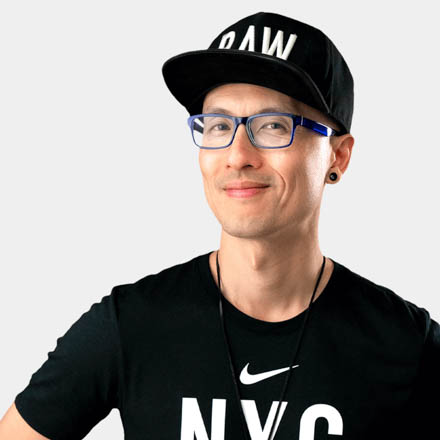
Chris Do
Founder, The Futur™ · December 30, 2023
Your Profile Is Leaking Money
“You would be surprised at how little money people are making on LinkedIn,” says Yasin (Jay) Alan, a copywriter and LinkedIn strategist who has become one of the platform’s fastest-rising authorities. “Just because their profile doesn't have a specific or clear action.”
It’s a brutal assessment that cuts through the noise of vanity metrics. You can have hundreds of thousands of followers, generate millions of impressions, and post viral content daily. But if the people who land on your profile have no idea what to do next, you have a very popular, very expensive hobby. Not a business.
This is the central problem many creators and entrepreneurs face on LinkedIn, a platform that, even in 2024, remains one of the last frontiers for organic reach. The potential is enormous, yet most squander it. They focus on posting content without designing the system that converts attention into revenue.
In a live working session, The Futur’s Chris Do invites Alan to deconstruct the platform, a conversation that quickly escalates into a live, no-holds-barred roast of Do’s own profile. The result is a masterclass in the psychology of writing, the mechanics of attention, and the ruthless clarity required to turn a social media presence into a powerful business engine.
The Mad Scientist of LinkedIn
To understand Alan’s methods, you first have to understand the man. He’s a former teacher and rap artist turned brand strategist, a solopreneur counseling Fortune 500 companies, and a single father who structures his entire business around his time with his son. He also claims to have a rare genetic mutation that allows him to thrive on just four hours of sleep a night. “I hate sleeping,” he admits, a trait that gives him the extra hours to be both a dedicated dad and a meticulous content strategist.
Alan is a self-proclaimed “mad scientist when it comes to LinkedIn.” He obsesses over details most people never consider. “How many pixels will it take up if my line is just one character too long? Will it fall into a second line and then I will have this weird dangling word?” he asks. This isn’t neuroticism. It’s a deep understanding that on a crowded digital feed, every single detail matters.
His approach is a stark contrast to the common advice that floods the internet. He doesn’t offer hollow platitudes or generic listicles. Instead, he provides specific, tested frameworks built on a single, powerful foundation: psychology.
“Writing is 90% psychology and 10% formatting,” Alan explains. This principle, which he teaches to his university copywriting students, is the key to his entire system. You are not creating content for an algorithm. You are creating content for a human brain, and you must understand how that brain processes information in a state of distraction.
Attention Is Nothing Without Retention
No one opens LinkedIn to read your post. They are scrolling to kill time, to network, or to look for opportunities. Your content is an interruption. Your first job is not to educate or to sell. It is simply to stop the scroll.
This is where Alan introduces his first core framework: the hook and rehook method.
The hook is your first line. It has one job: to make a promise. Alan simplifies the often-overcomplicated process of writing a hook down to a single question every writer should ask themselves: “What is the one thing that I want my reader to learn from this post?”
The answer to that question, stripped down to its most potent form, is your hook. “If they could skip the entire rest of the post and they could just read that one line, what do you want to tell them?” he asks. No clickbait. No fake promises. Just a direct statement of value.
But the hook is only half the battle. “Attention means nothing without retention,” Alan warns. Getting someone to pause is easy. Getting them to read to the end is where the real work begins. This is the job of the rehook.
The rehook is the line that immediately follows your hook, separated by a single line break. Alan describes its function with a powerful analogy: “The hook gets you in the room... but the rehook slams the door behind you and it keeps you reading till the very end.” He offers two primary strategies for crafting an effective rehook.
- Add Heft: Immediately crush the reader’s biggest objection. If your hook is, “This is the easiest way to find clients on LinkedIn,” your audience is already thinking about the time and money involved. The rehook attacks this head-on: “Without $0 investment.” You’ve made a bold promise and instantly vaporized the most common counterargument.
- State the Opposite: Create psychological tension by presenting two contradictory ideas. The hook makes a familiar claim: “LinkedIn is the number one business platform in the world.” The rehook then flips the script: “But it is the worst platform to sell your products.” The reader is immediately caught. How can both be true? They have to keep reading to resolve the paradox. This framing positions your insights as unique, something that can't be found with a quick Google search. As Alan says, “It catches them dead in their tracks.”
This structure isn't just about clever writing. It's about engineering a reading experience. It respects the reader’s time while demanding their full attention. The goal is to maximize “dwell time,” the measure of how long a user spends on your post. Like YouTube’s average view duration, it’s a critical signal to the algorithm that your content is valuable. Whether they are reading, commenting, or replying to others in the comments, you have successfully retained them.
Every Pixel Is a Persuasion Tool
While Alan is a writer first, he is adamant that visuals and formatting are not afterthoughts. They are integral to the psychological impact of a post.
“Images really matter on LinkedIn,” he states. But not just any image. He rejects the common practice of using random stock photos or generic graphics. For Alan, an image must be conceptually linked to the text. It must add another layer of meaning.
He gives an example of a photo he took in the makeup room before a television appearance at Bloomberg TV. His post began: “Before you publish your next LinkedIn post, apply makeup.” He then structured the post around the stages of applying makeup: foundation, shading, contour, each a metaphor for a step in the writing process. This transforms the image from mere decoration into the central pillar of the post's concept.
Most importantly, the image should feature your face. “If you don't include your face in the image of your post, it's not going to work that well,” he states, based on his experience with countless clients. For those who lack a library of professional photos, he points to AI tools like Secta.ai. He even reveals that his own polished LinkedIn profile picture is AI-generated, a testament to how realistic the technology has become. “It's that good,” he says, calling visual AI “years and years and years ahead of writing AI.”
Beyond the image itself is its container. Alan has analyzed the technical specifications down to the pixel, advocating for a specific format: the 4x5 aspect ratio.
And the reason is, again, pure psychology.
“When you just think about it, the way we use our phones, especially as you're scrolling,” he begins, “if your post is slightly shorter… your screen will actually be showing three posts.” Your content is competing for attention on the same screen. But a taller 4x5 image dominates the viewport. “You don't get the post before you or the post after you. You're actually front and center. You're the star of the show.”
This level of intentionality extends to the very rhythm of the text, a concept Do himself tested after learning from Alan. The use of specific cadences, like one-line and three-line paragraphs, creates a visual flow that makes dense information easier to consume. It’s not just what you say. It’s how it looks on the page. Every choice, from image ratio to line breaks, is a tool of persuasion. The same principles that guide a strong personal brand are at play here, where every detail communicates something about your professionalism and intent, a topic further explored in What Successful Personal Brands Do Differently.
Your Profile Is the Landing Page
Even the most perfectly crafted post will fail if it leads to a dead end. Alan’s most critical insight is that a LinkedIn profile is not a resume. It’s a landing page, and it must be optimized for a single, clear conversion.
He recalls working with creators who had massive followings but were making no money. “I take one look at the profile and I ask them, ‘Well, what do you want your audience to do?’” The answer is often a confused list of offerings hidden on a separate website or buried in an email list. The path from discovery to purchase is broken.
The solution is to treat your profile like a focused sales funnel. This starts with the headline.
“Your headline is actually the most visible, the most frequently shown part of your LinkedIn profile,” Alan emphasizes. It appears in the feed, in comments, in DMs, and in recommendations. It is your brand’s billboard. Crucially, LinkedIn cuts it off after about 45 characters on most mobile views. If your value proposition isn’t clear within that space, you have already lost. The entire system is predicated on a philosophy he borrows from web usability guru Steve Krug’s seminal book, Don’t Make Me Think. Every click you force a user to make, every ounce of mental energy they must expend to understand what you do, is a point of friction that loses you a potential client.
This is where Alan’s inbound-first strategy comes into focus. While other experts, like his friend Richard Moore, advocate a more sales-driven, outbound approach, Alan builds systems that attract and convert leads automatically. “I never do any outbound,” he says. “It's completely inbound.” The equation is simple:
- A perfectly optimized profile that clearly directs the target audience to the desired action.
- High-performing content that drives qualified traffic to that profile.
When this system is working, there is no need to chase leads. They come to you. The key is to ensure that the message across your entire profile is ruthlessly consistent. The banner, the headline, the featured section, and the custom profile link must all work in unison to tell the same story and point to the same next step. This focus on building a system to attract ideal clients is a cornerstone of smart business growth, a theme detailed in Proven Strategies to Attract Ideal Clients.
The Roasting of Chris Do
Theory is one thing. Practice is another. To make the lesson painfully real, Chris Do volunteers his own LinkedIn profile for a live critique. “Are we doing roasta post or roasta profile?” Alan asks.
“Roasta post,” Do replies. “Just the truth is all that matters.”
Alan pulls up Do’s profile. At the time, the headline began with a phrase Do had trademarked: “Helping left-brainers think right™.”
Alan’s feedback is immediate and sharp. “From a clarity standpoint, the first part is super creative, not that clear,” he says. “I get it. It sounds smart, but I would have to ask a bunch of questions to understand what it really means.”
This is the classic trap for creatives: prizing cleverness over clarity. While the tagline might resonate with Do’s existing audience, a new visitor has no context. “You're making me work for it,” Alan points out. For someone just discovering The Futur, it’s a stumbling block. He recommends moving the more direct value proposition, “I help creatives build businesses and businesses build brands,” to the very beginning of the headline. That’s the 45-character promise.
But the critique goes deeper. He points to Do’s profile banner, which prominently features The Futur Pro, a group coaching community. Yet, the headline makes no mention of it. Instead, it mentions his “Top 20 ranked marketing podcast.”
“I'm looking at your banner and there's one promise, and then I look at your headline, it's a totally different promise. They're not aligned,” Alan explains. “I'm getting mixed messaging.” The profile, his primary landing page, was sending conflicting signals. It was optimized for brand authority (the podcast) while the main visual was pushing a specific product (the community).
The advice is to align all elements toward the primary business goal. If the goal is to drive applications to The Futur Pro, the headline must reflect that. Ditch the podcast mention. Add a line about the community or a call to action like “Applications close December 7th.” Every element must point in the same direction.
What happens next is a powerful lesson in itself. Do doesn’t debate or defend. He listens, opens a new tab, and starts typing. “Hit refresh and you'll see,” he says moments later. He has already changed his headline live during the interview.
“I'm not going to resist,” Do explains. “Even though I love my own copywriting… I don't love it as much as I like winning in business.”
It’s a perfect demonstration of the ego-free mindset required for growth. He recognized that his personal attachment to a creative phrase was a liability if it stood in the way of a clearer, more effective business outcome. This is a vital lesson in entrepreneurship, echoed in conversations like the one with Daniel Priestley about how to get better clients by focusing on what works, not what feels good.
Write Better, Sell Better
The lessons from this deep dive culminate in Alan’s personal mantra, a philosophy that has guided him for 14 years. Write Better, Sell Better.
“I genuinely mean that,” he insists. “If you can write better content on LinkedIn… you're still writing words.” It applies to everything: video scripts, conference presentations, sales emails, and social media posts. Writing is thinking, clarified and communicated.
To “sell better” is not just about making money. It’s about persuading people to buy into an idea, an opinion, or a new way of thinking. It’s about building trust and establishing authority so that when you do have something to sell, the audience is already receptive. Building this kind of reactive audience is a skill, as explored in How to Build Content People Actually React To.
The strategies Alan outlines are not hacks or tricks. They are a system built on a deep respect for human psychology and a ruthless dedication to clarity. It’s a system designed for a world of infinite distraction, where attention must be earned, second by second, pixel by pixel.
For anyone looking to build a real business on LinkedIn, the path is clear. Stop creating content in a vacuum. Start by engineering a conversion system, beginning with your profile.
Stop being creative. Start being clear.
Stop chasing attention. Start engineering retention.
Because on LinkedIn, the difference between a popular hobby and a profitable business is not the size of your audience. It’s the clarity of your message.
TRANSCRIPT
Enjoyed this? There’s more where it came from.
Get insights on creativity, business, and design from The Futur.
You can unsubscribe anytime. By submitting, you agree to receive communications and to our Privacy Policy.
“I don't love it as much as I like winning in business.”
— Chris Do
Key Takeaways
Subscribe
Details
- Length
- 1h 37m
- Views
- 477,131
- Topic
- SOCIAL MEDIA