LinkedIn Growth Hacks: Dominate the Platform in 2024
Chris Do and LinkedIn expert Sam Brown reveal a playbook for explosive growth, focusing on content that entertains, not just informs.
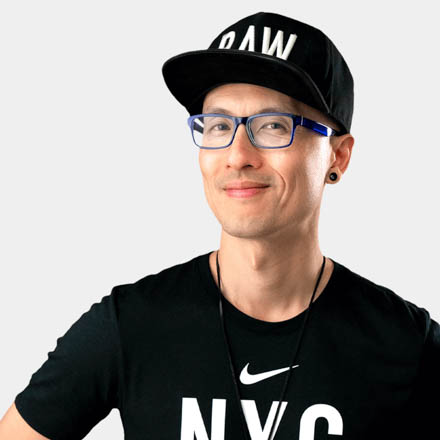
Chris Do
Founder, The Futur™ · May 19, 2024
Stop Treating LinkedIn Like a Resume
There is a lot of smoke around LinkedIn right now. It is the platform where careers are built, deals are closed, and authority is forged. Yet most professionals treat it like a digital filing cabinet, a place for dusty resumes and sterile corporate updates. They get it wrong.
They believe professionalism means being formal, verbose, and, ultimately, boring. They publish the equivalent of a 150-page report and wonder why no one reads it.
The big winners on the platform understand a fundamental truth. “Social media including LinkedIn is entertainment for people who are on that social media,” says entrepreneur Sam Brown. In a conversation with The Futur’s Chris Do, Brown, who grew his own LinkedIn following by 50,000 in a single year, dismantles the conventional wisdom that holds so many creators back.
This is not about dumbing down your content. It is about making it work for the environment it lives in. Your audience is not settling in for a long read. They are scrolling while waiting for a bus or between meetings. They have ten minutes, maybe ten seconds.
Your job is to provide something fun to interact with. Your job is to deliver a win.
The Art of the Quick Win
To win on LinkedIn, you must first understand the psychology of the scroll. Attention is the currency, and cognitive load is the enemy. The more you make someone think, the faster they move on.
Brown advocates for a strategy built on the “quick win.” Every piece of content should offer immediate value, even to the most casual observer. He points to the rise of the simple, text-based image, often formatted to look like a screenshot from X (formerly Twitter).
The image contains a single, resonant idea. A quote. A bold statement. “If you believe you can, you can. And if you believe you can’t, you can’t,” reads one of Brown’s examples. That’s it. A user scrolling the feed can read it, agree, and hit “like” without ever reading the full post. This is the first layer of engagement.
From the creator’s perspective, that “like” is gold. It signals to the algorithm that the content is valuable, amplifying its reach to a wider audience. That person didn't need the full story, but their interaction ensures more people have the opportunity to see it.
This strategy works because of what it removes. “It’s low cognitive load,” Brown explains. “It doesn’t demand the reader do any thinking.”
This isn't about simplicity for its own sake. It is about accessibility. Behind that simple, shareable image, Brown embeds a much deeper story about how his band landed a record deal in Nashville, a journey that started by writing the word “Nashville” on a whiteboard. The short, punchy image is the hook; the detailed, personal story is the payload for those who choose to click “see more.”
Even if they don't click, the algorithm tracks “dwell time.” When a user pauses their scroll to read the text on your image, LinkedIn notices. You have delivered value efficiently and been rewarded with a signal of relevance.
To ensure your writing is as accessible as possible, Brown suggests using tools like the Hemingway App. This tool grades your text based on its reading level. “When I do put my stuff into something like that, it always says, yeah, this is like a Grade Three,” Brown notes. The lower the grade, the better. It means you’ve done the hard work of communication, delivering a message that feeds directly into the reader’s mind without friction.
As Chris Do notes, this counters the common impulse to impress with complexity. “A lot of people think that they impress others by choosing very complicated language and sentence structure… In your efforts to impress people with your language skills, you become very verbose, you choose $6 words, and what you do is you alienate everyone.”
Simple is not stupid. It is sharp. It is effective.
From ‘A’ Specialist to ‘The’ Specialist
Once you understand how to communicate, you must decide what to communicate about. For many entrepreneurial and creative professionals, this is the biggest hurdle. Their interests are varied, their skills are diverse, and the fear of being pigeonholed is paralyzing.
They zip across seven lanes of traffic on the freeway, claiming to own them all. The result is a chaotic, unfocused message that connects with no one.
The solution is to pick a lane. Decide to be the ‘insert thing’ guy or the ‘insert thing’ girl. This is the path to authority and influence.
Brown points to Anthony Pierri, who has built a powerful brand and business, Fletch, by focusing exclusively on landing page optimization for enterprise SaaS companies. “He just stays right in his lane,” Brown says. “And as a result, he’s got this thriving audience and a thriving business.”
This principle is visible across the creator economy:
- Cody Sanchez is the “boring businesses” woman.
- Ryan Holiday is the stoicism guy.
- James Clear is the habits guy.
Their focus makes them instantly recognizable and indispensable to their target audience. When you try to be everything to everyone, you are nothing to anyone. When you become the go-to expert for a specific problem, you become a destination. This is a core tenet of business explored in how to find your niche.
Do reinforces this with a powerful distinction. “You go from being a designer to the designer,” he explains. The more niched you are, the easier it is to claim that definitive “the.” You have less competition and more credibility.
For those struggling to choose, Brown offers a practical approach. “Just try them all and kind of see what sticks.” Start with five lanes. Test content in each. See what gets a response from the audience and, just as importantly, see what you enjoy writing about. Then, work on narrowing it down to three, and eventually, to one.
The ultimate goal, Do adds, is to become a category of one. This is a state where your personal brand is so strong that clients don’t just want a solution; they want *your* solution. “I’ve been following Chris for five years and I only want to work with Chris,” Do says, illustrating the mindset. “I'm not comparing Chris's prices or what his proposal looks like… If I can afford it, if I can possibly find the money, I'm going to work with Chris.” This is the power of building a sharp, focused personal brand, a concept Do has explored in depth in talks on personal branding vs. business branding.
The Reverse Engineering Playbook
You do not have to invent your LinkedIn strategy from scratch. The blueprint already exists, published daily by the most successful creators on the platform. Success leaves clues, and your job is to become a detective.
“You want to look at what the people who are already having success are doing, and you want to do that,” Brown states. This is not about plagiarism. It is about deconstruction.
Find the leaders in your chosen niche. These are the people with 100,000 followers or more who are not global celebrities like Bill Gates. These are regular professionals who have mastered the platform. Scroll through their content. You will find a mix of smash hits and posts that fell flat. Both are educational.
The high-performing posts are your guide. Brown outlines a system for analysis:
- Topic: What subject did they cover? Was it a personal story about moving, a tactical post about a business transition, or an educational piece?
- Format: Was it a text-only post, a carousel, a video, or an image post?
- Structure: How was it written? Was it a long, detailed narrative or a series of short, punchy sentences?
- Hook: How did they start the post? What made you want to read more?
Brown’s personal process is simple but effective. When he finds a post that is interesting, performed well, and feels adaptable, he saves a link to it in a single, running Apple Note. “I might make some notes,” he says. “Chris did it with a photo of himself, huge response from audience, relatable, vulnerable, inspiring. And that might be the whole note.”
The key is to make this process frictionless. He calls it making content creation easy for yourself. Ideas can strike anywhere. Brown often gets his best ideas while walking his neighborhood, deliberately without his phone, to let his mind wander. “You want to introduce kind of a system where you’re having shower thoughts all day every day,” he advises, “and a system for capturing those thoughts so they don’t come and go.”
For those who are not natural abstract or divergent thinkers, Do offers a technological assist. You can use AI to do the deconstruction for you.
“Copy all of the text and jump into GPT,” Do suggests. “Say, ‘Analyze this high-performing post on LinkedIn for structure, style, tone of voice, challenges they had to overcome, the payoff, and any insights to help me deconstruct this.’”
You can even have the AI analyze the accompanying image for its theme and style. The output gives you a detailed blueprint. Your first attempt at replicating the formula may not be a success, but like any recipe, execution improves with practice.
Nail the Hook, Win the Game
Of all the components of a successful post, one stands above all others in importance. It is the single point of failure for most creators.
“The most important thing you can do as a LinkedIn creator, by far, is nail the hook,” Brown declares.
The hook is the first two to three lines of your post, the text visible before a user has to click “see more.” It is the headline, the opening argument, and the movie trailer all rolled into one. A brilliant, world-changing post with a weak hook is invisible. An average post with an irresistible hook can go viral.
This is where creators should spend a disproportionate amount of their energy. Brown admits to his own past mistakes. “I am very guilty of writing the hook when I’ve already spent three hours on the post and I’m a little bit bored.” The smart move is to treat the hook and the post as two separate, equally important tasks. Spend 10 to 15 minutes workshopping the hook alone.
The goal is to generate irresistible curiosity. You must make it impossible for the reader to keep scrolling.
Copywriting formulas are a great place to start:
- Challenge a common belief: “Everybody thinks this. Here’s the truth…”
- Create an open loop: “This one decision changed everything for my business…”
- Use the Known-Unknown: “Here’s what you know about pricing. But you didn’t know this…”
Do compares this to the creative process of legendary filmmaker Woody Allen. Allen kept a drawer full of napkins and scraps of paper, each with a single compelling idea or title. When it was time to start a new film, he would rummage through the drawer, find an idea that sparked his interest, and begin writing from there.
Creators can adopt the same system. Create a repository of powerful hooks and headlines. When you feel uninspired, pull one out and build a post around it. You are far more likely to succeed by starting with a proven hook than by trying to tack one onto a finished piece. As Do emphasizes when teaching how to craft resonant content, the opening is not a formality; it is the entire battle.
From Attention to Revenue
Likes, comments, and followers are often dismissed as vanity metrics. Without a clear path to revenue, they are just numbers on a screen. A truly effective LinkedIn strategy must connect content to commerce, turning an engaged audience into paying clients.
Brown’s approach to lead generation is built on inbound marketing. He avoids the aggressive, spammy cold DMs that plague the platform. “I like creating content that gets people to contact me and ask me, ‘Can we work together?’” he says.
The system is based on a simple ratio. Think of your content in batches of ten posts. 80-90% of your content should provide value with no expectation of return.
This value comes in two primary forms:
- Educational Content: This is your expertise on display. How-to guides, tactical tips, industry analysis. This content grows your audience by establishing you as a knowledgeable authority.
- Personal Content: These are inspiring or relatable stories that build trust. A post about completing a marathon, moving your family, or overcoming a personal challenge. This content draws your existing followers closer to you.
The remaining 10-20% of your content is where you sell. Brown has three preferred formats for these sales posts, each designed to feel less like an advertisement and more like a natural extension of his value-driven content.
His favorite method is the case study. He tells the before-and-after story of a client. He starts with their struggle, a pain point the reader likely shares. For example, a design agency owner spending hours on content that gets only 10 likes per post. Then, he details the transformation after working together: posts now getting 100 likes, real business results, and a 3x return on their investment.
“It doesn’t feel like you’re getting a sales pitch shoved in your face,” Brown explains. “It’s a good story.” It has a challenge, adversity, and a triumphant resolution. This method of attracting ideal clients is far more powerful than a simple list of services.
The second format is a testimonial post, which is essentially a mini case study. It might feature a powerful client quote on an image, like “I 5x’d my investment in 30 days,” with a condensed version of their story in the text.
The third is the direct sales post. This is a straightforward offer, but it is used sparingly. “I’m taking on five clients in April,” he might write. The post then acts like a landing page, clearly stating who it is for, what the process covers, and what results they can expect, often ending with a few powerful, outcome-focused testimonials.
This deliberate 90/10 balance ensures you earn the right to sell. You build a deep well of trust and authority, so when you do make an offer, your audience is not just receptive; they are eager.
Ultimately, none of these tactics will work without the right mindset. This is a long game. To be a successful creator, you have to love the act of creating, sharing, and helping. The money is a byproduct of that dedication, not the primary motivation.
“You won’t do what it takes if that’s what you’re there for,” Brown concludes. The real reward is found in the process: crafting a post you are proud of and watching it resonate with people. That is the engine that will sustain you for the long run.
TRANSCRIPT
Enjoyed this? There’s more where it came from.
Get insights on creativity, business, and design from The Futur.
You can unsubscribe anytime. By submitting, you agree to receive communications and to our Privacy Policy.
“Social media, including LinkedIn, is entertainment.”
— Chris Do
Key Takeaways
Subscribe
Details
- Length
- 1h 0m
- Views
- 57,070
- Topic
- SOCIAL MEDIA