Stop Chasing Followers. Start Building a Community.
There is a buzzword echoing through boardrooms and creator studios, promising a moat around your business that competitors cannot cross. That word is community.
But most people get it wrong.
They confuse attention with connection. They mistake an audience for a community. They build platforms on rented land, vulnerable to the whims of an algorithm, and wonder why the foundation feels so unstable. In a conversation with The Futur’s Chris Do, Design Cuts CEO Tom Ross dismantles these myths, offering a sharp, actionable playbook for building something real.
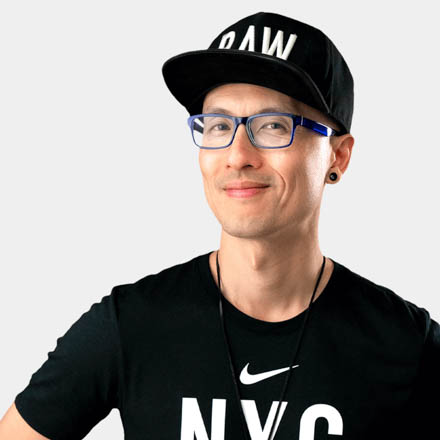
Ross, a self-described “community building guy” who bootstrapped his company, Design Cuts, into the world’s highest-rated design marketplace, argues that community was the secret ingredient to his explosive growth. With no funding and no capital, his team focused on one thing: building an engaged, loyal group of people who believed in their vision.
“We don't want to be just another e-commerce website,” Ross explains. “The same thing at The Futur, right? You're not just another educational platform... I think people are drawn to both of our companies because of the vision, because of the culture, because of the community and the people.”
This is not a soft skill. It is a strategic imperative. A strong community delivers tangible business results, from agile product feedback and increased retention to a loyal base that will actively defend your brand against negativity. As Do notes, it is the kind of marketing you cannot buy.
It must be earned.
The Great Misunderstanding: Audience vs. Community
The first step is a critical distinction. Most brands are building an audience, not a community.
An audience is a one-to-many relationship. It is a broadcast. You post on Instagram or YouTube, and thousands of people consume it passively. Tom Ross calls this a relationship built on rented land. “You can be very vulnerable to algorithm shifts,” he warns. “Overnight their reach can just be cut in half… you don't control the platform.”
A community, however, is many-to-many. It is a shared space where members can connect, interact, and build relationships with each other. It is an environment you own and control, free from distracting ads and competing content.
This difference is fundamental. It is the difference between shouting into a crowd and hosting a meaningful dinner party.
Here’s how the two models break down:
- Audience Platforms: These are typically social media channels like YouTube, Instagram, and TikTok, or a company blog. They offer massive reach and inherent shareability but leave you at the mercy of platform changes and fierce competition for attention.
- Community Platforms: These are dedicated spaces like Slack groups, forums built on software like Circle, or private groups on Discord or Facebook. They offer a private, intimate space with no distractions, fostering deeper connections.
The modern model is not a choice between one or the other. It is a funnel. You build a large audience on social platforms and then siphon off your most engaged, high-value members into a closed community. “You're not looking to get your entire social media audience into a close community platform,” Ross clarifies. “You're just going to kind of port across the most engaged people.”
Do’s own platform serves as a perfect example. The Futur has millions of followers across its social channels, but its paid community, The Futur Pro, is a curated group of its most dedicated members. This smaller, focused group creates a higher level of interaction and value than a massive, disengaged audience ever could.
This shift from collecting followers to cultivating connection is not just a business trend. It is a response to a deep human need. Ross points to a growing “epidemic of loneliness,” especially in the wake of the global pandemic. “People at large are just yearning for deeper connection,” he says. “We lost interest a long time ago in these highlight reels on social media… we actually want conversation and we want connection and humanity and relationships.” A strategy that ignores this is a strategy destined to fail, a point often discussed when analyzing why some social media strategies fall flat.
Ultimately, a community is about a feeling, not a feature. Ross argues you can have a “sense of community” even within an audience, long before you launch a private forum. This is built on:
- A sense of belonging.
- A shared sense of identity.
- Belief in a shared vision.
- A shared vocabulary and inside jokes.
“Community is more about the people than the platform,” Ross states. The platform simply puts your existing community on steroids, giving them a place to gather and strengthen the bonds you have already started to build.
Architecting Your Community's Foundation
Before you choose a platform or send a single invitation, you must answer two fundamental questions: Why should someone join your community, and why should they stick around?
If you cannot answer these with absolute clarity, you will fail. Ross breaks down the core value propositions that drive community participation into four categories:
- Networking: The community is a place to meet people and create serendipitous connections.
- Information: The community is a source of learning and expert knowledge. The Futur is a prime example of a teaching-based community.
- Belonging: The community offers a shared identity and a tribe of like-minded people. Ross compares this powerful driver to religion or fandoms like Star Trek. It’s about being among your people.
- Entertainment: The community is simply a fun place to be, to laugh, and to make friends.
A strong community often combines several of these. While The Futur’s community is primarily informational, it also provides belonging and networking opportunities. You must define your primary value proposition and then layer in secondary benefits.
Once your value is clear, the choice of platform becomes a matter of strategic alignment. Ross offers a simple, two-part filter for this decision.
First, what platforms do your intended members already use? This is about reducing friction. “If I was building a community tomorrow for gamers, I would absolutely establish it on something like Twitch or Discord,” Ross says. Expecting them to leave their native environment for a Facebook group is a losing battle.
Second, what platform do you personally resonate with? “Community building takes a lot of work,” Ross warns. “If you don't enjoy using the medium or the platform, you are going to burn out.” Choose a tool you enjoy, because you will be spending a lot of time there.
The final layer of the foundation is the access model. These generally fall into three camps:
- Free: Open to everyone, like Adobe’s growing Discord server for creatives. This model prioritizes reach and accessibility.
- Paid: An exclusive, high-value space for paying members, like The Futur Pro. This model filters for commitment and creates a premium experience.
- Freemium: A hybrid model with both free and premium tiers, like the community run by Dustin Lee of Retro Supply Co. This allows for broad reach while offering deeper value for a price.
The model you choose must align with your business goals and the value you promise to deliver. There is no single right answer, only the right answer for your specific context.
The Four Engines of Community Growth
A community does not grow by accident. It is not a case of “build it and they will come.” Growth requires a deliberate, multi-pronged approach. Ross outlines a framework built on four distinct but interconnected engines.
1. One-to-One
This is the unscalable, foundational work that most people skip. It is manual, time-consuming, and absolutely essential in the beginning. “If you're finding you're not getting your people… you need to go to them,” Ross insists. “Don't expect people to come to you, especially not early on.”
Define your ideal community member, figure out where they spend their time online, and go there. Join relevant groups, become a person of value, build relationships, and talk to as many people as possible. This is controllable, direct action.
2. Word of Mouth
To get people talking about you, you need two things: quality and conviction. Quality is table stakes. Conviction is the differentiator. This means niching down and planting your flag. As Chris Do often says, you must go “an inch wide and a mile deep.”
Ross shares his own story of pivoting his personal brand to focus solely on community building. Though he had been passionate about it for years, it was just one of many topics he discussed. When he went all-in, the momentum was immediate. Coaching inquiries increased, and friends started referring to him as “the community guy.”
“All I did was kind of have a bit of conviction about what I was doing,” he reflects. “I stopped flirting with the idea of community and I decided to propose to it.” This singular focus makes you referable. When someone needs a specialist, they think of the person who talks about that one thing day in and day out, not the generalist who dabbled in it 18 months ago. This is a core tenet for many who have learned what successful personal brands do differently.
Ross offers a powerful maxim he believes he coined: Conviction kills competition. Not by attacking others, but by building the tallest, most focused skyscraper in town.
3. Distribution
While one-to-one is essential, distribution provides leverage. Getting in front of other people’s audiences is a powerful growth lever. Ross shares an experience where a single guest newsletter appearance brought him a thousand new subscribers in a few hours, work that would have taken months to do manually.
But a blanket approach is a waste of time. Smart distribution focuses on two criteria:
- Relevance: Seek audiences that are a perfect match. If you have a CrossFit community, it is better to get in front of 100 dedicated CrossFitters than 10,000 general fitness enthusiasts, of whom only a fraction might be interested.
- Active Audience: Ignore vanity metrics. Ross references AppSumo founder Noah Kagan, who famously said an email list of 100,000 with a 10% open rate is really just a list of 10,000. Ross himself saw a partnership with a 5,000-person community outperform one with a million-person audience by 20x. The engagement of an audience, not its size, determines its value. These are the kinds of insights Kagan shares when explaining how to grow a million-dollar business.
When you do get in front of an audience, have a clear, valuable, and low-friction call to action, like an email signup for a relevant free resource. And above all, respect the audience you are borrowing. Your goal is to serve, not to take.
4. Inbound
This is what Ross calls the “rich get richer” engine. As your community grows, it begins to generate its own momentum. More members mean more people to spread the word. More members provide social proof, making it more attractive to new people. Nobody wants to join an empty party.
You can also engineer inbound interest. Ross’s team at Design Cuts noticed a surge of interest in the Procreate app. They created “The Procreate Creative Community” on Facebook. Because people were actively searching for “Procreate,” the group grew organically, now approaching 10,000 members. It is a constant, scalable source of new brand and community discovery.
These four engines work together. You start with manual, one-to-one effort, which builds the foundation for word-of-mouth. You use distribution to accelerate growth, and eventually, your inbound engine kicks in, creating a self-sustaining cycle.
The Tipping Point: Hitting Critical Mass
Every new community faces the same challenge: the empty room. An inactive community is a dead community. To avoid this, your primary goal is to reach critical mass as quickly as possible.
Ross shares a key insight from Dom McGregor, co-founder of the social media agency Social Chain, a company valued at over $300 million. McGregor found that the magic number for a community to become self-sustaining is around 200 active members. This is the **critical mass** tipping point.
“Until you hit that point, you're going to have to be pushing and driving the community,” Ross explains. “But once you hit a critical mass, it means that you could step away… and the members are going to support each other.”
Getting to 200 people cannot be a slow trickle. A few members joining an empty space will quickly get bored and leave. The solution is to orchestrate a launch that ensures you have a vibrant, active group from day one.
The most effective tool for this is a waitlist. Before you ever open the doors, build buzz and collect a list of eager, committed individuals. This ensures that on launch day, the party is already full.
But a simple email signup may not be enough. For his own community, Ross is taking it a step further with an application process. “I'm literally interviewing people,” he says. “I want to make sure that people are really going to stick around… they're having to jump through hoops.”
This friction is a feature, not a bug. It filters for quality and commitment. By the time the doors open, he will have a pre-qualified group of people who have proven they want to be there and are ready to engage. This strategy is about curating founding members, not just collecting signups. It is about avoiding the inertia that kills most new communities before they even start, a concept that runs counter to the typical advice to chase viral growth at all costs.
The Art of Service: Nurturing Your People
Growth gets people in the door. Nurturing makes them stay. This is the part of community building that requires the most heart, and it is where most brands fail.
Ross credits a transformative lesson from a former mentor, Chase Reeves: “You can either use your community or you can serve them.”
Most are in the business of using their community: for likes, for monetization, for ego. Shifting to a service mindset changes everything. It becomes about how you can show up, add value, and make your members’ lives better. You become a five-star concierge, not a toll collector.
This philosophy manifests in what Ross calls the “magic in the unscalable.” These are small, personal gestures that have an outsized emotional impact. When Do notes that he still tries to respond to every comment personally, Ross affirms the power of this simple act. “It really matters to people,” he says. “They want to feel heard.”
Ross once challenged himself at a conference to prove this principle. He invited over 100 attendees to DM him on Instagram with the words “Prove it.” He then spent the next two hours in a back room, recording a personalized video message for every single person, calling them out by name. The response was overwhelming. Many of those people are still active members of his community today.
To those who say this is too much work, Ross asks a simple question: How many hours do you waste aimlessly scrolling social media? Redirecting even one of those hours to intentional, personal outreach can have a revolutionary impact on your business.
To operationalize this, Ross trains his team at Design Cuts on the One Community Member Mindset. He asks them to imagine they have only one customer who pays all their bills. “Think how you would treat that person,” he prompts. “You would presumably make them your best friend… try and get as close to that as you possibly can with every single member of our community.”
This leads to his concept of Value Magnitude. Most creators do not have the celebrity status of Dwayne “The Rock” Johnson, where a simple “like” can make someone’s month. For the rest of us, we must give back an order of magnitude more value than we receive. If someone leaves a short comment, do not just reply. Go to their profile, leave three thoughtful comments, DM them to say thanks, and look for ways to help them.
It is not scalable. And that is exactly the point. In a world of automated indifference, radical, unscalable generosity is how you win.
The Scalable Soul
The unscalable is powerful, but how do you maintain that soul as you grow from dozens to thousands of members? The answer is not in tools or automation. It is in authenticity.
Authenticity is another buzzword that has been stripped of its meaning. Ross makes it practical. It means showing all sides of yourself, not just the highlight reel. It is about dropping the filter and admitting you are not perfect. Do adds that sharing his own struggles and less-flattering traits makes him more relatable. “I have dark days,” Do admits. “I have days where I don't feel that successful.”
This vulnerability forges connection. “How much more connected to me do you feel than like the Lamborghini guy on YouTube ads?” Ross asks. “No one likes that guy. No one relates to that guy.” True connection comes from being human. This is the central idea behind building an authentic personal brand, a topic Do explores in his masterclass on vulnerability and personal branding.
As your community scales, you must filter your efforts. Reserve the most time-intensive, unscalable gestures for your most highly engaged members, your true fans. For the wider community, connection is scaled through authentic, less-polished content.
The rise of TikTok, Instagram Reels, and YouTube Shorts signals a major shift. People are tired of overproduced, slick content. They crave the raw, the real, and the relatable.
Building a community is a long game. Ross uses the metaphor of his own nine-year relationship with his fiancée. Real relationships take time to deepen. You cannot expect to build deep, lasting connections overnight.
It requires patience and consistency.
The work is not easy. It demands a fundamental shift from broadcasting to connecting, from using to serving, and from polish to authenticity. But the reward is immense: a loyal, engaged, and resilient business built on a foundation of real human connection.
TRANSCRIPT
Enjoyed this? There’s more where it came from.
Get insights on creativity, business, and design from The Futur.
You can unsubscribe anytime. By submitting, you agree to receive communications and to our Privacy Policy.