From Addiction To Marketing at Nike
Chris Do and former Nike Brand Director Jordan Rogers discuss how unconventional paths, relentless hustle, and vulnerability build powerful personal brands.
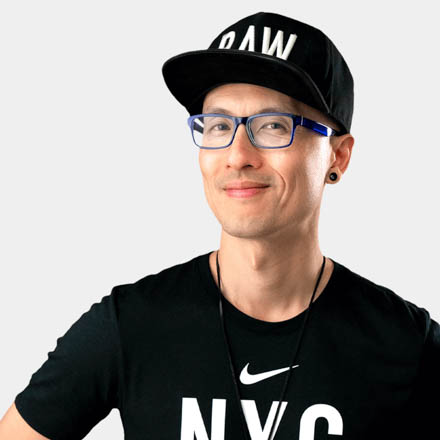
Chris Do
Founder, The Futur™ · March 21, 2024
Your Greatest Liability is Your Greatest Asset
Jordan Rogers should not have worked at Nike. By every conventional measure of corporate recruiting, his résumé was a collection of red flags. A history of heroin addiction. Incarceration. A non-linear path that started far from the polished halls of a Fortune 500 company.
Yet for nearly 11 years, he was an insider in one of the world's most powerful brand kingdoms, rising through the ranks of brand marketing and working on campaigns for Nike Football, Nike Women’s, and Nike Basketball. He worked with the biggest athletes and artists on the planet.
How?
In a conversation with Chris Do, Rogers, a former Nike Brand Director, unpacks a career trajectory built not on a perfect past, but on a potent mix of hustle, humility, and strategic vulnerability. His story is more than an inspirational tale of redemption. It is a playbook for anyone who feels like an outsider trying to break in.
It reveals a fundamental truth about personal branding: the thing you think disqualifies you might be the very thing that makes you unforgettable.
The Anatomy of a Painkiller
To understand the drive that propelled Rogers into Nike, you must first understand the pain he was running from. At 14, his life began to unravel. Growing up in Dallas, Texas, where youth sports culture is religion, he was a self-described “jack of all trades, master of none.” As sports became hyper-specialized in high school, his athletic identity dissolved.
His grandfather, a Southern Baptist preacher and a huge sports fan, was a hugely positive force in his life. He died. A first girlfriend cheated on him, a teenage heartbreak that felt world-ending.
“I didn't know what to feel,” Rogers recalls. “So much conflict happening there internally and just trying to find myself.”
This confluence of a lost identity, grief, and adolescent emotional chaos created a storm within him. He was, in his words, filled with “internal angst and frustration and struggle and discomfort.” He just needed to calm that storm.
One night at a party, he saw an older kid snort a line of a drug. The result was immediate. The user came up from the counter and, as Rogers describes it, “looked like he had this real crazy sense of relief and stress-free just kind of roll off of him like a rolling ocean.”
Rogers wanted to feel that. He wanted to feel nice. He tried heroin.
“It absolutely calmed that storm,” he says. “A lot of people describe heroin as like being in the womb again… it's a warm comforting sense of relief. It is an opiate and opiates are painkillers and it absolutely kills pain.”
But the pain heroin treats is not just physical. It is ruthlessly effective on emotional pain, too. The drug offered a temporary escape, a manufactured peace that quickly spiraled into years of addiction, stints in rehab, and eventually, a year of incarceration at age 21.
That year behind bars was a forced reckoning. The bar for his future was set devastatingly low. “I just didn't want to stick a needle in my arm again,” he says.
But the same obsessive energy that fueled his addiction could be redirected. That intense, single-minded focus is a powerful tool when pointed at a constructive goal. For Rogers, that goal became Nike.
The Hustler's Playbook: How to Get In
After getting clean, Rogers set his sights on a dream that seemed impossible. He wanted a job at Nike. He didn’t have an MBA. He didn’t have a sterling résumé. What he had was something more valuable.
A potent combination of determination and delusion.
“If I had known then what I know now, I don't know if I ever would have tried,” Rogers admits, reflecting on the sheer talent level inside the company. He was just delusional enough to believe he belonged there.
For five years, he tried to get in. Rejection after rejection. He met with someone who had the job he wanted, a role known then as an EKIN, a kind of brand evangelist who travels and educates retailers on Nike’s history, heritage, and latest product innovations. The advice he got was simple and humbling: get a job in retail.
Many would see this as a step back. Rogers saw it as a step in. He got a job at a Nike Factory Store in Dallas. He embraced the grind. As Do points out, “Humility along with determination and delusion can take you very far.”
This is where the hustle began in earnest. Rogers didn’t just clock in and sell shoes. He started volunteering for every marketing event he could. He became a familiar face to the field marketing team, the very people in the roles he coveted.
His strategy was not to ask for a job, but to make himself useful. This is a critical lesson for any creative professional trying to get noticed. A young man once approached Do with a similar offer: “I will do anything so that I can be around you. I will literally clean your toilets, scrub your floors, do the dishes, whatever it is.” Do gave him a shot, respecting the hustle.
Rogers embodied this ethos. He followed Do's core advice: “Look for a job that's not being done and throw yourself at it.”
He executed what could be called The Indispensability Playbook. Its steps are a masterclass in breaking into any competitive field.
- Start at the Bottom: He took the retail job without complaint, understanding it was a necessary entry point to the ecosystem.
- Do the Grunt Work: He volunteered to carry boxes and set up tents at events, simply to be in the proximity of the team he wanted to join.
- Identify the Unmet Need: He noticed that the field marketers were great at running events but terrible at documenting them. They had no photos or recaps to show headquarters their impact.
- Teach Yourself the Solution: A team member handed him a camera and said, “Can you figure this out?” Rogers said yes. He started taking pictures. Then he taught himself how to use iMovie to edit videos. He learned PowerPoint to build event recap presentations.
- Become the Go-To Person: He became known as the guy who could handle the “techy sort of nerdy creative” tasks that others didn’t want to do or didn’t know how to do.
He was making himself indispensable. A former boss once told him, “Work flows to the competent.” By demonstrating competence in areas the team was weak, he was no longer just a volunteer. He was a valuable asset.
Those first videos? “They were terrible,” he laughs. “So bad.”
But it didn’t matter. He was willing to learn and deliver. Unbeknownst to him, he was acquiring the very skills of content creation that would define marketing for the next 15 years. All because he was trying to be useful. After five years of this relentless hustle, during the 2008 economic collapse no less, Nike finally opened the door. He was in.
Inside the Kingdom: A Brand Director's Job
What does a brand marketer at Nike actually do? It is not about making ads. It is about steering the ship.
Rogers describes the role of a brand director as an exercise in synthesis. “You're having to intake a ton of inputs and then synthesize that and then deliver it in outputs,” he explains. It is a job perfectly suited for a creative with an ADD-like nature who enjoys juggling multiple threads.
The inputs are a constant flood of information from every corner of the business and culture:
- Corporate Strategy: Directives from the CEO and VPs. For example, a mandate to “win in running” or grow the women’s category.
- Consumer Insights: Data and analysis about what audiences want, what they are complaining about, and how they perceive the brand.
- Cultural Trends: What is the vibe in sports and culture? What platforms are people using? What is the vernacular? What styles are emerging?
- Competitive Analysis: What are competitors like Adidas, Lululemon, or Hoka doing well? What can be learned from them?
The brand director’s job is to take all these inputs and forge them into a coherent strategy. For instance, if the 35th anniversary of “Just Do It” is approaching, the task is to figure out how to introduce that iconic tagline to Gen Z, an audience with no memory of its origin.
Once the strategy is set, the brand director becomes the evangelist who sells and steers that vision across all the functional teams to ensure a consistent consumer experience. This is what separates a disjointed campaign from a cultural moment. Rogers would work with numerous teams to bring a single idea to life:
- PR & Comms: To get the story into the right media outlets.
- Creative Teams: To define the visual identity, the look, feel, and sound of the campaign. This connects to broader principles of building an authentic brand that resonates.
- Advertising: To determine the form of the campaign, whether it is a TV commercial, a digital short, or something else entirely.
- Media Buying: To decide where the campaign will appear, from the Super Bowl to a niche YouTube channel, depending on the target audience.
- Social Media & Retail Teams: To ensure the message is consistent from a customer’s social feed to the in-store experience at the mall.
The goal is a seamless narrative. A consumer sees a consistent tone of voice whether they are watching a game, scrolling Instagram, or walking into a Nike store. The brand director is the conductor of that orchestra.
It was in this role that Rogers discovered another, more personal, truth. Five years into his Nike career, he was presented with an opportunity to tell his full story of addiction and recovery in a short film for the organization I Am Second.
He was terrified, thinking it could be “career suicide.” But he did it. The result was the opposite of what he feared.
“We admire people through our strength,” he realized, “but they really connect with us through our struggle and our story.” His vulnerability didn’t make him weak. It made him a more relatable and effective leader. It proved that in personal branding, as explored in this full masterclass, your perceived flaws can become your most powerful connectors.
The Rebel's Edge and the Corporate Fishbowl
Nike built its empire on a rebellious spirit. It was the brand for pirates, the one that sided with iconoclastic athletes and challenged the establishment. Rogers felt that spirit deeply. “I felt like Nike would embrace and welcome a rebel like me and my story,” he says.
But as companies grow, that rebellious edge can dull. The very success that makes a brand a global behemoth can also make it insular. Do presses Rogers on a key observation: Nike’s most progressive and interesting designs often come from external collaborators, not from within. Why?
Think of the groundbreaking collaborations with Virgil Abloh’s Off-White, Jerry Lorenzo’s Fear of God, or Errolson Hugh’s Acronym. These designers took Nike’s classic silhouettes and technology and twisted them into something new, something fashion-forward and culturally potent.
Rogers explains that the collaborator’s job is precisely to “push the bounds of design.” But he also points to a deeper issue: the “Beaverton fishbowl.”
When you work at a massive, self-contained campus in a town where the company is the dominant employer, you begin to drink your own Kool-Aid. Rogers says, “Every presentation starts with how we're going to change the culture and we're pushing innovation and we're pushing design, but when you're just judging yourself constantly and you're not looking externally, you think that you're changing the game when really you're making 1% progress.”
This insularity is compounded by a startling lack of diversity. Rogers points out that while the African-American population in the U.S. is around 13-16%, it is only 4% in Portland, Oregon, and a mere 2.8% in Beaverton, where Nike’s world headquarters is located. “So many of the black people who live in Portland, Oregon either work for Nike or Adidas,” he says bluntly. It is difficult to reflect the culture when your internal culture does not reflect the world.
This creates a tension between two competing needs:
- Serving the Core: Nike’s DNA, forged by co-founders Phil Knight and Bill Bowerman, is in serving elite athletes. They built their reputation on making products for obsessive runners, what Rogers calls “nerdy runners,” who would do anything to shave a second off their mile time.
- Expanding the Market: To grow, Nike must appeal to a broader audience, people who might wear running shoes to run errands, not marathons. This requires a more mainstream design sensibility.
As you expand, you risk alienating the core. You lose your sharp edge. While collaborators can inject that edge back in, the internal design engine often defaults to safer, more commercial choices. People say they want fashion, but they often buy function and value. Most customers want a reliable, affordable white and black Pegasus running shoe, not a $250 architectural masterpiece.
The company’s rigid adherence to in-office work further exacerbates the problem. Rogers, who eventually left Nike to move his family back to Dallas, argued that the marketing teams would be far more effective if they were embedded in cultural hubs like New York, L.A., or London, not isolated in Oregon. But corporate logic often prioritizes uniformity over effectiveness. The result is a slow-moving giant that sometimes struggles to keep pace with the culture it claims to lead, in contrast to nimble smaller creative agencies.
How to Get on the Radar
For the creative professional watching from the outside, the dream of working with a brand like Nike can feel distant. How do you get on their radar? How do you become one of those collaborators who gets to push the boundaries?
Rogers gets this question so often he bought the domain name `howtogetajobatonike.com`. His answer is counterintuitive. Stop banging on the front door.
“So many of us get tunnel vision on the brand,” he explains. “We just go to their website and look at what careers are available.”
This is the least effective path. The real opportunities often lie on the periphery. The key is to go through the side door by working with the vast ecosystem of agencies that service the brand.
“So much of the amazing work that we do is from external agencies,” Rogers states. His job as a marketer was to come up with the strategy, but the execution was often handled by outside partners. He names one of the most famous: Wieden+Kennedy, the legendary agency that created the “Just Do It” slogan and nearly every iconic Nike commercial for decades.
Working at an agency that services a major brand offers several advantages:
- Direct Access: You are working on the brand’s most important projects, directly with their internal teams.
- Creative Freedom: Agencies are often hired to bring a fresh perspective that the brand cannot generate internally.
- Relationship Building: You build a network of contacts within the brand, creating opportunities for future collaboration or even a full-time role.
The strategy is simple: don’t just chase the brand, chase the brand’s partners. Find the creative agencies, production houses, digital firms, and social media shops that are consistently hired by your dream client. Get a job there. Do great work. You will be in the room where it happens, proving your value on real projects rather than begging for a chance from the outside looking in. This is a practical application of the advice explored in how to attract your ideal clients.
It is the same principle Rogers used when he was volunteering at events. He did not wait to be hired to add value. He added value to get hired.
You do not need an invitation to start contributing.
TRANSCRIPT
Enjoyed this? There’s more where it came from.
Get insights on creativity, business, and design from The Futur.
You can unsubscribe anytime. By submitting, you agree to receive communications and to our Privacy Policy.
“Look for a job that's not being done and throw yourself at it.”
— Chris Do
Key Takeaways
Subscribe
Details
- Length
- 1h 15m
- Views
- 15,614
- Topic
- PERSONAL BRANDING