The Evolution of Design and Personal Branding with Paul Povolni
Chris Do explains why the 'graphic designer' label is obsolete and how focusing on personal branding is the key to business success.
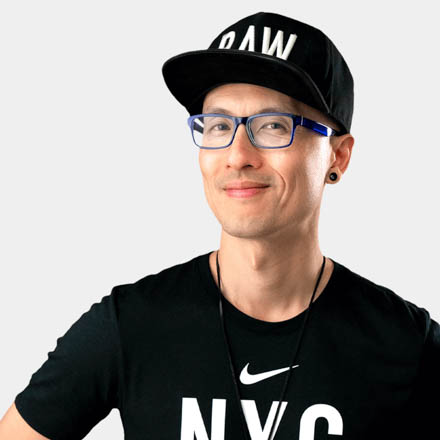
Chris Do
Founder, The Futur™ · August 29, 2024
A Cage Called 'Graphic Designer'
Every company in the 21st century is a media company. Most just do not know it yet.
This is not a prediction. It is a diagnosis of the current market. For creatives, entrepreneurs, and business leaders, it is also a warning. The labels that once defined careers are now cages, and the most common cage of all is the title “graphic designer.” Emmy award-winning designer and The Futur founder Chris Do proudly wore that label for years. Now, he calls himself a recovering graphic designer.
The journey from pride to recovery is a story of evolution. As a first-generation immigrant from Vietnam, Do felt like an outsider for most of his early life. Art was a refuge and a place to find validation. From doodling in notebooks to designing a yearbook cover, the creative impulse was undeniable. But the professional path was unclear.
When classmates suggested a career in graphic design, the internal reaction was instant. “Oh, I won’t be broke,” Do thought, sarcastically equating the profession with financial struggle. The perception, common then and now, was that design was a craft, not a business. It was for artists, not strategists.
The moment of clarity arrived not in a classroom, but in a designer’s home studio. Sent on an errand to pick up typesetting, Do walked into the world of Dean Walker, a professional graphic designer. He saw a drafting table, art instruments, and one of the original Macintosh computers paired with a massive Apple LaserWriter. It was a fusion of art and technology. “I was like, what is this wizardry that you’re doing here?” Do recalls. “This is it. This is what I need to be doing.”
That business card, reading “Dean Walker, Graphic Designer,” became a symbol of identity. Do embraced it. “I’m a graphic designer,” he would say with pride. It was a flag to plant, a skill to claim. It worked. For a while.
The Title That Stopped Fitting
The problem with labels is that they stick. The title that once provided an identity eventually became a limitation. Do found that when partners and clients heard “graphic designer,” their expectations were immediately capped. They expected someone to execute, not to lead. They expected hands for a job, not a mind for a problem.
“When you tell people you’re a graphic designer, they think of you as a graphic designer,” Do explains. “One who designs graphics.”
This perception prevents designers from being invited into the conversations that matter most: copywriting, brand messaging, campaign strategy, and business goals. “You wouldn’t expect a fashion designer to cook you a meal,” Do notes. “You wouldn’t expect an interior designer to then do all your graphics.” The label defined the service, and the service was seen as purely aesthetic.
This friction intensified as Do’s work evolved. He was doing brand strategy, market positioning, and deep strategic thinking, but the business card still said designer. As design leader Brian Collins has observed, the profession’s titles have shifted over the decades from graphic designer to commercial artist, communication designer, and brand designer, each an attempt to better capture the expanding scope of the work. But the core perception problem remains.
The issue is compounded by the democratization of design tools. With platforms like Canva, everyone has access to the toolbox, which Do argues has diluted the perceived value of the title. It no longer feels like an exclusive club demanding a high level of skill and access. It feels accessible, and therefore, less valuable.
This is when Do realized the title had to go. This is when the label graphic designer doesn't fit anymore. It was time to become a recovering graphic designer, a move away from a commoditized identity toward a strategic one. A move that anyone looking to deliver real value must also make.
The Pivot from Execution to Strategy
Survival in business depends on seeing the future. Not through a crystal ball, but by recognizing inevitable trends and moving before the market forces you to. Do’s career is a series of these strategic pivots, guided by a principle best articulated by hockey legend Wayne Gretzky: skate to where the puck is going, not to where it has been.
After graduating from ArtCenter College of Design, Do founded his creative agency, Blind. Initially, they did everything: logos, identities, and graphics for commercials. But he soon realized a critical business lesson. “I wasn’t very good at anything,” he admits. The first pivot was toward focus. Blind would become a motion design studio, a niche they could own and dominate.
That focus on motion graphics carried the company for over a decade. But by 2013, another shift was on the horizon. The rise of DVRs and streaming services signaled the slow death of the traditional television commercial. Do saw the writing on the wall. “If we’re in the business of making commercials, we’re going to be screwed.”
The next puck was heading toward web design and digital experiences. Do’s first attempt was a humbling failure. He designed a website for a client like a digital brochure, without understanding user experience, information architecture, or user flows. “We weren’t happy and they weren’t happy,” Do says. “Nobody was happy.”
The real unlock came from admitting what he did not know. Do reached out to his friend Jose Caballer, a veteran in the web design space. Caballer agreed to mentor him, and the lesson came in the form of a six-hour facilitated strategy session with a new client. Do just sat and watched. It was a revelation.
Caballer was not talking about colors or fonts. He was designing user profiles and customer journeys. He was defining brand voice and culture. He was connecting every feature and function back to a business objective. “I was thinking this is like so eye-opening for me,” Do recalls. He had discovered true brand strategy.
This, Do explains, is the critical difference between what most designers call “discovery” and what strategists do.
- Discovery (The Old Way): The designer’s goal is to understand the client’s preferences. They ask about color palettes, styles, and competitors the client likes. The process is about pleasing the client and getting to a visual solution quickly.
- Brand Strategy (The New Way): The strategist’s goal is to understand the client’s business needs. They challenge the client’s assumptions, not just accept them. The process involves competitive analysis, market research, and defining a unique tone of voice and positioning that serves a specific business and marketing goal. It's an approach Do now teaches in his personal branding frameworks.
This new framework allowed Do to transition from being a vendor hired to execute a task to a partner hired to solve a problem. It was the key to working directly with major clients like Anime Expo and the $13 billion real estate firm Hudson Pacific Properties. They were not just hiring a designer; they were hiring a strategic mind to help them achieve a business outcome, like leasing a property before it was even built.
Different Is Better Than Better
In a world saturated with options, competing to be “better” is a losing game. It leads to a race to the bottom on price, where the only winner is the customer who pays the least. The only sustainable path to success is to be different.
Do is adamant on this point. “Different is better than better.”
Most companies and creatives focus on improving their craft, becoming technically superior, or offering a slightly more polished version of what already exists. But a product or service without a story is a commodity. “If I had two bags of corn and there was no differentiation between the two, would you buy the one that’s more expensive or the one that’s cheaper?” Do asks. The answer is obvious.
But what if one bag of corn comes with a story? “We’re certified organic and we’re third-generation migrant workers. It’s a family-owned business.” Now, a choice exists. The corn itself may be identical, but the story creates a point of difference. It gives the customer a reason to pay more, a reason rooted in a deep psychological need to feel in control of the world they help create.
This principle was powerfully articulated by author Anna Lappé. “Every dollar that you spend is a vote for the world that you want to live in.” When you buy from a brand, you are not just acquiring a product; you are endorsing a set of values, a story, and a vision.
Do lives this principle. He describes his decision to see George Miller’s film Furiosa: A Mad Max Saga despite it underperforming at the box office. His motivation was not just entertainment. It was a vote.
- A vote for a genius director, George Miller, ensuring he gets to make more films.
- A vote for female-led action movies, a category that had seen recent commercial failures like The Marvels and Madame Web.
“If we don’t spend money to support the things, even if it’s not a good film, we just need to go because it’s important,” Do argues. This is the power of a brand story. It transforms a simple transaction into a meaningful choice. This is the same principle business owners can harness through building content that connects with an audience on a deeper level.
For any business, from a local roofer to a national cookie company, the lesson is the same. Stop trying to be the best. Start focusing on being the one and only. Differentiation is not a marketing tactic. It is a business strategy.
The Age of the Personal Brand
If differentiation is the goal, the personal brand is the most powerful tool to achieve it. In an age of corporate distrust, people are skeptical of ads and polished marketing campaigns. We trust people, not logos. The rise of the personal brand is a direct response to this reality.
When Do says he helps “Business Leaders build Brands,” he is not talking about their company’s brand. He is talking about their personal brand.
The evidence is everywhere. Elon Musk’s personal brand is more powerful than Tesla’s. Steve Jobs’ personal brand was, and remains, more powerful than Apple’s. Look at any influential founder, and you will find their personal following and engagement far outstrip their company’s. The brand building playbook used by successful founders is something Do has also explored in studying what sets them apart.
This raises an important question: is it dangerous for a company to be so closely tied to one individual? What happens if that person leaves or, as in the case of Steve Jobs, passes away? Do was so nervous about this possibility that he sold his Apple stock before Jobs died. “Dumbest decision I’ve made in the market,” he admits. Apple’s value did not plummet. It soared, becoming the first non-oil company to reach a trillion-dollar valuation and later tripling it.
The fear is misplaced. A strong founder’s brand does not create a single point of failure. It creates a North Star. It provides a clear mission, vision, and set of values that guide the company long after the founder is gone. The team that remains, the “composite” of people who absorbed those values, becomes collectively stronger than the founder ever was alone.
Now, consider the alternative. A product or service without a story is a commodity. Do you know who founded American Express? Most people do not. “And that’s why they spend half a billion dollars in advertising a year,” Do points out. Tesla, under Musk, spent virtually nothing on advertising for years. The reward of a strong personal brand is massive. It buys trust, attention, and loyalty that corporations spend billions trying to replicate.
You Are a Media Company: The Playbook
The call to build a personal brand is not just for tech billionaires. It applies to everyone, from the owner of a $30 million cookie company to a solo-practitioner chiropractor or a local plumber.
Consider two hypothetical cookie companies. One is a faceless corporation. The other is founded by “Paul,” a multi-generational baker who starts creating content, sharing recipes, and talking about his love for his craft. He becomes the Willy Wonka of cookies. Now, what happens if Paul and his partners disagree and he leaves? Where does the talent go? Where does the customer loyalty go? Who gets the next round of funding easier?
Paul leaves, and the best people on his team quietly send him their resumes. He announces a new company, and his audience is already waiting. He has the brand. The other company just has a factory that makes cookies.
This is the power of being a media company. And you do not need a film crew or a recording studio to do it. You need a phone and a willingness to share your story. Do points to the explosion of content from seemingly “boring” professions.
- A guy who pressure washes filthy driveways.
- A person who cleans impossibly dirty rugs.
- A detailer who restores cars that look like they were pulled from a barn after years of neglect.
These are not glamorous jobs, but through content, they become captivating stories of transformation. These creators are not selling pressure washing; they are selling satisfaction. They are not selling a service; they are building an audience and a brand that makes them distinct from the thousand other roofers or plumbers in their area. They are no longer competing on price.
For any business owner, the mandate is clear. You are the natural voice of your company. You are the one who can build trust and create preference in a noisy market. Every company today in the 21st century is a media company. The only question is whether you will be the one to lead it.
Stop waiting for permission. Stop hiding behind your corporate logo.
Start creating. Start sharing. Start building your personal brand.
The market is waiting to cast its vote.
TRANSCRIPT
Enjoyed this? There’s more where it came from.
Get insights on creativity, business, and design from The Futur.
You can unsubscribe anytime. By submitting, you agree to receive communications and to our Privacy Policy.
“Every company today in the 21st century is a media company.”
— Chris Do
Key Takeaways
Subscribe
Details
- Length
- 1h 3m
- Views
- 10,055
- Topic
- PERSONAL BRANDING