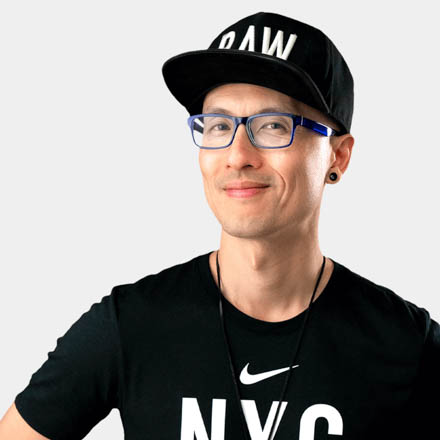
We're at the Rivian Theater. We're doing an event on personal branding. It's a 90-minute talk in association with AAF Orange County.
We're in the beautiful Laguna Beach. And you can't have a bad day out here. The friction that you feel about putting yourself out there is a thing that prevents other people from doing the same.
So, it's just a question of who's going to blink first. We are historically the worst judge of our own value. So, you are just the worst person to ask, is this valuable to anybody?
And you will not know until you put this out into the world and say whatever happens happens. There's a rumor that we might get a free car after this event. Just saying.
It's looking pretty sweet. And then in about an hour and a half, I'm going to be up on stage. I think that's the podium they have set up for me.
Beautiful LED panel wall, theater style seating, a couple of benches. It's pretty dope. Up in the mezzanine layer there, up in the loft, they have a special VIP meetup for a handful of people.
And they even have a green room that's a dedicated bedroom for you to chill out in. So a quiet space to decompress and figure out things. I think it's pretty neat.
I should be technically going through my slide deck right now just rehearsing it, looking at it, making sure I know what my own slides are so I don't feel like I'm surprising myself on stage. Want to check for any typos or glitches. And there's always something in there.
So I should be running spell check right now and just getting acclimated. I feel like I'm like a house plant. You don't want to move it inside or outside too quickly.
And so I need to acclimate and make myself feel comfortable. Otherwise, when I'm here and I'm speaking, I'm going to have the nerves. Right now, I don't feel any nerves.
I'm not quite sure why. It could be the sleep deprivation. Last night, I was up to 5:30 in the morning working on this deck.
And then a couple more hours this morning just refining, fine-tuning, and having my good buddy Drigo do spot check for any kind of quality control problems. And according to him, it's flawless. [Music] How do you keep good people around if you're not ready to hire them like on a W2 or anything like that?
You had mentioned like just be a good person and like if you're a good person that didn't work out. You got to be Oh. Oh, okay.
Otherwise, I'm on the edge of my seat here. Like, oh my god, bad advice. Bad advice.
Bad. Yeah. Be kind.
Yeah. So, but it but create a culture that people will follow you with. And I think that's been something that has been a a staple for us.
Yes. I think we're living in a different time now where the culture that you create will be the criteria for which people will choose to work with you and and help you build on your mission. I think I heard Simon Synynic say something about this like not everybody has a vision.
Not everybody needs one. But what we want to do is support a vision that is in alignment with who we are as people. So it's more important for you to communicate what culture that mission or the vision is so that people say I want to be a part of that and you're going to attract much higher quality people.
Um the last two years I kind of took my eye off managing the company and we had um my chief operating officer hire and fire people. Somehow the culture got sideways and it was really painful for me. I'm like why are these people here?
They don't even want to do what we want to do. And it felt like everything was like pulling teeth. And I said that with with the audience and the community that we have, we should only hire from the community.
So they believe in it. And by the way, they get paid too versus they're showing up. And so now we we've gone through the process of little bloodletting and now we have a really tight core team.
I think they're all bought in and we do incredible work together. So Drigo, the the tall Brazilian guy who's walking around with me, he started out as a guy who went to an event, then he went to another event and then eventually we travel the world together. He's like, "Where are you going to be?
I'll meet you there. And then he's like, "How can I help you? How can I serve you?" Now, he's one of the contractors that I work with to make content.
So, we're flying to Singapore together. We've been to Toronto. We've been to Miami, to New York.
We we go to as many places together as possible. So, we have a trip to Japan that we're probably going to go and Australia and everything else. So, those are the kind of relationships I really like.
And, you know, I'll share something. I think I'm pretty committed to the content game. And then you meet other people who are like way more committed and way more successful.
And you see like, wow, there are levels to this. Do you guys know who Simon Squib is? Yes.
Okay. Simon Squib is like the what's your dream guy and he literally tries to help people with their dream. Amazing.
He is pretty amazing. And when you get to meet him, you're like, "Yeah, he is that guy." He really is. He's super happy, optimistic, wants to help everybody.
He travels with a team of six people everywhere he goes. So when he comes to LA, he's from London or or UK somewhere, maybe not from London. And six young people fly with men and women.
And there's a producer, a social person, a foreign language person, and then two producer, editors, shooters, and they're a tight family unit. So, he also travels with his wife and his son. And so, it's like this crazy family adventure of six adopted kids.
Isn't that cool? And you know, when I walked in, they're like, "Hey, come on in." They did the research like, "Here, we have your thing ready for you." We No, I'm going to freestyle this cuz I don't need you to write it for me, but it's so cool. So, I'm like with one person, I'm thinking I need five more of Drigo and then we travel and we'll do stuff.
So, I'm slowly building this organically with a very small budget relative to like the kind of money he's working with. But, he's got this thing. He's built an infinite business model where the money he spends to make content is less than with the money he gets from advertising and sponsor deals.
So, he can do this forever. M. So he's like, "Oh, I just gave that person 5,000, but that video will make 15." So he can do this forever.
Mr. Except for with Soul, I think. Mr.
like, "Oh, you get a Lamborghini." Yeah, cool, bro. You know, but he helps people achieve their dreams or not, but that's not his fault, right? Yeah.
You guys are new. Hello. Hi, everybody.
We're just jumping into conversation, so feel free to jump in anything. I would encourage you. We can either just talk about nothing or something super deep.
Totally up to you. If there's something you've wanted to know, felt like it wasn't appropriate to talk about, now would be the time. For real, though.
For real. My current admin uh just took full ownership of the calendar in the inbox. Okay.
So, we're trying. And what's funny, it's kind of validating. It's like I tried to give her ownership of that on top of everything else that she does for the company.
She's like, "Dude, I'm out of capacity. I don't have time here." All right. So, now we're looking at bringing on another team to member, but I'm just kind of making this up.
Okay. Well, I got no idea. Some interesting things are happening right now.
Has anybody used made their own agent yet? An agent that plugs in to do things for you and has access to things. How's that working out?
I haven't done that. You haven't done it. Okay.
We're we're on the cusp of all that. All of us doing it. So, the idea of an assistant or a second in command that does these things will not be as necessary as it is today.
So, there's there's a buddy of mine, his name is Daniel Priest. He's like, "Chris, have you made your own travel agent yet?" I'm like, "Um, no." He goes, "Oh, I've done it. It's amazing.
It It knows what airlines you like. It knows your preferences, aisle, window, whether you want to sit here in what order. It has the ability to research and figure out what hotels, the best rates, the rooms, what floors, close to elevator, not close to elevator.
And you can do all this. You give it all parameters. You give it parameters.
You You talk to it mostly and then it builds things and it connects all your payment portals and it books it for you. It might send you an email saying, "Here's what I got. Can you approve this?
How much time you have?" And it's going to do this work for you. So, a lot of this work that we're trusting other people to do, like one of the things is I've never really had an assistant before, it's mostly because like I'm going to read my own messages. I don't need you in there.
But then it's also like I know a limiting belief and there's some trust issues probably. But now I have a robot. The robot's not going to read what it's not supposed to.
It's not going to disclose what it's not supposed to. And so I I really am looking forward to that. And there are a lot of people already taking advantage of this.
And so if you if you reach out to a few people or Google like how to do this, it is surprisingly easy. And there's also this thing where now you can code your own basic app to do a lot of things that you use other apps to do in minutes. It's pretty incredible.
And the the other one other thing I would say to you, no matter what level you're at, if you're needing help with creative production management strategy, whatever, the best thing I can tell you to do is just have people shadow you. Have you done that before? Has that worked for you?
Yeah. Yeah. So that that works for me.
Shadow me. Don't say anything. Just take notes and we'll talk at the end of the day.
And depending on the quality of the questions, the notes you have, I know there's a potential for you here or not. So we have this like sliding scale, right? So if you imagine the journey being the thirds, it's not literally a third, but just the first third is don't say anything.
Just watch, observe, take lots of notes, ask questions, document everything. The second part is heavy supervision, but I'm giving you some control, and I'm checking out like how you're navigating this. When they feel really confident, it goes into the autonomous stage where you're just going to work on your own, be self-directed, and I'm going periodically check in.
And the period in between each check-in is going to get increasingly longer until I don't even check in anymore. And so that there's just those three phases. If you adopt that, the cool part is the person who is the first hire for that role has a great book, a playbook that then they train their replacement.
So now you're not doing that. You're not doing this over and over again, right? Yeah.
So, something like that. And you'll know really early on in phase one, you have to make a really hard decision. Like we're as creative people, we're very optimistic and we see too much like potential when the potential is like that was it.
They hit their ceiling and you were thinking there's more to this and there's no more. There's no more that's there. So, you have to be sober.
That time. Yeah. You have to say, you know what, I don't know this is right for you.
Okay. And you're not a bad person. It's just this isn't going to work.
I I can already see that. Yeah. Yeah.
I have a question. Yes, please. Not exactly like imposter syndrome necessarily.
It's like it's like an adjacent to it. So like tonight's talk is like really timely because I'm like oh personal brand which is super important and so kind of wanting to develop some of that like coffee and um so I run a post company so video editing and I feel like and I don't I feel like this is maybe an internal story I've made up that there's like a outsourced video editing as being like commoditized or like um I don't know just super transactional engine and so I feel like that is I didn't like not get dressed and go on like launch of like you know so number one we are historically the worst judge of our own value so you are just the worst person ask is this valuable to anybody and you will not know until you put this out into the world and say whatever happens happens I'm just going to put it out there and somebody might like it somebody won't like it that's totally okay because if you ask me in 2014 when Jose and I are making videos together I'm like no one's going to tune into this we're we're going to teach them about how to make money for a very niche audience designers and in a very specific industry. Five people are going to see this and then sooner than later more than five people see it.
And now there are people that will approach me on the street that are literally hedge fund managers, real estate professionals. I'm like, "How do we get here?" I have a funny story. My son and I, we're driving um in Santa Monica.
I think it's on Arizona towards the ocean, towards the bluffs. And we come to that stop right before you going to go off the ocean, right? And we're about to turn right.
And this truck, the white truck, very aggressively pulls up next to us. And I pull my arms to my son's side saying like, "Hey, I don't know what's going to happen, but I can see it happening." And the guy pulls over and he stops. He rolls down his window and he's like, "Did I cut you off, bro?
What happened?" He goes, "I love your channel." I said, "Whoa, dude." Cuz you know, LA, you don't know what's going to happen next. Like, son, I'm going to take a bullet for you quite literally right now. And I'm like yelling back, "What do you do?
Are you a designer?" He goes, "No, I do tile work. Cool, bro. And then we just went like that.
So, we just don't know. We don't know who it hits. And the best part is what happens on the return.
And the the story I tell people, trying to get choked up here, is you put this message in this bottle. Oh, what happened? And it's like all your wisdom, your heart, your soul, everything you've learned in this life, maybe for your future children, whatever, and you throw it into the ocean.
The thing is now you have no control where that goes. If it goes anywhere, it could it could go right back. no one sees it.
Or it can go across the ocean, maybe go to some Polynesian country, I don't know, some island, and somebody picks it up and they read it and they have this emotional connection with you and you still don't know. Years later, they put two and two together. You run into each other in the street somewhere in Paris and they're like, "Hey, I was in a really dark place in my life and I think you're that person who sent me this and it was meant to be." And that's the coolest thing ever.
So when somebody says, you know, my father died, I was going through a really dark moment. I wasn't sure. I came across some content.
I got hooked on it. You got me out of a dark space. I don't even make content to do that.
Most of it is around business. And for some reason, somebody sees something that's beyond the intent. And I think that's one of the coolest consequences of creating content.
So remember, you are the worst judge of your own value. You put it out there. And if you treat it as a form of public journaling, do not worry about the results.
Put in your reps. See what happens. And every day, just ask yourself one basic question.
What did I do well? What can I do better? Acknowledge what was good and allow yourself room to keep evolving.
And that's where it's at. So, I'm about to start a new series where I'm man on the street and I cannot be more scared to do it. You know those ones where you just walk up to randos?
I was talking to Brendon Kane. He's like, "You want to do Man on the Street?" I'm like, "Yes." He says, "I do not recommend it for you. You're going to be terrified.
It's going to drain you. It's not going to work out. But here, do this." And he told me what to do, so I'm going to do it.
I mean, is it going to be the whole like I see your apartment? How much do you make? It's something like that.
Yeah. So, he's like, "I think your genius is helping people to see their own value." Yeah. Yeah, it is.
I'm like, "Well, how do I do that?" He goes, "Just ask people how much they charge an hour." I'm like, "I'm totally against that." What I did was I tested it with a few friends and we got into the coolest stories. So, so it clicked. It worked.
It worked. Like I was not stuck in each person and they had no idea. I said, "I'm going to ask you a question.
Say whatever you want." So I asked my wife, "Melissa, you remember Jesse, right? Where's Jesse?" She's not here. She didn't love me that much.
So I I I pretended to hold like a air mic and I said, "Hey, how much you make an hour?" She goes, "Nothing." I'm like, "How did you get into life where you can make nothing?" He goes, "I married well. You make good choices in life and you make bad." So that's where the conversation went. Somebody else told me they make $800 an hour.
I'm like, "Amazing. How'd you do that? Why is it not a,000?
Why is it not 200? How would you get to this point? What do you do?
Can you share with us what you do that people are happy to pay you $800 an hour? I hate that question, but I love the answers. So, you just ask a question.
It's easy enough for people to answer. Like, it's not a brain twister. Like, what's the meaning of life or what's love?
How much make an hour? They can say anything. They can say go to hell.
I'm like, okay, where's help? Please direct me. Just do it.
So obviously making content to promote your business and your personal brand which are kind of you know personal brand and there's a business kind of separate. Yes. I I believe in the personal brand I think you do.
Yes. But where's that content live? So like let's say I start a business you have a business where is it live on LinkedIn now?
Does it live on YouTube? Is it like Okay. So we we have a moment of silence for corporate pages cuz they don't work at all.
And it's pretty clear that the platform should not care about that because people abuse corporate pages as spam. Nobody interacts with it and they're like, "We're just giving away free traffic. It doesn't make sense.
Nobody wants this." So almost everything lives on your personal account. There's the business account and you can interact with each other, but it's really on the personal account. So whether platform I would go on LinkedIn right now.
So you're talking about LinkedIn. I'm on LinkedIn. Got it.
And I mean I'm on multiple platforms. I can talk about an omni channel strategy for you, but for most of us, it's going to be on LinkedIn. LinkedIn is is um I don't know if you know this, but the CEO of Microsoft, his his pay packages is tied to how well LinkedIn does.
It's it's on record. You can you can read an article about this. So, he or Microsoft needs a social platform to stay relevant in this race because they're one of the few who who doesn't, right?
So, they need to get in on this and they should. And so, you can see they're doing lots of things behind the scenes. The reason why I know this is because even though I have a relatively small audience on LinkedIn, I have direct relationships with product managers and they're giving me first looks and access to things.
You know, we have a project man product manager from YouTube, but it's not the same. It's not like that close to the executive team. Yeah.
You know, so LinkedIn is that LinkedIn algo still works. You put out good content. You gify to get people to comment and to share and that's how your thing goes.
It's a very simple formula. It's changing. So, get it while it's still good.
I can already see it's a little bit more difficult these days to get post to go big. And LinkedIn, believe it or not, actually likes artistic, heartfelt, heartfelt stories, not what you ate or this is my dog or it's an anniversary, people don't care about that. But if it's a really good story and is an emotional core, people will consume it.
It's not all business. is scrubbing your text content or is it is it listening to your your video content or both in regards to the type of content or how people are reacting to it? I don't know that answer but I think they're betting a lot on video right now.
Yeah. Did they get rid of Linda? You know Linda used to be it's called LinkedIn Learning.
Oh, okay. And it's free with LinkedIn premium. Yeah.
Yeah. I think it's the next Twitter. It'll be a better Twitter.
Could be. I hope so. I'm not a fan of Twitter.
May maybe with more intentional thoughtful messages cuz if it becomes like that then I don't know what to do again. Well, I mean a better Yeah. So I have a question in regards to the personal branding aspect.
I know it's like that's your lane, right? You're kind of owning that lane right now. What if we don't necessarily desire to be the face, but we want to grow the company and have that to be as popular or have as strong a voice as a personal brand.
Where's the person then? I always tell people there's two words or personal brand. If you take the person out, then you're back to being a brand, right?
And that's like corporations trying to be like people. I mean, I want to have a personality in the brand and that to me that comes across with the people that are part of the that are part of our our firm or agency. Yeah.
But I don't necessarily want to be like a face in front of the camera. Like it's going to be very difficult, friend. Why?
Um I just don't feel like I'm like that's that's anything that I necessarily like have a like a strong tact. There's there's a thousand reasons. I mean, there's a lot of people who do not want to be on camera to be the face for a lot of different reasons like survivability of your brand.
Um, uh, criticism, uh, image challenges. There's a lot of reasons, but the thing that is the the friction that you feel about putting yourself out there is a thing that prevents other people from doing the same. So, it's just a question of who's going to blink first.
Okay, I don't want to be out there, but I now realize the benefit of it, which we will talk about a lot in a few minutes, and you'll I hope to make you a believer as to why you need to do this by the end of the of the talk. Okay. The reason why personal brands don't work as a group of people is because it's group think.
If you're ever like if we were to say, "What do we all think?" It would take us for a long time to say something that we all can agree on, it becomes almost nothing, right? That's why good ideas die in committees. That's the problem.
So when I used to write for Blind as the voice, there were four directors, including myself. Well, we don't all agree on anything. We're all different ages.
From the oldest to youngest person is 25 years difference. How do we even we don't even use the same language. Their sensitivity to issues is way different than mine.
There's two generations in between us. So it's like I don't even know if we're on the same planet. We love creative things.
And that's the problem. You're trying to write for the group and you're going to read that and no one's going to connect with that. That's the problem, right?
Yeah. She could be our our face though. She could be, right?
You could be if you want to be, but the value will be with her then. You do understand that. You're like, "Let me spend all my time and money and make you the valuable one." Okay.
I've got a question. Yeah. So, I'm fairly new to my career.
I work at a small creative studio. During my time as a student, I did a lot of spec work for different advertising competitions and I had infinite control in there's no red tape so I can do the most creative things possible. Entering into the real world where they're not the sexiest clients.
It's tough for me where I we start with like big crazy interesting ideas and then they slowly get dullled as get passed through different bureaus and legal teams. And how do you combat that and still do creative work in industries where it's very difficult to get approvals through in huge corporations? Yeah.
Can I ask you a a very personal question and then feel free not to answer it. Okay. How much money do you need to make take home to make you feel like you've accomplished something in your career?
Do you know like right now? Not like in 10 years but right right now. About 8010.
Okay. Perfect. So I have a different answer because you just said that.
Okay. When you're in school, you're the boss of everything. Yeah.
It doesn't even matter what the teacher says. You're like, "Screw you. If you want to give me an F, give me an F." And some teachers even respect you more because you said that.
I'm gonna do my thing. That's pure freedom. That's why school can be so fun and addictive.
And then you get in the real world. And it's not the same because now you have many masters, not just one, cuz the client has a client has a client. And so everybody's making the next safest decision for whoever's above them.
And at the end of the day, the customer is above them. So it gets really weird cuz then you are their boss. So, you're coming in with your ideas and your ideas are what you want to make and it has nothing to do with what they want to make and it's a it's like a meeting of the wills and you will lose that almost always because they're the ones who write the check so that you can afford food and rent and everything else you need.
The reason why I ask you that question is because there's a different way to make money in the economy that we're in right now. If you make really good content and you get three sponsors who pay you 30,000 each, that's 90K that you will keep most of it and you get paid to do you. It's one of those beautiful things.
Okay. I use work in commercial production. If we did a project, a mid-size project for us about $400,000.
Now, it's expensive to produce that. So, we might net 30%. We spent a lot of it in production posts and everything else, right?
in lost pitches, in downtime, overhead, all that kind of stuff. So, 30 of 400 is 120K, right? I can get a sponsor deal, and I've done this, where I work for like a day and a half.
I'm talking about 12 hours total from beginning to end, and they're going to pay me 120K. Maybe it's not something I love, but I love that clean profit. And I literally do everything on my phone.
They don't want anything more than that. So, that's a new paradigm. So you see right now all over social people who mow lawns.
Why are they why are they producing videos on mowing lawns, right? And they literally go, "Hey, I just saw that you have an uncapped lawn. Can I mow it and take care of it for free?" Why would you do that?
Because they have an ugly ass lawn and the before and after is going to be remarkable. Those videos get hundreds of thousands of views and helps their account to grow that then next thing you know they're riding out on a John Deere lawn mower or whatever and that's how they're making the money. So you'll make more money from commanding an audience, a loyal and niche audience than you will actually service work.
And you get to do what you want. That's the best part. So I want you to change your mindset about the old paradigm of how to make money to the business of you right now.
That's the that's the cycle we're in. I guess I'm not necessarily as concerned about the money as how can I still create creative concepts for brands that well some of our clients are like credit cards and what and you get through so many different approval processes that it just gets stripped of any Christian you just do it for you. You're like hey I was walking by.
I looked at this bank. Yeah. And they have some ugly ass design and marketing and their voice is inconsistent.
I want to redo it. In this next three-part series, I'll show you how I'm going to do it. So, you get to design exactly what you want for no one except for for you.
Sure. And that's the video that makes you money and you get to exercise those creative muscles. If you put the caveat, I need to do it for a client, then you accept the terms, which is the clients will tell you what to do.
Now, you have a choice to make. Would you still like to work with clients? I have a different answer.
Now, if you want to work with clients, I I I'm most interested in working in the agency world. Okay, fine. You're doing step four bigger, right?
Got it. Okay, so now how do you get your big crazy ideas approved? Number one is you have to have a conversation with them about their ultimate goal.
And what I would do is I would present to them probably three options like mild, medium, and spicy. Mhm. So you're slowly ramping them into this.
There's a way that we design or used to design to get clients to buy off in crazy things. We first get them to fall in love with the big idea. Yep.
and we get them to commit to the bold statement they're about to make because what they don't realize is I'm going to use that against them in a little bit. If you say you're recklessly, wildly crazy, I we cannot look at any boring concepts cuz you can't say one thing out of your mouth and point with a different finger. It doesn't work.
Are you committed to this before I do? And what I'll do is I'll show you some loose mood boards or some sketchy ideas. It's because I want them to acclimate to the new aesthetic.
It takes time. You know, like in fashion, there might be things you don't like today, but given repeated exposure, you start to warm up to it, and the next thing you know, you're the champion for that style. So, you're trying to get them to change too quickly and and too big of a change too fast.
So, what you do is you slowly show them what's going to happen. You notice how interior designers work. They come in with a mood board material swatches conversation sketches, everything's movable, and you start to like, "Oh, I see the vision now." Cuz if you were just to show up one day and your home were totally different, you would probably freak out.
Even though objectively speaking, it's superior. You wouldn't accept it because we don't like that much change that quickly. So figure out in your program how you can onboard them and show them bits and pieces so they become really familiar with it.
Do you like sushi? I do. Was there a time that you always loved sushi or was there a time when you grossed out by a little bit?
Oh, yeah. I was grossed out for a while. See what happened?
I was too. I I I almost gag now. I was like, what where you going?
I want to go to eat sushi right now. It takes time. So, imagine you giving them not like a California rule, but sashimi, tuna, it's blood red.
You're here. Welcome to your first plate of sushi ever. That's going to happen, right?
So, that's why you need to just slowly bring them through that. Okay. So instead of thinking of it as one course meal, think of it like a six course meal.
Everything's going to prepare your pallet for this little adventure so that you can accept this thing that I want to share with you. You know Paula Sher, the world's most famous graphic designer, she would hand a giant book of the world's best logos in front of her new clients and say, "Pick three. I'll be back later." You can't go wrong there because there are the world's best logo and it's a it's a taste test.
Like do you have taste? And no matter what you pick, it's like we'll have a discussion. And so it's almost like reading tea leaves, right?
like, "Oh, I see good things happening for you in the future." It works out. And you know, to back up what Jeff said, it's totally true. Some clients when you do that small, medium, large, or mild, medium, spicy, whatever.
I have some clients who insist like, "Get rid of this. What's the spicy? I want to see it right now." And they insist.
And it's really weird. Every time we do something that we think there's no way they're going to buy this, there's that's the one they want. Yeah.
And so it's almost like, okay, you took this off the table. the boring one. Because if you just show them the spicy one, they're like, "Well, that's too spicy.
I don't know." It's like the Goldilocks thing. Show them three things. Hopefully, you picked the right client, they'll want that one that you want.
But you got to be okay with with luring cuz there's a good chance they'll pick that one, too. So, make sure that's good. I guess just how to stay relevant and stay on with like strategy.
Okay, I have the answer for you. It's actually going to be really surprising. No matter what happens on the technology and design side, good solid writing never changes.
I find that, you know, I didn't think of myself as a writer, but as I'm doing a lot of social content, I'm writing. I'm like like storytelling, right? Storytelling storytelling.
Conversational storytelling, creating desire for the outcome, building tension and releasing tension, creating unexpected moments, and threading ideas together. That is a timeless skill that's been around since we learned how to form words and sounds and write them down. So I think that's at the core of everything.
The translation of those words is where the technology comes in. And it's a beautiful time because now you can literally take those words and make it into a video. All right.
So it's now up to you. So I think I was having a conversation with a futurist earlier today and I said you know it's the return of people who have tastes of people who understand history and the people who have good language skills. These people pretty much were broke five years ago, but now they're going to be the new power brokers and the shapers of tomorrow because how do we tell the machine what we want if we don't know what's come before, right?
And the nuance in which you can talk about a Rembrandt painting and the way it's set up and the way it's staged and the the higher fidelity image or video you're going to be able to create. Well, also and then choose. That's the taste part.
That's the taste part. Like like now is the time for us to be editors and taste makers. Yeah.
Because that's what we have that's we have the other that the machines don't have the most people don't have either like you have taste you can edit right yeah taste is going to be the new thing and not everybody can have taste just look at all the rich people by that you can't have style that's right I have a question for you yes you were trained designer started your business you became an entrepreneur and then you left blind behind and became a like like probably during that blind process became a business person. So what clicked what happened to be like you had this NBA just like just coming out of you. to like what happened.
I feel like speaking for myself coming from a creative lens like that's that's that's a gear that I was never taught like you know in the agency world that they can just sit in the creative corner and now as a business owner and spending time with smaller business now I understand what a margin is now it's about not selling time it's about selling projects all these things that you teach what happened for you to be you're really amazing at it so thank you there's a interview on complex magazine about a comic book artist named Todd Mcfarlland have you seen that do you know who Todd Mcfarlland He's arguably the most successful comic book artist of all time. Todd McFarland did some things in the comic book world that has never been done and never since repeated. He took on Spider-Man and drew like ornate spaghetti noodle like webs and he just put a lot of effort, energy.
It turned out Todd was an aspiring graphic designer who got into comic books, a self-taught person. So he's interviewed there and he's like, "What's the what's your secret to success?" And he goes, "You know what? Most artists speak the language of creativity.
I speak the language of business and creativity. I'm bilingual. So I can walk into those business meetings and talk about the most creative ideas, but it was always rooted in a sense of what the business person was concerned about.
And that's how he started Todd Toys and then changed it to McFarland Toys. So he licensed some of the biggest IP in the world and he manufactures toys for Halo and all this stuff. So his career has long or exceeded the realms of comic books.
He had a movie based on a character he created called Spawn. He has one of the longest running comic books in image history cuz he pumps out these books once a month and he's one of the most consistent people doing this. Created a toy company.
He has a video game or two. He has the HBO show which was really like capturing faithfully the comic book. He's doing really well.
He's doing so well. I think he paid a million dollars for Mark Magguire's home run baseball. No comic book artist could even do that.
And here he is like, "No, I think I'll buy that baseball." Right? And then they asked him like, "Was it worth it?" He goes, "It was well worth it because you know the amount of press I got just from being the stupid guy who bought the ball for a million dollars. It was worth it cuz I get to talk about my companies now." That's a shrewd business person.
So I think I wasn't sure which came first, the entrepreneur or the designer, but because throughout growing up, I've always wanted to create a business because money was scarce in our house being immigrants. I was just trying to do something until I found design. They didn't have a skill.
And so the first couple of years of starting blind were hard. We were being bid against really big companies. We're tiny, no nothing companies.
We don't even know what we're doing. Don't even know how to do a conference call. And I got really tired of losing.
So at a certain level, I can win the project. But at the next level, we're getting slaughtered. Their ideas were better.
Their their phone game was better. Like they give good phone, as they would say. And we could not do that.
And it wasn't until I met a very in a very fortuitous encounter some producers who showed me how to bid. I'm like, "Oh, now I know how to do a bid. This is excellent.
Still don't know how to do the call, but the bid's going to look good." And eventually you start to learn. And then you hire someone. It's like, "Okay, I think I'm pretty good.
What am I not seeing?" And then that person says, "Here's all the things you don't know about." And I'll share with you what he taught me, which I still think are the core of what I know about business. Number one is to say what you think. It's a really weird thing to say.
Like that's important. Say what you think. Now, what I learned many years, maybe decades later, is that we're all ready to do something, but we need someone to give us permission to do that thing.
It's really weird cuz that's not a profound thing to say what you think. So, when we get on the call, you know the drill. Agency's like, "Let's walk you through the script." And you're like, "Oh, fudge.
Okay. I know at a certain time I have to say something." cuz they're going to say, "What ideas do you have?" So the whole time I'm not listening to them. I'm just getting ready to say whatever it is I'm going to say, which is a complete disconnect from what they just said because I'm not even present.
So what Kier told me to do was like, "Why don't you ask them questions about what they just said? Ask them what inspired this. What would they like to have happen?
Who else is bidding on this project? What kind of money do you have? And whatever other questions you can think of." And so the first time I did it, I hit a bunch of dead ends.
So I went back to him like, "Hey, here are dead ends." Like, "Oh yeah, just say this." instead. That's the that's all the training I got from him on how to do sales. And then I go around and do this over and over again.
They're like, "This is easy now." So then I train my creative directors. It's the shadow technique. They sit there, they listen, they follow, and I think you're good.
They do the calls. I don't even need to be in the room anymore. So it was just simple little things, business fundamentals like asking people quite frankly in non-judging, non-violent language, what is it that you want?
and you get really good at it, it becomes really fun. Was hiring Kier was your business coach, right? Yeah, he was my business coach for 13 years.
Yeah. Was that like that was probably watershed moment, right? Like Yeah, he's probably a special guy, too.
Yes. But he was a special guy because I've never experienced that before to have someone in your corner who understands business, who can hear your BS and call you out on it and also support you and give you the thing that you need at that moment in time. It's less important the person.
It's more important that you trust the person to do what they tell you to do. That's the critical part, right? So, if you can listen to your child and your child has good ideas, that will work out too.
It it will will work out. It's just we need to give someone permission to then give us permission. And we're all searching for that.
It could be mom, it could be dad, it could be a cousin or brother or sister. There are very few basic business principles that you need to learn that you'll do super well as a creative guy. One is to to be comfortable talking about money.
I think until you learn how to talk about it, it it's really awkward, right? Like how much money you have, like I don't know if it's worth this. And when you get comfortable with it, the other person recognizes they're talking to an entrepreneur, not a creative.
Mhm. And it's pretty awesome moment. And all of a sudden, it clicks.
Yeah. Otherwise, they're sitting there thinking, "Oh, they're creative types. They're dreamers.
They're living in fantasy land, but here in reality, we need to get business done." Yeah. So when you start asking them those kind of business questions, they're like, "Wo, this person understands and they can do the creative part." This is amazing. Exactly.
Yeah. For sure. And one of the biggest lessons I learned from from Kier and doing all these conversations is the other person really just wants to hear their idea back at them, refined and test it a little bit.
And then they give you all the credit in the world. I can't tell you how many times I've done these new business calls. We're like, "That was amazing.
You made us think. My brain hurts. Thank you for all the ideas.
I don't remember giving you a single idea, but I do remember asking you when you said epic but intimate. I was confused and I had to get some resolution around that. And believe it or not, there was a resolution.
So, one thing I can tell you which I don't want to like repeat everywhere is if you go into that conversation assuming the other person does not have the time or the language skills to tell you what they want and assume that they're not telling you the truth, not because they're bad people, because they just don't know. Use your language skills. Use your expertise, use your curiosity to bring it out of them, right?
Because there's this thing, I forget who where I saw this from, but the word educate doesn't mean to put in. The root word is deduce, which means to draw out. So, when we say we're going to educate the client, we're not telling them things.
We're drawing out for them the truth. And when you do that, the levels of respect and their willingness to open that pocketbook becomes much bigger than you than you had previously. Cuz you want to help people think cuz thinking is difficult.
That's it. It really is. You've done strategy meetings, right?
You know that when that breakthrough moment, that little thing that you see that that um that one needle in the hay stack and you're like, "What is this?" They're like, "Oh my god, as I've been there the whole time." You're like, "Yeah, you guys told me it was here. I just picked it up. You look like a freaking genius." And for that, they will pay you for that.
You will have the inside track and a competitive advantage advantage that's legal and unbeatable. I think that's it, guys. We'll head on down.
Thanks. It's your interpretation of what happens shapes your reality. You get to choose.
So maybe you're too spontaneous. You're too impulsive. Figure out where that's really good.
Like if you were on a quiz show, you'd win. You'd win. All right.
I got to go. Thanks everybody. Bye.
All right, Chris. Yes, sir. Recap.
How did it go? I think it went pretty good. The audience here was great.
Uh they they give you different answers and that's the beauty. They were very engaged and I think it took a little time to warm them up, but they they got it and I love that and I'm going to continue doing new exercises with them. I think if they were more bought into the fashion stuff, I would have gotten a bigger reaction and a conversation about that.
But sometimes people are like the silent giants. Like they move, but you don't hear them move. And I think I'll hear later.
And that's always the true test. like when they're on social and they're ready to share or say something, I'll know really how they truly feel. So, we'll see what happens.
I think a lot of good people uh out there and I was just super appreciative of everyone who put the effort in to make this possible. So, I'm thrilled. Well, next stop is Singapore, everybody.
So, we're going to take the ideas that were tested out in this talk format and turn it into a workshop where I can see people do things. But, Drigo, when we get back to the studio, I want to ask you what you thought worked and what didn't and what can be improved and we'll get into it. Always room for improvement.
I hope you guys enjoy this kind of rare behind-the-scenes look. It's something we're trying to do. If you like it, please make sure you like this video and leave us a comment letting us know what you want us to make more of.
Until then, I'll see you next time. [Music]