Inside A $100m Content Machine: How Top Entrepreneurs Build Million-Dollar Personal Brands w/ Caleb
Chris Do and Caleb Ralston reveal the unfiltered strategies behind the content machines of Gary Vaynerchuk and Alex Hormozi.
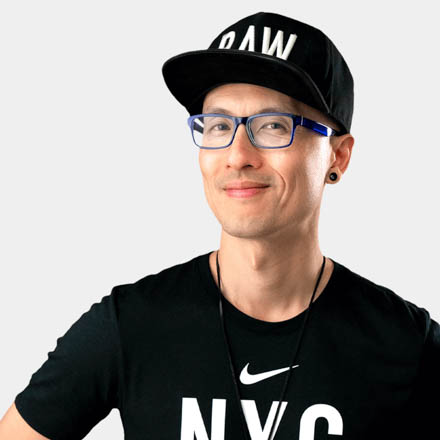
Chris Do
Founder, The Futur™ · March 5, 2025
The Audacity of Youth
It was audacious. A 15-year-old kid walking up to titans of the bodybuilding world, men like Ronnie Coleman and Jay Cutler, and delivering a pitch as brazen as it was simple. “I love your [stuff],” Chris Do paraphrases, summarizing the approach. “I'm a huge fan. I don't think your videos are very good and I think I can make a better one.”
This was the opening move for Caleb Ralston, long before he became the architect behind some of the most formidable content engines in business. With the unshakeable confidence that only youth and ignorance can provide, he made an offer these legends couldn’t easily refuse. “Can I vlog you backstage here? I'll make an edit, send it to you, and if you like it, maybe we can work together.”
That one move contains a masterclass in getting noticed. It was not a plea for a job. It was a demonstration of value, delivered directly and with no upfront risk to the client. This approach became a recurring theme in a career defined by proximity to power and an uncanny ability to be in the right room at the right time.
Ralston’s journey didn’t begin in a film school or a marketing program. It began in a church, where he was interning alongside Sean Cannell, now of Think Media fame. Cannell handed him a book that would change his trajectory: Gary Vaynerchuk’s Crush It!. Ralston says it was the only book he read cover-to-cover in high school. “I don't think I stopped reading the moment that I opened it,” he recalls. The message was clear: you could build a business online around your passions.
His passion was powerlifting, a world he knew intimately. His father was a bodybuilder, so the culture of gyms and backstage competitions was his normal. “I grew up like I remember I have this very vivid memory I was like seven years old and being backstage at a show,” Ralston says. He saw a gap. Fitness content was in its infancy, and frankly, “all the training videos kind of sucked.”
So he started filming. This wasn’t a casual hobby. His parents, in a move Do notes is culturally rare, actively supported his entrepreneurial drive. When he proposed dropping out of high school, they negotiated a homeschooling arrangement that allowed him to “work my face off.” They fronted him the money for a camera and computer, an investment he was to pay back. This wasn’t just permission; it was a real-world lesson in venture capital and accountability.
The bodybuilding world became his training ground. The gigs, while not lucrative, were validating. A $200 video for a 15-year-old living at home felt like a fortune. More importantly, it was proof of concept. The audacity worked.
This early run taught him a critical lesson about freelancing. “Freelancing is brutal,” he admits. The feast-or-famine cycle pushed him toward the stability of a full-time job at Logos Bible Software, where he honed his editing skills on documentaries and original content. But the entrepreneurial fire lit by Crush It! was only dormant.
Inside the School of Vaynerchuk
The call came via a friend’s text: a screenshot of Gary Vaynerchuk’s Instagram story. He was looking for creators. Ralston reached out to David Rock, better known as DRock, Vaynerchuk’s legendary personal videographer. After a sequence of follow-ups and sending video examples, he landed an interview and two offers: a role at VaynerTalent or one at PureWow, a women’s lifestyle publisher.
He chose the unexpected path. “I thought that was super interesting that's like the exact opposite of who I am and what my experience was,” Ralston explains. He was drawn to the challenge of a female-dominated organization targeting an audience he didn't belong to. After nine months, Vaynerchuk himself pulled Ralston onto his personal team. What followed was a trial by fire.
“Chris, the most insane time of my life,” Ralston says. “Day three I was told the night before, hey you need to purchase a flight… to go to London for 24 hours and you'll fly right back.”
Working as Vaynerchuk’s videographer was far more than pointing a camera. It was a masterclass in extreme multitasking and operational support. The philosophy was not about creating pristine, cinematic footage. It was about capturing the moment, no matter the cost to technical quality. This is the core of Vaynerchuk's content strategy: documentation over production.
Ralston paints a picture of controlled chaos. “The amount of times that I'm filming Gary and I'm like, this is so embarrassing that we're going to put this footage out… but what people don't realize is the reason why it's so shaky is because we're on the other end.”
The role of videographer was a trojan horse for a dozen other responsibilities. These were the ancillary skills essential for survival on Team Gary.
- Logistics Manager: “I would wheel his suitcase when somebody would come up to him and give them a gift at the airport.”
- Personal Assistant: “I would then hold that while I'm filming. I would also hold his latte and his croissant in the morning.”
- Communications Hub: “I would also be texting on my phone with the admins talking about, okay, we're walking to the event, he's going on stage at 30 minutes, he has a call in 5 minutes.”
- Executive liaison: “I remember there was one time where Gary was running late to a meeting with the CEO of AT&T Global and I had to go into the room and speak to him to stall basically.”
- Unofficial Security: “I always also thought of myself as like an unofficial bodyguard… I was always kind of cognizant of his safety too.”
It was a job that required all of him. Ralston, a formidable 6'7", would sometimes operate the camera with one hand, prop it on his elbow, while his other hand held luggage and a coffee. The priority was never the perfect shot. It was ensuring the engine kept running and that every valuable interaction, every impromptu Q&A, was captured.
The Real-Time Content Machine
The grueling days didn't end when the camera stopped rolling. The post-production process was just as intense, driven by a powerful strategic insight. “We would film all day… go back to the hotel, not only ingest, start cutting clips so you literally post [it] the next day,” Ralston says.
This wasn't just about speed for speed's sake. It was a real-time content loop. Vaynerchuk wasn’t just guessing what his audience wanted. He was actively listening. “He was consuming all the comments, the DMs, the tweets, everything. So he actually knew what people were thinking and wondering at that moment,” Ralston reveals. “He'd see five DMs about the same thing and be like, that means that there's a lot of people that need this. I'm going to hit on this right away, let's get it out tomorrow.”
This methodology explains the uncanny relevance of his content during his peak. It felt like he was reading minds because, in a very real sense, he was. He was using social media as the world's largest, real-time focus group and deploying his content team to serve the demand immediately. This is a strategy many attempt but few can execute with such discipline, a point central to understanding how to build content people react to.
Ralston confirms that the on-camera persona is authentic. Vaynerchuk is just as fast, just as high-energy, and just as intuitive in person. In many ways, Ralston argues, he’s even better. “He's way better off camera than on camera,” he states, citing a deep-seated business acumen and human decency that were often deliberately kept private.
“We would always push more of the business content, please put out more of the business content, and he always would say no,” Ralston explains. “He likes being underrated.” This desire to maintain The Underdog Chip is a key psychological driver. He filmed Vaynerchuk in boardrooms, breaking down billion-dollar strategies for Fortune 100 companies that would lead to viral Super Bowl ads, yet that footage rarely saw the light of day. Like a masterful poker player, Vaynerchuk preferred not to show his best cards to the public table.
“I think there's a lot of value to it,” Do observes, referencing Sun Tzu’s philosophy: “Appear strong when you are weak, appear weak when you are strong.”
The Changing of the Guard
But the digital landscape is not static. What works in one era may not dominate the next. Do poses a critical question: why has Vaynerchuk’s visibility on many social feeds seemingly declined in recent years, while others have risen to prominence?
Ralston suggests it's a matter of focus. Vaynerchuk is not just a content creator; he's the CEO of VaynerMedia, a global agency with thousands of employees, and the visionary behind VeeFriends, a massive IP universe. “I think that there's just been a shift in focus,” Ralston posits. “His attention has gone more so towards VaynerMedia and VeeFriends than the GaryVee brand in this season.”
There is also a platform-specific challenge. The raw, docu-style format of DailyVee, which was novel and groundbreaking, became harder to package for a YouTube algorithm that increasingly favors tightly themed, single-topic videos. “If you have 10 different things that occur, how do you package that in a way that YouTube prefers?” Ralston asks. The answer is, you often can't.
Do offers a complementary theory. As Vaynerchuk’s content evolved, a new player entered the arena to fill the void. “Whereas Gary was giving what I one of my criticisms… very rudimentary stuff which is good for broad audience, in comes this new guy… Alex Hormozi… and really gives high-level, really good business stuff that's highly actionable.”
The market, Do argues, can only sustain so many dominant players in one category at a time. “The universe can only have so many players in one category and so now Alex is just crushing and destroying.” This is a core concept for anyone trying to build a personal brand that stands out; you must find your unoccupied space.
Ralston refines this idea, suggesting it’s less about a direct replacement and more about a natural progression. He calls it the tactics-to-mindset evolution. Most creators, he argues, begin with tactical advice to build credibility. Vaynerchuk’s early content was far more tactical. Over time, as creators interact with thousands of people, they realize the ultimate bottleneck isn’t a lack of tactics, but a lack of belief.
“The tactics are very important, but if the individual doesn't have the correct mindset, they will never actually put those tactics into place,” Ralston says. “Gary occupied this space and then moved to a different space, and Alex came in and thunderously took over that space.” He predicts Hormozi’s content may follow a similar arc over the next decade, gradually incorporating more mindset as his audience matures.
Building the Acquisition.com Engine
In a twist of serendipity, Ralston became the person to help build that thunderous machine. After a stint at Constellation Brands following Vaynerchuk’s sale of Empathy Wines, Ralston moved to Las Vegas. A mutual friend, Ed Turny, connected him with Alex and Leila Hormozi, who were looking for their own “DRock.”
The initial conversation quickly escalated. “Our conversation immediately went from being let's bring you on as our DRock to like, no, we need to build a team,” Ralston explains. The Hormozis understood the investment required. They had the vision, and they were willing to commit the time, effort, and capital to build an in-house media empire from the ground up.
Ralston, who had never built a team from scratch, was nervous. But Leila Hormozi saw the potential. “I remember she was like, you have all the right character traits, you have all the hard skills, I can train you on how to do the team [stuff],” he recalls. This marked a pivotal shift in his career: the move from doer to empowerer.
His first task was to understand the existing system, which relied entirely on external vendors. From there, he began the systematic process of bringing all content functions in-house, scaling the team from zero to 18 people. This process of building an internal agency is a playbook for any entrepreneur looking to scale beyond themselves.
The transition was profound. “I was scared, but Chris, that's the most fulfilling thing I've ever done with my life,” he admits. “I realized I enjoy helping editors grow in their craft more than I enjoyed editing. And I thought when I was an editor, I was like, this is peak happiness… I realized I love this even more.” He had discovered the leverage of leadership.
The Art of the Graceful Exit
The relationship with the Hormozis blossomed into something deeper than a typical employer-employee dynamic. Ralston became family, spending holidays with them and feeling fully committed to their incredible mission. That’s why his eventual departure seemed surprising to many outsiders.
It wasn't a single event but a gradual realization. As the Acquisition.com brand exploded, so did Ralston’s own profile. “The opportunities were getting too crazy,” he says. Brands he had admired his entire life were reaching out. The pull to build something of his own, a dream he’d held since he was a kid, became too strong to ignore.
“I would regret in 5 to 10 years if I were to look back and be like, I wonder what would have happened if I would have tried this idea of going out on my own,” he explains.
His departure is a lesson in professional maturity and strategic foresight. It wasn't an abrupt decision. It was a sequence of open conversations with Alex and Leila. Crucially, he had been building the team for this eventuality all along. This is the concept of a graceful exit infrastructure.
“We were building everything for this to be able to happen,” Ralston says. He had hired and trained creative directors to run the individual teams for Alex and Leila. He had a successor in Michael G. Lynn, a “total beast” from the MrBeast ecosystem, ready to take the helm. The system was built to outlast any single individual, including its architect.
Ralston understood a fundamental truth about high-stakes performance: “I think the moment that [you have] one foot in, one foot out, you got to jump. Because all of a sudden your focus is no longer the same.” He owed it to his team and to the Hormozis to leave before his focus drifted.
Now, Ralston is on his own path, taking the lessons learned from inside two of the world's most effective content machines and applying them to his own venture. He is testing his own chops, documenting his own story. The 15-year-old kid who bluffed his way into the world of legends has become the entrepreneur proving his own value, turning years of observation into a life of action.
His journey is a testament to a simple idea. You don't need permission. You need a camera, a deep understanding of a niche, and the audacity to make an offer no one can ignore.
TRANSCRIPT
Enjoyed this? There’s more where it came from.
Get insights on creativity, business, and design from The Futur.
You can unsubscribe anytime. By submitting, you agree to receive communications and to our Privacy Policy.
“Love what you do, what you do sucks, I think I can help.”
— Chris Do
Key Takeaways
Subscribe
Details
- Length
- 1h 21m
- Views
- 26,917
- Topic
- CONTENT CREATION