How To Build an Uncompromising Creative Vision (Killspencer) full edit
Chris Do and Killspencer founder Spencer Nikosey break down what it takes to build a creative business without compromise.
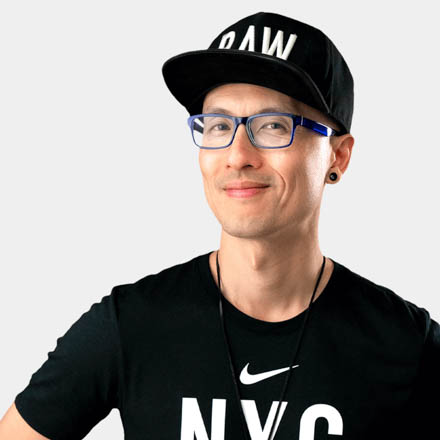
Chris Do
Founder, The Futur™ · January 13, 2024
The Price of Purity
Waking up to new orders can feel like Christmas morning every day. For many designers and makers, that feeling represents the ultimate dream: to build a company that is entirely your own, to control its every move, and to dictate your own terms. It is the dream of pure creative expression, unfettered by committee or compromise.
But this purity comes at a price. In a conversation with Chris Do, founder and CEO of Killspencer, Spencer Nikosey, makes it clear that while the reward is priceless, the cost is very real. His entire business is built on an idea many would call unsustainable or inefficient.
He rejects the standard playbook of outsourcing and scale. Instead, he has built his own factory in Los Angeles, where he oversees the a to z of production, from sourcing materials to shipping the final product. “If I was making these products in Asia,” Nikosey states, “I would be a salesperson just selling bags. I don't want to do that. I want to be able to make whatever I want whenever I want.”
This is not a story about chasing unicorns or finding shortcuts. This is a story about the deliberate, disciplined, and often difficult path of building an uncompromising creative vision. It’s a masterclass in what it truly means to prioritize craft over commerce, and how that very choice can become the ultimate commercial advantage.
The Making of a Maker
Spencer Nikosey’s path was, in many ways, forged before he was born. He grew up in a uniquely creative household in Bell Canyon, California, a quiet equestrian community in the mountains outside Los Angeles. “Both of my parents are designers,” he explains.
His father is Tom Nikosey, a legendary lettering artist and graphic designer known for his meticulous hand-painted and airbrushed logos. His work graced iconic album covers for artists like The Commodores and Diana Ross. His mother was an art director at Motown and Elektra Records, where she eventually hired his father for a project, sparking a lifelong partnership.
From a young age, Nikosey was immersed in a world of typography, art shows, and creative discipline. He remembers sitting at a small drafting table set up next to his father’s, learning to draw as his dad worked. “He was just like a teacher,” Nikosey recalls, constantly pushing him to get better.
But the artistic influence was balanced by a deep-seated curiosity for science, inherited from his grandfather: Don Herbert, the iconic television personality better known as Mr. Wizard. For decades, first on NBC’s Watch Mr. Wizard in the 1950s and 60s, and later on Nickelodeon's Mr. Wizard's World in the 80s, Herbert taught science to millions of kids. This foundation gave Nikosey a unique lens. “I had this like kind of Science Foundation and the science base plus the art graphic design from my parents.”
This potent combination of influences—art, music, sport, and science—became the bedrock of his creative identity. He was not just encouraged to be creative; he was given the tools and the mindset to execute.
By age 13, he designed his first logo for a restaurant. In high school, he created the entire visual identity for his band, from the album art and posters to the logo on the t-shirts, which he and his father screen-printed in their garage. “We made really cool packaging of how we like wrapped the t-shirts up and taped it up and like hand signed each shirt and stuff,” he says. “It was so cool.”
This wasn't just play. It was the early formation of a holistic approach to creation, where the product, the brand, and the experience were all part of a single, unified vision.
From Backyard Invention to a New Path
For Nikosey, an idea was never just an idea. It was a problem waiting for a physical solution. This inventive spirit manifested long before he considered a career in design.
As a kid who loved to skateboard, he encountered a common problem: how to maintain control when jumping off stairs. His solution was something he called a “Bind-board.” He took binding tape and screwed it directly onto his skateboard deck, creating makeshift straps like a snowboard. “It was really dangerous because, you know, if you fell you kind of are stuck to the board,” he admits. But it worked. He and his friend even did a photoshoot and created a logo for their new brand, De-Boards.
In that moment, he realized a fundamental truth: “I like created something that I needed that didn't exist and I built it and it provided like a lot of fun for me and my friends.” It was a glimpse of the power of turning imagination into tangible objects.
This pattern continued. After high school, he enrolled at the California College of the Arts and Crafts (now known as California College of the Arts) to study graphic design. While commuting between the Oakland and San Francisco campuses, he faced a new challenge: navigating steep hills on his skateboard. “I was like, I need a brake for my skateboard. I need to build that.”
He went to the school’s model shop, taught himself to weld and form metal, sourced a heavy-duty spring, and built a functional brake pedal for his board. The experience was a revelation. “I was like, wow, I really like graphic design, but I think product design is like more of like my speed.”
It was a pivot point. He realized that product design was the perfect synthesis of his disparate interests: it combined the art and design of his parents with the science and problem-solving of his grandfather. At his father’s suggestion, he took a summer class at the prestigious ArtCenter College of Design in Pasadena and knew immediately he had found his place. “I transferred to ArtCenter and that's where everything changed for me,” he says. “I became like addicted to the idea of product design.”
An Athletic Approach to Design
At ArtCenter, Nikosey channeled his energy with a focus that he describes with a specific and powerful metaphor: an athletic approach to design. This concept became the engine of his creative output, transforming raw talent into masterful skill.
“The people who are like the most dedicated to like iteration and the most dedicated to like building something and making it better and better and better are people who are like athletes,” he explains. For him, the path to becoming a pro in design is identical to the path of becoming a pro in sports. It is not about divine inspiration. It is about discipline and work.
This philosophy breaks down into a few core principles:
- Practice and Repetition. Just as a tennis player must hit thousands of forehands to achieve control, a designer must put in the reps. “The only way to get good at something is through practice,” Nikosey states.
- Micro-Adjustments. Excellence is found in the small details. It’s about learning to make tiny, almost imperceptible changes to gain greater control and achieve a better outcome.
- Mileage. He credits one of his ArtCenter teachers, the renowned artist and author Scott Robertson of Design Studio Press, with introducing him to the concept of “mileage.” As Robertson taught, “if you want to become good at drawing you have to draw a lot... the more miles you have the better you're going to be.”
- The Discipline to Start. The athletic approach removes the pressure of waiting for motivation. It reframes the work as daily practice. “If you approach every day from like a place of practice then it's kind of fun,” Nikosey says. “It’ll get done and it’ll be great. You have to just start.”
This mindset explains his intense work ethic. He graduated at the top of his class, earned ninth-term honors, and won the Young Innovator Award. He wasn’t just going to school; he was training. The principles of dedication and constant improvement he learned from sports became the framework for his creative career, a lesson he explores in depth, similar to the business-building principles discussed in how to buy back your time and build equity.
His approach is a direct challenge to the myth of the mercurial artist. It posits that creativity is a muscle, and greatness is a result of the sheer volume of time and effort invested. The magic appears not by waiting, but by working.
A Mentor's Challenge
During his time at ArtCenter, a class trip to the American Military Museum sparked the idea that would define his career. There, he saw a truck tarp on a Humvee and was captivated by its rugged, indestructible quality. “I was like, oh, I love that material. It's so cool. I want to make something out of that.”
Through a mix of charm and persistence, he convinced the museum curator to sell him a tarp. He took it home, hosed it down, and began cutting it up. He saw its potential for a backpack or duffel bag, with the scars and markings of its history adding a unique character. This repurposed material became the foundation for his Historical Reserve collection, a core part of the Killspencer brand.
He had the material and the vision, but he didn't know how to execute it. A teacher connected him with Bobby Chang, a fellow ArtCenter alumnus who had co-founded Incase, the bag and case company that grew alongside Apple. Nikosey got Chang on the phone, explained his ambition, and asked for guidance.
Chang’s advice was blunt and transformative. “Okay, buy a sewing machine and figure it out,” he said. When Nikosey protested that he was a designer, not a sewer, Chang explained the value of mastering the entire process. “He’s like, you know, if you if you buy a sewing machine then you'll be able to do every part of the process... you'll know how to prototype stuff.”
This was the moment that set him on a different path from almost every other industrial designer. He bought a $1,200 industrial sewing machine, opened the manual, and taught himself to sew. Two hours later, he had made his first bag. “I had a factory in my living room,” he says. “And I was like, wow, this is so cool.”
He wore the bag to school, and the reaction was immediate: “What is that? Where can I get that?”
Impressed by his initiative, Chang became his unofficial coach. They had weekly hour-long calls where Nikosey absorbed everything he could about building a company. This relationship highlights the power of a mentor, a guide who can offer not just advice, but the kind of tough love that forces growth. It is a critical element for any entrepreneur, as explored in discussions on developing a winning brand strategy.
Eventually, Chang invited him on a development trip to China. For a week, Nikosey witnessed a manufacturing operation at a colossal scale, with factories producing 25,000 bags a day. The experience was invaluable, but it led to a surprising conclusion. At the end of the trip, overlooking a valley, he told Chang, “I don't ever want to come back here again. Like, I want to build my own factory in LA.”
From an Angel Investor to an LA Factory
Bobby Chang’s response was unexpected. He told Nikosey, “Okay, if you set it up, I'll fund you.”
Nikosey had never asked for money or even a free product. He had simply shown up, done the work, and demonstrated his commitment. Chang saw a reflection of his own passion and decided to invest. Back in Los Angeles, Nikosey created a keynote presentation outlining his vision. Chang cut him a check.
“I showed it to my parents and they're like, what the what the hell are you doing? Like you're never going to be able to pay that back,” he remembers. But the investment was more than just money; it was a vote of confidence that gave him the power to build his dream.
With that capital, he launched Killspencer with his own factory in the Arts District of downtown LA. He hired his first master craftsman, Mauricio, who is still with the company today. He bought cutting tables, machines, and shelving. He built a website and shot product photography at the military museum where it all began.
He launched his first capsule collection while still a student at ArtCenter. It included a Weekender bag, a Special Ops Backpack, and a track bike messenger bag, offered in his historical reserve military fabrics and a few technical materials. The brand’s ethos was clear from day one: clean, minimal, functional, and devoid of overt logos and graphics.
The response was explosive. The brand was picked up by major publications like the LA Times, Playboy, and Men's Journal. “We started selling product every single day,” Nikosey says. “Every single morning I'd wake up and see orders would be coming in and it would be like Christmas every single day.”
He paid Bobby Chang back in full within five months. Chang took no equity in the company. He was simply a mentor who gave a promising young designer the push he needed. This approach of Made-in-LA manufacturing became the cornerstone of the brand, a stark contrast to the industry’s default of overseas production. For Nikosey, owning the means of production was not about patriotism; it was about control, creativity, and the ability to iterate instantly.
The Killspencer Ethos
Today, Killspencer operates out of a 6,500-square-foot facility in Atwater Village. It is part factory, part R&D lab, and part creative playground, complete with a recording studio and an indoor basketball court. The space is a physical manifestation of Nikosey’s philosophy.
The brand specializes in leather goods and bags, all made slowly and carefully in-house. They source buckles from Austria, zippers from Switzerland, and hardware from military suppliers. The aesthetic is utilitarian minimalism, but the construction is artisanal.
What truly sets Killspencer apart is its fanatical dedication to research and development. “For me, R&D is like is everything,” Nikosey says. The factory is not just for production; it’s a place to experiment, to learn, and to perfect. “You never know how to do something until you do it, and then once you learn how to do it once, you're like, oh, I can make it different.”
This relentless pursuit of perfection means that products are never truly finished. They are in a constant state of refinement. Yet, for many items, a point of near-perfection is reached. “Our Utility Special Ops Backpack, for example, that thing is so incredible... it's perfect right now,” he states. “I don't need to do anything else to it.”
Because they make everything themselves, they can stand behind their products with an unparalleled guarantee. If a zipper breaks, a customer can send the bag back, and the team will take it apart, replace the zipper, and ship it back. This is not just customer service; it is a reflection of a commitment to durability and longevity in a world of disposable goods. This kind of brand integrity is a core tenet of building an authentic brand, a topic explored further in Ditch Networking, Build An Authentic Personal Brand Instead.
It is a business built on the long game. The products are expensive, but as Nikosey argues, they are a value. “Because we're like almost like factory-direct, we're able to price our stuff and make it, you know, you get more bang for your buck by shopping with us than you do with any other company.”
This is the core of his uncompromising creative vision. It’s an obsessive, all-encompassing drive to make the best possible thing, no matter the cost or effort. “I'll go to the nth degree to find figure out how to make something or to make something great,” he says. “Even if it kills me.”
The Priceless Reward
Chris Do pushes on the central tension: the trade-offs required to maintain such purity. The higher costs of labor in Los Angeles, the lower production volume, the sacrificed scale. What is the dark side?
Nikosey’s answer reframes the entire equation. “I think if you do something you love, the money will come,” he says. “And if you do something right, the money will come. And if you compromise, then why are you even doing it in the first place?”
The true value is not measured in profit margins or market share. It is measured in freedom. The freedom to walk into his factory at any moment and say, “Hey, let's change this. Let's double stitch this here, triple stitch this here.” They can do it in real-time. That power, he argues, is priceless.
He is not a salesperson managing logistics from a distance. He is a maker with his hands in every part of the process. This capability allows him to dream bigger. If he wants to make shoes, he can. If he wants to design and build the entire interior of a custom Porsche, he can. “I know that we could do that right now,” he states with confidence. “And the power of that is is worth more than money.”
This is the ultimate payoff for playing the long game. By refusing to compromise, he has built not just a company, but a platform for unlimited creation. He has traded the potential for exponential scale for the reality of absolute control and infinite possibility.
It's a model that challenges the very definition of success in modern business. It suggests that the greatest return on investment isn't always financial. Sometimes, it’s the simple, profound ability to bring your ideas to life, exactly as you envision them, with no one to answer to but yourself.
TRANSCRIPT
Enjoyed this? There’s more where it came from.
Get insights on creativity, business, and design from The Futur.
You can unsubscribe anytime. By submitting, you agree to receive communications and to our Privacy Policy.
“If you do something you love, the money will come.”
— Chris Do
Key Takeaways
Subscribe
Details
- Length
- 1h 1m
- Views
- 17,177
- Topic
- ENTREPRENEURSHIP