How To Amplify Your Influence 2023 w/ Rene Rodriguez (full edit)
Chris Do and Rene Rodriguez reveal the science of influence, teaching you how to get your ideas heard and acted upon.
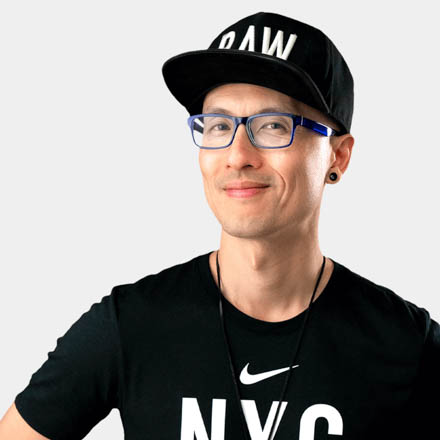
Chris Do
Founder, The Futur™ · October 17, 2023
The Inconvenient Truth About Great Ideas
Some ideas change the world. Most disappear without a trace. The difference is rarely the quality of the idea itself.
The marketplace of ideas is not a meritocracy. Behavioral scientist and author Rene Rodriguez argues a more cynical force is at play. “There are a lot of really mediocre ideas in the hands of people who know the influence game,” he states. “Man, that doesn't feel good.”
This is the central frustration for countless creators, entrepreneurs, and leaders. They have brilliant concepts, powerful stories, and meaningful solutions, yet they remain unheard. Meanwhile, louder, flashier, and often less substantive voices capture the attention of the masses.
In a conversation with Chris Do, Rodriguez deconstructs this dynamic, offering a new framework for understanding what it truly means to be influential. It’s not about becoming an attention-seeking megalomaniac. It’s about equipping good people with the tools to ensure the best ideas win.
Rodriguez, with a background in behavioral neuroscience, has spent nearly three decades asking one question: “So what the hell does that mean to X?” He translates dense scientific research into practical applications for persuasion, leadership, and change. His work is not about abstract theory but about real-world impact.
He wants to level the playing field. His passion isn’t for the rich and famous, who already understand the game. “My real passion is is those people that are quieter,” he explains. “They're good-hearted people, but man, they just they were never taught.”
The Weight of Insignificance
To understand influence, Rodriguez suggests first examining its opposite: the feeling of insignificance.
It’s a universally understood, yet rarely discussed, human experience. “You walk into a room and no one notices you,” he paints the picture. “You tell a joke and no one laughs. You share an idea, no one seems to care. You sell a product, no one's buying. You cast a vision and no one follows. That's a really tough place to be in life.”
The words people use to describe this state are telling: invisible, defeated, deflated, sad. Rodriguez argues they all point to one crushing feeling: insignificance.
This feeling has profound consequences.
- If you feel insignificant in a meeting, you start to question why you’re even there.
- If you feel insignificant in a relationship, you begin to doubt its foundation.
- If you feel insignificant at work, you join the “Great Resignation,” searching for a place that offers meaning and connection.
At its extreme, a persistent feeling of insignificance in life can be one of the most debilitating human experiences. “The lack of being a cause to any effect in the world is one of the worst of human experiences,” Rodriguez contends. It’s a direct assault on our sense of purpose.
Now, flip the equation. Imagine walking into a room where people notice you. Your jokes land. Your ideas are celebrated. Your products sell. Your vision mobilizes people to action. The feeling is no longer defeat; it is joy and significance. You matter. You have a purpose.
This is the core of influence. It is not about vanity or ego. It is about confirming your purpose and marking your impact on the world. It is the vehicle through which your ideas are heard, valued, and ultimately, acted upon.
This is not a mission reserved for extroverts. As Chris Do notes, many people, himself included, feel uncomfortable with excessive attention. Rodriguez, a self-proclaimed introvert who spoke 239 days one year, clarifies the distinction. Influence isn't about wanting attention; it's about commanding it when it matters. It's a deep human function, not a social media performance. This is a crucial difference most people miss, and it’s why many shy away from what they perceive as a game for attention seekers. The truth is that developing influence is a skill available to everyone, as it is a core component of what successful personal brands do differently.
The Teacher vs. The Pitchman
Once you accept the need for influence, the question becomes how to build it. Here, two distinct philosophies emerge: the pitchman and the teacher.
The pitchman operates on a transactional model. They follow a playbook, masterfully building emotional desire by explaining the “what” and the “why” but withholding the “how.” They create hunger and then sell the solution. This model, often seen at large-scale events, is highly effective for short-term revenue. “It's a great business model,” Rodriguez admits, adding he’s made more money using it than from his substantial $35,000 speaker fee. “But it doesn't feel good.”
The teacher operates on a relational model. They share openly, giving away the “how” without expectation of immediate return. Their joy comes from empowering others. Both Do and Rodriguez identify with this approach. “My joy comes from sharing with others fully, openly, without any expectations,” says Do.
This is not naive altruism. It’s a different strategy with a different timeline. The pitchman plays a game measured in quarters. The teacher plays a game measured in decades.
This long-term approach builds what Do calls karmic equity. By consistently giving value, you build a deep reservoir of gratitude and trust within your community. When the time comes to make an ask, that community is ready and willing to reciprocate. Rodriguez experienced this when launching his book, Amplify Your Influence. After two decades of serving his audience, people were clamoring to support him. “They were just calling say, ‘How many can I buy? What do you need me to buy?’” he recalls. This groundswell of support propelled his book to the Wall Street Journal bestseller list.
Do shared a powerful story illustrating this principle. After a talk, a woman approached him, confessing, “You have done for me more than this school has.” The school’s tuition was over $160,000. Do had provided his value for free. Later that day, he received a notification. The same woman, unprompted, had sent him $2,000 via Venmo. It wasn't a transaction. It was an expression of pure gratitude.
“I bet you that $2,000 felt like 200,000,” Rodriguez responded. It’s validation that the long game works. This is the difference between building a customer list and fostering a true community. The former responds to funnels; the latter responds to heart.
The Hidden Cost of 'Free'
The path of the teacher is noble, but it is not without its own perils. There is a tendency to romanticize the idea of giving everything away, but as Rodriguez learned, nothing is truly free. Someone always pays the price.
For years, he operated on the belief that giving away free work would eventually pay off. “I did so much free work for years and years and years,” he says. While it built relationships, it came at a significant, unseen cost. “There was somebody paying for it the whole time. It was my family.”
This was a sobering realization. “I'm borrowing from my family to pay for other people's education,” he reflects. “And then that hit me really hard.”
This is the moment of maturity every purpose-driven entrepreneur must face. Generosity must be balanced with sustainability. You cannot serve anyone if you burn yourself out or bankrupt your family. It forced a critical shift in his thinking. “There's a piece of the give, give, and give for sure,” he acknowledges, “but there's also a ‘Rene, grow up and learn how to run a business.’”
This isn’t a retreat from his core values. It’s an evolution. He sought to create a business model that could honor both integrity and profitability. The challenge was to deliver immense value in his free offerings while still illustrating the endless journey of content available in his paid programs. It’s about creating a business that is both harmonious and profitable, a challenge many face when they try to scale from a freelancer to a full agency.
The goal, he realized, is not a perfectly balanced life. That’s a myth sold by those who have already achieved wealth through periods of intense imbalance. He asked thousands of people if they achieved something great while their life was balanced. All hands go down. The true aim is not balance, but integration and harmony. It’s about creating a system where your work, family, and values can coexist without one constantly draining the others.
The Science of Learning Under Pressure
Rodriguez’s unique coaching style, which can appear harsh in short clips, is rooted in a deep understanding of neuroscience. He creates high-stress environments for a specific, scientific reason.
He explains that our brains learn in two fundamentally different ways, depending on the subject matter. He identifies these as biologically primary and biologically secondary learning.
Biologically secondary activities are things we learn for societal success but are not essential for survival. Think of algebra, reading, or writing. We can learn these effectively through traditional methods:
- Theories, axioms, and formulas.
- Guidance from a teacher.
- Reading a book and taking a test.
However, this method fails completely when it comes to biologically primary activities. These are the skills hardwired into our DNA for survival: reading facial expressions, fighting, connecting with others, and managing our emotional state under threat. You cannot learn to box by reading a pamphlet. You cannot prepare for battle in a simulator alone.
“You can pass the test on how to throw a jab, cross, right hook,” Rodriguez says, “but now I get in a ring and all of a sudden I got my butt kicked because I'd never seen a punch come at me.”
The skills he teaches, like commanding a stage, having presence, and communicating under the pressure of a high-stakes client meeting, are all biologically primary. They involve managing a physiological stress response that shuts down the parts of the brain needed for performance. Teaching these skills in a comfortable, sterile classroom is not just ineffective; it’s negligent.
Research shows that when primary skills are taught using secondary methods, only 15% of people retain the knowledge in a usable fashion. The key difference in that 15% was a preexisting condition of stress. They *had* to learn, or they would lose their job or their marriage.
Stress is the catalyst. “We have to train to the level that we're expected to perform in the environment we're expected to perform in,” he states. This is why his workshops are not gentle. Anyone who watches these sessions will find a raw and often uncomfortable environment, which is necessary for effective advanced communication tactics to take hold.
Training Under Live Fire
Rodriguez’s workshops are a laboratory for high-stakes performance. He doesn't just talk about pressure; he manufactures it. Participants opt-in to this intense process, giving him permission to interrupt, challenge, and push them past their comfort zones.
He rates every attempt on a simple binary scale: zero or one. A zero means the message didn't land; the speaker is moving away from influence. A one means it connected. The process is brutal and immediate.
He will bring someone on stage and ask them three simple questions: “Who are you? What do you do? What makes you unique?”
The typical response is a hesitant, filler-word-laden disaster. “Uh, um, uh, my name is John and I'm a uh, social media uh, consultant… and uh, what makes me unique is I really care about my clients.”
Without hesitation, Rodriguez stops the exercise. “Audience, was that a one or a zero?” When the polite crowd says one, he calls them out. “You guys are liars. That was a zero. And that's okay.”
The goal isn’t to shame but to reveal. Instead of giving them a new script, he digs for the source. “You say you care about people. Why?” This question forces the speaker out of their head and into their heart. As the speaker, “John,” tells a raw, emotional story about his mother’s kindness, his entire physiology changes. His delivery becomes authentic, natural, and believable. He connects to his story, and in doing so, he connects to the audience.
This is what it means to connect to your heart. It’s not a vague platitude. It’s a specific process of accessing core memories and emotions that fuel authentic communication. This is a topic further explored in how words shape your reality.
For his most advanced students, the training becomes even more extreme. He has thrown bags of candy across a table and poured water on a speaker's head, whispering, “Figure it out.” The point is to train the nervous system to remain calm and resourceful when the unexpected happens, whether it’s a heckler in the audience or a complete tech failure on stage.
This is the same principle that forges elite performers in other fields. Comedians don’t workshop their material in sold-out arenas. They bomb in front of belligerent, 12-person crowds in open-mic nights, callusing their skin and building the muscle for real-time problem-solving.
Wrapping Vitamins in Gummy Bears
Having the skill to influence is one thing. Getting that message to a broad audience in a distracted world is another challenge entirely. This is where strategy must meet substance.
Working with social media expert Mo Ishmael, Rodriguez analyzed his content to understand why certain videos reached millions while others, containing what he considered his best wisdom, fell flat.
The pattern was clear. Audiences crave transformation, not just information.
- Videos that went viral: Clips of him coaching people live, showing a clear before-and-after transformation. The raw, emotional tension of these sessions created a powerful narrative hook.
- Videos that flopped: Clips of him sitting and delivering profound wisdom directly to the camera. His favorite content was his audience’s least favorite.
“The ones that I hate are the ones that go viral,” he laments, a sentiment many expert creators share. The public doesn’t always value what the expert values. The key is to find a way to deliver what they need in a package they want.
Do offers a powerful metaphor for this concept. Your deep knowledge, your frameworks, and your wisdom are like vitamins. They are essential but often unpleasant to consume. No one wants to swallow a chalky pill. To get people to take them, you have to put them in a gel cap or, better yet, turn them into Flintstone gummy bears. You must wrap your nutrients in good-tasting content.
This can mean using a topical hook or “newsjacking” to make your timeless wisdom relevant to a current conversation. Rodriguez did this unintentionally in a video that went viral. He started a talk by saying, “I wasn't a Kobe Bryant fan until he passed away.” People lost their minds, and the emotional response drove millions of views. The content that followed was his core message, but the Kobe reference was the gummy bear that got people to consume it.
This isn’t about being inauthentic or chasing controversy for its own sake. The audience is smart enough to see through that. It's about understanding the environment. Rodriguez admits he was initially bitter about this shift to what he called a “simple sugar, fast food environment.” But he realized he had a choice: complain about the world or learn to operate within it. He had to learn how to wrap his nutrients. For anyone trying to grow their audience, it’s a vital lesson: stop trying to go viral and do this instead.
The path to amplifying your influence is a journey of integrating profound truths. You must have a great idea, but you must also learn to package it. You must be willing to give generously, but you must also build a sustainable business. You must have command of your material, but you must also train to deliver it under fire.
It’s about playing the long game with skill, integrity, and a deep understanding of human nature. You don’t have to be the loudest voice in the room, but you must learn how to be the one that’s heard.
TRANSCRIPT
Enjoyed this? There’s more where it came from.
Get insights on creativity, business, and design from The Futur.
You can unsubscribe anytime. By submitting, you agree to receive communications and to our Privacy Policy.
“There are a lot of really mediocre ideas in the hands of people who know the influence game.”
— Chris Do
Key Takeaways
Subscribe
Details
- Length
- 1h 7m
- Views
- 11,015
- Topic
- COMMUNICATION