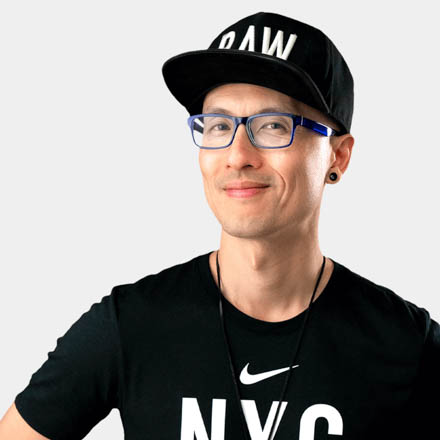
Hey guys, Chris here. I had the opportunity to sit down with Simon Squibb. He does something phenomenal.
And like many of you, I wonder how he's able to make this work and how it can be long-term sustainable. What he does is quite incredible. He asks people what's their dream and he actually helps them.
He gives them marketing support by shouting them out. and he financially supports them. It's mind blowing to me.
But when we sat down and talked about it, we uncovered how he built the perfect infinite business model. You'll want to stick around for that. Well, maybe this is a good time for us to transition into something because maybe I'll understand it better once you explain the business model.
Okay, sure. You go on the street and maybe this is divine intervention, but the day that we record our podcast, you had recently met a young woman whose dream is to go to UCLA to study graphic design, something that I know something about. And I'm just struck, like you go up to random people, ask them, what is it that you want?
And then not only do you support them emotionally, spiritually, philosophically, but you also then support them with money, cold, hard cash. There's a couple of things that bothered me about this video, but I guess it was like she was very nonchalant about it all, which is like kind of threw me off. And I was thinking, how do you know she's a good person?
How do you know she's a good designer? And then you just happen to need a logo. And then you told me, I don't need a logo.
I just want to give her a job. So when we understand that when you were looking for work, when you were in your most desperate, vulnerable moment, someone looked at you like, yeah, you don't deserve it. I'm just going to give it to you anyways.
And that changed your life. And so you're just trying to repay or pay that forward so that someone else has that same opportunity. This is a therapy session.
Can be sometimes. I feel like I'm in February. I agree with you.
I see the connection. Yes. Yes.
I told you I was on a Friday. It was pretty obvious. Yeah.
Okay. So you say yes. And that's why also off camera, you're talking about sometimes we need just to get that win to be at the top so we can get going.
So there's some win to our sale. So just one person to believe in you. And I guess for a lot of people, you're going to be that one person.
So if he doesn't have coming down the street, be ready to be ready. I'm being replaced by a doorbell, by the way. We now have a doorbell system.
I'm getting replaced. So my thing is you just approach random people and how do you know she's not a good person and does it matter? Yeah, again, judgment.
I really try to remove judgment. It's not about whether they're a good person or not. It's really about hope.
You know, so I'm not here to judge people and whether they're a good person or not. What does that even mean? Everyone's definition of that would be different.
I think I hear someone say they have a dream and I sense that they don't feel like it's possible or it's something in the future that it may or may not be able to do. And if I have the resources to help them give it a go, I will do it. And in reality...
the money I give, I mean, the maximum amount of money I've ever given is 20,000 US dollars to one person. And most of the time, like in that lady's case, I think I'm giving her $1,000 deposit and $10,000 if she delivers. So in reality, it's $10,000.
And don't get me wrong, I'm not saying that's a small amount of money. But I'll probably make that money back from the video of her talking about her dream. So then that money comes back to me and I can give it to someone else.
It's self-fulfilling system. It's the Mr. Beast of business model, right?
It's like you make content on someone, you help them, you do something good, you promote them, which actually is the most important thing. The money is actually just psychological. The real thing is that you give them a platform of their own after that.
You give them hopefully a client, which has happened in that case. She's got inquiries from people to use her services. And I think that...
That whole thing isn't about whether or not they're a good person or not. That whole thing is about the world is fucking tough. The world is tough.
And... People aren't living their best life because money's become so prevalent. Electricity is so expensive.
This brilliant invention that's supposed to help the human race is expensive. Accommodations become a business. It's expensive.
Basic human needs like accommodation, food, water, power. Literally most people, I think 75% of people in America literally have less than $100 in savings. So they're literally, if they're a washing machine, or they're...
Will you look at me, Simon? I felt like an Indian chicken. Should we do that?
By the way, this is a good clip. Who's got the most cash in the bank? Who's the biggest idiot financial literacy person?
But the point I'm trying to say is that a lot of people, they just need one little lucky moment. Life doesn't give you enough lucky moments. So we're just trying to add one more lucky moment to people's lives.
But the most important thing as well is people watching the video. A lot of people watch these videos and ask themselves for the first time in their life, what is their dream? And they actually wake up for a second and say, here's a lady that works at Bubba Gump that's now going for her dream.
Why am I not going for mine? what is my dream why am i not following what they're saying yeah my dream is to meet seven twins i think i think you're a lot that of course is one way it's a freaking good it's a bit like the lottery i guess there's one way to go about it but i think a lot of times more predictable but one of the things look at this man's face remember the three streets but one of the things that we try to do in our video is what we call fun education So a lot of the time, fun, F-U-N, education. So what we're trying to do in a lot of the content, if you watch it carefully, is teach people how to get started with no money.
Because a lot of the time, okay, I've hired her in that video. But then people, once they're aware of her, are hiring her. So actually, you don't need money.
A service business is probably one of the best companies to start if you've got no money, because you can literally charge a client 50% deposit, which can be your cost to execute the service, do the work, deliver the product, i.e. the design, and get the final 50% payment. It's one of the best cash flow businesses with no money to start.
If you can do someone's social media management for them, for example, your actual physical cost outlay to start that is very low. Maybe you need a laptop. You haven't already got one.
Probably unusual in this day and age. You probably got the infrastructure to help someone start doing their social media posting. You can charge them for that service and make profit and have no money and start doing things like that.
So I think a lot of people aren't aware of this because school doesn't teach people this stuff. So a lot of people get a job because they think that's the only thing to do. They don't understand that they could be a freelance social media poster, travel the world, getting a few clients and they're free to at least think what their purpose might be and not have to be stuck in a particular location doing a particular job.
And that's part of why we do this content is to educate people that if you have a dream, Yes, one way Simon gives you some money, but most of the time, most of the videos, there's no money involved. It's just knowledge. It's knowledge.
Wait, I need you to say that in a time-lapse voice. Knowledge. It's knowledge that you're missing.
We're going to have to work on that. Knowledge. Knowledge.
Knowledge. Knowledge. Yeah.
- I should go by the peg. - Well, I don't know where to go with that. Okay, I'm sorry to kill it.
- Oh, it's good, it's good. - Okay, you know why I needed to do that? - Go on.
- 'Cause I've done the math in my head. - Go on. - This is what we're talking about.
So we know that five times 20 is 100. So five times four is 20, so that's 120, right? And we had those two zeros, then we had the three zeros there.
So that's the number we're talking about, 12 million. That sounds low to me, Simon. I'm not giving you any clipping on this.
Blink once if it's low. It's got to be low. This feels too low to me.
Blink once. Anyway, it doesn't matter. I actually think this whole how much it fascinates people, but I don't think it matters.
Is that what it is? It probably is. I think it's the process of building something you love and then being able to monetize it because your own equity is the less I'd like people to stick with.
But net worth as well doesn't mean anything. What's your net worth? what is my network you say that if people actually understand how net worth works i would say it's not too high north of 20.
yeah no i would say it's higher a lot higher the reason is brand has value so i want to keep saying that like what the bank would consider no no but the bank fuck the banks they don't know what they're doing the banks do not know what they're doing they have lost every sponsor oh there is a banker sponsor no no but you're like that's the word after this after that sponsor these people want to see this video on instagram i don't know why i don't know why it's just crazy oh well let's see this let's just quickly recap on a couple different things so 50 times 240 is that what is that 12 is it yeah okay 120 yeah something like that i can leave a lot anyways thank god we talked about purpose and purpose is a funny word because it means a lot of different things but when you were talking what i got from that is once you have enough money you have to ask yourself this and it's an existential question like beyond money why you exist it makes you look for something deeper because you have no more wants or needs and so you have to find something and i'm loving that You want to try to make a dent in the universe. You want to try to leave this place better than the way you found it. And you want to repeat the opportunities that you found or created or was given or given to you so that other people can have something like this.
So in 18 years, somebody's going to be like, well, Simon did this for me. And you're planting a lot of seeds. You're like the British Johnny Apple seed, just planting little entrepreneur seeds all over the world.
Right. And then one day there's going to be an orchard of entrepreneurs all over the place and they're going to be able to pull fruit and say to their great-great-great-grandchildren, like, we're here because there's this British guy with blue eyes and looked in the camera, he looked kind of generous and he said, you can do it. And I did it.
I didn't need any money. I need knowledge. Knowledge.
Gain that fruit. Number two. Can I just add something to what you said there?
I was going to go on a thing with please. No, no, no, no, no, no, no, no, no, no, no, no no no no no no no no no no no no no no no no no no no no no no no no no no no no no no no no no no no no no no no no no no no no no no no no no no no no no no no no no no no no no no no no no no no no no no no no no no no no no no no no no no no no no no no no no no no no no no no no no no no no no no no no no no no no no no no no no no no no no no no no no no no no no no no no no no no no no no no no no no no no no no no no no no no no no no no no no no no no no no no no no no no no no no no no no no no no no no no no no no no no no no no no no no no no no no no no no no no no, no, no, no, no, and waking themselves. But I didn't plant those seeds.
I think people watched the content of someone else going for it and felt inspired. And therefore they're asking themselves, why am I not doing that? And school doesn't teach people to be aspirational in this way.
So I feel that the analogy is, yes, I'm helping those people plant a seed. But actually, people watching the content are planting their own seeds. A lot of people send us DMs from a year ago or two that I watched your video.
Now I started a business of my own. And now it's working. It had nothing to do with me.
I didn't help them. How about you till the soil? How do you want to go on?
Yeah, I'll move on. You don't have to take any credit. All right.
Okay. Is that a British thing? In America, they all take the credit, isn't it?
We take credit for things we have nothing to do with. Fair. It's like a pastor.
I imagine the guy behind the scenes helping Simon before any of this happens. Yeah, you too. It's all thanks to your branding expertise I wouldn't be here today without, Chris.
Please. That's a clip. All right.
So Beyond Money, why you exist. Yeah. And then you said something, it's like our natural state is to want to give.
And I believe in that 100%. There's this episode I listened to on a different podcast, a science-based podcast. They said, well, money can't buy happiness.
And it turns out money can buy happiness, but not the way you think. If you receive money, as they say, and then you spend it on yourself, it's diminishing levels of happiness. But if you get money and you're charged with giving that money to other people, your happiness actually goes up.
So if each person who receives the money continues to give it to people, the levels of happiness go up. Therefore, some of those viral pieces of content, like $100 or $1,000 giveaway, they're like $1,000 giveaway. And then $100, they just keep elevating the stakes until somebody's like, selfish, I want it.
and we were watching that so we're kind of living that feeling there uh your whole thing is give without expectations because a gift is a gift you give or you don't give but you can't give and expect people to do things there's a word for that it's called manipulation we don't want that like if you get good grades and i'll give you something if you do this if you basically do everything i tell you to do then i will reward you with love with appreciation with acknowledgement or with a roof over your head There's a lot of manipulation by the way. Political system is one big manipulation. And you're saying that we live in a society unfortunately where we no longer have the ability to ask for help because one, maybe there's a stigma against asking for help, but two, we don't know where to ask help from.
It's not from a bank or government official. We just don't know where to go and if you're trying to change that. So that leads us to unconditional giving.
Which is what you're doing. And what you're doing is the Mr. Beast model, less vapid.
You're actually trying to help people change their lives. And it's not just for shock or entertainment value. Can I say that?
Yes. And you built the business model, infinite giving. So let's unpack this because you can afford to, because of the business model you've built, be able to give this young woman an opportunity.
And you stay out of the whole like, I don't care what you do. I don't care if you're a bad person. I don't care if you drown kittens, as you're saying.
Those are your words, right? I probably can't drown kittens. I'm not here to judge.
Whatever you do, I'm not here to judge. I love kittens. I don't know how I just put it right.
That doesn't really say anything. You have people letting what they do, who they become, that's on them. They're going to move on because the The business model supports that if enough people watch the video, you'll make money on AdSense or something else or sponsor deals or new opportunities.
So the bank account can keep filling itself up. So can we get into the business of giving? Yeah, I think the business of giving is a good way of putting it.
I think we should have a business that helps people for profit, for good. You want to race? Should we?
Yeah. Okay. That's a special arc to us and we do it so well.
All right. Okay. business of gaining so i want to know and i want you now not to speak to the philanthropic but the miserly the entrepreneurs are like a little tight on their money how they can build an amazing sustainable business helping others while making even more money so can you break it down for us so the first thing probably like i don't know if i'm going to go in the right order on this but okay i think i think the number one thing in a business of giving is to actually act like you've got no money That's easy for a lot of our audience because literally nobody.
I think if I could go back to the 20 year old me and start a business again, I think having no money is a competitive advantage. I have invested in so many companies and what I've noticed, the probably the most extreme example, let's say WeWork, right? WeWork's raised billions and they spent the money without thinking about how to make it work as a business.
So sometimes having too much money can cause a problem and you're not inventive. So for example, I invested in a business where the people took the money and they hired a marketing firm. And they come up with this brilliant marketing strategy.
There's another company that I didn't invest in that didn't raise any money. And the founder came up with their own marketing system and was talking direct to customers and didn't hire anybody. And so what I found interesting about that was the people that had the money lost because they hired external party and they didn't take control of the marketing themselves.
Whereas the company had no money to hire the marketer and did it themselves and won. Okay. Because I think basically money makes you weak.
And so in the business of giving, probably the first thing to be careful of is not say, I've got billions of dollars and I'm going to give it away because then you're going to give it all away. It's going to sound good, but then it's never coming back to you. And that's the end of it.
Your money's gone. That system's gone. This is my problem with charity models.
If you build a business that isn't worried about how to make money, it's too easy to spend it. And when people have charity models and say, please give me money, and then they spend it one day you can't please give me money and there's no money there for whatever reason the covid comes along or the the organizations were funding you before stopping them to have a change of policy you you have to actually i think act like you've got no money and if you act like you know got no money you build an income model now in the business of giving you need to have something to give so the first thing i think is act like you've got no money Don't think you need money to start this. Like I could start a business of giving that would be incredibly profitable with no money.
Actually, I did do this. I told my whole team when we started this whole thing, I'm not using my fortune to build this business. I did use some of my money to start it, but I'm acting like I've got no money.
It's important because otherwise we won't be inventive. We'll just throw money at things. We won't think about the economic model to make it sustainable.
If I'm not here anymore, it dies. So, or if you run out of money, it does run out of money, it does, then you have to have an income model. Now, I think, you know, the business of giving you have to have a core philosophy, we'll call it a core belief, maybe a bit of both.
And so in my case, core belief is that the education system is broken. And it doesn't really give people financial literacy, core requirements, I think, in life, how money works, how the world works. And it doesn't give people as many choices as they actually have.
So most people think, you know, go to school, go to university, get a job, get a promotion, buy a house. And I think that that system is so baked in, and it needs to change. We need to say to people, actually, what do you like to do?
Not you're really bad at this, you get a D, you got to do more of it. I think the system needs to say, actually you're really bad at biology you're getting a d so let's just forget that what do you like doing that you get an a in let's just do more of that and so i have this core belief But at 15 years old, when I left school, school taught me nothing. I've been in school 13 years.
It taught me nothing about how to live in the real world, nothing about how money worked, nothing how sales worked, nothing about how to hire people, nothing about human behavior or management, psychology, nothing, nothing. I could use a calculator to replace everything I'd learned at school. Pretty much, right?
So I think a company doing the business of giving needs to have a core belief. And mine is we need to fix the education system. Now, people listening, they might have a different core belief.
That's fine. You need to have a core belief because then you're going to build an army. And to build an army, the mistake people make when they build a company is they build a business model.
Let's say the design agency. We help clients get more clients. And then they hire people around that to help them do that business.
But then if you're not careful, there's many companies that will be offering to do the same thing. And so what if companies make more money? Do you make more money if those companies make more money?
What everything will end up being about, I need to earn more money. Your team won't be there. You'll be managing a team.
And I tell people not to manage a team, manage a purpose, hire people on that purpose, and they manage themselves. Because if my team, which they do believe that the education system is broken, not helping humanity, then I don't need to manage them. They will self-manage.
Because if they go off and do nothing, then this problem doesn't get fixed. So I hire this army based on do they believe in what we're doing. Now, the income model...
I think should be linked to what the giving is. So I'll give another example, except for my own. I'm going to explain my own business in a minute, how we make money and what we do and how this all works.
Trying to get my own business, but just a general general example. Most people listening would have heard of property agencies. So companies that help you sell your property or help you buy a property.
So those businesses generally. First of all, they confuse people. Who's the client?
The person walking in buying the property or the person selling the property? They pretend that they're both their client, but only one is actually their client. The actual client is the person selling the property.
Okay. So they're all about making the person who sells the property happy, get them best price, because then they'll get more houses to sell in the future. Yes, they want people to buy houses, but they're not really their client.
They're just a byproduct of having the listing. Most people buy the house, not the agency who's selling it. So under this model, you don't need any money to be a property agent.
And my income model is to help people sell their houses and make commission. My core belief in this idea, forget my fixed education, is that homelessness is out of control and we need to fix the homelessness crisis. So that's my core belief.
And then I build an army around this. We're going to fix the homelessness. And then the income model becomes every time I sell a house, All the profit doesn't go to shareholders.
It goes to homeless charities. Now, if you built this income model around that, everybody who wins in the property business will win because they get the listing. Getting the listing is the most important thing because I'm not buying from an agent because I like them.
I'm buying because I like that house and that agent happens to be listing it. So you can win because I will get all the listings if I built a property agency this way, because you as the list that now America is slightly different, but in England, if you give me the house to sell, I sell it, you don't lose anything, but now you're helping the homeless as well. You're going to pay me anyway.
Now I'm just going to sell your house for you. That's important. I have to sell your house for you.
But that profit is now going to solve a problem, help the homeless. So you give me the listing. As long as I sell it, you'll give it to me over my competitors.
So actually, the business of giving gives you a competitive advantage if you apply it correctly. Now, I'll give you that example so it's not all just about my model. In my model, I think fixing the education system also involves an element of what we call freeing humanity, right?
Just helping people do what they love, which is what the education system is meant to do. It's meant to give you the groundwork to live a really good life in the real world once you enter it, right? So we want to free humanity.
So in my particular case, business of giving, act like you've got no money. So how can we help someone? Well, we can video them.
They can tell us their dream. We can upload it and that will help them. Now, even if we got 10 people viewing their dream, that's maybe one person that could be their customer.
Yes, today we have millions of followers and millions of views, but that didn't start off that way. Just putting a video up alone helped people a lot of time, even with low views. And then we have an income model where that video makes money, as I mentioned earlier, and that allows us to give people the money to start their dream and free humanity from the trap of the job they don't love, for example.
But also, we have thousands of hours of content at this point where we are not fixing the education system, but we have made content with people like you. You've been on our podcast. where we're giving people the knowledge for free that the education segment system isn't providing.
Now we're putting that knowledge up on YouTube. So you watch that free education video for you, it's free, but we make money from that free education video. And then again, from that free education video, we can get the money away to free humanity so they can start focusing on what they love.
So we give them free education. We give them free money So we have an army that cares about fixing the education system. We have a core belief the education system is broken and humanity deserves to be free.
We have an income model. There's much more levels to the income model than just the videos, but we have videos that educate for free, but we make money from them thanks to YouTube. And we have videos that share people's dreams on TikTok and so on that make us money, that generates revenue for us to then give away to people to ironically make more videos.
It's a flywheel model. Now, I think social media for social good is an element of this. People are complaining about social media, but they don't understand that today I can make a video with no followers and get 100 million views on that video.
Because the algorithms today in the last 18 months are all about is the video good or not? It almost doesn't matter how many followers you got. It slightly does, but it doesn't really.
That is incredible opportunity on the business side. There's a whole separate thing. But for us, we're now able to fund people, promote people and be profitable.
Couple of challenges. Ready? Number one, you're like not a fan of charities because they are always having their hands out.
Yep. And also they can't pay people for me. There's two elements, right?
And there's a lot of other problems. Look at those are just some. But your first business model is to give money to a charity.
The example, the real estate one for homeless shelter. Yes, the reason I pick charity to give the money to in that case study, that's not a real business. I'm just making that idea up now.
But I say that because homelessness is actually a very complicated, very specialized thing. And I have tried to do this, by the way. If I give money direct to someone homeless, I'm no expert in addiction, for example.
And I have given money to someone who's homeless and they've spent it on their addiction. So I'm now cautious when I talk about that type of thing. Better to work with an intermediary.
In our case in England, we work on charity called Shelter. They have experience in how to dish that money out to the relevant homeless folks in a way that's not going to hurt them. So I use an intermediary in that particular case.
In this particular example, I cut out anybody in the middle. I give the money direct to the people. Okay.
Because I'm not worried about those sorts of problems, whereas homelessness is a completely different model. So homelessness is a very complicated thing that's not about opportunities or finance because there's mental health, there's addiction, there's lots of infrastructure. How do you even find people?
This is very complicated. So let's get to your model, bro. Could you say that young woman was also a charity because she doesn't know how to do things for no money either?
That's what I have to ask you now. Say that again. I'm so trapped.
I'm just letting you know. Go on, say it again. I'm playing three-dimensional chess here.
I'm keeping up. I think I'm keeping up. Okay.
So we said the homeless shelf thing is not the perfect model. So we switched over to the people. Aren't those people charities of one for themselves?
Because they haven't been able to figure out how to act with no money and they're not building a self-sustaining model. Yeah, but they were product of the broken education system. And this is like a third generation broken education system.
So their parents or their grandparents were taught to work in factories. And that's what the education system was designed to do, right? Sit down, shut up, turn up at this time, go home at that time, don't have an idea of your own, read this book, this is the truth, that's the end of it, shut up.
And so we have to break the cycle a little bit. So I call this pattern interrupting people. And so when I walk up to her, she's a young person.
I don't think I'd describe her as a charity, but she's a product of a third generation broken system. So her parents are probably telling her go to UCLA. And education has been this revered thing that's going to somehow guarantee you a better future.
But we know that's not true. They know it's not true. Well, I know it's not true.
But again, back to that, like weeds and growing in the Mars dirt, I think a lot of the time, people that the role models will tell, by the way, so it might not be true. The psychology of like, what you're capable of doing is often by your own limitations. A lot of extreme athletes have proven this, you know, you can do ultra marathons back to back, even though your body's telling you you're about to die, right?
Somehow people can do it. A lot of it is your subconscious. So For her, in her case, her subconscious and society has told her that she's 19 years old and she can't be a graphic designer yet.
Well, most people were dead by 20, like 500 years ago. So she can do it. But the system is telling her she has to wait until she's got this certificate before she does it.
So I don't see her as a charity, but I do see it as perhaps an obligation if I'm in... If my mission is to fix the education system, one is get into the education and try and fix it, which is incredibly difficult. I have tried to do that.
They don't want to let you in. It's not broken for the people that designed it. Otherwise, they'd change it.
So there are ways. Build an alternative, which we are doing and have done, where you can go and get knowledge for free that school isn't teaching you. And then the final stage, I think, is like literally intervention.
Like someone's a drug addict to the system. You have to get a job. I'm going to go to UCLA.
I'm going to have debt. I'm going to get a job because I can't afford to start my own business because I've got debt. I'm going to get a mortgage and I'm going to get in a car and I'm going to get a credit card debt.
And then I'm going to have $150,000, $200,000 worth of debt. There's no way you're starting your business at that point. But I go to that 19-year-old, pat her into up in the mail.
You're 19 years old. Used to be dead for a year from now. You can do it.
Why can't you be a graphic designer now? Yes, it will take time to get good. I'm not saying it doesn't take time to get good.
And maybe you're not good. But now is the chance to try. Because you're young, you can take some risk.
Okay, I want to say this. I'm a big fan of what you're doing. Yeah, thanks.
But there's a component here that I need to pick apart a little bit. Go ahead. So we're going to call one a C and one an E.
Ooh. Okay. And you're giving money to indiscriminately C's and E's.
So you as a young man who somebody gave the opportunity to, to say, go ahead and mow my lawn, use my equipment, whatever. You were as a charity because you knew how to run a business. That very first day you went to go and find 99 more customers.
so when you meet a c was the charities like i don't know what i'm gonna do just give me money and more likely than not maybe you have the data to support it one way or the other They're just going to blow the money. Not any different than an addict. They're just going to blow the money because they're going to support the same habits that got them in this position in the first place.
I think it's less of an addiction because we're using a lot of metaphors here from homelessness addiction. I think it's just more like everybody's been brainwashed to believe you follow the rules, you play by the rules and things will work out. And the truth is it hasn't worked out in a long time.
This is not new news. This is not, you know, Wolf Blitzer saying breaking news here. Okay.
So my thing with you is if you're against the charities, why don't we find more ease? And, but there has to be a process other than you just walking up to people and saying, what's your dream? You're just giving them money because when you find the E they multiply what you do, but this is going to be the end of the story where these, these ones explode.
Like for example, those two young, um, black eyes that you found that their dream was the craziest dream was to clean people's homes or something. It was something like that. What kind of dream is that?
then they're doing really well right yeah really well and that's the kind of thing it's like how do you discern or i know you don't care but that's where i could just follow your own philosophy here you don't want to give to charities because all charities know how to do is ask for more money you want to give to entrepreneurs who just need someone to believe in them and a little bit of startup capital so they can get on with their lives and break the system in a very good way what are your thoughts on that simon i think There's different elements to what I'm doing. I think the content side, I do quite like fate. And yes, there'll be some people I give the money to that just blown it and not done anything with it.
And there's other people that are taking advantage of it. There's another lesson in this, which is, I think, my theory is having interviewed lots of people who've done really well in life, there's eight times you're lucky in life. And so Me giving someone money in the street is one of those times.
And if they don't take advantage of it, it's up to them. I don't see that as charity. I see that as a lesson.
I will make the money back from the video so I can go again. So it's not going to kill me if they don't do it. And equally, even in that, and I had a video got 139 million views where I asked someone to sing because they said their dream was to sing and then she didn't sing.
I didn't give her any money. I didn't have to give her any money. But in that moment, later, she does sing later, she comes back and says, Oh, my God, now everyone knows my name.
And everyone's asking me to sing and I want to come and sing. We did another video with her singing. And so I think not every part of what I do involves giving people money.
So it's not like I'm going up to someone and saying, here's a load of money, and then they blow it and it's charity. I think a lot of it is like helping people believe in themselves. And a video is a good way of also helping other people believe in themselves.
Because a lot of people in that video said, oh, I've done that. It's self-sabotage. Someone gave me a chance to sing and I didn't do it.
I remember that. I'm never going to do that again. Or they watch it and they're like, why didn't you take the luck when it came your way?
So it's almost like education, even if in the clip, it's seen as charity. If you give someone money, it's charity. But But I don't think it is.
I think it's education. All of those videos are still education. Even if that person who takes the money blows it, I get the money back so I can do it again.
But I also get to educate people at scale. for free yeah charity is just an act of kindness i don't think it has to necessarily be tied to money like it's terrible of you to help that old lady across the street it's terrible that you let me stay here tonight yeah it's just an act of kindness i sponsored a charity once it's still charity and a charity said to me the difference between charity and marketing is whether or not you want us to tell people you sponsored us So if I give you the money and that's it, they consider that charity. If I give you the money and then say, would you please tell the world that I gave you this money, it's marketing.
Are you always what you're doing, charity or marketing? What I'm doing, I'm fixing the education system. Are you running for office?
No. Answer your own question. But I don't think it's binary choice.
You just said. No, I'm doing a business for good. It's a new definition.
You can do well in politics. Thank you. I am actually genuinely trying to ask the question.
I don't think it is either. But you're saying the difference between charity and marketing is marketing wants to get credit. So just to ask you is what you're doing.
I'm saying that's what that charity said. That doesn't mean to say that I think they're right. Yes.
But by the way, but neither wrong the charity said to me at the time neither is wrong like do you want people to know you did this and there's nothing wrong with that we don't mind the charity doesn't mind it but do you want to keep it to yourself and that's that's pure charity right that's just so i think for me like i a lot of people tell me a lot of people criticize me and they say you shouldn't be filming acts of kindness right yes and and the philosophy behind it is very ancient and very stupid It's kind of like, well, if you're doing something good, you should do it behind closed doors. But I think the real value on what we do is we've learned to take social media and make it useful to help those people. The real value isn't the money I give people.
It's the exposure I give their dream. the chance I give it to live in the world. If you come to me today and say, Simon, please promote my podcast, I charge $150,000 to do a promotion on my social media, right?
So I, with a brand that can afford it, because that's one of our revenue models, we have brand income that also helps us fund people's dreams and pay for this. But I think for a dreamer, I can promote them and give them that exposure. And so I think a lot of it is not about the money.
The money is just a byproduct. Sometimes there's some people that need 10,000 US dollars and there's some people that need nothing. Literally a singer just needs exposure for her songs.
But if I gave her a load of money and no exposure, that would be awful. I don't think that would be a good use of the platform. So, and ironically, and I think you mentioned this earlier, we have given people in a video 10,000 US dollars just last week.
And that video got less views than someone we gave $100 to, but some advice. And so I think that, yeah, I mean, I don't know if I have answered your question properly. Yeah, but that's okay.
I just think that the charity model isn't right and it's not sustainable. We're not going to fix the education system. Yeah.
And I think making profit, a lot of it is healthy because there's more you can do, the more profit. Profit solves all problems. You're speaking to another capitalist here.
So I got no problems with that. I'm a capitalist socialist these days because I also don't think we should make everything about money. But yeah.
Yes. What I'm trying to do is to push against this because that's what's going to happen in the comments. So then you'll be too late.
Yeah, no, good. I like it. So what I'm going to do is surface this so that they can either get on one side of the fence or the other.
And that's up to them. We don't really care. They're not getting there.
So I'm just trying to understand. So everything you say, I'm like, what is our audience going to say? Yeah, get it.
What if some random person bumping into the channel? So I want to get into the business part of this a little bit. We're going to run out of time here, but I want to get into the business part.
So you said YouTube pays you money and you said TikTok pays you money. Yep. You didn't mention Instagram.
They don't pay you jack. They don't pay you anything. Oh, no, there's a slight change.
You have a subscription now. Yeah, but it's all a bit different. These are passive.
I have hundreds of people paying a monthly subscription fee on Instagram. Let's get into it. Okay, so I'll write IG.
Let's just look at the social media. It's not big yet, but there's potential there. What are you pulling in annually on YouTube?
On AdSense? I actually don't know. We were doing $20 per thousand views last time I looked at the last video.
Your CPM is $20,000. Roughly last year. We have a whole video on all of that.
Okay. - It's roughly, roughly. - 24.
- I can tell you, just look at it. January, I can tell you our income stream. In total, we made 1.8 million pounds.
- From YouTube? - No, a mixture of all these different. - Can we break it down?
- I'd have to go get it broken down. I didn't know you want it. I don't mind doing it.
I just got to make sure I do precisely. - Give me some numbers. - YouTube.
- 4.3K. - That's dollars? - Pounds.
- Pounds. Okay. 4.3K in the last 20 days, right?
congratulations by the way yeah and tick tock last 28 days last 20 years okay big difference there yeah okay and instagram subscriptions yeah so fix that but brand deals are all part of this here so we just broke down a little bit about how you're able to make money doing good in the world so that you can do more good would you say a good portion of that is through brain deals is 150 000 or pop that's a lot relative to this yeah so uh 10 of those that's the one and a half million dollars just yeah i think i think the revenue side is pretty pretty interesting yeah okay well i'll keep it there as a reference um so it's kind of like steps in this process to um make it financially viable. So this TikTok revenue here is the last 28 days. Doesn't actually sound right to me because I think this one video we worked out for Emma Wills, for example, that alone was $7,000 just on that one video.
Yeah, they found that person wanted to talk about it. Yeah. So what we found is this might be slightly an error here in how the system calculates the money.
But let's say this 43,000 in the last 28 days is actually from one video, pretty much. - Stuff on the channel? - It's from the channel, but it's coming from one video.
- Oh, I see, one nuclear hit. - Yeah, exactly. Yeah, so that's kind of how that works now.
We have other videos that are now feeding off the back of this other video. - Yeah. - So...
- It's gonna be a lift. - Yeah. So, and I think on TikTok, we helped someone called Emma Wills, Emma, and that video last time i looked that video just on tick tock made seven thousand dollars now we've actually we actually have gave we gave her five hundred dollars in the video and then since that we've done a part two which we haven't paid out yet and in that video we gave her a sewing machine and some courses we spent another three thousand dollars helping over between so in that one in case study the cost to us apart from editing right and all those things which is part of our fixed cost yeah fixed cost is a different issue right but just fixed cost that's really bad oh i've written now to be honest i'm like a barely reading the right book fair enough yeah i think she has a drive cost fixed cost outside.
In theory, we may cost $3,500 to help with a dream and the income is $7,000. So that's the general way we look at how we build out the content. Now, not every video goes viral.
So often we make a video that also loses money. But in the end, it seems to work out for whatever reason. Now, That is from putting the video on TikTok, putting on YouTube Shorts, putting on Snapchat, putting on Instagram.
Instagram in particular, the subscription revenue is now coming in, but it's really more about brand awareness of what we're doing for brand deals. Now, brand deals is phase one. Stage one is the videos themselves making money, right?
Stage two, I've written, I'm really doing this badly. I'm not getting judged by you. Normally people just let me go.
Stage. Stage, okay. Because you said stage and phase.
Stage one is the videos made money. Yeah. AdSense passive.
Exactly. Stage two. Perfect.
Brand deals. Right. And right now, brands really are supporting us.
And we have about 12 brand deals, right? Mm-hmm. Now brand deals are getting more complicated because brand deals aren't just a fee.
So let's say, let me think of a good example of this. You know, by the way, what you're thinking, people will love you're going to hate you. They are not like, wait until I wake you when I can.
Suck it. No, give me a hard time. I don't care.
I don't mind it. I'm going to do it, but I'm just saying. By the way, I think what I really like about this type of interview is that you're thinking about the audience are going to ask, and I want those questions answered.
So I don't mind at all, just to say. I think it's good. I'm trying to think of a brand deal.
Adobe, did we actually get a sign-up bonus for each one? Oh, like affiliate? Exactly.
Okay, let's just take Adobe. Yeah. Right?
So Adobe will sponsor us a flat fee. Yep. Let's say $150,000.
right to do a series of videos and then we have an affiliate you have an affiliate so you know it's very common it's not no no no affiliate you guys are i mean um we'll just do a affiliate so every time someone signs up yep we get a percentage right and so again people don't mind signing up and supporting us because we're using that money to fund people's dreams and build infrastructure to help people for free and pay people well before so this is actually quite scalable income it can be quite it's not easy to get affiliate income and i never actually recommend people just go with affiliate income only because it's a bit baseless in the fixed cost you can have to run a platform blah blah blah but um you know this can be powerful now stage three in our kind of income model is our own products Right, so we have Help Bank, which based on last money in, the last money in, a few people invested in that business with me, and that business is now worth 50 million US dollars. It's a year and a half old. So stage two, stage three of this is our own products.
We're now launching our own coffee brand. I won't plug it on your podcast, but we can. It's called Dream Brew.
And we are launching our own clothing line, which is called Purposeful Clothing. And Dream Brew is like B-R-E-E-W. It's not either...
South African brew. Exactly. And we are now, you know, in talks about doing what we are doing our own TV shows and partnering on that as well, not just creating ourselves.
So we have all these things in the pipeline which allow us to sell our clothing and the profit from that clothing does exactly the same as the videos do. And so when building a business, I could have skipped this stage. I've got enough money.
I could have skipped this stage and dealt with no brands, right? A lot of people don't like dealing with brands and it can be a pain. I could have skipped this.
Alex Hormozy said to me, he's grateful he doesn't have to deal with brands, right? The reason I, first of all, I like it and it's an important part of what we're doing is because Adobe can help people start businesses. If they give this product to someone for a month, they can do a lot of their creations and get their business going.
So I want them to offer my community it free for a month and then you pay for every month after that. But I want these services such as banking. Everybody needs a bank account, whether we like it or not.
You need a bank account. So I have a bank partner. Everybody needs software often to start their business.
I like working with these partners. These brand deals are brand deals, not just because they generate us revenue to help fund people's dreams, but also because these products can help people who are starting businesses. So we only work with people who actually products that help people with their businesses.
I'm not working with a cleaning company that cleans sinks, unless you want to sponsor us, let me know. But the point I'm making is like... The point I'm making is I need an affiliate commission off that deal.
Yeah, okay. Well, sure. Link down below.
But yeah, so, you know, there are further stages depending on how things go and things like blockchain. There's some opportunities there. But right now, you know, these are the stages of the business.
We start off with an income content that makes money. It's a bit erratic. because some months it's a lot of money and other months it's not so much.
And then stage two, we have brand deals, which are a lot easier when you've got a big following, but you can get them when you've got a small following. You can. People have to believe, but you can.
Brands will support you if they see some merit in what you're doing. A lot of the brand supporters, my first sponsor was GoDaddy when I had, I think I was about 15,000 followers. Now I'm 15 million.
But GoDaddy supported me when I had a small amount of followers because they believed in what we were trying to do. You're saying GoDaddy was your sugar daddy? Yeah, sugar daddy GoDaddy.
But now they're not my sponsor at all. So you got too old, GoDaddy. And then I left home.
I found a new love. Well, I'm still talking to Godaddy. We keep dating.
But just, you know, I think that's the business model. We're now rolling out our own products and then we promote them. We sell them.
The committee buy them to support us. That money goes back into helping people and funding Dreams. Okay.
If we were to take these things away, is your fixed cost given the passive income enough to keep this dream going? The short answer is yes. What?
But we keep adding team members and growing the business. If I cut the team down and got rid of half these guys here. But you'd love all of them except for one.
Yeah, except for one. Poor Arthur. But right now, I could run this.
with the income from the videos, with a team of three, making the videos, recording the videos, editing the videos, putting the videos up, and we'd be able to fund people's dreams, Mr. Beast model. We are doing that now.
That's working. We're able to fund people's dreams with the video revenue. It's a little bit erratic.
Like some months we have more coming in and some months we have less. So that's always like, if I had no money, that cashflow would be slightly scary. But generally, yeah, we can.
Okay. It's taken five years to get to that point though. Right.
Is there a person in this room who knows your numbers? No. They know the numbers.
They've got all the access to all the business numbers, like what your overhead expenses are because it's just rent the house, having the crew here, six people traveling with you. Yeah, this costs $50,000 to bring everybody here. Okay, let's do that then.
Can we erase some of this? Oh, I know. This is quite interesting.
Go on. Yeah, go on. I think I know where you're going.
Okay, so it costs $50,000 US dollars. to come my whole crew to come to la right how about oh i'm doing there you're using a lot of space it's almost like you know okay okay okay okay okay okay we can get with the stage running this is all the real thing i didn't know you were going to challenge me but i like it i like this the math it's got to add up all right 50k come to la my team of 10 i've got a team of 29 by the way but 10 of them are coming so yeah what's the question okay let's just get the team here for how long two weeks two weeks is this just the flight what is this 50k uh flight accommodation food okay 10 people okay in a villa so there's 10 people here in for two weeks yeah so what does it cost you to run the media part of this monthly overhead insurance All that kind of stuff. I feel like I need my account number.
That's why I asked you if somebody here knew what they're talking about. So, well now, just to be clear, we have different businesses, right? I don't think I'm going to make this too complicated for you, but I can probably do it by business.
I know the numbers but I don't know it. I'm going to understand your business here. No, I'm not sure.
Do you know what I thought you were going to ask? I thought you were going to ask how do we justify spending $50,000? I would never ask that.
That's a good question. If you were good at podcasts, you would ask it. - You're not.
- You're not. - People wanna know if they can go on a 50 grand holiday and justify it. - You know why I don't wanna ask that question?
- Why? - Small minded question. - Small minded question, okay.
- It doesn't matter how much you spend, it matters how much money you make or take. Yes and no. If you bring in $5 million, $50K is like a dumb small amount.
Yeah, I mean, we make a calculated guess that... It's a charity. People don't understand the $50K, but I'm a business guy.
Yeah, but remember, I also came here to be on a TV show. So part of that as well. That's a new income stream coming.
Oh, you make a justify. No, I was beginning to explain how we do justify. But you were...
By the way, I remember I said earlier, I don't want to be a hypocrite. I said you got to act like you got no money. So people listening to that, well, how can they afford to spend a 50 grand going on a trip, right?
But we can literally break down. Simon, how can you just invite spend 50k? I've helped you be a good podcaster.
I'm not actually going to want to push you into it. Right. So what was the next question?
Next question is what? Are you going answer it. So this will be talking to yourself the whole time.
Did you make it look like I'm talking to myself all the time? No, he won't. Don't worry.
What a way holiday to LA? Let me know in the comments. Okay, but you're asking, I was asking you, how do you justify spending 50k?
Now that's all you're asking. You're asking how much each of the businesses cost? How much we make?
No, I'm not asking a question. I'm asking you, what do you spend a month to have a media team so I can look at if you could do this against the passive income? I'm trying to help all those entrepreneurs who are like, "This is never gonna work." That's what they're thinking.
"This will never work. I've got $100 million to burn a hole right through my account." I'm trying to be there. Then there's a better way to explain it.
Okay, please. I think. Okay.
Does he always do this? Do you want to write in the status? Yeah.
Am I coming around in seconds? You creative folks will stick together. Yeah, we will see each other.
I can tell you know, when they say we feel seen. I know. I know.
Words. Hey, brother. So listen, for people listening, don't want to know how to do what I have done.
You have to start with no money. And that's what I did. So the first thing I ever did, and then maybe we can do this in stages, because I'm going to talk about where we are now is very unrelatable to where I started.
If I don't explain where I started, people won't understand how to get away. If I just described, I've got 30 people today, full time, right? And I split it in a very clever way amongst different businesses that we're doing.
Help Bank, The Clothing Line, The Dream Brew, The Simon Squibb Brand Media Team, right? These costs of these 30 people are split between these businesses because they're all different businesses doing different things, but it's cross-pollination between them. So the Simon Scribd Media Business will of course also promote the Help Bank platform that helps people.
Simon Scribd Media Business will also promote the Dream Brew products and the clothing line. But eventually all of these products will stand on their own with their own marketing teams and put money into the middle to help people with their dreams, right? But what I'm getting to is I think you have to go back to the very beginning, okay?
And I had a lot of money in the bank account. At least 12 million. A lot more than that.
And what I did was... At Christmas, my wife gave me a microphone that cost 100 bucks. And she said, you clearly want to do something.
Why don't you just start off by... That's kind of a cheap Christmas gift for a guy. Totally, totally.
But like always, it's the thought that counts. But it's the right thing to give you. It's the right thing to give me.
And what she gave me on top of the $100, Mike, was why don't you just start interviewing people that have knowledge and share it with people? That's what I did. My first three podcasts are the worst pieces of shit you've ever seen.
They're so bad. But I had a cheap mic and I learned how to edit a podcast and realized I couldn't do that. Just one mic though, right?
One mic in the middle. One crappy mic with a little switch on it. It's supposed to help the audio going.
None of this beautiful material we have around us now that no one can actually see. But, you know, one mic. And I actually did a hundred podcasts.
And they were called the Good Luck Club podcast. They're still up today. You can go to this.
Good Luck Club? Good Luck Club podcast. And during that process...
I realized that I needed to, I started getting brands in inquiring what I would like to sponsor your podcast. I can see how it was to make money. And then I thought, I can't do it like this.
I've got to get a proper editor in. You were editing yourself? I was doing a little bit of Fiverr, a little bit of myself.
I had someone helping me a little bit here and there, but it really wasn't, I wasn't spending money on it. It felt like it was just a little bit here and there to figure out how it worked. And then I brought in a proper editor and put them on payroll and I brought in a PA.
to help me organize the guests. Now, at first point, this is money losing propositions. Money losing proposition, but not a huge amount.
not a huge amount because to upload the podcast cost nothing right the microphone there 100 bucks it's nothing so my fixed cost each month is actually next to nothing the hardest bit was me learning to be a good podcast host i can teach you everything i know in a different day different but like that i did the reps on the work right the interviewing people bit and and actually initially i was like i don't think anyone would come on my podcast i was surprised how many people would But I thought that was gonna be my biggest problem, getting people on the podcast. And then they came out. Eventually, I realized, okay, hold on.
I'm competing with people that are doing our podcast. I need to get a proper editor. And I need to get a PA to help me organize it.
So my cost started kicking in. Let's say at this point, my costs were, let's say, I think about 4,000 US a month, right? But one brand deal in GoDaddy.
Yeah, they are. Covered the cost, right? So I'm a very rich person starting a business for nothing, just like everybody else who's listening to this channel can.
How many episodes in are you getting GoDaddy? I think I think GoDaddy, I'd have to go look back to be sure because you know, sometimes people are sleuths, they go check your episodes. I think it was about 40 episodes.
Okay. I think that's about 40 episodes. 40 episodes, you're eating dirt, pretty much and just doing it.
I enjoyed the conversations as well. You know, again, a bit selfish. I enjoyed and then I was putting it out there and two people were saying, wow, I just got so much from that.
I'm great. This is a win. I'm having something to do that I like I'm talking to great people.
Two people found it useful win. right but then my brain starts to say you could do this better right and you need to compete so i get an editor and a pam the next six months i run this model and then i realized the editor is i don't have a good i didn't know what good editing was and what bad editing was this editor just wants to make everything look like casey nice dad done the video so i'm like look it's not working so then this guy uh sent me a message he said i've got a podcast would you come on it i check him out like okay his name's callum i'm like all right Yeah, okay. I'll come on your shitty podcast because I had a shitty podcast once.
So I remember that was like, so I got on his podcast. Anyway, it turns out he's an editor that's starting a podcast. And I said to him, I said to him, you know, what's your dream?
And he said, I would like to travel. I'm like, go do that, man. You should go travel.
It's like, but I'd also like to be rich and really build a really successful business and blah, blah, blah, and help people. I'm like, all right, if you want to do that, you can come and join me. And I said to him, come and join me.
And he did. He dropped his shitty podcast. It's actually pretty good, best.
And he joined me. And then I got serious. I started, when Callum joined, I thought, right, okay, let's do it properly.
In part, because when I first brought Callum on board, who's sitting here now with me, this is three years ago, I said to Callum, you can have 50% of the YouTube revenue, but I'm going to pay you next to nothing. I'm going to give you the GoDaddy revenue. but i'm not going to pay anything other than what godaddy are paying us but i want you to do a lot more and i want you to not be someone i've just paid to do it i want you to care so i'm going to give you 50 percent of the youtube was it 50 percent it was just 50 yeah 50 of them so so suddenly again because i'm being invented three years ago okay so i'm being inventive I'm acting like I've got no money.
I've now brought someone in that cares about this channel as much as me. He actually aligned with my purpose, by the way. His podcast was, well, it doesn't exist anymore, but it's still there if you want to listen.
Happy days if you want to go listen to it. The point is the podcast was about helping people. His podcast was about helping people discover themselves.
So we had alignment already around the mission. So we just joined forces. And then Callum said to me, we've got to bring in this guy and call Jack, who's sitting outside in the back there now.
And he said, he's going to help us get more commercial deals. I'm like, ah, I remember saying to him, I don't really need him. I don't commercial deals.
They're not really bothered. We're okay. We've got to go daddy.
We'll make money on YouTube. We don't need it. He's like, no, no, he's really good.
And I met him and he was really good. I'm like, all right. So then now I've got someone that's generating revenue, Jack and Callum, who's part owner in the whole platform.
We go to the next level. It all starts taking off. All the videos start going big.
We come up with a formula on social media. What's your dream? where people just love it.
The video start taking up all the things I've now just shown you about all the revenue things started being consistent and started to work. And in reality, Jack and Callum were on a profit share. So it wasn't even that I had to pay them a lot to make that happen.
And I think a lot of people don't realize this, that there's a lot of people that would rather have equity in something than a big salary up front. If you can give them upside that's clearly potentially there, then they will join you without a massive salary. They want a massive salary if there's no upside, right?
In the equity ownership. So from that point, then it just over the last two years, Skyrocket did to what it is today. Okay.
And every time I've grown the business, I've directly linked the revenue to the team. So my favorite people to bring on are always people that can bring in revenue. And the editor can bring in revenue because if they get the video right, it gets more views, it generates revenue.
So I think it's quite important to share that quickly with people. This is how I built the business because I don't just want to tell people how to do it. I wanted to show people how to do it because anybody can say, it's easy to build a business.
I'm a millionaire. Of course I can build a business. I did it like everybody else who listens to this channel has got no money, maybe wants to start a business.
I wanted to do it this way to prove there is a way to do it. If you've got no money, but you have a purpose and you have a mission, you will follow through. So that's how we did it.
Great. Did I answer your question, really? I'm not sure I did.
I think you answered your question. Yeah. Yeah, I answered my question.
I did answer my question. Well, it sounds like you found two E's and not two C's. yeah come back to the whole season is yeah no of course i mean inside your business you've got to be careful you don't have people that are charity this was a c he was a c yeah what about the pa she was here how he said he is entrepreneur you're talking about yeah okay so so uh this person i cried when she left she was with me four years she's really good she wasn't an e though no no i i don't describe this sort of person this every business i've ever built that's been successful I brought someone in as my number two initially who doesn't want to be the front person.
They don't want to be an entrepreneur, but they work brilliantly with entrepreneurs. Now, I would actually class them as entrepreneur, but they actually like a salary and they like things to be very structured. And they're a bit...
you know in the movie the matrix when neo gets unplugged they say sometimes people of a certain age we don't unplug them because they're so entrenched in the system there are some people that are really really good and and i'm scared to say her name because i insult her but my pa she's really really good but as soon as we got to this stage where we were getting really entrepreneurial like really scaling we're building a 50 million dollar tech company and she got a little bit scared because she's like, "Wow, I didn't sign up for this. I signed up to do a podcast and too much change and close too quick." And like, "Well, this is what we planned for." And so she wasn't... I don't know what the classification of this type of person is.
They're very, very important people in your company, but they're not necessarily going to go off and do their own business, but they will support you. But equally, they don't like huge change. And we were building something much bigger.
If I just stayed here, by the way, if I just stayed at this level here, I can work one day a week, help two people a day and have a really easy life. So now going to what we're doing now, building a tech platform to help people, building out TV show, building out clothing line, building out drinks company. This isn't for the weak or the lazy, right?
This is to change the system, fix the education system. I could stop here and have the easiest life imaginable. You could have stopped at the 12 million.
I could have stopped there. That's true. We didn't have to get into this mess.
you can draw and paint all day long if that's what you want and have a ball in the back but i think the purpose of life is life with purpose i wouldn't want to do it i wouldn't want to not do it i think if i had the capability to fix the world i should and i kind of think that's why i admire someone like elon i know he's not liked at the moment but like i kind of admire people that could sit back but don't we need people like that in the world otherwise we're just going to live with broken things yeah there are days there when i think i should just take it easy but here's what i'd love to do because i think When you have a relationship, a marriage that is aligned with what you want to do, so that you have the capacity and the support and a shared vision, you can do lots of things. But that's another four-hour episode. And that's true.
So let's do this. And here's a quick call to action. If you're watching us on YouTube or listening to us on a podcast, find me somewhere and make a comment.
Say, Chris, please make that episode and reference that we want to hear what the home life is, the work-life integration, how you raise your child and how you're able to travel the world together because you hear some pretty wild, crazy things. And I want to say this. As a fan of yours, as a person who's gotten to see behind the curtain, so to speak, seeing this team, this is a dream for me.
Currently, full disclosure, my wife and I, we do not share this dream. So it creates a lot of friction for us because she's like, enough, enough. We're supposed to be winding into our chill life and you're winding up into the crazy frantic life and she just looks at my calendar and gets stressed out just by looking at calendar i'm like imagine living it you just look at it and that's too much for you right yeah so i'd love to talk to you about that to unpack some of those things but i want to just say this i think you have a brilliant business model where you can do a lot of good in the world put some money in your pocket and to support and lift up the dreams of the people in this room the people who see the content and the people that are secondary and tertiary ripple effects from those people who change their lives so the way i'd like to bookend this episode is to say this when your mom kicked you out of home at 15 not anybody would choose that option but you had said is probably the best things ever happened to me because you basically were free of all attachment and i think the second point of clarity in your life is when you're brought out by pwc and you have that same kind of i got nothing no one expects nothing i can do anything so what is it that i want to be who do i want to become And I think that 1 Billion Follower Summit shows exactly that person.
Thank you for saying that. The organization, the people. So I know you're not getting tired of this, but you are loved.
People do love you. Thanks. And it's great that you do this.
And I just want to see you keep doing it. Thank you. Thanks, Evan.
Appreciate it. And thanks for dealing with my unprofessionalism and my lack of how to ask them. You're awesome.
I really appreciate it. Also, I haven't given away the million dollars yet. So I'm working on that.
Oh, tell us how to win. But that, that, that, we can do that in the next episode. People want to hear about that as well.
Next episode. Next episode. Here's what we're going to do.
I can have your bucks. $20. $20.
is what we're gonna do um my guess has been simon squid i don't think he even introduced himself but he's got a book it's called what's your dream it encapsulates this big idea that he's he's got and it's already sold 120 000 copies there's got to be something in this book that is worth it and we both believe in this that knowledge is power knowledge is a lot of knowledge out there simon i'm sure you get asked this all the time but what is your dream My dream is for people to realize how amazing they are, that anything is possible, and to perhaps not listen to the doom and gloom view of the world and see just how amazing it is, how amazing that brain of yours is. And ultimately to probably fix the education system would be ideal, but I've got a feeling it's going to have to be offered an alternative to it. and give people a chance to have more choices in life than just get into debt, live a basic life.
They can live the life they want to live and live the dream. That would be my dream that people can live their dream. And you can obviously see the reason why I'm so connected to Simon and what he's trying to do is because those of you that are fans of the channel know that our mission is to teach a billion people how to make a living doing what they love.
And we believe that there must be a better alternative to this system that exists today. We're both building it. So we have shared dreams, I believe.
Should we just merge? Yeah. Do you want to launch a cloud in line with me?
Maybe. She'd be pretty good at that. Maybe.
Now, you answer the question the wrong way. You're supposed to say my dream is to give you all this money so you can buy a building to help you. Oh, yeah.
My dream is to give you all the money so you can buy a building. I'm very anti-property. Create a learning space.
I know, you don't know. But not for what you're trying to do. That's different.
You're trying to have a building for a purpose. I hate people doing property just to make money. No.
Bullshit business. That's not a good business for now anyways. For a lot of people, it still is the business the kids think is a good business.
Everyone wants to own a house and rent it out, and that's what they think is a business. But that's, again, that's bullshit. Yeah.
That's not real business. A script in one line, one sentence. I know you have to...
I'm sorry, I'm the editor on this. Okay. It's okay, yeah.
No, that's too commercial. People won't watch. Okay.
I'm Simon Squibb, and you're listening to the future. That was perfect. Done.
Now go listen to the future, because you are the future. I'm Simon Squibb.