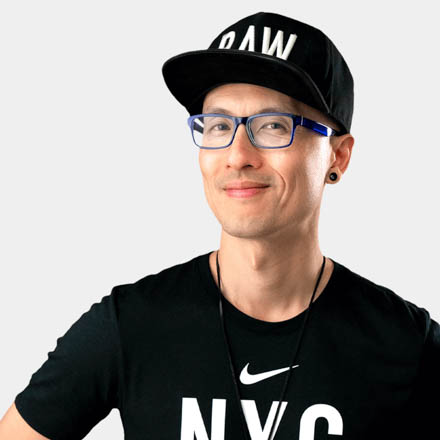
I was hiding a huge part of my personality from the world the entire time that I have been an entrepreneur. As soon as the wall came down, everything got a million times better. The more that you can be in alignment with your life and your business, the more money you can make.
I'm Rich Webster, and you're listening to The Future. When I first met my next guest, he was going through a lot of different explorations and changes to his life and his business. But the thing that's been very consistent with the way he's approached his life and his business is to work less, earn more, and just prioritize his time.
And so it's been a number of years since we first talked, but he's gone through this beautiful evolution of a person who does service work, a person who does teaching and service, and now mostly teaching, coaching, and doing zero service. Rich, welcome to the show. Great to have me, Chris.
It's great to be here, Chris. Yeah. Okay, so Rich, people may know you of some other names.
How else might they know of you? maybe know me from the internet as at Rich Webbs. I've kind of built an audience on Instagram.
But if you don't know me from there, basically my kind of TLDR life story is I'm an entrepreneur, I'm a designer, I'm also a writer, and I'm just a big fan of building highly profitable solo businesses. I have a couple in my history. The first one was an agency.
I ran that business for a decade. And I got to say, this business would not have reached the peak that it reached without Chris Doe. So we can maybe talk a little bit more about that later on.
But at the end of its road, it was making half a million bucks a year in profit. It took me 10 to 15 hours a week. And I basically had kind of designed this like perfect system leveraged agency business.
But as great as that sounds, that business doesn't exist anymore. I actually shut it down officially a year ago. And then thanks to Chris Doe, I started writing online and built up this audience and kind of took all the lessons I had from running that business, all my systems, frameworks, secrets, and package that up into a course, which kind of teaches people how to do that.
And yeah, now I basically write, create, and do consulting and mentorship for folks that run similar businesses to me. So generally speaking, six figures and up, trying to just design really lean, mean, one person businesses with kind of just a small team of freelancers that support them. Let's try to forecast what we're going to talk about.
It's not always easy to do at the beginning, but let's see if we can do that. So what do you think is the most interesting or compelling part of where you've landed so that we can set that up as the hook for people to tune in? Like, why should people watch this episode?
I would say two things worth talking about are why I decided to shut down a design agency that was making half a million bucks a year that only took me 10, 15 hours a week to run. And then on top of that, why I had a deep, dark secret for over 13 years that I never shared with anyone and why I'm sharing it now and what it's done to my business. What is that business called now?
What is, oh, what is the business called? You're supposed to mention that. Well, it's called Work Less LLC is the name of the business.
But I don't go by the business name too often. Mostly people just know me as my name, Rich. All right, let's go into this.
So when you're leaving an agency or you decide to purposely shut it down, doing half a million dollars a year, what are you going to do now for money? I mean, how much money does it make? So, okay, well, this is a great point.
And I think that at a certain point, a lot of entrepreneurs get to an inflection point. So I see it consistently. I don't know.
It took you probably a bit longer, Chris. For me, it was about a decade when I felt like... of the business.
But I don't go by the business name too often. Mostly people just know me as my name, Rich. All right, let's go into this.
So when you're leaving an agency or you decide to purposely shut it down, doing half a million dollars a year, what are you going to do now for money? I mean, how much money does it make? So, okay, well, this is a great point.
And I think that at a certain point, a lot of entrepreneurs get to an inflection point. So I see it consistently. I don't know.
It took you probably a bit longer, Chris. For me, it was about a decade when I felt like there are diminishing returns on me continuing to devote my time, my effort, and my focus to the business that I had built. It kind of reached the form where it was grown up, right?
It was ready. It'd gone off to college. It was doing its own thing.
And for me, that was like trying to reach the limits of how much profit I could make as a one -person business while still optimizing for time. So at the end of the road, for me, that was like half a million bucks a year in profit. This would not have happened without Chris, by the way.
Chris was actually the last piece to create this business. The one piece that I was missing that Chris helped me with was actually delegation. I had figured out price.
I had figured out delivery, all this stuff. And then just once Chris slotted in, it was perfect. So I had essentially built this lifestyle business, for lack of a better term, where I was working 10, 15 hours a week.
That time was spent only doing the stuff that I'm the best at, right? I had basically said, if it's not the thing that I am the best at that only I can do, I'm not doing it. And at the end, that was like 10 hours a week.
And I ran that as a lifestyle business for probably, I don't know, two, three years. It made more and more money. And yeah, towards the end of it, what happened was, I was like, okay, well, I'm an entrepreneur.
I'm a creative person. What's next? And believe it or not, Chris, that's where we intersected.
You probably know that. And you gave me advice, which changed my life, which was to start talking about what I've been doing online. Because for whatever reason, I was doing stuff that other people weren't doing.
So I made the commitment, and I don't even know if you remember this, this was like three or four years ago, to just post every day online for a year. And I had no expectation of growing an audience, building a business, nothing like that. I was literally just brain dumping every day and just talking about how I think about entrepreneurship, how I like to run businesses, why I like it, you know, like, what are the kind of tricks and tools and stuff that I've learned.
And it ended up taking off relatively quickly. And there was interest. And then from there, I was like, okay, well, maybe there's a path to do something with this.
You left your service business and your full -time educator, coach, consultant, or something like that. How much money do you project to make at the end of this year? I'll probably make above seven figures, but not high seven figures.
So what you're talking about is a million plus? Yeah. Okay.
I just want people to know that because oftentimes when people say, I stopped doing this, they're like, oh, yeah, because you couldn't hack it. These are very deliberate, intentional choices that one makes when you're like, what else can I be doing with my time? Let's do this now.
Let's break this episode into two parts. The life before, the big change in the life after, and we can get into all the nitty gritty because I think so many of the people are going to be listening to this or in the exact position that you are in that you want to run a small lean business. You call it a one person business, but obviously there are more than one person in there.
So let's define what you mean when you say one person business. Sure. So I think of it as me and no employees.
So whether the leverage exists from working with freelancers or contractors, from creating systems, from using tools, dare I say AI, I'm actually not like the person to talk about AI with. I'm like a boomer. But all of those things, it's basically a business that's optimized for profit where there's one person at the center of it.
And there are a lot of benefits to running your business like this. Mostly you can make a ton of profit, but there are downsides too, right? Like generally these businesses are not sellable businesses.
They exist to create cashflow. Often they can kind of create a good situation for you in terms of how you live your life and balance and things like that. So you're not killing yourself, but they have a lifespan.
So my agency, right? The one that I was running was not an asset when it was time to shut it down. There was, no fair market.
It's basically a business that's optimized for profit, where there's one person at the center of it. And there are a lot of benefits to running your business like this. Mostly, you can make a ton of profit, but there are downsides too, right?
Like generally, these businesses are not sellable businesses. They exist to create cash flow. Often, they can kind of create a good situation for you in terms of how you live your life and balance and things like that.
So you're not killing yourself, but they have a lifespan. So my agency, right? The one that I was running was not an asset.
When it was time to shut it down, there was no fair market value for it because I'm at the center of it, right? And as soon as I'm gone, there's nothing else. So you have to think of it as a double -edged sword and what are you optimizing for with your business?
Yeah. Okay. That makes a lot of sense.
So what you're saying is there are people who helped you do the things that someone else is better suited to do that can be done for less money than what it costs you to do, but you're not having them on payroll. So it's not a recurring expense to you unless you need it. There are pros and cons.
I want to tell everybody this because when you have people on staff, well, maybe you can talk about it. I'll talk to you. What is the pro of having someone on staff?
What are the downsides? And then we can flip that and say, well, why is it better to work with contractors? Why don't I start with why is it better to work with contractors?
Okay. I'll do the staff side. You tell me what is the benefit of having people on staff.
But I'll tell you the benefit of having contractors is when you hire an employee, your expenses have ratcheted up to a new level and they will never go lower than that, right? Once you bring someone on and you're putting them on payroll, you have up -leveled to a certain point where you will always have this amount of monthly expenses. And with most kind of solo businesses, creative businesses, stuff like that, revenue is lumpy sometimes.
It goes up, it goes down, And you have your expense that is fixed throughout that process. And what I see happens a lot of the times is there becomes a temptation to take on projects to pay the bills that aren't actually aligned or aren't actually super profitable. And that really distracts your focus away from doing good work and working with clients that are ideal.
So the way I think about it is when you work with contractors, you can essentially scale up and scale down with the revenue so that your expenses are kind of always aligned with it. So as you make more money, you can ramp up the expenses. And if you have a slower month, the cash flow is a little bit lumpy, you can fix it that way.
So that's why I like it. Now you tell me the downsides. The downside is you're working with a bunch of mercs.
They're not always available for you because they need to make money too. So when it's slow for you, they're doing work all the time and you never know if they're fully paying attention to your work or not, because that's part of the gig. It can be more expensive to work with contractors because they have to charge you more money because there's unpredictability to this.
So sometimes they're not available, sometimes they're solely focused on you, and you don't really have a partner in crime because there could be moments when you're going to your dark tunnel and you're like, what am I supposed to do? You're not going to call Joe or Mary contractor and say, Hey, you know, I'm typically the guy who sends you money from time to time. What do you think about my business model?
What do you think about my life crisis? Yeah. So it's a solo endeavor, right?
So let's talk about some of the pros and cons of having someone on staff. Yeah. Okay.
The big con you've already mentioned is you have consistent expenses and you're right. It never goes down. In fact, it just goes up because they want to raise, they want to grow and they need to make more money.
It's an expectation of businesses to continue to pay their people more money, even if they haven't acquired new skills, even if they haven't taken on new responsibilities. Here's another con. You can just not rebook a contractor.
There's a finite start and end date, and there's no expectation that it has to go on beyond that. Whereas when you have an employee, you have to deal with local labor laws. There's proper ways to dismiss somebody.
There's sometimes severance that's involved, and there's a lot of emotions that get involved. And for a lot of creative folks, firing someone is such a painful process. That's enough for them never to hire someone because it takes an emotional toll on your psyche, your body, your spirit.
You feel it. You feel achy. You've lost sleep over this, and you're avoiding that kind of confrontation that ultimately has to happen.
And I'm guilty of this myself. I'm not talking about theoretical thing. This is something I go through every single time we have to let somebody go.
And the mistake that we all make is we hire too fast and we fire too slow. So there's this period of actual productivity. And then there's these weird parts of ramping somebody up and then also winding somebody out.
It could take weeks, sometimes months, or even a year, especially too, if someone has a disability, if someone's part of our protected minority group, or they're going on maternity psyche, your body, your spirit, you feel it, you feel aching, you've lost sleep over this. And you're avoiding that kind of confrontation that ultimately has to happen. And I'm guilty of this myself.
I'm not talking about a theoretical thing. This is something I go through every single time we have to let somebody go. And the mistake that we all make is we hire too fast, we fire too slow.
So there's this period of actual productivity. And then there's these weird parts of ramping somebody up, and then also winding somebody out, it could take weeks, sometimes months, or even a year, especially too, if someone has a disability, if someone's part of a protected minority group, or they're going on maternity or paternity leave, you can get rid of people then. So you have to kind of just wait it out.
So there's a lot of that. Now let's talk about the pros. Number one is you have someone who's in your corner who's dedicated 100 % of their mental creative energy to helping you grow your business.
That's a theory. That's what it's supposed to be about. And you can invest in them so that they can level up, you can teach and train them so that eventually their skills far exceed the price in which you're paying them, and then move into senior management position.
So you can delegate more and more until you actually just disappear out of the company. And the company can continue on without you, which is probably leading to the next pro. In theory, then your agency, your business can be sold because their assets, a book of business, there's a system in place that can survive without your input in it every single day.
And the benefit is you can have best in class people working with you that become an asset that is actually part of your pitch and selling process. If you say I hired the best copywriter, I've hired the best designer, they're available for your project and only for your project. That's a that's a big plus.
Also, some big clients will not hire you because they need to know who's working on the project, government contracts or sometimes like that, things that have IP that they have to be very protective of. The most extreme case is Apple. Apple asked Shia Day to create a new agency and bring all the Apple team over and create a new agency called Media Arts Lab.
And they have no other client except for one, they only have one client and it's Apple. Is that a pro account? It depends on how you look at that.
I mean, could you imagine how much money Shia Day is making off this one client? So what they're saying is we want exclusivity. We want secrecy and we will pay you whatever is necessary.
So they create a new building before they firewall the whole operation. They have dedicated teams and it's a beautiful revenue generator. And for some people who love, I guess, who love routine and predictability, they kind of know the voice of the brand.
They know what's expected and they don't have to stress out over it. And they know that the the their job is pretty safe because Apple's not going anywhere in theory. So those are the pros and cons.
Now, I have to say this from our very first conversation together, a couple of things that stuck out about you. You are extremely disciplined, borderline militant about how you spend your time. And you were telling me, like, I'm super crazy and maniacal about this.
So let's talk about your philosophy on managing your time. I would love to talk about it because I've actually evolved on it. OK, so this is this is tell me where it was before you get to tell me where.
OK, yeah. So I've been a huge advocate for time tracking when we met and I was super serious about it. I think that time tracking is one of the most useful pieces of information that an entrepreneur can have, especially if it's just you, because basically what are your resources, your time and your energy and you have money.
Right. But at the end of the day, you have a certain amount of hours. And within those hours to get even more granular, you only have a certain amount where you're really amped up and you're energized unless you're one of these like super energized people.
There's some there's a small section of the population that only needs like three, four hours of sleep. I'm not one of those people. So for five, six years and when we met, I was tracking my time down to the minute any time that I was working.
Now, I wasn't always I wasn't tracking my time when I was sitting around watching Netflix or going for a walk or anything like that. But if it was related to business, the time was tracked. And I've been a massive advocate of it because time tracking is important because at the end of the day, you only have time as an entrepreneur.
That's that's your resource. And how you allocate that time determines how much money you're going to make. You know, you can spend your money on a client.
And if you don't have clarity, you know, it's the difference between, okay, well, they paid me, I'll give you an example. They paid me $5 ,000 for a project. And if you don't track your time, you look at that and you compare it to $1 ,000 project.
And you just think, okay, well, $5 ,000 is bigger than $1 ,000. Therefore, I should do more of these $5 ,000 projects. massive advocate of it.
Because time tracking is important because at the end of the day, you only have time as an entrepreneur. That's your resource. And how you allocate that time determines how much money you're going to make.
You can spend your money on a client. And if you don't have clarity, it's the difference between, okay, well, they paid me... I'll give you an example.
They paid me $5 ,000 for a project. And if you don't track your time, you look at that and you compare it to a $1 ,000 project. And you just think, okay, well, $5 ,000 is bigger than $1 ,000.
Therefore, I should do more of these $5 ,000 projects. But you might track your time and you realize that the $5 ,000 project took you 50 hours. And the $1 ,000 projects took you one hour.
Very extreme example. But what that really tells you is you have an effective hourly rate, which is the value of your time. And if you don't understand that, all of your decisions are going to be just made on what has the biggest number, right?
As opposed to what is the value of each hour that I put in. So time tracking creates awareness, basically. One of my buddies named Patrick McAndrew shared an insight that I think is genius.
And this is why I started rethinking all of this stuff. So there are things like, you know, an aura ring, right? So you put on an aura ring and it's really helpful because it tells you how much you slept, you know, whether you were disturbed by eating, you know, a big pizza before you went to bed or something like that.
And that data is really helpful. And you learn a lot about what patterns are helpful and what patterns are not helpful. But at a certain point, when you start wearing these kind of wearable things, you get to the point where you check your ring and your stats to see, did I sleep well last night?
As opposed to just waking up, being a human and feeling, do I feel like I slept well? Do I feel like I'm energized? And I've been guilty of this in the past, right?
I'll check my aura ring or whatever and be like, oh, I only slept six hours. Wow. I must be tired.
And it can become a self -fulfilling prophecy. So I see all of these tools, you know, your wearables, your aura ring, your time tracking as essential for creating awareness and building good habits. Okay.
But there's that book, what got you here won't get you there. At a certain point, time tracking will not get you to the next level. Your wearable won't get you to the next level.
Because at the beginning, like most entrepreneurs don't know where their time goes. Time tracking allows you to understand the value of your time, how to spend it, like you can use it to calculate different levers in your business, like how much money you can spend on delegation, you know, like what you can devote your time to different projects and clients. But after you do it for a long enough period, time tracking basically becomes internalized.
So for me, I did it for five years, you don't need to need to do it for five years. But I can time track without tracking time. And the benefit of this is, once you have this, you can start using internal awareness.
And instead of focusing on start the clock, measure it, you can shift right and listen to your body and listen to how you feel. And the one big downside of time tracking, and why I think it is helpful up until a certain point, and then you need to let go of it, is time tracking is focused on spending time on things that are revenue generating, right? Like the goal is to spend as much time increasing your effective hourly rate.
There are a lot of big things in business that will not make you any money upfront. And if you're focused totally on tracking your time, and in living in the short term, you don't actually ever get to experience that. So why I let go of the time tracking is because I've started spending more time on more kind of long term, leveraged things.
And if you're in the day to day of just how many hours did I work? How much money did I make? Divide the number of money by the number of hours, you don't get those big hits, right?
So it's what got you here won't get you there. This is excellent. So I'm going to drop two quotes, I think, to help people encapsulate or understand everything that you just said.
We know in the fitness industry that if you don't track your calories in your workout, you're really not sure what you're doing at all. And the fitness thing is the best metaphor for this, because it's, it's calories in and calories expended through working, out. And so a coach doesn't even need to look at you can just look at your numbers and say, it's not gonna, you're not gonna hit your goals, and they can tell.
And the quote is, I think from Peter Drucker, what is measured improves. And so it makes a lot of sense in that some portion of your If you hear it, we'll get you there. This is excellent.
So I'm going to drop two quotes, I think, to help people encapsulate or understand everything that you just said. We know in the fitness industry that if you don't track your calories in your workout, you're really not sure what you're doing at all. And the fitness thing is the best metaphor for this because it's calories in and calories expended through working out.
And so a coach doesn't even need to look at you. can just look at your numbers and say, you're not going to hit your goals. And they can tell.
And the quote is, I think, from Peter Drucker, what is measured improves. And so it makes a lot of sense in that some portion of your solopreneur lifestyle business, you must track everything. Track how you're spending money, track where revenue comes from, track where your leads come from, and track how you're spending your time.
So it provides analytical data, not just feelings about what I'm doing and where we're going as a business. Quote number two is, I think it was from Ron Baker. And he said that revenue is vanity, whereas profit is sanity.
So you have touched on that, where if you bring in a lot of money, it's like, I am most excited. I'll do more projects like that. In the year, you realize I'm almost bankrupt.
What is going on? Because the big numbers are very alluring until you see the amount of work that's required to fulfill that work. And so you have to pay attention to this because the data is power.
Information is power. Okay. I love this part.
And this is a transition here where you said, you know, at some point you reach this moment when you realize always tracking and optimizing for effective hourly rates. Your EHR will just be short -term, and you'll not invest in the long -term. And here's the example, and I'd love to hear what you think of as long -term things, okay?
Let's say somebody calls you up and says, Rich, we want to invite you to a dinner. There's a bunch of people that you might like to get to know and potential clients. You're like, nah, I don't see anything here.
I'm going to spend two hours driving there, an hour, two hours there, and then whatever. I don't see any benefit from it because usually in these dinners, nothing comes up immediately, and you might forgo that. You might say, well, it's going to take me a week to really consume this book, and you won't do that.
And you know what? Somebody's inviting you to do public speaking, and they don't have a budget, but, you know, they'll cover your expenses. And you're like, ah, that's a lot of time.
I'm going to spend like a month and a half developing a talk. I don't know. Those are some things that are much more beneficial to you long -term.
In my point of view, there's a lot more, but I'd love to hear what you're seeing, what you're thinking about. Yeah, I think that militant anything is useful up until a certain point, and then it's very, very destructive, right? So counting calories is super helpful for awareness in the example that you gave.
But at the end of the day, you know, if you're this person who is so obsessed with your calories that you can't go out and enjoy a meal, it defeats the entire purpose of counting calories. So the same thing with tracking time is why am I using it, right? It's to grow a business.
It's to have, you know, a life and a business that I'm happy with. And if you're missing things, like, you know, you gave a perfect example, relationships, right? If you're optimizing for effective hourly rate, people and relationships are essentially not on the table, right?
Going out to a networking dinner, connecting with someone. But what I found, you know, in business, looking back on the patterns is people, relationships are actually the biggest lever movers. You know, when I was running my agency, it wasn't the hours spent doing the design, doing the strategy.
It was actually the relationships that I forged with people that would sometimes be one client that turned into 10, right? So if you're constantly just picking at only do things that generate revenue, in the short term, you'll make a lot of money. But some other examples, relationships are a huge one.
Second one is things that compound over time, okay? So it's something where there is very little upfront benefit, something like building an audience, right? Spending time doing that, the EHR sucks, you know?
All the benefit is in the long tail. And if you're only focused on short -term EHR, it's not going to benefit you. Public speaking, another great one.
Another perfect example, and this is one that I have evolved on as well, catching me in an evolution state right now, Chris. Writing a book, okay? I was approached when my course started popping off by a book agent.
And he essentially pitched me on, I think this, you know, this idea is amazing. I love your writing. I love how you think about business.
Let's turn this into a book and let's, let's like, you know, send it out to the world. And I started doing a little research, kind of got halfway through. And if you're only focused on short -term EHR, it's not going to benefit you.
Public speaking, another great one, another perfect example. And this is one that I have evolved on as well. Catching me in an evolution state right now, Chris.
Writing a book. I was approached when my course started popping off by a book agent. And he essentially pitched me on, I think this idea is amazing.
I love your writing. I love how you think about business. Let's turn this into a book.
And let's send it out to the world. And I started doing a little research, kind of got halfway through the process. And was like, what am I going to make?
Like $3 a book from this? The EHR on this project sucks. And as a result, I'm just going to go back to my $500 an hour EHR, which is going to benefit me more in the short term.
But what you miss out is the long tail. And ironically, I'm now working on a different book. And it's only because I've shifted this.
So I've taken all of the insights, all the awareness that I have from knowing the value of my time and knowing what moves the needle. And now I can approach that with kind of holding two things loosely, right? Being effective, being efficient, and then also planning for the long term and kind of making bets that are not going to pay off in the short term.
I like seeing your evolution. That's why when I pinged you to check in on you to see how things are going, you're like, oh, a bunch of things have changed since we spoke last. And I was like, maybe we need to do a podcast because I can always predict these things.
Maybe, maybe. So here's my general prediction for folks. When you do service work, you'll want to do strategic work.
That's a natural evolution. And once you taste what it's like to be hired as a consultant and pay for your thinking, you'll see somebody else needs to do the making parts. Even though you used to love it, you love this idea of thinking more and getting paid for it.
And then when you get into sharing your thought leadership and it starts to lead you down another path where you're creating kind of knowledge or information products, eventually, if that works, you're not even want to do the other service work because it feels so rewarding, fulfilling to help people and to be paid for it. And so eventually you're going to give up all the service work and you just go 100 % in on coaching and content creation. It seems like that's kind of where you've netted out.
And I've seen many others before you do the exact same thing. Let me ask you this question, though. In the time in which we were talking together and I was just helping you out with your business, I'm curious what your thought process was then and what you see now looking back on the old rich.
I'm curious. So looking back on that business, and I think this is a perfect seg into probably what has been the entire theme of my 2024, which is what I'm calling work -life alignment. OK, and for me, looking back on that business, I see a business that was profoundly, profoundly misaligned.
And it's not for the reason that you might think it was. The business itself was doing great. It's not like I hated waking up and running it or anything like that.
It made money. It was pretty, you know, pretty leveraged. It was it was a great business.
Right. But the big missing piece is that I was hiding a huge part of my personality from the world the entire time that I've been an entrepreneur. And that reality is that I'm a person in long term recovery from addiction.
I've been in recovery for 13 years. And from the time I started my business until last year, no one knew that Christo didn't even know that when we were working together. It was a complete secret.
So I had essentially created a firewall between me and my business where the business is over here on one side, just this tiny compartmentalized thing. It was a lifestyle business. The goal of it was basically charge the most amount of money, work the least amount of hours so that I could bring myself and my money over to life, which is where I'm a person in recovery.
I have this active community of people that I work with that I help. I have all these hobbies, all these things that I'm excited about. But there was this massive firewall between my life and my work.
And the past year has basically been about bringing down that wall and aligning those two things. And I think the reason why I'm excited about the work that I'm doing now is because I finally integrated those two parts of my life into one. What are you addicted to?
Currently, nothing other than my phone. But yeah, man. So basically, my story is that I grew up and on paper, I was probably.
I work with that I help. I have all these hobbies, all these things that I'm excited about. But there was this massive firewall between my life and my work.
And the past year has basically been about bringing down that wall and aligning those two things. And I think the reason why I'm excited about the work that I'm doing now is because I finally integrated those two parts of my life into one. What are you addicted to?
Currently, nothing other than my phone. But yeah, man. So basically, my story is that I grew up and on paper, I was probably the most ideal child possible.
I was a straight A student. I played three sports. I was active in clubs.
I had a ton of friends, all of the above. But throughout the entire process, I always felt like I kind of had this hole or this void or something. And when I was 15 years old, for the first time, I smoked weed.
And that was like something exploded in my brain, basically. And I was like, oh, okay, this is actually the solution to all of my problems. And if I can just do this every single day forever, then this void isn't here anymore.
And I'll just be able to go about my life and everything will be fine. And from that point onward, I basically like speed ran the destruction of my entire life. So I started out, you know, like smoking weed being like a normal high school student type of thing.
But it very quickly escalated to like prescription opiates, illegal opiates. And by the end, I basically used every single drug under the sun. Think of like whatever bad, naughty thing that you can think of, like, it's been in my body.
But my drug of choice was opiates. And this was at a time where like, this was the early 2000s. You could walk into any house in suburbia, open up a medicine cabinet.
And there's like high octane prescription pain medication across every household. So I kind of fell backwards into it. And as a result, things got bad really fast, you know, so I started using drugs when I was 15.
I got clean at 21. So basically, it took me six years to completely dumpster my entire life. So I got kicked out of college, could not hold on to any jobs, could not hold on to relationships, moved back in with my parents.
And I'll tell you what, Chris, this is something that only, only a person who has experienced addiction will be able to relate to this. But I believe this, honestly, if I could hold down a job at a coffee shop, making minimum wage, and still use drugs, I would still be doing it right now. But the addiction was so bad for me that I couldn't even stand behind a counter and pour a cup of coffee, because I would just keep getting fired.
And at the end of the day, what it looked like for me, just to paint a picture, was essentially like a full spiritual death. So I believe that everyone has some like, for lack of a better term, like light inside them, some spirit. And there was none of that.
It was completely turned down. You know, it was kind of like a walking zombie. I couldn't wake up without using drugs, you know, having to spend hundreds of dollars a day to support the habit, doing all kinds of not cool stuff in order to make it happen.
And that was my life from 16 to 21. Thanks for sharing that with me, Rich. I know you're talking very openly about it.
And it's been a big part of your journey and tearing down the wall that exists between life and work. And I think you're discovering something about yourself and the community that comes to you because they, they are feeling, I think they understand what you're going through because they're going through it themselves in some way. I'm really happy for you.
And you've done what very few people can do, which is by the time you're 21, you're like, wait, this is not my life anymore. How did you get clean? And how do you stay sober?
It's a great question. So for me, the end of the road was for the final two years of my addiction, I was in this pattern where I was doing everything in my power to try to control the addiction on my own. So I would come up with all of these rules and strategies and things to try to make it happen.
I'd be like, okay, well, I'll only do drugs on the weekend or only after sundown or only these specific substances are okay. And these are bad. And what I would just fall flat on my face every time, you know, like sober?
It's a great question. So for me, the end of the road was for the final two years of my addiction, I was in this pattern where I was doing everything in my power to try to control the addiction on my own. So I would come up with all of these rules and strategies and things to try to make it happen.
I'd be like, okay, well, I'll only do drugs on the weekend or only after sundown or only these specific substances are okay. And these are bad. And what I would just fall flat on my face every time, you know, like one day I'm following the rules and the next I'm back to exactly where I started.
And that was a process of about two years where the consequences just kept getting worse and worse. Life just continued to circle the drain for me. But I felt like if I could just figure out how to use drugs successfully, then all my problems would be solved.
And that was the quest that I was always trying to figure out. I was like, I can just manage it. And at the end, the moment for me was essentially where I surrendered.
And I was sitting in the back of a car using, and there was some voice that like appeared. It was in my head. I don't know if it was mine.
I don't know if it was something else, but it said to me, this isn't working anymore. We need to do something different. And that day, I checked into rehab.
And I credit that to nothing that I did on my part, other than running my life into the ground. Because up until that, I had been trying to make it happen. And for whatever reason on that day, I had had enough.
And I was ready to do something different. And yeah, basically got shipped off, went to rehab, and started my recovery journey from there. Wonderful.
So a couple different things here. Did your parents know you were using? Oh, they found out.
And do they still accept you, support you afterwards? While I was using or when I got into recovery? While you were using?
Yeah. So I was living in their house. So they were basically paying for me to eat.
But the consequences continued to get worse. So like, the end of the road was the next step was I was out. Yeah.
I just want to talk about this briefly, which is, you love your children. When they are in a quest to self -destruct, it hurts too much to watch them do it. And if you're powerless to do something, then you say, I'm not going to enable you to continue to doing it around me.
And sometimes we need that as hard as it may be for the person that's going through it. Like, I need your support and love right now. But you kind of have to hit rock bottom sooner than later.
And I have members in my family who've had really bad drug addictions, were homeless for a while, and had to deal with the tough love after trying to get help, couldn't do it. They needed to hit rock bottom. And thankfully, they're also kind of recovered.
There's this beautiful thing. You say to yourself, or some voice says, this isn't working anymore. I've had a similar voice.
It was my voice, but I don't give it to any kind of defined powers. My voice like, this sucks. This is not going to go well.
I want to change to the next day. I mean, that changes. Sounds like you're, you had that same moment.
You go and check yourself in. Are you going through withdrawals and all that kind of stuff while in detox? Yeah.
So I started off, they put me into a, you know, medical detox for five days where basically they kind of taper you off of the drugs and a supervised environment. So you don't end up with any kind of like emergency situation. And yeah, from there, ship you over to rehab, you're stuck in there with a whole bunch of exciting characters for 30 days, kind of just absolutely feeling like garbage and trying to piece your life back together and kind of wondering like, how did I get here?
Like, how did things get so bad? Things, things were pretty good for a while. I'm now sitting, you know, I got, got sent to a rehab in Northeast Philadelphia.
It was, it was pretty crazy. And yeah, but throughout that entire process, there was, for whatever reason, I had made this internal decision that I was done and I was going to do whatever it took in order to stay in recovery. And I can only attribute that to the two years prior to me, finally, like going into treatment where I had ran through every possible scenario to try to make this happen.
Like, like I said, Chris, if there were no consequences, like I guarantee I would still be at it or be dead, you know, like that is where my disease took me. So by the time I hit the end of the road, the rock bottom, if you will, there were no I know. reason I had made this internal decision that I was done and I was going to do whatever it took in order to stay in recovery.
And I can only attribute that to the two years prior to me finally going into treatment where I had ran through every possible scenario to try to make this happen. Like I said, Chris, if there were no consequences, I guarantee I would still be at it or be dead. That is where my disease took me.
So by the time I hit the end of the road, the rock bottom, if you will, there were no other options. All my smart ideas had been played out and hadn't worked. And I was like, I just need someone else to tell me what to do.
I'm willing to do whatever you say, but I just can't run my life on my own. It's interesting that the way that you get out of this is you run out of resources. So people who grow up in affluent families who are maybe have some source of income, this thing never comes to an end.
They just keep on this path because there's kind of no end to it. Because I'm such a noob. And when you said you probably have never done a drug, alcohol has not ever entered my body.
Because when I say I'm straight edge, I'm straight edge. So I don't know. So you go into a detox.
They kind of taper you off. What are they using to taper you off? Is it some other drug?
Yeah, there's like a handful of cocktails. So this was 13 years ago. Specifically, I think the drugs that they were tapering me off were like suboxone, some kind of like barbiturate thing.
And then a couple of like psychiatric meds that they give people so that they don't like, you know, stay up for 48 hours or 72 hours straight, like basically, so you'll sleep and stuff like that. Yeah. And then after five days, basically all like for me, that stuff was all done, cut off completely.
And the day that that stops is essentially my recovery date, which is June 26, 2011. Wonderful. And you've been sober since?
Oh, yeah. Okay. 100%.
Wow. Coming up on 5000 days. Wow.
Wow. You take it a day at a time. Is that the idea?
Yeah. 100%. Yeah.
When I got out, I joined a recovery community. And I've basically been active in that for the last 13 years. And that's kind of been like the saving grace kind of operating system.
That's really allowed me to do everything that I've been doing, like in my life in entrepreneurship. And it's been the secret operating system. And despite that, I never really shared it with anyone because I had all of these reasons in my head as to why I didn't want to share my story publicly.
Yeah. Yeah. A couple of other questions on this and we'll get back to the business stuff and some of the observations are having.
Did you have a sponsor? I did. I still do.
Okay. Same person or different people? It's been different people.
Okay. Did you meet somebody in those cast of characters who are going through recovery themselves that wound up becoming something that influenced your life in a positive way? I have met 1000 people in the world of recovery that have influenced my life in a positive way.
It is. When I say it is the most important thing in my story, the missing piece of the puzzle that makes everything click. Yeah.
I would not be here without my recovery community. My wife is also in recovery. It is just like so ingrained in everything that I do.
Can you share maybe one story of somebody who had said something, done something where you're like, wow, that really, that hit me. Yeah. I'll try to.
So I'm in a fellowship that is anonymous, right? So there's a certain degree of things that I can't share. But I'll tell you one of actually had two really great mentors throughout the process.
And the first was really inspirational to me, because he was also an entrepreneur. And he was not running an online business or anything like that. But you know, a lot of times in the recovery world, they say, like, find someone who has what you want.
And when I met this dude, I saw that he was running a business. And he seemed like not only was he successful, but he was extremely happy. And he seemed like he had principles and values and like friends and all this stuff.
And this was really my first kind of entrepreneurial role model, as I was able to see someone who was able to navigate the world of business in a way that was kind of more principled than what I had kind of seen in TV and things like that. And that was like, where I learned the first things about, about business he ran find someone who has what you want. And when I met this dude, I saw that he was running a business and he seemed like not only was he successful, but he was extremely happy.
And he seemed like he had principles and values and like friends and all of this stuff. And this was really my first kind of entrepreneurial role model as I was able to see someone who was able to navigate the world of business in a way that was kind of more principled than what I had kind of seen in TV and things like that. And that was like where I learned the first things about business.
He ran a bunch of like, he had real estate in Philadelphia. He had a, it was a barbecue shop and I was just paying attention and I was taking notes and I was kind of soaking it in. And then my second entrepreneurial role model was actually the person who taught me everything that I know about design.
I didn't go to design school. I never really thought that I wanted to be a designer or anything like that. But I met this dude and we're still friends now.
And I literally just sat behind his shoulder watching him in InDesign for probably two years straight. Just, you know, asking him not only like, Hey, what's that keyboard shortcut that you did? Or, Hey, like, you know, like, why'd you pick that typeface?
We're really asking him to explain the why behind the decisions that he made intuitively. And I feel like I learned more from that mentorship than any other kind of design books or training or anything. And I was basically just picking this dude's brain.
So the reason that I'm in entrepreneurship now is because I'm in recovery. Like that was the secret path that led me to hear. Great.
So you just connected the dots and you've answered the question that I was going to ask you, which is how does one go from rock bottom being sober to having a business doing now a million plus a year. So two people, it sounds like, and it's kind of interesting how you selected these two, one about entrepreneurship and one about design or design entrepreneur and learning from these two people and then forming what you're going to do. How long does it take you for you to actually get some traction with your own design business post -recovery?
That's a good question. So I basically started out and I had no, there was no Christo. Well, I mean, you were alive, but when I started the business, the amount of resources that were available were very slim.
Like I really had to go out of my way to try to even understand anything about running a business. Like it was not readily available the way that it is now with YouTube and courses and all that stuff. It was harder to find.
So what I did was I essentially just said yes to every single paid opportunity that was thrown in front of me for maybe the first like three, four, five years of running my business. And a lot of times like I would get paid to do something that I didn't know how to do. And I always thought that was the best thing.
So I would be like, Hey, can you like animate this thing for me? And I'd be like, sure. All right.
Now I'm on the clock getting paid to learn and deliver this thing. And a lot of it was just like not structured, you know, trial by error, building relationships, working with people and really just building up like a book of business organically. Because for the entire decade, I was running my business.
I was not, there was no social media. It was all like IRL, real life relationships. I didn't have an Instagram account.
I didn't have a Facebook page. You know, I had a website that was basically just like a little portfolio, but it wasn't a sales page. And it all happened really naturally and organically by just continuing to do good work and build relationships.
I want to go back to the whole revelation or the transformation of the evolution of Rich Webster. I remember in one of our earlier coaching calls, you said, Chris, man, if somebody could help me do this, it'd be fantastic. I don't know if you remember this conversation or not.
But I, at that point, I think you were just still kind of bumping around on Instagram. I think you had under 15 ,000 followers and you set a pretty modest goal. Like if I can just get to here, that'd be fantastic.
And you're plugging away at it. And you're also plugging away at Twitter. And then something happens.
So do you remember this conversation at all? I don't. So you got the clue.
Yeah. So I have the transcript from it somewhere on my notes. I mean, it's not that important.
It's just like saying, I'm see the importance of media. I want to get better at it. I understand how it's going to help me grow in my service business.
And then later on, when you launch your course and build your personal brand becomes really important. So I think at that point, you must've been less than 10 ,000 followers or right around there. How many followers you got on Instagram now?
pretty modest goal. Like, if I can just get to here, that'd be fantastic. And you're plugging away at it.
And you're also plugging away at Twitter. And then something happens. So do you remember this conversation at all?
I don't. So you got to clue me in. Yeah.
So I have the transcript from it somewhere on my notes. I mean, it's not that important. It's just like saying, I see the importance of media.
I want to get better at it. I understand how it's going to help me grow in my service business. So then later on, when you launch your course and build your personal brand becomes really important.
So I think at that point, you must have been less than 10 ,000 followers or right around there. How many followers you got on Instagram now? like 300 ,000 and some change.
And I saw a pretty rapid ascent. There was something that you're doing. I don't want to say, but you'll say it probably that you started doing.
And then all of a sudden it started to skyrocket. Do you know what point that was and what you were doing? Sorry.
You, you got to fill me in. I Okay. So you're starting to post carousels.
Yes. And then that's working. And then you start doing these simple line animation things in your voice.
You don't remember this? I know your account better. Yeah, I do.
Yeah. So you're doing this and then all of a sudden I could see like some of them went viral. Oh, crazy.
Yeah. No, one of them had 30 million views. Like Kim Kardashian shared it.
Like it, it freaking popped off, man. That might've helped a little bit. I got to say, none of the people that Kim Kardashian brought me have bought anything.
So how do you know though? I mean, I talked to most of the people that buy stuff for me, but did you find me through Kim? No.
They're like the Kim funnel did not pay off. Okay. So tell me a little bit about your transition also from, we talked about, there's a, term people will use.
It's called performance marketing or direct marketing. When you create a piece of content in the spirit of trying to get business. And then there's something called brand building, which doesn't have an immediate effect.
And the more performance marketing you do, the less powerful your personal brand becomes because you're selling all the time. And so you're saying, you know, sometimes we have to take a longer view. We have to do things that don't pay us front that we can't see the immediate return, but it opens certain doors.
So what has changed in your life and your business having grown from say 10 ,000 followers to 300 ,000 followers on Instagram, what doors that opened for you? It's interesting because the best part about this story is growing from 10 K to 300 ,000 Instagram followers did nothing for my agency business. And the reason being, I wasn't talking to agency clients.
I wasn't saying anything that would resonate or, you know, interest someone who wanted to hire someone for creative services at all. I was really speaking to entrepreneurs. And as a result, I attracted people who own businesses, business owners.
And basically I spent most of that time period, not necessarily pushing super hard to sell anything, but really just like sharing my insights and what I was thinking about. And I had this entire 10 year backlog of basically like thoughts and insights and systems and ideas and strategies that I just felt like were backed up and I needed to get them out. And I was just using social media essentially as an outlet to do that.
And the beauty of it is when you run a design business and, you know, a little bit, you can use all of those skills that you used to help clients with on your own stuff. So for me, where things like really took off was I've always been a good writer. I am a clear writer.
It's just been a skill that I've always had. And when I combined that writing with the design and the visuals and, and, you know, working with an incredible animator it just like freaking exploded, man. Like people resonated with, I think the simplicity of the message, they resonated with the depth of the message because, you know, you can post like productivity platitudes all day long and it won't resonate with people.
I think when you have depth and you have a story and you have experience, people can sense that, right. And just the energy of the work so that the design, the taste, the aesthetics, my voice, people resonated with that as well. And all those things kind of came together into this like great package, which just like really blew things up.
And, uh, yeah, I think probably the ascent from like, whatever, 10 K to 300 K, um, the last 150 ,000 or 200 ,000 happened in the period of maybe like three months or something. Yeah. I saw that.
That was really amazing. have depth and you have a story and you have experience people can sense that right and just the energy of the work so that the design the taste the aesthetics my voice people resonated with that as well and all those things kind of came together into this like great package which just like really blew things up and uh yeah i think probably the ascent from like whatever 10k to 300k um the last 150 000 or 200 000 happened in the period of maybe like three months or something yeah i saw that it was really amazing to watch we'll just kind of see from afar and cheer you on now you're sharing things about your general philosophy about working less making more creating greater impact and then teaching people the systems and processes you built and you do that through socialness so that i'm assuming here but you tell me if it's if i'm wrong that leads people into a evergreen course that you make and then it brings people into community that you coach and that's the business now right so yeah basically the business was this is kind of an interesting path in terms of how it all played out so my agency was running i was committing the like 10 hours a week to keep that thing humming you know make my clients happy all that good stuff and then on the side i i reached some traction and decided that i wanted to create something that um would capitalize on this attention and i created this course and it was called how to work less and i highly if you're ever going to build a course or anything online i highly highly highly recommend doing it this way chris recommended that i do this you suggested that i started with a workshop what i ended up doing was instead of just like renting out the studio getting the big lights you know like having a dp hired and the whole crew um i actually just taught the course live and the first time that i bought it it was not to a ton of people i think maybe only 13 people took it the very first time how much was it uh at that time i think it was like 800 bucks or something okay yeah and um it was with me yeah 12 sessions over a month and the crazy thing was what i thought people wanted and what they actually wanted were not the same at all so i thought oh i'm this like productivity guy i'm gonna tell you how to like track your time and be super organized and like you know more efficient and manage your energy and focus and all this stuff and i talked about that and at the end i had these like two bonus lessons where i was like and i'm gonna show you how i apply this to my business when i did those two everyone was like well that's me leaning forward yeah they're like i'm interested tell me more and that was the signal that i needed to basically like strip the entire thing down and redo it and the second time that i taught it it was basically my philosophy on business and entrepreneurship and that's when things really took off and i taught it live five more times like 400 people have taken it and after iterating each time making the product better um i was like okay this thing is ready it's like it's dialed the freaking results are off the chain like you know everyone's made a ton of money doing it like fix their businesses all this awesome stuff that the testimonials speak for themselves but it's only because i committed two years of my life to making this thing the best possible course ever and if i had just said well i got 10 000 instagram followers let me just like record some shit that i think people want and post it and then it doesn't sell i would be like well what happened you know you need to actually validate what you're doing so the only way to get to the place where like you've got a successful product is to treat it like a product and not like this thing that you think people want you need you need to actually test it so anyway i did that after the sixth cohort i decided this is perfect it's you know it will only be incrementally better to the point where like each hour i put in will not make it like 10 better it'll make it like 0 .05 better and then from there i basically like was like i i was running my agency you know our minimum rate was sixty thousand dollars a lot of times projects would be in the six figures um i gotta sell something more expensive and that kind of transition to what i also do now which is more like six cohort i decided this is perfect it's you know it will only be incrementally better to the point where like each hour i put in will not make it like 10 better it'll make it like 0 .05 percent better and then from there i basically like was like i i was running my agency you know our minimum rate was sixty thousand dollars a lot of times projects would be in the six figures um i gotta sell something more expensive and that kind of transitioned to what i also do now which is more like mentorship slash consulting and i think the beauty of that work and i i really only work with entrepreneurs that are like minimum making six figures like that's kind of my my cut off there um the beauty and why i call it like mentorship and consulting is the mentorship comes from my recovery stuff right like i know how to help people i have this well of expertise that i had been tapping into the entire time but just wasn't aware of it right like i understand empathy i understand what's really important um when you've been basically to death and back i think you have a unique perspective on on business and on life and what really matters and like to really be able to connect with people and help them so i love the mentorship aspect of it but at heart like i'm essentially a consultant like that's what my agency turned into when you get down to 10 hours and it's no fat just the meat it is selling thinking and strategy and insights and being able to combine those two things which is essentially like my decade of entrepreneurship and and you know my philosophy on business and how i think about it with the recovery has been like the missing piece and that's where everything kind of locked in for me this episode is brought to you by paypal you know how a mom's bag has everything sunscreen snacks a stapler the new paypal app is like that but for your money shop pay manage your account and earn rewards all in one place and with purchase protection on eligible items biometric security and pass keys you're protected at every step download the new paypal app to get started see paypal .com protection terms how do you price this mentorship in coaching or consulting well okay i can tell you the price now but this is an artifact that is locked in time so if you're watching this next year it may not be the price but it's basically 12 grand for six months to work with me and it's in a like group setting it's not one -on -one when you finish doing the prototyping and testing of the product itself did you go back and re -record it as here's the standalone course that i can sell this i thought i was going to yeah but it turns out that um i didn't need to that like the energy of the live recordings were actually more beneficial for people than me like setting up a studio and awkwardly going through slides like in my house so i actually just you know took you know i basically take done it five times the best possible takes you know and kind of packaged it all together edited it up and that was it and how much does that course sell for uh three grand so you took the live zoom recordings edited together and put put structured it as a course and then people pay for that yeah yeah i mean it's basically structured as because it was live it's essentially like a four -week journey and you know there's two lessons you go through every week and you're kind of going through it like i just encourage people to if they're going to buy something to actually do it so i'm like let's put everything on the calendar schedule it out like you're actually doing this thing live do the assignments like get it done so it's yeah it's like eight lessons over a month and then you basically have it all i think that gets us caught up to speed here i'm just curious is there um is there anything else you think you want to tell audience so the last thing that i want to say is just around this idea of work life alignment so for me i had this like super huge huge part of my life that i had basically put a firewall up on and i told myself all these reasons why i shouldn't share it publicly like oh there's the stigma of of addiction like you know or like that you're a criminal or whatever um two like it was just really special and personal to me you have it all. I think that gets us caught up to speed here.
I'm just curious, is there anything else you think you want to tell the audience? So the last thing that I want to say is just around this idea of work -life alignment. So for me, I had this like super huge, huge part of my life that I had basically put a firewall up on.
And I told myself all these reasons why I shouldn't share it publicly. Like, oh, there's the stigma of addiction, like, you know, or like you're a criminal or whatever. Two, like it was just really special and personal to me.
I didn't know if I wanted to combine that with the world of commerce. And then I just like had told myself that, well, I don't want to like monetize something that's so important and so special to me. Like, oh, here's like my recovery story.
Now buy my $49 course on how you can start your recovery journey. Like I just never had any interest in doing any of that. But what I realized was that was all cop out, right?
These were all just lies and excuses that I told myself because I just didn't want to be vulnerable and be honest with people about my story. And the irony was that was massively, throttling me from just a energetic perspective and what I was able to bring to work. So basically, as soon as I started telling this, this story to my clients, to the world, it was like I had picked up jet fuel.
And I realized that like, all of these recovery things that I've learned, I had been bringing to work, but it actually takes a ton of energy to translate and kind of sanitize something for, you know, for an audience. So I might like have some story that like was from my, from my recovery journey or from my addiction or whatever. And I'd be like, well, okay, how, you know, use the processing power, sanitize it, turn it into a story that has nothing to do with that.
And that was massively throttling me because I was constantly having to just like negotiate between these two parts of my brain. And as soon as the wall came down, everything got a million times better. The results I was able to get from my clients were so much better because I could actually go deep with them and get to the root cause of like, what's going on with them?
What are their issues? And at the end of the day, like there's a deeper reason why we are all good at whatever we're good at. And for the longest time on paper, you would think, okay, well, the reason that Rich is good at business is because, you know, he worked really hard and, you know, he, he tried and, you know, like never gave up and all this stuff.
When in reality, if you pull back the curtain, like the reason why I'm good at what I do is because I have 13 years of living this life of recovery. And I believe that everyone has this deep reason that, you know, is the reason behind why they're good at what they do. And it's totally personal, totally unique to them.
And the hack is the secret is the more that you can be in alignment with your life and your business, the more money you can make, you know, like the world that doesn't need more throttled, closed off people, right? I think AI and social media is doing enough to make us not be ourselves right now. And my pitch is basically just like, we all have these stories, we all have these things about us that we feel like we're not comfortable sharing.
But if you can take the time, and really do it and really integrate it and kind of like, bring your life and your work together. The results are immense. I think what you're talking about speaks to me, because I talk about how we show up as a persona, a fragment of who we really are.
It takes some courage, and fortitude to be able to say, you know what, I've been been only showing you 1015 % because it's presentable on camera, it's palatable for people. And then when I show you into the dark side, my dark history and my shadow self something, sometimes people feel shame or guilt over. And we release that we think the reaction is going to be the world's going to stab us and want to destroy us.
But in fact, there are a lot of other people who you give strength and voice to, who are still in the shadow, they're not quite ready to say or come out themselves, but then they find power and strength in what you're doing. And so they're drawn to you. The very fact of us holding back the vulnerable And fortitude to be able to say, you know what, I've been only showing you 10, 15 percent because it's presentable on camera.
It's palatable for people. And then when I show you into the dark side, my dark history and my shadow self, something sometimes people feel shame or guilt over. And we release that.
We think the reaction is going to be the world's going to stab us and want to destroy us. But in fact, there are a lot of other people who you give strength and voice to who are still in the shadow. They're not quite ready to say or come out themselves, but then they find power and strength in what you're doing.
And so they're drawn to you. The very fact of us holding back the vulnerable shadow self is the thing that keeps people away from us. And I'm not saying that everybody on your first year of recovery, just go and blurt that out or your two years into a struggling business for you to go and say all that stuff.
There's a time and place for each one of us. It's different and you'll have to figure it out. But you're testifying to the fact that, you know what, I was running a life and a business that was misaligned with who I was.
And when I finally came clean and talked about it, it freed me. It's like an empowering thing. And then now you don't feel like you have to show up as half or 3 % or 5 % of who you are.
You can just be 100 % you. I wrote this line recently when I was presenting on stage about personal branding. I think the line is, the more you are, the more you are.
And it seems like you are 100 % a whole person, not a person with a whole. That's beautiful, Chris. I love when you quote yourself.
I think it's... Chef's kiss. Yeah.
I'll say, to zoom out to the meta level, because I've heard you talking a lot about this recently, there's this YouTube video that has like 1 ,000 views on it. Like, I don't think anyone's seen it except for me. And maybe I am half of those 1 ,000 views.
But it's by this dude named Joseph Arthur. He's a musician. And the video is about this concept called strategic originality.
And it's basically the idea that like, in 2025, being yourself is basically the only strategic advantage that's going to be left. Anything that AI can munch up and swirl around and spit out is going to be done a million times. And the only thing that's going to last is us being humans and being ourselves.
So the way I see it is, if you know who you are, and you have the courage to share it honestly, you're going to be rewarded. And if you don't, it's probably not going to be great for you. Yeah.
But I think even beyond the reward, it's freeing. It's like you don't have to like hide the secret because carrying a secret around is a burden in itself. And it's just, maybe you just feel lighter.
I'll tell you, 13 years was a long time to hold it in. And when I look back on it, I know that everything was supposed to happen at the time that it was supposed to. But if I had done it, you know, from the beginning, I can't imagine where I would be now.
Do you think your life would be, would you, if you could, want to shorten that time of holding on to this piece of information? I think in hindsight, everything is played out perfectly to get me where I am right now. And I'm very, very happy with it.
But I do believe that there was a time period early on where I was not ready to handle the responsibility of speaking publicly about this stuff. And, you know, like being a face. And I think that at a certain point, I crossed that threshold.
And maybe if I had done it then, I would have been able to help more people. But listen, dude, I'm 35, you know, God willing, I have a long life ahead of me. And, you know, it starts now.
Rich, it's been a real pleasure talking to you. I appreciate your honesty, your transparency. And it was just really super awesome to catch up with you and see this arc that you've been on.
It's been super exciting to witness it from afar. So I can't wait to see what happens in the next couple of years. Best of luck to you.
Thanks, Chris. Appreciate it, man. I will say, Chris Doe, plug for Chris.
I would never have built an audience online if it weren't for Chris. I would not have the business that I have now if it weren't for Chris. So I just can't thank you enough, man.
Thank you, buddy. If people want to go and people are so inspired to chat with you, to have you be their business mentor and coach, where should we send them to? Just go to richwebster .co.
All of the stuff is there. I send out a weekly newsletter, like 30 ,000 people read it. You'll also see my Instagram on there if you want to just start there.
But if you want to work with me, there's... luck to you. Thanks, Chris.
Appreciate it, man. I will say, Chris Doe, plug for Chris. I would never have built an audience online if it weren't for Chris.
I would not have the business that I have now if it weren't for Chris. So I just can't thank you enough, man. Thank you, buddy.
If people want to go and people are so inspired to chat with you, to have you be their business mentor and coach, where should we send them to? Just go to richwebster .co. All of the stuff is there.
I send out a weekly newsletter, like 30 ,000 people read it. You'll also see my Instagram on there if you want to just start there. But if you want to work with me, there's a video on there.
You can check it out. And if it resonates with you, just send me a message or something.