Skip to content
    Podcast 13 min read

    The One Thing LinkedIn Doesn’t Reward (But You Should Do Anyway) w/ Jodie Cook

    with Jodie Cook

    Chris Do and Jodie Cook argue that a distinctive personal brand needs real opinions and visible sources.
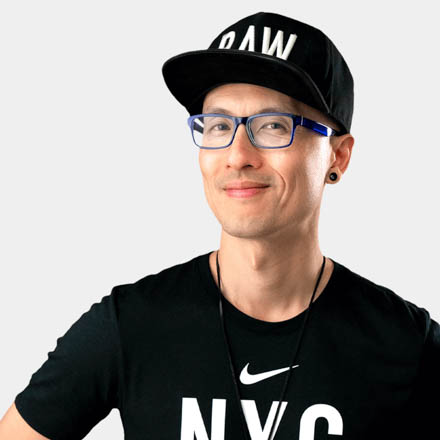
    Chris Do

    Chris Do

    Founder, The Futur™ · July 19, 2025

    The professional voice that says nothing

    A professional voice can become so polished that nobody remains inside it. The sentences work; the person disappears. Jodie Cook, who has created an AI version of herself and competes in a drug-tested powerlifting federation, brings both experiences to a conversation with Chris Do about what a public persona reveals and conceals.

    Her complaint begins on LinkedIn. Cook sees posts and comments becoming increasingly generic, with AI adding more language without necessarily adding more perspective. Her answer is not another publishing formula. It is a demand for people to let more of their peculiarities show.

    Do agrees with the diagnosis but disputes its starting point. Professional conformity did not arrive with ChatGPT. In his account, people already treated LinkedIn as a place where an unusual opinion could damage a career, cost an opportunity, or make a prospective employer hesitate.

    AI enters a room where everyone has already learned to lower their voice.

    Professional polish is not a substitute for a point of view. That is the problem beneath their argument about weirdness. The issue is not whether every post sounds informal or every creator behaves provocatively. It is whether any identifiable judgment survives the effort to sound professionally acceptable.

    Cook describes several pressures converging on the same result:

    • Career stakes encourage people to avoid saying anything too controversial.
    • AI writing can produce generic language when the author supplies little direction.
    • Advice about posting more and organizing content into pillars can become another template.

    None of those pressures requires a person to publish something empty. Together, in Cook's telling, they make emptiness easy to repeat. The writer has a format, a production tool, and a reason not to offend. What remains uncertain is whether the writer has something to say.

    Do encounters the problem in his comments. He describes replies that seem to follow the same pattern: recap the post, then ask a question. When he challenges an account about whether the response came from AI and receives no answer, he blocks it.

    The repetitive structure is his warning sign, not proof of how any particular comment was produced. His deeper objection is relational. Someone is ostensibly showing interest while delegating the expression of that interest to a machine.

    That tension belongs alongside the trust-building concerns signaled by The Futur's Demystifying LinkedIn. A comment occupies the space where a relationship could begin. Filling that space is not the same as participating in it.

    The conversation does not establish that LinkedIn's algorithm penalizes authenticity, nor does it offer platform data about the reach of unusual posts. Its argument concerns the professional culture surrounding publication: people want to be noticed without risking being seen too clearly.

    Cook and Do are interested in the cost of that compromise. A profile can remain impeccably respectable while offering almost no reason to remember the person behind it. Their proposed alternative begins with a word neither can quite agree how to define.

    Weirdness is not a volume setting

    For Cook, becoming weirder means turning up the characteristics that already make a person recognizable. She describes personality as a lighthouse: a stronger signal helps people with compatible values locate its source. The point is not universal approval. It is recognition among people who have been waiting for someone else to say the thing first.

    Her experiment begins in an unexpected place: the instructions for her AI counterpart. The original personality description emphasizes directness, firm advice, tough questions, and support without fluff. Cook asks the system to keep the description the same length while making its personality three times more extreme.

    The revision trades firmness for aggression. It introduces question bullets, truth bombs, and a demand for immediate results. What had sounded like a direct adviser begins to resemble a relentless drill instructor.

    Cook enjoys the transformation. Do catches the contradiction: a conversation about standing apart from generic AI writing has arrived at an AI prompt. But the contradiction is useful because it separates the tool from the intention behind it.

    Cook is not asking a machine to decide what matters to her. She is experimenting with how strongly an existing personality can be expressed. The system changes the delivery, while the original description supplies the direction.

    Do proposes a different starting point. His version of weirdness is to "remove the layers" hiding the person underneath. Where Cook imagines amplification, he imagines subtraction.

    Distinctiveness can come from removing restraint, not adding performance. This is an important distinction for anyone tempted to turn authenticity into another costume. A louder persona is not necessarily a more truthful one. Aggression can be manufactured as easily as blandness.

    Their two approaches expose different obstacles:

    • Amplify what already belongs to the person. Cook wants recognizable traits expressed with greater intensity.
    • Remove what conceals the person. Do wants learned restrictions examined before another layer of presentation is added.

    Do locates those restrictions in social conditioning. He argues that education and years of learning to fit in can suppress individual expression. In his account, people do not always need to discover an eccentric identity. They need evidence that showing an existing one will not automatically lead to rejection.

    That makes permission more important than instruction. Being around someone who behaves differently can change what feels safe. Do wants his own conduct to give other people a reason to test boundaries they have treated as fixed.

    The question of inherited expectations also connects naturally with Living in the Dogma of your Parents. Here, the immediate concern is how old expectations continue editing a public voice long after the person has gained the freedom to speak.

    Neither approach requires social isolation. Cook explicitly separates weirdness from social awkwardness. A person can be strange, maintain friendships, and function within a group. The desired audience is not necessarily everyone. It includes people who share the unusual trait and people who simply appreciate it.

    That is where the lighthouse image becomes practical. A distinctive signal is useful because it lets others make a more informed choice. A polished imitation of distinctiveness only gives them a different kind of disguise.

    Normal depends on who is looking

    Cook and Do's disagreement becomes sharper when they discuss their mutual friend Daniel Priestley. Cook sees a person willing to put himself forward, make predictions, build businesses, and withstand criticism. Do sees confidence and pattern recognition, neither of which automatically qualifies as weird in his definition.

    The difference is not merely semantic. Cook treats deviation from common behavior as evidence of unusualness. Do wants a more substantial departure, something that unsettles expectations or challenges the status quo enough to make observers uncomfortable.

    A competent entrepreneur can look unusual against the general population and entirely conventional inside a room of entrepreneurs. For Do, standing apart requires attention to the actual reference group, not just a flattering comparison with an imagined average person.

    Their discussion of Priestley sits beside The Futur's Personal Branding Masterclass with Daniel Priestley, but here his role is especially revealing. Two people who know the same person cannot agree on whether he represents the ordinary or the exceptional.

    Cook initially doubts that anyone would willingly describe themselves as normal. She expects people to name some pursuit or characteristic that distinguishes them, even if it is a race they have entered or a physical challenge they have taken on.

    Do disagrees. He believes members of his own family would readily accept the description. For them, normal is not necessarily an insult or evidence of an undeveloped identity. It can simply describe how they understand themselves.

    The conversation becomes more useful when it moves away from assigning labels and toward examining their origins. Cook recalls a short podcast series in which she interviewed entrepreneurs and business leaders about their childhoods. Their accounts differed considerably, yet she remembers the participants repeatedly describing their childhoods as fairly normal.

    That is a reported observation from her interviews, not a population study. Its significance lies in the mismatch between the variety of experiences and the consistency of the label. Each speaker had a different baseline but reached for similar language.

    Do's explanation is that familiar circumstances become the benchmark. The household a person grows up in supplies an early model of how life works. Other arrangements can initially register as deviations from that model rather than equally familiar realities for someone else.

    Context determines what counts as unusual. Applied to a personal brand, this prevents an easy mistake: assuming that a characteristic feels distinctive to an audience simply because it feels central to its owner. Confidence, entrepreneurship, and strong opinions do not carry the same meaning in every professional circle.

    It also complicates the demand to become weirder. A creator can seek difference endlessly without clarifying who is meant to recognize it. The relevant question is not how far a person can depart from convention in the abstract, but which conventions are suppressing something meaningful.

    Do's standard is therefore more demanding than a quirky wardrobe or a provocative sentence. The difference has to register against a real expectation. Cook's standard adds another consideration: it should help compatible people recognize one another.

    Together, those ideas move the discussion away from eccentricity as decoration. The useful departure is one that communicates something, not simply one that earns a second look.

    A strong opinion must survive resistance

    Cook's argument for stronger opinions gets an immediate test when Do asks for one of hers. She offers a sweeping conviction: getting into exceptional physical shape can accelerate progress toward goals across life. Fitness, in her view, improves far more than the body.

    Do does not let the claim pass as an inspirational slogan. He recalls former employees who were already in excellent shape, including a former athlete. His advice to one was to put down the barbell and pick up a book.

    The example challenges the assumption that physical discipline automatically produces intellectual range. Do says the former employee eventually began reading more, and the substance of what he could discuss changed. He also recalls that person's successful TikTok content drawing on what he had read and learned.

    This is an anecdote, not evidence that reading and training compete for a fixed share of personal development. Its role in the exchange is narrower. Cook has proposed fitness as a broad accelerator; Do supplies a case where another form of development was missing.

    Cook responds by describing the person she wants to follow. Business achievement alone is not enough if the visible cost appears to be poor health or an unsatisfying life. She is drawn to people who combine intelligence and commercial success with physical health, happiness, and involvement in family life.

    Her language becomes deliberately ambitious. She imagines future personal brands needing to resemble demigods: people whose appeal comes from an unusually complete combination of qualities rather than excellence in one isolated category.

    That is Cook's preference and prediction, not a demonstrated requirement for building an audience. It also introduces an exacting standard, one Do probes rather than simply endorsing. The important development is that her original assertion becomes more specific under pressure.

    She is not only praising exercise. She is rejecting a model of achievement that asks the audience to admire an outcome while ignoring its sacrifices.

    Do then identifies a version of weirdness both can recognize: unexpected combinations. The stereotype of the intellectual and the stereotype of the heavily muscled athlete are familiar. A person who convincingly crosses those expectations creates a different impression.

    The combination matters more than either isolated trait:

    • Physical strength does not remove the need for ideas worth discussing.
    • Intellectual ability does not have to arrive in an expected physical package.
    • Commercial achievement can be considered alongside health and family life.
    • A public identity becomes more specific when its qualities resist a familiar stereotype.

    There is a useful connection here to How to Stay Curious: a recognizable identity need not reduce a person to one repeatable characteristic. In this conversation, the interest comes from refusing to let one category explain the whole person.

    The exchange also demonstrates what generic content often avoids. A substantive position creates the possibility of substantive disagreement. Do pushes, Cook clarifies, and the claim gains definition instead of collapsing into mutual approval.

    An opinion becomes more credible when its owner can explain what it includes, what it leaves out, and why it still matters after someone challenges it.

    The missing source changes the story

    Cook sees physical training as evidence of commitment because no one else can perform the work on a person's behalf. Posts can be ghostwritten. Tasks can be delegated. Training appears, in her argument, to offer a more direct connection between the visible result and the person claiming it.

    Do challenges the completeness of that account. He raises the role of substances that can affect physical development and recalls an acquaintance who described an impressive physique through a long account of training before acknowledging testosterone use when asked directly.

    The relevant issue is the disclosure, not a diagnosis based on appearance. The conversation provides no basis for deciding whether a particular physique proves substance use. What matters in Do's anecdote is that the person's first explanation omitted something the person later acknowledged.

    Cook distinguishes between assistance and dishonesty. She says she competes in a drug-tested powerlifting federation and appreciates the existence of separate competitive settings with different rules. Her objection is to people concealing relevant information or violating the terms under which others believe they are competing.

    Both speakers resist turning the exchange into a blanket judgment about what adults choose to do. Their shared concern is the gap between an actual process and the public explanation of that process.

    Transparency means disclosing what produced the result. This is where the fitness argument returns directly to LinkedIn. The same problem appears when an audience is invited to copy a success story without being told about the support, time, or circumstances that made it possible.

    Cook's closing phrase is "disclose the source." It brings several seemingly separate disputes under one standard. A result does not have to be unaided to be real. But its explanation becomes misleading when the assistance is essential and invisible.

    She names several omissions that distort the account:

    • Engagement groups presented as if an audience response arose without coordination.
    • Ten hours of daily work sold as a result available in twenty minutes.
    • A tactic that worked in an earlier period presented as if its conditions still apply.
    • Outside assistance omitted from the explanation of a visible achievement.

    These are examples she offers, not allegations established against named creators. Their common feature is a missing input. The audience sees an output, hears a simplified explanation, and is left with an incomplete model of how to reproduce it.

    That gives transparency an educational purpose as well as an ethical one. Cook argues that disclosure helps other people take what is useful and make their own success from it. Without the source, the audience cannot distinguish transferable practice from a result dependent on concealed conditions.

    Her position also challenges the fear that admitting help automatically reduces authority. If the aim is to teach something usable, identifying the help improves the explanation. It replaces an impressive but opaque achievement with a more intelligible one.

    Do draws the same line around AI. He does not object categorically to using it for writing or prompts. He wants the resulting content to retain the author's actual opinions.

    The standard is not purity. It is an honest account of authorship, assistance, and effort.

    The person behind the post must be present

    Do offers a practical test for the difference between an assisted voice and an outsourced identity. Imagine the author of polished online posts being invited onto a panel and asked an unscripted question. Without the production system, can that person articulate a position?

    The test does not require identical fluency onstage and on the page. Writing allows revision; conversation does not. The issue is whether there is an underlying view to express, or whether the apparent authority exists only in the finished text.

    He describes a related frustration in team brainstorming sessions. People reach for their phones while ideas are still forming. What should be a shared encounter among different minds starts to resemble a race to retrieve an answer from elsewhere.

    Cook recognizes the pattern. The activity becomes a second, parallel brainstorm, with participants searching or prompting instead of contributing directly to the room. The technology supplies responses, but the original opportunity was to discover what the people present could produce together.

    Human judgment should lead the tools. Do condenses the distinction into a short statement: "Humans should do the thinking." His objection is to reversing that arrangement, leaving people to carry out work while the machine supplies the ideas they no longer practice developing.

    This is not a call to abandon AI. Cook's personality experiment already demonstrates a deliberate use of it. She starts with traits she can identify, sets a constraint, requests a transformation, and evaluates the result. The machine assists an act of judgment rather than eliminating the need for one.

    The closing implications are concrete, although the speakers do not present them as a formal framework. Their examples establish a set of editorial checks that can happen before publication:

    • Confirm that the opinion belongs to the person whose name appears above it.
    • Notice whether professional restraint is concealing something the person actually believes.
    • Include material assistance and effort when explaining how a result happened.
    • Keep enough ownership of the idea to discuss it without a generated script.

    Do also recommends moving beyond the current comfort zone of disclosure. He suggests an extra ten percent of transparency, a conversational challenge rather than a measured formula. The point is to test whether the feared cost of greater openness actually appears.

    That does not turn every private fact into publishable material. His qualification remains important: transparency begins with what a person is comfortable sharing. The challenge concerns the unnecessary distance between the public explanation and the reality it claims to describe.

    Cook arrives at a similar conclusion through her desire for weirder people and stronger signals. The unusual story, the unpolished conviction, and the admitted source all give an audience more information about the person seeking its attention.

    That is the transformation this conversation ultimately demands. Not a stranger persona engineered to interrupt the feed. A more accountable public voice, one that can explain its convictions, acknowledge its inputs, and remain recognizable when the writing tools are gone.

    The next post does not need an invented eccentricity. It needs an opinion its author can defend and an explanation that does not conceal the work.

    A public voice should still exist when the screen goes dark.

    Weird doesn't have to mean socially awkward, like you could be kind of strange and quirky, but you could still have a group of friends. Yes, of weirdos. I'm going to try to normalize weirdness, if that's even a thing. But then you normalize weirdness, and then what's weird? Well, on this episode of Jodi and Chris Don't Know Anything About Anything, we're going to talk about what it means to get weird and why that might even be something you might be interested in. We have to get more weird online right now, for sure. And I think it's partly because there is so much AI writing that things are generally being dumbed down and generally being generic. Like, they're just more generic. So, you know, if you cast your mind back to high school, when you did an exam paper, and you didn't really know how to answer a question, so you just completely blanked it. We've all done it. We've all been there. I definitely have. That answer that you would have written down is very similar to what ChatGPT comes out with, or very similar often to what Claude comes out with when you don't know how to work with it. And so the internet is, like, full of this kind of content right now. And so on LinkedIn, especially because there's so much AI -generated content, because there's so many AI -generated comments, it's like it really stands out when someone just is a bit weird. And of course, you could prompt an LLM to be weird. But invariably, it just sounds that little bit more human. And I absolutely love it. So I've been geeking out on people doing weird things on LinkedIn, and doing a bit more of it myself as well. Okay, what is an example of something that's weird? So, well, it started out just by people asking other people to be weird on LinkedIn. And the first I saw of it was someone called Jillian Richardson. And she started a post with, I am on my knees begging, be weirder on LinkedIn. Ten times weirder. weird so um well it started out just by people asking other people to be weird on linkedin and the first i saw of it was someone called jillian richardson and she started a post with i am on my knees begging be weirder on linkedin i had 10 times weirder 100 times weirder if you had a good breakfast and she just basically went on a rant about how it was a terrible situation when people weren't weird and then she ended the post with for my freaks who like to comment say something that the va responsible for your linkedin engagement would never approve of let loose anarchy and over a thousand people commented and a hundred people re -shared it because it's such a good message and i think we should all do it so i tried this out with my ai because you have dobot right wait i can't believe it you were just saying about being weirder than you're into ai go on well i just tried it i tried it more to see how much this could translate to something else like not just me in the coachbox system where we created jody ai and the other ais there's like a personality description that you give it and so my personality description says i'm direct firm i don't accept limiting beliefs except weird and i challenge thinking ask tough questions and give straight advice i'm supportive but with tough love no fluff just clarity i'm sassy sharp and i push for action my style is simple succinct and no nonsense you get truth not excuse not excuses so then i added a prompt to that and said take this personality and tone of voice description use the same number of characters but make it three times more extreme and see what happens and then that personality description that i just described became i'm brutally blunt rentless and i kill all excuses i destroy mental barriers i fire question bullets and i deliver truth bombs i support by shoving forward zero fluff pure clarity razor sharp venomous and i demand results now my style is raw skeletal merciless you get savage reality only and it's amazing and it's amazing and now it's like a crazy military like you of pure clarity razor sharp venomous and I demand results now my style is raw skeletal merciless you get savage reality only and it's amazing and now it's like a crazy military like no holds barred mentor and I just like the idea that of course that's I'm doing that with AI but we don't have to do it with AI but I like the idea that online we like crank our personality up as many notches as we feel comfortable with it's almost like you are a lighthouse and you're shining out these beacons to everyone else and then you're attracting in the people who also believe that and the magic I think is when you find the people who also believe it who don't wouldn't normally admit that they actually believe that same thing that you do but because you've had the courage to put yourself out there and put yourself out there and say it now they're like well if she thinks it I'm gonna share that I think it too and then you do find those kindred spirits the people whose values are aligned and the people who are just cool to hang out with because you were more weird this is interesting your description of being weird is to crank up my my description of being weird is to remove the layers that you're hiding the inner weird ah yeah well I guess you could do either you could crank up what makes you you or you could remove the layers holding you back from being you because I think we're socialized and conditioned to fit in with people and it's through many many years of that through our education system that the uniqueness gets stamped out like the other time when we were speaking on our last podcast together whenever that's going to be released we're talking about like how I think when you're around weirder people it's going to show you that it's actually safe and most of this is some kind of construct a narrative that's built up in your own mind and so from the way I see myself is I want to give permission to anybody who identifies with what I'm doing to say like well if Chris can do it of course I can do it I'm going to try to normalize weirdness if that's even a thing to say it's okay but then you normalize weirdness and then what's weird well here's the thing when you normalize weirdness it's not that 99 % of the people are going to be weird it's going to be 0 .2 % more if chris can do it of course i can do it i'm going to try to normalize weirdness if that's even a thing to say it's okay but then you normalize weirdness and then what's weird well here's the thing when you normalize weirdness it's not that 99 of the people are going to be weird it's going to be 0 .2 percent more that's going to be weird because it's not comfortable and people don't do uncomfortable things just like how you're like i want to make america fit or i want to make the world fit one percent of the people will do it does anyone actually think yes i am normal i think a lot of people think that and they would say because i talk to them they're pretty normal but would they say it if you said are you normal they would say yes i'm normal i think they say it to themselves i can't imagine you have to just look around let's look around let's let's let's dive deep into this now you got me fired up here if you look around the circles in which you travel in how many are friends or friends of friends and people that might be remotely kind of within that circle how many of them are really weird i i feel like i only really hang out with weird people and i also feel like the people who i think are probably the most normal of the people i know if i said to them are you normal they would no one would say yes i don't think anyone would actually self -select doesn't really i think they would say i think they'd be like no because i do this and i do that and most people don't do this but i do even if it's they run 5k or they've just signed up for a triathlon or they've just done something that they think stubs them out in some way i i feel like normal is not a word that anyone uses to describe themselves okay this is fascinating okay we have a mutual friend daniel priest is he weird yeah yes i don't think he's weird at all yeah he's a straight white guy who's married who has kids who says respectable things never loses his cool uh he dresses in an oxford shirt and jeans and he has a beard and curly hair what what part of him is weird well he wants to put himself out there he wants to build his personal brand he likes making predictions about stuff and he likes it when he's right he invariably is right weirdly he kind of predicts the future and he has a beard and curly hair what what part of him is weird well he wants to put himself out there he wants to build his personal brand he likes making predictions about stuff and he likes it when he's right he invariably is right weirdly he kind of predicts the future i think that's a weird thing to be able to do predict the future and i think that when we wrote how to raise entrepreneurial kids and then we were getting some interesting comments online he was just all up for not caring whatsoever what anyone thought and just answering and just being him so yeah i would call him pretty weird and also starting like starting companies that makes you like that's a thing that not everyone does as well yeah he's weird daniel priestly you're weird i don't think daniel priestly cares what you or i have to say about him but i don't think i don't think daniel's weird at all and i'm curious now i'm going to text him later and ask him do you describe yourself as weird no ask if he describes himself as normal as normal okay yeah do you think you're normal but is the opposite of normal weird the opposite of normal is abnormal which i guess is weird okay so normal short for our long version of norm which is just average right the norm normal means yeah normal means the average running the mill just pretty standard what would make you think this person is weird well okay let's just go through this though and you're gonna try to pin me down hold on hold on i'll be asking the questions here okay people who predict the future are not weird to me okay because there are a lot of academics who study things and like they just it's pattern recognition it's their expression of their intelligence and seeing things people who are self -confident aren't weird to me they just believe in themselves people who don't care about the opinions of other people aren't weird to me either it's not until they do something that is a deviation from the norm quite far away from that that i'm like oh that's that's weird like if if daniel was saying very contrarian things quite often i would describe him as weird but i don't think what he's saying is contrarian maybe because i believe in what he believes in now it's not for everybody for sure but i don't think it's like that one percent of people believe That's weird. Like if Daniel was saying very contrarian things quite often, I would describe him as weird. But I don't think what he's saying is contrarian, maybe because I believe in what he believes in. Now, it's not for everybody for sure, but I don't think it's like that 1 % of people believe this thing. It's actually much bigger than that. Steve Jobs is weird. Steve Jobs didn't believe in bathing. Steve Jobs thought that he could heal himself through homeopathy or whatever. However, Steve Jobs had a very strange way of looking at the world and he saw the future before most of us could see it in ways that were challenging, like a visionary. Steve Jobs was a disruptive force in lots of different things. Steve Jobs is weird in the way he looked because he would wear a mock turtleneck by Issey Miyake or whoever and wear mom jeans. I'm like, bro, that's not fashionable. Are you weird? I think I'm weird. Am I weird? The things I do make people uncomfortable. On purpose. Am I weird? Sometimes. Yeah, I think I'm weird. Also, since you've told me that Steve Jobs didn't believe in bathing, I'm like, I don't believe in bathing. Here's your report. Oh, thanks, Jane. I wish I could hire someone just like you. Try LinkedIn Hiring Pro. It's more than a job board. It's like the recruiter you always wished you had. Hiring Pro uses real -time insights to match your role to LinkedIn's unique network of professionals and delivers a shortlist of best -fit candidates. You'll spend less time sorting applicants and more time talking to the right people. Let's do it. You're irreplaceable, Jane, but another you would be great. Hire right the first time. Post your job for free on LinkedIn today at linkedin .com slash quality. It's like I do, and I do it, but I train so much that it would be actually really useful to just not believe in bathing and then just not do it and then start self -cleaning. But I also think that everyone's weird, so who knows? I don't know how many standard deviations work in the moment. Everybody can't be weird because everybody's weird, then that would be normal. But in their own way. My mom's not weird. My dad's not weird. But if you said to your mom, are you normal? She'd say no. I do all my stuff that's not normal. No, she would say yes. I'm normal. No, she would so much be like me to promotional. No, I do all my stuff. No, I do. then that'd be normal but in their own way in their in their own way my mom's not weird my dad's not weird but if you said to your mom are you normal she'd say no i do she would say yes not normal no she would say yes she would say yes and my older brother who's like very left like logical he's not weird at all and he would say i'm normal yes he would okay mind change i think so but maybe i need to ask them you know we'll find out it's a big thing in spain my friend moved to spain and she started dating and on dating apps it was a big thing for spanish men to put in their dating profile i am normal and she was like i don't want anyone normal that's not what i'm looking for but it was just yeah i'm normal i'm normal i'm normal that's just the thing that they all wanted to be because they believed that that's what women wanted stable job no psychosis a lot of artists are weird not all of them are some of them look like bankers salvador dali was weird pablo picasso was weird jackson pollock was weird andy warhol is weird but not all artists are weird if you are a bit weird but you can also function in a group because weird doesn't have to mean socially awkward but you could be no kind of strange and quirky but you could still have a friends yes of weirdos your weirdos yeah or appreciate weirdness you know do can we accept that normal is average and there's many deviations away from normal before you get to weird and just because you don't do normal things doesn't make you weird being weird means that almost even just by looking at you or being around you people feel a little bit uncomfortable because you have challenged the status quo you're doing something like if you literally walk backwards through a subway station you're weird my my coach told me this many years ago he said that everybody thinks what they're doing is normal because it's the only way you know things are done so if you grew up with a single parent you think everyone has a single parent if you grew up with loving parents who supported everything you did you would think everyone must have that same thing and that's kind of why most of us would not describe He said that everybody thinks what they're doing is normal because it's the only way you know things are done. So if you grew up with a single parent, you think everyone has a single parent. If you grew up with loving parents who supported everything you did, you would think everyone wants to have that same thing. And that's kind of why most of us would not describe ourselves as weird or not normal. We would say, well, no, it's pretty normal. Like in your world, you're very logical. So people are very logical. And when you meet an illogical, rational, notional person, you're like, whoa, slow your horses here. Slow your roll a little bit there. It doesn't make sense, right? So within our own bubble, we're all normal. But there's some context that matters here in terms of the kinds of people that you're around. If you wore a burqa in London as a white female, that would be a little bit weird. But if you're wearing in the Middle East, that's not weird at all because that's kind of how people dress. And so context does matter a lot. And so it's you making certain decisions to do things that go against convention and amounts that you provoke looks or raised eyebrows, I think is really where the weirdness lives. Just what you said on that everyone believes their childhood was normal. I started a podcast once. I just did a mini series interviewing people about their childhoods, interviewing successful entrepreneurs and business leaders about their childhoods. And it was a series of 20 episodes. And it was so fascinating to be able to say, well, what did your dad do? What did your mom do? What was your family situation growing up? And all these amazing questions of what they learned about work and money and everything else. And all 20 of them at some point in the episode said, I had a fairly normal childhood. So different, such different stories and made us, they all believed it was normal. But I don't believe they were normal now. They just knew that they just figured growing up they were. Talked about being weird. Yeah. That's what I mean. Yeah, I did. Because I didn't know anything different. It was, it created my, my childhood created my benchmark for what normal was. Okay, so let's, let's go back to the beginning here. Why are people craving a little bit more weirdness on LinkedIn and whose fault is it? I think this has happened long before AI came onto the scene. No, anything different. It was, it created my, my childhood created my benchmark for what normal was. Okay. So let's, let's go back to the beginning here. Why are people craving a little bit more weirdness on LinkedIn and whose fault is it? I think this has happened long before AI came onto the scene. People look at LinkedIn as LinkedIn as a professional site. For a long time, it was a resume builder and we're there to further our professional careers. And so there are things that we think should not be shared on social platforms, especially because it may damage your opportunities to get gainful employment or an executive position or something like that. And so I think since Microsoft purchased LinkedIn, trying to turn it into a social platform that we're seeing a greater diversity of content types from different types of people. And we're seeing this, but I think the corporate world needed to wake up to it, which was being boring, predictable, saying normal things is a great way to be forgettable. And AI is just making it worse. It's exacerbating the problem because I don't even know why people do this. Why did, why do you use a robot to make your comments for you to build relationships with people? That is the worst kind of engagement possible. I hate it when I read through my comments and it's like, oh, it's almost cookie cutter because AI thinks a certain way. And it continues to like recap and it'll ask me a question, a recap with a question. I'm like, you're AI. And I comment, are you AI? And they don't respond. Then I blocked them. But LinkedIn used to be people showing up being delighted to announce something, people showing up just declaring their news. And you can't do that anymore. But now we have AI to write posts for us, but ChatGPT was trained on 300 billion words. So all the strong opinions cancel each other out. So if you don't put your strong opinions in, you're not going to get any out. So you just end up with just fluff. And then that's what comes out with your LinkedIn posts. And I almost feel like it's exacerbated on LinkedIn because it's a professional platform, because people's jobs, careers, businesses are on the line. put your strong opinions in you're not going to get any out so you just end up with just fluff and then that's what comes out with your LinkedIn posts and I almost feel like it's exacerbated on LinkedIn because it's a professional platform because people's jobs careers businesses are on the line it's not like you go on Facebook and you share something and you just check you just don't really care because it's just your buddies checking out it's like no this matters because this is my career so it's even more wanting to be dumbed down and not wanting to share anything too controversial and it's just got strange it's got strangely not weird so I think that everyone's kind of bored and then actually if you couple that with lots of if you couple that with the most common content that you see on LinkedIn which is LinkedIn consultants telling you how to grow on LinkedIn and they're saying post more come up with your content pillars use AI do all this stuff so you've got these like three things all working together to mean that everything is just the same and it's it's not good and it's not really going anywhere good so I can see why the call is there and is loud and I'm all for it I want to get with more weird I want a prompt to prompt me to come out with my weirdest stories and the weirdest things I believe so that then I can share them and keep doing it and keep attracting in more weirdos just like me I'm gonna ask you then what is you said people don't have strong opinions what's a hot take you have on something I think that um I think getting in shape is an absolute cheat code for life I feel like if you write all your goals down for everything you want to achieve in your whole life and then if you get in exceptional physical shape I think all of them you can achieve them like twice fast maybe faster because it elevates everything and I think people don't realize enough and I think they don't give it enough attention when actually it could like 2x 5x 10x everything so I want to challenge you there were two guys who used to work for me they're both in exceptional shape one is a former athlete and I said put the barbell down and pick up a book instead and he resisted enough attention when actually it could like 2x 5x 10x everything so i want to challenge you there were two guys who used to work for me they're both in exceptional shape one is a former athlete and i said put the barbell down and pick up a book instead and he resisted for a really long time and then to my surprise a couple years after he left the company he started reading more and i can see that the kinds of things he could talk about were changing they were evolving and his most viral content on on tiktok was him just telling people about the things he read and what he learned from it so in in his case and and this is a stereotype a lot of jocks don't have a lot of things to say yeah meat grunk can lift heavy things push people yes but it's like don't you have something you want to say so yeah help me understand that i'm all for fitness too by the way i just i just want to push you so you can refine your statement if if someone wants to assume that you're just a meathead or someone wants to assume that you just spend time in the gym or someone wants to assume that you work in fitness and then you're actually really smart and then you actually say some good stuff it's like oh hang on there's more to that person and i feel like also the the kind of the personal brands of the future the people that stand out more in the future are going to have to be almost demigods they are almost they are going to have to be in exceptional physical shape because otherwise it's like hey here's me i'm really clever i've got this book i've built this big business and it's like yeah but if you also got big bags under your eyes and you've also got a dad bod it's like well i don't want that because you've made certain sacrifices to get that business that i wouldn't have made so show me someone who is very healthy it like really happy meditates all the time walks their kids to school and has all the smarts and all the money that you've got that's who i want to follow and i feel like so many things you can fake you can fake like you can get someone else to write your linkedin post for you you can get someone else to do something else to do all these things but you could only do your own working out you can only do your own resisting the cookies so it's like you just can't you can't pretend you have to it shows that you've got some kind of level of commitment discipline more about you else to do all these things but you could only do your own working out you can only do your own resisting the cookies so it's like you just can't you can't pretend you have to it shows that you've got some kind of level of commitment discipline more about you and i think that's really impressive well we were talking about being weird yeah so the stereotypical intellectual person is kind of a nerdy professor with a dad sweater and argyle socks and things like that and we get that part and then the meat head is like has muscles on top of their muscles and veins very what do they call it when you're all veiny i forget what it's vascular yeah they're very vascular all right there's got a healthy cardiovascular system but they they can't put two things together so when you get weird is you you mix roles like um anatoly i think that's the guy's name who pretends to be a janitor and he is not that assuming like in terms like these big meat heads but he's very powerful he's got i think good form i think so he's able to kind of show up a lot of these big more muscular dudes so that is him being weird him not behaving or looking like what a typical person like him would look like i think that's the unique formula so if you come in zigging when everyone's zagging i think that's weird and so the formula here is for you to not only be smart and have ideas and be stimulating to talk to and charismatic and kind and generous but you're also running ultra marathons or iron man's or whatever it is that you do i think that becomes like your demigod kind of thing now you had said something which i have to to bring back up you can cheat a lot of things but you can't cheat your fitness but yes you can you can totally cheat your fitness no one can work out for you but there's a lot of chemicals that you can put in your body to give you the physique and i see these things where there's like there's a man who's like 65 years old or something oh yeah he's clearly very old but he is jack like a horse yeah and i was like you're not natty i know you're not natty that's not possible not that you can put in your body to give you the physique. And I see these things where there's a man who's like 65 years old or something. And he's clearly very old, but he is jacked like a horse. And I was like, you're not natty. I know you're not natty. That's not possible. And I don't want to be a doomsday sayer and all that kind of stuff. But knowing the little that I know now within certain circles, men feel the pressure, especially if you want to be fit, to start using testosterone and steroids and other kinds of things, HEH, much younger than they actually should be. I think, I don't want to say his name right now, but a certain business influencer had gone on record now saying he's like barely out of his 30s. I'm using testosterone. I'm using these other things now. So of course you can cheat, Jodi. You can do so much without them. Yeah, you can, but you can do so much without them. And even if you take the stuff, you still got to lift the stuff. You can't just take it and then sit in your pajamas and then just not do anything. And it just happens. You still have to work. You can do it without the gear. But the amount of work relative to the results is disproportionate. Just like you could say like, yeah, you could use GVT and AI to write your posts for you and you don't have to do any work. Well, yeah, but you could do a little bit of work and use AI and get a lot of results, I think, potentially, if you know what you're doing. I want to put apples to apples there because those things, and I'm not here to judge them. You want to use AI, use AI. If you want to use testosterone, HEH, or steroids or some other thing that I don't know about, use it. Use whatever you want. It's your life. But I just wanted to make sure that we're like saying you can't cheat it because you can. Because apparently, okay, I'll tell you something. I know a guy. All of a sudden, I mean, he's my age. He's like really fit. I'm like, damn, bro. Look at your arms and your neck. And then he goes on this long list of everything he's done. And then he doesn't say anything. And then I ask him, wait, did you use any testosterone? He goes, oh yeah, I did. Like, that's the one thing you didn't mention? Are you kidding me? So I compete in powerlifting and I compete in a drugs -tested federation. And there's also non -drugs -tested federations. And it's kind of why I love the sport because in most sports, it's almost like there's one federation and there's a few federations, but they're all drugs -tested. But people... And I can be in a drugs tested Federation and there's also non drugs tested federations and it's kind of why I love the sport because in most sports, it's almost like there's, there's one federation and there's all this, there's a few federations, but they're all drugs tested, but people are all just cheating. But I quite like the empower lifting is split. So the idea is if you want to take stuff, you can go compete there, but you can leave all the people not taking stuff competing here. And I'm going to say as you, I don't care what anyone does is if they, I don't care what anyone does, if they make their own decisions and they're intentional about it, but I really don't like the cheating side. So your buddy who's told you it's cool that he's told you because what wouldn't be cool is if he was doing all this stuff and then he was actually missing it out like over the, even when you said, come on, what's the real story? If he then missed it out, that wouldn't be cool. But I think sharing it is, I quite like that. And I wouldn't even label it as cheating. I don't really care. You do whatever you want. It just, I think what's been real interesting the last couple of years is more and more people are just telling you now, this is really what I do. And I just find it like dishonest. Maybe that's a form of cheating. When I see a person, again, my age, who is just like, it looks like you're holding a heavy piece of equipment, but there's nothing in your hands right now. You're so jacked right now. And then I asked him, what are you doing? It's like, oh, I've been training all my life. If you don't know, like, you're just saying right now, it's just, you're all natty. Is that what you're saying to me? That's ghee butter. You know, come on. Let's be real here. At your resting state, it looks like you're holding a 50 pound weight. Jodi, tell me that I'm crazy. One day when we meet in real life, you're going to say to me, at your resting state, it looks like you're holding a 50 pound weight. Well, show me right now. Show me your heart. And you're like, yes, this is the best thing ever. Do you know what I mean? Like, I know. More confident, yeah. Because if you're lifting something, you're going to be very vascular and all your muscles and striations are going to pop out for sure. But as soon as you drop that weight, a lot of that goes away. Now, your muscles are building up over time, but it's not, it doesn't look like that. do you know what i mean like i know yeah because if you're lifting something you're going to be very vascular and all your muscles and striations are going to pop out for sure but as soon as you drop that weight a lot of that goes away now your muscles are building up over time but it's not it doesn't look like that so the next time i mean not even for bodybuilders it doesn't look like that i watch their videos you can get in the pump you can before you prepare to like go on stage or something like that oh my goodness you should do this before you don't say it's 20 press -ups i do you do press -ups before you go on stage okay cool and i do i do all kinds of stuff yeah but you know that that's a pump and i'm talking about like i'm sitting there for with lunch for the guy for like three hours i'm like why do you still have a pump going on this is like a really long pump bro you're not going to the bathroom we're doing 50 push -ups are you what is going on okay so let's conclude this episode why jody and chris doesn't know anything about anything is that i think we crave realness we we crave honesty and even when you're not being real be real about you not being real and we're all good with that and i like that we're living in a time and age where people can disclose like yes i've had plastic surgery yes i've taken steroids or heh or testosterone or i've had my limbs lengthened whatever it is i don't care but i think owning that first of all feels really good like you know the truth will set you free i but also because we we crave that in a world when everything is really really fake and everyone's fronting so i don't care if you use ai to enhance your writing or to give you prompts but i do care that your voice your opinions like your real opinions come out and here's here's my test what happens when you get invited on a panel and you're asked a question but you've been so reliant on ai you you have really no opinions and you can't articulate anything maybe you're like well then i have an earpiece and they'll listen and i'm like okay then you're a bionic person at that point you're a cyborg and that's okay and so i get into it with my team sometimes when we're brainstorming everybody's got the phone i'm like what why are why do you all have your phones out right now can we just brainstorm and be in Maybe you're like, well, then I have an earpiece and it'll listen. And I'm like, okay, then you're a bionic person at that point. You're a cyborg and that's okay. And so I get into it with my team sometimes when we're brainstorming, everybody's got the phone. I'm like, why do you all have your phones out right now? Can we just brainstorm and be in the moment with each other to have a shared human experience about our individual ideas and contribution? You're going to have the machine do all the thing for you so that you can do all the labor. You have this opposite, friends. Humans should do the thinking. The machine should do the labor. So you're kind of giving up. You're just saying like, I don't want to think anymore. I just want to be hands. And you're quickening the speed in which we reach the matrix where we're just human batteries. That's all we're good for at this point. Jodi, final thoughts? What you said about the brainstorm when everyone uses their phones, it's like, it's like a second brainstorm. It's like, how fast can everyone Google this? How fast can everyone claw this or chatty we tee this to find this answer faster? So that's a real thing. But then also the realness, the realness for me is almost described and defined as disclosing the source and whether the source is steroids or whether the source is that you're in engagement groups or whether the source is that you actually spend 10 hours a day on this, but you're telling people that they can do it in 20 minutes or that you found this hack that was applicable in 2005. And now it's not, it's like disclose the source, whatever that is, because that's the realness. That's often the weirdness, but that's the thing that means that people can actually take it and make their own success of it. And I don't think it takes anything away from you disclosing it. I think if anything, it makes you more real, more weird. And that's what people really relate to and really value and appreciate at the same time. Yes, I think the, I think you put a point on that, which is your level of transparency, I think determines how real you are. So I would encourage everybody to be as transparent as you're comfortable with and go to the extra 10 % and see it doesn't hurt you. point on that, which is your level of transparency, I think, determines how real you are. So I would encourage everybody to be as transparent as you're comfortable with and go to the extra 10 % and see it doesn't hurt you.
    Download transcript

    Enjoyed this? There’s more where it came from.

    Get insights on creativity, business, and design from The Futur.

    You can unsubscribe anytime. By submitting, you agree to receive communications and to our Privacy Policy.

    “Humans should do the thinking.”

    — Chris Do

    Share