Skip to content
    Podcast 13 min read

    I Built a Business With No Degree, No Plan, and Cancer w/ Jennie Smythe

    with Jennie Smythe

    Jennie Smythe and Chris Do examine building a business without sacrificing identity, relationships, or health.
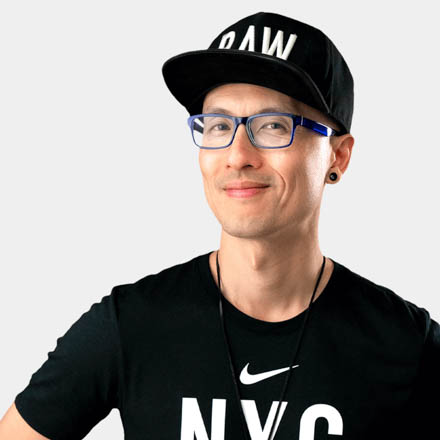
    Chris Do

    Chris Do

    Founder, The Futur™ · July 24, 2025

    The career that needed an escape

    The suits went into the fire after retirement. Jennie Smythe, a digital marketer and agency founder who works with artists, comedians, brands, and nonprofits, remembers her father burning his work clothes in an alleyway. His rejection of a career spent in corporate marketing became an early warning about the cost of professional success.

    He wanted the beach, surfing, golf, a bicycle, and time outside. Instead, Smythe had watched him put on what she describes as a mask each working day. Retirement was not simply a transition. It was a repudiation.

    For a daughter trying to work out her own future, the scene complicated the usual bargain: follow the respectable path now, collect freedom later. Her father had followed that path. The reward included an urgent need to stop being the person his work required.

    Smythe was already struggling with college. She was paying for it herself, unhappy with her experience, and increasingly unconvinced that the education justified its expense. Leaving was not an easy declaration of independence. It felt like failing people whose judgment mattered.

    Both grandmothers had graduated from college. Her mother had a master's degree. Her father had led marketing for a large oil company, and her sister was approaching graduation. A degree was not an abstract social expectation. It was part of the family's lived experience.

    In conversation with Chris Do, Smythe resists turning that departure into an effortless origin story. She dropped out, struggled to find direction, and worried about employment without the credential. The uncertainty was real, even when staying felt wrong.

    Rejecting a prescribed path does not remove the responsibility to learn.

    That distinction keeps her story from becoming a slogan about college. She is saving for her own children's education. She recognizes the value of learning to manage time, develop friendships, care for oneself, and meet obligations. College can provide structure for those skills as well as academic instruction.

    What she could not accept was spending most of her day preparing for work she did not care about. The problem was not effort. It was the destination that effort served.

    Do presses on the tension between freedom and responsibility. People eventually need something they can do well, whether or not a school helps them find it. Choosing another route does not excuse drifting indefinitely. It changes who must supply the direction.

    The family pressure behind that choice also sits at the center of The Futur's Living in the Dogma of your Parents. Here, the pressure has a particularly vivid counterweight: an accomplished parent who could not wait to discard the uniform of accomplishment.

    Smythe also distinguishes expense from debt. Living in an expensive city was a burden, but she says she did not have education debt forcing her next decision. That room mattered because she wanted to choose an opportunity, not simply satisfy an obligation.

    Her account does not establish that leaving school is the better financial decision for everyone. It establishes something narrower and more useful: a sensible-looking plan can still be wrong for the person expected to live it.

    The introduction outside the official channels

    Smythe wanted to work in music long before she knew how to enter the business. She tried the approved route, applying for internships while attending a music conservatory. The applications produced dead ends rather than access.

    The opening came through someone the conventional career map had not prepared her to consider.

    A fellow aspiring music professional knew an adult dancer named Nikki. Smythe spoke with her by telephone, and Nikki arranged a meeting that proved successful. She also offered career advice. Decades later, Smythe still expresses gratitude for the help, even while acknowledging that she never established whether Nikki was her real name.

    The story is not evidence that preparation is useless. Smythe had a direction and was actively pursuing it. What failed was the assumption that the official process was the only legitimate source of opportunity.

    A person outside that process supplied the connection it had withheld.

    At around nineteen, living in Phoenix, Smythe packed her belongings into a Jeep and left with enough money for roughly a month. That detail gives the move its proper scale. This was neither a fully financed career experiment nor a polished entrepreneurial plan.

    It was a limited opening, followed by a decision to act.

    Do connects the experience to advice from his business coach: a life-changing relationship can be only a couple of introductions away. His emphasis is not on collecting contacts mechanically. It is on genuine relationships and the willingness to say what help is needed.

    Smythe's recent book release party in Nashville offered a smaller, less dramatic version of the same principle. She encouraged guests to speak to the people beside them because everyone in the room was connected through someone. Messages afterward described shared gyms, mutual friends, and relationships people had not recognized before.

    The useful connection was not always missing. Sometimes it was unspoken.

    That experience carries into how Smythe now chooses clients. She describes working across entertainment, nonprofits, brands, and local businesses, but the variety has a filter. Her stated criteria are personal as well as commercial:

    • Interesting people with stories worth telling.
    • Good human beings.
    • People who are enjoyable to work with.

    Those standards matter because digital marketing puts an agency close to its clients' voices, audiences, and daily decisions. Smythe is not describing a business that simply accepts material and publishes it. She is describing ongoing collaboration with the person behind the work.

    There is a line connecting the unexpected introduction at nineteen to those present-day choices. Both depend on taking people seriously before sorting them into categories of professional usefulness. Nikki helped when the institutional route had not. Smythe now treats the quality of the human relationship as a condition of the work.

    That does not make relationships a substitute for competence. It makes them part of how competence finds a place to operate. The meeting still had to go well. The opportunity still had to become work. An introduction can open a door without carrying someone through everything on the other side.

    Her story is therefore less about having no plan than about refusing to confuse one blocked route with the end of the road.

    Ambition without the initiation ritual

    The same question returns once someone becomes an employer: which parts of the old path deserve to survive? Smythe's answer becomes clearest when Do raises the challenge of employees who resist duties beyond their understanding of the job.

    Do argues for grit. Some work is unpleasant, and doing it can be the price of reaching work that is more rewarding. From his perspective, an employee who treats every additional request as a demand for additional compensation can become difficult to employ.

    Smythe does not answer by denying that businesses need effort. She questions how effort gets measured and what employers believe it must feel like.

    Her office is split roughly between millennials and Gen Z, with Smythe identifying herself as the only member of Gen X. She describes an earlier professional standard built around visible endurance: arrive first, leave last, remain available, prove commitment through presence.

    That standard could reward the person who stayed longest even when that person was not the most talented. It also made work's claim on someone's life seem self-evidently legitimate.

    Her younger colleagues have challenged that assumption. They have priorities beyond the office and a different understanding of what a job entitles an employer to demand. Smythe says she has changed her own mentality while also trying to influence theirs through example and care.

    Loyalty should not require misery.

    She rejects the idea that people need to be belittled or worn down before their commitment counts. That is not an argument against standards. It is an argument against treating humiliation as professional development.

    The distinction matters for an owner whose father's working life ended in a bonfire. Repeating the same bargain inside her own agency would preserve the very pattern she had tried to escape. A different career path would mean little if it reproduced the same experience for everyone else.

    Her description of the agency's work also shows that care does not mean avoiding complexity. The business handles websites, email lists, merchandising, social media, and the commercial connections among them. It works with artists and their business managers, and increasingly with legal teams.

    She describes digital marketing as an extension of the client's offline proposition. A touring musician has tickets to sell. An author has a book. A nonprofit has a mission and people whose experiences can explain it. The online activity needs to connect to those realities.

    The move from making individual things to coordinating a business has a natural companion in Moving from Makers to Entrepreneurs. Smythe's version involves recognizing how creative decisions, audience relationships, rights, and revenue affect one another.

    She is careful not to claim she has become the client's business manager. Her role is to identify opportunities and make sure the people responsible for money and legal decisions know about them. Coordination is not the same as pretending to possess every specialty.

    That leaves room for a more demanding definition of leadership than simply working the longest hours. Someone must understand the whole situation, connect the right people, and protect the conditions that allow good work to happen.

    The business still needs a quarterback. It does not need everyone proving loyalty through exhaustion.

    The person behind the screen

    Digital marketing makes that distinction harder because the work can expand indefinitely. There is another comment to answer, another format to produce, another platform to understand. When the client is a person, the raw material is often that person's time, attention, and willingness to be visible.

    Smythe's agency cannot manufacture those things without participation. She describes client work as collaborative: the agency needs direction, and first-person video makes it especially difficult to pretend that someone else can supply the whole presence.

    Do reveals how much of his own social activity he still handles personally. He publishes, answers comments, and responds to direct messages. Discovering that other public figures delegate these tasks has made him question whether his approach is necessary.

    Smythe draws a sharper distinction than simply personal versus outsourced. Repeated questions answered privately consume time without making the answer available to anyone else. When appropriate, a public response lets other people read it and return to it later.

    The issue is not whether a direct message deserves a response. It is whether every useful answer needs to disappear into a private exchange.

    Delegate production without disappearing from the conversation.

    That principle also shapes her mixed assessment of batch recording. Recording several pieces at once can be sensible when someone has limited time or many obligations. The problem starts when efficiency becomes detachment from what the material says or how people respond.

    Smythe draws the boundary around these choices:

    • Batch recording can help meet a realistic content requirement.
    • Editing and resizing can be handled by a support team.
    • The client still needs a say in the message.
    • Audience engagement cannot be treated as irrelevant to the work.

    Her clients are capable of many production tasks, she says. Capability is not the constraint. Time is. Freeing an artist from repeatedly adapting a video gives that person more room to think creatively and connect thoughtfully.

    This is why she does not define an agency's value as chasing analytics all day. The support should improve the conditions for creative work, not trap the creator inside a permanent reporting exercise.

    Reluctance introduces another problem. Some people care deeply about their work but find public exposure awful. Smythe does not claim to have a universal template that makes them comfortable. She tries to discover what they enjoy and adjust to their circumstances, which change even for the same person.

    A willing creator can become a reluctant one after reading cruel comments. That vulnerability has a related treatment in Dealing With Negative Feedback. Smythe's emphasis is on the person receiving the words, not just the account receiving engagement.

    Watching people treat one another harshly online during COVID helped motivate her book. Professional familiarity with digital communication did not make her indifferent to friendships breaking down, family members alienating one another, or people struggling in public.

    She also leaves room for stopping temporarily. “It's okay to take a break,” Smythe says. A walk, a meal, sleep, and a better frame of mind can be more useful than forcing another interaction.

    Presence is not the same as permanent availability.

    The waiting room changed the measure

    The conversation about visibility takes on a different weight when Smythe describes breast cancer. During the period around her diagnosis, online survivor stories became lifelines. Other people's willingness to make a difficult experience public gave her something she needed.

    That is a different measure of content's value from reach or posting frequency. The same digital environment that could wound people through casual cruelty could also make a frightening experience feel less isolating.

    Smythe distinguishes those personal accounts from the medical information and misinformation she encountered online. Their significance in her story is emotional, not diagnostic. They were people describing lives that continued beyond the moment she was struggling to comprehend.

    She remembers sitting in a mammogram waiting room, noticing women of different ages occupying themselves with phones, books, and conversation. The room made illness feel both immediate and ordinary. Whatever distinguished their lives elsewhere did not provide a special entrance here.

    “There's no backstage,” Smythe says.

    The observation cuts through an assumption that professional progress can quietly encourage: enough access, enough preparation, enough competence will create an exception. In the hospital, the familiar symbols of access did not apply.

    Her father had died of pancreatic cancer at sixty-seven. After his early retirement and rejection of corporate life, he had not received an unlimited stretch of time to enjoy the alternative. For Smythe, that made postponement look costly in another way.

    First came the warning of a life that needed escape. Then came the warning that escape could arrive with less time than expected.

    She does not respond by romanticizing cancer. She explicitly refuses gratitude for having it and wants no one else to endure it. That refusal matters. A difficult experience can change someone's perspective without becoming a gift that needed to happen.

    Her response was to reconsider the scale on which she allowed frustration to operate. Anger, disappointment, and difficult moments still occur. She describes herself as intense, energetic, and capable of a temper, not as someone who has graduated beyond ordinary emotion.

    What she resists is letting one of those moments claim an entire day.

    The point is not a prescription for how other people should handle illness or distress. It is Smythe's account of a personal boundary: she does not want the experience of being alive reduced to whatever went wrong most recently.

    Asked about her health, she describes herself as doing well, five years out, and continuing to take tamoxifen. She is careful in her wording rather than offering a clean, dramatic ending to the medical story. She also continues to seek survivor accounts and support breast cancer research.

    When Do asks how she would feel if her life ended unexpectedly, her answer centers on her children. She wants to watch them grow, travel more, and remain with them longer. Other ambitions have not disappeared, but they no longer occupy every part of the picture.

    The practical implication is uncomfortable precisely because it is ordinary. The life being designed cannot exist only after the next professional milestone. It also has to work on a Thursday, inside the responsibilities and relationships already present.

    A business that can survive a pause

    Smythe's marketing advice follows the same logic as her life choices: dependence deserves scrutiny. A career can depend too heavily on approval. A workplace can depend on overextension. An audience strategy can depend on a company that controls access to everyone following the account.

    She asks business owners to imagine Instagram shutting down. The panic that thought produces is useful information. It exposes the difference between having an audience on a platform and having a direct way to communicate with customers.

    Her practical guidance begins with the parts of the business that support that direct contact, not with a promise of viral growth.

    • Build direct channels. Keep the website and email list in order. Consider a text database where it fits the business.
    • Set a sustainable publishing rhythm. Start with a workload that can be maintained rather than an ambitious schedule that collapses.
    • Stay active without being everywhere. Maintain existing relationships while remaining willing to meet a different audience on another platform.

    These are connected decisions. A website alone does not replace discovery. Social activity alone does not establish direct contact. A publishing calendar alone does not create a relationship if the person behind it never participates.

    Smythe warns against judging a direct contact list only by comparison with a larger social following. She does not supply a universal conversion percentage that makes the transfer successful. The point is to keep building the connection rather than treating a smaller list as proof of failure.

    For content, her example is deliberately modest: one video and two photos a week. It is not a mandatory formula. It demonstrates that consistency can begin with an honest assessment of capacity.

    “There is no trick,” Smythe says.

    The familiar starting problem also runs through Where To Start With Social Media. Smythe's contribution is to keep the starting point connected to business continuity and human limits, rather than making production volume the entire strategy.

    She also challenges platform complacency. A business comfortable with its Facebook audience cannot dismiss another platform simply because the early response is smaller. A different audience requires different creative choices. Established familiarity is useful, but it is not evidence that every other environment lacks value.

    The immediate work is concrete:

    • Check whether customers can be contacted outside social networks.
    • Choose a content schedule that fits the available time.
    • Answer recurring questions publicly when appropriate.
    • Remove production tasks that crowd out meaningful participation.

    None of this requires the founder to become someone else. It requires distinguishing the work only that person can do from the work that support can carry. It also requires accepting that connection needs attention, even when production has been delegated.

    The test is not whether every channel stays busy every day. It is whether the business can keep its relationships intact without demanding the constant depletion of the person running it.

    Smythe watched her father burn the clothes of a life he wanted to leave behind. Her own operating question is more immediate: can the business support a life that does not require that kind of escape?

    Success should not require a bonfire.

    It was a terribly painful decision to make because I felt like I was letting myself down, letting my family down, but I just knew I wasn't going to follow that path. I'm Jenny Smythe and you're listening to the future. Today I'm speaking to Jenny Smythe. She wrote the book Becoming, this is hard for me to say, Becoming Guerlilla. Is that how I say it? So it's kind of a running joke in the office because I have always said gorilla. So I think both are right. And I like the idea of girl-illa because it... perfectly explains everything that we've been trying to accomplish. Yes. As I'm getting to learn more about you, you're a digital marketer. So there must be something related to like guerrilla marketing tactics. And for people who don't understand where this word comes from, I think it comes from the military, like guerrilla warfare, where there's an asymmetrical battle where one force is much bigger than yours. So if you try to meet them force for force, you will lose. You have to get inventive. You have to think outside the box and I think that's where that comes from. It's appropriated for marketing. Is that your understanding too? That's exactly right. And it's meant to be, it was a tactical title for my company, which is Guerrilla Marketing. Yeah. I love the subtitle here in your book. It says, My Journey to Unleashing Good in Real Life Online and Others. And in the very first chapter, there's a quote from E.T. It says, Do good. Do good, Elliot. Yeah. Right. So let's talk about that philosophy and then I would love to get into your backstory. What is this whole thing about unleashing good in real life and in the world? Like a lot of people, when we went through COVID together and digital became our primary way of communicating. For us being digital marketing people, that's always been a huge priority for us is digital communication, but it really sunk in on the personal side during COVID. And I think, For me, I have pretty tough skin in this world just because of what I do for a living. But I was tremendously affected by how people were speaking to each other online and how people were losing friends and alienating family members and, you know, having a hard time publicly. And I just wanted to I wanted to at least present an alternative and some perspective on how we can change how we were treating each other. So I was just glancing over the book and I was talking about your backstory. You've had to overcome a bit of adversity. But the part that caught my eye was like how you got into the music industry. Can you tell that story? From the time that I could remember, wanted to be in the music industry and had a bunch of broken roads to try to find that. And then I ended up at a music conservatory and I had applied in all of the official ways for my internship opportunities. And I was hitting a lot of dead ends and I was speaking to, um, fellow music industry, budding, budding dreamers about it. And, um, one of my friends said, actually, I know somebody and it happened to have been, um, an adult dancer. And so I, her name, well, she said her name was Nikki to this day. I'm still not sure what her real name is, but I'm excited. extremely grateful for her. And I talked to talk about her a lot, but Nikki was actually got on the telephone with me and set up a meeting that ended up being successful. And she gave me amazing career advice on the way out. But it was, it was one of those situations where you were just like, how, how did that how did that all happen? And it was a really good lesson that you just never know where, you know, inspiration and connection is going to come from and who's going to help you. And so it's just important to keep an open mind. How old are you in this moment and where are you living? I am living in Phoenix, Arizona, and I believe I am 19-ish. My business coach used to say this to me all the time. you are two people away from someone changing your life. And that's why it's important for us to develop great relationships with people, to be genuine, to be sincere in how we connect with folks, but also to not to be afraid of asking for what we want because somebody might know somebody who might know somebody. And it sounds like that's exactly what happened here. Yes. And it's been happening to me for 30 years. And we had a party in Nashville this week, a book release party. And it's, I said in my speech, I basically said that you might not know the person standing next to you, but you do like, and ask them because everybody here is connected through just one person, you know? So it was really fun to watch pockets of people talk to each other after that. And this week after the party, I've had countless texts where they're like, Hey, So what you said, and I actually said something to the person next to me and you'll never believe it, but we go to the same gym or, you know, we actually have a friend in common or, or whatever. And so that was, that was reaffirming. At 19 years old, are you picking up, packing up and getting out of town and moving? Is that, is that what's happening here? That's exactly what's happening with everything I owned in the back of a Jeep. And like enough money to live on for one month. That was it. At 19, I'm taking that unless you graduated college really early, you're not in college. I had a really hard time with college. I went to college and became supremely disenchanted with my experience after a couple of strange academic experiences. happenstance, you know, things that happened that I just was like, is it, what am I paying for? You know, I was paying for my own college. I just was so miserable and I ended up dropping out. And then I, I floundered for a bit until I found the direction that I needed to have. But that was, it was painful. For context, what year are we talking about here when you're deciding to drop out of school and do something different? Late 90s. Late 90s. Okay. I think it's always important, especially because people are tuning in at different times in their life. Like, well, why didn't you do this and that? Like, well, that's context, everybody. Yeah. Okay. I have this question. Which is when you decide schooling for me, or at least this school is not for me, were you concerned about your job prospects? Because in the late 90s, it would be kind of this thing where it'd be difficult for you to go and get a real job making decent money without a degree. Oh, 100%. And remember, this is just before the Internet, you know, like the Internet was just so close, but you were still there. expected to apply to things in person you were expected to have your degree like it was yeah it was real not only was it scary professionally but it was scary personally like I not only both of my grandmothers are college graduates My mom has a master's degree. My dad was a head of marketing for a big oil company. My sister is, you know, in school at the time, getting ready to graduate. And it was a terribly painful decision to make because I felt like I was letting myself down, letting my family down. But I just, I just knew that I wasn't going to follow that path. It just was not, it was not working for me. Despite everybody in your family having this kind of education, what is the little voice inside of you that gives you the courage to say, maybe this is the right path for me? I watched my dad take an early retirement. I watched him burn his suits in the alleyway. of taking a retirement and saying, I'm never going to do this again. I'm never going to be that guy ever again. And I just thought that was profoundly sad to see somebody who really just wanted to live by the beach and surf and play golf and ride his bike and be outdoorsy and do all of that. I watched him put on a mask every single day of his life for the cost of doing business and And I just thought, man, you know, that's just, again, it's just profoundly sad. What's the point of going and doing all of this if you get out four years later or six years later, as it were, and then you're strapped with all this debt? At least... If I was going to go try my hand at some things, I had the financial freedom to do that. And whether that was living in a city that was expensive, which was a burden for me, but I didn't have the debt. So it was like I had the expense, but I didn't have the pressure of the debt. And to this day, I still feel like when you make decisions based on opportunity instead of making decisions based on obligation. you can't go wrong. I think the way that we have our society set up is at 18, you're supposed to figure out what you're into with the rest of your life. Right. What your talents and gifts are, what gives you joy. And we're asking pretty much kids to make these decisions. At some point in your life, you have to take on responsibilities and possibly do the things you don't like. Hopefully, you can design a life that's filled with joy and reward you handsomely for doing that. What I'm hearing from you is, F dogma. I don't care how it was done for a thousand years. This is your moment. And the only moment we have is today. And this time to make the most of our lives. And if school is not for you, don't feel like you've got to be squeezed into something that doesn't fit you. But at some point you're going to have to find something to do that you're good at. You still have to educate yourself. And that's the thing is like, it's harder to not have a path to follow. But like for my kids, as an example, am I saving for their college? Yes, because I'm hoping that they are like, you know, oh, this is what I want to do. And this is, it's better, you know, as a parent to see that there's a clear path for your child to be happy is like an amazing thing. And I also, like I said, I feel like it's training wheels for life. You need to learn things, right? besides curriculum. You need to learn how to make new groups of friends. You need to learn how to get to places on time. You need to learn how to take care of yourself and how you eat and when you find time to exercise and how you study and show up for exams and all of that. Those are all things that we have to do in the workplace. So for that, there's value. But like I said, if you spend the majority of your day learning about something that you don't care about, Yeah. There are young people who I've employed that have this kind of mindset where I wish there were a different word for me to use, but feel quite entitled to what they have. And they say, well, the burden of the business is to take care of them, not for them to take care of the business. and they become extremely difficult to work with. And they're always like, well, pay me more and I'll do that. I said, well, I'll show you the door because this is not how I work. And so some part of this, I feel like we have to develop a certain amount of grit to be able to do things that we might not like to get to do the things that we want. And over time, at least this is my mindset, we get to do exactly what we want. Do you want to speak to that? I have an office that's split almost half between millennial and Gen Z. I'm the only Xer. I love my office and I love the different perspectives. And I think there's a bad rap on kind of the, you know, the, the Gen Zers saying like, well, this isn't what I get paid to do. And I do have other priorities in my life besides work. Whereas our mentality was you have to be the hardest working person. You don't necessarily have to be the most talented person. You just have to be there. The person that's there the longest, you know, the earliest, the last person to leave all of that. So I've had to kind of change my mentality, but I also think that by changing, example and love, I have also maybe changed their mentality. I don't want to pass on that you have to be miserable and be belittled and, you know, sort of beaten down to submission in order to prove your loyalty to a company. Well, let's move into the business at hand here. What do you do at Guerrilla Marketing? So I'm the CEO and founder and we And we handle everything soup to nuts on what a brand or an artist needs online. So it's the nuts and bolts of the owned properties. It's websites. It's email lists. It's merchandising. It's things like that. But most people know us because we manage social media. which has become obviously more complicated and more robust over the years, which you're very aware of. But it is an amazing time to be in this business, especially creatively. But we handle not just the creative, we also handle the economics. And so it's building digital technology We work with a lot of artists. We work with comedians. We work with brands and nonprofits. And we also work with local business people. I mean, I truly work with... interesting people that have good stories that are good human beings, first and foremost, and are fun to work with. And I just refuse to work with anybody who doesn't check all those boxes. Let's expand on this in terms of the economics of it. That's something I haven't heard before from a digital marketing agency. What does that mean? The thing is that it's everything. How you are set up to succeed online is an extension of how you're set up to succeed offline. What is your proposition for people? You know, like, why do people want to follow you? What products do you offer or what? Shows are you part of are you a musician? Are you a touring band? Are you a painter? Are you an author? Are you a? a digital creator Are you a charity? They all have the same issues they every single one of them across the board they have profiles to manage they have content to to ideate, create and edit, which as you know, more than anybody, probably that I've talked to in the last month, editing is a thing, a very timely process. And then you have merchandise and you have concert tickets or you have things to sell. And what's the balance of personality versus selling something? And how do you create community? Like these are not buzzwords. These are actual strategies that we have to help and maintain. And so each new idea brings, you know, the whole idea. ecosystem with it. And so there's direct sales, obviously. There's indirect sales in terms of like, how do you amass a certain audience that when it's time you can galvanize in a certain area. And then there are nuts and bolts now of how do we monetize the content directly on these platforms and what's fair and what rights do we have? And, you know, that's a pretty complicated system and it's just keeps getting more complicated. So and with AI and, you know, everything coming down the road for us, like we're just trying to stay on top of what we can stay on top of in terms of opportunities. And it's fascinating and it's frustrating and it's overwhelming. And it's also, I've never been more excited about digital media than I am right now because there's so many opportunities. But it is, it's a lot. So somebody kind of has to be the the quarterback of the of the team and that's that's me it sounds like a bit of what you're doing is business management is that are you getting into business management i mean i sure hope not because i am the the last person that anyone needs to be doing math with but i i certainly uh want to find places and identify where we can be monetizing or you know, leveraging relationships and making sure that the people that are in charge of the money things are aware. Okay, so then you're probably working pretty closely with the artists and their business manager to connect those things. Yeah, and legal. And legal, okay. A lot of legal, which I never thought I would say in, you know, 20 years, but I've just been raging against lawyers my whole life. I mean, as you say, business development, when you're building somebody's digital economy, then you are responsible for that. And like anybody in life who runs a business, taxes and legal is just part of it. Most of our audience are not going to identify as an artist, comedian, some kind of celebrity or running a nonprofit. They're going to be small to medium sized businesses, most likely doing a professional service. Can you share with us your top three things that you need to be doing in 2025 in the digital social space? Something that's really practical that they could apply. I mean, there's a difference in followers, but it's still the same. Your biggest... hurdles are your biggest opportunities. So do you have your own properties on lockdown? Is your website and your email list and or if you have a text database, like these are important for a plethora of reasons. Like look at the pandemonium that we all went through when TikTok was down for a day. What business do you have really that if you don't own the relationship with your customer. Period. So don't delay making sure that you have your website and your email list and maybe consider a text list, but just something that you have direct communication with. And the biggest hurdle that I see is that people feel sad that they don't have as many people on their own properties as they might on a third party like a social network. So I constantly have to remind people, whether you have 10 followers or you have 10 million followers, there is no conversion rate that you should feel successful at between amassing an audience on a social network and trying to make sure that you have direct contact with them. All the third party social networks are a big wide net. But you don't own that relationship. And so the drill and the trick is to say to yourself, what would happen if Instagram shut down tomorrow? And most people panic as soon as I say that. And so we try to say that frequently because it could happen. We've seen it happen. And also these networks are cyclical. They're generational. The second thing is, And everybody talks about numbers, but here's the trick. There is no trick. You need to decide what's right for you as a business in terms of how often you can create consistently. So start small and say to yourself, I'm going to do one video and two photos a week. That's it. And then you need to interact with people and other pages and be active. You just need to be who you are. That's the biggest thing. And the third trick I would just say is that you don't have to be everywhere at once, but you do need to be active because if you have the desire to grow your business, then you have the desire to grow. Maintain relationships with the people that you already have and have new people come into your world. The only way to do that is to meet them where you are. I see a lot of resistance still to people who might have some comfortableness in one particular area, but then they dismiss like, for instance, they maybe built a pretty good following on Facebook and they don't see the value in trying to rebuild something on TikTok or something like that because they're don't get the kind of reaction that they do on Facebook. Well, that's just silly. I mean, it's like, well, it's a different generation and and it's a different audience and you have to create different. So those are my those Those are my three things, but people overcomplicate it. You can't overcomplicate it. You just have to be consistent. Do you manage the accounts and are acting on behalf of your clients? I mean, technically it's, it's collaborative effort. I mean, we certainly don't pretend to be anybody online or we certainly don't deploy anything without our clients giving us directive. Like that's, it's just not possible. We used to be able to do that a little bit more back in the day, but now it's most of the content is first person and video content. So it's really hard, you know, it's like, you can't really fake that stuff. It's more so, teaching and coaching and collaborating with their clients to make sure that they're doing everything in the right way. Maybe I'm doing this all wrong myself because when I discover that certain people I follow actually don't do any of their own social content, they batch record, they give it to an agency, an agency posts and comments and response for them. And I'm just shocked because I literally post everything myself, respond to all the comments and the DMs myself. So there must be a hybrid. Maybe. Yes. And here's what I'm going to tell you. Okay. Responding to DMs constantly is a waste because you're answering the same questions over and over and over again. Right? So I will just give you that tip right there. That if it's so much better, if you're going to spend your time engaging with people, please engage with them on the actual posts so that people can see that. I mean, responding to somebody on a DM is perfectly fine, but saying it as a badge of courage, like I answer every DM, don't say that because then people are going to DM you, you know, but answer those questions publicly so that other people can read them and reference them later on in older posts. It's just such a more strategic way to go about it. Batch recording and editing, I have a double, I have... I have a conflicting relationship with. Batch recording, I don't have an issue with necessarily for some people who have limited resources and time or are pulled in a thousand directions. And we know that we have a certain threshold that we're looking to have content wise. but not being involved in what you want to say about that content or not engaging For me, it's a no. Brands are different because they're not human beings. I work with human beings. And even for nonprofits, those nonprofits have founders and those nonprofits have employees and those nonprofits have success stories, hopefully of people's lives that have been changed. So you have storytelling and you have a story an endless amount of material to help promote that isn't necessarily batched recording you know like you just have to dig deeper than that and I know it's hard when you're doing everything yourself and you're doing your booking and you're doing the recording and then you're doing the editing and then you have to promote yourself and all that that's hard so that's what I'm saying like For me, it's not that my clients aren't capable of doing all of these things because they are. There's just not enough time. And as these platforms have become... More complicated and more robust and now we're cutting all this video and one day we wake up and it was vertical video and now they need something square in different dimensions and then you have to resize everything like I love the I love the idea that we have the resources in this office to be able to just say hey I did this for you, you know, like I already took care of that. Um Because the more I can free up my client to think creatively and to be more thoughtful about how they connect with people, the better they're going to be. But the idea that you have to like chase an algorithm all day long and be so involved in the analytics, that's, it's not conducive to the creative process. Can you share how you might possibly work with a reluctant creator? whether they're an artist, a comedian, or a small business owner, or a nonprofit, where they make stuff and you feel like, "Hmm, you're kind of holding back. I'm not feeling the real you in this." How do you help them through that? Because there's a lot of people I know who seem to be holding back all the time. Most human beings that feel deeply or passionate about what they do, putting themselves out here like this, doing this work, is awful. They feel like they have to. And so that's the first hurdle is that we have to say to them, yeah, I mean, this is where the world is and this is where, you know, the opportunities are. So we have to reframe the motivation to want to do those things. And then it's our job to figure out what what do they like about it? And so it's, it's, you know, I mean, it's, it's a challenge because there's no, I can't give you a template. I can't say to you like, Hey, here's, here's what you, here's what you need to do, Chris, this works for everybody else. Like it's literally different for every single person and in different seasons for the same person. Sometimes you're like super motivated. Then other times you go in and you read the comments and there's full of the worst things that you could possibly read about yourself. And it beats everybody down, beats us down. And we have like thick skin and we have to read. We read what all these human beings say to each other all the time, which was the whole point of the book, right? Like to start talking to people like they're not human. to remember that people are human beings behind these screens and that it's not okay to just like blindly go on somebody's page and blast them for how they look or what they said or what mistake they made, you know? But it is important that every day, If you want to say something, you want to communicate to realize like what a blessing that really is. Because I remember when that wasn't the case. Then you in order for you to put out an advertisement, you'd have to have a million dollars. How do you get your product out? Let's say you invented a mop. How do you get your product out without putting it on television? And who could afford television back then? Not very many people. So the idea that we can create something and create content and sell or connect with people or share that somebody is in a bad space and needs donation or whatever, those are, it is, it is so prolific and it is so important to us as human beings that I just, you know, we just have to keep reminding people of it. You're spot on with so much of that. And it's kind of how most people are in terms of like, we're afraid of really showing up as ourselves because if you put up a persona of yourself, it's easy for somebody to critique that and say, man, I know, it's all right. It's not really me, but to be really vulnerable and to show up 100% as yourself, It is opening yourself up to both the good and then fortunately the bad and to be resilient through all that stuff. It's tough. But I just find that personally, when people are willing to take that risk, the reward is worth it. But that's just me. Well, you don't have anything to lose and you won't have anything to regret if you're fully yourself. Like we do things, we say things maybe, you know, but like at the end of the day, it's, that's kind of what we're here for. Right. But I will say this also, it's okay to take a break. Like, it's okay if you're not feeling good. Going in and talking to people that day, you know, you're going to not answer as many DMs, but you're going to, you know, you decide you're going to go answer a bunch of Facebook comments or whatever. you know, whatever, whatever it is that you feel comfortable doing and you're in a bad mood, don't do it. It's okay. Like, guess what? If you just go to sleep, get a good meal, take a walk, do all of those things that maybe you do that tomorrow. And maybe that's a different thing. Like we all have to shut it down, but you don't have to give it up. I have a light question and I have a heavy question. Okay, I'm ready. Do we go light first or heavy? Let's go heavy. Let's go. Okay. You talk about in the book about losing your father and dealing with breast cancer. What did you learn from that experience? Well, you know how you asked me or we had talked about earlier where I said, why me? Yeah. And so I remember... I was getting a mammogram and I was sitting in the doctor's office and they have all those like posters everywhere. And it was like one in eight. And I'm looking around me and I'm seeing how many people are there in that day. And like I said, I'm not great at math, but I can understand a bad average, a bad average for me for that day. And I'm looking at all these women And, you know, there's some of us that are like in our 40s and, you know, maybe we have young kids or, you know, then there's younger women, then there's older women, there's people on their phones, there's people that are just reading like it's nothing, you know, just reading a book, like chatting away, you know, just doing all of that. And I was like, yeah, like everybody, this affects everybody. And I just was kind of overwhelmed in that moment. Not that I had no, first of all, I thought there's no way I would, it wasn't going to be me, you know, but I was overwhelmed with thinking somebody here, at least three people are probably going to get the call today that this test is coming back. Like that's terrible, terrible imagery to have while you're waiting to get a mammogram. But I walked out of there and I remembered it was my father had passed from pancreatic cancer, which is there's a zero survival rate on that cancer. And there's a high probability of survival for breast cancer, especially with early detection. And I just walked out of that hospital alive. thinking how even though my life up until that point had been anything but average, I walked out of the hospital thinking how average I am, like how part of like just You know, there's no, there's no VIP. There's no backstage. There's no quick fast pass. There's none of that when you're sitting in a hospital waiting room, you know? And my dad, after all the things that I told you about him taking an early retirement, kind of throwing his middle finger to the man and going to live a beach bum life. After all of that, and then going through retirement, and then he dies at 67. And I was like, well, that's not for me either. You know, like there, like you said, there has to be like some middle ground here, you know, like how do you, how do you create the kind of life that you don't feel that you need to rebel against later and go so far, you know, in the opposite direction that you are like, reclaiming something that your perception is that you lost. So instead, how do you just know that you could change and your priorities might evolve and you might get more responsibilities like spouses and children and all of that. But like, how do I do this with some level of authenticity that makes me feel like I am living the life today on a, today is a Thursday. It's April right now. And how do I feel that if, God forbid, today is my last day on earth. How do I feel pretty okay about it? And so I didn't, I don't give thanks for having cancer. I don't, I'm not one of those people like, oh, it changed my life. I did blah, blah, blah. I was like, literally, I'm the fuck cancer person. I don't want anybody to have it. Okay. I don't want anyone to have it. I don't want anyone to go through it. I want it to be eradicated off the planet earth. But I did get the unwavering philosophy that I have not gone back on for one day. And that is that I do not have bad days. I have bad moments. I'm a very high energy, high tempered, you know, also big lover. Like, I mean, I'm all the big things. But so I do have bad days. I do get angry. I do get frustrated. I also have two children. So you know how that goes. But I do not have bad days. I do not waste a whole day feeling bad ever. This episode is brought to you by PayPal. You know how a mom's bag has everything? Sunscreen, snacks, a stapler. the new paypal app is like that but for your money shop pay manage your account and earn rewards all in one place and with purchase protection on eligible items biometric security and pass keys you're protected at every step download the new paypal app to get started see paypal.com protection terms is that because you're grateful to be alive yeah because it's and it's even like it's not even that dramatic it was like It's just, you see, you're so much more in tune with people. And maybe this would have just come with age, you know? But like, everybody is battling something. And everybody had a hard time with something today. And so I just want to be... Like, okay, I had a hard time with something or you had, you know, a bad day, but like tomorrow we're going to show up and we're going to show up together and we're going to figure this out. I'd love to get your response to this. Does losing something gain you a perspective? Probably. And I think like just understanding how fragile all of this is. and how fleeting all of our moments are that at the end of the day, if we feel like we did something that mattered every day, what else is there? I think there's this, I don't know the exact quote on this, but it's something about making your days count because we don't know how many of them we have. So make every day count. Just so I don't leave our audience hanging, are you cancer free? i'm doing great i'm five years out it's a continuation because there's hormonal um issues for women and so I'm on a drug called tamoxifen so I'm always like very careful to tell people that and but so far so good and I am I do everything I can for breast cancer research and so you know if anybody else has you know tips or tricks or other things that they find about breast cancer, like great resources or whatever, please find me on Instagram and, and send it to me. Cause I, I really do love to read all of those survivor stories and it, it, it, it helps me. I mean, that's another thing about digital media is that during the diagnosis period, which was a, a, a hugely depressing and, and, a bewildering moment for me. A lot of the internet information you don't want to read, you know, it's like the medical information and a lot of misinformation. But what wasn't misinformed were people that shared their stories online and especially stories of survivorship. And they were lifelines to me. If you were to pass away unexpectedly tomorrow, how would you feel about the life you've lived? I would, my biggest regret or my biggest emotional response to the question like that has just to do with my children. Just wanting to be here as long as possible to watch them grow. But I set out to do some things when my dad died and I made I made them very clear and I've been able to expand on them. And aside from the fact of like wanting to see more places and travel more and and be with my kids, that's it. I everything else I I feel like it's just like. awesome bonus time. But I would like to live to be like 100. But you'd be at peace because you're pursuing the things that make you or that give you joy, right? Yes. Yeah. Okay, I can't help but to ask this question because if you're listening to the podcast, you won't know this, but if you're watching this somewhere on YouTube or the internet, There's a skateboard behind you. Tell me about the skateboard. So that is my friend's daughter made that for me. I can't move. I want to show it to you. But she painted the deck by hand for me. And so it was the coolest thing I've ever seen. And so I had to hang it up on the wall. But it's a... it's a homage to my to my love for California. Being in Nashville, it's, you know, I still I'm not a skateboarder at all. I just want to say that I just wear I just wear the clothes. So I'm a poser. I'm an absolute poser. But it is it is my it is my homage to the the Golden State. You love California youth culture. I always loved it. And I was born and raised in Colorado. So I feel like we were adjacent. In my mind, there's a picture of youth and it was the 1980s kids in vans, slip-ons and beachy hair. And, you know, I hear the soundtrack. Like as soon as I see that image, I hear the music. My guest today has been Jenny Smyth. She's the author of Becoming Gorilla. Jenny, thank you very much for spending your time with me today. Thank you for spending your time with me. For people who want to find out more about you and what you do, where should we send them? I think probably to gorillamarketing.com is probably the best place. And there's a there's like on the on the top there's a tab that's for becoming gorilla and it has like my I do a little blog and try to do like industry tips and tricks and digital media things like that um that's probably the best place but you can always send them to my instagram too what's instagram it's gorilla jenny it's girl like g-i-r-l and then it's illa i-l-l-a gorilla yeah yeah Just so you guys know, because there'll be... We'll get it eventually. Yeah. The internet is smart like that. It'll figure it out for you. Yeah. Okay, wonderful. Thank you.
    Download transcript

    Enjoyed this? There’s more where it came from.

    Get insights on creativity, business, and design from The Futur.

    You can unsubscribe anytime. By submitting, you agree to receive communications and to our Privacy Policy.

    “So make every day count.”

    — Chris Do

    Share