Skip to content
    Podcast 14 min read

    The 3 Rules of Personal Branding Nobody Tells You w/ Chris Do

    with Chris Do

    Chris Do connects personal branding to meaningful difference, the courage to be disliked, and visual intention.
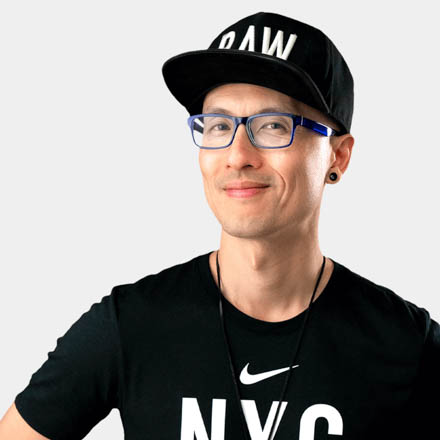
    Chris Do

    Chris Do

    Founder, The Futur™ · July 29, 2026

    The professional mask has a cost

    A professional can become so acceptable that there is nothing left to recognize. The risk is not embarrassment. It is interchangeability. Chris Do, the creator of the Unblend Yourself workbook, approaches that problem through his experience running a service design company and testing personal branding exercises in virtual and in-person workshops.

    His perspective matters because the tension was once practical, not theoretical. While running a company handling large projects, he worried that expressing himself publicly would threaten the business supporting him. A personal opinion, an unconventional outfit, or an unfamiliar tone seemed capable of putting commercial relationships at risk.

    That fear supplies the central problem of this podcast conversation: the habits that make someone look professionally acceptable can also conceal what makes that person worth choosing.

    Do describes a professional mask assembled through repeated acts of accommodation. Say the expected thing. Avoid upsetting anyone. Present the version of the self that causes the least friction. After enough repetition, the performance becomes difficult to distinguish from identity.

    The consequence reaches beyond an undistinguished social feed. Someone who continually edits out personal convictions can lose track of those convictions altogether. The mask does not simply hide a person from the audience. It can hide that person from themselves.

    Do traces the workbook to three years of research, testing, and experimentation in workshops. Its purpose, as he describes it, is to make that reflective work available outside a scheduled group experience, without requiring everyone to move at the same speed.

    That distinction matters. A question about personal values is not equivalent to a production task. Finishing an exercise quickly does not establish that its answer is honest, useful, or even fully understood.

    The workbook is intended to create room for questions that get crowded out by professional routines: what someone believes, what they have buried, and how their current identity relates to the person they once expected to become.

    This is not a demand to recover a pristine childhood self. It is an examination of what happened between early possibility and adult permission. Which choices were genuinely chosen, and which became permanent because they once made fitting in easier?

    The question sits alongside the tension named in Living in the Dogma of your Parents: an inherited expectation and a deliberate identity are not necessarily the same thing.

    Do's proposed alternative is neither indiscriminate disclosure nor a louder professional performance. It is a closer relationship between what a person believes and what other people can actually perceive.

    A personal brand needs a recognizable person behind the expertise.

    Before that person can become visible, however, a more immediate obstacle has to be confronted: the imagined consequences of being seen.

    The audience is not watching that closely

    Do identifies making videos with Jose in 2014 as a turning point in expressing himself at scale. He had already been interested in provoking reactions through words, behavior, and clothing. Video changed the size of the audience and, with it, the apparent size of the risk.

    His concern was specific. If he showed more of himself, would clients withdraw? Could an expression of personality cost him work that a more neutral presentation would have protected?

    The first lesson was less dramatic than the fear. Clients were occupied with their own businesses and lives. They were not necessarily examining every post or listening to every conversation for evidence of disagreement.

    “Nobody's really paying attention to you,” Do says.

    It is a deliberately blunt corrective to the feeling of being under constant examination, not a promise that public behavior has no consequences. His account explicitly leaves room for damaging, sensational conduct. The point is that ordinary self-expression and a business-ending controversy are not the same event.

    The second lesson was that acceptance had more room in it than he had assumed. Some people responded positively to the person emerging from behind the service provider. Others did not. For Do, that separation became useful information rather than automatic evidence of failure.

    His examples are deliberately ordinary:

    • A floral print or an unusual color can prompt admiration from one person and discomfort from another.
    • A positive account of therapy can help someone considering it while irritating someone who rejects the subject.
    • A strongly expressed belief can create recognition without creating agreement across the entire audience.

    These are not instructions to manufacture a dispute. Do distinguishes conviction from contrarian performance. Saying something meaningful because it matters is different from saying something inflammatory because conflict generates attention.

    His standard is that an expression should “both compel and repel.”

    The attraction is only credible if the possibility of rejection remains real. A statement engineered to offend nobody often gives nobody a reason to care. Its safety comes from removing the very distinctions that would allow an audience to recognize an affinity.

    That does not make every negative reaction valuable. Nor does it turn hostility into a quality metric. It changes the interpretation of disagreement: rejection can indicate a mismatch, rather than a defect requiring immediate correction.

    The emotional difficulty deserves its own attention, a related concern in Dealing With Negative Feedback. A positioning decision can be intellectually clear and still feel uncomfortable when an actual person objects.

    Do's account suggests a measured process rather than a theatrical reveal. Show something more specific. Observe what actually happens. Separate the anticipated punishment from the response that arrives.

    The professional mask promises protection by hiding difference. His experience suggests that some of that protection is purchased against a danger larger in imagination than in practice.

    A tutorial is not a complete identity

    The conversation becomes most revealing when the host, who describes a decade building a video production business, struggles to imagine content beyond that expertise. Video is familiar territory. It offers subjects, authority, and a clear reason to publish.

    Do does not dispute the usefulness of the knowledge. He disputes whether usefulness alone makes the person identifiable.

    “Talking about what you do is not how you build a personal brand,” he says.

    The line is intentionally categorical, but the fuller argument is more precise. A tutorial can demonstrate competence without revealing philosophy, judgment, or lived experience. It can answer a practical question while leaving the instructor effectively anonymous.

    Do offers a recognition test: replace the speaker's voice with a robotic one and obscure the face. If the same script could belong to almost anyone, the content has transmitted information without transmitting much identity.

    The opposite extreme does not solve the problem. A compelling personality can attract attention while offering little practical help. Do recalls an earlier style of online creation built around simply appearing on camera and being interesting enough to follow.

    His preferred approach sits between those poles:

    • Utility gives the audience something useful, helpful, or capable of producing a change.
    • Personal story reveals the experience and perspective behind that usefulness.
    • The combination gives people a reason to prefer one practitioner's approach over another's.

    The distinction is not tutorials versus storytelling. It is transferable information versus information shaped by a recognizable mind.

    For the video professional, changing the label from production to strategy does not automatically resolve the identity problem. Strategy can describe a different service, including audience building, reach, or conversion. It still does not establish who the strategist is.

    A category describes the work. A personal brand gives that work a particular source.

    Do uses bottled water as an analogy, concentrating on the story surrounding an otherwise familiar product. Where it comes from, how it is presented, and what its origin signifies supply a narrative that a buyer can attach meaning to.

    The useful part of the comparison is not a claim that all products are materially identical. It is the distinction between describing an offering and explaining why this particular offering feels different.

    For a service professional, provenance is personal. Experience, conviction, and interpretation provide context for the method. They explain why the same technical problem can receive a different treatment from two capable people.

    That is the connection to Storytelling Is A Superpower: narrative is relevant here because it carries the person, not because every piece of instruction needs a decorative anecdote.

    The host's resistance makes the issue tangible. Expertise feels safe because its boundaries are visible. Identity requires revealing something that cannot be reduced to a list of deliverables, even when those deliverables remain central to the business.

    The work must pass through a mind

    Self-knowledge can become another excuse not to publish. The host raises that objection directly: if someone already struggles to make a post, assigning extensive inner work can make the threshold feel even higher.

    Do rejects the idea that permission to create depends on completing a workbook. People can publish whatever they want. His distinction is between beginning and being intentional about what that beginning is meant to achieve.

    He also challenges the polished self-description that often passes for personal branding. People readily present strengths, achievements, and competence. They are less accustomed to examining the uncertainty or vulnerability that complicates that picture.

    For Do, the flawless presentation creates distance. A person who appears permanently capable and composed offers few points of contact for someone who knows their own life is less orderly.

    That does not establish an obligation to disclose everything. His argument is narrower: an identity assembled exclusively from flattering material can feel less human than one that acknowledges an honest limitation.

    The same principle applies to knowledge. Do distinguishes having read something from having learned it. Reading provides exposure. Learning becomes visible when someone can internalize an idea, explain it, and use it through their own judgment.

    When the host identifies storytelling as something he wants to teach but does not yet feel confident teaching, Do describes a preparation process:

    • Study books on storytelling rather than relying entirely on an initial opinion.
    • Examine films, stories, and plays for the structures connecting them.
    • Discuss emerging ideas in conversations and small workshops.
    • Notice which explanations connect before turning them into broader content.

    The research is not the personal brand. It supplies the material from which a distinctive explanation can emerge. That distinction resolves the host's concern that studying a subject simply produces another how-to account.

    “When I say learn, I don't mean read,” Do says.

    An idea changes as a person understands it. One detail receives more emphasis. Another gets removed. A different example becomes the clearest route into the subject. The resulting explanation reveals choices as well as knowledge.

    Do contrasts mechanically describing how to tell a story with telling an effective story and then explaining the decisions behind it. The second approach makes the method visible through the practitioner's own performance.

    Feedback also becomes a way of discovering value that the practitioner overlooks. Something that feels obvious to an experienced person can be unfamiliar to someone else. Explaining it exposes the gap between private familiarity and public usefulness.

    Conversation therefore serves two purposes at once. It tests whether an idea makes sense, and it reveals what others find distinctive about the person explaining it.

    Publishing is no longer simply a choice between complete self-understanding and blind action. There is a middle path: study, interpret, explain, listen, and let the emerging work reveal more of the person making it.

    A position needs something to oppose

    The workbook itself becomes evidence that Do's approach is not fixed. He describes recognizing that a document of more than 100 pages asked for substantial inner work. Some people needed a smaller point of entry before they could engage with the larger task.

    During a conversation in Japan, a friend challenged him to offer frequent exercises with less intellectual effort required for each one. Instead of leaving participants with one large problem, the alternative was a succession of smaller tasks and check-ins.

    Do took that advice into another workbook, designed around a quicker experience. The change was not simply shorter copy. It required different exercises and greater clarity about the essential decisions.

    The resulting model connects three elements:

    • The one thing to be known for. A clear association, reduced to a single word when possible.
    • The enemy. The condition or problem the person is on a mission to remove.
    • The rallying cry. The phrase that gives an audience a shared direction.

    The relationship among them matters more than the order in which they are discovered. Do says clarity about one element can help reveal the other two. A conviction about what needs to disappear can be as useful a starting point as a desired professional reputation.

    The enemy is not necessarily another person or business. Do gives judgment as one possible thing to oppose. Framing the enemy as a condition keeps the exercise connected to a mission rather than reducing it to a contest with a named rival.

    The rallying cry performs a different job. It translates a position into language other people can recognize and repeat. It bridges what the person represents and what the community wants to change.

    When the host proposes YouTube strategist as his desired association, Do presses on whether that space is realistically available to him. Wanting a position and having a credible path to becoming strongly associated with it are separate matters.

    Do's advice is forceful: examine the existing field before committing to it. His own proposed horizon is one to two years of intentional effort. That is his strategic threshold, not a universal timetable for building a business.

    The host hears discouragement in this. Do sees permission to define a more specific lane. If personal branding is too broad to own, he can concentrate on the particular idea expressed by unblending.

    The distinction is between abandoning the ambition and refining the territory. A narrower association can clarify an approach without requiring the person to become someone else.

    This concern with recognizable positioning belongs beside The Personal Brand Framework That Gets You Hired. Here, the decisive move is connecting the desired reputation to an actual belief about what should change.

    Without that connection, a title remains a title. The model asks for a reason that the title should matter.

    Clothing is already making the introduction

    The conversation's three principles bring the internal and external work together. Do names meaningful difference, the courage to be disliked, and aesthetic discernment. The last principle is not an ornamental addition to the first two.

    It is where they become visible.

    Do treats clothing as a tool chosen for a job. An apron has a purpose in a kitchen. Scrubs serve a purpose in a hospital. A speaker's outfit also performs a function, even when its wearer has not consciously decided what that function should be.

    The familiar answer is professionalism. A sport coat and trousers can signal seriousness and preparedness. Do does not deny that function. He asks what else the same outfit communicates when it resembles everyone else on the stage.

    For someone advocating difference, adopting the standard speaker's uniform can weaken the message before the presentation begins. The visual delivery and the spoken argument point in different directions.

    His own objective is to make the claim visible. An unconventional appearance tells the audience that the presentation is not intended to feel interchangeable with the one before or after it. Whether people like the choice is a separate issue.

    “What job are you trying to solve?” is the question behind the outfit.

    The answer changes with the setting. Onstage, Do wants the appearance to support a message about difference and intentionality. At a social gathering, it serves a more private need.

    He describes himself as a socially awkward introvert who enjoys other people but struggles to start conversations. Walking into a room where everyone seems to know each other brings back the feeling of being the unfamiliar child at school.

    A distinctive hat or accessory gives someone else an opening. The appearance makes it easier for another person to ask a question, comment, or approach. What looks like an effortless display of confidence can also be a practical response to discomfort.

    That disclosure changes the meaning of the styling. It is not simply a performance of boldness. It is a tool for creating a social interaction he finds difficult to initiate himself.

    Another story makes the limits of visual self-permission concrete. A friend teases Do about carrying a bag he believes he could never wear himself. Do invites him to try it on. Positive reactions from people nearby challenge the friend's prediction.

    The point is not that everyone needs the same accessory. It is that an assumption about reception can harden into an unnecessary restriction. Trying the thing supplies evidence that speculation cannot.

    Aesthetic discernment, in this account, does not mean looking expensive or copying Do's wardrobe. It means understanding the signal, the setting, and the task.

    The right visual choice is the one that helps the message arrive intact.

    Difference becomes credible through alignment

    The three principles are most useful when treated as connected obligations rather than independent tricks. An unusual outfit without a meaningful position is only an unusual outfit. A strong conviction kept permanently private cannot help an audience recognize the person holding it.

    Do's framework asks for the inner position, the willingness to expose it, and a presentation capable of carrying it:

    • Be intentionally or meaningfully different. Establish a distinction that gives people a reason to recognize the person, not merely the service.
    • Have the courage to be disliked. Accept that expressing a real preference or conviction will not produce universal agreement.
    • Be aesthetically discerning. Make the visual presentation serve the intended job rather than defaulting to an unexamined uniform.

    The order is significant. Starting with appearance can produce a conspicuous shell. Starting with convictions gives the appearance something to express. Courage keeps that expression from being edited back into neutrality at the first sign of resistance.

    The same logic applies to content. A useful lesson gains personal meaning when the audience can see the judgment behind it. A personal story earns its place when it illuminates that judgment rather than merely announcing that the creator has a life.

    This is why the host cannot solve the problem simply by exchanging video production for video strategy or storytelling. Those choices establish a subject. They do not automatically establish a perspective on it.

    The practical work is to locate the connection between subject and self. What experience shapes the explanation? What belief determines the method? What problem makes the work worth doing beyond the transaction?

    Those questions need not delay publishing indefinitely. Do's workshop examples offer a smaller arena for answering them: a conversation, an explanation, a reaction that reveals an overlooked strength. The work can become clearer through contact with other people.

    Nor does the process require treating every boundary as a personal defect. Do's own progression was measured. He tested expressions of identity, observed the consequences, and revised his assumptions about what was possible.

    The challenge is to distinguish a considered boundary from a rule that survives only because it has never been examined.

    At the business level, that distinction changes what a prospective client encounters. Instead of a generic expert followed by a collection of personal details, there is a coherent person whose expertise, beliefs, and presentation reinforce one another.

    At the individual level, it changes the task from inventing a marketable character to making deliberate choices about an existing self. The goal is not maximum exposure. It is enough clarity that the right people have something specific to recognize.

    A neutral tutorial can still help someone. A conventional outfit can still suit a room. Neither is inherently wrong. The problem begins when an unexamined default is mistaken for a deliberate identity.

    The professional mask can make someone acceptable. It cannot explain why that person should be chosen.

    People are so afraid of alienating everyone that they wind up saying nothing to everyone and they're just landing themselves into oblivion, into irrelevancy. So when you say something and you say something that is based on your convictions, not to say it to rile people up, I'm not saying to be a contrarian, to be divisive, but to say things that have meaning to you, it should both compel and repel. Chris. Yes, sir. Welcome back to the show. Appreciate it. You just launched a new workbook, Unblend Yourself. Tell me a little bit about what inspired that. Unblend Yourself comes from philosophically this idea that we have been socialized to blend in to get along. And depending on what culture you come from, it's stronger in some than others. But we're wearing, in my opinion, a very, for some people, a professional mask. You show up, you say certain things and you play your cards. You don't try to upset anybody. And then if you do this for long enough, you forget who you are, what your core beliefs are, and you're afraid to go against the grain. And this is amplified across social media. We're so fearful of saying our thoughts, expressing ourselves in our true self, dressing the way we want to, because we're afraid of the backlash. So Unblend Yourself is a culmination of the last three years of research, testing, experimenting in virtual and in -person, in real life workshops, where I'm testing concepts to help people figure this out for themselves. Like, who were they? meant to be in this lifetime? And who were they when they thought to do it themselves when they're seven years old? This is what I want to be when I grow up. And something happened to that plan. Did you always have the thought of making this book versus like a sales book? Or like, how did this come together? I realized that my ability to teach as many people as I want is finite if I do it as an in -person experience or even through the price barrier. But I believe this is fundamental to our overall well -being, our sense of self. I want to be able to do something that's a standalone thing that can be done at your own pace in the privacy and comfort of your own home that you can go through and ask yourself these deeply personal. through the price barrier. But I believe this is fundamental to our overall well -being, our sense of self. I want to be able to do something that's a standalone thing that can be done at your own pace in the privacy and comfort of your own home that you can go through and ask yourself these deeply personal and profound questions that require a really kind of contemplative, reflective moment. And it's not always conducive to do around people on a certain timetable. So I recommend people go through the book at a certain pace that they feel comfortable with. And the goal is not to try to finish it as quickly as possible, but to learn about things that you kind of bear way deep inside of you and to have some honest conversations with yourself. When did you start to unblend yourself? It's been a progression of exploring, is it safe? I'm going to be okay. I think for me, doing video with Jose in 2014 was how I was able to do this at scale. So prior to that point in time, it's not like I was sitting there trying to fit in. I've always been intrigued by this idea of pushing buttons and using the things I say, my actions and the way that I dress to kind of push people's buttons. And this has happened, but now it's happening at a much larger scale. So it's kind of that expression of you can't put the genie back in the bottle. So you do it in measured steps. Like if I showed up and dressed like this and said these things, what is the consequence of that? And like many things, there's a quote. The quote is something like, the human mind once expanded does not shrink back to its original size. And this is like many things. When you find out that these self -imposed rules that you live by are actually just that self -imposed and not real rules, they're not laws, that you start to be more free. It's this classic story of a dog who wears electric shock collar. And when they approach the perimeter to a fence that they're not supposed to go beyond, send them a little electric signal. After a while, they learn that there's a perimeter and you can just take it off and they never cross a boundary. And the same is about an elephant who's one since childbirth is held by chain and eventually it's just a string and they never push past. We are like that. We learn really fast about what we can and cannot do according to certain societal norms. And then we play small the rest of our lives. We never realize that once we leave the city in which we grew up in or we leave a group of friends that we thought, this is my core group, I must need them always. We are like that. We learn really fast about what we can and cannot do, according to certain societal norms. And then we play small the rest of our lives. We never realize that once we leave the city in which we grew up in, or we leave a group of friends that we thought, this is my core group, I must need them always, or the job that we've always had, we learn that the world's much bigger. There's a lot more to us to give. And I think that's one of the most liberating things. So with Jose, I guess, what was that chain that you had to let go? Like what was holding on to you? I think the biggest hurdle I had to get through was, if I am myself, what kind of negative impact is it going to have on my business? Because at that point in time, I'm still running a service design company, doing really big projects. And if I say this, does it mean that I lose that? And that was the thing I need to figure out. So a couple of things to learn in that process. And number one, nobody's really paying attention to you. So in our own little bubble, I think we falsely believe we're the most important thing in the world because we have no other thing to reference. We're always thinking about ourselves. We're looking at ourselves. We're just dealing with ourselves most of the time. And we don't realize clients are busy. They're thinking about themselves. So they're not sitting there looking at every social post that you make and just listening to every podcast like, oh my God, we disagree politically. We can no longer work with that person. Unless you do something super sensational in a way that's not good for you. And number two is there's a wider level of acceptance for you than you think. So even if they were paying attention, what will inevitably happen is as you show more of yourself, some people get to say, I like that guy or I like her or I don't like that person. And I think that's a good thing. So when you say something, it should both compel and repel. It should compel people to say, yo, I get your vibe. I get what you're putting down. I want to be around you. This is cool. Let's chop it up sometime. And it should repel that people are like, I don't like the way you think. I don't like that expression of whatever. For example, sometimes I wear fashion that is unpalatable for some people. If I wear some kind of weird, crazy color or floral print for some people, some straight people, they might think that's too zesty. You can't do that. Or if I talk about therapy and how that's been one of the biggest return on investments I've ever had, they're like, well, don't bring your therapy agenda to this conversation. Everybody needs it. I never said everybody needs it. But if you're searching your loss, it's worked really well for me. Some straight people, they might think that's too zesty. You can't do that. Or if I talk about therapy and how that's been one of the biggest return on investments I've ever had, they're like, well, don't bring your therapy agenda to this conversation. Everybody needs it. I never said everybody needs it. But if you're searching your loss, it's worked really well for me. I recommend you give it a try. I'm not trying to impose anything on anybody. For the people who feel called, try it. If not, no worries. Find whoever you think is most aligned with the way that you want to learn. I think a lot of us get stuck in a place where we want to make content as we grow a personal brand, but we talk about what is it that we do versus who we are. How do we navigate that road? Okay. Some very different things. Before I answer that question, I want to talk about the comments. Okay. Everyone has an a -hole and everyone has an opinion. That doesn't mean I want to see either. Let's just put that out into the universe, okay? Yeah. And everybody needs to know that. Sometimes they both stink. Like, so people would say things like your hat or, well, who do you think he is? He's trying too hard. Or every time I tune in, there's another necklace and it's just getting out of control. Here's where it gets real interesting. When you're in real life and people start saying that thing, now you're dealing with heat in real life. But people are very brave behind your back. They're not so brave in front of you. Here's a classic example. I think you were there. We're at Ford. I think it's two years ago and at their main event. Ford is run by Neil Dingra. It's for mortgage professionals and real estate people. My buddy Trevor, Trevor York is there. He goes, Chris, Chris, I love the way you dress, but I don't fully understand it. And he's giving me a hard time as a straight white guy. He's giving me a hard time. But with love, Trevor and I, we have a great relationship. And he's like, I said, I could never pull off that man bag that you're wearing, that purse. And I said, are you sure? And why don't you try it on? And he would try it on. And all the women around it, part of the staff is like, oh, Trevor, you look so good. He goes, do I? So that's a presumption of reception of how people would read you and also a limiting belief about what you can and can't pull off in this life. And the next thing you would do is say, oh, what is that? Did you take that belt buckle off the airplane? Like, does TSA know about this? Trying to give me a hard time. I'm like, I'm good with it. You want to play? We can dance. And we have these conversations about what makes you comfortable and comfortable. And now this is great because Trevor, his game has changed. He's dressing differently. And he's like sending me DMs like, hey, is this a good fit or not? And so I like that. Like, dude, does TSA know about this? Trying to give me a hard time. I'm like, I'm good with it. You want to play? We can dance. And we have these conversations about what makes you comfortable and comfortable. And now this is great because Trevor, his game has changed. He's dressing differently and he's like sending me DMs like, hey, is this a good fit or not? And so I like that for each person. It doesn't have to be around fashion. It could be, oh, you never thought you could drive that kind of car or you never thought you could live in that house or that neighborhood or date that kind of person. We have so many limiting beliefs. Let's get into your question now. Your question is, why do people talk so much about what they do versus who they are? Because there's a lot of templates out there that exist. We don't know what to talk about. We're told from very young age, don't talk about yourself. Don't think about yourself so much. So what do we do? We deflect. What we're realizing is in the 21st century, we have an embarrassment of choices. We're kind of inundated and overwhelmed with how many choices we have in the world. In fact, there's a cognitive bias. It's called the paradox of choice, that the more options that we have, the harder it is for us to make a decision. And the reason why potentially some of your clients don't choose to follow you or to reach out to you is because they can't tell why you're different than anyone else. And so therefore they shut down. And you and I both know this. Anytime you need to do something you don't know about, you start to do too much research and you're like, I'm just overwhelmed. That's why it just takes us too long to do something. Getting back to why people don't talk more about themselves. Culturally, it doesn't feel right. We don't know ourselves. We have low self -awareness. And if we have high self -awareness, we're not quite sure what's interesting to other people. Historically speaking, we are the worst judge of our own value. I could do something. You're like, dude, how'd you do that? Why'd you even move that there or put that thing on? How'd you know that's going to work? And I'm like, doesn't everybody know that? Yeah. Like, well, I don't explain it to me and then I would explain it to you and depending on your reaction to me explaining to you, I think maybe I'm onto something. Maybe somebody else like you would want to know this thing. And that begins the whole process of understanding, wow, something I take for granted is valuable to other people. So if we want to learn more about ourselves, we need to put ourselves in a position where we're explaining to people what it is that we know, think and believe and judging by their reaction. And if you get enough feedback from different types of people, you might discover something. You weren't even aware about yourself. I think you're so aligned with who. So if we want to learn more about ourselves, we need to put ourselves in a position where we're explaining to people what it is that we know, think, and believe, and judging by their reaction. And if you get enough feedback from different types of people, you might discover something you weren't even aware about yourself. I think you're so aligned with who you are. So I think it's easy for you to talk about these things because you're well -read and you do all these different things. But I think for a lot of us, me being in video production and build my business for the past 10 years around video production, when I'm like, hey, Chris, I want to make this video about that. You're like, no, that's boring. Talk about this other thing. And I don't see it the way that you do. For me, it's so easy. Like, well, I can build a personal brand talking about video. But you're like, well, that's not really building a personal brand. But I think for you, you're so aligned that when you say this, yeah, it makes sense for you. But I don't feel like it'd work for me. What wouldn't work for you? Like, to not talk about video. It's like, I don't know how to not build a personal brand around the thing that I've been doing for 10 years. Okay, let's clarify. Talking about what you do is not how you build a personal brand. You're basically doing tutorials. Nobody has any sense of who you are, what you stand for. All the things you've learned in life, it's just manifested in how -to. So if we said this, if we put a robot voice on you, but it's the exact same script and we blur your face, would anybody be able to tell it's you? Because you're not really sharing your philosophy and your ways of the world. Now, let's contrast that against some people who are very strong personal brands, but maybe not put a lot of value into the world. We were talking to manager John earlier today. He's like, in the OG days, all you had to do is turn on the camera and be a personality. So we got to know those people really well and they grew gigantic accounts and have massive fandoms. But to the average person, it's like, what value did you give to me? So the solution is somewhere in between the two to say, like, I create a lot of value in the world. I give you a lot of utility. I'm useful. I'm helpful to you creating transformation. But I'm also weaving in my story about who I am. So you have a choice. Do I want your brand of video production or do I want someone else's brand of video production? The classic example I always give to, and I'm sorry if people are bored out of this until they can understand this concept. Water is water. is two molecules of hydrogen and one molecule of oxygen, H2O. When we put that together, we have water. is water. comes from the sky. Water comes from the earth. production. The classic example I always give to, and I'm sorry if people are bored out of this until they can understand this concept, water is water. Water is two molecules of hydrogen and one molecule of oxygen, H2O. When we put that together, we have water. Water is water. Water comes from the sky. Water comes from the earth. It comes from every place, and it's theoretically free and abundant and available. Yet, we all make this decision to go into the store and buy a bottle of water for $2 or $25 for the exact same amount. Why does one command $2? Why does one command $25? And the answer is the story that each bottle brings. And there's a fancy word that's called provenance, like where something comes from. This came from the Swiss Alps. This came from the Amazon River. This came from parts of Africa or the Canadian Glacier. This is never touched by man. This is vapor distilled. They're all stories because marketers have learned that we need a story. Humans are meaning -making machines that we need to have meaning in everything that we do. So if you tell the story, I allow myself to accept your meaning. So when you don't tell your story, there's no meaning. There's no connection. So if I wanted to start 2026, I want to start building my personal brand. I want to start telling my story. What is that first post that I would start off with? Well, you're talking about the tactics of creating something. Before we can create something, we need to know, well, who the heck are you? And there's a good chance you don't even know who you are. Hence the questions I pose in the book and the workshops. Well, who are you? What are your beliefs? What are your values? And what people tend to do is they want to talk about all that they're good at, all the strengths and the beautiful things. We're very used to that. This is why people appear too perfect on TV or on social media. It's because they're presenting their very best self on their very best day. That's really boring to me. And it reeks of inauthenticity. So I say to people, look into your shadow self, the things that you feel great vulnerability around, things that might bring anxiety or make you nervous. Let's figure out how you can incorporate that into you because that makes you much more interesting. I don't know about you. I'm not perfect. And when I see perfect people, which they don't exist, but they present themselves to me, there's something about it. It feels like they're driving a wedge between me and them. My ability to connect with them is not going to be great. I hear you on doing the deep work and trying to find out more about yourself before you make the first post. But I think for some of us, we get so paralyzed. they don't exist but they present themselves to me there's something about it it feels like they're driving a wedge between me and them my ability to connect with them is not going to be great i hear you on doing the deep work and trying to find out more about yourself before you make that first post but i think for some of us we get so paralyzed of even just doing a workbook like some of us can't even make a post just to make a post so then you say like hey you got to do this deep work before you make something are you saying that's doing no i'm not saying that okay you can make whatever you want in fact all over the internet is people making whatever they want it's not stop them someone will figure it out some of them won't but if you want to be more intentional before you make the work spend a minute so i'll give you an example what is something that you've wanted to teach but you're not fully confident that you know how to teach it storytelling great answer so storytelling if you want to go out and teach storytelling you can say here's what i feel about this and based on my own life experiences this is what i know which could be a great video but a learned person somebody who's like much more intellectual curious would say well what are the top five books on storytelling and can i watch movies read stories and watch plays and start to understand the invisible structure that binds them together what is the thing that makes the top 100 films of all time great and then you can do that research and you can start thinking about it and then you can maybe come up with a couple of things that are obvious between these things and a couple of things that are not obvious that you start to share with the world you could do this in intimate conversation with you and another person off camera you could do this in small workshops virtual workshops and then you start to see what ideas stick and now you have something and when you go and make content around that something you thought about that's going to hit much harder can we see the difference between these two approaches i want to say no okay because that to me feels like what you just said of like you're a how -to person like if you're coming if you're like looking at these books like hey here are five books for you to go read how is that different than what you said to like to be a how -to person okay these are two different arguments we're making i ask you can you see the difference between someone who wings it who doesn't do any research okay and one person who does a deep dive and just try to like fill in the knowledge gaps they may or may not have okay which one will be more valuable the second one the second one right the problem is most people don't go this path as you know so when you say i don't know how much work i need to do it's like have you done the basics so now who doesn't do any research and one person who does a deep dive and just try to like fill in the knowledge gaps that they may or may not have okay which one will be more valuable the second one the second one right the problem is most people don't go this path as you know so when you say i don't know how much work i need to do it's like have you done the basics so now that you have structure and you've learned these things when i say learn i don't mean read i mean learn like you can internalize it you can share ideas what happens inevitably is once you learn something it gets mutated by your own brain in a good way you say a little differently you embellish this and you remove that and all of a sudden it starts to become more yours and less theirs now if you were to learn about storytelling you're teaching storytelling one way is mechanically say here's how you tell a story the other more interesting way is you tell an amazing story and said do you want to know why i did that here's what happened that becomes part of your brand but then don't you just become the storytelling brand guy yeah that's what you said you wanted to learn how to do storytelling well i wanted to figure a way out that i'm i just don't become that person because like why so what's the difference between me being the video guy or me being the storytelling guy okay what is video guy i'm the guy that you come to when you need like videos done and what is it that's the underlying layer that you're selling views reach from a clients if i'm a strategist to help people get views conversions audience building all that kind of stuff i don't talk about video production at all i talk about video strategy okay that's very different okay but let's say i talk about video strategy okay i thought when you said about being building your personal brand isn't about talking about what is it that you do that's correct so then wouldn't i just be the video strategy guy yeah so how do you haven't done anything to tell about your personal brand yet so how do you get started with that there's a couple things you need to do i've developed another workbook because i realized unblend yourself is dense book is 100 plus pages it's deep inner work and people like their heads are melting right now so i was thinking how do i provide a quick win i'll share a story you and i were in japan i'm having a really good conversation with my buddy chris sergio he goes chris i love what you're doing can i give you some advice i'm like sure please and he's a brilliant guy so of course i'm gonna take advice from him he said that what i find to be effective is when there's high frequency of exercise I'll share a story. You and I were in Japan. I'm having a really good conversation with my buddy, Chris Sergio. He goes, Chris, I love what you're doing. Can I give you some advice? I'm like, sure, please. And he's a brilliant guy. So of course, I'm gonna take advice from him. He said that what I find to be effective is when there's high frequency of exercises, but low intellectual lift. What that means is instead of giving us a big thing to figure out that we don't talk about for three days, give us lots of little things, quick check -ins. So we feel like we're making progress on things, little tiny tasks. And it's very different than how I think. I'm a deep diving kind of guy and these seemingly complex problems for me are not that complex, but for other people, it's very complicated. So I took that to heart. So when I went to do the next workbook, I had the goal of how do we lower the lift, the mental lift, and how do we make it fast, fun, and easy that somebody can do it 30 minutes and feel like they have some success. So what I had to do is develop a whole set of different exercises and it gave me a lot of clarity that, dare I say, I might actually even like more than the 100 -page book. Okay, so I'll share it with you. There are three things. We'll call this your unblend essence or essentials or foundational layer or something like that. And there are these three things. The cool thing is you only need to know one of these things to figure out the other two. So what I want you to imagine is either a triangle or three overlapping circles, the Venn diagram. Where they meet in the middle is where you are in your personal brand. And they are, what is the one thing you want to be known for? And I'd like to reduce it down to a word if possible. There's some conditions there. So first, what's the one thing you want to be known for? Number two, who's the enemy? What are you on a mission to rid the world of? What do you want to eradicate? And this, there are only so many versions of this, right? So it's universal. There's probably 12 universal concepts that just made up the number that everybody's trying to get rid of. Judgment, let's say. And then the last one is, and it's the bridge between these two things. You're one thing, the enemy, the thing that you're trying to eradicate the world of, and your call to arms or your rallying cry. The phrase that when you say activates your audience and the community. And so do you know the one thing you want to be known for, Drigo? Or of these three things, what do you think you're clearest about? A YouTube strategist. That's what I want to work on for 2026. Perfect. YouTube strategist. The criteria now, phrase that when you say activates your audience and the community. And so do you know the one thing you want to be known for, Drigo? Or of these three things, what do you think you're clearest about? A YouTube strategist. That's what I want to work on for 2026. Perfect. YouTube strategist. The criteria now we have to ask ourselves this question. Can you own this space? Because the world rewards number one, not number two, three, or four. If you cannot own this space within a relatively short amount of time, when I say short, between one to two years, then you should not try. Something from Seth Godin's book, The Dip, is we should predetermine if we're going to be successful. And once we determine we can be successful, we never quit. What people do is they don't think, they try things and they quit. They think and they try things and they quit. They never get anywhere. So if you look up right now on the internet, type onto Google or Gemini or anything and say, who are the foremost thought leaders in the YouTube strategy space, did a list, double check your homework and say to yourself, can I with intentional effort overtake them in a year's time? If you think you realistically can, I would suggest you go for it. But why do I need an enemy? Like if I'm just trying to be the YouTube strategist, why do I need an enemy for that? You need to get rid of something in the world. Because we are more united in a common enemy than we are in a common friend. And all the best brands in the world, as far as I know, they have an enemy. Well, pick a brand. I guess it'd be easier if we put this to a person versus a company. Okay. Let's do Brian Johnson. Oh, glad you brought that up. Are you familiar with Brian Johnson? A little bit. Okay. He is the guy who, I guess for lack of a better term, looks like a vampire. Sometimes he's considered the most measured man. He spends over a million dollars a year biohacking so that he doesn't have to age. So we say, what's the one thing he wants to be known for? Not dying or death? Okay. But the word would be something like longevity. Okay. I see the twist there. Okay. Okay. So longevity. He wants to live for as long as possible. And you can say aging reversal, his biological age is going backwards. His chronological age, nobody can stop, goes forward. So when he does all his chemistry and they look at it and his biology, they're like, wow, you're not 48, you're 36. And he takes a thousand vitamins. He's doing all kinds of radical treatments, red light therapy. He's doing everything he can to grow back. age is going backwards. His chronological age, nobody can stop, goes forward. So when he does all his chemistry and they look at it and his biology, they're like, wow, you're not 48, you're 36. And he takes a thousand vitamins. He's doing all kinds of radical treatments, red light therapy. He's doing everything he can to grow backwards in his age. What's his enemy? What's he fighting against? Death. That makes sense. Do you see how they're connected? He wants to be known for longevity and he wants to get rid of death. So longevity and death. What is his rallying cry to let everyone know we're on the same mission? Let's go do this thing. Do you know what he says? No. He says, don't die. And it's perfect. So I want to be known for longevity. My enemy's death. My rallying cry is don't die. So he has a conference, the don't die conference. He might have a package of supplements called don't die. So now it becomes really clear and he can build brand extensions from this and it's super clear now. So whenever you think of longevity, he owns that space now. So there are a lot of other people like my friend, Dr. Ken Vu, and he's trying to like be for longevity. I'm like, I can't remove Brian from my mind. So you're going to be number two. And I'm pretty sure people in this space know Brian Johnson, but they don't know Ken Vu. And that's a problem. Okay. Now there's mathematical parts that support this. The number one leader in any vertical is three times bigger than number two. Number two is three times bigger than number three. So basically the three top players in the market control the entire market and there's like scraps for everybody else. So the remaining 97 % fight for crumbs. If you can't be number one, don't even play. That's my opinion. Who's the first person on the moon? You know, I'm sure. Who's number two? No idea. Who's the first person to run the four minute mile? Roger Bannister. Who's number two? Couldn't tell you. Right. Yeah. So let's say, for example, who is the person who's going to teach you to unblend yourself? You should say my name. And then who's number two? We don't care. Right. That's the problem. But I feel like that's so discouraging. Why? Well, you're saying like, hey, if you can't be number one, then you shouldn't even try. You shouldn't even try. So like if I look up on YouTube and like the top four YouTube strategies, you're like, oh, they didn't even bother. So then what do I do? Just find a different lane. Simple as that. Okay. So you say like, Chris, can you be number one in personal branding? Maybe. I'm not sure. But I can definitely be number one in unblend. So like if I look up on YouTube and like the top four YouTube strategists, you're like, oh, they didn't even bother. So then what do I do? Just find a different lane. Simple as that. Okay. So you say like, Chris, can you be number one in personal branding? Maybe. I'm not sure. But I can definitely be number one in unblend. Okay. It's words and words do matter. When you think of why, who do you think of? Simon Sinek. Who else do you think of number two? When you think of vulnerability, who do you think of? Brene Brown. Who do you think of number two? That's what I'm saying. If I cannot out research and storytell and do TED Talks, that is one of the 10 most viewed TED Talks in the world and compete with Brene, who's written so many books, who's been on Oprah, who's been on every single thing you could think of. I'm not going to try to win that game. I'll try to win a different game. Maybe I use the word shadow self. And I want to tell you something. You're like, it's discouraging. I don't see it as discouraging at all. Because if you're number one, it means you're number one and nobody can take it from you. So is this just one part of the book when you actually learned this? So is your book teaching you how to find this one thing for you to be known for? Or are there different elements to the personal branding and what you're known for? There's more than that. There are seven points. But I realized in trying to make it simpler, is it simple enough? I mean, I have a copy here and I've been playing around with it. Definitely something like when I'm on the airplane, I've been going through this. So it's definitely helped a lot. I do see one thing here. You said there's like three principles to personal branding. Yeah. What are those? They are, number one, you have to be intentionally or meaningfully different. Because if you're the same as everybody else, you might as well not have a brand. You have a brand. Number two, you have to have the courage to be just like... That sounds really good because it's coming from a book title that I also like a lot. So if you're different, different gets smashed. Different gets ridiculed. Different is misunderstood. So we know as soon as you have the courage to stand up, people are coming after you. So then you have to have the courage to be disliked. I'm different and I'm cool with that. Number three, and this is the one that's going to surprise most people, is more than 50 % of our brain is dedicated towards visual processing. So to tie it to how we began this conversation is the way I present myself visually signals to other people really quickly before... This is the one that's going to surprise most people is more than 50 % of our brain is dedicated towards visual processing. So to tie it to how we began this conversation is the way I present myself visually signals to other people really quickly before words are formed a feeling. And so principle number three is you have to be aesthetically discerning. If I were to show up in a potato sack with flip -flops, you might think, oh, Chris is really earthy. He's a man of the people. He's keeping it real humble right now. Or somebody else might think, oh, you couldn't be bothered to show up for this. I showed up for you. I can't take you seriously. So what we're doing is unbeknownst to us, we're signaling to people all the time. Who are we? How should you perceive me? So you walk into a room and you have a perfectly groomed beard and you're wearing a super sharp $10 ,000 Italian suit that's tailored. And you walk into the room, people are going to think, oh, this guy, he must be an important person. You come in there with shorts, cargo shorts and a t -shirt with holes in it and sneakers. Who let this kid in a room? Where's security? You can literally be the CEO, but people will interpret you as a certain thing. So what I tell people is this, your clothes are not clothes or tools and tools are designed to solve a certain job. So the question for you is the tools that you have, what job are you trying to solve? This is a really important question. So if you're working in the kitchen, an apron works really well. And if you're working in a car, a jumpsuit works really well, a dark one. And if you're working in a hospital, scrubs work the best. So when you're dressed and you're going to step on stage, what job are you trying to solve? I guess I'm trying to impress. You're trying to impress. Yeah. And how would you impress people? By wearing something unique or sharp. So when you're trying to impress, most people say you're trying to be professional. You want to be taken seriously. And so then what are the tools that you would use for that of all the different kinds of fits you can put on? Most people say, well, sport coat, trousers, maybe a tie, maybe. We don't know. And that would be a pretty reasonable thing. Like I'm trying to be professional. I'm taking this seriously. I wish for you to take me seriously. And we adopt the corporate speaker's uniform. Perfect. The problem is you're also telling them I'm like every other person that's on the stage. I'm actually not. Maybe a tie, maybe. We don't know. And that would be a pretty reasonable thing. Like, I'm trying to be professional. I'm taking this seriously. I wish for you to take me seriously. And we adopt the corporate speaker's uniform. Perfect. The problem is, you're also telling them, I'm like every other person that's on the stage. I'm actually not that special. Maybe you guys should ignore me. Because what I'm going to say is going to be like what everyone else is saying. The way they deliver it is the way I'm going to deliver it. You know how they start with this? I'll start with that. You know how they conclude with this? I'll conclude with that. You see their tone? I will adopt that tone. So you're inadvertently signaling to everybody by adopting the corporate uniform, I'm like everyone else. Please don't pay attention to me. This hurts. Because a lot of people dress this way. So my intention is different. Because I'm maybe more secure in myself. I'm more self -confident. I could give a flying rat what you think about what corporate looks like. What job I'm trying to solve is, I'm going to be different. Whatever you heard before and after may or may not matter, but this will not be the same presentation. I'm not the same person. I actually care a lot about design and intentionality. And I'm going to tell you why it's an advantage to be different by proving it to you, not just talking about it. Imagine if I came on stage and I'm like, dare to be different, and I look like every single other person. The best way to unblend yourself is to look just like everyone else. There would be a mismatch, a misalignment between message and delivery. You see the problem. So I told you before, my philosophy, my ideas are meant to compel and to simultaneously repel. I know if I do something that doesn't repel people, I'm not doing anything of note. If you play it really safe, if you drive down the middle lane always at 55 miles per hour, you're not going to offend nobody. You're not going to break a speed record here. I'm here to break things. So somebody during our conversation at dinner, I said, so what's this all about? You're on stage right now. Why do you look like this? And I like being tested, by the way, because that caught me off guard too. I'm like, oh, I wasn't. It's just theory, man. You don't turn the lens back on me. And I had to think real quick. And I said, so here's something you don't know about me. I hate social events. It took a lot of energy for me even to decide to come to this, even to say, yes, I'll be there. That was a lot of effort for me. And you don't turn the lens back on me. And I had to think real quick. And I said, so here's something you don't know about me. I hate social events. It took a lot of energy for me even to decide to come to this, even to say, yes, I'll be there. That was a lot of effort for me. And my biggest problem as a socially awkward introvert is I don't know how to start conversations with people, but I enjoy the company of other people. And so when I walk into the room and there's 18 people and they all know each other, they're chopping it up like they go way back, I feel like I'm brought back to junior high again. Like I'm the new kid who just transferred into school and I look like nobody and I feel very much the outsider. What I do is I am a provocateur. So I want to wear things that invite people to have a conversation with me so they can say, hey, what's up with your hat? Why did you wear this today? And let's have a conversation. Or are you in the creative space or you must be doing something or you're an important person. I need to talk to you, right? I'm like, am I? That solves most of my problem. So in social circles, the job, unlike on stage, is come talk to me, please. I'd like to have a conversation with you because I think you're a person worth getting to know, but I don't have those skills. You just don't know that's what I'm doing to you. I love that. So what are some ways that people want to support and look into the book? How can we show up for you? A lot of different things. So we have some goals in terms of growing the YouTube channel. You can support us financially by becoming a member. The patron level is one that counts the most, but we appreciate any and everything you do. If you don't like subscriptions or memberships like that, you can just send me money on Venmo to help build this thing. Where can we get the books, the workbooks? Probably just go to future .com. We'll figure out where you can get them. But if you follow me on social at the Chris Doe, you'll know because I'll, I'm not trying to make it a secret. I'll tell you. Anything else for 2026 that is keeping you up at night? Nothing keeps me up at night. I sleep really, really well. But I will tell you something. The next chapter of what holds, what's in store for us in 2026, if all comes to fruition, fingers crossed, because I don't like talking about chicken for the hatch. You're going to say, oh my God, that guy had a dream and he's making his dreams come true and we get to ride along and be a part of it. Not just from a voyeur point of view, but we get to learn through the whole process. That's what I'm doing. Awesome, man. Well, great talking to you as always. Thanks for hosting me on your show. Of course. for the hatch you're going to say oh my god that guy had a dream and he's making his dreams come true and we get to ride along and be part of it not just from a voyeur point of view but we get to learn through the whole process that's what i'm doing awesome man well great talking to you as always thanks for hosting your show of course man thanks for me in the future see you guys in the next one
    Download transcript

    Enjoyed this? There’s more where it came from.

    Get insights on creativity, business, and design from The Futur.

    You can unsubscribe anytime. By submitting, you agree to receive communications and to our Privacy Policy.

    “Talking about what you do is not how you build a personal brand.”

    — Chris Do

    Share