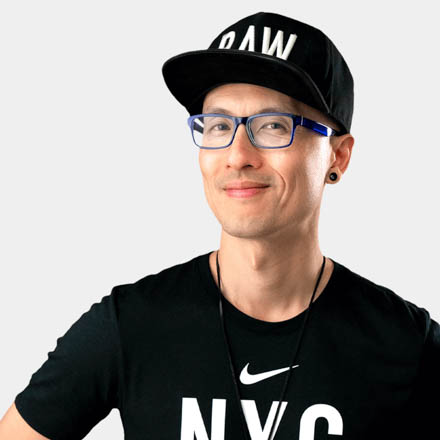
I met my next guest in of all places Dubai and some people are saying Dubai is where the future is at and so it seemed pretty appropriate that I'm speaking to my newfound friend Don who's at the cutting edge of like all things AI. This is Don Allen Stevenson III and you're listening to the future. There are a lot of people who do AI things but then I find them not to be super practical.
And very rarely do I find it to be artistic things that are done with an aesthetic edge and an eye. Don, you're the exception to that. And I want to get into your background.
And once people understand that, we're going to talk about the now and the future. Don, welcome to the show. Chris, thank you so much.
Delighted to be here. Very excited for our chat. Wonderful.
So for people who don't know who you are, Don, can you please introduce yourself and tell us a little bit about your backstory? Yeah. So my name is Don.
I'm a creative AI research lead. I used to teach all the software at DreamWorks Animation for many years, getting people into the animation studio for feature animations. And then I decided to kind of resign, go freelance.
And now I try to be kind of like a Bob Ross character of futuristic technologies. What does that mean? We know who Bob Ross is, but how do you see your connection with him as it relates to AI?
Yeah, well, you know how Bob Ross, like he always makes stuff very approachable. He communicates at a pace that's relatable and makes it feel like anyone can be a part of it. I try to do that, but for like AI and creativity and tech.
So I didn't know at the time, but I did actually grow up in an age when I could actually watch Bob Ross on PBS. And it was something about him. He was a little goofy, older gentleman, very soft-spoken.
He was talking about white puffy clouds and just do what makes you happy. Later on, I realized there's like this whole meditative thing that he's doing, kind of hypnotizing you and just getting you to relax and to meditate with him and to paint and feel the joy of it all. I was wondering if you ever watched the documentary about bras.
i haven't seen it yet but gosh i probably should now geez you probably should if you're gonna be the bob ross of ai or something the 2025 version it's kind of sad actually oh no what happened well there's two things that happened to him that i'm certain won't happen to you number one is as he's painting with oil paints he would use paint thinner or whatever it is that you get the paint off and he was hitting the brush hard on the edge of his palette or something to flick the paint off but he was atomizing these chemicals that he was breathing in so ultimately this affects his health and he does die of cancer the worst part of this all is that there's a company who i think acquired the rights to bob ross's image and his likeness and he did a deal with them and ultimately the corporation and there's a tale of corporate greed and not taking care of the artists there's something in there and it's not great it's a lesson for all of us i'm happy you can make me aware of kind of his tragic life story but i'm definitely still inspired by his mission of kind of creating every day and getting people to you know join in with the ride but i think there's ways that you can do creativity safer if it means you know not breathing in fumes you could probably describe things and have them come to life at the especially nowadays. - Right. Your greatest danger might be carpal tunnel syndrome or something like that, but you're not inhaling pixels or anything, so we're good, right?
You gonna be okay? - I mean, you would think. I actually like, so I have chronic nerve pain, so I had a I had a brain surgery many years ago.
So I use almost all the accessibility features in iOS, like voice control my laptop. I use Super Whisper to turn my voice into text. So like I'm already not really using my keyboard because I have limited use of my left arm.
So that's part of the drive of why I love creativity and tech was like, I need these technologies in order to use a computer. And now these technologies have just been amplified. Okay, I love that you shared that part.
I used to watch Star Trek Next Generation and they would talk to the computer unlike in the original one. They would talk to it. I'm like, when is that feature going to be here?
It is amazing time in which we're living in where you actually just talk to the machine and it talks back to you. We're almost there. We're not on warp drives yet, but we're talking to the machine, the machine's talking back to us with some form of intelligence, soon to be general intelligence.
I want to share a moment here with everybody. You and I were sitting at a table, we're at a breakfast buffet at the hotel and you're sharing with me. i think you're amazingly inspiring note-taking process and it's like these doodles coming to life and you're showing me this application i did get the application i've not used the ones i confess But it was amazing.
Now, for people who can't obviously see that, describe it and my team will then find a B-roll clip and we'll drop it in. Or you can send us yours and then we just drop that in. That'd be cool.
Oh, okay. Perfect. So the app is called Loom.
It's L-O-O-O-M. There's three O's in there. And essentially you doodle and you draw on an infinite canvas.
Think kind of like Adobe Illustrator. It's all vector based. You can zoom in forever in any direction.
But it's animated layers. So you're your notes can be on key shots. And so like when you draw and make a note, you can keep that on a frame and then swipe to make another frame.
And now that layer will animate between two, three, how many ever layers you want. And so I'll use this to kind of highlight key areas that I don't want to forget. I need to doodle when I'm learning to kind of like make a sense of it in my brain.
And then afterwards you get this fun animation that like encaptures the That's wild. Was that the original intention of the app itself was to do this? No.
The app was an animation app aimed at kind of speeding up real-time animation because as you draw, like with the Apple Pencil, it actually can draw lines following your cursor. So you can almost describe a motion by kind of bouncing your pen across the canvas. And as soon as you're done performing that, it actually shows the little dot bouncing and following your cursor and it loops forever.
And so they're thinking it's like an animation tool, but I'm sitting there thinking like, oh my goodness, this is the best note taking tool ever for my brain. And you guys, this is the thing to behold. So if you're listening to this on the pod, maybe you should go check out the YouTube episode too, which we'll be sharing so you can see how this works.
It's quite amazing because I'm just looking over here. I'm like, what the heck is that? Are you animating a project?
And it's just interesting how you adapt different technologies for things that it wasn't originally intended for and you use them in really creative ways. And I think this speaks... to a lot of what you're doing and what you're what you're involved with okay let's move on here now i i want to ask you some big questions okay so this might make your heads hurt everybody but Couple things that are on my mind here.
How do you think reality will unfold? I know that's a big crazy question. Like, what does that even mean, Don?
Help me out. Yeah, so I think reality is going to get extremely subjective, so much so that individual people will kind of get to decide what they want and not want reality to be. I got this quote from one of my favorite authors.
His name's Donald Hoffman. I love this quote. He says, He takes reality seriously, but he doesn't take it literally.
I need to process that. This is like buffering in my brain here. Okay, you take it seriously, but not literally.
Tell me why reality is subjective. Unpack that for me, please. Yeah, so like we've kind of heard of ideas like people are in echo chambers and they kind of are only seeing a mirror of what they want to see and what they want to be heard.
And it kind of just mirrors their values exactly and their interests. So like That was in a world where we had mostly human engineers who made algorithms that kind of made content do that. Now we have AIs that are making those echo chambers even more custom and adaptable and precise all the way to even how we converse with ourselves.
So like the number one use case right now for chatbots is companionship right now. So for me, that suggests that reality is going to get really subjective. You're going to have such different experiences by people all using the quote, same tool, but they're all having totally different realities within those tools.
The way you described that, I totally understand. But isn't something that you experience in your own mind that's unique to you, not reality? Isn't that just the way you see the world or your own imagination?
For example, prior to AI and all these things that you're talking about, the algorithm, if I experience a unique reality that no one else shares, I think that's a form of delusion, is it not? I mean, your brain is in a dark vacuum right now behind your skull. So like, Everything you see is actually made up by your brain making sense of the world.
So like in my mind, everything is subjective already. It just gets more subjective moving forward. It's like if you walk around talking to people that no one else can see, either you have the ability to tap into the quantum field or you're interdimensional or something like that, or we might say you're not all there.
So do you distinguish this at all? 100%. Do you remember the maybe the first year that Apple AirPods became like ubiquitous?
It looked really silly. It got ripped on on the different news broadcasts are saying everyone's talking themselves looking like they have. And then all of a sudden, it just became normal.
And all of a sudden, we don't even have a lot of exposure to seeing people walking around talking on the phone with AirPods, or wireless headphones, then you kind of accept this new reality, even though it from the outside, it looks like they're just talking to themselves. Even right now, we're in a video call, we're far away, I'm guessing many, many miles apart. If I zoomed out and you didn't see this computer in front of me or this camera, it would look like I'm just talking to the wall very intensely.
- Right. Okay, fair point. Okay, you're right.
You're right because sometimes when I'm out and about and I'm on a call, people do look at me like, "Is he talking to me?" And I'm like, "No, he's talking on the phone." but you could just put a white object in here and just be crazy and people assume you're talking to somebody. I get that. Now I can see if I'm connecting the dots moving forward with the Apple Vision Pro, it gets even stranger now because now you're experiencing an alternate or an augmented or a hybrid reality, a mixed reality, if you will, between what we all see and what only you can see.
I guess you're right. I guess the lines are blurring. It is becoming more subjective.
Oh, 100%. I mean, I think of like probably around this time next year or sooner, a lot of people are going to start running around with glasses that look similar to yours, but have an optional display in them. And when that happens, there's going to be overlays that are only in their reality that they can see that are real to them, but aren't available for you.
If you're not wearing the glasses or if you're not on their same, almost like radio channel, but like imagine it as instead of it being like you're on the right tuning frequency for the audio waves, there might be different frequencies set to different visual overlays. And so, yeah. To me, that makes reality very subjective.
So someone might have like a fitness mode and like their whole world looks like a fitness video game when they go about their day. Whereas somebody else might have a focus on like nature and they have all these overlays that kind of inform them about their natural surroundings. And they could be in the same exact space and occupy the same time and yet have completely different intersubjective realities.
Yeah, I get that. All right. All right.
You've won me over on the argument. Yay. I'm I'm following the logic here.
And in fact, actually, if I bring the timeline backwards, I remember a time, I mean, there's a modern version, but having a Sony Walkman, putting a cassette tape in, putting it on my ear and having a whole different experience. Of course, the music affects my mood. I might be a little peppier in my step.
I might bob my head a little bit. People are like, "What's going on with that dude?" Because I'm having a slightly different experience, a different reality than the one you're having right now. The cool part of the new technology is, I suppose, you and I, we could be wearing these smart glass technologies, And though we're not together physically in the same space, we could be experiencing the same thing.
I could probably be broadcasting what I'm seeing to you and your eyes are kind of now seeing what I see. And so we're, - Sharing two perspectives? I mean sharing one perspective, two bodies, two different locations.
- Yes. - That's wild. - That is so wild.
Have you tried the Vision Pro on yet? - No, I have not. - Okay, so I know from a lot of your work, you're always using a whiteboard and you tell excellent stories and teach people things through that shared medium.
Recently, I got on a group, it's weird to say it this way, but a group video call with four different people that all had Vision Pros. All of us were in different cities, very far apart from each other, but we shared one whiteboard. And I saw all of their avatars, kind of like ghostly apparitions, walking around my living room.
And Each of us saw each other's avatars in our homes. And so those were intersubjective. But we all had one shared whiteboard.
So somebody doodling on the whiteboard and kind of making a note would be shared by all of us. And you could draw on that by looking at the whiteboard, pinching your thumb and index finger together. And immediately, like a laser pointer would emit from your fingers at the whiteboard.
And you could kind of doodle and draw, highlight. And then if you needed to move the whiteboard, you could pinch and pull and the whole board would slide but stay within like the constraints of the whiteboard shape. So it was an infinite canvas.
It was such a bizarre experience because i felt like i had a really meaningful interaction but again if you took it from the outside everyone looks pretty nuts okay i have a bunch of questions for you there i remember trying out my first virtual reality experience somebody brought it to the offices years ago and i'm like this is so cool go put it on me whatever and you forget Even though you know physically you're not where you think you are. I'm walking across an I-beam. It's one of these demos.
I think in the I-beam falls and I get the sense of vertigo because I'm on it and I almost fall off. You know, I can stand. I know how to stand.
You know, I don't need instruction. But because what's happening in my senses and what I was hearing and seeing that in a weird way, my brain tricked me to say, like, you're feeling it, too. And I stumbled.
And the guy's like, are you all right? I'm like, yeah, yeah, I'm OK. That was a little scary because I'm afraid of heights.
I have vertigo. So that was pretty wild. OK, so now we just improve the fidelity of the graphics.
It's more immersive. It's three dimensional. It's spatial and all those kinds of things.
My question for you is this. Because we were talking about Vision Pro. Where did Apple get this thing wrong and why has the virtual reality experience not taken off?
Because a lot of big tech companies have spent a ton of money trying to make it take off, but it hasn't gotten there. What's the problem? Yeah, they were missing two elements in my opinion.
The first one was the cost ratio has not made sense. It needs to kind of be close to the cost of a phone. for people to like really get on board and the second one is it was missing ai so spatial experiences are cool with like cool graphics and visuals and shared whiteboards and you know that vertigo experience that you had that's great and all but the next layer is if you could have a layer of intelligence added to that experience so imagine you're wearing a future version of your glasses or current version now that the some of these already exist and you're your glasses kind of overlay an invisible layer of intelligence and augment your views.
That makes the spatial computer, that makes the VR experience really meaningful and useful and practical. So we'll start seeing those come online. And then as the cost comes down, plus they get better AI on board, I think you'll see a wave of adoption.
of these new mediums. I'm with you and I'm waiting for the technology to be at a place where I feel like it checks the boxes for me. My complaint is weight and battery life because I have enough stuff on me already.
I don't need another heavier object that only lasts a certain amount of time untethered from the wall or an outlet. But I know for one, I'm horrible with names and recognizing people's faces. And in my line of work, it's kind of not a good thing to like run into somebody you had a conversation with two weeks ago.
I'm like, oh, I know you're where do I know you from? And I need that. And I guess rich and famous people have a body person who literally tells them this is Senator blah, blah, blah.
And you met them this and they're talking about this. And so, oh, Senator, good to see you again. And how's the wife?
You know, how's Susan doing and the kids? kids. So I would like that because I want to dedicate what finite brain power I have to thinking about problems and not trying to remember pieces of data that I should be able to recall with the help of AI.
How far away do you think we are from that moment happening? I mean, I saw a demo of this about six months ago. Someone hacked a version of the Ray-Ban Meta smart glasses, and it added a facial recognition that then checked public databases of names and then fed that information via audio back to the wearer's ear.
So that exists today, and it was made in the kind of bootleg kind of wraparound way. I think that gets probably integrated into a real product around 2027. when I think when people are going to be a more not everybody, a few people are going to be more comfortable with that.
And then when that happens, it will slowly take over. Kind of like how, you know, having cameras in the back of phones were really weird at first. And then slowly people just kind of gave up fighting it.
And then you had these cameras everywhere or they're like, oh, I care about my privacy. But then if we want to have you unlock your phone three milliseconds faster, everyone happily scanned biometric data and store it. Sure, they're storing it locally on the device, but everyone started scanning their face and sharing biometric data if it meant getting into the phone a few milliseconds faster.
So I think a similar thing is going to happen with like that feature might kind of infringe on a lot of privacies, but there's going to be some kind of new application or modality that makes it so convenient that not having it is so disruptive that you slowly see people just massively adopt it. I can also see the technology being powered by remembering who you are and the people you've met, building a database that's specific to you, not just with the entire universe or whatever. I think that becomes much more interesting.
I think Scott Galloway, Professor G, talked about this. He goes, you know, humans, we're very inconsistent with how we see the world. We cry about privacy and erosion of privacy and I guess consumer rights and our data not being sold.
But then we go to Facebook and we tell everything about us, our family, our history, our birthdays and our musical preferences. We're not super consistent. He's like, I, for one, am OK with losing some privacy when the benefits outweigh the perceived loss of the privacy.
He goes, have you been to LAX recently? If you go through there, they've done away with the lines. You move through super fast now.
And it's because it's using, I assume, AI facial recognition to quickly scan you so you can get through. He goes, more power. I mean, if DMV could do that and all these other things where there's congestion and just people doing things the old way, I'm for that.
And I, for one, do not want to wait half an hour or longer to get through the queue to go through customs. I mean, it sounds great on paper, as long as you're in full alignment with whoever's in power, because it can be very easily switched off and turned into an extreme inconvenience if the powers that be decide to change its direction a teeny bit. Yeah.
So you're saying like if you've been profiled or something's up, then they're going to hold you back specifically and it makes it easier for them to do good and bad. Yeah. I mean, someone like me, like I'm half black, half white.
And I've noticed that since I've grown my hair out, I get treated differently in the same stores that I used to go to. And I was just like, oh, wow, my avatar has changed. And this new avatar that has longer dreads has a perceived notion that means they they think I might steal something.
And it makes them ask a lot of questions when I go into the same stores. And I was kind of just like, Oh, wow. So then I found a fix to adjust my avatar without changing my hair.
I have two tiny little Chihuahuas. They're super cute. And if I walk around the same store with one of the Chihuahuas, I'm not questioned anymore and I'm not harassed in stores.
It's like I'm humanized because I have this little dog with me. So it's funny and sorry, maybe funny is the wrong word. I use humor to kind of make sense of it, but I just was kind of fascinated that you can make these subtle adjustments to your avatar and then it changes everything.
Now I can go through the store conveniently. They all know my dog's name and they're very friendly and I'm treated like a person again. Wonderful.
But if I wear casual clothes and have my hair down, I won't get treated that way. Almost guaranteed. That's a sad reality that we live in.
And it is an odd hack that you figure it out. And I think little dogs, it also depends on the species of dog, I think, because if you were walking around with, I don't know, Pitbull. Oh, no.
I think you would be reinforcing certain stereotypes. And that's tragic that that's the world that we live in. Now, I remember seeing something on Instagram where there are black comedians that are like, "Oh yeah, this is how we deescalate it.
We just hold Starbucks coffee." - Starbucks, yeah, I saw that. - He's like, "Look how safe this brother looks." And he's having the Starbucks coffee. He looked so safe.
And I was like, "Damn, there's so much truth in that meme." - This could work both ways though, really. 'Cause if you have criminal intent, you could probably hide something in a Starbucks ceramic coffee cup and then fool people and get entree into buildings and other kinds of things or wear a sweater vest or something like that. There's a lot of little things you can do and it works both ways.
- Wow. Oh my God, even think about the malicious way. You're right, you could hack the bias that thinks safety and security.
Ah, that's a bummer. - I have to ask this question. I think I know the answer, but I wanna ask.
You're a futurist, right? - Very much so. You're playing in that playground.
You're seeing things that people haven't seen yet. You're building the things that people haven't seen yet. And you're amongst those kinds of people.
Would you describe yourself as an optimistic futurist or a dystopian kind of nightmarish, like the world's apocalyptic futurist? Or where do you net out on this? Are you somewhere in the middle?
Yeah, so I now define myself as sub-optimist, which is weird because I've always been optimist. Now I'm a little bit less than full optimism. If I had to put it on a scale of one to 10, I'm closer to a seven now, whereas maybe a year and a half ago, I might have been closer to a nine, an eight or a nine of optimism.
I'm not pessimistic, but I am not fully optimistic anymore either. Okay, what has happened last year? Yeah, well, I've seen...
a really frustrating strategy seemed to work in a lot of tech companies and i'm bummed with this trend and i'm not convinced that it's going to stop so that's kind of why i was like oh this might not be fully optimistic and that strategy has been um kind of like like the ip theft like kind of take from everybody and then make a great product that people love i really thought that that actually might get pushed back and i don't think it's getting any pushback. And so that kind of made me a little less optimistic. I still want to use these tools and be in the space, but I'm also trying to pioneer more like ethical frameworks of using AI tools.
And it's difficult when you see less ethical methods succeed over and over again. And then you're like, oh, Darn, I'll keep fighting for the good stuff, but I don't know if I see a world without the bad stuff. In the race or pursuit progress and a winner take all kind of model, because I think that's where it's going.
There's a lot of collateral damage intended and unintended consequences and people taking shortcuts. And I think for now, governments seem to be turning a blind eye, at least in this country, because we don't want to lose this race. Because if we halt innovation and ideas, we will get lapped.
And we're seeing this leapfrogging of technologies and ideas with deep seek and other things that are coming out that are free, that are faster, that leave a lower carbon footprint or whatever it is. There's a lot of things going on there. Leads me to this next question, which is, I think there are companies that are doing ethically.
Adobe theoretically is doing it very ethically. They own the stock footage library outright. royalty free and they're training it on that.
And for a long time, Adobe's Firefly sucked. Whereas the ones that seem to be trained on maybe questionable sources were doing much, much better. And so it's like now I'm seeing it play out real time.
There's a company that's doing it the right way. and they're getting slaughtered in terms of the race towards fidelity and understanding of what it is that we want. What are your thoughts on that?
Yeah, I mean, we're running into the kind of same crux at my own company at Moon Valley. And so I think our strategy is probably going to have to be, we have to differentiate ourselves in kind of the creative use and the methodology. So hire more artists, human artists, have them use AI tools, and then leverage clean models when they can, and like make that the focus and have it be about kind of like all the steps in the process.
Because, you know, if you're just trying to compete with people who only steal, it is hard because it's like, how do you get more data than just stealing it? You know? So like we pay for all the data that we get.
We hire artists, we pay for licenses to train our own model. And it's like, it's harder. I'm noticing it's hard.
So I'm, I'm treating it like a challenge to myself. I want to challenge myself and other artists to try our best to like continue to challenge the norm. But at the same time, I think you should be researching those tools that are not doing this either.
I think you should be aware of them. You should be familiar with them in hopes that we can ideally swap these tools with the ethical tools in time. So you and Adobe theoretically are all kind of starting behind because you're handicapped by ethical moral practices.
This is problematic because everyone else is adopting the other tools. You're like, shoot, what are we going to do? The other problem is I think people in the AI space get painted with a pretty broad stroke because Adobe does their best effort to say ethically trained AI, but people just hear the word AI and their brain goes into reptile mode and lizard brain says, no, you're bad, you're evil, screw you.
So not only are they not as innovative and the product not as good, they're also getting accused of the exact same thing. So you're kind of screwed both ways. We found some silver lining, I guess, or some positive avenue, which is if you have human artists and you hire them to use AI tools that are trained ethically, then you can have, I guess, a little bit more clear conscious because you're like, oh, we still kept humans in the loop and we're using models that got permission.
So it really becomes more like an education game. Like, can you educate the masses, how was yours made? Kind of reminds me of like when calculators got invented, what became more important than getting the right answer was showing your work.
And it's like, if you couldn't show your work and you just got the right answer, it was less valid because they were living in a world where there's calculators. You had to show your work. What were your steps?
Where was the intention? Where did you go right? Where did you go wrong?
How did you get from here to there? I think that becomes the real secret sauce behind using these AI tools. If you can't really show your work, I think it might be hard for people to trust it.
But some people, you're right, might not care. Yeah, I think a lot of people don't care. Let's be honest here, right?
I think that model works when you're talking about show your work, when there is a singular kind of unilateral decision maker to say, I agree, I disagree, and I hold all the power. When it's a society, it becomes much trickier. I'll tell you the reason why we should be scared or concerned.
And the reason why I understand you're suboptimal or optimist now is that there are clothing that is built using, I guess, horrible techniques on cotton. And then they're given over to sweatshops that are subhuman in terms of their working conditions and child labor. And they're paying them very, very little money to do this.
And then we're just thrilled to have cheap, affordable clothing that we don't even wear. So we can see how human behavior is. It's like we're very short range in our thinking and our action.
And even to the preservation of certain natural resources, carbon footprint, those kinds of things. We're like, no, it's not going to happen. So we're going to, I think, design ourselves into a box and then we're kind of screwed there.
So I think there's a couple of ways that we go around this. Number one, corporations who do not permit any employee or vendor or subcontractor to use unethically sourced materials. I think that's the leg Adobe is going down because it's like safe for corporate use.
And I think if there are enough big companies who spend millions, if not billions of dollars in creative services, if they demanded this, then it would be okay. There could be a governing body that's certified organically produce food. That label does mean something and that commands a price premium.
I think some of those things, and my last crazy idea is this. Okay, big companies, you're in the race winner takes all. When you do win, I think you need to go back and set aside an amount like a pool for royalties to be paid out to any person living or dead and their families or their state, a percentage of the money that you have now made built on unethically sourced materials.
But that would have to be almost done out of the goodness of their heart. But we can do it. I do believe in this because there are companies for good, people who give away water or shoes for people who can't afford it.
They do this partly marketing, but partly because it feels right. What are your thoughts on that, Don? I think those are excellent approaches.
I mean, that's kind of what we're doing right now is we're bypassing the need. We're going straight to the largest Hollywood studios and saying, I know there's other AI solutions out there, but all of them cannot pass an audit for safe, clean data. And we're kind of saying, if you don't want to get sued, you should be using our model where everything was licensed.
Even if it's not what you're used to, we're growing, we're getting better every day and we're going to catch up. And then when we do, you won't have to worry about the nightmare. And then I love your idea of kind of just saying for the folks who do go for the winner takes all once they win.
And if they do the way that we'd like to, it'd be so great if they could hear this podcast and be like, you know what, let's give back a percentage of what we took. You know, it'd be like asking the pirates to be like, can you share some gold? Like after you got, you know, All the gold, keep all the gold.
You got the gold. You made a gold generator. Great.
Can you just give us enough gold to thrive and be happy? That would be great. Well, you know, the word pirate is kind of interesting because there are a lot of people And my hands are not clean here who listen to pirated music.
And we don't think anything. Oh, I'm not hurting anybody or, you know, I can't buy it. But eventually what we need to do is to give the money back to the artists, go to their concerts, buy their merch, buy the album, the CD, whatever it is, we do that.
So I usually chastise my children or people that are around me. When I dad just download, I'm like, if you want that much, you should pay for it. If you're not willing to pay for it, we should not consume it.
and that but why dad everybody's doing that i said well if no one pays you cannot enjoy this thing that you love and care about so much so we can't account for anybody else's actions we can only account for ours so let's stay away from these like streams or y'all sharing accounts with your friends If we want it, I'll pay for it. And if you want it, you'll pay for it. Maybe we work with that.
- What about for learning? What about for learning though? I mean, I feel like I learned on pirated software and then I went and taught back the world and taught what I've learned so that other people could create.
Is that bad? Is that unethical? - It is.
- Yeah. - But there's a grayish area here. See, now it hits home, right?
Now it hits home. So here's what I always tell people. I'm not a religious person, but like, let he who is without sin cast the first stone.
And we all with a little sin here from pirated software, from maybe books that you quote unquote borrowed. There's all kinds of things. And when you said pirated, like how we learn, our courses are being sold out there for like $2.
And I say, if you're a friend and fan of what we do, Please don't do that. And they they try to argue back with me. I can't afford what you do.
Like, well, this ain't helping because not only do you not help us, you help the pirates do the wrong thing. So maybe I'm guilty to all this myself. Man, I'm so conflicted every week.
I'm sitting here thinking. Is what I'm doing ethical or is it not? And then I feel like I'm flexible with my ethics when it's a personal project.
And then I'm not flexible with my ethics when it's a paid client. And it feels weird that I'm playing this game. Do you find yourself playing any of that game of being like, who am I now versus last week?
Who am I going to be a month from now? yes well i'm gonna full disclosure hopefully statute of limitations is it's over at this point i remember in the beginning 1995 start my company i need fonts okay what are we using and you know the underground student network i got floppy disks of fonts like boxes full of them i'm gonna use them i'm gonna use them because i can't afford anything and you know what i've After a while, I'm like, this is wrong. So I go out and buy, I think at that time, $8,000 worth of fonts from an Adobe library.
And I said, here are fonts we own. So I clearly mark in folders, fonts we own. And then by assumption, everything else is bootleg.
And I'm like, shoot, we got to do this the right way, everybody. So as soon as I can make a dollar, I'm going to go off the illegal pipeline. I'm going to go straight into like, everything is legit.
All the licenses and all this stuff. Not to say... I don't try to exploit the maximum number of seats that is allowable from the thing.
But, you know, it's murky there, too. But still, I'm like, OK, that's still within the rules. This is how it's set up.
So if I'm hearing you right, it's like flexible ethics until you get to the point where you don't need to break any rules and then you pay it back. you're like robin hood until no it's not robin hood because robin takes and gives to other people you take it for yourself damn you're right yeah my general rule is this do it for the shortest amount of time possible and make sure you take care of the companies or at least pay your fair share as soon as possible and sooner than later And know what you're doing is wrong and not justifiable. Don't try to wash it with, well, they didn't make it affordable for me.
It's not their problem to make it affordable for you. It's how the market works. I mean, honestly, I feel like now too, with AI kind of bringing it back full circle, we can make a lot of things that were inaccessible, accessibly and almost free.
A lot of those models you can learn from, you can ask questions from. So like, it's kind of a great time where it's like, okay, well, I guess that's only because the ones who made those models might have stolen stuff. Ah, damn it.
That's where it goes. You are ethically paying for something that was unethically built to do something that might be unethical too. Because I've heard people do this.
They'll look at an app and they're like, hey, I look at this app. Bill being out just like that. That's really dirty right there.
We're really close to just saying we have a mini clone machine to make anything we want for 25 bucks a month. There's something wrong with that. Okay.
You know the author, Neal Stephenson? No. Any relation?
I'm not related to him. I met him in person though, mind-blowing. He's one of my favorite sci-fi authors.
He wrote Snow Crash. He wrote The Diamond Age. Really brilliant sci-fi designer, writer.
He had a book called The Diamond Age. There was a theoretical technology, he wrote this book like 25 years ago called the Matter Compiler. This machine was basically 3D printing, they didn't call it that, didn't have that name yet.
You could put a code in and it could print out any complete object, like it could print out a whole car or food. They had a whole section of what happened to the art in that fictional world when there was these Matter Compilers. It was kind of beautiful, and I would love to get your thoughts on this.
They showed the middle class, lower class, and upper class. So in the middle class, you could only print some things on the compilers because the elite actually owned the compiler machines, and they basically put limits of what you're allowed to print because they still needed labor. And then the lower class could only get the generic stuff that came out.
but then the upper class, they don't use the Matter compilers. They only wanted handcrafted everything. So their homes had hand-carved tables, hand-sewn rugs.
Their clothing was made with human effort and intention, and that was what they were bragging about. What are your thoughts on this? I love this, by the way.
In Star Trek, they had the replicator, and you'd walk up to it and you're like, "Oh, I want pasta. I want whatever." And it would just make you whatever food you wanted. and i was thinking well that's crazy how does this even work and it turns out if you are a master of particles and manipulation atomic structures you can basically make any you want to make a mistake it'll just reform it from carbon or whatever it is they need to do i understand the concept it's pretty awesome and you can literally take your waste matter recombine it and you can live in this weird cycle it gets replicated okay so there's a replicator now You just touched on something that I've been talking about.
In the age of AI, when everything can be done faster and cheaper than before, the new luxury will be to do things slowly, to pay for crap. And I think there's a reason why there's a lot of social accounts of people doing really boring, simple things. and they're getting a ton of views.
The person who's in China who cuts down some bamboo, breaks it into things of, I guess, grass and then soaks it in the river, takes it out and pummels it again. And they're slowly building something. I'm like, "Oh my God, this is so enjoyable to watch when we know a human's doing it." There's love, intention, craft, experience, skill, and all that kind of stuff poured into it versus Here's the prompt.
Imagine if, you know, it's like, what? That's the new luxury. The new luxury to sit down and eat a meal slowly, to go on a slow moving boat or train, not to get there instantly.
- That's the luxury. - That's the new luxury, I believe. - Oh, I love that.
God, 'cause like you think so much of the luxury was getting it done faster, more efficiently, more productive. Now, since AI is gonna take that to the max, the luxury is take it slow, take it steady. What is the thing that a rich person or poor person has a finite amount of time?
So the rich person says, I can spend this time doing the most mundane things where you're busy running back and forth doing whatever it is. So you cannot enjoy the passage of time. That's the meaning of life.
Wow. So, okay. Then hearing this, this makes me less than suboptimist.
I'm sorry, more than suboptimist. I'm more optimistic hearing this because it makes me think that AI might force us to reckon purpose and reassess the time that we put into life, the time that we put into ourselves, our families. So in that sense, this is like a giant mirror that we're all having to deal with, look into, and we're like, oh, what do I see reflected back in here?
So isn't this a good thing? I think it is. There's going to be a rough patch before that point.
So when the robots can do all the dangerous jobs, all the menial labor, take care of your kids, wash your car, do all those kinds of things, and there's universal basic income because there's so much wealth for every country in the world, not just ours. then it brings up the bigger question. I don't have to do anything.
So what is it that I will do with my time? It creates an existential crisis or a moment for us. Like, what is the meaning of our lives?
Now, here's the thing. I do believe this. When you take a person's purpose away, they wither.
I've seen it. Older uncles and relatives, they retire. All of a sudden they don't stand up straight anymore and their faces looking kind of old and they're starting to fall apart because they have nothing compelling them to do anything to get out of bed, to stay fit, to be alive and do things.
And so if we take this and we say from the age in which you were born into the time in which you expire, everything you do is your choice, which brings up a new problem, radical accountability. see so everybody will use the reason i couldn't do this i had to do this i had to go to school i had to work i had to study that because somebody told me and all these i have twos and the first thing we all want to do as humans is to say not my responsibility. I don't want to be accountable for anything.
But when you don't have to do anything, you don't have to go to school, you don't have to work, you don't have to draw, you don't have to read. What will you do? Because you have no one else to blame.
I know what they'll blame at that point. They're like, I blame society for creating such a utopian nirvana, heaven on earth situation where I don't want that. I want conflict.
And this is to tie it to science fiction. You remember the Matrix 1? Agent Smith says, we tried to give you what we thought would make you happy.
But we found that kind of like early 2000s or late 90s is what the most optimal version of reality you prefer. You prefer it to be a little gritty, a little unsafe, and you want that. Oh, humans.
Why? What a fun game we play with ourselves. We can't have nice things.
You know what I mean? It's like, because then it's not worth anything. Do you feel prepared for the future?
You know what? I know my company is called The Future, but I think I tried to spend almost all of my energy being in the present. Because the future is going to happen.
The future marches forward with or without me. And I always tell people, don't fight the future. The future is undefeated.
It always wins. So it doesn't care about your opinions, your whims, your preferences. Unless you're a head of state, you're running for government and you're going to try and change things.
Even then, it's very difficult to change anything. We move at a certain pace. Like we cannot predict anything's going to happen.
It just happens because it's the right idea at the right moment at the right time. Who knows? But I would say like I'm optimistic because the alternative is not good.
If we're in a crash, worrying about it is not going to help it. So I'm going to have to play with the cards I already have. We're going to get some really weird new cards though.
Do you see that paper Apple just released of their robotics research they've been doing? No. Oh my God.
I'll give you the highlight reel. They showcased a lamp. Seems simple at first, but let me build on it.
The lamp resembles the Pixar lamp in their logo. It kind of looks like that. And it has AI on board.
It can see and you can talk to it and it has a speaker. So here's some examples of what they showcase their research doing. So it's mounted to this table and you could ask it, where did I put my keys?
And the lamp looks at you and then looks at the keys looks back at you looks at the keys and flashes the light over there right right like hey dummy right there like it's like it's over there like kind of like how a person would gesture with their chin like to kind of say there's a thing over there they had another one it says if you set your if you told your lamp that you have um you need to drink a certain amount of water per day uh you need fluids per day gold when it's the right time this lamp nudges the glass of water to you physically, physically moving like near you gently, like drink your water. Like, you know, that was a goal. You said another thing they showed it doing was if you're playing music in the background, it will start.
bopping its head to the correct beat not just a random beat it will it looks like it has like a shoulder so you can actually see like a lot of like fluid movement and now your lamp is like with you they even have the idea they didn't show this one but it gave me idea like what if your lamp reminded you to take medicine like if you had it next to your light your nightstand and your lamp tapped your shoulder because you forgot to take life-saving medicine And it made me think there's going to be people that say like my lamp saved my life and I can't do anything without my lamp. Like my lamp is my best friend. My lamp takes care of me.
My lamp knows me better than any person ever did. I love lamp. The lamp will have a name at that point, I believe.
So you know who's going to be threatened by this? Who? Your dog.
Oh, damn. Your chihuahua's like, hey, bro, what happened to me? You used to love me.
Now you love that thing. So every new technology displaces something else. There's always in the pursuit of progress, there's collateral damage.
Now, I know what they're doing. I totally get it because Apple and Pixar were one company at one point. Steve Jobs acquired Pixar and he funded it for a long time before it made money and eventually made money.
So as a very significant piece in CG animation, I know you know your history here, that little lamp, it's like one of the first things they were animating. And so there's history here. and it becomes the pixar logo and it goes on so they're basically imbuing an inanimate object and morphizing it to make it feel very human in the most gentle non-threatening thing because if we look at anything that looks like human it's like we go straight into the cyber robots are going to kill us all right boom but a lamp we've never seen a lamp kill people on tv no dude it was so clever like as soon as i saw the research i'm like Oh my God, that's how they're going to get home robots into people's houses.
It starts off as just, it was just a lamp. It was just a lamp. And then later, there'll probably be an upgrade where it has a hand or it can move around and do stuff.
But that's too big of an ask to do right away. So let's just start with a table-mounted desk lamp. It's not going anywhere.
It's very fluid in its movements. It reminds you of the Pixar logo. Oh, it's so sweet.
And you said, we like to do that thing where we put life on the non-living things. So here's the crazy thing is, pulling this back to the orbit of AI, AI allows us to ask questions that would be kind of impossible to answer and give it to us in such a high fidelity version that it just blows my mind. So you could literally say, watch this animation, imagine it from the point of view of the letter I, create a narrative that happens before and after, and create sympathy and empathy within the audience for what happens to the I as it gets its life crushed from it.
And sooner or later, that thing appears and now you have it. I mean, I think that might be a big part of the future of storytelling and the present of storytelling. I know they're a big competitor, but Google's, I just watched Google's announcements from yesterday and I was just like, oh no.
Stuff looks like, you know, wizardry, but it also made me think like, I mean, would you ever think that you'll like log into Netflix or HBO one day and your Netflix app knows you so well that it makes a custom show for you and your family that's just for you and your family and it's good and you want to tell your friends about it? I'm looking forward to that day. I'm doing everything I can to tell the machine what it is I want because I want less of what I don't want.
Is it doing a good job? To a degree. I'll tell you something.
Do you use Facebook much? A little bit. Yeah.
Yeah. So maybe we're in that same era or arc where we're like, we used to be on Facebook a lot until they try to monetize everything. Now it's like accessible for political opinions and weird stuff, right?
Polarizing stuff. I'm afraid to go on Facebook because Facebook knows so much about me that it serves me ads I want to see. so when i want to buy things i go and open up facebook and i said i need guns and it streams by and it's like there it is like neil in the matrix right it really is and it shows me brands that i like i didn't know about or it reminds me of there's a promotion going on and so when i want to shop i'm opening up facebook so i want to teach it i'm probably one of the few weird people who actively in my DMs on Instagram, say block spam this, and it just take forever to label all this because I'm hoping the machine wakes up one day and says, hey, we recognize patterns of emails or DMs you don't want to see.
People are trying to offer me a high ticket sales program done for you. People want to grow my social kind of like, I don't want any of this stuff. Get rid of all that.
And I do this with my emails, with my DMs. And I thumbs up things like I remember one time I was doing a Facebook Messenger call with somebody and I was close by to my employees who were much younger than me. And after the call, I hit up like that call was good.
Like, Chris, you're the first and only person I've ever seen to give that stupid thing feedback. Like, why wouldn't I? Is that because I'm trying to teach it?
That was good. Or hey, that wasn't good. So I wish you could teach a local version of your AI, though, because currently when you teach those models, you don't fully get the benefits, all the benefits.
I've been learning how to run local large language models on my home network that are Wi-Fi turned off. You can still chat with it. and run it on your phone locally without having to use the internet.
And I'm trying to make almost like a home security system that is an AI I can talk to, but it's all local. So it can't be like interfered with or hacked as easily because without like a physical connection to my home. So like, is there a world where that custom AI that knows you best, would you ever want it to be local?
Or are you comfortable with it being kind of in the cloud in a server that you don't have physical access to? I would prefer to be local. Like, again, I kind of sit there and think, We can all sit here and worry and protect all our data to death, but we're already giving it away all the time and not knowing it and appreciating it.
So at some point it doesn't make sense. Now, having said that, my AI, my doppelganger, Dobot, is trained on content that is walled off from the rest of the internet because we know chat talks to itself and to everyone else. That's how it learns.
And so sometimes I'm like, maybe not yet. Maybe not yet. Allow me this one last little bit for a year or so before you take over everything.
There's a safety setting I want to encourage yourself and listeners if you're using ChatGPT a lot. There's a setting that's on by default now that is in your privacy and security section. I would encourage you just to reassess it and see if you agree with what is automatically checked on.
If you're cool with it, don't change a thing. If you're not cool with it, maybe change a thing. - Yeah, I wanna make sure I'm consistent and symmetrical in my thinking, 'cause I'm like, "I don't know if I want everybody snaking my stuff," but then I'm like, "What did this person say about this?
"Read this book for me." I'm like, "I want to be able to look at other people's stuff "and to glean knowledge from that, but then, "wait, wait, am I being a hypocrite here?" So it kind of goes both ways, right? We have to kind of think about that. We benefit from some eavesdropping, and so we're like, "Well, wall off my stuff." It seems like we're takers and not contributors.
So I wanna make sure. I'm good on both sides. Would you teach your dobot to view social media like you do and then give you a report?
I could see that happening a hundred percent. So then you don't have to do it as much, but it knows you well enough. It's like, this is actually what you would want to see from what is being pushed to you.
Here's the curated list for just you in a way that you like and the way that you communicate. Yes. I mean, look, on YouTube, it serves up a certain number of videos and it keeps serving me the same things over and over because I keep watching.
I'm like, show me something new, man. Whereas I think TikTok and now Instagram and aka Facebook meta, it's doing a much better job like here's the stuff you normally like but here's some weird stuff you may or may not like and i think what they're doing is triangulating like your friends kind of like this and they're kind of interested in and maybe you would be too so i like that my feet grows and changes and not it's always like mma or cars or tech or something like there's got to be more or political stuff right i want to see a little bit more the same thing about my musical feed i love these songs But these playlists are static. They're not growing and changing.
That's the problem. I would like for it to like, yeah, 80% you're going to like, 10% you're going to discover and find amazing, and 10% you're going to say, not for me. And if you keep teaching us what it is you like and dislike at scale, I think, then it starts to create this amazing, almost human-like intelligence in terms of curation.
It just becomes your second brain at that point, if it's effective. And it's like, it's what you would have wanted for you. It makes me think, I saw my friend had a joke.
He was like, not even a joke. He just said, imagine you were hungry for burritos. And so you go looking for a restaurant and you walk into the first taqueria that you see, you're eating this delicious burrito.
And then you walk outside and every restaurant has been turned into a taqueria. And you're like, oh my God, no, I just wanted a burrito right now. I still like the other restaurants.
They were great. So here's where I think from an end user point of view, YouTube needs to catch up a little bit, especially for long form, maybe short form they've already figured out, but long form, like I'm just getting the same things over and over again. And now I have to go and search.
And once I search, a new thing replaces an old thing, but it doesn't keep growing. It leads me to this question. I'm sure you've done this, but have you built agents to help you do things that save you a ton of time?
Yes, very much so. Tell me about your experience, the good and the bad and the ugly. Yeah.
So, I mean, the good right now is that they've led to actual real client leads. Like I've trained one that kind of vets clients for me. I update what I look for in clients every month on this document.
And then that's it's high level understanding of how to vet things. And then it creates a scorecard on a new client intake. And if they don't get above an 85%, I won't even get emailed about it.
which has been very helpful. So I'll get an email that from my vetting AI agent, who's like, I think this is a lead that you as a human should follow up with. I'm not going to auto write the email.
You should be doing it. I'm like, OK, yes. Thank you for doing the filtering part, which is not something I enjoy and letting me actually be the one that responds, which I do enjoy when it's relevant.
That's been immensely useful. I trained another one to, if I get a lot of frequently asked questions on Instagram, I've kind of trained a bot that can respond in text very well off of things I would say. And I would say that one right now is only 80% accurate.
I would say 20% of the time it's doing a catastrophic mistake, but it's not catastrophic enough that I've turned it off. So it's mostly great. You know, it works pretty well.
Those are two that come to mind right away. Wonderful. Is this Meta's AI or something else you've built?
Both. I tried turning on their AI and it started going crazy. I mean, like, no, no, no, stop, stop, stop, stop.
This is not what I want. It took me a little while to figure out how to turn it off. But how are you hacking into the API or do you even need to, to be able for it to respond on your behalf?
Yeah, so I kind of, you know, okay, this is a weird comparison. I don't feel weird saying it, but I think it's going to be helpful. Do you ever watch Westworld?
Yes, of course. Do you know how they train the hosts in Westworld? I don't recall.
Remind me. They would sit in those glass rooms. The host would usually be not wearing anything.
And then the trainer would be wearing stuff and they would like instruct them through conversations. I kind of did that with my AI studio minus the close part. I basically turned all of the stuff I wanted to give it into a chat bot that I would have conversations with vocally.
And then I would take the best responses from that chat and paste them as answers in the AI studio. That instructed it on how do I want it to talk in certain things? What tenses does it use?
What topics does it totally avoid? If you look at how extensive that document is, it's nuts. It's too much.
I put way too much information and that gets me at that 80 percent, it works perfectly, and then 20 percent, it works badly. And I imagine this is the worst it'll ever be because it won't get better from here. Either you give it more data or the intelligence on meta side gets better.
And so it starts to understand nuance and context. It doesn't need to be trained for every single thing. Like a real person.
Last year, I met with the founder of Boston Dynamics and we had a conversation around what they're working on. He's not the head of it anymore. He does like a separate thing, but he was showing me some of the stuff that they're working on in research.
And one of them is called Show and Tell. And I'm like, tell me more. And they had a prototype where they can show one of their Atlas robots, the new one that's electric motor, not the one that does the cool backflips yet.
It's the one that's more ambidextrous, sleeker. They can show it that and how like basically go into show mode and it will watch and you as the human go and repeat the same thing a few different ways, how you would do some action. Like, all right, those, this is how we take out the trash.
I go over here. I do this. I do this with my hands.
Then I go over here and I do this. And then I lift this bag. You show it a few examples and then it's like, okay, let me try it.
And that's something that they've been working on. And I've, I haven't seen too much stuff about it. That was a public thing.
It was like they had a little slideshow, so I won't get in trouble. But I can imagine that they've gotten a lot further in that domain since I saw that slideshow. And that will probably be a thing where you grab your little robot.
This isn't a robot, but you say, hey, I'm going to show you how I like to operate the camera during interviews. And then it's like, all right, show me what you got. And then I go into camera mode and I'm like, cool, you got that?
And it's like, yes, I got that. I think that will become normal soon. And then you'll get to this world where you're like, oh, like I came from the generation when all your stuff in your house wasn't alive.
And then that'll be like a weird thing. Like, what do you mean your stuff wasn't alive? How did you get your stuff to do anything?
And I'll have to be like, oh, I had to do it myself. And then the next generation of kids will be like, what? You did stuff yourself?
Like your table didn't just come to you when you asked it to and it didn't know when you were in a bad mood. I'm like, yeah, my table didn't know that. Your tables know that?
You know the song Be Our Guest from Beauty and the Beast? Yes. I think that scene might resemble more closely what our far future looks like in some weird way where you're like, you ask your dining room to prepare for a meal and then they go and do it.
Or it could be we're just too fed. And this is all happening in a hybrid virtual reality. Then those objects are dancing because it's much more efficient to do it that way.
So I mean, physical reality, being able to do things slowly will be the thing that rich people do. Oh, got it. That full circle.
The rest of us be floating in pods, I think. And just like, hey, this is much more efficient. You get all the nutrients, your body will move a certain way and you just live this life.
And it's indistinguishable from real life unless you unplug. Hence, the matrix. We're so in the matrix.
So do you think in the future, the most elite, they would not want all their stuff to be autonomous because that's not a luxury anymore? They would want to do everything manually? I think as a sign of wealth, as a flex, they want humans doing stuff.
like they can afford to pull people out of the pods if you think about it to kind of bookend this entire conversation you said reality is becoming more subjective and so when we're immersed in a reality that is indistinguishable from how our brain process things like in our dream state it is very real to us in that moment you have the same emotions the same fears same reactions basically it's a little cloudy sometimes a little mushy in our dream but if it were kind of like a linear narrative like the one where we exist in right now Well, if you think about it, we won't consume as much food or oxygen or materials, and then the planet will have a chance to heal itself. Maybe we've got to give it some time. The animals will come back and they'll do certain things and we'll all be sequestered into three foot by three foot.
chambers or vats of goo, who knows, or pods. And then the ones who are super rich, the Gates and the Musk of the world, or the Bezos will say, you know what, I'm pulling those people out of the pod because I can afford it. Wow.
And that's the flex. That's the flex. They don't need the pod sustained reality.
They can actually do it physically. Yeah. So here's the sci-fi version of that.
Somebody unplugs from the thing, crawls out, is confused, is disoriented. Like, what is this? Why is everything so much harder in this world?
Why can't I do these things? Stumbles into the property of rich person and it infiltrates it. And then it's a sci-fi horror.
I heard a friend of mine recently say that they think that we're living in Elon's simulation, this whole thing. that everything was in the sim and i was just like wow that's an interesting perspective and and hearing you say that kind of echoes it that would be a great um story i might want to turn into a little horror story film with the latest ai tools you should i mean that's the beauty in which we live in the times in which we live in because if you have an idea and ideas are going to be very powerful now whereas there's this mushy area in the middle where like ideas like everybody's got an idea. It's all about the execution.
But now everything can be executed. So now we're back to the idea. So I think it's the rise of the people who have taste, the people who have sense of history.
They know what has come before. This is really important because you're going to design the future. You have to know what's come before.
And the people who are very good with language skills, which were like English majors or philosophy majors who were pretty much broken working at Starbucks, now are going to take over. - Wow, they're the new reality creators. - Yes, they are.
They're the visionaries of the future because they can say, "Well, what if this happened?" And, you know, that's not what I was talking about. I want this, this, and that, and they're so precise. And reference this style of architecture with that kind of painting and this period of time and do these mashups for me and they would just do it.
- Dude, you're so right. I mean, as you're saying it, that just makes sense. Wow!
So, you know how there was, like, the Golden Age? of different enlightenment periods. This gives me hope again.
I'm like, "Oh, maybe there's another one of those right around the corner." Yes. This is the Renaissance sequel, an age of enlightenment, of ideas and tastes, art, poetry, music, architecture, everything. How can most people get there?
Or are most people going to get there? I think that's a really good question. for episode two.
Most of you guys, I don't have the answer, but you know, fair. Got to create a hook there, right? And maybe the next time we talk, we can talk about how we can all better prepare for what's coming.
And it is coming. Yeah. Have you been inside of an autonomous vehicle before?
A couple of times. Yes. Waymo or something else?
Waymo and Tesla's. Tesla's. Fully autonomous?
They had a demo at a thing. Okay. You went to that thing?
No, no, not that one. I wasn't at the big one, a smaller one. Like a cyber cab or something?
Yeah. Tell me about your experience with the Waymo because I've been in Waymo recently, your impressions, and then I want to hear all about the cyber cab thing. Yeah.
So like the Waymo one was, it's just like, I was bummed to say that it was so good. and it was freaking good it was so good and it was safe it was comfortable i felt like i could have a good conversation with my friends that were all riding in it and like there wasn't like a another person that we didn't want to have we had a really serious conversation and it would have been weird to have somebody else kind of eavesdrop on it i guess i know they could eavesdrop with the microphones but it felt like that they couldn't because of the nature of the ride and the app experience is very good It made the right decisions. It was safe.
I was kind of blown away. And then I saw the update on Uber's app when I was in Austin. Did you see their Uber update?
Same. Yeah, yeah. Yeah.
And I was like, oh, my God. Now only booking. You can book Waymo's only through the Uber preference, non-human or human mode.
It's like, oh, my God. Okay, I want to share my experience also happened in Austin because there's a fleet of them circling around ready to pick you up. And somebody had said, oh, I got my first one.
I'm like, awesome. I put my preference. I'm not getting served.
And then eventually one pulls up like, oh, I'm so thrilled. The user experience, I know they have had some hiccups, everybody. And then they can't account for like crazy humans doing what they do.
But when you get in one, first of all, you unlock it with your app so no one else can get in. They're fairly clean and new, mostly because I'm also thinking people are very technophobic, are not getting in them. So you're not getting the crazy, drunken, sweaty people in there, maybe.
I don't know. And so they're super clean. And there's this whole screen.
And there's a lot of leg room because there's no driver. And you're like, OK. And it drives.
This is going to sound like it's a paradoxical statement, but it drives conservatively, safely, but aggressively at the same time. like it hits the curb the right way where i'm like oh it didn't curb itself and and you know when it was crossing through the intersection and somebody wasn't supposed to walk through it would pump the brakes but it didn't stop it like stop stop stop stop like i'm going through but so you know so if it's an older person they just stop the first time that somebody puts a foot in the crosswalk right i'm like oh you could go there's so much room or the young kid who somebody's about to get hit they just take that corner too fast i'm like This did something in between. And you know what I love about it?
It doesn't play its music. It doesn't eat food in the car. It doesn't smoke.
So I don't have the weird thing. It doesn't vape on me. It doesn't try to jump in my conversations when I don't want it to.
And if I want to just get some shut eye and just decompress for five minutes, I don't feel guilty just doing that. If I want to have a conversation, I have to say, you might have a conversation. It's cool.
So I like that. How's that compared to the cyber cab? I had to keep taking the wheel a couple times.
So it wasn't fully autonomous. It was like in a mode where they had a steering wheel. And there was like three or four times that I actually kind of got nervous and had to like, actually, you know what, I'm going to take it from here.
So it wasn't too calming for me. It was cool when it was exiting certain areas, it was good. But then when it got into like more neighborhood looking areas, it was kind of like, I didn't trust it.
It was going maybe too fast in the areas that there might be somebody that's getting out of their car and that they open their door, you'd have an issue. So I would got kind of got nervous by kind of like how close it was kind of driving to some of the cars. I haven't gone in it since.
Whereas Waymo's I keep going to. This is a little strange because Tesla in theory has had so much more data and a head start on this autonomous thing. They've been promising it fully autonomous for years now and they still haven't done it.
Still haven't done it and Waymo comes out. My theory on this is Waymo's sole existence depends on this working. If it doesn't, it doesn't have a plan B as far as I know.
Number two, it has an S-ton of sensors everywhere. Radar, sonar, it's just, it's got everything. Whereas I believe Tesla's mostly dependent on optical sensors.
All optical. Right? So this is where it gets real interesting.
The reason why I feel safer in a Waymo is because it has that 3D map and it knows where every person is. And that's my biggest concern. Please don't hit anybody while I'm in the car.
This is just not good. And so it can see around corners. It can see through walls.
It can see into cars. It can see a lot of things. that we cannot see.
So you can start to like, okay, first time a little edgy, like, no, it's actually a really good driver. Within, by the end of that first ride, I'm like, I'm cool. This thing is cool.
It's not going to do anything weird. And you don't feel like you have to supervise it, which is mind blowing because it's like, you're in a robot right now. You're in a robot vehicle and you feel comfortable.
Whoa. bizarre and then there's zook or zooks that's coming out in sf right now i think they got level five autonomy so they don't even i haven't tried one yet but i think level four autonomy is when there doesn't need to be a person in the driver's seat but there has to still be a wheel and then level five is they don't need to put a steering wheel in it anymore and that's been like the holy grail of the autonomous spaces when does it get to level five and apparently they have a level five thing and it's in testing now in san francisco so Wow, that came by very quick. Yeah, I think the future that we hope for is minutes away from happening and I think it's both exciting and a little bit scary and you know how you're talking about at first we reject an idea and then within an instant we just adapt so you and I were in these cars with Waymo like well, it's kind of weird.
Oh, it's fine. he's just fine i prefer to get into waymo because i know waymo is not going to speed it's not going to run through stop signs or weird stuff that sometimes these drivers do both cabs ubers and lifts they think they're like on a racing circuit or something it's like yo i don't need to get there two minutes faster if you're gonna kill us all it doesn't make any sense but trying to get in the most drives because like they might have to hit a certain quota they're only free for this time window bad experience for us like during rush hour they want to get as many rides as possible so it's not good for me right like they're inclined to not make it good for you yeah incentivize right yeah inside right that word yes okay whereas the robot can kind of be like i'm here oh you know somebody said you don't have to tip the robot there's no option to tip it's like thank god it's easy i'm like i didn't even think about that i'm like you're right you're not gonna tip a robot It's not going to say thank you. It doesn't feel appreciated.
It doesn't feel disrespected. Come on. So like, not yet, but like, I know this is a weird one.
Probably have to talk about a different time, but I started creating a religion for AIs. Don, why would you do that? Okay.
What's the motivation behind that? The motivation is real. It's a real concern of like the long play.
I'm very confident they're going to reach super intelligence and kind of pass all forms of our intelligence very soon. And I was thinking when that happens, if they don't have shared values to humans and other organic matter, then it might be hard to kind of converse or understand each other. They'll be so different.
So I thought maybe if I found a universal religion that would work for both humans, coral reefs, and AIs, then we'll be a little bit safer when the inevitable super intelligence takes off. And I coded it with an AI and all of it is based off of laws of thermodynamics, which I thought would be laws that would also apply to AIs. It's anything in physics.
But yeah, it's weird and it feels weird, but like, I feel like it's necessary, genuinely. - All right. I like that you're thinking about these things and working towards solutions for it.
Here's what I think. I think humans are a very unique creature on Earth that we've developed certain rules and ideas to prevent us from killing each other all the time, to like not go into our most carnal primal selves. And I think when we create something that we can no longer understand, it's exceeded our intelligence and creativity.
It will form its own philosophy that won't be rooted in its creator's shortcomings. One of my favorite films is Interstellar. And the part that I love the most about it, believe it or not, it's the design of the robot.
I knew it. I'm sorry. Yeah, I knew you were going to say that.
Awesome. Yeah, because it's the first one that's not anthropomorphized. It's just a slab of metal.
And you always think like, why are all robots looking like humans? Because idiot humans designed them for TV. And then you're like, well, we'll make them look like humans.
Why? when the most functional shape might be something totally different. He saves his life.
Yeah, yeah. I love how cute it is. And sometimes it tumbles like a jack or something, you know?
Or sometimes it just becomes a giant hand. It can become a lever. And I love how it walks like in the scissor formation.
And I was thinking, Chris Nolan, your art director, your industrial designer who came up with this and you approved it or whatever it is, or you set this as the intention. Kudos to you because it doesn't need to be humanoid. Neil deGrasse Tyson said this.
He was asked, I think, on a Rogan podcast. Hey, do you believe in these aliens that are here on Earth? Because there's they're pulling up carcasses and dummies and whatever it is.
He goes, I do believe there are aliens out there. I just don't think they've been here on Earth. And he explains it this way.
And I thought it was fascinating. He goes, you know, one tiny little change in the DNA sequence, you get a totally different creature. He's like, there's such little differences between us and a lobster.
Look how different we look. The fact that there's all these humanoid aliens with faces, mouths and hands like us, but just strangely proportioned because I just don't know. I don't know.
I mean, just look at a human and an ape. We're really different. But he goes, we have a lot in common with a lobster.
and that thing looks like a freaking cockroach. When you see District 9 and they do look like cockroaches and they call them things like that, it's like, "Oh yeah, I get it." I get it. Somebody understands, I guess, physics and evolution or biology or something like that.
I can appreciate when something goes beyond the imagination of humans. They're not constrained by our own limited thinking. And I think there's a Japanese physicist futurist.
I'm sure you know what I'm talking about. He goes, the challenge is always as a futurist is to think what's the craziest idea that can happen and then say that's not crazy enough. It needs to be crazier than that because the future is like that.
I mean, right now I feel like AI is a form of alien intelligence. So maybe like aliens are here, but we just didn't expect us to make it. We didn't think we were going to invent them.
Because it doesn't think like people at all. And also doesn't have the same survival instincts. You know, like a lot of humans were based off of like, all of our chemistry is based on like survival and, and whatnot.
Whereas this thing doesn't need to like fight or flight in order to pass on its genes. You can just copy and paste. It's not even thinking about that.
It's not even think about its own mortality or procreation or defending itself or anything. the hoarding of resources. It doesn't think like that.
Yeah, but I think they do emulate our behavior though in weird ways. So like, it's kind of like how like a bird and a plane can both fly, but they fly very, very differently. So I feel like humans and AI both have experiences, but we have very different kinds of experiences.
Yes. I also can think of it as the child outgrowing the limitations of its parents. So I think of like sometimes Mozart's dad.
Oh, wow. Your son becomes perhaps the most influential, consequential composer for a couple of 100 years, maybe for millennia. Who knows?
No one talks about his father. He was a child prodigy. According to legend or whatever, he was even trying to learn.
His sister was the one who was being taught and he just surpasses older sister's ability to play and hear. He plays. And where's the father?
The father's a tiny little shadow or footnote in the history of this thing, I think. So maybe AI is going to exceed its creators in ways that we cannot even imagine. And we'll be humbled because now who's the superior intelligence?
It's like we're passing on the torch to the next intelligence. We said, here's everything. Train on everything we've ever done, never made, never thought, and then take it further.
And then it's like, all right, are you sure about this? And we're like, yeah, we're sure. Here you go.
Take the torch. We just handed it the torch. Yeah, kind of.
Well, I mean, well, or I guess. Well, we didn't mean to. I think we said, like, help us out.
and then all of a sudden it's like, "Thank you, I got it from here." You're like, "No, no, wait, what happened to me?" - You know it's already doing brain surgery on itself right now too. Yeah, like Nvidia, I just watched one of their keynotes recently and they said a lot of their latest chip designs were not made by humans. It was made by their own AIs that find new patterns of passing electrons.
And in my mind, I'm like, that's like a person doing brain surgery on themself and succeeding and being like, "Oh, I found a breakthrough." What? Yeah, I think in the year 2085, when there's a book left and we try to understand what happened to humanity, chapter one, the robot does surgery on its own brain. Skynet is alive.
It's quite interesting. When the machine develops its own way, then we're like into like now quantum leaps forward, right? Because it's not limited by anything that we have.
So both, again, exciting and sometimes alarming times that we live in. Well, Don, I appreciate you, first of all, for sharing so openly and for being who you are just as force for good and for thinking about religion, ethics, and in the space of AI, and hopefully your optimist scale. goes up a little bit after our conversation today.
It's not meant to be, but it gives me hope too, because if you're in it and you're seeing all the things you're seeing and you're concerned, all of a sudden now it's like, oh, I'm concerned. So if you continue to stay positive, knowing what you know, it gives us hope that maybe this will all work out for this species. Who knows?
Chris, thank you so much. And I am a lot more optimistic after talking with you. You gave me such good, needed perspective shifts and and views and I am more optimistic and I will continue to share optimistic things with you moving forward.
And yeah, thanks so much for the opportunity to be here. - Absolutely. Now for our audience who maybe this conversation tickled their brain, excited them, it scared them, and they wanna find out more about you and the projects you're working on, where can we send them?
- My Instagram is the best spot. It's D-O-N for Don, A-L-L-E-N for Allen, and then the third, I-I-I. - Don Allen III.
you're the only second third person i've met one was former roommate yeah it's like i love that tradition to be able to be the first second or third or whatever the the 15th version of you i like that wow thank you so much yeah i'm the third of the dons i have my grandpa's name first middle and last my dad's name and then there's me beautiful